Showing posts with label Free Jazz. Show all posts

Friday, June 22, 2012

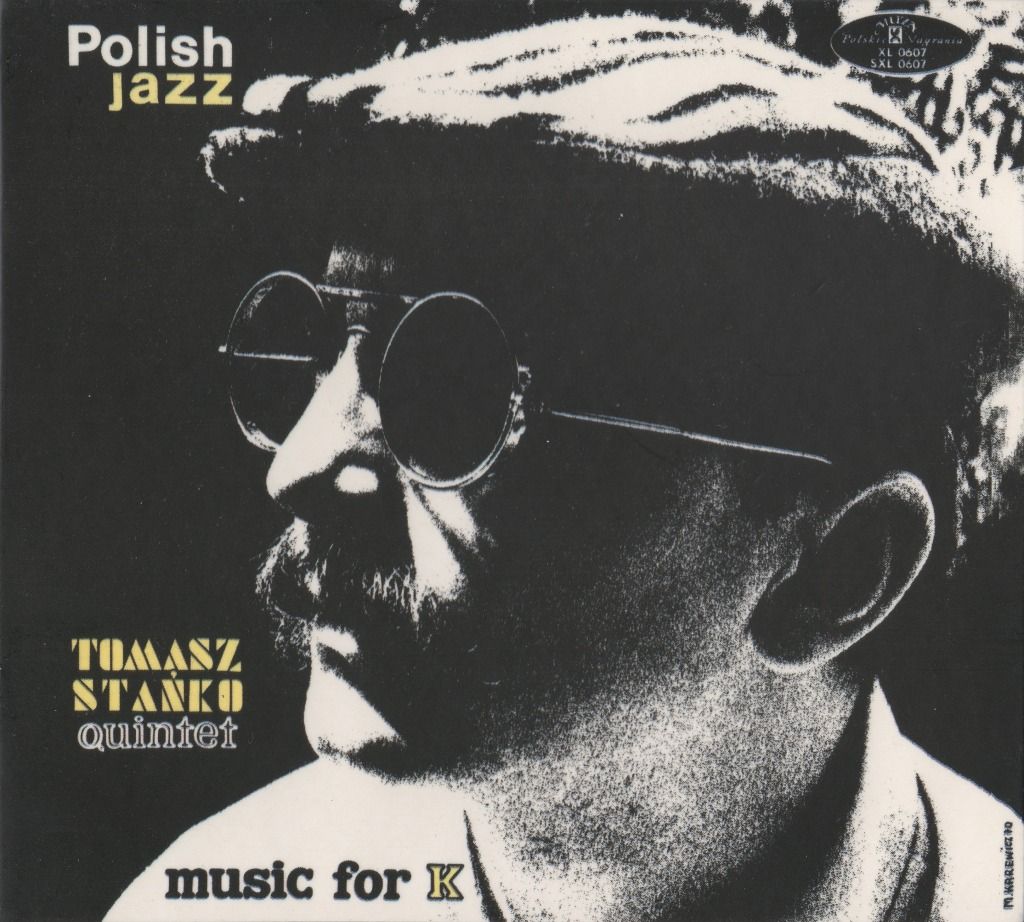
Tomasz Stańko - Music for K


These days, what's probably the biggest obstacle for Polish trumpeter Tomasz Stańko's 1970 debut is that it says "Polish Jazz" in the top left corner, leading to some reasonable assumptions that it's going to be some sort of fusion of polka or mazurka and American jazz, and some perhaps less justified assumptions that it'll be crap jazz because it's not American.  Not only are both of these assumptions proven incorrect by the music contained in these (digital) grooves, an album like this provides key evidence of the roots of the compositional framework that British/European jazz fusion bands like Nucleus and The Soft Machine utilized in the mid-1970's, but also that the narrative of jazz history in Europe is unjustifiably incomplete and marginalized in comparison with that of America.

Now, anybody in the know about this period of European jazz will probably acknowledge that I'm sort of getting ahead of myself by starting with Stańko's debut--many would cite Krzysztof Komeda's 1966 album Astigmatic as the most important illustration of the above points...in my own feeble defense, let's just say that this was the album I decided to review today for no other reason than that it's the one my eyes landed upon and seemed like a good one to write about.  Music for K is indeed a tribute to the late Komeda, on whose watershed Astigmatic album Stańko also played trumpet, and who is credited with contributing heavily to the development of a distinct flavor of European jazz that started in the 1960's and has continued to present.  Assigning credit is important but not as much as acknowledging a quality piece of work.  Here the influence of Komeda (who also had extensive film score experience including Roman Polanski's Rosemary's Baby) and Astigmatic are felt both in a sense of cinematic drama and a tonal palette that trades much of American jazz's jubilant euphoria for a darker, more cerebral form of expression.

The opener "Czatownik" both recalls Komeda's descending chromatic piano themes and predicts the tangled melodies that the aforementioned electric fusion groups would favor, with alto and tenor saxophones blurting rapid fire unison themes with the trumpet before things start to get more shambling, with each voice separating into an upward call that again lines up for a dramatic fanfare.  One of the things I really appreciate about this music is the shifting dynamics--things can go from blaring horns to sizzling quiet in an instant--the bass and drum interaction is prime here (check out that drum sound around 3:30)--and the piano-less lineup both points to the absent Komeda  and allows for alternation between skeletal frameworks and a spotlight on the wind instruments' melodies, not to mention a huge potential for free playing, of which there is an abundance.

In trying to define the specifics of a "European" jazz sensibility, my instincts are to point at its richly developed classical tradition, which seems to be borne out in a predilection for ostinato (check out the gently pulsing reeds in "Nieskonczenie Maly," and their darker, more anguished and dissonant counterparts in "Cry") and song structures that seem more linear than the typical circular jazz structures (head, solo:, head).  Things reach their freest and most intense in the 16-minute title track, which climbs a series of crescendos and mini-dips to a collective caterwaul, then steps back down across one of the album's greatest drum showcases to a squawking conclusion.

More than anything, the quality and energy of the playing on this album raises questions about the relative obscurity of the players here and severely shakes my confidence in a completely American-centric jazz narrative...we need better informational resources and access to more great music like this!  On the plus side, if you're feeling like you've exhausted the available avant-garde American jazz and everything's sounding a bit too happy and boppy for you, maybe there's hope in the Old World's "new" jazz--who knows what else we're still missing!

Get it here.

Wednesday, May 16, 2012

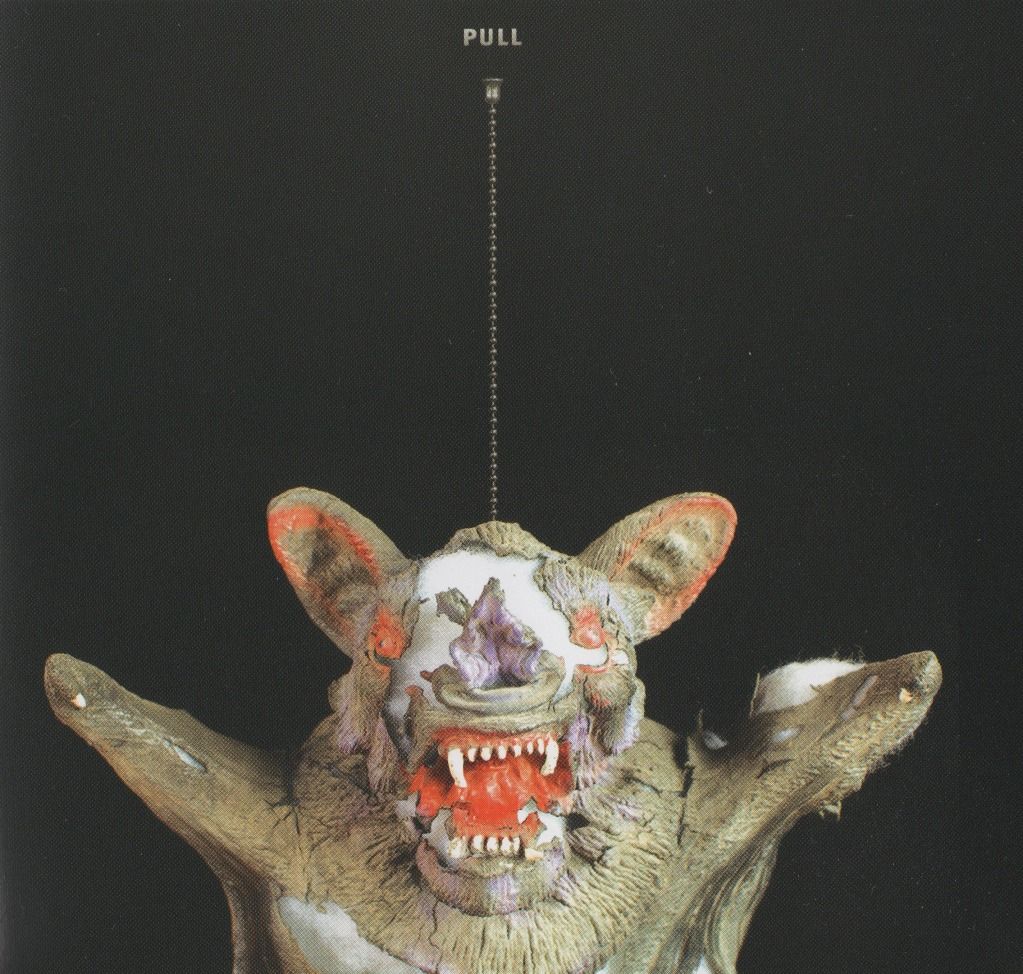
Captain Beefheart - Bat Chain Puller


It's been well over a year since I kicked off the reviews division of this site with a review of Captain Beefheart and the Magic Band's Shiny Beast (Bat Chain Puller), and considering how much the Captain's work has continued to influence my approach to music and writing I'm surprised I haven't waxed poetic about any of his other classic albums.  Technically, today still isn't that day--I'm here to gush about the "brand new" 2012 Captain Beefheart release, the lost 1976 first studio version of Bat Chain Puller, just released this spring (to disappointingly limited fanfare) on the Frank Zappa record label and nearly exclusively available for purchase here (which just might be why the album's gotten so little press).

To describe the genesis of this release briefly, Don Van Vliet decided in 1976 to return to the avant-garde and stage a creative comeback.  Herb Cohen (Frank Zappa's manager) secretly used Zappa's money to fund the project and the two had a falling out upon Zappa's return from tour, resulting in Cohen's seizure of many of Zappa's assets, unreleased Bat Chain Puller masters included. Zappa eventually reclaimed his property through legal means, but by that time Van Vliet had re-recorded most of the material on his final albums.  Since then Zappa, and now his widow Gail, have been busy enough managing Zappa's gargantuan legacy that the tapes have remained neglected in the vaults...until now!

With 10 of 12 tracks already appearing on Captain Beefheart albums that have been available for 30 years, the biggest worry with Bat Chain Puller is that it'll come across as merely supplementary to those "definitive" versions, or worse that it'll sound only partially complete in comparison to the later recordings.  Thankfully, the disc falls prey to neither possibility, playing like the hazy, dream-like album-that-never-was that it's always been!

After listening to these different versions of familiar songs and becoming familiarized with the new track sequencing, I'm left with the strong impression that this album has an undeniably distinct feel, especially in relation to Shiny Beast (Bat Chain Puller) in terms of its accessibility.  Compared to Shiny Beast's almost exclusively song-based program, this Bat Chain Puller is very much a venture split between songs, spoken word-over-music and pure poetry.  Sure, it's still considerably more mainstream than the hallowed stuff of Doc at the Radar Station, but even compared with Doc's orchestrated prickles, the poetry/music tracks here feel much more spontaneously arranged and the sonic palette more often unexpectedly drops down to just one instrument or Van Vliet's voice in some very effective instances. 

Perhaps as expected, some of the material here isn't significantly different from later versions--the arrangement of "Harry Irene" (never one of my favorite later Beefheart tracks, but an important contributor to this album's accessibility) includes guitar, but otherwise isn't much different.  The title track has its own subtle identity (further shaded by a third version here in bonus track form), bristling with kinetic motion (it's easy as ever to hear how Van Vliet originally pulled the rhythm from windshield wipers), more of an organic feel with cranked harmonica and just-barely-conflicting guitar layers (though the ever-important synths are still there) and outstanding vocal delivery (dig the the naked place he takes "their very remains and belongings").  Right off the bat, my highest hopes are kindled--one of my disappointments with later Beefheart albums is the marked reduction in the elasticity of Van Vliet's voice and additionally, in the case of Ice Cream for Crow, an overall dip in energy and compositional effort--here the Captain's voice still possesses a razor's edge and he takes enough risks that we can almost forgive him wasting the early/mid-70's trying to become a mainstream star.  "Owed T'Alex" burns with a reinvigorated closeness that's magnified further on "Floppy Boot Stomp," where the band's joyous delirium pushes the vocals so close that it sounds like the Captain's ranting all the way inside your brain. 

The most exciting aspect of Bat Chain Puller, of course, is the brand new material, namely the poetry/music hybrids "Seam Crooked Sam" and "Odd Jobs."  The former is a moody guitar/electric piano duet with Van Vliet's downbeat-yet-intense images spinning seemingly unrelated on top, while the latter is more of a full band piece with tunefully-spun vagrant imagery while the band shifts ever so slightly into what must be the first kernel of Shiny Beast's "Tropical Hot Dog Night."

Evaluating these pieces has helped me identify a couple of the specific traits that make Captain Beefheart one of my top favorite artists--first, it's the way his poetry mirrors the music, flowing smoothly then stopping, jerking, suddenly rhyming or playfully riffing off of a phrase's connotations or expected syntactical outcome.  Unsurprisingly, Van Vliet chooses words like paint colors on a palette, not necessarily concerned with their logical or expository value but rather their energy, emotional color, and the way they sound.  When I hear these songs, there are countless unexpected images and feelings popping into my head, and I can't think of too many other poets in the popular music sphere who can achieve that.  And yet, there's a strange logic or narrative to many of these pieces--what at first seems like incoherent rambling in "81 Poop Hatch," for example, gradually reveals itself to be an impressionistic panoramic scene including Van Vliet's beloved natural imagery as well as a view of his internal landscape--at least, that is, until he leaps mid-sentence to somewhere completely different; every piece seems to be at its root a rational enigma with unlimited emotional potential.
Secondly, the compositions here are a dazzling presentation of Van Vliet's painterly approach implemented in yet another aspect of the music.  More than on any of his other albums we hear open, warm-sounding jazz harmony on songs like "Seam Crooked Sam" and "Ah Carrot Is As Close As Ah Rabbit Gets To Ah Diamond."  Again, though, Van Vliet applies these combinations of notes intuitively and without regard to how theoretical rules say they're "supposed" to be used.  Fragile, sweet harmony can dissolve into dissonant, minor darkness just as quickly as it can pursue a completely fresh melodic path, as evidenced on "The Human Totem Pole (The 1,000th And 10th Day Of The Human Totem Pole)," one of two album-closing commentaries on the human race's cumulative achievements (or lack thereof) and precarious current position on earth.  Here he fuses this weird compositional approach with one of his more straightforward (yet most compelling) poems, sketching a partially-obscured picture of the skin-crawling, comical-yet-repulsive "pole," and delivering it all with a seething creepy mystery that trumps the Ice Cream for Crow version within just a few seconds..."the man on the top was starrrrrrrrvinnnnng" indeed!  Now is probably an important time to laud the contributions of the rest of the band--this music certainly couldn't have been made without the conscientious talent and attention of the rest of the band, especially drummer/guitarist John French, who also performed a crucial "music director" role in transcribing Van Vliet's hastily-blurted musical ideas into a form that the other band members could understand and memorize--just listen to the through-composed spacious atmosphere as the song sputters out in a denouement that takes up over half the song's length.  The idea that it's possible and even ideal to consent to the urge to compose and arrange notes and sounds in whatever way sounds intuitively best (regardless of the rules) is one of the important lessons I've learned from Van Vliet's music and attempted to apply to my own process.  Though the difficulty of successfully communicating such an idiosyncratic method to collaborating musicians is challenging to overcome, the singular character of the end result can really be worth the sweat.  It's also one of the few lessons any artist can potentially adapt from Van Vliet's work without necessarily ripping off his total sound wholesale--it's possible, no matter what Tom Waits tells you!

In the end, this album is like a gift sent from beyond Van Vliet's grave (though very real thanks are due to all of the living collaborators who finally brought this album to release).  Amazingly, it never sounds unnecessary in comparison with the later albums--"Brick Bats" is the only song that sounds more unfocused than its later version, with a much looser guitar arrangement, less effective vocal delivery and a fun but meandering free jazzy end section made more effective in the shorter Doc at the Radar Station version.  Nor does this earlier album obviate the ones that follow (except Ice Cream for Crow, which was always teetering on the brink of being a "completists only" release, especially now that two of its best tracks are revealed to belong to a more vital earlier work), with Shiny Beast (Bat Chain Puller) still best straddling avant-garde and pop and Doc at the Radar Station best warping Trout Mask Replica poetic/musical craziness into a newer, mature and carefully-integrated form.  Thankfully, we now have all three to consider as required listening--though the price of this CD is still uncommonly high (it cost me $27 including shipping and tax), it's worth the added expense and work it takes to track it down--let's hope there's some wider distribution on the way to make it a little easier to get the word out about this remarkable album's first issue.

Wednesday, January 25, 2012

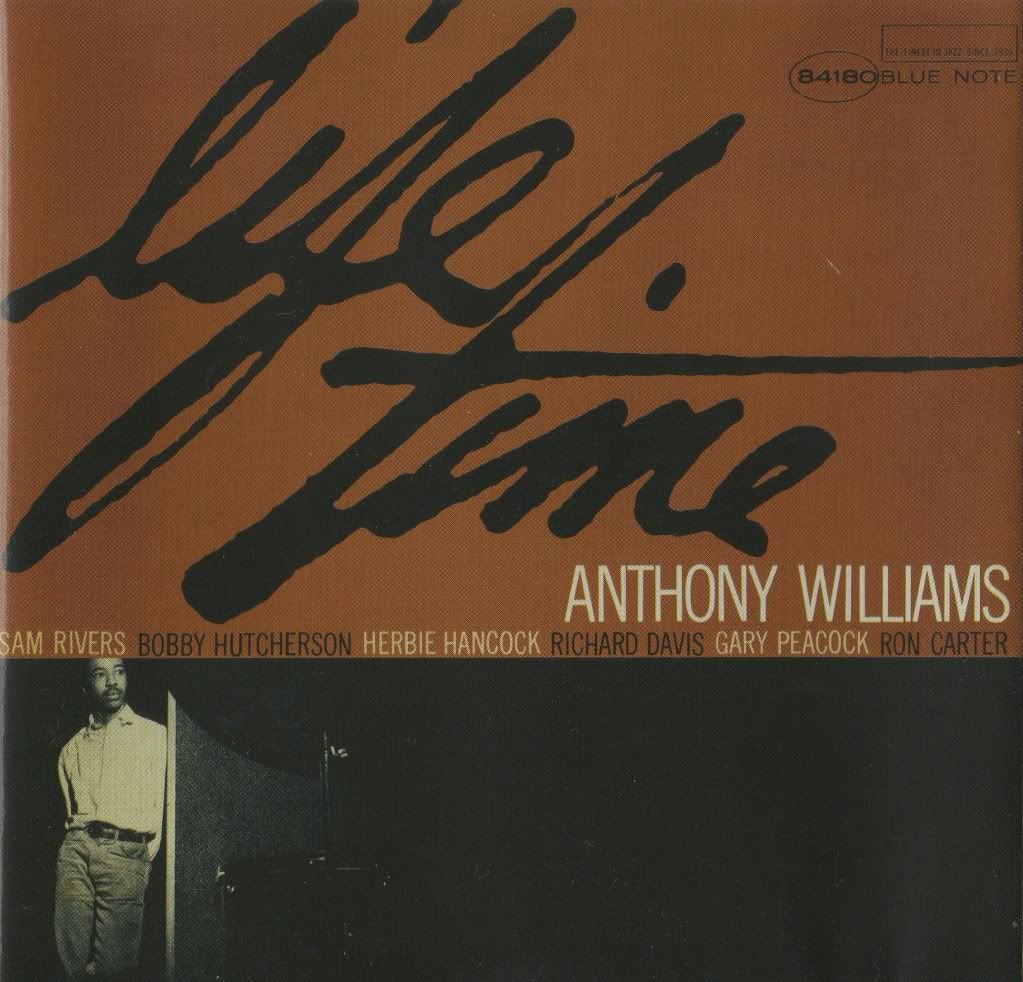
Tony Williams - Life Time


By 1965 and this--drummer Tony Williams' first set as a leader--the then-17-year-old had already been working with a slew of talented and innovative jazz artists, including Herbie Hancock, Eric Dolphy, Andrew Hill, Sam Rivers, Jackie McLean and Grachan Moncur III (not to mention his recent incorporation into Miles Davis' Second Great Quintet).  Listening to Life Time, it's clear that Williams was listening closely to what the latter two were doing, especially on the sessions for McLean's One Step Beyond and Moncur III's Evolution.  For me, this album represents one of several high points from the period when it comes to a distinctive brand of avant-garde jazz that seems to favor space over wild soloing.

You know from the eerie, quietly intense opening melody of "Two Pieces of One: Red" that this isn't going to be a typical bop album, but as Sam Rivers' tenor fades out and dual bowed basses from Richard Davis and Gary Peacock gently arpeggiate it's apparent that this subtle opening isn't going for the explosion your ears might expect.  One of the bassists takes the first solo, and from then on you can rest assured that we're not returning to the usual structures or sounds for the rest of the album.  "Two Pieces of One: Red" and the rest of Life Time are typified by a restrained, spacious atmosphere wherein solos take place with very little backing instrumentation (aided considerably by the fact that there's no piano on three of five tracks) and rarely take off into the rapid-fire solo excursions popular even with some of the players on this disc--Sam Rivers is surprisingly subdued here, but he manages to ride the transition with little difficulty, relying more on dynamics and the presence/non-presence duality that's much more of an option when you're playing in a musical landscape as open as this one.  Indeed, the overall sound of this album owes as much to the theoretical advancements of John Cage as it does to free jazz pioneers, setting up blocks of silence as both an effective compositional tool (making it easier to tell when the sometimes skeletal compositions are moving to another section) and as an invisible member of the combo, giving the players another (absence of) sound to play off and somehow adding depth and intensity to the sounds that are actually present.  Williams' drums in particular seem to particularly smolder in the open, reverb-heavy environment, with his brushwork lifelike in its texture and his cymbal work especially benefiting from miles of reverb and a lack of competition with other instruments (and himself, for that matter--this music wouldn't be so great if the players didn't match the mood by leaving a little space in their own playing).

"Two Pieces of One: Green" is the album's longest track, with Rivers contributing some more of his characteristic fire and blasting some really juicy overtones, while Williams explores the toms and un-snared snare.  While the subtle melody of some of the album's other tracks gradually reveals itself, this track is one of the freest of the bunch, demonstrating amply that free jazz doesn't have to always consist of several instruments blaring at the same time.  "Tomorrow Afternoon" comes closest to hard bop in melody and swing, but gradually breaks up into greater and greater caverns of space, like the floor is dropping away from the comfortable atmosphere that was so briefly established.  "Memory" drops Rivers and brings vibraphonist Bobby Hutcherson and Herbie Hancock in for a bassless free improvisation that sees Hutcherson and Williams riffing off one another quite effectively, with the vibes providing just enough of a tonal anchor; with Williams' wood block and other hand percussion providing yet another noticeable textural contribution.  The arrangement is so sparse that when Hancock finally asserts himself around 5:30 with a brief chord, it sounds like the loudest, most melodic thing you've ever heard.  The album ends with "Barb's Song to the Wizard," a piano and bass duet with no drums--the tense melody nods to Williams' aforementioned work with Moncur III and McLean.  Unlike those great albums, though, Williams always seems to take things one step further, providing no real traditional bop tunes to appease nervous listeners and committing fully to the album's mission statement.

The fact that this album works so well with such a piecemeal, rotating assortment of players exclusively playing the compositions of a 17-year-old drummer is a testament both to Williams' skill and unheard-of musical maturity at the time, but also to whatever it was in the air at the time that made all of these players so assured in their judgment, synchronicity and adventurousness.  Life Time is a grower in the best sense of the word--sounding like nothing much on first listen but gradually unfolding into a paradoxically dense work, considering its relative quietness--and every time I listen to it I find myself asking "Why isn't there more free jazz like this?!"  Luckily a little research into the discographies of the artists involved here yield further pairings in the same time period and several great albums in the same vein.  While Williams would go on in the next few years to collaborate with some of avant-garde jazz's most acclaimed albums (as well as Miles Davis' less challenging but equally iconic work [I bet he hated this album]) before heading into fusion territory, he did reconvene with some of these players for the nearly-as-excellent Spring, but no album I've found has done such a good job of fusing an AMM-like free improv space aesthetic with "traditional" free jazz harmony and melody--recommendations welcome!

Get it here.

Monday, December 19, 2011

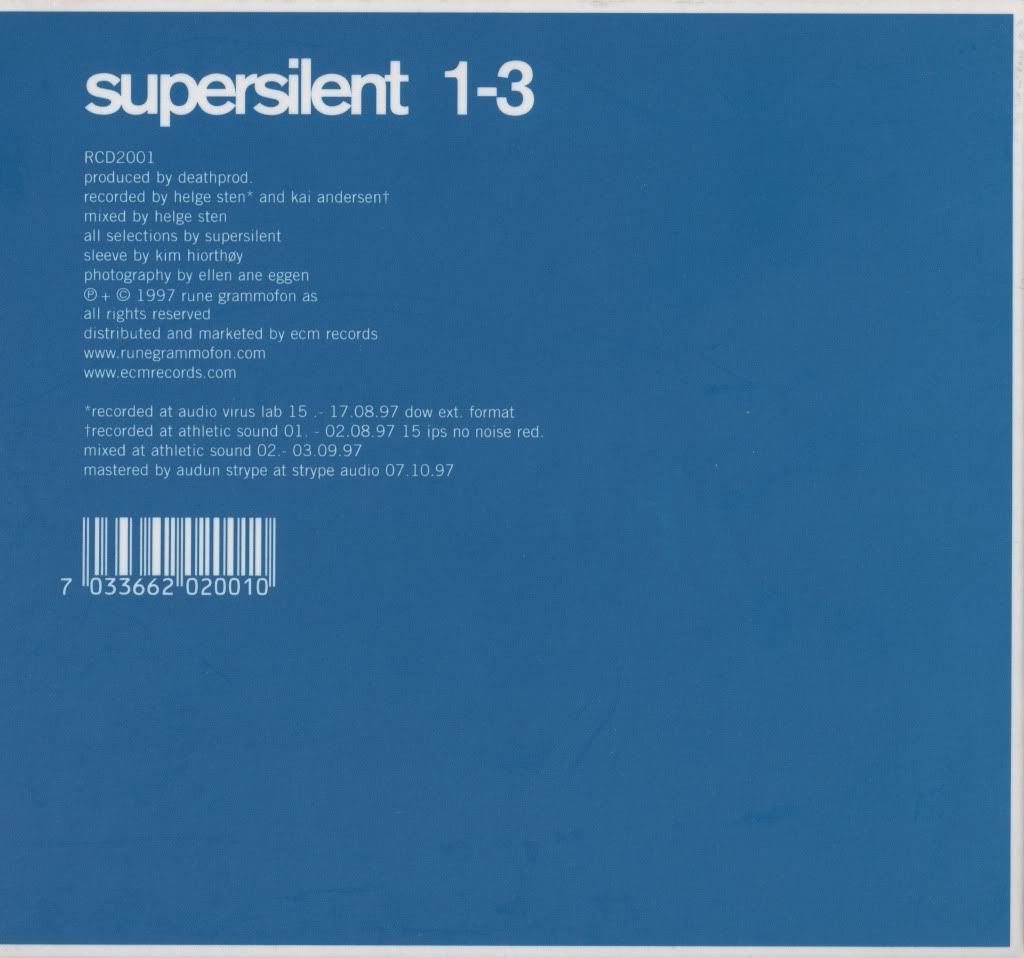
Supersilent - 1


Though I've written a fair bit about free improvisation, I've only written about a couple of groups (mostly AMM and related artists).  Here's something different from a more recent group from Norway called Supersilent.  1 is the first disc of their 1997 debut 1-3, which I've decided (after no small deliberation) to break up into three parts to review despite the fact that the albums are all grouped (like each of Supersilent's numbered releases) in one single-colored package and since each disc is over an hour long.  While it took my ears a while to grow accustomed to the synth-heavy sounds on these albums (I'm used to the comparatively organic sounds of groups like AMM), the music here has eventually become the kind of paradoxically noisy brain relaxant that I've come to look for in the best free improv.

The fact that Supersilent's music is related to free jazz is immediately apparent here--"1.1" opens with 2:30 of drums before the first synth statement.  The drummer's jazz chops is probably one of my favorite aspects about the group's sound--often the longer tracks come down to layering extended synth tones over the top of the kit sounds, which keep things interesting and remind us that there are indeed humans making this music.  The first track also demonstrates the group's interest in both sampling wordless vocals and throwing a little bit of trumpet into the mix, which deepens the connection to free jazz (though the trumpeter's chops aren't especially jazzy).  Things also get satisfyingly twitchy in the first track's second half and in "1.2" when repeating bass synth tones start to contrast the drum beats. 

"1.3" shows the group's interest in both treated sounds (with synths that undergo brilliant changes in timbre and texture) and the power of volume, with densely layered soundscapes made of shrieking synths and pounding drums.  I like how the group manages to keep things kinetic in these places--it's the judgment to ensure an energetic beat (no matter how fractured or buried by abrasive sounds) that (for me) separates this noise from just anybody out there with a keyboard and a big amp.  The final track, "1.4" finds the group toying much more with dynamics, using a repeating minor trumpet melodic motif as a backbone and running past it with a series of percussion and comparatively gentle synth improvisations.  Though the band rarely manages to use silence as an effective tool on this disc, the shift in volume dynamics is a welcome and arguably necessary one (if you're going to try and make it through all three discs at once!).  The melodic fragment is effective but repetitive and predicts the group's later, much tamer forays into more melodic, tonally-anchored improvisations.  While it's definitely a more accessible sound, I prefer the group's more distinctive and energetic early work, but I understand that it sure must be tough to try and achieve success playing such harsh-sounding music.  6 seems to be the group's most popular release, but I appreciate the edge that's present here on their earlier material, which inhabits a niche in the free improv realm that I haven't heard anyone else quite fill.

Get it here.

Wednesday, December 14, 2011

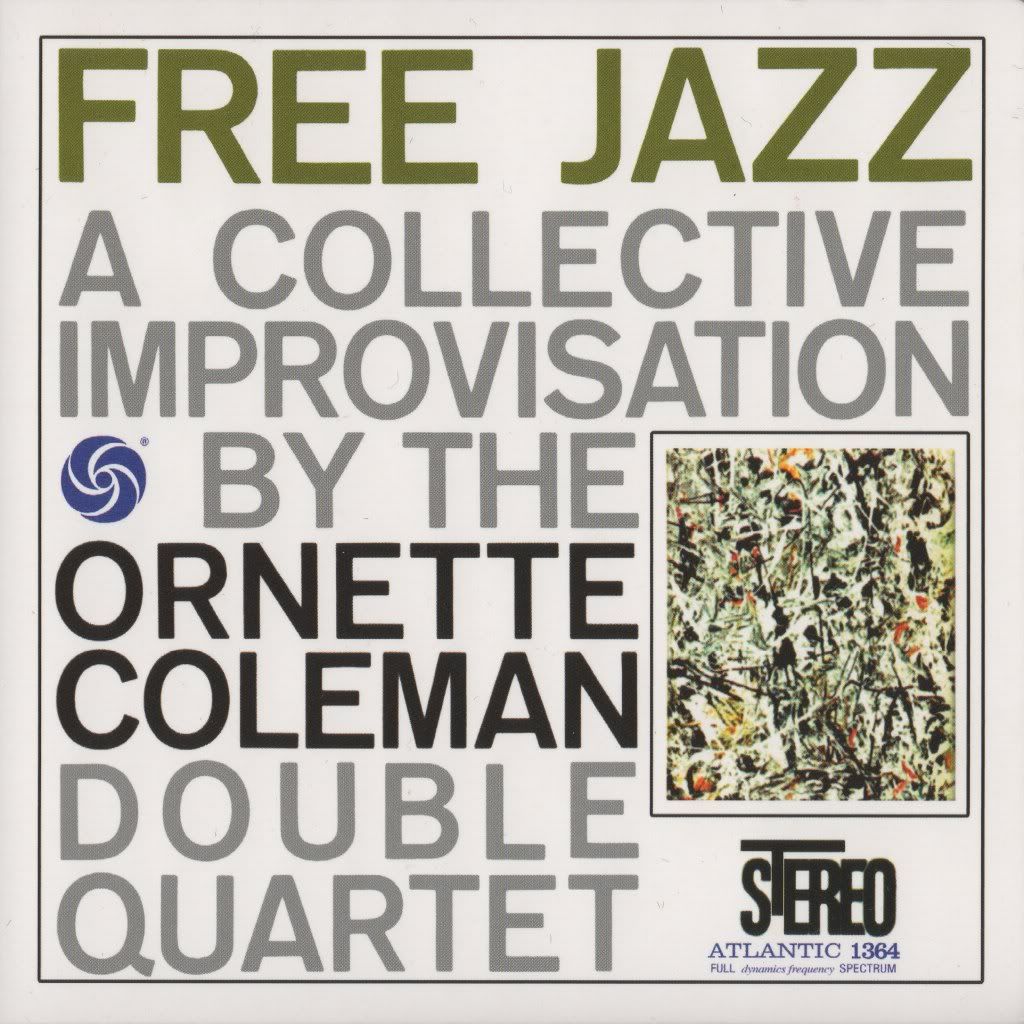
Ornette Coleman - Free Jazz


Though he'd already been prolifically recording for a few years by 1961 and had already thrown down the free soloing gauntlet with The Shape of Jazz to Come in 1959, Ornette Coleman's 1961 Free Jazz album continues to stand as a peak among peaks in Coleman's celebrated early discography and as one of the earliest and most fully-developed statements that would define the loose but enduring free jazz movement.  For me, the thrill of Free Jazz is the feeling of looking into a petri dish as something utterly unprecedented happens for the first time.  The album's form intersperses lengthy solo sections (Coleman's saxophone solo is the longest) with rhythmically-composed atonal horn fanfares, a typically labyrinthine Coleman-ian 'melodic' head and a closing duet for each rhythm section duo.  The double quartet (Coleman on alto, Eric Dolphy on bass clarinet, Coleman stalwart Don Cherry and Freddie Hubbard on trumpet, Scott LaFaro and Charlie Haden on bass, and Billy Higgins and Ed Blackwell on drums) is arranged in stereo, with one quartet on each side.  The result makes the bass interplay much clearer (the bassists decide, for the most part to stick to different octave registers to stay out of each other's way), but for some reason the drums are difficult to discern--reaffirming my usual opinion that dual drum kits are a concept that sounds good on paper but usually comes across as excessive in real life.

This tension between concept and practice is what's most exciting to me about Free Jazz; clearly Coleman thought out the large pieces of the puzzle quite well, but it had still never been done before.  He exhorted his side-men to contribute whenever they felt the urge and play as expressively as possible without connections to any recognizable pieces of music or styles, but the end product swings like a mother and Coleman's instructions didn't stop Hubbard from quoting "Jingle Bells" at one point ("don't pour salt in your eyes, don't pour salt in your eyes").  What always captivates me when listening is the range of development in "freeness" that's on display.  It's almost like looking at that classic image of human development; Coleman and Dolphy had both already reached a comfortable level of freedom in their playing (which is still extremely melodic [at least in Coleman's case] and fluid if idiosyncratic), and Don Cherry isn't far behind, no doubt aided by his tenure in Coleman's quartet.

Of the horn players, Freddie Hubbard is undoubtedly the weak link in terms of freeness, which might be the most interesting in terms of historical context.  His inability to really wrap his brain (and chops) around Coleman's concepts are evidenced in his tentative stop/start soloing which ultimately owes more to the theoretical constraints of bop than any sort of previously uncharted territory (it's particularly evident in the CD reissue "first take" bonus track, where Hubbard's feet are audibly cold and his solo's conventionality comes across as the equal and opposite reaction to the excitement and hurried uncertainty of the song's "first go").  It's funny to hear Dolphy pedagogically prodding at Hubbard during his solo, mimicking the trumpeter's ideas with repeated derangement, throwing in squawking vocalizations and wonky riffs--it's as if he's saying "let it go man, try it like this."  Dolphy's accompaniment might be even better than his formidable solo--when he and Hubbard start team-riffing to Ornette's solo, things get really fun, and though his bass clarinet seems to be miked really poorly, the character of his atonal hooting not only accentuates Coleman's soloing, it pours directly into the raucous, party-like atmosphere that's central to this session.

Finally, and in a more meta sense, Free Jazz is a reminder of the areas of "out" and free jazz that had not yet been explored.  While Coleman's compositional framework abandons many of the classic tropes, it's also still pretty close to jazz tradition in terms of solo vocabulary (compared with some of Sun Ra's stuff, for example), rhythm (compared with, say, Spiritual Unity), and overall composition--Free Jazz still paints (though in broader brush strokes) a quite clear picture of dedicated solo sections and sometimes leans on obligatory building blocks like the extended bass and drum sections (compared with something like the impressionistic structures of something like Peter Brötzmann's Machine Gun) in a way that suggests automatic impulse in place of a well-considered original idea.  These are just historical/theoretical observations, though--people who argue about how Free Jazz isn't really free seem to me to miss the point.  It's not about trying to pursue only freedom, but to show how much the jazz idiom opens up to new directions, ideas, and expression of emotion if players and composers start casting off some of the conventions that have become stale.  Sure, this album is cacophonous and not always easy listening, but its richness in ideas and energy remain undimmed and helped catalyze a movement that produced some of the most interesting music made in history of jazz.

Get it here.

Thursday, October 20, 2011

Eric Dolphy - Out to Lunch!


If I had to credit one album for inciting my recent obsession with jazz, it would have to be Eric Dolphy's 1964 crowning achievement, Out to Lunch!  Before then, I'd found something of a backward insertion point into jazz by moving into free jazz from the less idiomatic free improvisation realm.  After hearing this album, though, I realized that there's an entire movement within jazz (generally known as avant-garde jazz) that overlaps with free jazz in terms of soloist expression but also focuses heavily on expanding the compositional palette of bop and post-bop to a wide variety of places it'd never been before--undoubtedly, avant-garde jazz is the jazz for me!

By 1964 Eric Dolphy had had a storied career as both a sideman (supporting, among others, John Coltrane and Charles Mingus) and as a leader, recording several studio and live albums since his bandleader debut on 1960's Out There.  It's unsurprising that Dolphy was in great demand as a session and live ensemble member, as he could play alto saxophone, flute and bass clarinet--the wider success of which in jazz music he can arguably credited--with comparable (but always idiosyncratic) virtuosity.  Though he was playing "out" for years before the date of this recording, Out to Lunch! is the first (and last, since he died within months of its recording) of Dolphy's albums to feature only his own compositions.  As I've increasingly found among successful avant-garde jazz albums, the combination between the adventurousness and innovation of the compositions and the freedom, creativity and chemistry of the performers creates a perfect storm of blissful, challenging sounds.

On the compositional side, Dolphy provides songs that run the gamut between dissonant odd-metered avant-garde ("Out to Lunch," "Straight Up and Down," "Hat and Beard," dedicated to Thelonious Monk, one of the only jazz composers who could be said to foreshadow Dolphy's style), early 1900's gospel jazz (the ballad "Something Sweet, Something Tender") and frantic, twisted bop riffing ("Gazzelloni").  On the more dominant weird stuff, Dolphy strikes a fascinating balance between abstractness (which often pleasingly extends typical jazz harmony to the brink of atonality) and Ornette Coleman's sinuous sense of head melody.  "Hat and Beard," with its constantly mutating descending scale and lurching unison non-melody, fits the former category, while the title track fits the latter with a seemingly never-ending head that winds around in spiraling circles, somehow never separating the tight unison between trumpet and alto sax.  The final track, "Straight Up and Down" is supposed to emulate a drunken stagger but, really, the same could be said of most of the rhythms here!  What I really love about Dolphy's compositions is that they travel well beyond the head-solo-head formula that sometimes hangs like an albatross from so much ultra-orthodox jazz; sure, the songs have recognizable and recapitulated heads, but there are innumerable pockets of group dynamic shifts, coordinated rhythmic interplay and near complete dropouts that you never get the sense that things are happening without a good reason.

As far as the playing goes, like I said earlier, this is an undeniable example of a perfect storm where a dream team of players come together over a set that pushes them all to places they've never been before.  The absence of piano means that vibraphonist Bobby Hutcherson carries the mid-range chromatic accompaniment on his shoulders, which means a lot of the accompaniment is more spacious than the type of comping that piano usually provides.  I really enjoy how Hutcherson swaps between helping state the songs' melodies, comping with two or three-note chords over occasionally strange intervals, and spontaneously supporting solos with minor melodic excursions.  While Hutcherson's replacement of piano on this album is often lauded (as must be his ability to make one of the geekiest jazz instruments as cool as it could possibly be), I think some credit is also due to bassist Richard Davis, who often uses two-note chords (sometimes with a bow) in addition to a more standard walking style to emulate the piano's absent tonal cluster effect.  The tightness of Hutcherson and Davis allows Tony Williams free reign to play counter-rhythm to the vibes, alternate between blasting and delicate fills out of nowhere, and keep the ideas coming one after another without obsessing about blatantly stating the beat--sometimes it's just implied, and that space is one of the best parts about this music.  Trumpeter Freddie Hubbard could easily be labeled this set's least adventurous performer, but there's really no denying his chops; though he can't compete with Dolphy in terms of out-ness, he ably makes up for his relative conventionality with furious energy, which just might be considered out on its own.

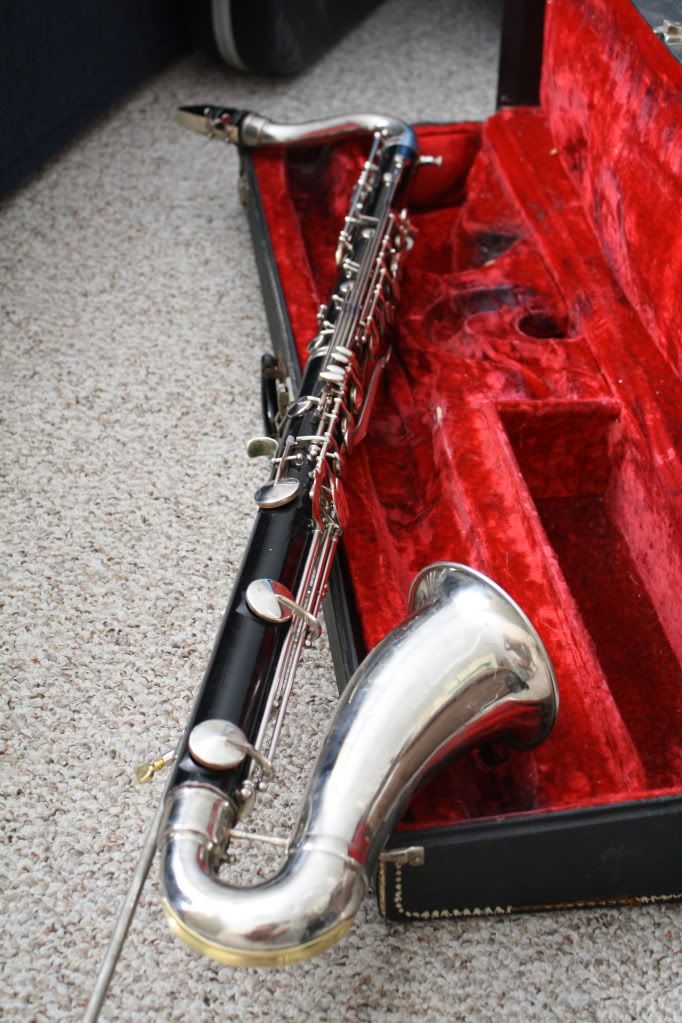
Finally, Dolphy manages to consolidate his well-documented strengths on all three instruments by stealing his own show.  I can never get enough of his bass clarinet playing--the instrument's ear candy timbre is enjoyable on its own, but in the hands of someone like Dolphy, it becomes something else entirely.  Especially with the bass clarinet, his intuitive feel for the instrument's range and voicing allows him to employ it quite vocally, screeching through wide intervals just as often as he blurts out vaguely tonal (but always strangely melodic) fragments.  The beauty of this approach comes out even more on "Something Sweet, Something Tender," where the slow tempo and old-timey feel allow for some wide vibrato and compelling emotional expression.  Dolphy's alto saxophone chops are another thing entirely; his tone is so flagrant it sounds like he's blowing fire out of his horn and the mics can barely handle it.  "Gazzelloni" is the only flute showcase, which seems like a good ratio--the vibraphone seems to overlap in terms of timbre, so one example of Dolphy's rapid fire, often viscerally percussive flute style satisfies quite well.

It's a shame Dolphy wasn't able to follow up this masterpiece with a few more albums of his own compositions--he was clearly on a roll.  Fortunately, there are numerous great examples of his ability as a sideman (my picks for a balance between Dolphy's chops and adventurous composition are Andrew Hill's Point of Departure, George Russell's Ezz-thetics, and Ornette Coleman's iconic Free Jazz), and if you just want to hear the man play, his Wikipedia page comprehensively lists his discography as a leader and sideman--enjoy the trip.  It's disappointing that few contemporary jazz artists have attempted to push the genre forward in this way--there's clearly lots of space left to fill with audacious sounds, and it's hard to argue that these guys didn't have a great time making this music.

On a side note, here's what happens when you listen to too much Eric Dolphy...for use on my upcoming recording project.

Tuesday, June 28, 2011

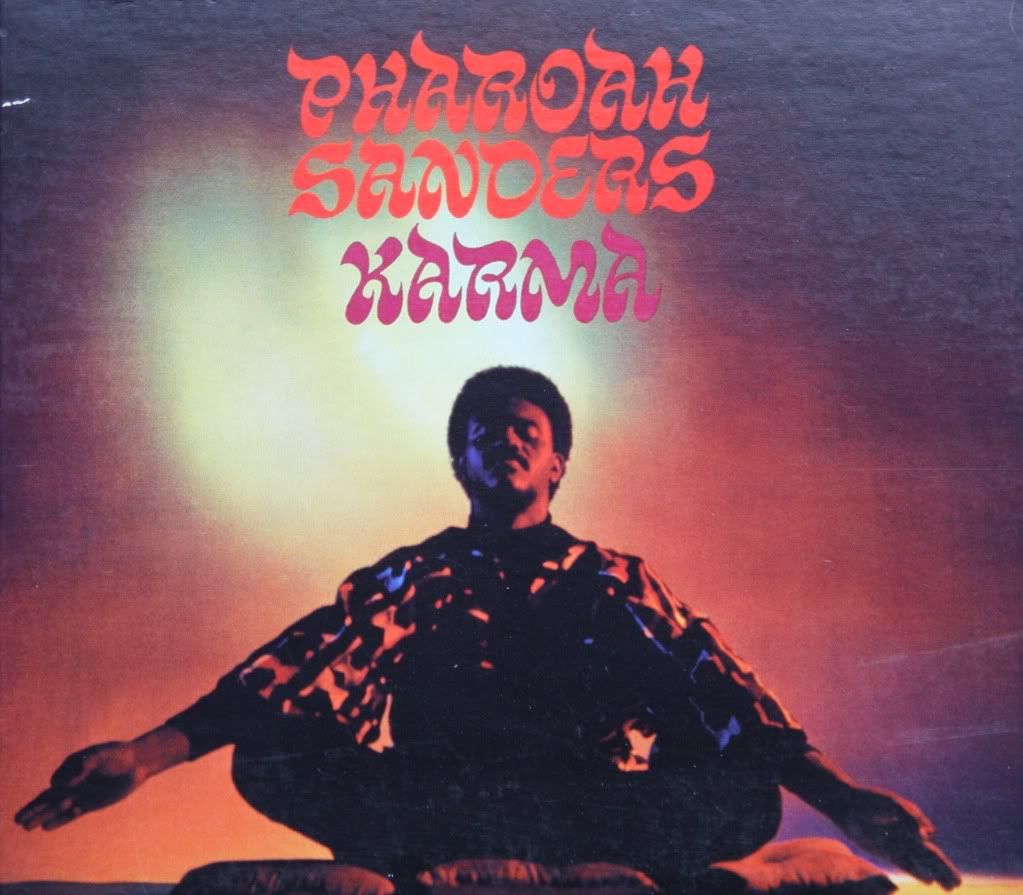
Pharoah Sanders - Karma


In my nascent explorations of avant-garde and free jazz I've heard Pharoah Sanders' name numerous times (he first achieved notoriety playing tenor in John Coltrane's combos and influenced Coltrane's move to free jazz), and I've seen Karma, his 1969 breakthrough solo album, near or at the top of quite a few lists of the best free jazz albums.  Unfortunately, though, personal tastes don't always jive with popularity, and this album stands as my first big free jazz disappointment.

There are so many flaws and annoyances that easily come to my mind, from the obvious (atrocious lyrics--hell, the fact that it even has vocals at all) to the less obvious (the fact that there's almost no harmonic development over the course of a half hour, and the fact that Sanders' saxophone, which sounded so blistering on John Coltrane's Ascension, occasionally comes dangerously close to sounding like SNL opening credits/softcore porn soundtrack) that I couldn't even imagine calling this one of the best albums of the free jazz movements.  The first time I listened to "The Creator Has A Master Plan" and Leon Thomas started going "Yeah yeah yeah yeah yeah..." I was thinking, "Oh no, is that what this is about?"  The lyrics, few though they are, are among the worst of the era for their painfully broad, facile peace n' love message, and they get even worse on "Colors," where the hoped-against happens again--"yellow....purple...." Is he really going to sing-list all of the colors as an illustration of how great god is?  Yes, he is.  And then there's the wordless vocal soloing--while I don't really mind Thomas' yodel phrasing, his improvisation here is a perfect example of why I have yet to be satisfied by a vocalist in a group improvisational setting--the lines he sings are the kind of generic, simplistic soul runs that any average music listener would likely attempt if told to sing a solo over this music.  If this album is supposed to be some sort of pinnacle of free jazz--a genre supposedly anchored on unbridled freedom of expression, especially during soloing, then this sort of repetitive, rudimentary technique just comes across as middling.  Let me put it this way--if a saxophone (even with Pharoah's tone) played the notes that Thomas sings, it'd probably be lambasted as one of the most boring solos ever laid to tape.

Ok, so the vocals are a major detractor. Take them away, and what do we have?  Well, for the most part, we've got two chords for over a half hour's worth of music.  That's dangerous territory--with a harmonic compositional structure that lazy, you've got to provide some variation in other ways.  Miles Davis would do it the same year on In a Silent Way by adding and subtracting instruments, adding and removing subtle repeating riffs and themes, and allowing the energy to gently ebb and flow, then in 1972 he'd perfect the technique with On The Corner's merry-go-round of instruments, textures and rhythmic shadings.  Here Sanders offers a mildly dynamic development with the percussion, which is one of the biggest draws of the album--it's definitely a thick sound, and when things ramp up around the 18-19 minute mark, it gets exciting.  However, the piano and bass are both pretty rigid, and other than Pharoah's saxophone we have nothing to keep things fresh for around 20 minutes of the album.  Other than the borderline cheesy sax sound (Sanders can't really be blamed too much for how much his sound influenced much worse soft jazz artists to come in the past 40 years), the minor-key opening flourish offers a change in texture and mood, and again around 11 minutes.  So, for structure and development, we have to be satisfied with a lot of repetition and a general energy buildup that reaches a series of intermediary peaks before really topping out around the 20 minute mark--and make no mistake, this album exudes structure, which is disappointing considering its prized place representing a jazz movement that moved continually away from structure; I can't help feeling that there simply isn't enough compositional substance there for track's length and that an opportunity to make a much more interesting backbone for Sanders' soloing was missed in a big way.  To be fair, the noisy, atonal section that happens from about 20-25 minutes is pretty great--all kinds of cacophony and the Sanders soloing I had assumed would be the centerpiece of much more of the album.  The crescendo paces itself (what else could it do in a 32 minute song), and for that reason it's pretty effective.

Really, Sanders shines throughout with his thick timbre, trilling and melodicism, but it's a far cry from the crazy religious expression some descriptions would have you believe.  Instead of something other, we get something mostly familiar and only occasionally rapturous--for the most part telling us how great god is rather than showing us.  Though the resulting music's mainstream approachability won Sanders some much-deserved popularity and success, I think it falls far short of what the free jazz movement has to offer in terms of spirit, theoretical development, and actual other-worldliness.  Can't win 'em all.

Decide for yourself and get it here on CD or MP3.

Wednesday, June 22, 2011

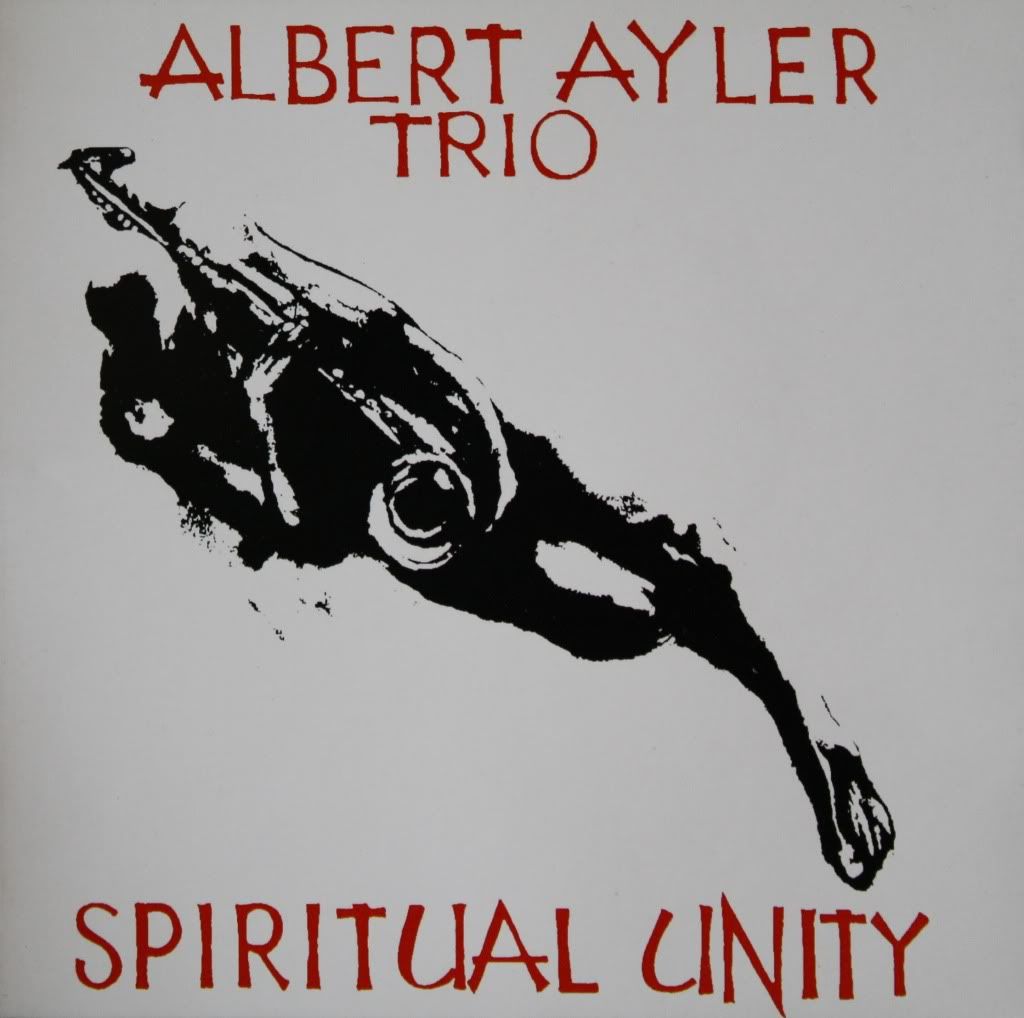
Albert Ayler - Spiritual Unity


Although I've mentioned free jazz a few times, I still haven't ever actually defined it or reviewed a full-on free jazz release.  Although free jazz is a widely-accepted subdivision of the jazz genre, it came about gradually over a couple of decades (mostly the 1950's and 60's) and through the work of a number of pioneers, so it can be difficult to pin down exactly what its characteristics are.  There is, for instance, a big difference between Ornette Coleman's unrestrained soloing over a relatively orthodox rhythm section in The Shape of Jazz to Come and some of the 20+ minute raging noisefests in Sun Ra's more audacious outings.  The unifying principle behind most music labeled "free jazz," though, is the elimination of some of the more traditional restrictions of the jazz idiom--be they adhering to chord changes when soloing, playing the instrument in a traditional way, including a repeating melody in the song, ensemble members playing in the same key (or even the same tempo), or ensemble members paying attention to what the others are doing.  It would also seem that free jazz places utmost importance on emotional expression--famous players have sought to avoid limitations in order to more authentically communicate their emotions through improvisation.  There will always be critics who argue that no jazz is actually "free," pointing out that there's always some structure, repetition, or limit to how the music will sound, but I think this observation misses the point--few free jazz players have ever claimed complete freedom; rather, the idea is to become freer from the traditional structures of jazz.  To this end, something that's interested me is the difference between free improvisation, a few examples of which I've already reviewed, and free jazz.  It's usually pretty easy to identify free jazz from free improvisation or atonal modern classical music, as the instrumentation is usually traditional, and the style of playing seems almost always to obviously fall within the jazz idiom (a saxophonist's phrasing, for example) no matter how noisy or atonal it is.  Free improvisation, on the other hand, often seems hell-bent on avoiding connections with any established musical idioms and more in combining elemental sound with the energy and unpredictability of improvisation.  While I'm neither a jazz musician nor particularly knowledgeable on the subject, I've recently gotten to a place where I feel like I'm starting to appreciate the tenets of jazz (especially of the free variety) and can enjoy and talk about it on specific aesthetic grounds.

Albert Ayler's 1965 album Spiritual Unity seems to me to be a great introduction to free jazz as it bridges the gap between early free jazz efforts and the much more ethereal works to come.  Ayler is widely regarded as one of the greatest free jazz saxophonists for his emphasis on timbre and characteristic vibrato-heavy style.  The album is book ended by two different versions of a tune called "Ghosts."  The first variation beautifully illustrates Ayler's stance in the free jazz movement--the piece opens with Ayler belting a winding gospel-influenced melody before gradually disassembling it over the course of the next five minutes only to recapitulate the original theme at the end.  It's thrilling to listen as Ayler inverts intervals between the notes, perverting what was originally an extremely recognizable melody into an at times hilarious and at other times furiously energetic caricature.  No matter how wild his trills and runs get, though, they still fit within the rhythmic footprint of the original theme.  The drums and bass are barely on the map, too, wildly filling the space with sound and energy, which seems to suffice in place of an actual beat.  

"The Wizard" continues to showcase Ayler's playing, beginning on an even shorter melodic motif before devolving into some of his rawest playing on the album--his harmonics and overblowing sound so amazing that it's easy to understand why some of the fathers of the movement believed texture alone could replace melody and harmony as the centerpiece of a solo.  "Spirits" brings the tempo down, showcasing the rhythm section with a little more space and room for the bass and drums to play off of each other, while Ayler's tremulous vibrato communicates a wailing sort of mourning sound reminiscent of a New Orleans jazz funeral.  The relatively short album closes with a second variation of "Ghosts" in which Ayler stretches beyond even the theme's rhythmic form, running all over the map during his solo and returning for more soloing after the bass and drum break before returning to the theme.  Spiritual Unity unifies free soloing with highly unstructured rhythm section playing to delve pretty deeply into free jazz territory, but its utilization of recognizable themes and loose but undeniable song structures make it considerably more accessible than some free jazz outings.  My only gripe is with the drummer, who spends too much time on the ride for my tastes, but I've got nothing bad to say about Ayler's stunning chops and energy. 

Get it here on CD or MP3.

Friday, May 20, 2011

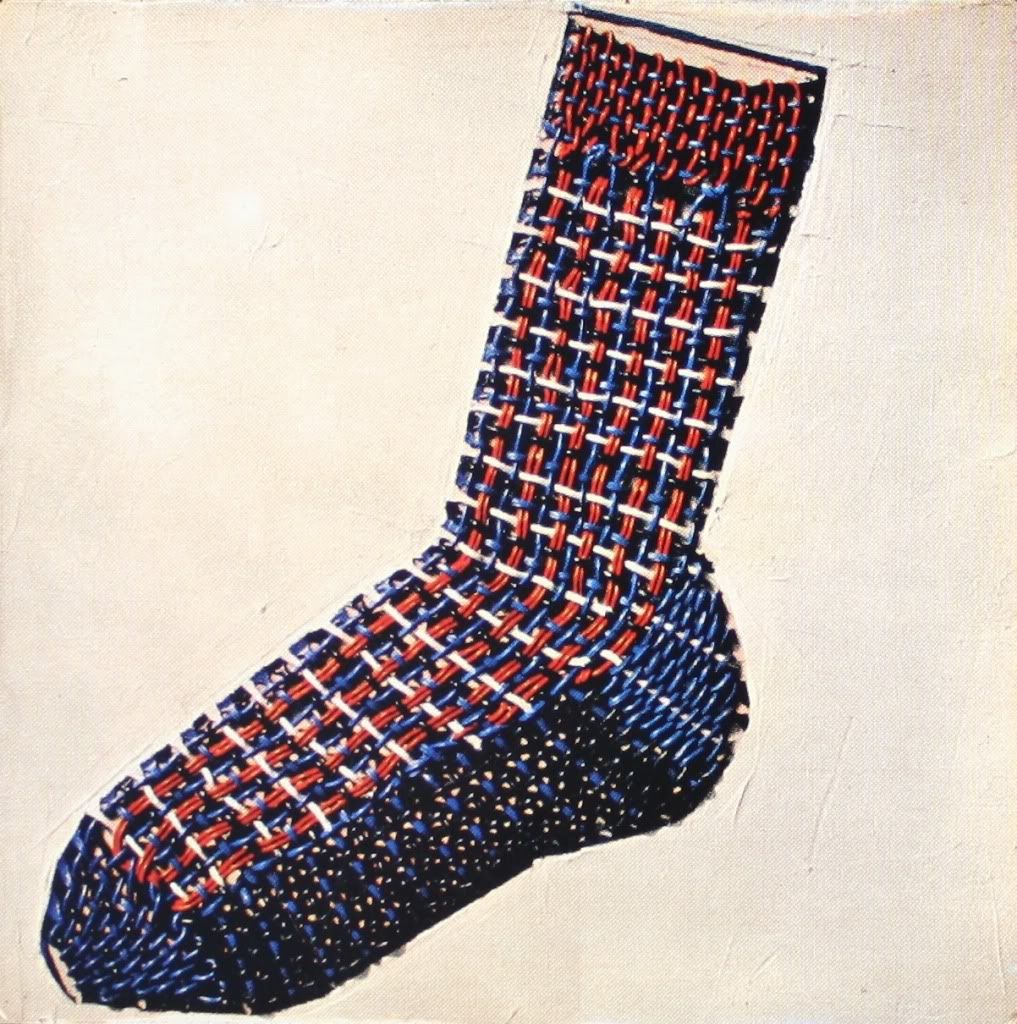
Henry Cow - Leg End


There is apparently some debate as to whether Henry Cow can accurately be deemed part of the Canterbury scene as an actual physical scene, but to me they're both clearly a part of the scene (due to guitarist Fred Frith's geographical origins and the band's association with Robert Wyatt both live and on his Rock Bottom and Ruth is Stranger than Richard albums) and part of the Canterbury scene as a genre of music that blends rock, jazz, folk, experimental and a playful sense of whimsy.  Henry Cow is one of my favorite groups in or out of the Canterbury scene for the complexity and dense melody of their music, the way each member of the group contributes in an identifiable and irreplaceable way, for the way they blend avant-garde compositions with improvised music across their sparse but evolutionary discography, and for the fact that their music remains challenging but listenable no matter how many times I return to it.

Leg End is the band's 1973 debut--it doesn't take too many seconds after the rimshot that kicks off "Nirvana for Mice" before it's obvious that Henry Cow is probably the Canterbury band most influenced by avant-garde modern classical music, which shows in their compositions' weaving concentric circles of odd-metered counterpoint as well as a hefty dose of atonality and dissonance lurking behind and within the jazzy melodies.  The sound is saxophone-heavy, with at least two horns at most times, and Fred Frith's guitar is often double-tracked, while some synthesizer fills in the background not covered by the manic drums and restlessly probing bass lines.  "Nirvana..." sort of sums up a good part of the band's mission on Leg End, consisting of a vibrantly intricate composition which quickly dissolves into a jam over which Geoff Leigh's saxophone runs rampant in an ecstatic free jazz testimony.  Interestingly, the rest of the group's vamping mechanism during Leigh's solo acts as a sort of improvisational version of the composed sections, as each band member sticks with a different meter and improvises accompaniment.  The parts interweave, at times synchronizing and at other times sounding rather tenuously held-together.  For me, it's exhilarating.  If you weren't already awake, the song-ending staccato blast will ensure either your attention or annoyance (these guys are admittedly not for everyone).

The rest of Leg End follows a similar path, though there is a superabundance of ideas, great variety in mood and melody, and some more surprises in instrumental arrangements, including flute, clarinet and Frith's violin.  The Tim Hodgkinson-penned "Amygdala" boasts an ever-shifting melodic structure that dabbles in the types of Renaissance style that is Gentle Giant's stock in trade, while the dark and cacophonous "Teenbeat Introduction" goes further down the free jazz rabbithole before swelling gloriously into Frith's "Teenbeat" composition.  "The Tenth Chaffinch" sounds very much like one of the group's live improvisations (mostly unreleased until the release of the box set The Road), blending musique concrete (pre-recorded sounds) with totally atonal, unstructured improvisation.  The album closes with an odd track, "Nine Funerals of the Citizen King," which actually features a vocal arrangement.  Though the music is extremely dense (perhaps even impenetrable on first listen), further listening reveals melodic motifs that pop up in "Teenbeat" and return again throughout "With the Yellow Half-Moon" and again in "Nine Funerals..."

For me, Leg End and the rest of Henry Cow's discography represents the real deal when it comes to progressive music--genre is irrelevant, and the band unflinchingly incorporates modern musical concepts into a sound that assaults the ear with surprises at every turn but remains a fun and energetic (especially Chris Cutler's drums, which rival Robert Wyatt's Soft Machine-era drums in energy and creativity) listen with innumerable moments of twinkling beauty.  I've heard the band's earlier material compared with Frank Zappa and the Mothers' albums from the same period, and while I can see a general stylistic similarity (jazzy, complex compositions, lots of noise and craziness), Henry Cow sounds so much more out-of-this-world and surprising to my ears, while Zappa's compositions (and especially his guitar playing), idiosyncratic as they are, always remind me directly of something I've already heard before.  This album is the perfect example of music that doesn't need lyrics--when it sounds and feels this indescribable, why limit it with the trappings of lyrics?

The whole Henry Cow discography can be found at Recommended Records, which is owned and operated by drummer Chris Cutler, or here, if you don't want to pay in GBP.