Showing posts with label Country. Show all posts
Wednesday, October 26, 2011
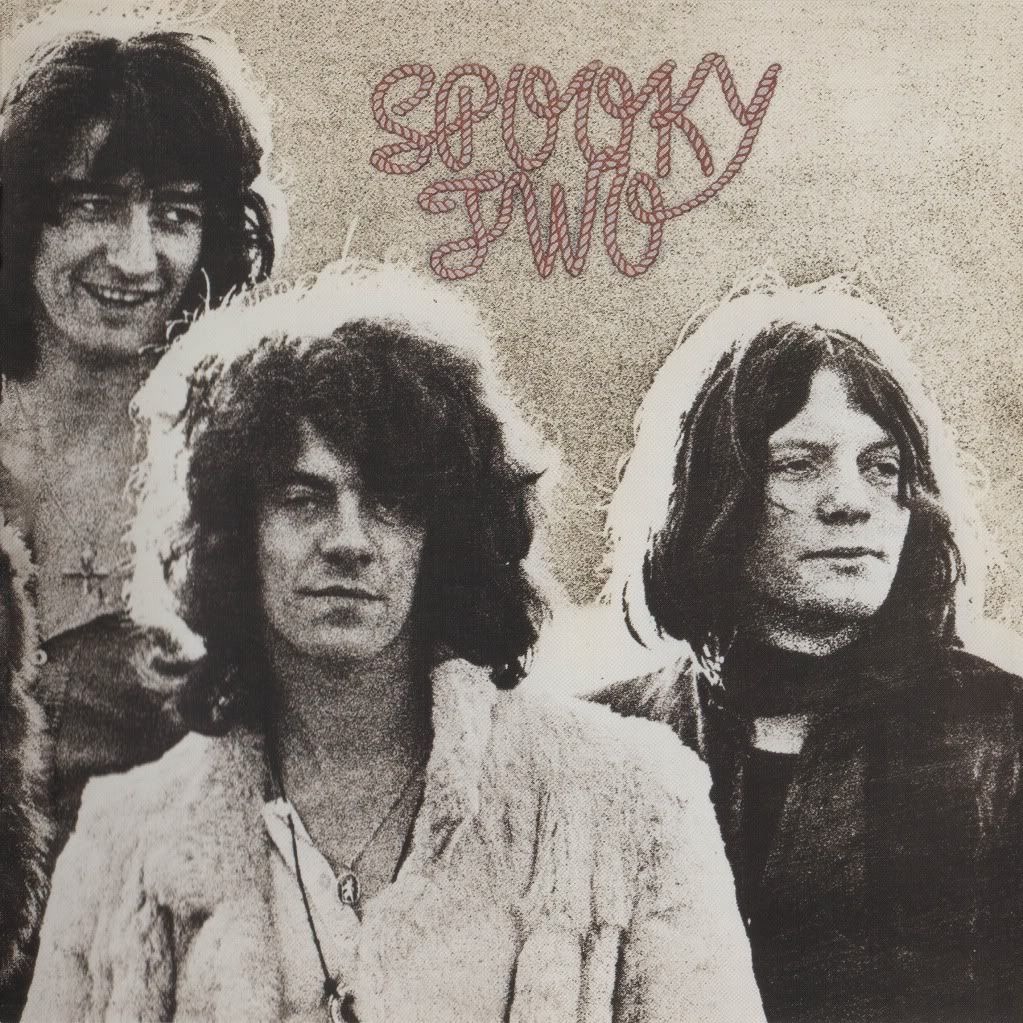
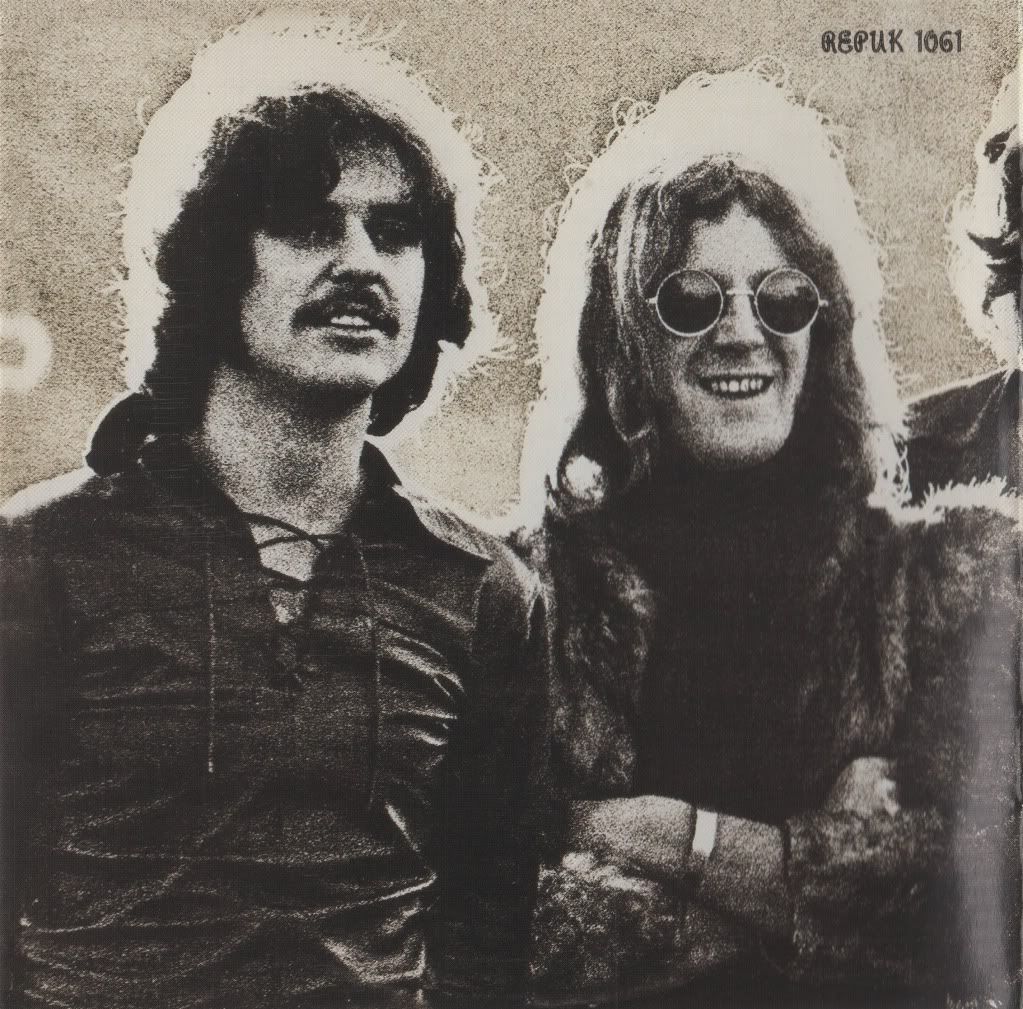
Spooky Tooth - Spooky Two
Spooky Two's 1969 sophomore effort definitely stands as one of those albums I've listened to so many times that it gets more difficult to back away and think analytically about it. Revisiting it, though, I'm reminded just why I've listened to it so much--it's pretty awesome. While late 60's hard rock isn't everybody's flavor of choice in 2011, for those who enjoy it I can think of few forgotten bands who do it as well as Spooky Tooth.
What I notice most re-listening to this is how well everything comes together to make the album comprehensively strong. In the end, it's not really an album where the quality of the songs carries the music past the performances or the production masks a lack of passion or attention to detail in arranging. Rather, all of these elements are paradoxically workmanlike yet outstanding in the way they complement each other and the overall cohesion of the album. Take, for example, the lead-off "Waitin' for the Wind," (I love how musicians are never satisfied with just dropping the "g" when singing; they have to make sure the word ends in an apostrophe in the song title, even when the words aren't actually in the song). It's the perfect opener--30 seconds of drum beat that gets some delay slapped on it around the 20 second mark, and finally a bass/organ riff that sounds like the heaviest thing you've ever heard. Dual vocalists Mike Harrison and Gary Wright start singing about...well, nobody really knows what the hell they're singing about on most of these songs (something about the wind giving the narrator life advice), but it sounds awesome because they sing with such undeniable conviction. For such a hard-rocking song, there's hardly any guitar--just on the chorus, where heavily-reverbed harmony vocals lift the energy above the already-driving main groove. Such is the strength of this whole album--the band hits the sweet spot in all areas without really standing out in any one of them. As far as I'm concerned, that's as worthy a musical goal as any, and a thoroughly excellent album is probably one of the hardest achievements to rack up.
Sound-wise, Spooky Tooth sets themselves apart from the rest of their UK contemporaries by slathering their sound with heavy gospel influences (the aforementioned reverb, female backing singers and a whole lot of keyboards) and maintaining a fine balance between eclectic songwriting and a cohesive, recognizable sound. The gospel influence comes through strongest in "I've Got Enough Heartaches," where the backing vocalists share center stage as much as Harrison and Wright, and to a somewhat less classifiable extent on "Feelin' Bad," where the band wrings unbelievable heaviness out of the production and low piano keys. Elsewhere, though, the band diverges quite successfully into poppy country rock, catchy hard riffing, anthemic folk rock, and heavier vestiges of the psychedelia of their nearly-as-formidable debut, It's All About Spooky Tooth. Principal songwriter (and the band's only American member) Gary Wright (yes, that Gary Wright) certainly deserves credit for bridging so many styles, even if he now feels embarrassed by his falsetto singing. On that subject, half the fun here comes from the juxtaposition of Wright's ridiculous head voice and Mike Harrison's awesomely thick, manly and soulful pipes (he's got one of the best rock voices I've ever heard, somehow able to out-Steve-Mariott Steve Mariott, at least in the vocal department). On the subject of dual lead singers, nowhere is this more righteous than on "Evil Woman," (no, not that "Evil Woman"), probably the album's most epic cut. The song also features what's really the only guitar solo on the album, which reminds me of my original summation of this album's balance--Grosvenor's solo is so wickedly grimy that it proves his chops in one fell swoop, yet the band as a whole acknowledges that the rest of the songs don't really call for solos and refrain from any excessive lead parts. It's this restraint that I find most inspiring about this album--the ability to recognize what's actually best for the songs and the overall album isn't an easy one to acquire, and it elevates these guys from a second-tier group of rock journeymen to a level of judgment few big stars ever even reach.
Sadly--if predictably--the band's creative balance didn't last, with The Last Puff proving Harrison couldn't really hold up the whole band without Wright's vocal counterpoint and songwriting, and Witness showing that the duo's chemistry alone couldn't really make up for less-inspired writing from Wright and the absence of some original members. As it stands, Spooky Two is a treasured example of everything coming together for a group, and--perhaps even more importantly--it's a glaring reminder that the conservative collection of mega hits packaged and branded by music and radio corporations as "classic rock" isn't doing us any favors when it comes to revealing the totality of good music that was produced during the period. Shame on them for making us work so hard, but the effort is worth it when you find albums as good as this!
Monday, October 17, 2011
Red Simpson - Roll, Truck, Roll
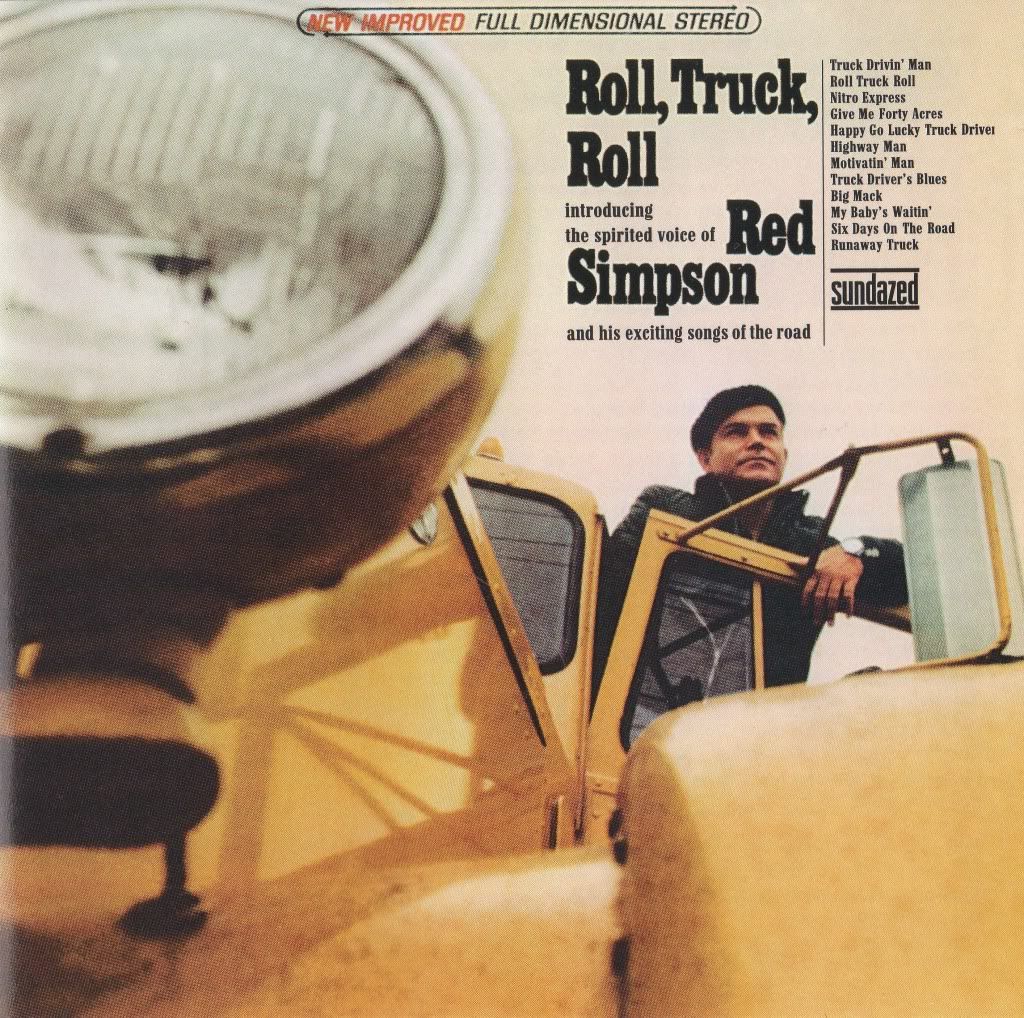
It's been far too long since I've done any country, so here's one of my favorites. Though Red Simpson's not as well-known as the dual kings of Bakersfield (Buck Owens and Merle Haggard), you won't find an album that exemplifies the Bakersfield sound more than 1966's Roll, Truck, Roll. In my mind, there's never been a novelty album that's been so thoroughly gimmicky and musically righteous in every way.
Like the cover says, this album presents "exciting songs of the road" as sung by Simpson's "spirited voice"--each and every one of the 12 songs is about truck driving, and every time I listen to this album I'm astounded how comprehensively and realistically the subject is explored. For starters, we get just as many songs detailing the loneliness and soulful isolation of the road (the title track, "Truck Driver's Blues," "My Baby's Waitin'") as we do about the joy and freedom of living life on the move ("Truck Drivin' Man," "Happy Go Lucky Truck Driver," "Motivatin' Man"). Elsewhere, there's colorful kernels of the truck driving life sprinkled like party favors--three songs about runaway trucks, a jackknife incident ("Give Me Forty Acres"), a truck stop ("Big Mack"), a run-in with the law ("Highway Man"), and even a reference to stimulants in "Six Days on the Road." For what's ostensibly a novelty album, there's some real emotion behind some of these songs, like the traditional spoken monologue on "Roll, Truck, Roll" where we're sat right there in the passenger seat as the narrator talks about how his son hardly knows him and spends all of his time drawing pictures of trucks. Dig the end of the monologue when Simpson says "I've got to keep my spirits up, so I guess I'll sing a little more" and launches back into the chorus--now that's great songwriting. What really pulls it together is Simpson's everyman voice--he actually sounds like he could be a truck driver, delivering lines both heart-wrenching and hilarious in an unadorned and matter-of-fact style that fits the subject matter perfectly.
In other places the band delivers plenty of other classic country tropes, like substituting a honk for the word "hell" on "Give Me Forty Acres," imitating a siren with steel guitar on "Highway Man," and founding choruses on cheesy jokes like in "My Baby's Waitin'" when Simpson croons "It won't be long till I get there, holding the one who's true/'cause old steering wheel, I'm getting mighty tired just holding on to you" and on "Big Mack" when a lovestruck truck driver mixes up the food items in his breakfast order. Throughout the set the musicianship is top notch--both the six-string lead guitar and steel guitar are great, and there's even a bunch of great piano that accentuates the jazziness of songs like "My Baby's Waitin'" and especially the honky-tonk bounce of "Motivatin' Man," "Big Mack" and "Truck Drivin' Man." When it comes to addictive melodies and upbeat, catchy Bakersfield rockers, I can think of few better collections of foot-tappers. For a branch of country that seems to have precious few real examples, Red Simpson's debut is a precious and worthy addition to the pantheon. I suggest we follow his orders, put a quarter in the jukebox and play "The Truck Drivin' Man."
Tuesday, October 4, 2011
The Band - Music From Big Pink
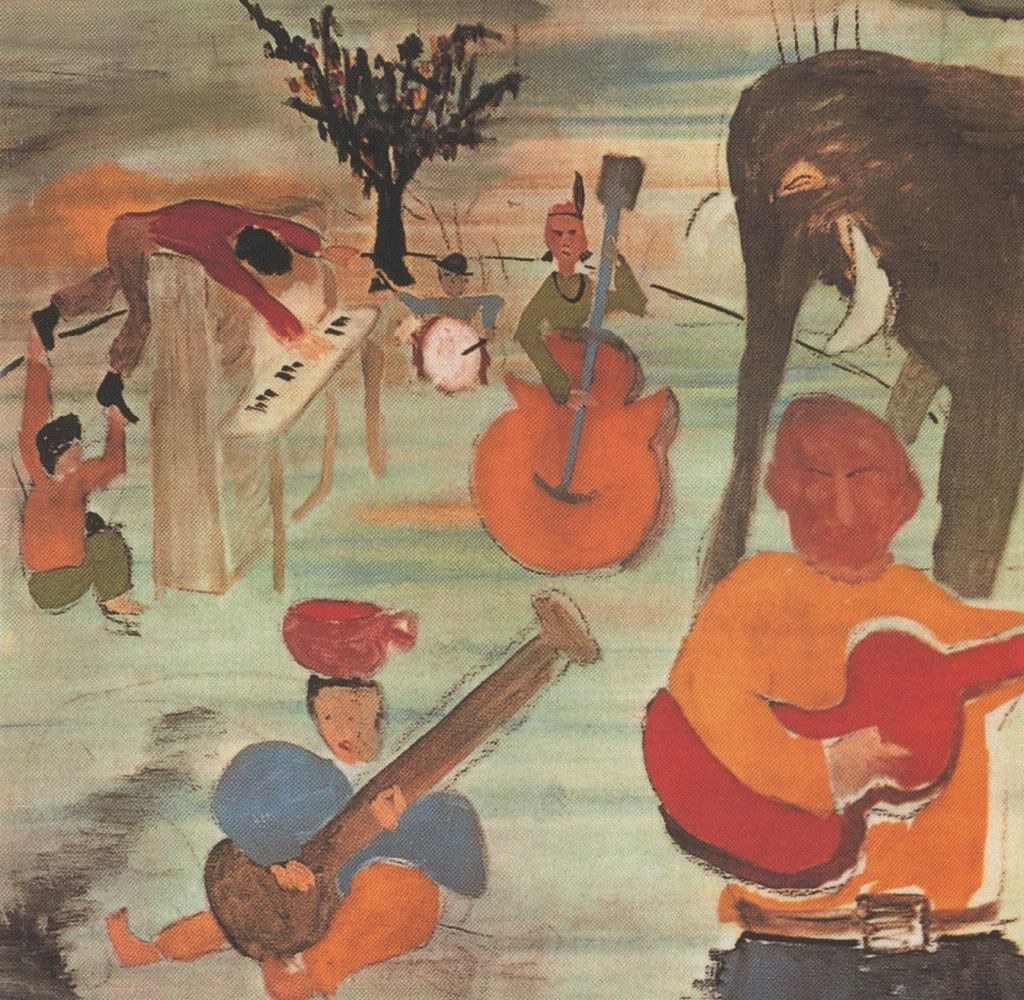
When it comes to The Band, Music From Big Pink is simultaneously the most obvious and most misleading place to start. For a group that most writers describe with a heavy dose of historical context and mythology, it can be difficult to separate both the association with Bob Dylan that preceded this album and the widespread fame and musical accomplishments to come from the actual music contained herein. After long years of fandom and complete subsumption into these sounds (The Band's first three albums still sit firmly atop my iTunes play count list) I find it a little easier to bracket the legendry and approach the music directly, which has in turn led to an odd sort of historical contextualization in my own mind.
Part of the reason I've chosen to review Music From Big Pink is that I've recently spent an inordinate number of keystrokes bitching about musicians not working hard enough to make music that is completely unprecedented when, in fact, I don't believe that that's the only valid approach to music-making. Case in point, The Band--sure, they laid down some undeniably innovative songs and sounds (though it's arguable that it was a little easier to innovate within a roots rock context back in 1968), but really their genius lies in those pedestrian virtues of group interplay, emotional delivery and great songwriting. Such is the individual instrumental idiosyncrasy and group chemistry of each band member that even their worst albums are at least pleasant listens, and at their best, hearing Richard Manuel, Rick Danko and Levon Helm rotate in between lead and backing vocals, and hearing everyone swap instruments with carefree abandon to serve each song becomes a dizzying and rapturous spectacle. Naturally, it helps that the songs are uniformly great--Dylan/Manuel's "Tears of Rage" becomes a New Orleans dirge when Manuel's Canadian Ray Charles falsetto and Danko's aching harmony blends with a weepy horn arrangement, while Manuel's own "Lonesome Suzie" puts Manuel's pathos center stage but wryly winds into a pickup line by the song's end.
The group also betrays a budding interest and capable hand at country and folk on "I Shall Be Released," "The Weight," and a definitive version of "Long Black Veil," which the group immeasurably elevates with the addition of electric piano and the multi-textured combination of Rick Danko's mournful lead with Helm's twang and Manuel's ethereal top third. This is exactly what I'm talking about--if you're this good at simple melody, harmony and straightforward songwriting, why would you even feel the need to subvert the basic principles of pop music-making? The problem is, the vast pack of songwriters and performers (both past and present) attempting to achieve transcendence with these simple elements just don't have the knack, the ear, or the equipment to pull it off and end up blending genially but forgettably with the rest. There are very good reasons why a song like "The Weight" never sounds as good note-for-note on The Band cover albums, without Danko's quivering, that thunderous Danko/Helm bottom and Garth Hudson's all-penetrating class on those honky-tonk octave piano runs (Hudson, by the way, just might be the group's musical linchpin, somehow molding his erudite classical and jazz chops with the rest of the group's self-trained abilities so effortlessly that it's easy to forget that most in his position can't overcome the rigidity of their academic training).
The songs that really sustain my fascination these days, though, are the gnarled, weird ones--the pseudo-Baroque psychedelic dreamland of "In A Station," the reeling melancholy and bluesy escapism of "Caledonia Mission," and especially the lurching transitions between pounding rock and some some kind of drunken, swinging R&B or jazz on "We Can Talk" and "Chest Fever," the latter of which unites Hudson's icy classical Lowrey organ tones with some of the album's funkiest riffing before the aforementioned teetering interlude. With all of the genre blending, strange musical cul-de-sacs and weirdness, I'm tempted to even refer to this music as progressive in a very literal sense. Across the board, the group's (and Dylan's) lyrics perfectly match the album's off-kilter tendencies, combining religious and rural imagery with fragmented, hazy narratives--never quite telling a whole story, but choosing just the right words to evoke endless speculation and fascination--and somehow the skills of the three talented but discretely idiosyncratic vocalists overcome the sketchiness of the words to create authentic emotional depth, every single time.
As I mentioned earlier, I've personally come to view this album in a historical context different from the received narrative; for me, the most engaging progression between The Band's albums is the creative one, in which Music From Big Pink occupies a totally unique place. While mid-career (and especially nowadays) The Band became known for reassembling an appealingly anachronistic vision of "Americana" in a rock music context, there was a time before the formula that would later limit the group was standardized and the songwriting and playing was considerably more impulsive. If there's one endearing flaw to The Band's music, it's got to be Robbie Robertson's tendency toward a slightly academic, contrived feel when it comes to his attempts to imagine himself into old-timey America, which I think pops up quite often and became a songwriting crutch later in his time with The Band, especially as the songwriting workload became increasingly his responsibility. With Music From Big Pink, though, there's a sense of innocence and freshness in the approach that arguably exists only on this album (and maybe on The Basement Tapes). In spite of years of experience professionally touring, the group was on its maiden voyage as a project imbued with creative vision, and their lack of exposure and the album's long creative gestation made for a wholly eccentric debut. I think it's this fact coupled with the bizarre mix of Dylan's influence, country, soul, folk, rock, beat poetry and searching that make Music From Big Pink The Band's least accessible album. Before critics and the public consistently (if somewhat quietly) applauded the album's merits and the group decided to continue further down the nostalgic rural America avenue on their second album, there was just a group of musicians who realized that they could do anything they wanted with the songs they were writing and playing. It really shows in the fact that the songs are uncompromisingly quirky, but the guys play them like they really mean it. As the group's tenure progressed, this freshness and excitement was gradually replaced by a workmanlike attempt to recreate the elements about their most-loved songs, and while they repeatedly succeeded in creating deeply resonant, emotional music, they never again reached this album's peaks of unspoilt spontaneity of vision.
Saturday, August 13, 2011
Nina Nastasia - The Blackened Air
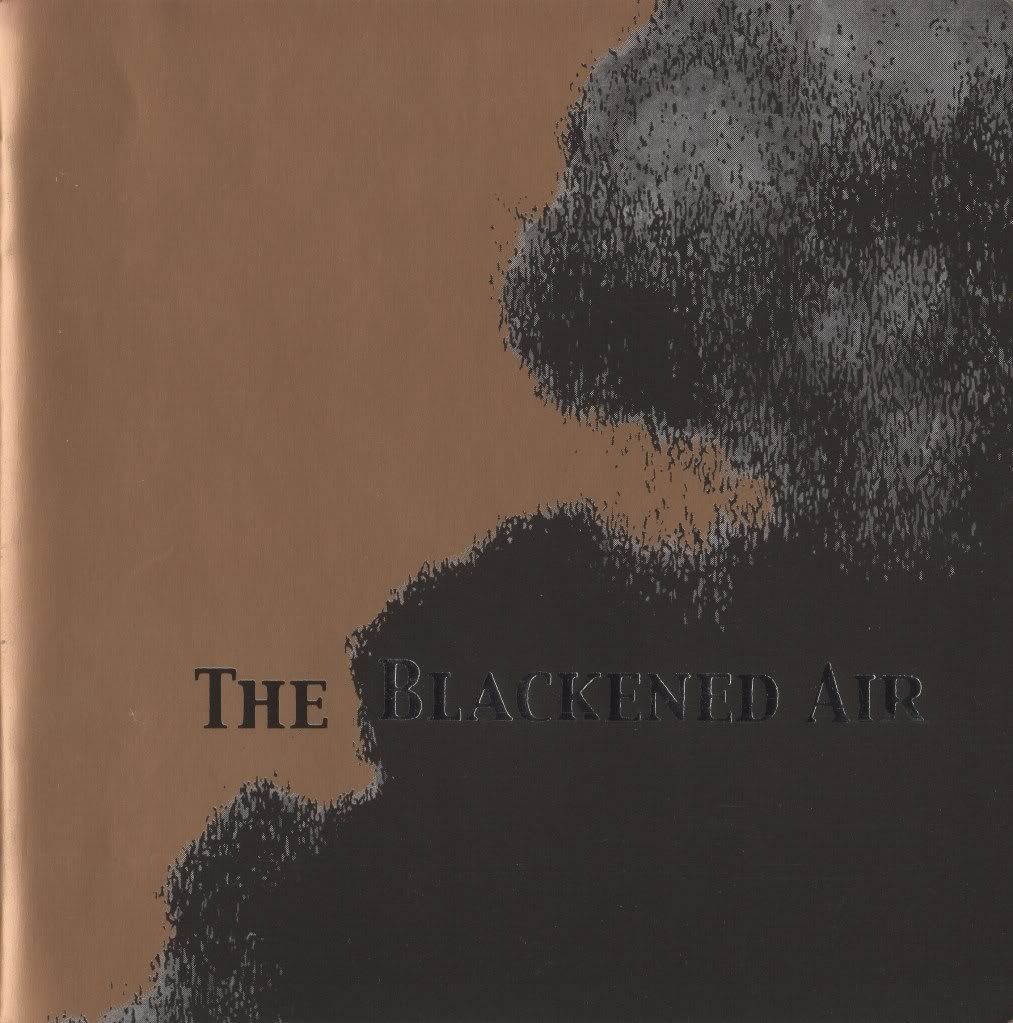
I can think of few better examples of album art that evokes the sounds contained within than Nina Nastasia's 2002 sophomore effort, The Blackened Air. There's a smoky duskiness that's always prevalent in her music, lingering and diffuse like the on the cover. And yet, there's also a contrasting sort of autumnal warmth that takes the edges off her dark ruminations and the desolate moments she highlights in clock-stopping detail.
Nastasia seems to be a rarity in today's "Americana" landscape insofar as she's been doing this since the late 90's (well before the current fad took off) and there's very little artifice in her delivery and the sentiments expressed in her songs. Rather than affecting a fake southern accent on songs like the Appalachian-esque "Oh, My Stars," and the the twinkling "All For You," her wispy vocals tell the story with pure tone and no trace of a cheesy accent. The former is a great example of Nastasia's graceful songwriting--the song conjures a vibrant sense of the moment, describing the fall of an icicle before getting to the real subject, the discovery of and the narrator's father's pursuit of a peeping Tom in the night. Throughout The Blackened Air Nastasia proves particularly adept at spinning whole stories out of short moments. The ability to improve storytelling by leaving out details is one that not every songwriter can pull off, but Nastasia manages to successfully employ the technique to juxtapose a cemetery visit with memories of childhood games ("In the Graveyard"), evoke the irony and resentment of relationship subservience ("I Go With Him") and to blur the lines between external and internal antagonism (the delightfully dirge-y waltz, "Ugly Face").
Though a quick perusal of YouTube reveals that Nastasia's songs lose none of their power in a live setting, one of my favorite parts about this album is how well-done the arrangements are. The songs are loaded with cello, violin, musical saw, accordion, mandolin and the more traditional sounds of guitar, bass and drums. So much Americana I've heard treats strings like a novelty, but here they provide both atmosphere (probably the easiest thing to accomplish, especially with amateur string players), but also melody and harmony that accentuates Nastasia's spare but repetitive two- or three-note rhythm guitar phrases. The noise is glorious on the opener, "Run, All You..." when the barely audible opening gives way with a crash as Nastasia states the album's title with a forcefulness belied by her usual vocal delicacy. Sometimes they do both, as on the album's centerpiece and emotional nadir, "Ocean," where the the cello is variously a source of cacophony in the song's first crescendo, a gentle pizzicato companion to Nastasia's voice that builds into broad, deep strokes for the second crescendo, and a trove of texture for the uncertain aftermath that draws the song to a close.
Among Nastasia's growing discography, I like The Blackened Air maybe the best, since its occasional cacophonous darkness points the way to her next album's (Run to Ruin) more thorough examination of those textures while at the same time retaining the recognizable folk and country tropes that made her debut, Dogs, such an accessible introduction. I'm also always impressed by the brevity of Nastasia's songs--she packs so much into so little space by building her songs with gossamer threads. There's very little in the way of identifiable verse/chorus chunkiness, though those elements are often present. Though the album is quite thoroughly dark, there are moments of bright beauty and joyousness that certainly prevent a monochromatic mood. Though she's managed to keep a mostly cult-level profile despite 10+ years making music, I still think Nastasia is one of the most sophisticated songwriters working in her field, and a damn sight more inventive when it comes to artistic integrity and vision.
Nastasia seems to be a rarity in today's "Americana" landscape insofar as she's been doing this since the late 90's (well before the current fad took off) and there's very little artifice in her delivery and the sentiments expressed in her songs. Rather than affecting a fake southern accent on songs like the Appalachian-esque "Oh, My Stars," and the the twinkling "All For You," her wispy vocals tell the story with pure tone and no trace of a cheesy accent. The former is a great example of Nastasia's graceful songwriting--the song conjures a vibrant sense of the moment, describing the fall of an icicle before getting to the real subject, the discovery of and the narrator's father's pursuit of a peeping Tom in the night. Throughout The Blackened Air Nastasia proves particularly adept at spinning whole stories out of short moments. The ability to improve storytelling by leaving out details is one that not every songwriter can pull off, but Nastasia manages to successfully employ the technique to juxtapose a cemetery visit with memories of childhood games ("In the Graveyard"), evoke the irony and resentment of relationship subservience ("I Go With Him") and to blur the lines between external and internal antagonism (the delightfully dirge-y waltz, "Ugly Face").
Though a quick perusal of YouTube reveals that Nastasia's songs lose none of their power in a live setting, one of my favorite parts about this album is how well-done the arrangements are. The songs are loaded with cello, violin, musical saw, accordion, mandolin and the more traditional sounds of guitar, bass and drums. So much Americana I've heard treats strings like a novelty, but here they provide both atmosphere (probably the easiest thing to accomplish, especially with amateur string players), but also melody and harmony that accentuates Nastasia's spare but repetitive two- or three-note rhythm guitar phrases. The noise is glorious on the opener, "Run, All You..." when the barely audible opening gives way with a crash as Nastasia states the album's title with a forcefulness belied by her usual vocal delicacy. Sometimes they do both, as on the album's centerpiece and emotional nadir, "Ocean," where the the cello is variously a source of cacophony in the song's first crescendo, a gentle pizzicato companion to Nastasia's voice that builds into broad, deep strokes for the second crescendo, and a trove of texture for the uncertain aftermath that draws the song to a close.
Among Nastasia's growing discography, I like The Blackened Air maybe the best, since its occasional cacophonous darkness points the way to her next album's (Run to Ruin) more thorough examination of those textures while at the same time retaining the recognizable folk and country tropes that made her debut, Dogs, such an accessible introduction. I'm also always impressed by the brevity of Nastasia's songs--she packs so much into so little space by building her songs with gossamer threads. There's very little in the way of identifiable verse/chorus chunkiness, though those elements are often present. Though the album is quite thoroughly dark, there are moments of bright beauty and joyousness that certainly prevent a monochromatic mood. Though she's managed to keep a mostly cult-level profile despite 10+ years making music, I still think Nastasia is one of the most sophisticated songwriters working in her field, and a damn sight more inventive when it comes to artistic integrity and vision.
Monday, March 14, 2011
Merle Haggard - Sing Me Back Home
As whole albums go, Sing Me Back Home is a relatively minor entry into Merle Haggard's early catalog. Most of the early Capitol Hag albums are built around a hit, a few potential hits, and some filler. While you can't name a 60's Merle Haggard album that I don't enjoy from beginning to end, it's true that the good stuff is more concentrated on some albums than it is on others. In other words, an album stands or falls based on the quality of the filler, and Sing Me Back Home has quite a bit more filler than it has potential hits.
The title track is nice and solid--stately and emotional, with a sort of anthemic quality that's a new thing for Haggard at this point in his career. There are a couple of good drinking songs--"Wine Take Me Away" and the heartbroken "I'll Leave the Bottle On the Bar," as well as the catchy mid-tempo "Where Does the Good Times Go?" "Seeing Eye Dog" is the most Bakersfield-sounding track on the disc and probably my favorite, with a pounding tempo, nimble steel guitar and some powerful vocals from Merle. Add to the list the well-handled novelty tune "Son of Hickory Holler's Tramp" (it's a surprisingly jolly tune about an abandoned single mother who provides for her 14 children by becoming a prostitute) and you've hit the album's brightest spots, songwriting-wise. Elsewhere Merle mines the songs of his Bakersfield forbears, with the somewhat out-of-place "Mom and Dad's Waltz" and tosses off the similar yet similarly out-of-place "Home is Where a Kid Grows Up." Songs like "Look Over Me," "If You See My Baby" and "My Past is Present" lack the wit, verve and hooks of their like on earlier Hag albums, though there's nothing objectively wrong with them.
Still, Sing Me Back Home is an enjoyable listen irrespective of the quality of the individual songs--the production is sterling, with a lot of close-miked guitars, drum kits and backing vocals, and Merle's vocals are worth paying close attention to for an entire listen for the depth of nuance and subtle emotion; he's not quite singing the phone book, but it's clear that his (and his band's) abilities as performers are capable of elevating material much higher than its weaknesses would seem to allow.
Get it here on CD or MP3
Monday, March 7, 2011
Merle Haggard - Strangers
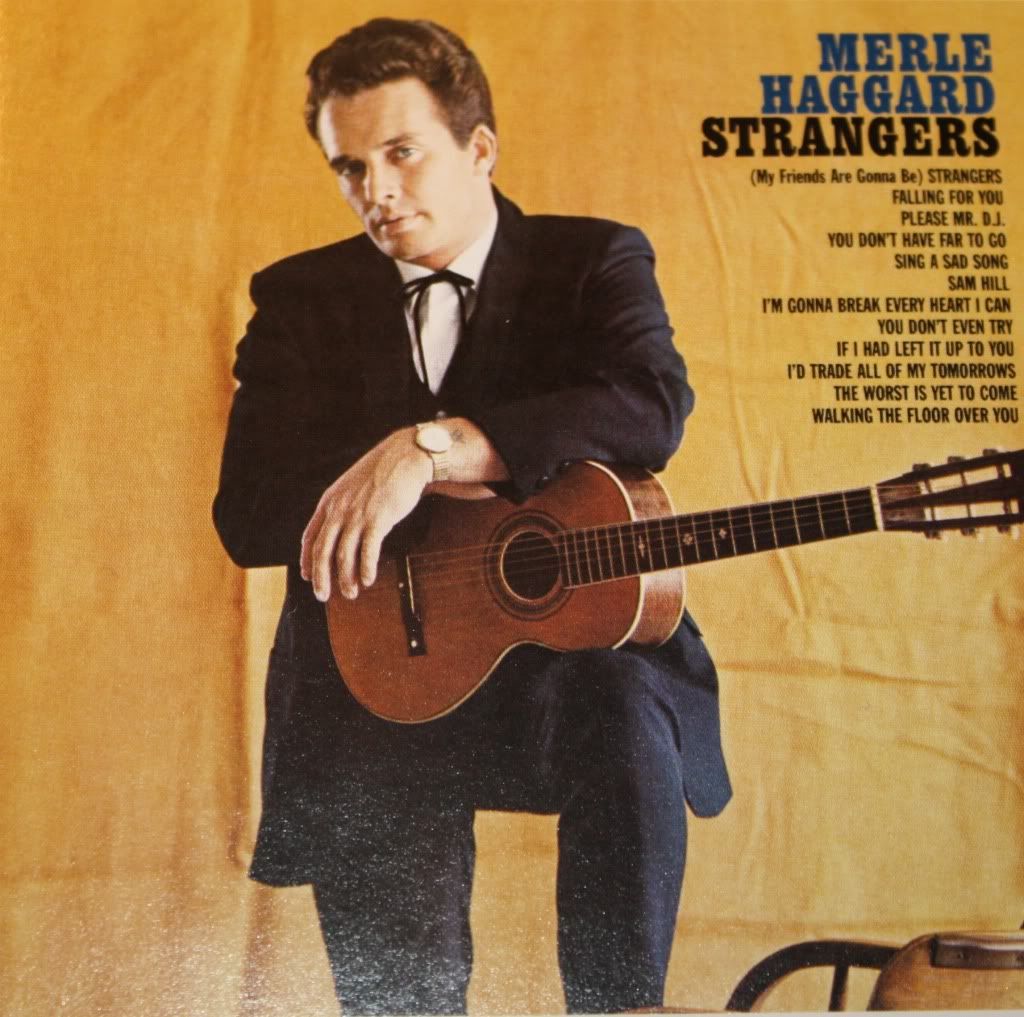
Take a look at Merle Haggard on 1965's Strangers: even with that silly tie and leaning on that tiny guitar, he already knows he's a badass. As might be expected, though, the full flower of Merle's greatness hasn't quite bloomed on this, his debut. To my ears the reason is a combination of production/style and material. It's pretty clear that Merle's being pitched as more of a crooner, with an emphasis on ballads and smooth melodies--too often the arrangements include big string arrangements and Nashville Patsy Cline-style backup singers, and the amount of reverb would suggest that Merle was performing inside a cave. In retrospect it's easy to criticize the production choices, but it's worth mentioning that the more muscular Bakersfield brand of country that became Merle's signature was still in its very early stages in 1965--though Together Again/My Heart Skips A Beat had already been released in '64, there wasn't much precedent for the Bakersfield lightning bolt Haggard was about to call down in 1966's Swinging Doors and The Bottle Let Me Down.
So, that brings us to the material. There are a handful of good-to-very-good songs, my favorites being "I'm Gonna Break Every Heart I Can" (or my name ain't Merle), the ridiculously awesome vocal on "Sing A Sad Song" (probably the only place where the crooner image actually fits), the title track, and "You Don't Have Very Far To Go" (for some reason Merle's recorded this song on at least three studio albums; my favorite version is on Branded Man). Oh yeah, we also get a dynamite song title--"The Worst is Yet to Come." There are a few bombs, too, like the novelty tune "Sam Hill," and a few bland ballads like "Falling for You" and "You Don't Even Try." Merle's signature writing style was on its way to fulfillment, but he's only got writing credit on half of the songs, and it's pretty clear he didn't pick all of the covers (a glance at later albums' writing credits reveals that Merle had really good taste in filler; that's why the albums are so good). Instead of a classic Hag album, we get a soft launch; Strangers is a pleasant enough listen but I'm always left thirsting for a little more energy or a little bit better writing. Thankfully the next nine albums of originals deliver better on both counts every single time.
Get it here in CD or MP3
Monday, February 28, 2011
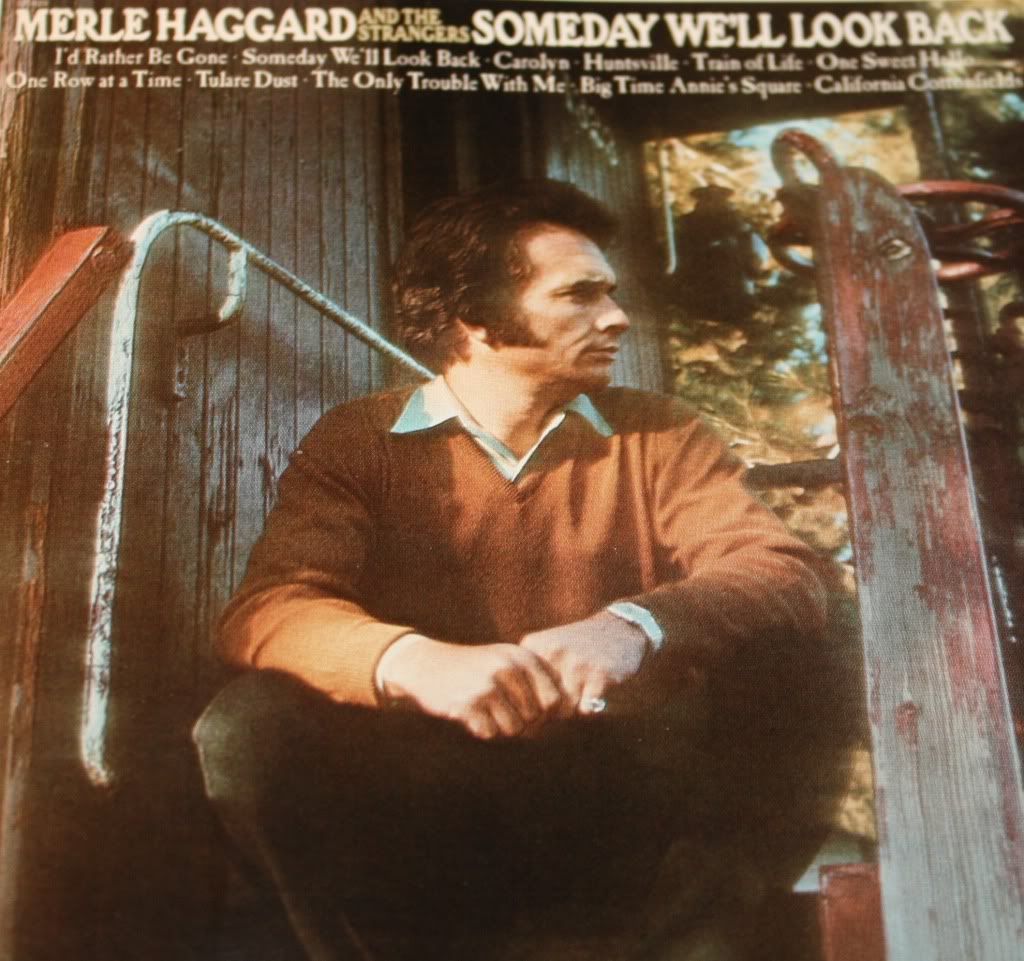
Merle Haggard - Someday We'll Look Back
Merle Mondays continue with the Hag's 1971 tour de force. As if releasing a progressive gem in Hag earlier in the year wasn't enough, Merle saw fit to bestow upon us an even better album of bewitchingly eclectic Bakersfield country in Someday We'll Look Back.
Although my favorite side of Merle is the hard-edged Bakersfield honky-tonk sound with lots of steel guitar, I just can't fault this album (or Merle's entry in the "widest sideburn in the world" competition). This album blends Merle's songwriting mastery (it's clear that by 1971 he'd achieved an uncommon level of assurance in his songwriting abilities) with some of his most mature vocals and a dizzying array of country blended from everything from Latin to blues on through to jazz, swing and even straight-up pop.
Though it's a mellow listen, this is classic Hag through and through--we get a dig at hippies in "Big Time Annie's Square," a badass prison song in "Huntsville" ("the man better keep both eyes on me/or they're gonna lose ol' Hag"), and some crushing heartbreak laments like "I'd Rather Be Gone." What really tugs at my heart strings, though, is the authentic nostalgia that pervades the whole set--from the hit title track to the wistful, bittersweet imagery of "California Cottonfields," "Tulare Dust" and "One Row at a Time," Haggard has a way of sizing up his past in such a way that the emotion and sense of remembrance is overwhelming--when Merle sings "California cottonfields--as close to wealth as daddy ever came," you know he lived it. There are Haggard albums I reach for more often, but this album is like a warm embrace from a relative you haven't seen in years.
Get it here on CD or MP3
Monday, February 21, 2011
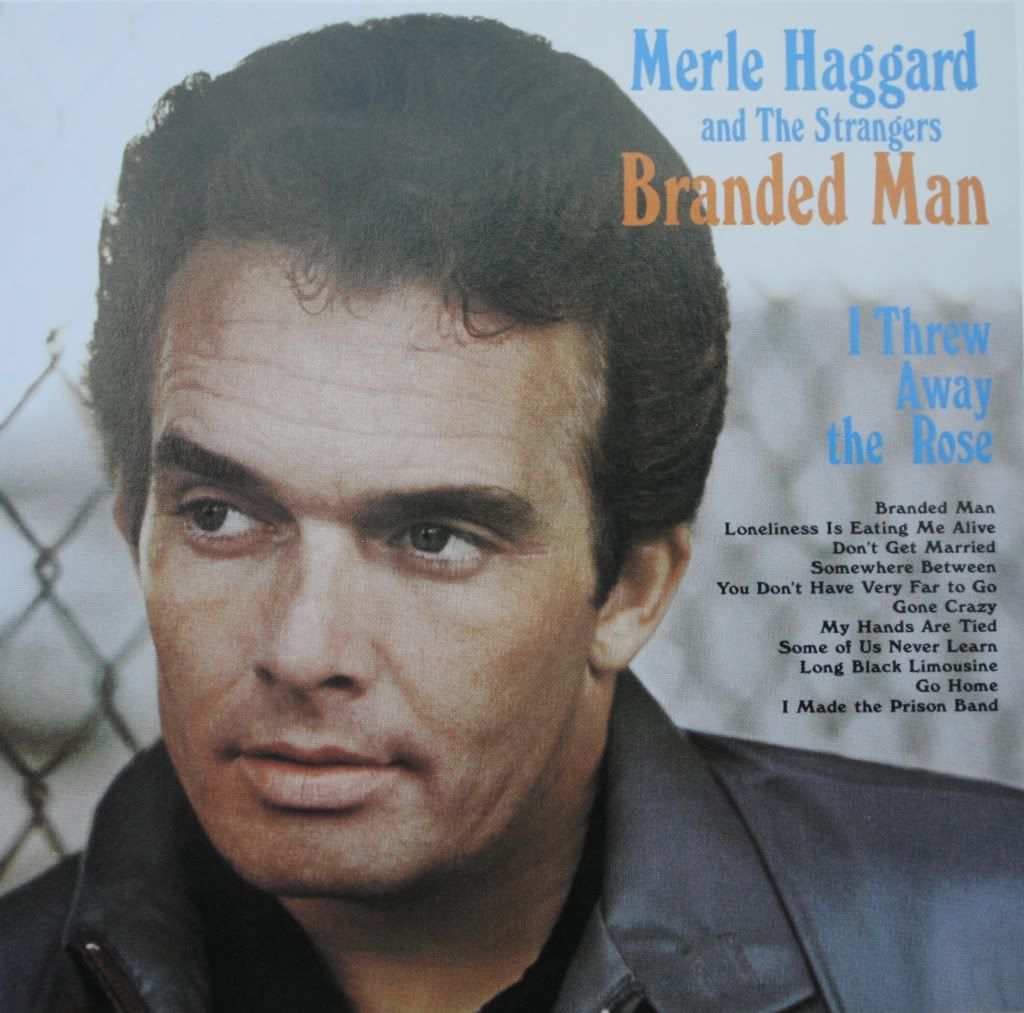
Merle Haggard - Branded Man
Yeah, that's right, there used to be such a thing as good country, and we're not talking about pill-popping tough-guy posers, we're talking about the guy who was in San Quentin for armed robbery when said legend performed there. In spite of his heavenly pipes, Merle has always resonated with me because of his realism and authenticity--he writes and sings about what he knows, most often drinking, heartbreak and jail.
Branded Man was my first Merle Haggard album and still one of my very favorites. Merle hits some glorious notes on this album both low (on "I Threw Away the Rose" and "Some of Us Never Learn") and high (on "Long Black Limousine" and "I Made the Prison Band"). A lot of these songs trade on the time-honored country trope of cheesy wordplay (a tradition that has somehow even remained in shitty contemporary country): lines like "If you're trying to break my heart/You don't have very far to go" are glorious in their down-home cleverness, while elsewhere Haggard, referring to his past days of wine and roses, admits with a straight face "I kept the wine and threw away the rose." There are many facets of this album's glory, from the track titles--some of which stand alone quite well--to the unbounded variety. Merle goes from classic Bakersfield honky tonk to jazz to Spanish-flavored and back again in a very short time, and the Strangers have no trouble adapting to the style changes. I swear, country music probably has the best session musicians out of any music genre. Though there are a couple of driving Bakersfield numbers, I wouldn't mind a couple more.
Get the CD or MP3s here
Subscribe to:
Posts (Atom)