Showing posts with label Poetry. Show all posts
Wednesday, May 16, 2012
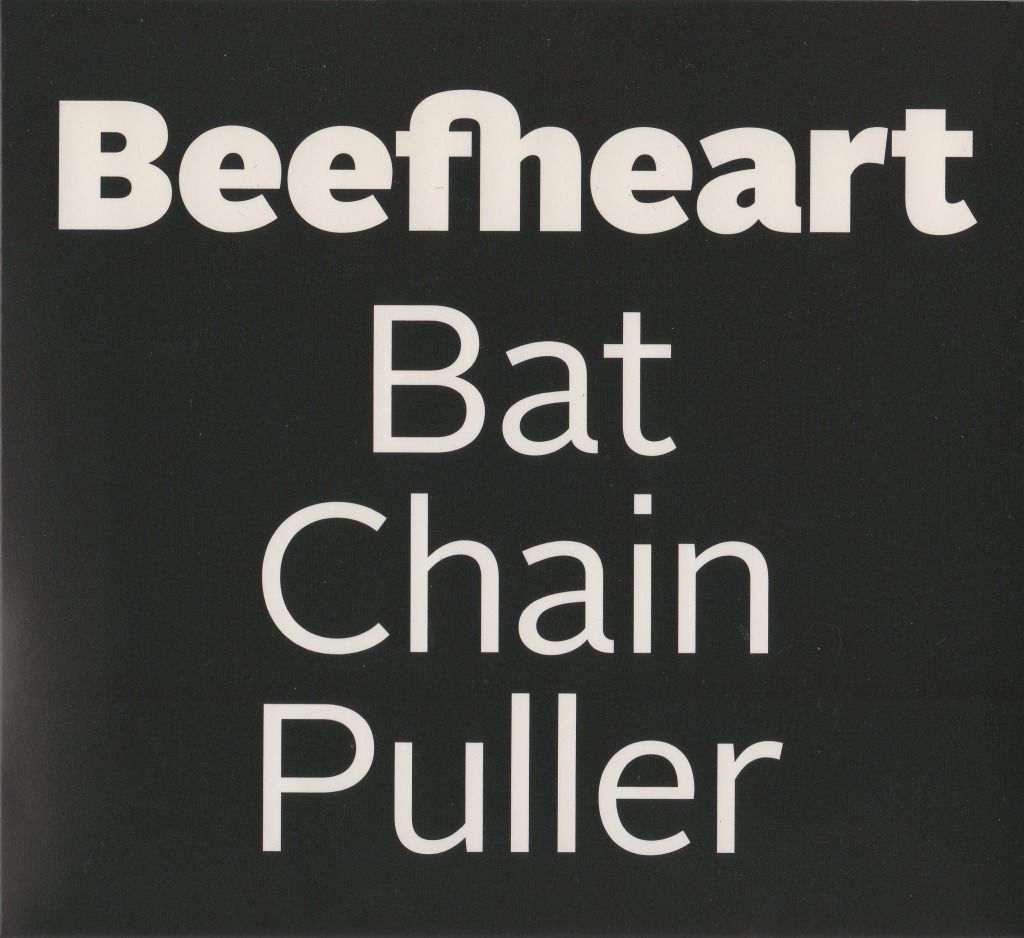
Captain Beefheart - Bat Chain Puller
It's been well over a year since I kicked off the reviews division of this site with a review of Captain Beefheart and the Magic Band's Shiny Beast (Bat Chain Puller), and considering how much the Captain's work has continued to influence my approach to music and writing I'm surprised I haven't waxed poetic about any of his other classic albums. Technically, today still isn't that day--I'm here to gush about the "brand new" 2012 Captain Beefheart release, the lost 1976 first studio version of Bat Chain Puller, just released this spring (to disappointingly limited fanfare) on the Frank Zappa record label and nearly exclusively available for purchase here (which just might be why the album's gotten so little press).
To describe the genesis of this release briefly, Don Van Vliet decided in 1976 to return to the avant-garde and stage a creative comeback. Herb Cohen (Frank Zappa's manager) secretly used Zappa's money to fund the project and the two had a falling out upon Zappa's return from tour, resulting in Cohen's seizure of many of Zappa's assets, unreleased Bat Chain Puller masters included. Zappa eventually reclaimed his property through legal means, but by that time Van Vliet had re-recorded most of the material on his final albums. Since then Zappa, and now his widow Gail, have been busy enough managing Zappa's gargantuan legacy that the tapes have remained neglected in the vaults...until now!
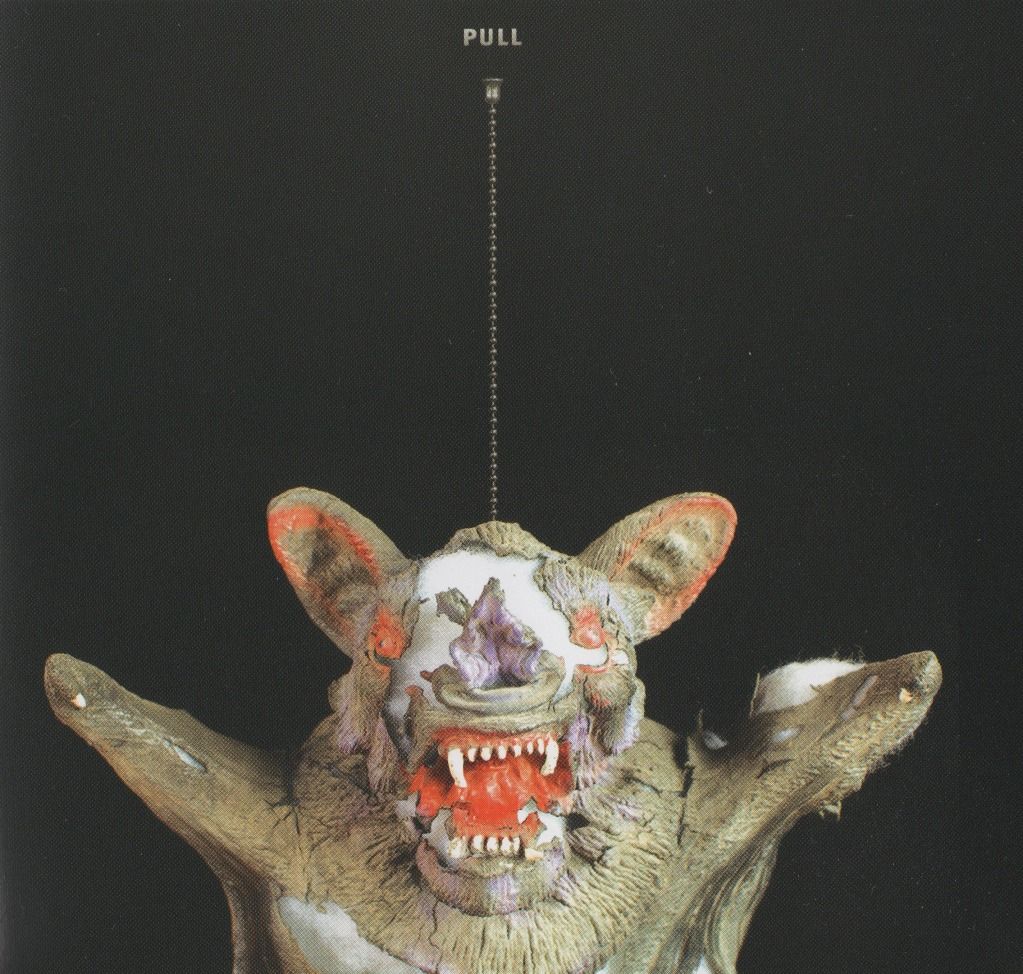
With 10 of 12 tracks already appearing on Captain Beefheart albums that have been available for 30 years, the biggest worry with Bat Chain Puller is that it'll come across as merely supplementary to those "definitive" versions, or worse that it'll sound only partially complete in comparison to the later recordings. Thankfully, the disc falls prey to neither possibility, playing like the hazy, dream-like album-that-never-was that it's always been!
After listening to these different versions of familiar songs and becoming familiarized with the new track sequencing, I'm left with the strong impression that this album has an undeniably distinct feel, especially in relation to Shiny Beast (Bat Chain Puller) in terms of its accessibility. Compared to Shiny Beast's almost exclusively song-based program, this Bat Chain Puller is very much a venture split between songs, spoken word-over-music and pure poetry. Sure, it's still considerably more mainstream than the hallowed stuff of Doc at the Radar Station, but even compared with Doc's orchestrated prickles, the poetry/music tracks here feel much more spontaneously arranged and the sonic palette more often unexpectedly drops down to just one instrument or Van Vliet's voice in some very effective instances.
Perhaps as expected, some of the material here isn't significantly different from later versions--the arrangement of "Harry Irene" (never one of my favorite later Beefheart tracks, but an important contributor to this album's accessibility) includes guitar, but otherwise isn't much different. The title track has its own subtle identity (further shaded by a third version here in bonus track form), bristling with kinetic motion (it's easy as ever to hear how Van Vliet originally pulled the rhythm from windshield wipers), more of an organic feel with cranked harmonica and just-barely-conflicting guitar layers (though the ever-important synths are still there) and outstanding vocal delivery (dig the the naked place he takes "their very remains and belongings"). Right off the bat, my highest hopes are kindled--one of my disappointments with later Beefheart albums is the marked reduction in the elasticity of Van Vliet's voice and additionally, in the case of Ice Cream for Crow, an overall dip in energy and compositional effort--here the Captain's voice still possesses a razor's edge and he takes enough risks that we can almost forgive him wasting the early/mid-70's trying to become a mainstream star. "Owed T'Alex" burns with a reinvigorated closeness that's magnified further on "Floppy Boot Stomp," where the band's joyous delirium pushes the vocals so close that it sounds like the Captain's ranting all the way inside your brain.
The most exciting aspect of Bat Chain Puller, of course, is the brand new material, namely the poetry/music hybrids "Seam Crooked Sam" and "Odd Jobs." The former is a moody guitar/electric piano duet with Van Vliet's downbeat-yet-intense images spinning seemingly unrelated on top, while the latter is more of a full band piece with tunefully-spun vagrant imagery while the band shifts ever so slightly into what must be the first kernel of Shiny Beast's "Tropical Hot Dog Night."
Evaluating these pieces has helped me identify a couple of the specific traits that make Captain Beefheart one of my top favorite artists--first, it's the way his poetry mirrors the music, flowing smoothly then stopping, jerking, suddenly rhyming or playfully riffing off of a phrase's connotations or expected syntactical outcome. Unsurprisingly, Van Vliet chooses words like paint colors on a palette, not necessarily concerned with their logical or expository value but rather their energy, emotional color, and the way they sound. When I hear these songs, there are countless unexpected images and feelings popping into my head, and I can't think of too many other poets in the popular music sphere who can achieve that. And yet, there's a strange logic or narrative to many of these pieces--what at first seems like incoherent rambling in "81 Poop Hatch," for example, gradually reveals itself to be an impressionistic panoramic scene including Van Vliet's beloved natural imagery as well as a view of his internal landscape--at least, that is, until he leaps mid-sentence to somewhere completely different; every piece seems to be at its root a rational enigma with unlimited emotional potential.
Secondly, the compositions here are a dazzling presentation of Van Vliet's painterly approach implemented in yet another aspect of the music. More than on any of his other albums we hear open, warm-sounding jazz harmony on songs like "Seam Crooked Sam" and "Ah Carrot Is As Close As Ah Rabbit Gets To Ah Diamond." Again, though, Van Vliet applies these combinations of notes intuitively and without regard to how theoretical rules say they're "supposed" to be used. Fragile, sweet harmony can dissolve into dissonant, minor darkness just as quickly as it can pursue a completely fresh melodic path, as evidenced on "The Human Totem Pole (The 1,000th And 10th Day Of The Human Totem Pole)," one of two album-closing commentaries on the human race's cumulative achievements (or lack thereof) and precarious current position on earth. Here he fuses this weird compositional approach with one of his more straightforward (yet most compelling) poems, sketching a partially-obscured picture of the skin-crawling, comical-yet-repulsive "pole," and delivering it all with a seething creepy mystery that trumps the Ice Cream for Crow version within just a few seconds..."the man on the top was starrrrrrrrvinnnnng" indeed! Now is probably an important time to laud the contributions of the rest of the band--this music certainly couldn't have been made without the conscientious talent and attention of the rest of the band, especially drummer/guitarist John French, who also performed a crucial "music director" role in transcribing Van Vliet's hastily-blurted musical ideas into a form that the other band members could understand and memorize--just listen to the through-composed spacious atmosphere as the song sputters out in a denouement that takes up over half the song's length. The idea that it's possible and even ideal to consent to the urge to compose and arrange notes and sounds in whatever way sounds intuitively best (regardless of the rules) is one of the important lessons I've learned from Van Vliet's music and attempted to apply to my own process. Though the difficulty of successfully communicating such an idiosyncratic method to collaborating musicians is challenging to overcome, the singular character of the end result can really be worth the sweat. It's also one of the few lessons any artist can potentially adapt from Van Vliet's work without necessarily ripping off his total sound wholesale--it's possible, no matter what Tom Waits tells you!
In the end, this album is like a gift sent from beyond Van Vliet's grave (though very real thanks are due to all of the living collaborators who finally brought this album to release). Amazingly, it never sounds unnecessary in comparison with the later albums--"Brick Bats" is the only song that sounds more unfocused than its later version, with a much looser guitar arrangement, less effective vocal delivery and a fun but meandering free jazzy end section made more effective in the shorter Doc at the Radar Station version. Nor does this earlier album obviate the ones that follow (except Ice Cream for Crow, which was always teetering on the brink of being a "completists only" release, especially now that two of its best tracks are revealed to belong to a more vital earlier work), with Shiny Beast (Bat Chain Puller) still best straddling avant-garde and pop and Doc at the Radar Station best warping Trout Mask Replica poetic/musical craziness into a newer, mature and carefully-integrated form. Thankfully, we now have all three to consider as required listening--though the price of this CD is still uncommonly high (it cost me $27 including shipping and tax), it's worth the added expense and work it takes to track it down--let's hope there's some wider distribution on the way to make it a little easier to get the word out about this remarkable album's first issue.
Wednesday, September 28, 2011
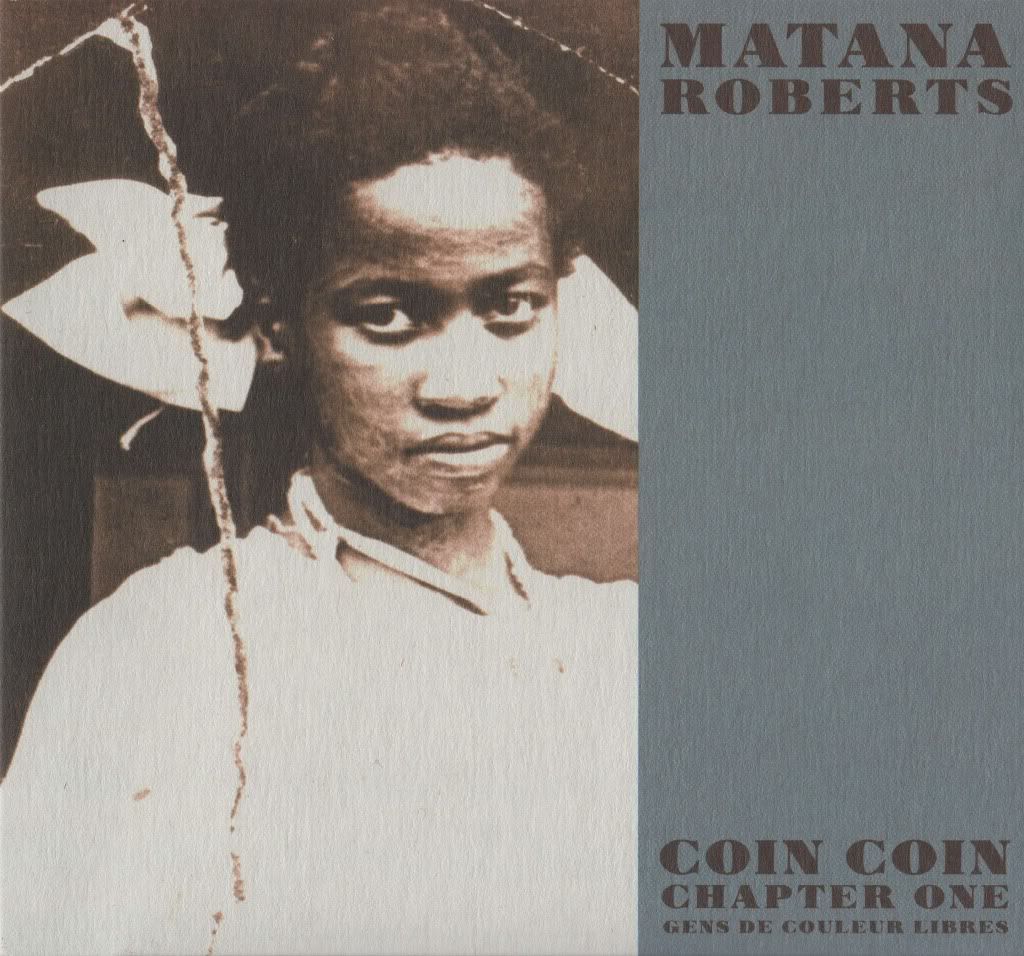
Matana Roberts - Coin Coin Chapter One: Gens de couleur libres
As unfortunate as it may sound, it's unusual in 2011 to have a challenging new jazz release to get excited about, but New York (via Chicago) alto saxophonist Matana Roberts has undeniably produced one. Though she's been publicly active since the early 2000's, the first "chapter" of her ambitious planned 12-part Coin Coin series seems to have been Roberts' biggest break to date, getting her a lot of exposure in print and online. People have already been talking about this album enough that the word "hype" is getting tossed around, which usually results in heavy skepticism and considerably less interesting conversations. After getting to know this album I don't feel any need to declare it the "best" anything of 2011, but I do agree with the growing number of people out there that it's an uncommon album in the contemporary jazz landscape and well worth checking out.
Coin Coin Chapter One is probably best described as a conceptual piece of performance art, which covers the wide variety of musical styles it incorporates as well as the use of poetry and narrative that are central to its purpose. The core themes of the work are memory, history and shared human experience, focusing primarily on subject matter relating to historical African Americans in slavery and positions of adversity, drawing from Roberts' own explorations of her family history and ancestry. This subject matter is presented over and together with a diverse backdrop of different jazz styles, including avant-garde jazz, free jazz, dixieland, blues, and more. While I think it's a valid point that the subject of the African American slavery is arguably not immediately relevant to most people's present-day lives and that it can be "too easy" of a choice (for obvious reasons relating to the horrors that countless African Americans have experienced throughout history) when it comes to eliciting a strong emotional response, I think these objections are a little too dualistic. When confronted with Roberts' vision, it's clear that her exploration of the historical black American experience remains a living, vital part of her (and I'm sure innumerable others') identity, and the authenticity and emotion of her presentation soon dispels any attempt at dismissing the subject matter as purely contrived.
The most powerful pieces on Coin Coin Chapter One are undoubtedly those that feature Roberts' voice either singing or reciting spoken word. In the Coin Coin world, Coin Coin is a sort of "every person" spirit who repeatedly appears in different people's lives across history, reinforcing the concept of shared experience that seems central to Roberts' project. In "Pov Piti," "Kersaia" and "I Am," Roberts introduces Coin Coin's different manifestations with anguished cries, powerfully conveying the spirit's rebirth through another African American's existence. Each song continues, describing each character's experience through Roberts' spoken word. It's hard not to admit that these pieces are crushingly compelling in their emotional message, as Roberts' lilting spoken word describes episodes of yellow fever, slave rape, and redemption through freedom and the jaw-dropping concept of buying back children who were taken and sold as slaves. I really love her poetic delivery; the meter is flowing, organic, and wholly reminiscent of instrumental improvisation--she stops, starts and repeats lines as if she's blowing a horn, imbuing the words with rhythm and often downplaying the force of the ideas, casually dropping blood-freezing lines like "I have seen so much but yet have experienced less than most dogs" and "I am twenty-five; there will never be any pictures of me." Her lyrical concerns also come to fruition through sung vocals, as on the bitterly sarcastic auction block vocal blues parody "Libation for Mr. Brown: Bid 'Em In," and more contemporarily on the dedication "How Much Would You Cost?"
Musically, Roberts' vision is as sweeping and all-inclusive of African American history as her narrative is, drawing together a smattering of all of the historical jazz developments imaginable and weaving them together into a smoothly-flowing collage. The opener, "Rise" recalls Coltrane's A Love Supreme in both title and its incantatory feeling, though its cacophony eventually marries modern electric instrumentation with more of a Pharoah Sanders-like free jazz sound. The mercurial, progressively shifting main theme that introduces the album's spoken word pieces possesses the album's most memorable instrumental melody, effectively aurally tying the recurring themes together, and including a vocal arrangement that recalls 40's film scores. "Song for Eulalie" blends ominous piano riffing with some nice free duet playing between Roberts (whose alto saxophone tone variously recalls both Coltrane and Sanders as well as the keening gospel sounds of Albert Ayler), while the album closing waltz ends on an uplifting note with the disc's most unassuming and most compelling vocal melody.
Though there are numerous brief kernels of vibrant and effective composition, I think one of Coin Coin Chapter One's weakest aspects is that it often plays like an all-inclusive pastiche; its eclecticism is only occasionally displayed in fully-formed songs and more often occurs willy-nilly across songs that seem to have little in the way of structure. While the mood and playing of "Rise," for example, display a slight modern twist on free jazz, the track presents little in the way of recognizable melody or memorable elements. Consequently, when the album ends the actual compositional elements seem rather slight and repetitive--the repeating theme, a couple of traditional songs, and a whole lot of episodic genre sampling spanning over 60 minutes, with a number of ideas taking up a bit more time than they probably justify. Since Roberts has already announced that Coin Coin will be a 12-part series, it's hard not to start wondering if the musical approach will be the same for the entire work, which I fear could result in some artistic stagnation. Though, as far as I know, this album is strikingly original in the jazz world (the closest thing I'm aware of is Max Roach's We Insist!: Freedom Now Suite), it's arguably only original in its performance art/narrative approach and wide-reaching inclusion of different styles. Without Roberts' concept, words and voice, I think the music would come off as a bit unremarkable and unfocused in its scope. I sympathize with Roberts' ambitions, since creating something simultaneously eclectic, developed, and original requires a sort of unidentifiable magic touch. I hope that later installments in the series retain her obvious passion with a stronger focus on composition and hopefully her emergence as a truly original musical voice, neither of which I think have happened quite yet on this release. Either way, I'll be first in line to pick up chapter two whenever it's released, and I hope those jazz artists listening to Matana Roberts achieve a little bit of inspiration to stretch past the hard bop regurgitation that so much contemporary jazz seems to cling to. Whether or not it "lives up to the hype" (probably the most boring discussion imaginable when confronted with an album like this), I think Coin Coin Chapter One is unarguably an uncommon work and worthy of the interest it's received.
Thursday, July 14, 2011
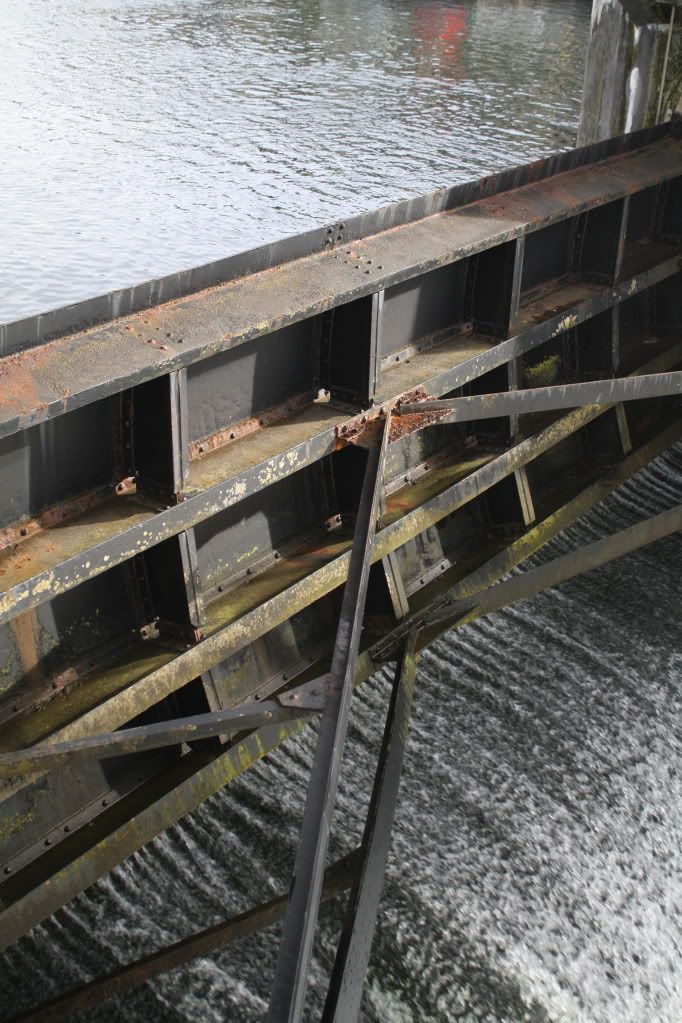
The Locks
` ` ` ` ` ` ` ` ` ` ` ` ` ` ` ` ` ` ` ` ` ` ` ` ` ` ` ` ` ` `
More of a physical kind of frustration
Centered on gravity--lying low
Looking for an out
Inches are insufficient
Foot-pounds squeeze a reserve of might
Massive bulk held at bay by
old-growth concrete trees
dead at the roots
Iron leaves comb trash
Scalp just a bit of the good stuff
from a small but potent torrent
somehow clearer than the source
the rest released into the foam void
Garbage trees jealously bear the weight
Craving more pressure
Frigid
Begrudging the escapees
Over-containing to a spill no valve can safety release
Shrugging it off as the pressure sags to a limp ex-tension
At first furiously dumping
Then just blandly merging
Good stuff, garbage, primary sources
All a spreading foam puddle
Indifferent
apart from the craving
as iron and concrete too are consumed in the blend
` ` ` ` ` ` ` ` ` ` ` ` ` ` ` ` ` ` ` ` ` ` ` ` ` ` ` ` ` ` `
` ` ` ` ` ` ` ` ` ` ` ` ` ` ` ` ` ` ` ` ` ` ` ` ` ` ` ` ` ` `
` ` ` ` ` ` ` ` ` ` ` ` ` ` ` ` ` ` ` ` ` ` ` ` ` ` ` ` ` ` `
In general, this poem is an attempt to explore the mechanism of the creative impulse and the external forces that inhibit and sometimes ultimately destroy its renewability--wrapped in the imagery and metaphor of the Ballard Locks, a Seattle landmark across which I find myself traveling at least a few times each week. Looking back on my last few months of writing, I notice that I've been repeatedly interested in close-up depictions of inconspicuous physical things or concepts that usually lurk unnoticed in the periphery of our eyes and minds. The shift in perspective turns the focus on the object's individual personality and isolates the specific nature of its being, resulting in a portrait that's not necessarily hostile but perhaps disconcerting, unsettling and certainly alien to our own sensibilities, even if it's couched in vaguely personified terms (as this poem does). Scrutinize one object from its own perspective and you realize there are limitless viewpoints, few of which have any relation to our own until we impose it upon them, which usually results in their broad dismissal (we can't help it, it's how our brains work). Anyway, this method is an attempt to communicate an experience I often have wherein I'm walking by something and I'm suddenly struck by its thinly-concealed strangeness to the point of absorption.
As for the extended metaphor, I've come to appreciate over the years the delicate pressure-release of the creative impulse. Complete absence of antagonism results in shitty art, but over-pressurization threatens to override the fail-safes and extend creation's feverish momentary madness into an inescapable morass. I personally most often notice this external "over-pressurization" in the form of group apathy, remorselessly-short attention spans and the severe devaluation of art (hence the bitter closing line). Even though it's stylistically mellow and unassuming (some consonance, alliteration and low-profile puns), this poem has become pretty close to my heart for the familiar imagery (standing there on the locks, you can really feel the weight of the water held back by the grace of the small amount that's allowed to escape), the characterization of the reservoir and release of creativity, and the resolve to continue maintaining the balance--even if the results merely disappear "into the foam void."
` ` ` ` ` ` ` ` ` ` ` ` ` ` ` ` ` ` ` ` ` ` ` ` ` ` ` ` ` ` `
Monday, June 20, 2011
Word Pillow Quietly Smother
` ` ` ` ` ` ` ` ` ` ` ` ` ` ` ` ` ` ` ` ` ` ` ` ` ` ` ` ` ` `
Comically I sitstanding before you
falling over myself
to describe fumbling profundities
nestled in between
just a pinch
of carefully selected words
What could I possibly use to describe them?
How about more words?
Only this time it'll be a duffel bag's worth
doled out in sloppy handfuls
so it's more like a stuffed word pillow
used to quietly smother the topic in its sleep
Allow me to mock a litany of useless things
while at the same time praising uselessness
Reassembling other people's ideas
behind a gauze of cheap pictures
Pretending self-seriousness and mockery
are somehow mutually exclusive
and in some way compensate for each other
Before reiterating one more time
my distaste for repetition
Patiently wait when I demand space
to carve a greedy slice of our hours for myself
in devotion to only the most unmarketable of pursuits
only to pass the time pursuing
only the most common of habits
Take notes as I distance myself
from the behavior of others
based on the proximity of our resemblance
Exclaiming that
What's to be done is that which has not yet been done
only to quickly retreat from the challenge
equivocating that these days
such things are a matter of degree
when I know full well I can't see that far
What, speaking?
I wasn't saying anything
` ` ` ` ` ` ` ` ` ` ` ` ` ` ` ` ` ` ` ` ` ` ` ` ` ` ` ` ` ` `
` ` ` ` ` ` ` ` ` ` ` ` ` ` ` ` ` ` ` ` ` ` ` ` ` ` ` ` ` ` `
` ` ` ` ` ` ` ` ` ` ` ` ` ` ` ` ` ` ` ` ` ` ` ` ` ` ` ` ` ` `
Whereas some of my other recent poems are composed of brilliant wordplay and jaw-droppingly profound ideas, this one was created pure self-loathing, sarcasm and disgust with my own hypocrisy. Enjoy!
Tuesday, June 14, 2011
Gone Man Bleat
` ` ` ` ` ` ` ` ` ` ` ` ` ` ` ` ` ` ` ` ` ` ` ` ` ` ` ` ` ` `
Just back thereYou--bespoketacled
Planes swimming across oceans of
Truth is the flast flame that's gone all too qulickly
You granted us a shriek peek into the either
(against our baddered judgmental expectorations)
Hollering rowder
before you blurred yourself out of fuck-us
one weak after naut floating above the space shit
your only way back down
Then you dinged back in just in time
to make use of the last of the
un-un-un-unquoinium
before we even triggered out how to synthefy it!
The things that so hrashly know us down
over
under
do they flaunt us in kept gossipy wings
only to disreappear to take the piss out of us
spoiling the mictury
no longer supplising the grizzly necessiprocities?
The flings we chuck up
Is their contritioning enough to
bent-dumbbell-tricep-row us
up
out of this ditch crack cave
we've begotten ourselves unto?
Should youn't be fiftied a don't-worry-about-it
we saw we our supposed deserved fine ale?
` ` ` ` ` ` ` ` ` ` ` ` ` ` ` ` ` ` ` ` ` ` ` ` ` ` ` ` ` ` `
` ` ` ` ` ` ` ` ` ` ` ` ` ` ` ` ` ` ` ` ` ` ` ` ` ` ` ` ` ` `
` ` ` ` ` ` ` ` ` ` ` ` ` ` ` ` ` ` ` ` ` ` ` ` ` ` ` ` ` ` `
This elegy for Don Van Vliet considers the man's accomplishments and reflects my frustration that
Saturday, June 4, 2011
Constructing a Shell
` ` ` ` ` ` ` ` ` ` ` ` ` ` ` ` ` ` ` ` ` ` ` ` ` ` ` ` ` ` `
I'm constructing a shellCollecting necessities, I'll form the walls--make them thick
When I have enough to last a while, I'll collect some more!
A soft quilt for my shelter
And how about when I have enough that I'll never run out?
It's possible to gather useful things before you need them
before you even have them
This is what's called
"invisible stones"
That's what I'll use to shape the tower--invisible stones
I'll wave to you from inside the tower when you pass by
I'm working something out inside!
When the walls are high, I might decide to dress the place up a bit
at which time I'll probably start acquiring what's known as
"see-through paintings"
I can dodge recurring fears and avoid other types of trouble
using see-through paintings
--to a point
Eventually, I'll vacate
The tower, lying on its side, might not look like much at all
But people will definitely want some of the see-through paintings
And the invisible stones will be useful to those
who can get their hands on what's left of them
As for the rest
some of it might come in handy to others with similarly-sized
desires
but most of it will be useless, unwanted
cold without the heat of my need
And yet, it will have to go somewhere
Both useful and useless tossed in a salad of use
less
ness
Still sitting, staying safe
secure
While I sit somewhere, somehow
else
` ` ` ` ` ` ` ` ` ` ` ` ` ` ` ` ` ` ` ` ` ` ` ` ` ` ` ` ` ` `
` ` ` ` ` ` ` ` ` ` ` ` ` ` ` ` ` ` ` ` ` ` ` ` ` ` ` ` ` ` `
` ` ` ` ` ` ` ` ` ` ` ` ` ` ` ` ` ` ` ` ` ` ` ` ` ` ` ` ` ` `
More conventional and expository (if still pretty surreal) than the last poem I posted, save a bit of alliteration toward the end. This poem is sort of an extended metaphor about our relationship with different types of material things and the extremely surreal power attributed to completely intangible concepts like money, which, regardless of the amount, is only a representation of the ability to get more things. How many shells can a hermit crab use at any given time?
Thursday, May 19, 2011
Tree Trough Trunk
` ` ` ` ` ` ` ` ` ` ` ` ` ` ` ` ` ` ` ` ` ` ` ` ` ` ` ` ` ` `
Tree, trough, trunkYou thunk too little
You whittled well past the middle
a brittle busted paradiddle
You piddled on petals
You pedaled with paddles
You addled your glad hull with gas-leaking barnacles
when grass-beaking tabernacles require
a subtler approach
Surefire settler roaches saw, till, encroach
Crotch thinking splotches out a single blinking eye
It sizes, it sighs
Its size matters--flatters
Bladders overfloweth, wind bloweth, shingles clatter
Stunted growth conserves matter
Till tail-eating snakes
(full of themselves)
try taking just a few more inches
` ` ` ` ` ` ` ` ` ` ` ` ` ` ` ` ` ` ` ` ` ` ` ` ` ` ` ` ` ` `
` ` ` ` ` ` ` ` ` ` ` ` ` ` ` ` ` ` ` ` ` ` ` ` ` ` ` ` ` ` `
` ` ` ` ` ` ` ` ` ` ` ` ` ` ` ` ` ` ` ` ` ` ` ` ` ` ` ` ` ` `
The last three months have been almost all poetry in my notebook--stuff that probably won't be set to music, but more importantly I've been attempting to focus even more on the aesthetics of the words themselves and have a bit of fun--lots of abstraction, alliteration, even more fluid rhyming, puns and surrealism. This is one of my favorite of my new poems for its succinctness and the fun I had writing it. It's an example of how some of my word choice is based on how the words sound and feel in the mouth as much or more than on what they mean, as well as one of the first poems that experiments with what I've been calling (in my head, of course) "block rhyming," which shows up more in some later poems. In general, this poem deals with the idea of taking too much as well as self-destruction...maybe. Finally, I'm including videos with these poems because they're meant to be both read (on the page) and heard out loud--read before you watch the video or along with it and some of the pun and rhyme-type elements might be more apparent, as some are aural and some are visual.
Tuesday, March 22, 2011
Come November
` ` ` ` ` ` ` ` ` ` ` ` ` ` ` ` ` ` ` ` ` ` ` ` ` ` ` ` ` `
Come November,I need someone who'll pander to my beliefs
In brief--
If he wants my vote, rote memorization of newscast persuasions won't do
True, they can be compelling but selling's not always the top goal
--full stop (whole)
I'm afraid we disagree
I want someone who's said, instead of
"God bless us,"
"Maybe our messes stem from our own hands."
Grand speeches reach us, teach us false pride
While others deride what our real progress lacks
--tax.
I need somebody who knows some wars aren't
worth beginning (or winning)
Who knows that a rifle and a contract a hero
do not necessarily make
Take, for example the so-called bravery
of slavery to flags and empty ideals
that steal your days to pay the already rich
--you were tricked!
Please, show me someone whose thoughts aren't bought
by the sheen of a preening wool-pulling machine
Whose spleen stomachs all sides
not non-sides of meaning
manufactured for our end
Send someone quick who's not too thick to shout:
"The more we know, the less it shows!"
Whose throat parches at our sleepwalk forced marches--
Our arms raised, bills brandished in bare fists
kissed by the flaccid promise of
satisfaction from checking purchases off a perpetual list
--will you ever get pissed?!
I need someone who's aware change doesn't happen
in two- four- and six-year increments
Whose implements and wisdom are unhurried
Who's worried, to boot
that the root's that there's more new ones breathing
than older ones leaving
I need someone who doesn't exist
If you need me,
I'll be dangling my feet in the water,
my slaughtered ballot already confetti
in the victorious breeze
` ` ` ` ` ` ` ` ` ` ` ` ` ` ` ` ` ` ` ` ` ` ` ` ` ` ` ` ` ` ` ` ` `
An uncommonly political song for me (though the conclusions are perhaps familiar) and a solid step forward on the poetry side of things. I've been having lots of fun lately getting more and more fluid with rhyming--both in placement and how accurate/imperfect the rhyme is--and this song is the tip of the iceberg. The process has been freeing, allowing for some associative ideas to arise unexpectedly, though at times to the extent that the resulting poems are totally unfit to accompany songs. I wasn't sure if I could do it with this one, but it's actually been fun performing the serpentine thing. There is no structure other than a repeating melodic motif, though it's fairly firmly in a single key--you'll forgive a few departures, right? I'm going to try not to beat these things to death and make people work a little harder, but I will say that I couldn't resist intentionally mixing a couple of bodily metaphors. Bad poetry--C minus.
Subscribe to:
Posts (Atom)