Showing posts with label 1973. Show all posts

Wednesday, May 9, 2012

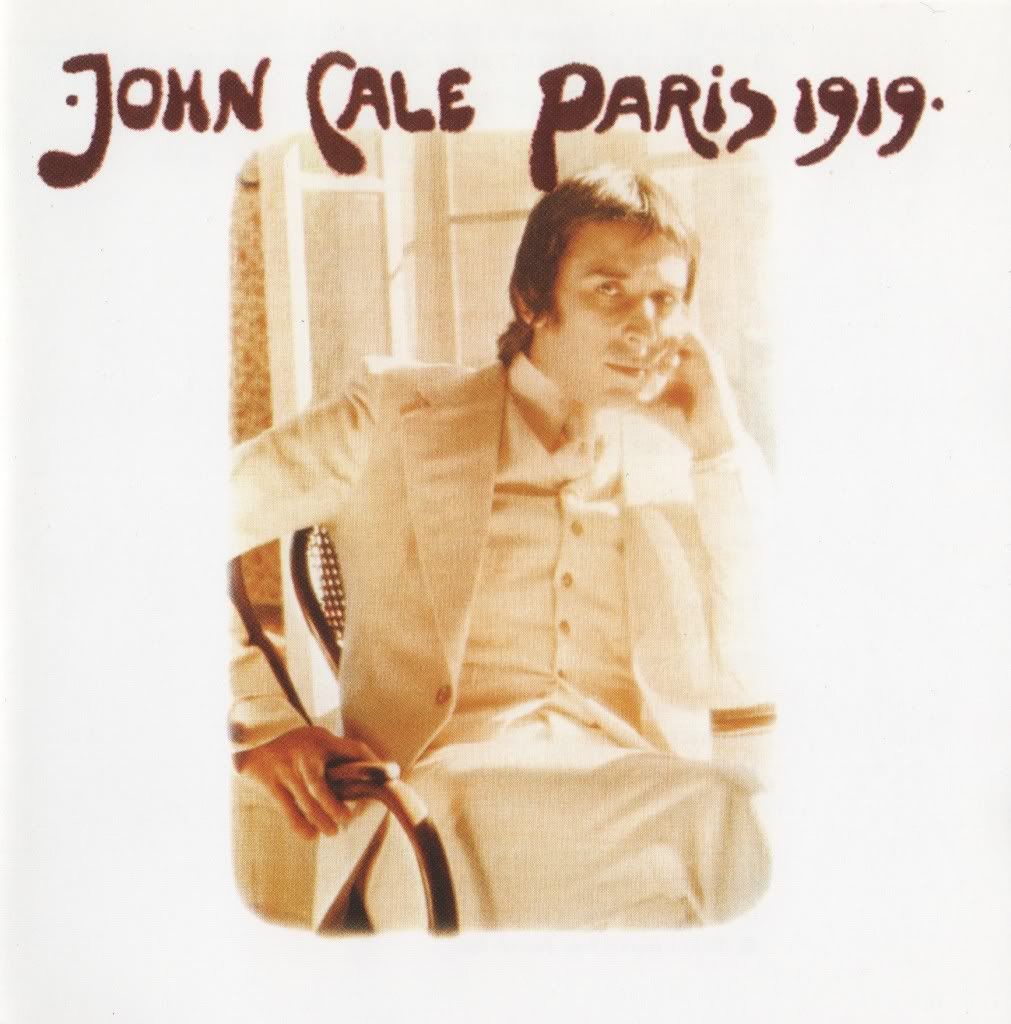
John Cale - Paris 1919


Another album I've rediscovered in the past few months, iTunes tells me I've listened to this album over 10 times.  Though I wouldn't consider it a major favorite I was trying to think of something soothing to listen to after a difficult session and this album instantaneously popped into my head.  After listening a few more times it's not hard to pinpoint why the album produces such a specific reaction: everything--from Cale's half-obscured vocals to the slide guitar, organ and strings that dominate the arrangements--everything here is the aural equivalent of being wrapped in an old but still comfy quilt (rainy day included).  If I may, it's these kinds of feelings that a lot of people might be describing when they say an album or song sounds "British" as if it's a genre or aesthetic descriptor.  There's a pervasive sophistication in these songs that seems to be uniformly reigned-in by an instinctual desire for understatement, and they all seem grounded in the sort of beauty that takes some attention to uncover and--no matter what the subject matter--is touched by a sort of resigned sadness.

Not to say that Paris 1919 is a downer, but if you're looking for some sort of extension of Cale's role in The Velvet Underground, you're likely to be repeatedly disappointed.  Sure, there are comparative moments of "rock" like the romping "Macbeth" and the quirkier, Eno-esque "Graham Green," but really nothing close to anything found on early Velvet Underground.  Not being much of a Velvet Underground fan at all, this doesn't really bother me, but I can see how this album's style might come as a shock--you're going to have to also enjoy pretty, orchestrated pop rock to make the transition to this one! 

There's so many things to enjoy in this album, from the evocative-yet-cryptic lyrics (Cale jumps from a brilliant one-liner in "nothing frightens me more than religion at my door" to the completely indecipherable titular chorus in "Hanky Panky Nohow").  The opener and "Andalucia" evoke a fragile nostalgic yearning that's only made stronger by the songs' simple and accessible melodies.  I can see how things might get a bit plodding for rock listeners ("Half Past France" gets a bit sedate, at least tempo-wise), but like many great pieces of art, a lot can change when you give yourself over to the creator's vision--when you're into it, Cale's repeated "we're so far away/floating in this bay" delivers a desolate, opiate euphoria.  Likewise, "The Endless Plain of Fortune" can change from plodding excess to gripping drama, and Cale's whispered vocals on the brilliantly-titled "Antarctica Starts Here" close the album with the sort of creepy intensity that only restrained dynamics and brevity can bring--in a scant two minutes the song is already fading away, closing the lid on a similarly terse album; packing your message into a concise package is a difficult feat to achieve, and I'm always impressed by how much more power a 31-minute album like this can pack into such a short time span.

Finally, I have to praise Cale's vocals--nothing makes me happier than hearing a great songwriter and musician achieve so much emotional resonance and deliver such beautiful performances with such a limited voice--there's nothing displeasing about Cale's delivery or tone, but it's fair to say he's not the most distinctive, technically-skilled or expressive vocalist.  That's the beauty of great singer/songwriter music--when it all comes together and the elements of composition, arrangement, performance and self-expression add up to something greater than their individual merits.  Though it may not sit at the front line of close-to-my-heart favorites, my collection always has more room for music as well-crafted as this!

Get it here.

Monday, January 2, 2012

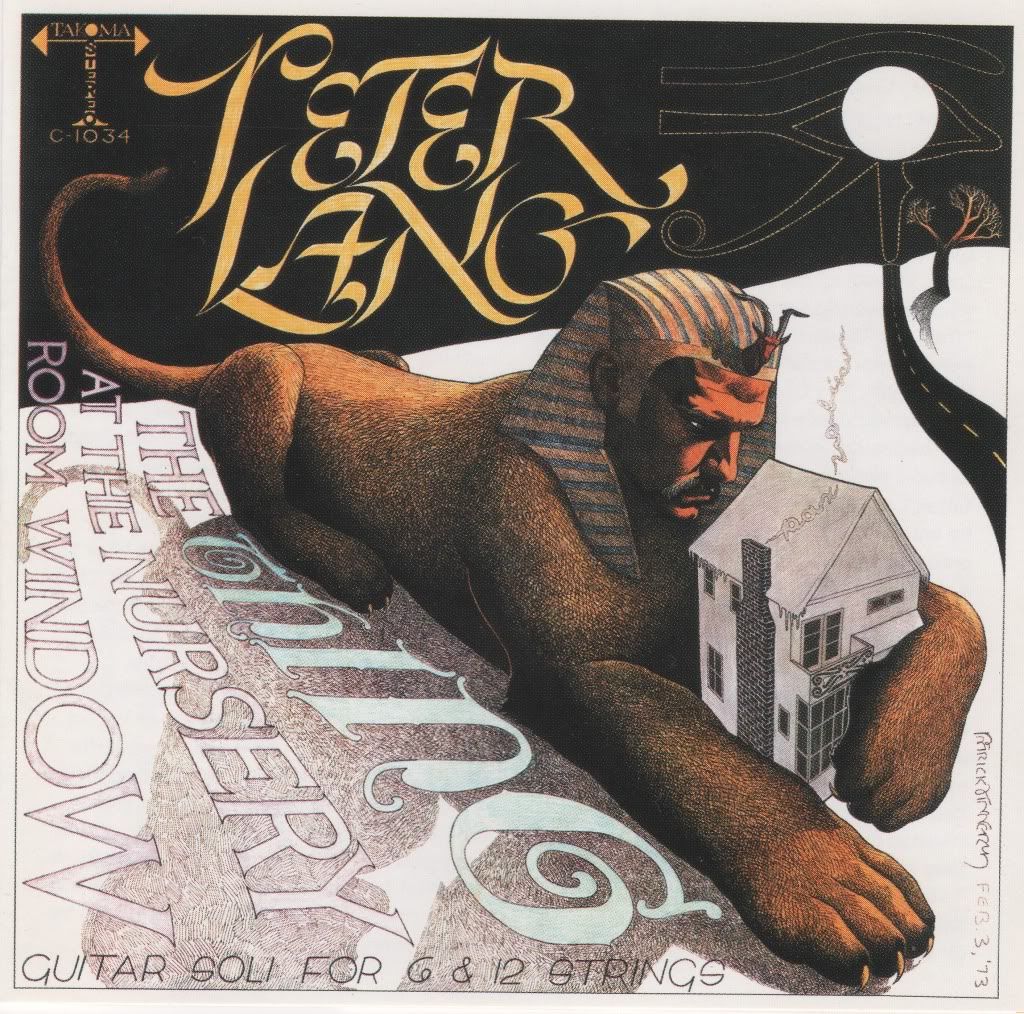
Peter Lang - The Thing at the Nursery Room Window

One of the greatest title/cover art combinations I'm aware of...what exactly is that cursive smoke spelling out?

Especially considering the fact that the "American Primitive" genre of folk guitar was just over a decade old in the early 1970's, I think it's a testament to the depth of the stable of outstanding guitarists Takoma Records had assembled that each one managed to have a distinctive style and purpose.  While genre founder John Fahey wanted to communicate something mystical he discovered by examining the elemental essence of early blues players under a microscope and Robbie Basho strove to reimagine his guitar technique to communicate incommunicable mystical secrets, Leo Kottke and Peter Lang both seemed to be players first and composers second--musicians driven most by the joy of making beautiful sounds come out of their instruments.  While this is an important component to any musician's working life, I think vision is one of the elements that separates musicians who truly have something to say from those who are simply technically proficient.  What I find most interesting about Peter Lang's Takoma debut is the fact that it finds the guitarist at a developmental crossroads, growing past his pure technical roots into a territory with far fewer limits, determined only by his own compositional imagination.

According to the CD reissue's liner notes, Fahey told Lang that he was thinking (as a composer) in too small blocks of time and urged him to allow his pieces to stretch out a bit.  You can hear where Fahey's coming from on the opening tracks "Snow Toad" and "Muggy Friday," where Lang's formidable technique seems bent on making the finish line.  While his rapid fingerpicking audibly owes more to Kottke's style than Fahey's, Lang's approach is subtly idiosyncratic, with a nice emphasis on string bends and slides.  As the album progresses, though, we get to see the fruits of Lang's response to Fahey's critique--"Turnpike Terror," though only slightly longer, starts playing with dynamic and textural changes, utilizing space and strumming to take the short piece in several directions.  The marvelous "Bituminous Nightmare" stretches even further, flirting with much more dissonance, theme development and single note layering (for lack of a better term) that seems to be wholly Lang's trick. 

Though only a few of the songs here fully demonstrate Lang's growth as a composer, his playing is always beautiful, engaging, and (for my money) more emotionally compelling than Kottke's.  He proves himself an able slide player on "Wide Oval Ripoff," a capable balladeer on "Young Man, Young Man, Look At Your Shoes," and unafraid of lightning fast swing on "Quetico Reel."  Satisfyingly, though, the album ends on his most ambitious and adventurous compositions, the nearly 10-minute "Future Shot at the Rainbow," which further explores his penchant for overlapping single note lines to an almost baroque extent, unfolding and refolding a humbly beautiful melody with a real sense of journey abetted by judicious pacing and flow.  While Lang never managed a consistent output, his playing is always delightful and this album stands as one of the most enjoyable Takoma releases and a hopeful nod to the virtue of stretching beyond your comfort zone.

Get it here.

Monday, October 10, 2011

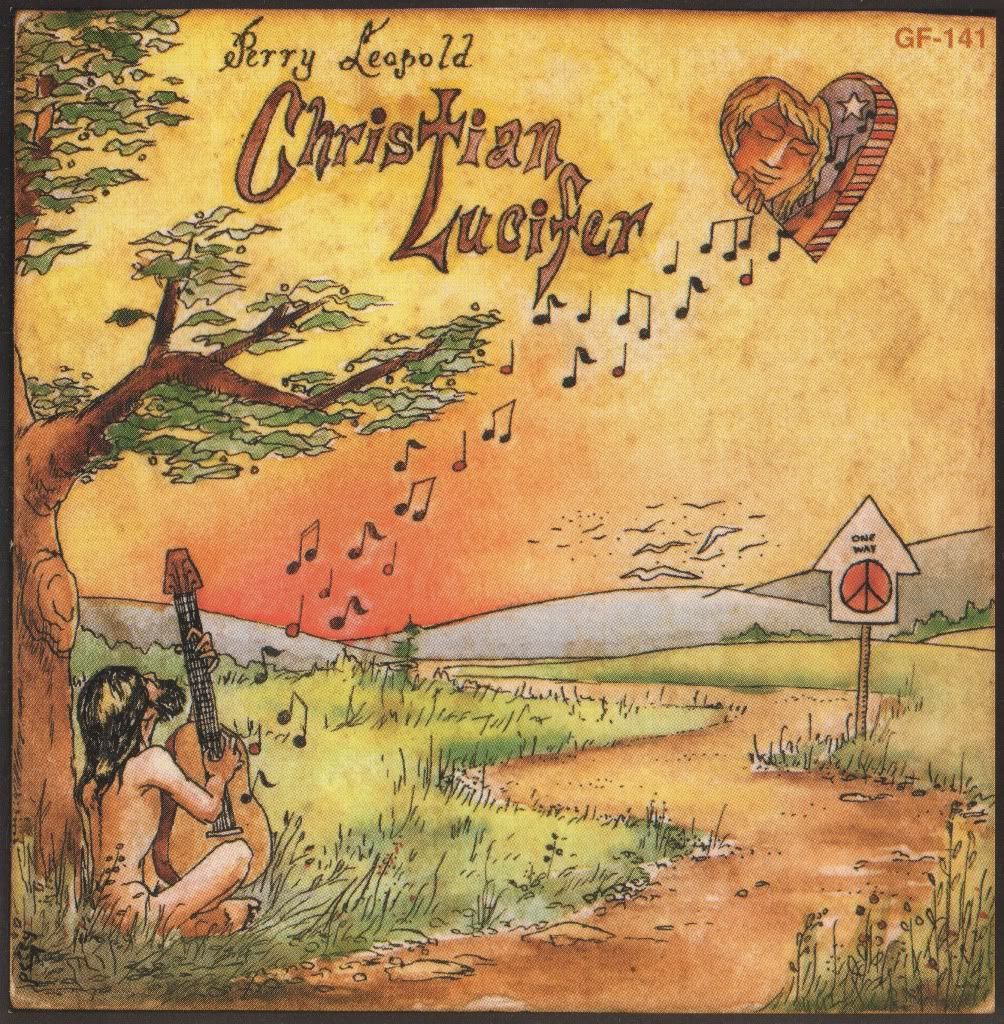
Perry Leopold - Christian Lucifer


The acid folk genre is a lonely and under-appreciated one in terms of mainstream recognition, especially when it comes to American artists.  Since there's never really been a commercial market for it, those of us who enjoy experimental, genre-bending singer/songwriter music often have to spend some time digging and take chances on obscure albums like this in order to locate some hidden gems.  Leopold's second (of two) album's, 1973's Christian Lucifer is a well-realized attempt at one of progressive folk's more popular facets--fusing acoustic singer/songwriter material with lush orchestral arrangements and classical composition techniques.

As the title more than suggests, Christian Lucifer is spiritually-focused. Thankfully, though, it's not that kind of explicit worship theme that verges on dreaded "Christian rock" and threatens to derail even the delightful period kitsch of artists like Judee Sill.  Rather, Leopold manages to provide depth to his personal spiritual conflict by using accessible imagery and evocative language that holds up well without attention to the subtle Christian underpinnings.  Throughout the set, Leopold frets over questions of love, despair, overcoming of adversity, and redemption, rarely invoking typical Christian lyrical tropes with the notable (and effective) exception of the valedictory "Lord I love you" refrain of "Vespers," the album's closing track.

Probably what this album has going for it most is a cohesive atmosphere.  Leopold's lyrical subjects are for the most part somber and reflective, moods that are exceedingly well-represented by the album's arrangements and songwriting.  Most of the songs are based on 12- or 6-string acoustic guitar parts, often strummed and occasionally fingerpicked.  Surrounding and layered on top of those guitar parts, though, are orchestral arrangements filled with both wind instruments and strings, electric keyboards, lead guitar, some subtle hand percussion, and an airplane hangar's worth of reverb, which is used a little for psychedelic ends in "Serpentine Lane," but more often for general atmosphere. 

Interestingly, I find the album's arrangements and production simultaneously subtly detailed and impenetrably dense.  While there are many moments where delicate wind lines (often oboe) rise above the other instruments or a keyboard riff sounds out audibly for a few seconds, equally as often there's so much instrumentation that it all blends into a homogeneous river of sound.  Though it's tempting to start using the music critic-favored "over-produced" criticism, it's actually one of my pet peeves, in part because it's most often used as a broad-brush dismissal and very rarely do critics develop the reasons why they think something is over-produced.  In my mind, the first question is "Would these songs succeed with only a guitar [in this case] and vocals?" and the second is "Does each added instrument or production element add something distinctive and justify itself on an ideological basis?"  If the answer to the first question is "no," then you've got music that either attempts to compensate for a lack of substance with production or simply needs all of the instruments and production to be properly conveyed--there's nothing wrong with that and, if true, it almost invariably means that the answer to the second question is "yes."  If the answer to the second question is a "no," then I think we're getting into the territory of unnecessary production and perhaps again into reasonable claims that the production is an attempt to mask songwriting inadequacies. 

In the case of Christian Lucifer, I think the songs' core arrangements could certainly stand alone, but when it comes to the orchestral part-writing, things are often a little muddy and parts do come across as unnecessary because they're in another instrument's register, doubling numerous other instruments rhythmically, or there's simply so much sound happening that things are lost.  Now, the "dense sound" school of thought has advantages when it comes to tonal color and the creation of a thick-yet-subtle sound monolith, but to achieve the proper balance is to toe a very thin line.  My criticism of this album's orchestrations is similar to the beef I have with a lot of arrangements I hear in new music--the heavy blanket of sound seems to be there because "it seemed like a good idea" and because strings etc. seem to add drama and class just by dint of being included.  Rather than imbuing each part with an individual sense of purpose and pursuing the potential for melodic enhancement, development, or counterpoint, the orchestrations float like a vague, noodly cloud above and around the guitar/vocal core, never really managing to achieve the sort of integration into the actual structure of the song that seems to me to be the ultimate ideal of including such lush instrumentation. 

What the production sacrifices in space and well-developed intent it gains partially back with a sense of gravitas and cohesiveness in mood.  It helps that Leopold wrote a few really good melodies for his songs and includes some memorable hooks, partially obscured as they may be at times.  "The Starewell" includes a surprising minor/major change with an almost Cat Stevens-like verse sound, also including some of the most rhythmic/energetic dynamism of the album, while "The Anunciation" boasts a great vocal arrangement that effectively juxtaposes double-tracked recordings of Leopold's thick baritone (which somehow reminds me a little of Tom Rush's).  While I generally prefer either a bit more instrumental verve (Pete Fine's On a Day of Crystalline Thought, in spite of its hippie-dippyness) or just a bit more sophistication in arrangement and integration of orchestration (Tudor Lodge), Christian Lucifer is always a pleasant and relaxing listen with a lot to discover with repeated spins--it's neither the most psychedelic lost acid folk gem nor the most instrumentally engaging, but it's popularity with other aficionados attests to the passion and authenticity of Leopold's personal expression.

Tune in next time for a contrasting example of singer/songwriter orchestral integration that I think is really well-done. 

Tuesday, August 16, 2011

Gentle Giant - In a Glass House


With at least five solid albums, a lineup full of virtuoso multi-instrumentalists and a totally unique sound, to me, Gentle Giant is a great band.  While their counterpoint-focused arrangements and penchant for unsettling busy-ness and atonality were probably too sophisticated to garner the group mainstream success (even in the early 70's), looking across their discography it's clear that even in 1973 the band was aiming for a more commercial sound.  While many people point at Octopus as their best (and it probably does the best job of fusing their more experimental side with a less dated sound and strong songs), In a Glass House is probably my favorite in their discography for its graceful first statement of the classic mid-70's Gentle Giant sound, its many memorable moments, and some of the strongest songs on any of their albums.  Make no mistake, though--this is 70's prog, and there's little on this disc to make you forget.

In a lot of ways, Gentle Giant are like some weird progressive version of the Band--their verve is infectious as the band members swap vocals and trade around on something like 30 different instruments based on the needs of each song.  Like many of the later Gentle Giant albums, In a Glass House is loosely based on the title's concept, which plays out generally in a set of songs that focuses inward on matters of psychological introspection and interpersonal relationships.  While it's hardly a meticulously laid-out treatise, the themes add cohesion and the lyrics are always intriguing if sometimes inscrutable.

While the songs are mostly long (four of six are over seven minutes long), they're distinctly songs and feature compelling examples of the band's trademark fusion of rock, classical, folk and the occasional soul and funk elements.  In addition to a good flow between rockers and quiet reflections, there are loads of great moments, like the gleefully atonal xylophone solo on the opener "The Runaway," which also manages to state themes of complex counterpoint, psychedelic and spacey vocal arrangements, hypnotic guitar riffs, and some great folky flute breakdowns.  As always, the transitions are seamless and the music is anchored by a fat, funky bottom provided by the bass and drums.  "An Inmate's Lullaby" features only percussion instruments and uses some great overlapping vocal production to enhance a first-person narration of a mental ward and the gray area that is "madness" (a classic theme in British music of the 60's and 70's).

"Way of Life" is maybe the least listenable track, with a slightly frantic opening riff, but it's certainly dynamic and a great example of how good the band is at juxtaposing Derek Shulman's ballsy lead vocals with Kerry Minnear's delicate vocals, which show up on a great pump organ section that emulates church music.  "Experience" is more classic Gentle Giant, with lots of contrast between odd-metered violin/guitar riffs, medieval-sounding vocal harmonies and a simple repetitive bass riff.  Gary Green's mid-song guitar solo, while not the proggiest thing on the album, is glorious for its razor-sharp tone, a perfect helping of slappy reverb, and the way it fits so well over the aforementioned bass riff.  Similarly crushing is the heaviness of the main riff of "In a Glass House," which has both a flitting, jazzy opening section and a ballad in the previous song ("A Reunion") to make it sound even heavier and worthy of its place as the album-closer.  While bands like Henry Cow employ a similar amount of counterpoint but focus on an edgier and more experimental brand of progressive music, it's hard to complain about how Gentle Giant manages to make such geeky music so catchy.  They pursued this album's template with admirable success through The Power and the Glory, Free Hand, and Interview, but I think it was definitely at its freshest state here.  Great album.

Tuesday, July 5, 2011

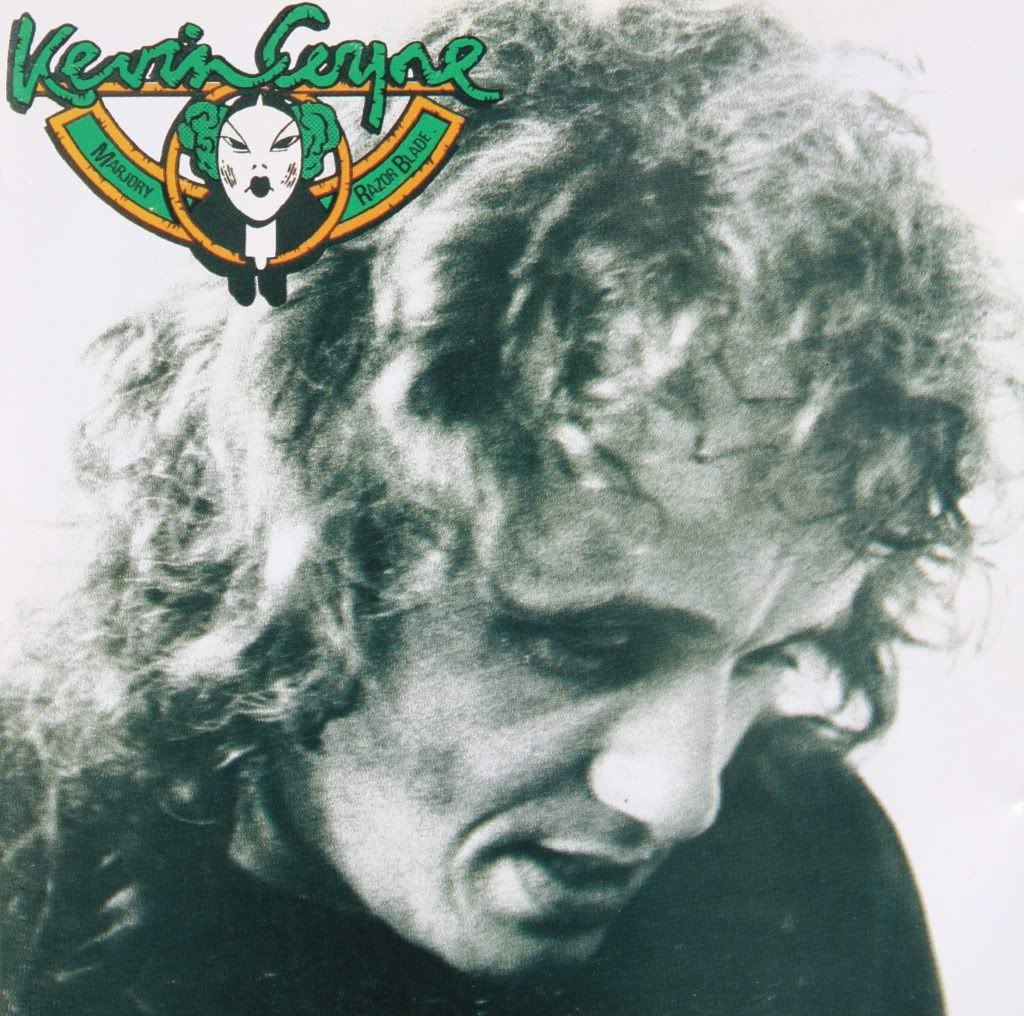
Kevin Coyne - Marjory Razorblade


One of my favorite weird singer/songwriters is the enduringly obscure Kevin Coyne.  Though he started his career with a rather generic blues-rock outfit called Siren, Coyne eventually embarked on a solo career that occasionally brilliantly, almost always interestingly, and usually commercially unsuccessfully straddled the line between intense singer/songwriter, blues, and avant-garde material.  If you've read or heard about Kevin Coyne, it's probably been this 1973 album, his second solo outing and his undisputed high point--Marjory Razorblade.

A sprawling double album, Marjory Razorblade manages to cover a quite wide subject matter swath while maintaining a coherent sound typified by plenty of acoustic and bluesy electric guitars, Dobro, organ and an occasionally boisterous rhythm section.  If you start reading about Kevin Coyne, it won't be too long before you see him compared with Van Morrison--listen to the joyous, organ-suffused "Marlene" to have this comparison confirmed (except, what are those weird Captain Beefheart noises he starts making toward the end...?), then listen to, say, "Nasty," to have the comparison become nearly meaningless--though their vocal styles are somewhat comparable, Van Morrison and Kevin Coyne are worlds apart when it comes to their respective songwriting intentions.

It's often repeated that, earlier in his life, Kevin Coyne had worked in mental health institutions, which would later inform his songwriting muse.  While this detail might appear as the sort of sensational lore that is often tossed around to romanticize artists' work, there are quite a few songs that deal directly with mental instability, like the thinly-veiled desperation of "Talking to No-One," the anxious "Good Boy," and especially the heartbreaking "House on the Hill," which specifically describes the alienating environment of a mental institution and one man's struggle to reconcile his troubled psyche with the pressures of society.  One aspect of Coyne's songwriting I find fascinating is his ability to conjure acutely-detailed impressions of various outsider characters often through the use of first-person narration/monologue.  I don't quite understand how, but Coyne manages to variously imagine himself into the role of silent, desperate searcher on "Talking to No-One," "Everybody Says," and "House on the Hill," resentful, patronizing parent on "Good Boy," paranoid tourist on "This Is Spain," and a couple of uneasily bizarre characters whose precise summation escapes description on "Nasty" and "Jackie and Edna." The final 10 seconds of the latter--it should be noted--states (out of nowhere) but deigns not to develop a pure distillation of the essence of twee folk pop (one of the most over-developed genres of recent times).  What's more, Coyne channels all these characters with gut-wrenching empathy, graceful detail, and a gentle wit that amuses often without laughing at the fragile characters in a malicious way.

Though the album does experience the unavoidable double-album flaw of having a potentially-fatiguing length, the quality across its entirety is remarkably consistent.  Even the inclusion of traditional material like "Lonesome Valley" (on which Coyne sings call-and-response with himself) and "Heaven in My View" succeeds because of Coyne's energy and inventive arrangements.  Similarly, more straight-ahead blues material like "Mummy" ("Way way way way WAYYYYYYYYYYY"), "Chicken Wing" and "Cheat Me" is engaging because of the band's interplay, musicianship and energy.  We even get a few heavier tracks like the dire "Eastbourne Ladies" and a sort of surrealist Bringing it All Back Home-era solo acoustic Bob Dylan/Roy Harper absurd diatribe against religion in "Dog Latin."  The latter is also a pretty good example of Coyne's unusual and idiosyncratic guitar style--big chords with a lot of dissonance, drone strings, but melodic riffing within the core of the noise. 

It probably goes without saying that Kevin Coyne's style is undeniably eccentric--there are enough incidences of sarcastic goofy drama and Coyne's vocals dipping or soaring into bizarre territories to mean that Marjory Razorblade will sound "weird" to most mainstream music fans, but anybody who enjoys music with a pinch of absurdity will probably find his personality fascinating.  Coyne's later career featured quite a few more surprisingly avant-garde tendencies and strange collaborations with other artists, but Marjory Razorblade remains his simultaneously creepy-but-accessible peak.

Friday, May 20, 2011

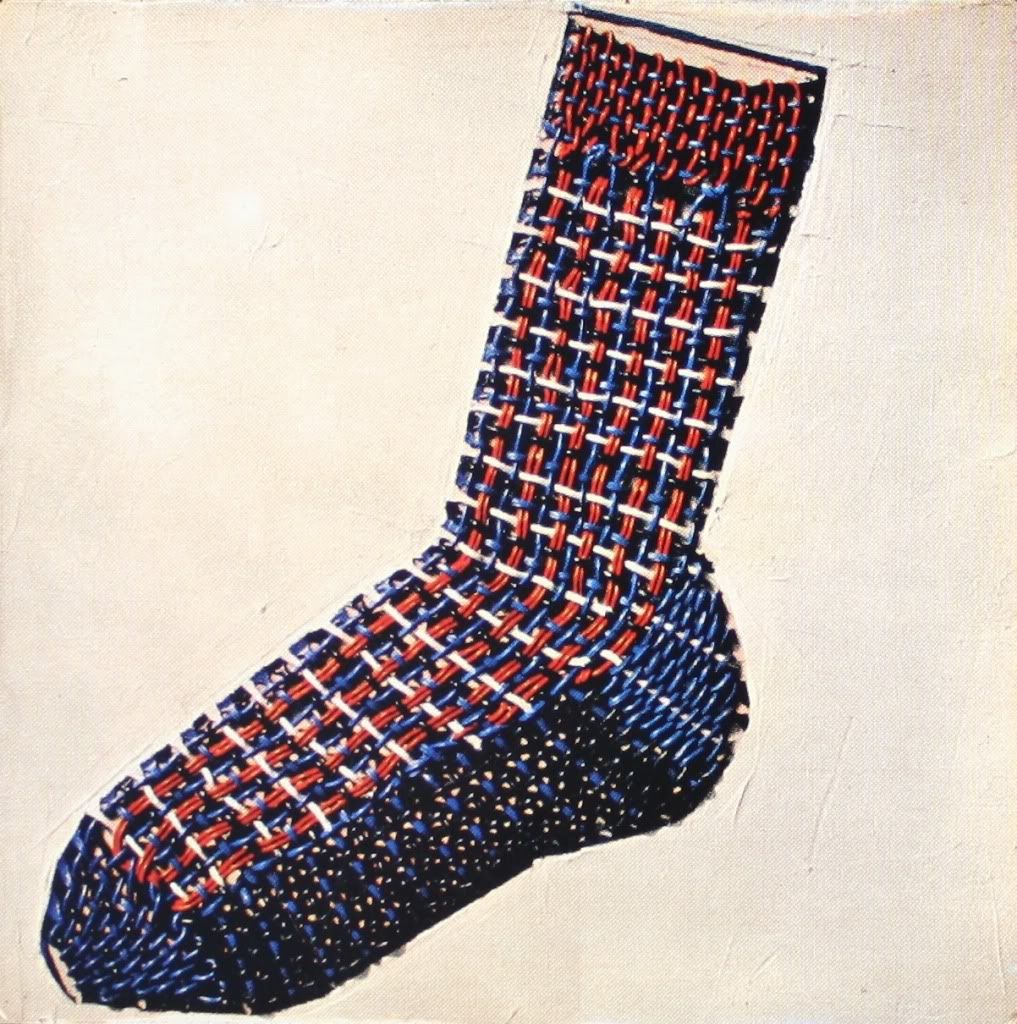
Henry Cow - Leg End


There is apparently some debate as to whether Henry Cow can accurately be deemed part of the Canterbury scene as an actual physical scene, but to me they're both clearly a part of the scene (due to guitarist Fred Frith's geographical origins and the band's association with Robert Wyatt both live and on his Rock Bottom and Ruth is Stranger than Richard albums) and part of the Canterbury scene as a genre of music that blends rock, jazz, folk, experimental and a playful sense of whimsy.  Henry Cow is one of my favorite groups in or out of the Canterbury scene for the complexity and dense melody of their music, the way each member of the group contributes in an identifiable and irreplaceable way, for the way they blend avant-garde compositions with improvised music across their sparse but evolutionary discography, and for the fact that their music remains challenging but listenable no matter how many times I return to it.

Leg End is the band's 1973 debut--it doesn't take too many seconds after the rimshot that kicks off "Nirvana for Mice" before it's obvious that Henry Cow is probably the Canterbury band most influenced by avant-garde modern classical music, which shows in their compositions' weaving concentric circles of odd-metered counterpoint as well as a hefty dose of atonality and dissonance lurking behind and within the jazzy melodies.  The sound is saxophone-heavy, with at least two horns at most times, and Fred Frith's guitar is often double-tracked, while some synthesizer fills in the background not covered by the manic drums and restlessly probing bass lines.  "Nirvana..." sort of sums up a good part of the band's mission on Leg End, consisting of a vibrantly intricate composition which quickly dissolves into a jam over which Geoff Leigh's saxophone runs rampant in an ecstatic free jazz testimony.  Interestingly, the rest of the group's vamping mechanism during Leigh's solo acts as a sort of improvisational version of the composed sections, as each band member sticks with a different meter and improvises accompaniment.  The parts interweave, at times synchronizing and at other times sounding rather tenuously held-together.  For me, it's exhilarating.  If you weren't already awake, the song-ending staccato blast will ensure either your attention or annoyance (these guys are admittedly not for everyone).

The rest of Leg End follows a similar path, though there is a superabundance of ideas, great variety in mood and melody, and some more surprises in instrumental arrangements, including flute, clarinet and Frith's violin.  The Tim Hodgkinson-penned "Amygdala" boasts an ever-shifting melodic structure that dabbles in the types of Renaissance style that is Gentle Giant's stock in trade, while the dark and cacophonous "Teenbeat Introduction" goes further down the free jazz rabbithole before swelling gloriously into Frith's "Teenbeat" composition.  "The Tenth Chaffinch" sounds very much like one of the group's live improvisations (mostly unreleased until the release of the box set The Road), blending musique concrete (pre-recorded sounds) with totally atonal, unstructured improvisation.  The album closes with an odd track, "Nine Funerals of the Citizen King," which actually features a vocal arrangement.  Though the music is extremely dense (perhaps even impenetrable on first listen), further listening reveals melodic motifs that pop up in "Teenbeat" and return again throughout "With the Yellow Half-Moon" and again in "Nine Funerals..."

For me, Leg End and the rest of Henry Cow's discography represents the real deal when it comes to progressive music--genre is irrelevant, and the band unflinchingly incorporates modern musical concepts into a sound that assaults the ear with surprises at every turn but remains a fun and energetic (especially Chris Cutler's drums, which rival Robert Wyatt's Soft Machine-era drums in energy and creativity) listen with innumerable moments of twinkling beauty.  I've heard the band's earlier material compared with Frank Zappa and the Mothers' albums from the same period, and while I can see a general stylistic similarity (jazzy, complex compositions, lots of noise and craziness), Henry Cow sounds so much more out-of-this-world and surprising to my ears, while Zappa's compositions (and especially his guitar playing), idiosyncratic as they are, always remind me directly of something I've already heard before.  This album is the perfect example of music that doesn't need lyrics--when it sounds and feels this indescribable, why limit it with the trappings of lyrics?

The whole Henry Cow discography can be found at Recommended Records, which is owned and operated by drummer Chris Cutler, or here, if you don't want to pay in GBP.

Monday, April 4, 2011

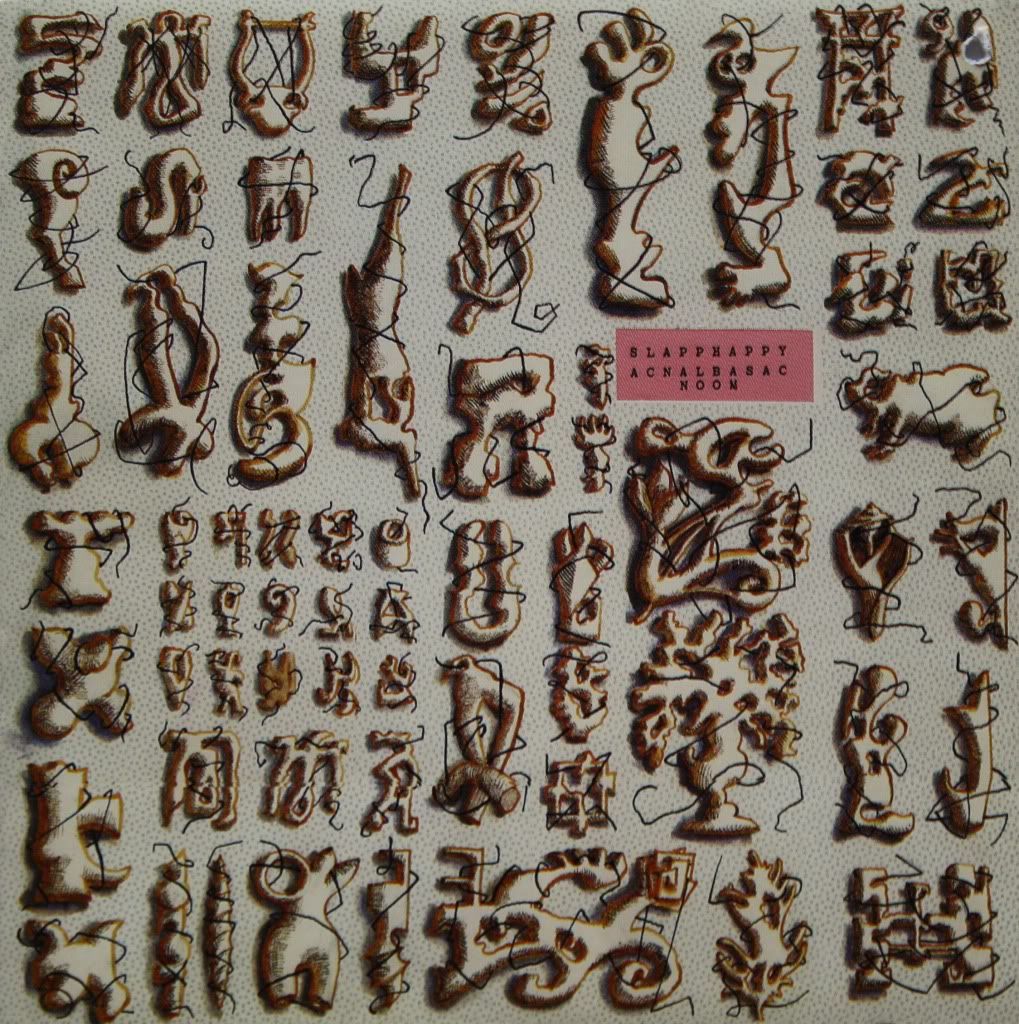
Slapp Happy - Acnalbasac Noom


Since this isn't a download blog and a lot of my traffic comes from facebook, I've decided to start linking to YouTube for at least one song mentioned in each review, so use your mouse to find some Easter eggs and match some sounds to the words. 

A release with an entirely befuddling genesis, Acnalbasac Noom was recorded for Polydor by the core Slapp Happy trio (Dagmar Krause, vocals; Peter Blegvad, guitar; Anthony Moore, keys) with Faust as a backing band in 1973.  The songs were re-recorded for Virgin in 1974 and released as the self-titled Slapp Happy.  The original recordings finally saw release on Recommended Records in 1980 as Slapp Happy or Slapp Happy, then (here comes the really confusing part) reissued again by Recommended as Acnalbasac Noom.  Today, if you want the original Faust version, your best bet is on CD, titled Acnalbasac Noom.

Acnalbasac Noom is pop music with brains--eclectic, jazzy, psychedelic, experimental and intelligent, but never prone to lengthy instrumental passages or songwriting that could be considered "progressive" in the early 70's meaning of the word.  Instead, it's an album that exudes wit; a clever spin on convention that won't assault anyone's expectations but subtle--slightly subversive.  The focus of the show is on Dagmar Krause's vocals singing Blegvad's lyrics.  For those familiar with Krause's later material (Henry Cow, Art Bears etc.), her performances here are much more traditional and even the timbre of her voice sounds quite different.  Here, it's a bit on the nasally side, sweetly but sharply adding an odd sultry edge to much of the lounge-flavored material and occasionally delving deeper into a more technically-proficient Nico-like register.

The real joy comes when you dig past Krause's rather thick but attractive German accent to find Blegvad's adroit way with words.  Take the album-opening words on the spy-themed title track: "He used to wear fedoras/but now he sports a fez/There's Kabbalistic innuendos/in everything he says."   The text of this album is a veritable treasure trove of clever rhyme, boundless vocabulary, humor and wit.  At times, it borders on smarmy, but despite their intelligence Blegvad's songs are blithely unpretentious--a rare combination.  The music is unobtrusively melodic, with pretty standard rock group arrangements with the occasional flittering synthesizer, and in addition to the aforementioned lounge-style pop there's some joyous almost bubblegum pop in "Charlie and Charlie," "Michelangelo," and "The Secret," while "A Little Something" lays down a bossa nova rock groove and "Mr. Rainbow" and "The Drum" tread into demonstrably heavier psychedelic territory.  The CD reissue sports a pretty wicked aerobics-themed bonus track, too, entitled "Everybody's Slimmin'", which is just as awesome as it sounds ("shake your yamma yamma like you're humping a ghost").

If you listen to this and can't stand Dagmar Krause's voice, there's probably little hope you'll enjoy Art Bears or her work with Henry Cow.  On the other hand, if you're already a fan of those, you might find this album a less demanding pleasure.  Either way, you can crawl further down the experimental pop deconstruction rabbit hole with Desperate Straights, Slapp Happy's 1975 collaboration with Henry Cow.

Get the CD here.