Showing posts with label Rock In Opposition (RIO). Show all posts

Wednesday, November 23, 2011

Etron Fou Leloublan - Batelages


Back to mainland Europe and one of the first groups of bands invited by Henry Cow to join the Rock in Opposition festival--France's Etron Fou Leloublan.  Along with the recent Zappa post, this album is a great example of one of the common trade-offs found in experimental rock: if you want to hear some unorthodox ideas, don't expect the album to be uniformly coherent.  As much as I obsess over the album-as-ultimate-pop-music-artistic-statement, I also acknowledge that the effort it takes to produce unique musical ideas is often so creatively taxing that the band seems to have little energy left to expend attentively cultivating their album's big picture--flow, connectedness, uniformly high quality, or even the strength of the individual songs wherein the unique ideas reside.  As a result, some experimental albums turn out to be confused messes, while some more successful ones still tend to come across as good but wildly scattershot and inaccessibly eclectic (to some, at least).  This reality makes the truly great experimental albums full of truly great ideas so rare that they're like precious diamonds to behold.  In pursuit of that elusive ideal, though, I've found a need to shift my expectations when listening to experimental music from album consistency to subjectively evaluating the presence and quality of interesting ideas.  In other words, it can be just as entertaining to listen to a group attempt and not fully succeed at doing something that's never quite been done before as it is to listen to an artist make a thoroughly great album in a style that's already been done a million times.  What better music to illustrate this experience than Etron Fou Leloublan's 1977 debut, Batelages?

The group is surely one of the most curious of RIO outfits, consisting of just a drummer, a saxophonist and a bassist who occasionally plays guitar.  Their roots are unique within RIO too, sounding much less like Henry Cow and with more of a performance art/dance hall vibe.  The epic tracks that bookend the album demonstrate quite well the relative success and failure of an experimental approach, with "L'Amulette et le Petit Rabbin" showcasing all of the group's strengths in one long narrative.  The track opens with acoustic guitar, abruptly shifting to a punk rock-like blast of electric guitar, drums and raw but playful vocals that initiate the ironic tale of the titular "little Rabbi."  The ensuing 14 or so minutes blend the band's ribald humor and vocal/poetic acting with hypnotically interlocking bass and drum figures (probably their strongest characteristic) and cabaret-like saxophone melodies.  The story is pretty absurd and funny, but there's enough feeling in the vocals and musical depth to hold the interest of non-Francophones--like when the beat changes around 9 minutes from dance hall striptease music to bass chording and stutter-stop drum interplay.  While some may prefer more smoothness and dovetailed segues between the different sections of music, I really enjoy the immediacy and surprise that comes when the band jaggedly and instantaneously changes gears from one mood to another.  And if there was any question regarding whether or not you can play difficult, complex music and still enjoy it, just listen to the last two minutes!

Conversely, "Histoire de Graine" offers another longform statement that is much less impressive.  While the narrative elements are still strong, the ideas are fewer and further between, with considerably more repetition.  The vocalist (I'm not sure whether it's saxophonist Chris Chanet or bassist Ferdinand Richard) is considerably tamer than the first track's, and things tend to drag with less energy and more of a feeling of musical stagnation.  Still, it becomes apparent that the goal of the song is a cacophonous crescendo.  While not the most economical ratio of ideas to minutes, the build-up is not necessarily unsuccessful.  In the middle of the two epics we're treated to a solo percussion performance and a 30 second saxophone-led instrumental (both of which reinforce the band's circus-like image) and the fascinating instrumental "Madame Richard/Larika," which features a doubletracked, almost avant-classical bass intro and more of the noisy trio grooves that make the first track one of the best.  Probably the most carefully-composed piece, it's also easier to grasp the relationship between the band's freer and more aggressive tendencies and their inklings as composers.

Like a lot of the uncommercial bands that made up RIO, Etron Fou Leloublan's albums play like snapshots of what they were doing live at the time; they're not so much carefully crafted studio statements (indeed evident by the charmingly lo-fi production) as they are attempts to document the achievements of a group trying (and sometimes succeeding) at combining disparate crazy elements in one place and having a great time doing it.  Though their later albums shed some of the feral energy found here, I'm happy we have both sides of the band documented in order to compare unbridled and spontaneous creativity with a more refined and thoughtful take on some of the same ideas.  When it comes to the tension between searching for perfect albums and interesting ideas, I think this one has enough inspiration to make it worth listening to and keeping in spite of tenuously gelling as a good album--chaos is often beautiful in its own way!

Get it here.

Tuesday, June 21, 2011

Aksak Maboul - Un Peu de l'Âme des Bandits


After a week that saw reviews for Brazilian pop, 60's folk and French pop, I feel it's time to travel back out into the...beyond.  There's so much to say about this album, Belgian group Aksak Maboul, and RIO (Rock In Opposition) that I almost don't know where to start--let's begin with RIO.  Rock In Opposition, though it's sometimes loosely used as a genre tag, was originally actually a festival organized by British group Henry Cow (with especial effort on the part of drummer Chris Cutler) in order to promote avant-garde rock groups selected by Cutler (eight in total) that were receiving little to no support from commercially-minded record companies.  Though the movement was short-lived, it garnered a fair amount of press for the groups and, more importantly, facilitated the release of some of the most challenging progressive music produced throughout the 1970's and beyond.  Since the loose movement became inactive in the 1980's, you're more likely to hear RIO referred to as a music genre used to describe either music that members of the original RIO groups have made, or music that is similar to, for example, Henry Cow's--dense, avant-garde, forward-looking, often with healthy doses of modern classical and jazz influences, though I personally don't find the tag to be the most helpful.

Belgian group Aksak Maboul was part of the second group of artists invited to RIO and was primarily the project of Marc Hollander (previously of CoS and founder of record label Crammed Discs).  Aksak Maboul's 1977 debut was much more of a solo effort, with Hollander playing most of the instruments (a lot of keyboards, wind instruments and drum machines)--it's a playful, eclectic and enjoyable outing, but not today's album!  In 1980, Hollander was joined by Henry Cow alumni Fred Frith and Chris Cutler and a few lesser-known European musicians for this, "their" second and final album.  Though Aksak Maboul wasn't an original RIO group, I picked this album to introduce RIO because it's one of the most consistent, representative, and simply best RIO has to offer.

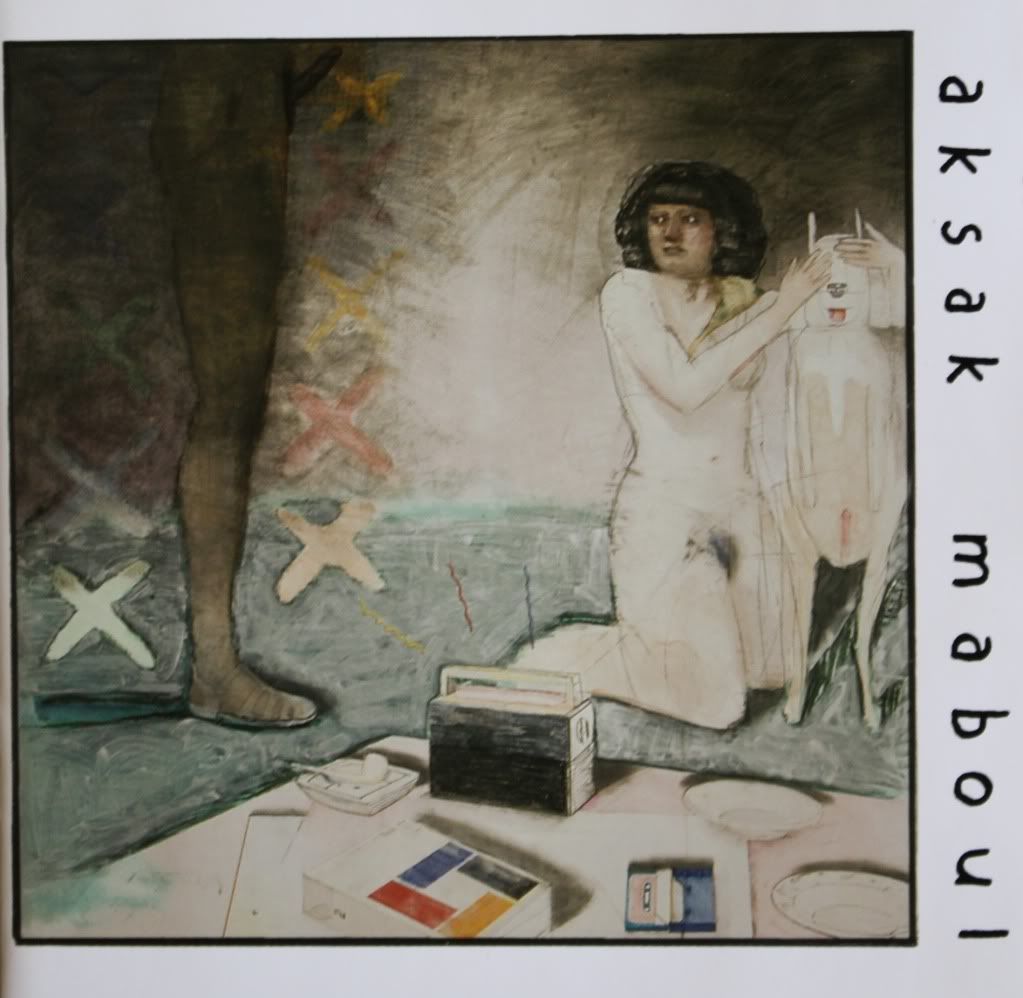
You know (or at least hope) from the ridiculous cover (depicting no fewer than two erections) that this album is going to be a crazy trip, and it certainly doesn't disappoint.  Personally, I find this album extremely satisfying because of the experimentation--most all of the songs are based on at least one describable experiment, and the results are not only challenging, they're often quite listenable.  A great example is the opener, "A Modern Lesson" (please, oh please, watch the video), which manages to deconstruct a classic blues riff with dissonance, drum machines, and wacked-out female vocals in under 6 seconds.  As the track progresses, the wind instruments enter (along with some pinball machine recordings) for an interlude, the main riff returns, then the bass and tempo increase and Hollander's electronic keys and Frith's detuned guitars amp up the energy for a driving finale that sees an incredibly complex wind/key/string arrangement brimming with head-spinning counterpoint and--what elevates this beyond similar attempts--a memorable melody.  "Palmiers en Pots" radically switches gears with a tango supposedly composed of (get this) pieces of several popular tangos, cut up with scissors, rearranged, and performed in random order.

That Fred Frith was on an unstoppable roll in the early 1980's, I'll never deny--his fingerprints (as musician, composer and producer) are all over this album, and in some ways it's better than its Frith solo contemporaries as his ideas (some heard already heard on other albums) are supplemented and developed by other musicians.  Though the resulting disc doesn't exude quite as much of Hollander's personality as the Aksak Maboul debut, its diversity is one of its greatest assets--"Geistige Nacht" features a frantic sax-led melody with some great free jazz soloing in which the sax and eventually Frith's guitar trade squawks, and "I Viaggi Formano La Gioventu" features a snaking Middle-Eastern melody doubled on wordless vocal, violin that's strongly reminiscent of Frith's other 80's work, though that handclap track buried in the mix toward the end of the song shows up again on Cheap At Half the Price's "Absent Friends."   "Inoculating Rabies" is probably the second best experiment on the disc, blending a balls-out punk riff driven by Frith's and Cutler's unfettered noise with the addition of a delicate woodwind arrangement.  It's probably the best (if not only) progressive commentary on and appropriation of the burgeoning punk movement I've heard so far, which, by 1980, had all but swallowed what little market experimental progressive music like Aksak Maboul might have cornered.  It's pretty ironic how loud Frith, bass and Cutler get considering how "obsolete" punk supposedly made their musical contributions.

The 23-minute-long "Cinema" rounds out the album with long-form composition interspersed with free improvisation (there's a lengthy and wicked cello solo as well as a pretty epic Fred Frith guitar solo), recording collage, a recurring sinister-sounding theme, some really heavy jamming from the full group (Cutler's drumming here is the liveliest I've heard since Henry Cow's last album, and recently, too).  The melodies and ideas aren't quite as immediate as they are on the shorter songs, but the added space allows the group to accomplish some things that it couldn't in five minutes, and it gives us more to uncover on later listens.  Pieces like this often seem to divide the camp of potentially interested listeners--take longer than five or six minutes and some people will complain about having their time wasted.  If there are enough different ideas being developed, though, I don't mind it taking a while--as much as I'm leaning toward shorter songs packed with briefly-stated ideas these days, I can appreciate a piece that actually allows listeners to engage with and unravel the ideas being presented during the piece, rather than after numerous plays.  While Hollander's personality is somewhat obscured by the thickness of the production and arrangements, it's perceptible on repeated listens, especially if you've heard his earlier works.  I really enjoy his mechanical-sounding drum machines and keyboard lines, not to mention his contributions to the horn sections.  Let's hear it for RIO, and this week let's keep going down the rabbit hole.


Available here on CD, and here on MP3.

Friday, May 20, 2011

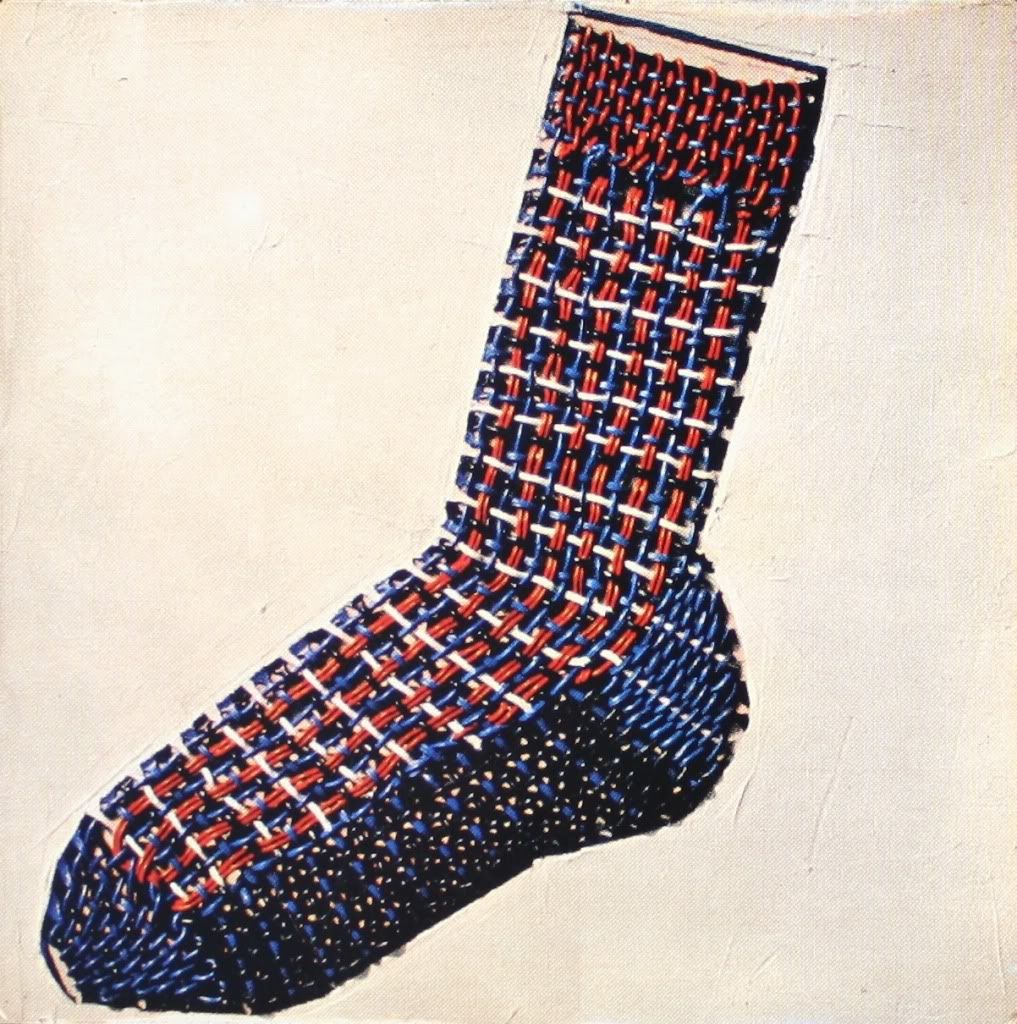
Henry Cow - Leg End


There is apparently some debate as to whether Henry Cow can accurately be deemed part of the Canterbury scene as an actual physical scene, but to me they're both clearly a part of the scene (due to guitarist Fred Frith's geographical origins and the band's association with Robert Wyatt both live and on his Rock Bottom and Ruth is Stranger than Richard albums) and part of the Canterbury scene as a genre of music that blends rock, jazz, folk, experimental and a playful sense of whimsy.  Henry Cow is one of my favorite groups in or out of the Canterbury scene for the complexity and dense melody of their music, the way each member of the group contributes in an identifiable and irreplaceable way, for the way they blend avant-garde compositions with improvised music across their sparse but evolutionary discography, and for the fact that their music remains challenging but listenable no matter how many times I return to it.

Leg End is the band's 1973 debut--it doesn't take too many seconds after the rimshot that kicks off "Nirvana for Mice" before it's obvious that Henry Cow is probably the Canterbury band most influenced by avant-garde modern classical music, which shows in their compositions' weaving concentric circles of odd-metered counterpoint as well as a hefty dose of atonality and dissonance lurking behind and within the jazzy melodies.  The sound is saxophone-heavy, with at least two horns at most times, and Fred Frith's guitar is often double-tracked, while some synthesizer fills in the background not covered by the manic drums and restlessly probing bass lines.  "Nirvana..." sort of sums up a good part of the band's mission on Leg End, consisting of a vibrantly intricate composition which quickly dissolves into a jam over which Geoff Leigh's saxophone runs rampant in an ecstatic free jazz testimony.  Interestingly, the rest of the group's vamping mechanism during Leigh's solo acts as a sort of improvisational version of the composed sections, as each band member sticks with a different meter and improvises accompaniment.  The parts interweave, at times synchronizing and at other times sounding rather tenuously held-together.  For me, it's exhilarating.  If you weren't already awake, the song-ending staccato blast will ensure either your attention or annoyance (these guys are admittedly not for everyone).

The rest of Leg End follows a similar path, though there is a superabundance of ideas, great variety in mood and melody, and some more surprises in instrumental arrangements, including flute, clarinet and Frith's violin.  The Tim Hodgkinson-penned "Amygdala" boasts an ever-shifting melodic structure that dabbles in the types of Renaissance style that is Gentle Giant's stock in trade, while the dark and cacophonous "Teenbeat Introduction" goes further down the free jazz rabbithole before swelling gloriously into Frith's "Teenbeat" composition.  "The Tenth Chaffinch" sounds very much like one of the group's live improvisations (mostly unreleased until the release of the box set The Road), blending musique concrete (pre-recorded sounds) with totally atonal, unstructured improvisation.  The album closes with an odd track, "Nine Funerals of the Citizen King," which actually features a vocal arrangement.  Though the music is extremely dense (perhaps even impenetrable on first listen), further listening reveals melodic motifs that pop up in "Teenbeat" and return again throughout "With the Yellow Half-Moon" and again in "Nine Funerals..."

For me, Leg End and the rest of Henry Cow's discography represents the real deal when it comes to progressive music--genre is irrelevant, and the band unflinchingly incorporates modern musical concepts into a sound that assaults the ear with surprises at every turn but remains a fun and energetic (especially Chris Cutler's drums, which rival Robert Wyatt's Soft Machine-era drums in energy and creativity) listen with innumerable moments of twinkling beauty.  I've heard the band's earlier material compared with Frank Zappa and the Mothers' albums from the same period, and while I can see a general stylistic similarity (jazzy, complex compositions, lots of noise and craziness), Henry Cow sounds so much more out-of-this-world and surprising to my ears, while Zappa's compositions (and especially his guitar playing), idiosyncratic as they are, always remind me directly of something I've already heard before.  This album is the perfect example of music that doesn't need lyrics--when it sounds and feels this indescribable, why limit it with the trappings of lyrics?

The whole Henry Cow discography can be found at Recommended Records, which is owned and operated by drummer Chris Cutler, or here, if you don't want to pay in GBP.