Showing posts with label Counterpoint. Show all posts

Wednesday, December 19, 2012

Song of the Week: "Turn South"

Here's the next song of the week from Cheap Seats--track #4, "Turn South."


~~~
I can tell you what you’re doing is predictably sad
And point out all the wasted potential you’ve had
Believe me, I won’t point the finger any which way but out
I may as well go ahead and turn South

I’ll go on about the secrets that you’d better learn quick
And I’ll scoff if you suggest a method other than logic
Nobody’s impressed with what I’m talking about
I oughta go ahead and turn South

I’ll swear there’s something good in the alternative
I’ll bluff so hard I’ll claim that I don’t mind if I live
I don’t believe in all the shit that’s coming out of my mouth
I’d better go ahead and face South
~~~

In terms of the album's concept, "Turn South" represents an early peak in conflict--it's about overconfidence and ego.  By the time we've reached adulthood, it seems we are secure enough in the way our minds behave (and in the relationship between our minds and our brains) that it becomes just "the way things are" and there's no need to question that there may be other things going on behind the scenes that the conscious mind is unaware of.  In this state, our elective preferences and opinions dominate to the point that ego becomes a caricature.  Of course, this is a personal song with some scathing self-assessment.  The phrase "turn South" relates to my much-explored interest in Daoist writings and classical Chinese religion--it's said that when the emperor achieves order in his kingdom and harmonizes the way of the human world with the way of nature and heaven, as a natural next step, he'll "face South"--as in, "attain perfection."  Naturally, here it's used sarcastically (time to add the ever-popular self-loathing tag!).  Along with "The Knack" and "Chrysalis (In Three Verses)," this makes up the hubristic peak from which a fall is inevitable.

Musically, this is another example of what I'm short-handing "ITC (intuitive through-composition)," where one part is through-composed and the others are subsequently composed by ear to fit together as a sort of sloppy puzzle.  Differently from other songs, though, this one doesn't really have a "lead" guitar part--there's the acoustic (trivia: the very first part I tracked over a year ago...talk about an ego-destroying experience), then the Telecaster (which plays a rhythm part in low-register octaves that somewhat overlap the acoustic) and finally the ES-335 (the last guitar part composed, which plays smaller intervals of thirds and fourths in the upper register).  You'd better believe that things get contrapuntal

This being one of the first songs I started working on, it's interesting to revisit because I had so many hypothetical goals and ideas about how the project would play out--for instance, I was hoping to avoid bass guitar entirely for the album, replacing it with bass clarinet and synthesizer where appropriate.  Obviously that didn't work out, but this one has low register Moog and no bass guitar, which contributes to a sort of (attempted) "warped indie rock" feel.  Also contributing to the "indie rock" feel is the eighth-note focus (so many staccato eighth-notes in indie rock...so many) and the absence of lead guitar.  The verses modulate chromatically, which was easy to write on paper but you can bet was a bitch to record vocals for.  The horn arrangement is another interesting thing to look back at--though it changes harmonically, the placement of the parts doesn't change, and I think it's one of the arrangements that fits best and most audibly in the overall mix...guess I got lucky early on, since not all of the parts work out as successfully.  In the studio, this was the second song Drew recorded drums for, and the first really weird one.  At first I was directing him to go "dancy," which turned out to be obviously not what I was hearing in my head.  After a few false starts and a quickly-internalized lesson in communication, we settled on "jazzy" and Drew basically figured out that he could do whatever he wanted, blasting out some ridiculous fills in the song's ending (a show for which I was privileged enough to have front row seats).  And so proceeded the rest of the drum tracking...

Wednesday, December 12, 2012

Song of the Week: "An Unsettling Preposition"

As promised, here I am introducing some material from Cheap Seats--it's my plan to talk about one song per week.  This is indeed a concept album about the human mind, and though there isn't a specific "story," there is something of a narrative progression to the track listing.  "An Unsettling Preposition" opens the album, and while I won't be proceeding chronologically with these weekly updates, this song is the perfect place to start.  Lyrics are listed below, followed by some thoughts about the song's place in the concept as well as some info about the words and music.  Please take my introspection with a grain of salt; it's there for anybody who wants explanation or is interested enough to learn more about the details imbued in this work, but also as a tool for myself in moving forward artistically for my next projects.

*
~~~
You’ve been on the understanding where the way is by the will
You say you use the fundamental features, not the flashy frills
It’s within reason’s pungent sound you sail without a doubt
Though you were once upon a time so short these tools you were without

But I recall

I’ve been in and out of context enough to lose the feeling
I by no means know the meaning of a life without this ceiling

It’s been a while!
But I recall

We’ve been under these assumptions since I thought they’d keep us dry
You say we both agree that I am you and we are I

You’re so sure!
But I recall
~~~

"An Unsettling Preposition" effectively sets the scene--amongst a lot of lyrics and poems that deal with duality, an anxious sense of questioning and explorations-posed-as-dialogues, this song opens the proceedings with a one-sided conversation directed at the complacent, passive, comfortable (perhaps willfully ignorant) self of routine--the "me" that most of us experience, most of the time.  The speaking voice comes from a corner of the mind with a nagging sense that certain day-to-day assumptions ("In conjunction with my brain, 'I' consciously choose to act, then my physical body acts;" "Logic is a clear map I use to determine and decide the course of my actions;" "My reasoning mind and my physical brain are one and the same, always acting in accord with my conscious free will;" and finally, "It's always been this way") are perhaps not quite representative of the entire picture.  I think we forget that there was a time (childhood) when our brains were soaking up sensory input like sponges--before we really had any congealed sense of selfhood or the ego to behave with confidence about it.  Once this system is firmly in place and running like a well-oiled machine fueled by memories of cause and effect, life is an easy enough plate to keep spinning--but have you ever wondered about how much sensory input (present and past) your brain is ignoring because it doesn't fit into the framework whereby you've been routinely living your life for the past decades?  The lyric also posits that the "me" that sits comfortably in routine and the "me" who questions and balks at such an anemic mind-life just might not be co-existing quite as peacefully as the automatic mind would prefer.

Lyrically, I had a lot of fun with this one as a sort of word game--the verses are built from prepositional figures of speech treated as if the locations in question were actually physical.  There's further punning happening with some homophones and imagery tied to the fact that I was looking out across the water from the Ballard Locks to the Olympics when writing the words.

Musically, the song serves as an apt introduction for the rest of the album, displaying a concise structure (a much-abbreviated traditional verse/chorus structure with a brief breakdown and an even briefer sort of post-second-chorus bridge).  It's a three-guitar arrangement, with one guitar (my ES-335 though a tiny 4-watt Hawaiian guitar amp that belongs to my friend Nick, complete with "mother of toilet seat" turquoise case) laying down rhythm riffs in the lower register and two other guitars functioning in tandem and a sort of "intuitive through-composition" (this ends up happening enough across the songs I'll go ahead and start calling it "ITC") in the upper register, where the Telecaster plays two-note chords, and the Firebird plays more of a liquid, distorted, single-note lead.  This approach has allowed me considerable freedom in terms of partwriting where I'll attempt to to create detail-rich parts with minimal repetition that can be followed individually by the listener but also fit together as parts of a more singular whole.  There's a sort of pleasing (to me) chaos in the fact that the parts can either fit together like a jigsaw puzzle, call and respond, blend harmonically, or be saying different things entirely at the same time, and it can all change from one bar to the next.  So far I've achieved this by sitting down and writing one guitar part, taking care to leave at least some space rhythmically, then composing the second by ear, using the first as a general map of inspiration.  Needless to say, it's an exacting, painstaking process and it's an enormous bitch to reproduce in the studio without extensive rehearsal (which I mostly didn't have time to invest in) but to the ear, the results are pretty unusual sounding with that sort of nearly-falling-apart groove that's been another big goal with the project.  The track really came alive when Russ tracked his drums, handling the odd-metered grooves and tempo shifts of the chorus section with aplomb.  Moving forward, I see challenges in developing the ITC aspect so I don't end up continually repeating myself (though by its fluid nature it may take a while for that to happen), as well as in general arranging--there are bass clarinet/alto sax parts, backing vocals and some piano in the final verse that are only marginally audible--this may be partially a mixing issue, but it's certainly in my mind to pay attention to how many elements can exist in an arrangement before they're obscured by the others. 

* Yes, the YouTube videos have ads.  Why?  It's expensive to make music independently...if my music is being played for free by YouTube users and there's a way for me to make a tiny pittance in return for my self-funded creative content, I'll take it. 

Wednesday, May 16, 2012

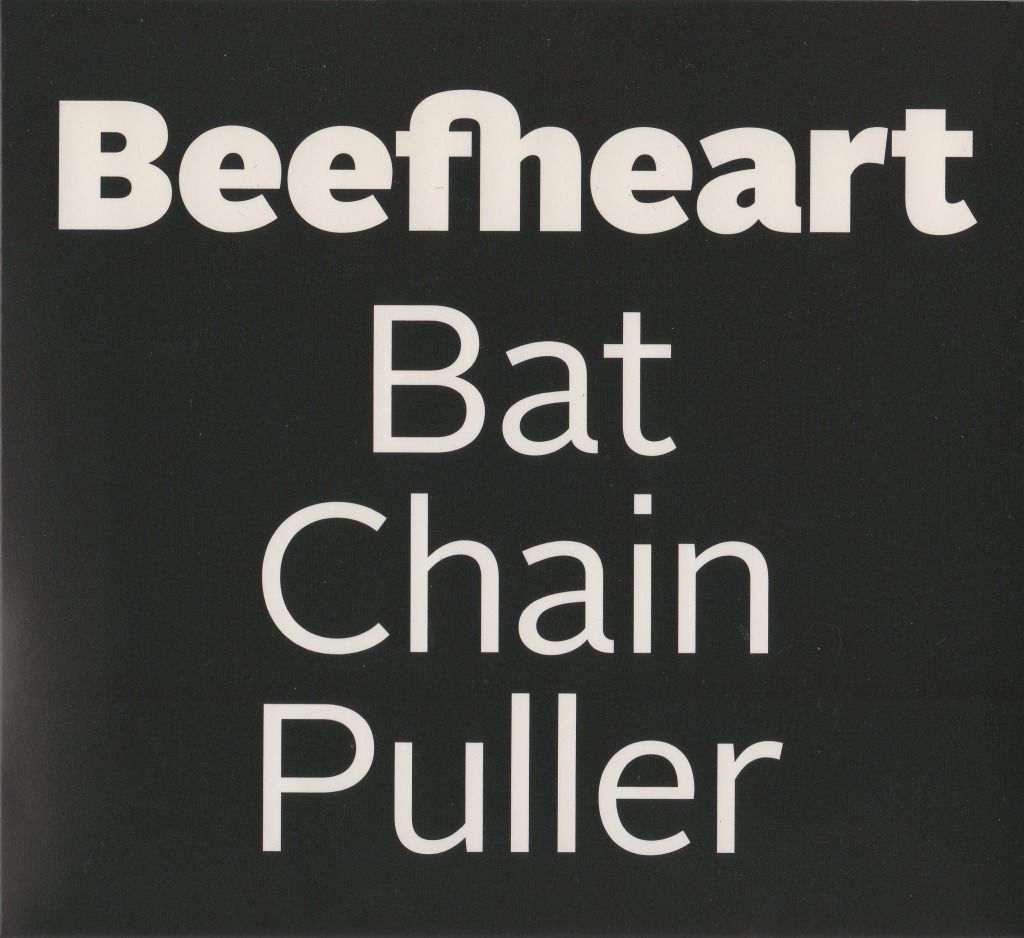
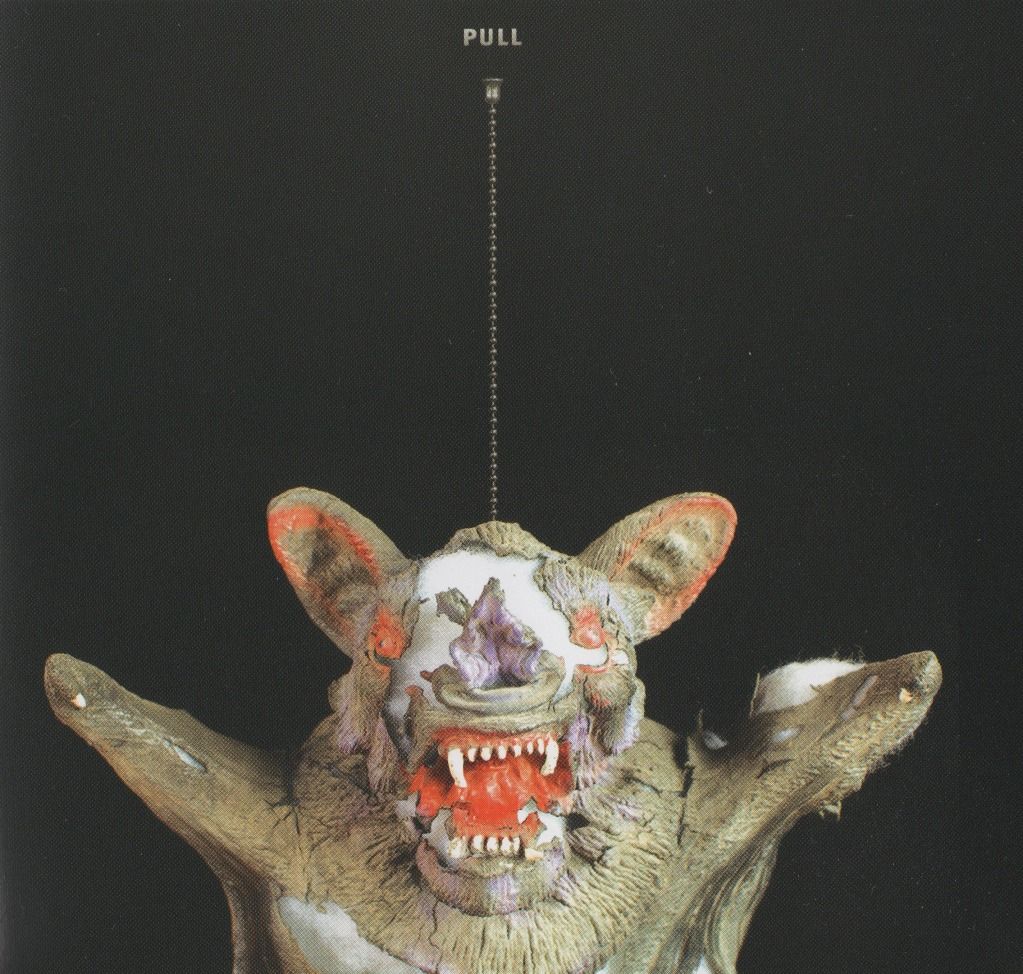
Captain Beefheart - Bat Chain Puller


It's been well over a year since I kicked off the reviews division of this site with a review of Captain Beefheart and the Magic Band's Shiny Beast (Bat Chain Puller), and considering how much the Captain's work has continued to influence my approach to music and writing I'm surprised I haven't waxed poetic about any of his other classic albums.  Technically, today still isn't that day--I'm here to gush about the "brand new" 2012 Captain Beefheart release, the lost 1976 first studio version of Bat Chain Puller, just released this spring (to disappointingly limited fanfare) on the Frank Zappa record label and nearly exclusively available for purchase here (which just might be why the album's gotten so little press).

To describe the genesis of this release briefly, Don Van Vliet decided in 1976 to return to the avant-garde and stage a creative comeback.  Herb Cohen (Frank Zappa's manager) secretly used Zappa's money to fund the project and the two had a falling out upon Zappa's return from tour, resulting in Cohen's seizure of many of Zappa's assets, unreleased Bat Chain Puller masters included. Zappa eventually reclaimed his property through legal means, but by that time Van Vliet had re-recorded most of the material on his final albums.  Since then Zappa, and now his widow Gail, have been busy enough managing Zappa's gargantuan legacy that the tapes have remained neglected in the vaults...until now!

With 10 of 12 tracks already appearing on Captain Beefheart albums that have been available for 30 years, the biggest worry with Bat Chain Puller is that it'll come across as merely supplementary to those "definitive" versions, or worse that it'll sound only partially complete in comparison to the later recordings.  Thankfully, the disc falls prey to neither possibility, playing like the hazy, dream-like album-that-never-was that it's always been!

After listening to these different versions of familiar songs and becoming familiarized with the new track sequencing, I'm left with the strong impression that this album has an undeniably distinct feel, especially in relation to Shiny Beast (Bat Chain Puller) in terms of its accessibility.  Compared to Shiny Beast's almost exclusively song-based program, this Bat Chain Puller is very much a venture split between songs, spoken word-over-music and pure poetry.  Sure, it's still considerably more mainstream than the hallowed stuff of Doc at the Radar Station, but even compared with Doc's orchestrated prickles, the poetry/music tracks here feel much more spontaneously arranged and the sonic palette more often unexpectedly drops down to just one instrument or Van Vliet's voice in some very effective instances. 

Perhaps as expected, some of the material here isn't significantly different from later versions--the arrangement of "Harry Irene" (never one of my favorite later Beefheart tracks, but an important contributor to this album's accessibility) includes guitar, but otherwise isn't much different.  The title track has its own subtle identity (further shaded by a third version here in bonus track form), bristling with kinetic motion (it's easy as ever to hear how Van Vliet originally pulled the rhythm from windshield wipers), more of an organic feel with cranked harmonica and just-barely-conflicting guitar layers (though the ever-important synths are still there) and outstanding vocal delivery (dig the the naked place he takes "their very remains and belongings").  Right off the bat, my highest hopes are kindled--one of my disappointments with later Beefheart albums is the marked reduction in the elasticity of Van Vliet's voice and additionally, in the case of Ice Cream for Crow, an overall dip in energy and compositional effort--here the Captain's voice still possesses a razor's edge and he takes enough risks that we can almost forgive him wasting the early/mid-70's trying to become a mainstream star.  "Owed T'Alex" burns with a reinvigorated closeness that's magnified further on "Floppy Boot Stomp," where the band's joyous delirium pushes the vocals so close that it sounds like the Captain's ranting all the way inside your brain. 

The most exciting aspect of Bat Chain Puller, of course, is the brand new material, namely the poetry/music hybrids "Seam Crooked Sam" and "Odd Jobs."  The former is a moody guitar/electric piano duet with Van Vliet's downbeat-yet-intense images spinning seemingly unrelated on top, while the latter is more of a full band piece with tunefully-spun vagrant imagery while the band shifts ever so slightly into what must be the first kernel of Shiny Beast's "Tropical Hot Dog Night."

Evaluating these pieces has helped me identify a couple of the specific traits that make Captain Beefheart one of my top favorite artists--first, it's the way his poetry mirrors the music, flowing smoothly then stopping, jerking, suddenly rhyming or playfully riffing off of a phrase's connotations or expected syntactical outcome.  Unsurprisingly, Van Vliet chooses words like paint colors on a palette, not necessarily concerned with their logical or expository value but rather their energy, emotional color, and the way they sound.  When I hear these songs, there are countless unexpected images and feelings popping into my head, and I can't think of too many other poets in the popular music sphere who can achieve that.  And yet, there's a strange logic or narrative to many of these pieces--what at first seems like incoherent rambling in "81 Poop Hatch," for example, gradually reveals itself to be an impressionistic panoramic scene including Van Vliet's beloved natural imagery as well as a view of his internal landscape--at least, that is, until he leaps mid-sentence to somewhere completely different; every piece seems to be at its root a rational enigma with unlimited emotional potential.

Secondly, the compositions here are a dazzling presentation of Van Vliet's painterly approach implemented in yet another aspect of the music.  More than on any of his other albums we hear open, warm-sounding jazz harmony on songs like "Seam Crooked Sam" and "Ah Carrot Is As Close As Ah Rabbit Gets To Ah Diamond."  Again, though, Van Vliet applies these combinations of notes intuitively and without regard to how theoretical rules say they're "supposed" to be used.  Fragile, sweet harmony can dissolve into dissonant, minor darkness just as quickly as it can pursue a completely fresh melodic path, as evidenced on "The Human Totem Pole (The 1,000th And 10th Day Of The Human Totem Pole)," one of two album-closing commentaries on the human race's cumulative achievements (or lack thereof) and precarious current position on earth.  Here he fuses this weird compositional approach with one of his more straightforward (yet most compelling) poems, sketching a partially-obscured picture of the skin-crawling, comical-yet-repulsive "pole," and delivering it all with a seething creepy mystery that trumps the Ice Cream for Crow version within just a few seconds..."the man on the top was starrrrrrrrvinnnnng" indeed!  Now is probably an important time to laud the contributions of the rest of the band--this music certainly couldn't have been made without the conscientious talent and attention of the rest of the band, especially drummer/guitarist John French, who also performed a crucial "music director" role in transcribing Van Vliet's hastily-blurted musical ideas into a form that the other band members could understand and memorize--just listen to the through-composed spacious atmosphere as the song sputters out in a denouement that takes up over half the song's length.  The idea that it's possible and even ideal to consent to the urge to compose and arrange notes and sounds in whatever way sounds intuitively best (regardless of the rules) is one of the important lessons I've learned from Van Vliet's music and attempted to apply to my own process.  Though the difficulty of successfully communicating such an idiosyncratic method to collaborating musicians is challenging to overcome, the singular character of the end result can really be worth the sweat.  It's also one of the few lessons any artist can potentially adapt from Van Vliet's work without necessarily ripping off his total sound wholesale--it's possible, no matter what Tom Waits tells you!

In the end, this album is like a gift sent from beyond Van Vliet's grave (though very real thanks are due to all of the living collaborators who finally brought this album to release).  Amazingly, it never sounds unnecessary in comparison with the later albums--"Brick Bats" is the only song that sounds more unfocused than its later version, with a much looser guitar arrangement, less effective vocal delivery and a fun but meandering free jazzy end section made more effective in the shorter Doc at the Radar Station version.  Nor does this earlier album obviate the ones that follow (except Ice Cream for Crow, which was always teetering on the brink of being a "completists only" release, especially now that two of its best tracks are revealed to belong to a more vital earlier work), with Shiny Beast (Bat Chain Puller) still best straddling avant-garde and pop and Doc at the Radar Station best warping Trout Mask Replica poetic/musical craziness into a newer, mature and carefully-integrated form.  Thankfully, we now have all three to consider as required listening--though the price of this CD is still uncommonly high (it cost me $27 including shipping and tax), it's worth the added expense and work it takes to track it down--let's hope there's some wider distribution on the way to make it a little easier to get the word out about this remarkable album's first issue.

Tuesday, August 16, 2011

Gentle Giant - In a Glass House


With at least five solid albums, a lineup full of virtuoso multi-instrumentalists and a totally unique sound, to me, Gentle Giant is a great band.  While their counterpoint-focused arrangements and penchant for unsettling busy-ness and atonality were probably too sophisticated to garner the group mainstream success (even in the early 70's), looking across their discography it's clear that even in 1973 the band was aiming for a more commercial sound.  While many people point at Octopus as their best (and it probably does the best job of fusing their more experimental side with a less dated sound and strong songs), In a Glass House is probably my favorite in their discography for its graceful first statement of the classic mid-70's Gentle Giant sound, its many memorable moments, and some of the strongest songs on any of their albums.  Make no mistake, though--this is 70's prog, and there's little on this disc to make you forget.

In a lot of ways, Gentle Giant are like some weird progressive version of the Band--their verve is infectious as the band members swap vocals and trade around on something like 30 different instruments based on the needs of each song.  Like many of the later Gentle Giant albums, In a Glass House is loosely based on the title's concept, which plays out generally in a set of songs that focuses inward on matters of psychological introspection and interpersonal relationships.  While it's hardly a meticulously laid-out treatise, the themes add cohesion and the lyrics are always intriguing if sometimes inscrutable.

While the songs are mostly long (four of six are over seven minutes long), they're distinctly songs and feature compelling examples of the band's trademark fusion of rock, classical, folk and the occasional soul and funk elements.  In addition to a good flow between rockers and quiet reflections, there are loads of great moments, like the gleefully atonal xylophone solo on the opener "The Runaway," which also manages to state themes of complex counterpoint, psychedelic and spacey vocal arrangements, hypnotic guitar riffs, and some great folky flute breakdowns.  As always, the transitions are seamless and the music is anchored by a fat, funky bottom provided by the bass and drums.  "An Inmate's Lullaby" features only percussion instruments and uses some great overlapping vocal production to enhance a first-person narration of a mental ward and the gray area that is "madness" (a classic theme in British music of the 60's and 70's).

"Way of Life" is maybe the least listenable track, with a slightly frantic opening riff, but it's certainly dynamic and a great example of how good the band is at juxtaposing Derek Shulman's ballsy lead vocals with Kerry Minnear's delicate vocals, which show up on a great pump organ section that emulates church music.  "Experience" is more classic Gentle Giant, with lots of contrast between odd-metered violin/guitar riffs, medieval-sounding vocal harmonies and a simple repetitive bass riff.  Gary Green's mid-song guitar solo, while not the proggiest thing on the album, is glorious for its razor-sharp tone, a perfect helping of slappy reverb, and the way it fits so well over the aforementioned bass riff.  Similarly crushing is the heaviness of the main riff of "In a Glass House," which has both a flitting, jazzy opening section and a ballad in the previous song ("A Reunion") to make it sound even heavier and worthy of its place as the album-closer.  While bands like Henry Cow employ a similar amount of counterpoint but focus on an edgier and more experimental brand of progressive music, it's hard to complain about how Gentle Giant manages to make such geeky music so catchy.  They pursued this album's template with admirable success through The Power and the Glory, Free Hand, and Interview, but I think it was definitely at its freshest state here.  Great album.

Monday, July 18, 2011

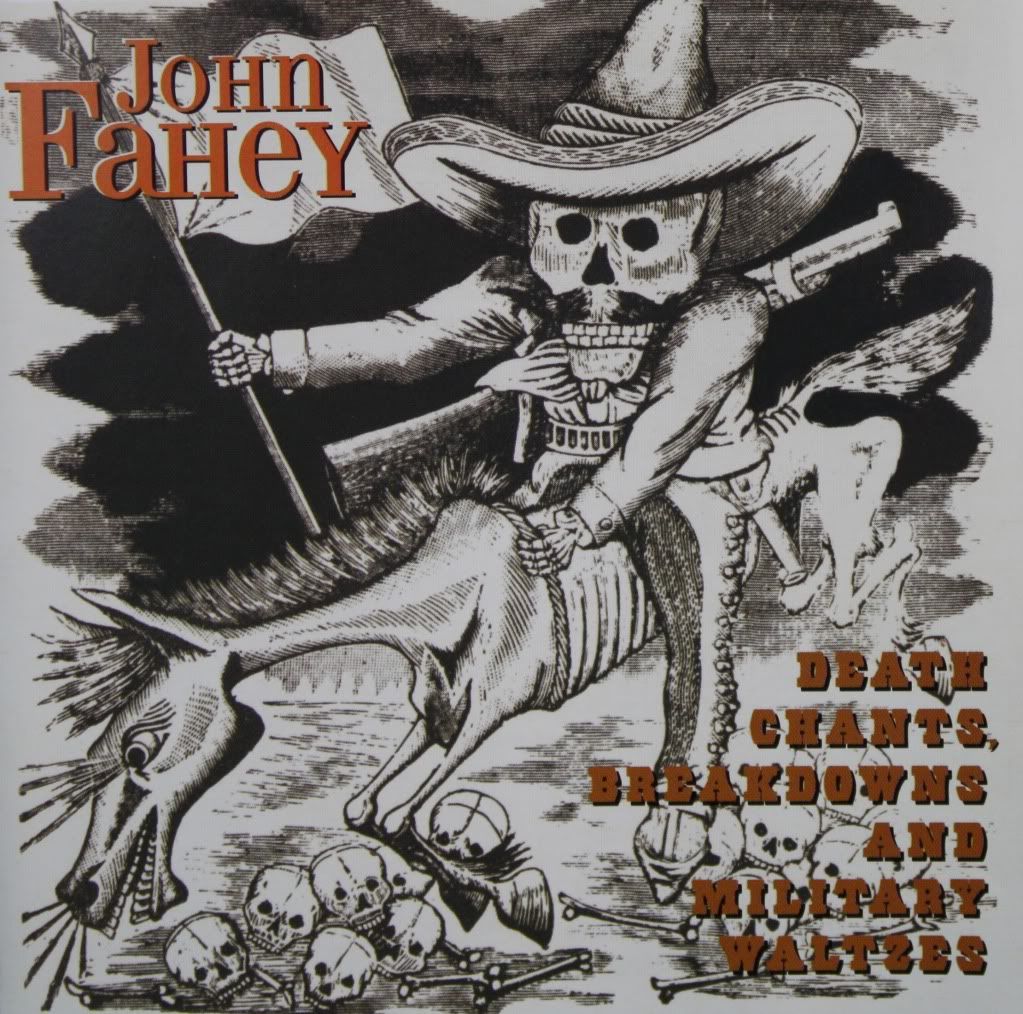
John Fahey - Death Chants, Breakdowns and Military Waltzes


In laying out markers for my musical landscape and contextualizing some of the other reviews I've written, I've been totally remiss in not yet mentioning John Fahey--sole creator of the solo steel string guitar genre, acoustic blues fanatic, composer and innovator--so I'll start with my first Fahey disc, and an enduring favorite from a man whose first 15 recorded years spanned an astonishing array of progression while still remaining anchored in the blues.

Death Chants, Breakdowns and Military Waltzes is John Fahey's second album, released on his own Takoma Records in 1963, four years after his unassuming but iconic debut.  The intervening years allowed Fahey to significantly refine his technique (mostly open tunings, allowing for lots of octave Travis picking, arpeggiatos and some majestic slow strums with blues-cum-classical melodies played on the high strings) as well as his compositional style, which sees the song lengths stretching out and the compositions featuring more surprising changes and contrasting movements.  Take "Stomping Tonight on the Pennsylvania/Alabama Border," which begins with a string-bending slow blues with a turnaround, mutates into a free, ascending arpeggio on the high strings, then again to a crushing minor blues dirge before revisiting each of its sections and closing on an arpeggio that crosses through dissonance to a dreamy major 7th concluding passage. 

Like a lot of albums that have become long-term favorites of mine, part of what I love about this album is how it sounds--the recording quality isn't great, but since it's (mostly) just one instrument, everything's still audible and the music is laced with an antique atmosphere--and the room reverb is awesome.  There are a few moments where the volume of Fahey's guitar threatens to distort the recording equipment (to its great) as on the slide glissando of "On the Beach of Waikiki," or where the distance of the guitar to the microphone lends a raucous feel, as on the energetic "Spanish Dance," and then on "John Henry Variations" when the instrument's slightly out-of-tune harmonic overtones warble with an unsettling but hypnotic pulse.  If I call some of this album "psychedelic," it's these sort of extra-melodic elements that I'm talking about, like 3:15 into "America" where (through the use of tape editing, I assume) the guitar timbre suddenly changes from bassy fingerstyle to tinny high-neck strumming, or 1:06 into "When the Springtime Comes Again," when the key abruptly shifts from minor to major but the theme remains almost the same--there's something within those quavering intervals that lingers on the precipice of some forgotten memory that never ceases to make my hairs stand on end.  The piece would continue to fascinate Fahey the composer as it evolved into numerous versions on the 1967 re-recording of this album, in numerous live recordings, and on 1971's America as "Mark 1:15"--each time expanding on the last but somehow leaving a trail of discrete incarnations, each with its own particular magic.

The dark corners of this album aren't without some extreme eccentricities, either, like the dissonant strumming on the flute duet, "The Downfall of the Adelphi Rolling Grist Mill" (Fahey's titles were often almost as great as the songs they labeled).  Ultimately, though, Fahey's genius substantially rests on his ability to bizarrely marry the familiar harmony and structure of the blues with the dissonance and imagination of 20th century classical composers.  For someone like myself who gets bored with the repetition inherent in a lot of blues music, hearing Fahey deconstruct his beloved genre and reassemble its innards into dazzling piecemeal sculptures breathes new life into what's usually a compositionally inert idiom.  His preternatural melodic abilities provide melodic lines that sink into the brain slowly but insidiously--not sounding like much at first, but ultimately sounding as beautiful as any music possibly could--I really love the way his sweeping melodies traverse multiple string plucks, simultaneously savoring a note and impatiently re-sounding it before the sound has a chance to decay.

I've got a feeling that whichever Fahey album most people name as their favorite is one of the first (if not the first) that they hear.  Though his early career covered expansive ideological and theoretical territory, it did so at a modest pace and Fahey would often repeat the same ideas either explicitly or intuitively.  At the time he was only pressing hundreds of copies of each album, so how was he to know how things would sound when his discography was considered retrospectively?  For example, he re-recorded and re-released most of the songs from this album (to be reviewed at a later date) in 1967, and the advancements he made in technique and composition are noticeable.  What I'm trying to convey is that, beautiful as they are, some of his ideas lose that "first time" magic when they crop up elsewhere, and where you hear them first tends to remain the most memorable.  For me, it was here with Death Chants, Breakdowns and Military Waltzes--I still think it's a great place to start with Fahey as it states many of the ideas he would continue to pursue--compositionally, technically, sonically (he'd continue to experiment with tape editing as the 60's wore on), and arrangement-wise (many more of his albums feature his own adaptations of Episcopal hymns as closers)--but it all comes in a relatively digestible form, mostly adhering to compartmentalized song structures and resonating with some sort of pop instinct in terms of flow and melody.  I've got several John Fahey favorites, but this is probably the one I'd give up last--you can pry this album from my corpse's withered fingers.

Friday, May 20, 2011

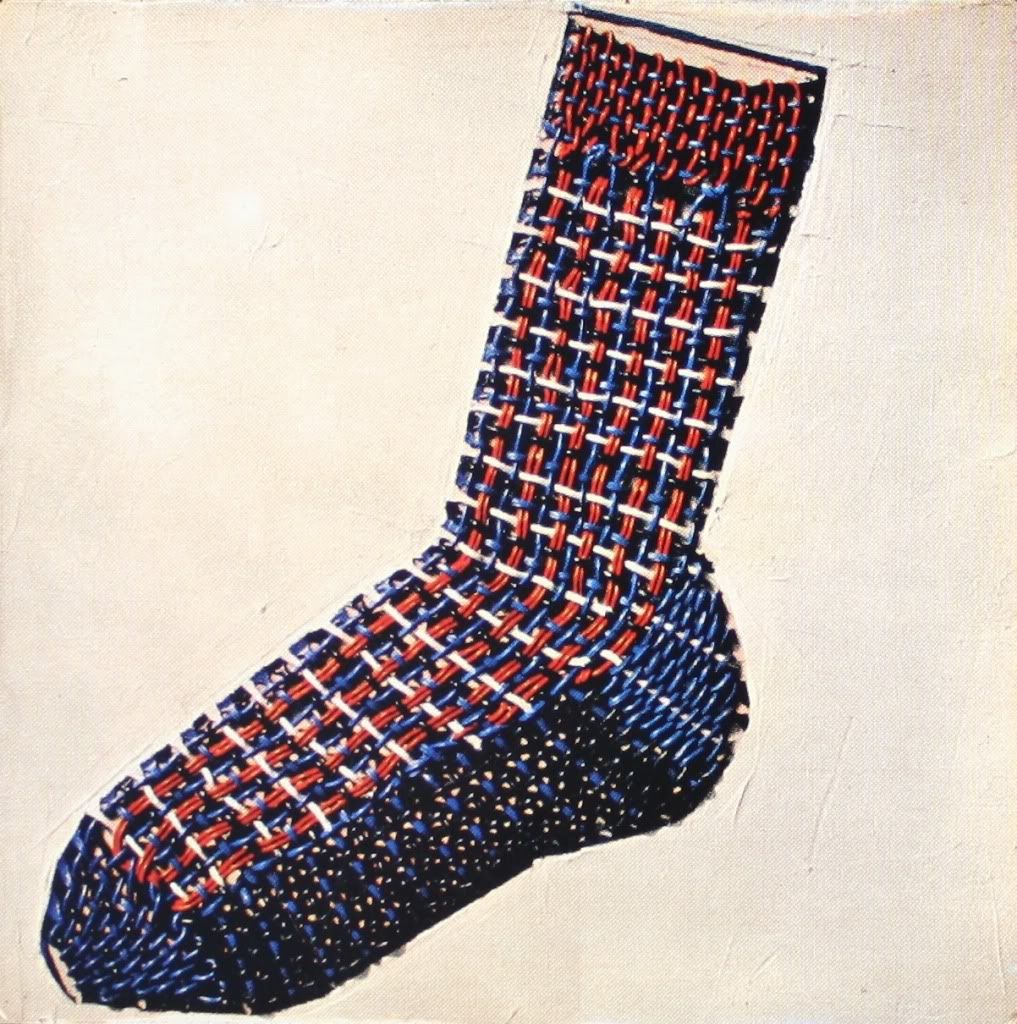
Henry Cow - Leg End


There is apparently some debate as to whether Henry Cow can accurately be deemed part of the Canterbury scene as an actual physical scene, but to me they're both clearly a part of the scene (due to guitarist Fred Frith's geographical origins and the band's association with Robert Wyatt both live and on his Rock Bottom and Ruth is Stranger than Richard albums) and part of the Canterbury scene as a genre of music that blends rock, jazz, folk, experimental and a playful sense of whimsy.  Henry Cow is one of my favorite groups in or out of the Canterbury scene for the complexity and dense melody of their music, the way each member of the group contributes in an identifiable and irreplaceable way, for the way they blend avant-garde compositions with improvised music across their sparse but evolutionary discography, and for the fact that their music remains challenging but listenable no matter how many times I return to it.

Leg End is the band's 1973 debut--it doesn't take too many seconds after the rimshot that kicks off "Nirvana for Mice" before it's obvious that Henry Cow is probably the Canterbury band most influenced by avant-garde modern classical music, which shows in their compositions' weaving concentric circles of odd-metered counterpoint as well as a hefty dose of atonality and dissonance lurking behind and within the jazzy melodies.  The sound is saxophone-heavy, with at least two horns at most times, and Fred Frith's guitar is often double-tracked, while some synthesizer fills in the background not covered by the manic drums and restlessly probing bass lines.  "Nirvana..." sort of sums up a good part of the band's mission on Leg End, consisting of a vibrantly intricate composition which quickly dissolves into a jam over which Geoff Leigh's saxophone runs rampant in an ecstatic free jazz testimony.  Interestingly, the rest of the group's vamping mechanism during Leigh's solo acts as a sort of improvisational version of the composed sections, as each band member sticks with a different meter and improvises accompaniment.  The parts interweave, at times synchronizing and at other times sounding rather tenuously held-together.  For me, it's exhilarating.  If you weren't already awake, the song-ending staccato blast will ensure either your attention or annoyance (these guys are admittedly not for everyone).

The rest of Leg End follows a similar path, though there is a superabundance of ideas, great variety in mood and melody, and some more surprises in instrumental arrangements, including flute, clarinet and Frith's violin.  The Tim Hodgkinson-penned "Amygdala" boasts an ever-shifting melodic structure that dabbles in the types of Renaissance style that is Gentle Giant's stock in trade, while the dark and cacophonous "Teenbeat Introduction" goes further down the free jazz rabbithole before swelling gloriously into Frith's "Teenbeat" composition.  "The Tenth Chaffinch" sounds very much like one of the group's live improvisations (mostly unreleased until the release of the box set The Road), blending musique concrete (pre-recorded sounds) with totally atonal, unstructured improvisation.  The album closes with an odd track, "Nine Funerals of the Citizen King," which actually features a vocal arrangement.  Though the music is extremely dense (perhaps even impenetrable on first listen), further listening reveals melodic motifs that pop up in "Teenbeat" and return again throughout "With the Yellow Half-Moon" and again in "Nine Funerals..."

For me, Leg End and the rest of Henry Cow's discography represents the real deal when it comes to progressive music--genre is irrelevant, and the band unflinchingly incorporates modern musical concepts into a sound that assaults the ear with surprises at every turn but remains a fun and energetic (especially Chris Cutler's drums, which rival Robert Wyatt's Soft Machine-era drums in energy and creativity) listen with innumerable moments of twinkling beauty.  I've heard the band's earlier material compared with Frank Zappa and the Mothers' albums from the same period, and while I can see a general stylistic similarity (jazzy, complex compositions, lots of noise and craziness), Henry Cow sounds so much more out-of-this-world and surprising to my ears, while Zappa's compositions (and especially his guitar playing), idiosyncratic as they are, always remind me directly of something I've already heard before.  This album is the perfect example of music that doesn't need lyrics--when it sounds and feels this indescribable, why limit it with the trappings of lyrics?

The whole Henry Cow discography can be found at Recommended Records, which is owned and operated by drummer Chris Cutler, or here, if you don't want to pay in GBP.