Showing posts with label 2012. Show all posts

Wednesday, December 19, 2012

Song of the Week: "Turn South"

Here's the next song of the week from Cheap Seats--track #4, "Turn South."


~~~
I can tell you what you’re doing is predictably sad
And point out all the wasted potential you’ve had
Believe me, I won’t point the finger any which way but out
I may as well go ahead and turn South

I’ll go on about the secrets that you’d better learn quick
And I’ll scoff if you suggest a method other than logic
Nobody’s impressed with what I’m talking about
I oughta go ahead and turn South

I’ll swear there’s something good in the alternative
I’ll bluff so hard I’ll claim that I don’t mind if I live
I don’t believe in all the shit that’s coming out of my mouth
I’d better go ahead and face South
~~~

In terms of the album's concept, "Turn South" represents an early peak in conflict--it's about overconfidence and ego.  By the time we've reached adulthood, it seems we are secure enough in the way our minds behave (and in the relationship between our minds and our brains) that it becomes just "the way things are" and there's no need to question that there may be other things going on behind the scenes that the conscious mind is unaware of.  In this state, our elective preferences and opinions dominate to the point that ego becomes a caricature.  Of course, this is a personal song with some scathing self-assessment.  The phrase "turn South" relates to my much-explored interest in Daoist writings and classical Chinese religion--it's said that when the emperor achieves order in his kingdom and harmonizes the way of the human world with the way of nature and heaven, as a natural next step, he'll "face South"--as in, "attain perfection."  Naturally, here it's used sarcastically (time to add the ever-popular self-loathing tag!).  Along with "The Knack" and "Chrysalis (In Three Verses)," this makes up the hubristic peak from which a fall is inevitable.

Musically, this is another example of what I'm short-handing "ITC (intuitive through-composition)," where one part is through-composed and the others are subsequently composed by ear to fit together as a sort of sloppy puzzle.  Differently from other songs, though, this one doesn't really have a "lead" guitar part--there's the acoustic (trivia: the very first part I tracked over a year ago...talk about an ego-destroying experience), then the Telecaster (which plays a rhythm part in low-register octaves that somewhat overlap the acoustic) and finally the ES-335 (the last guitar part composed, which plays smaller intervals of thirds and fourths in the upper register).  You'd better believe that things get contrapuntal

This being one of the first songs I started working on, it's interesting to revisit because I had so many hypothetical goals and ideas about how the project would play out--for instance, I was hoping to avoid bass guitar entirely for the album, replacing it with bass clarinet and synthesizer where appropriate.  Obviously that didn't work out, but this one has low register Moog and no bass guitar, which contributes to a sort of (attempted) "warped indie rock" feel.  Also contributing to the "indie rock" feel is the eighth-note focus (so many staccato eighth-notes in indie rock...so many) and the absence of lead guitar.  The verses modulate chromatically, which was easy to write on paper but you can bet was a bitch to record vocals for.  The horn arrangement is another interesting thing to look back at--though it changes harmonically, the placement of the parts doesn't change, and I think it's one of the arrangements that fits best and most audibly in the overall mix...guess I got lucky early on, since not all of the parts work out as successfully.  In the studio, this was the second song Drew recorded drums for, and the first really weird one.  At first I was directing him to go "dancy," which turned out to be obviously not what I was hearing in my head.  After a few false starts and a quickly-internalized lesson in communication, we settled on "jazzy" and Drew basically figured out that he could do whatever he wanted, blasting out some ridiculous fills in the song's ending (a show for which I was privileged enough to have front row seats).  And so proceeded the rest of the drum tracking...

Wednesday, December 12, 2012

Song of the Week: "An Unsettling Preposition"

As promised, here I am introducing some material from Cheap Seats--it's my plan to talk about one song per week.  This is indeed a concept album about the human mind, and though there isn't a specific "story," there is something of a narrative progression to the track listing.  "An Unsettling Preposition" opens the album, and while I won't be proceeding chronologically with these weekly updates, this song is the perfect place to start.  Lyrics are listed below, followed by some thoughts about the song's place in the concept as well as some info about the words and music.  Please take my introspection with a grain of salt; it's there for anybody who wants explanation or is interested enough to learn more about the details imbued in this work, but also as a tool for myself in moving forward artistically for my next projects.

*
~~~
You’ve been on the understanding where the way is by the will
You say you use the fundamental features, not the flashy frills
It’s within reason’s pungent sound you sail without a doubt
Though you were once upon a time so short these tools you were without

But I recall

I’ve been in and out of context enough to lose the feeling
I by no means know the meaning of a life without this ceiling

It’s been a while!
But I recall

We’ve been under these assumptions since I thought they’d keep us dry
You say we both agree that I am you and we are I

You’re so sure!
But I recall
~~~

"An Unsettling Preposition" effectively sets the scene--amongst a lot of lyrics and poems that deal with duality, an anxious sense of questioning and explorations-posed-as-dialogues, this song opens the proceedings with a one-sided conversation directed at the complacent, passive, comfortable (perhaps willfully ignorant) self of routine--the "me" that most of us experience, most of the time.  The speaking voice comes from a corner of the mind with a nagging sense that certain day-to-day assumptions ("In conjunction with my brain, 'I' consciously choose to act, then my physical body acts;" "Logic is a clear map I use to determine and decide the course of my actions;" "My reasoning mind and my physical brain are one and the same, always acting in accord with my conscious free will;" and finally, "It's always been this way") are perhaps not quite representative of the entire picture.  I think we forget that there was a time (childhood) when our brains were soaking up sensory input like sponges--before we really had any congealed sense of selfhood or the ego to behave with confidence about it.  Once this system is firmly in place and running like a well-oiled machine fueled by memories of cause and effect, life is an easy enough plate to keep spinning--but have you ever wondered about how much sensory input (present and past) your brain is ignoring because it doesn't fit into the framework whereby you've been routinely living your life for the past decades?  The lyric also posits that the "me" that sits comfortably in routine and the "me" who questions and balks at such an anemic mind-life just might not be co-existing quite as peacefully as the automatic mind would prefer.

Lyrically, I had a lot of fun with this one as a sort of word game--the verses are built from prepositional figures of speech treated as if the locations in question were actually physical.  There's further punning happening with some homophones and imagery tied to the fact that I was looking out across the water from the Ballard Locks to the Olympics when writing the words.

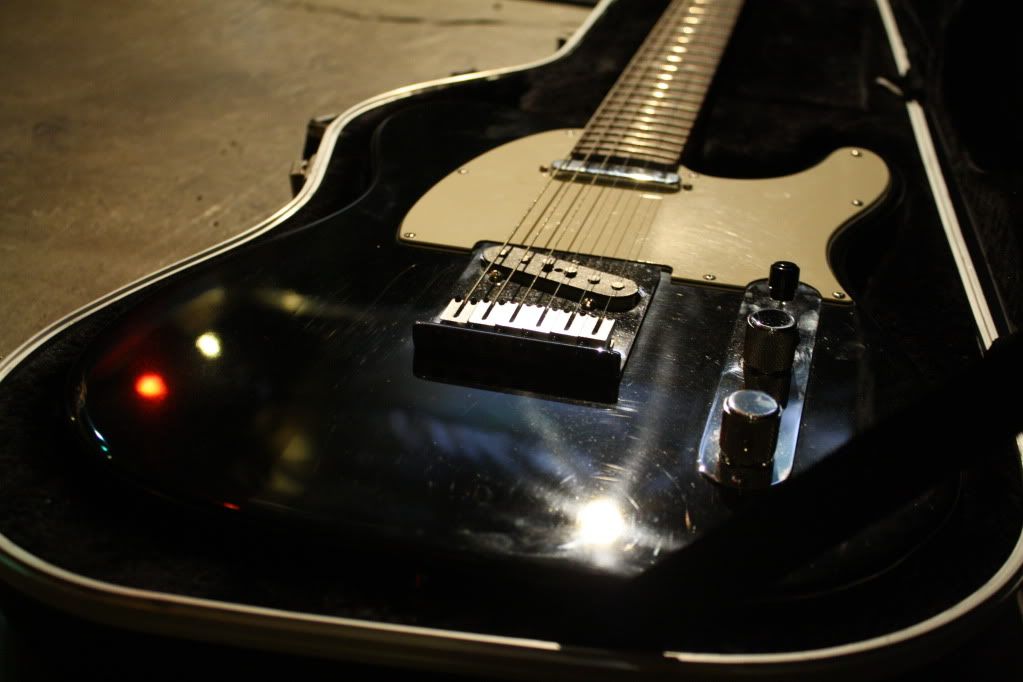
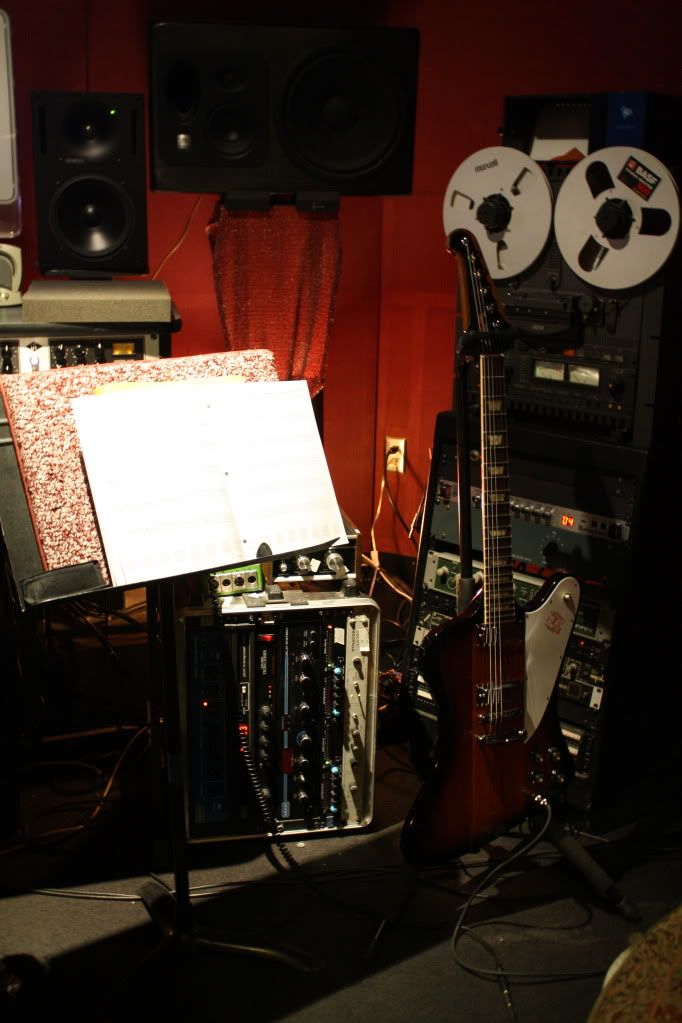
Musically, the song serves as an apt introduction for the rest of the album, displaying a concise structure (a much-abbreviated traditional verse/chorus structure with a brief breakdown and an even briefer sort of post-second-chorus bridge).  It's a three-guitar arrangement, with one guitar (my ES-335 though a tiny 4-watt Hawaiian guitar amp that belongs to my friend Nick, complete with "mother of toilet seat" turquoise case) laying down rhythm riffs in the lower register and two other guitars functioning in tandem and a sort of "intuitive through-composition" (this ends up happening enough across the songs I'll go ahead and start calling it "ITC") in the upper register, where the Telecaster plays two-note chords, and the Firebird plays more of a liquid, distorted, single-note lead.  This approach has allowed me considerable freedom in terms of partwriting where I'll attempt to to create detail-rich parts with minimal repetition that can be followed individually by the listener but also fit together as parts of a more singular whole.  There's a sort of pleasing (to me) chaos in the fact that the parts can either fit together like a jigsaw puzzle, call and respond, blend harmonically, or be saying different things entirely at the same time, and it can all change from one bar to the next.  So far I've achieved this by sitting down and writing one guitar part, taking care to leave at least some space rhythmically, then composing the second by ear, using the first as a general map of inspiration.  Needless to say, it's an exacting, painstaking process and it's an enormous bitch to reproduce in the studio without extensive rehearsal (which I mostly didn't have time to invest in) but to the ear, the results are pretty unusual sounding with that sort of nearly-falling-apart groove that's been another big goal with the project.  The track really came alive when Russ tracked his drums, handling the odd-metered grooves and tempo shifts of the chorus section with aplomb.  Moving forward, I see challenges in developing the ITC aspect so I don't end up continually repeating myself (though by its fluid nature it may take a while for that to happen), as well as in general arranging--there are bass clarinet/alto sax parts, backing vocals and some piano in the final verse that are only marginally audible--this may be partially a mixing issue, but it's certainly in my mind to pay attention to how many elements can exist in an arrangement before they're obscured by the others. 

* Yes, the YouTube videos have ads.  Why?  It's expensive to make music independently...if my music is being played for free by YouTube users and there's a way for me to make a tiny pittance in return for my self-funded creative content, I'll take it. 

Sunday, December 9, 2012

Cheap Seats 11: Thanks! (I Couldn't Have Done It--Not Alone!)

Oh!  It's The Noble Fir!  With Ellen and Rick
Ok!  Official Release Day for the album is behind us, as is the release party (I performed an acoustic set and released CDs to Kickstarter contributors, friends and family and regulars at The Noble Fir on Thursday).  Before I get to the business of introducing some of the specific creative content on this album, I'd like to expand a bit on the album's credits and "thank you" section, as there are many people whose efforts helped bring the project to fruition.  Though this diary entry comes out a bit long-winded, it's of paramount importance to me to give credit where it's due.

As far as the sounds recorded on the album, nobody played a bigger role than Justin Phelps--he was recording, mixing and mastering engineer, and as I've mentioned before, he played a crucial role in the quality control department.  In addition to those technical roles, Justin was pretty much the first person I met after emerging from my creative cave--he's a hard-working, friendly guy, and the fact that he instantly took my artistic goals seriously was a hugely important boost to my confidence and morale.  There's a lot of loneliness involved in making music independently, and it's connections like these that, for me at least, act as lifelines.  Though we didn't always reach complete accord regarding my artistic goals (which is to-be-expected), Justin was always ready to constructively challenge and question my decision-making, which is an important part of the learning process for me as I move forward to my next projects--knowing how a sympathetic pair of ears hears ideas you may have thought you made clear is a good signpost to understanding how completely unsympathetic listeners might respond.  Most importantly, I'm looking forward to teaming up with Justin again on my upcoming plans.

Sarah, of course, sits at the top of the thank-you list.  I can't imagine what it's like to be subjected to another person's artistic ups and downs in close quarters, but she is always emotionally supportive even if it's hard for her to understand how high the stakes can be for me personally in the midst of these projects.  Also crucial is having a stable, "real" life to return to from the peaks and troughs of the creative roller coaster.  It's good to be reminded of your responsibilities and know how important the simple things are in life.  Speaking of real life, my mom and dad have also been incredibly supportive throughout the process, hosting me in Camas for long periods while I commuted to and from the studio.  While I'm sure my aesthetic path and career choices continue to mystify them, I know they appreciate how important and critical my current goals are to my happiness and I'm proud to have shown them how seriously I'm taking my current endeavor.

Rick and Ellen at The Noble Fir deserve very special mention, too.  Ever since I burned them a CD-R of the In Not-Even-Anything Land material as I was finishing it up in summer of 2010, they've generously exceeded any expectations as patrons of the "arts," hosting not one, but two CD releases and always providing positive feedback and the warmth of friendship that allows labors of love to flourish.  It was a great pleasure to celebrate this friendship in song, performing "The Noble Fir" at the release party.  In a more serious, "brass tacks" sense, the fact that they've also employed me at the bar since June 2011 has provided me with enough income and leave time to actually afford projects like this--the costs for this album would have equaled about half a year's worth of my previous income, and I'm extremely grateful for the fact that my job enables me to fund artistic projects of this scale while still maintaining a reasonable standard of living and savings--I take this privilege very seriously!

Working my way through the list, I again find cause to thank Nick and Cathy Manwell--I've been friends with them since Nick gave me a dollar when I was playing at 4th Avenue Coffee Shop outside the Liberty Theater in Camas back around 2002.  Since then I've played countless hours of guitar with Nick and "borrowed" pieces of his gear for years at a time (it's his bass heard on the whole album).   It was a real pleasure to get Nick involved in Cheap Seats--he plays lead acoustic on "Chrysalis (In Three Verses)."

In terms of the rest of the "band" heard on the album, much thanks is owed to the kinetic energy provided by drummers Drew Shoals and Russ Kleiner.  I've known Drew since he was an already-legendary presence on the Whitman College campus, playing for every band from the school's jazz band to r&b/hip hop group Love Child to his own solo stuff (releasing such unforgettable singles as "I Can Hear You Having Sex")--apart from a brief stand-in soundcheck appearance, we never played music together.  So, Drew's appearance on eight songs here fulfills a goal I'd long had in the back of my mind.  Additionally, Drew came into the recording process at a very early point (December 22nd of last year), so his willingness to take the music seriously and add some real bones to the fleshy mass I'd concocted was a huge boost to my confidence, which was quite low at the start of the sessions.  I love how Drew's contributions acknowledge the complexity of the songs' meters but also aren't afraid to run rampant, enhancing the "nearly-falling-apart" feel with a free-flowing, intuitive groove.  Russ (to whom Drew introduced me after his school schedule prohibited his return to the later sessions), somewhat contrastingly, approached his songs with a meticulous attention to the details--I was really surprised at how thoroughly he'd internalized the knotty meters of songs I'd not even bothered to chart for him--his energy and sympathetic attention to detail really shine through on his contributions, which were made in spite of a monumental cold (he went on antibiotics after our session).  Finally, my friend Peter Bruckner provided piano for two album tracks and one bonus track, lending a lot of complex feeling with his jazz voicing knowledge, and providing some really choice melodic nuggets in the small spaces that were left by the time he came into the picture.  Here's hoping I'll get to work with these musicians again! 

Chelcie (L), Michelle (R)

Though they're further down this posting than they really deserve for their staggering team accomplishment, the post-production design team that created all of the album art and other visuals for the release deserve huge props for making this package something eye-catching and realizing of a concept I'd had in my...brain...for two-plus years.  Chelcie (who sits both in the credits and "thank you" sections of the booklet, deserves enduring credit for acting as a sounding board for ideas, a confidant for hopes and fears and a companion/fellow traveler on the artistic path) contributed the hand-made collage and watercolors that grace the album art, as well as the watercolor image of my imbecilic grin that disgraces the deluxe package.  Michelle Koelbl (who designed the whole package for In Not-Even-Anything Land) returned for some stellar typographic contributions to the outside cover.  My brother Andy took a lion's share of the "odds and ends" that always crop up with this kind of thing, impressingly finding an attractive layout for the verbosity that is the inside of the CD jacket and the liner notes, as well as promptly responding to needs for posters, image manipulation, print layout for the deluxe package, and probably more time-consuming minutiae that I'm ungratefully forgetting (*brrriiiing*"Hey, I know you're at work, but can you do me a favor?").  Similarly, Courtney Morgan picked up numerous loose ends, creating the sweet brain graphic that appears a few times in the art and became a rubber stamp for the deluxe package, designing the t-shirts, and responding to numerous small design needs throughout the project.  Finally, Johnnie Heinz hand-painted the menagerie of brains that sit quietly behind the lyrics in the insert. Again--I'll be a lucky man if these people continue to help me in the future!

This brother band is formed!  Tentative band names include: Knappetite for Destruction and Knapp Kin.

Finally, I need to round out this list with some people whose contributions are less measurable but no less important in sum--Patrick (whose djembe I've been using for something like 6 years) gets thanks for providing ongoing cheerleader support and continuing connection with an atrophied social life.  Randy Parsons and Cody Green at Parsons Guitars have continually serviced my guitars from basic setups to trouble-shooting to exacting custom work, all the while with professional attention to detail and reasonable prices.  Ike's Auto Repair in Centralia replaced my truck's alternator within two hours when it failed in the middle of one of my many trips to Portland--talk about coming through when it counts!  Professor Mitch Clearfield and his metaphysics course at Whitman must be credited with introducing me to many of the philosophical and cognitive science ideas and writings that form the conceptual basis of these songs and the album's overarching concept--these unsolvable problems still haven't let go of my imagination something like eight years later!  Joel, Andy, Donny, Rick, Sandi and all of the interns at Cloud City Sound and Super Digital provided a welcoming studio environment, friendly support and feedback and some especially professional studio and duplication services.  Paul Davison provided inspiration for "Adjacent to Not-Really-Anyhow Time" in conversation on his Roy Harper Podcast.  Finally, there are all of the Kickstarter campaign contributors, supportive music fans and friends, family, artists, teachers and thinkers who provide a huge grassroots network out of which creative projects like this spring.  I'm sure my frazzled brain has forgotten to credit specific contributions, but please know I am constantly thankful for the wellspring of energy that has brought this to fruition.  One of the later lines on the album is "I couldn't have done it not-alone;" rest assured--when it comes to this project, "I couldn't have done it--not alone!"  Thank you!

John gleefully brandishes his deluxe package CD.


Cheap Seats Part 1
Cheap Seats Part 2: Non-Commercial Music 

Cheap Seats Part 3: A Day in the Studio 

Cheap Seats Part 4: The (Un)Happy Accident 

Cheap Seats Part 5: Mix Mix, Stir Stir 

Cheap Seats Part 6: Kickstarter Campaign
 
Cheap Seats Part 7: Alicia Dara Interview  
Cheap Seats Part 8: Tyler Fortier Interview 
Cheap Seats Part 9: Anna Coogan Interview 

Monday, November 19, 2012

Cheap Seats 10: Chris Cutler Interview

Today we've got the final interview of the Cheap Seats series, and one that I've been looking forward to since it was conducted all the way back in July (time flies when you're leading a double life!) inasmuch as it nicely caps the interview collection by not only encapsulating an independent musician's perspective, but also that of an owner and operator of an independent music label with a long career in non-commercial music.  As a musician, Chris Cutler is perhaps best known as the drummer for Henry Cow and Art Bears, but like the other members of those groups his recordings and performances have spanned innumerable notable collaborations and solo projects that encompass and cross too many genres and ideas to even attempt cataloging them.  In addition to his percussion skills, Cutler is an experienced lyricist, composer and writer/speaker on various musical topics and, finally, is the creator and operator of Recommended Records (ReR), which has released and distributed an eclectic array of music (most of which broadly falls under the experimental and avant-garde umbrella, and much of it falls in my "absolutely essential" category) since its creation in 1978. 


How would you say the state of non-commercial music (as a whole) in 2012 differs from when you first entered the professional music world in the late 60's/early 70's?


In the late ‘60s there was a handful of major labels and an almost non-existent independent sector. The idea that a band could release its own LPs was not in the air (though there were a few visionary exceptions, mostly in other fields—such as Sun Ra’s Saturn and Harry Partch’s Gate V labels, though lacking any general distribution, these were effectively invisible). And there was the additional problem of distribution: you could make a record, but how would you get it into the shops? A tiny monopoly of distributors dominated the market, structurally tied into the needs of the majors; anything outside that was too much trouble. So bands didn’t think of going it alone, instead they looked for labels. And that meant major labels or their specialist subsidiaries.

On the other hand, in the late ‘60s and early ‘70s—through a complex set of special circumstances—both labels and public were looking for novelty and innovation, and these are things that an essentially parasitic music industry can’t manufacture, so they had to chase after them instead, meaning that it was still possible for outsiders to get into the game. In addition, there was a moderately healthy gig circuit routinely programming new bands, and these were gigs that paid. Support groups didn’t play for nothing then, or ‘pay to play’ as now; they got reasonable money. So the sign-posted way to success was to get onto the ladder and climb up into the system. And it seemed to work. So there was no thought—and no reason to think—of finding a public in any other way.

This picture has now changed beyond all recognition.  The old patriarchy has long collapsed and the few surviving major labels face ever-diminishing sales, so they invest what they have in safe mainstream product or dirt-cheap back-catalogue reissues. The old practice of ploughing a healthy percentage of turnover back into speculative releases—testing the water and discovering new talent—has long since devolved onto more energetic, less profit-oriented, independent labels, the first batch of which emerged in the late ‘70s, part of the mini-revolution that was Punk (swiftly followed by its more canny beneficiaries, the New Wave). In that environment, if a band rose to the top, a major could buy it up, thereby avoiding the cost of speculative research. And occasionally an independent might be able to hang on to a success and edge a little closer to mini-major status.

In this climate, all but very mainstream bands had to aim to be signed by independents or release their own records. The independent marketplace expanded crazily throughout the ‘80s and ‘90s, at the same time fragmenting into a mass of disconnected and self-contained specialist niche communities. Everything changed: a relatively inclusive mainstream (Beefheart and Sinatra had coexisted on the Warner catalogue) fractured into a major, hits-only, mainstream while a multiplying catalogue of subcultures peeled away, disappearing from the general conversation altogether. So, as the nature of the listening public changed, bands’ ambitions changed along with it.

Looking back, Henry Cow was extraordinarily lucky: we, like many other bands of our era, having strayed across—or broken through—the common-practice fences, had been pitched into the wild, uncharted territories of extended electrification, new instruments, hybrid compositional techniques, cross genre borrowing, radical recording practices, unfettered improvisation and controlled noise… a relatively uncharted terrain. Most of those territories are mapped now, so the sense of possibility and discovery has inevitably dimmed. Of course, there are other terrae novae, but they are not—as they were for us—in such plain sight. I hasten to add that that is not because we were smarter; it’s just that we were just lucky enough to be active during an untypical historical hiccup.  The next musical breakthrough will come along in its own time, as they always do.  Meanwhile, consolidation, revival and minor modifications of existing forms will continue to dominate a musical climate no longer particularly supportive of experiment and innovation. In other words, it couldn’t be much more different now than it was it the late ‘60s, or much harder to survive in.

Thursday, November 8, 2012

Cheap Seats 9: Anna Coogan Interview

The Cheap Seats train rolls on--this time we've got an interview with Anna Coogan, a talented songwriter and artist working roughly in the Americana vein.  A seasoned independent musician since her days with north19, Anna now has three solo albums and numerous tours of the US and Europe under her belt, as well as a continuing portfolio of good press.  I'm excited to interview Anna as her career has seen her begin as a regionally-successful artist and grow from national to international touring, not to mention the great leap she's taken from musician-with-a-day-job to full-time musician.  Take it from Anna's experience--if you want to progress in the independent music world, you'll need to cultivate some perseverance.   

Photo: Marcel Houweling, taken at Roepaen Podium in Ottersum, NL.

As a musician who's been doing this for a number of years, how have things changed across your career, both in terms of how you make and release your music, and in how you've attempted to promote and advance it?  What are some of the most valuable lessons/tricks you've picked up?


A lot of things have changed so much, and a lot of things have stayed the same over the past ten years.  I started playing at the most turbulent, exciting, and vulnerable time in the music industry--right around 2002--and so much has changed since then for everybody.  Sometimes I kick myself for not getting into it a few years earlier, but things work out the way they work.

Mostly I have learned how to treat it like a business, with a balance sheet and a realistic view.  What is going in (financially, emotionally, and time-wise) and what is coming out?  Are these things balancing out?  How many years of investment are you willing to make before you want to see some returns?  What kind of returns are you looking for?

The thing that seems to be most important is to hire a good team to help promote you – and that can take years to find.  But I think if you are good, and you are relentless, and you tour your brains out and make records and videos and send a lot of emails and show up on time and are polite and friendly to people, eventually you will build a good group of people who care about you and are willing to help you out, and that makes all the difference.

Monday, October 29, 2012

Cheap Seats 8: Tyler Fortier Interview

Today we've got the second installment of the handful of interviews I conducted for the Cheap Seats series.  I've written about my old school friend Tyler Fortier's (Bandcamp, Facebook) music before, and back in September I posed to him a series of questions similar to those in the last interview.  Just as all of the other interviews seem to have turned out, Tyler's offers a unique perspective and an emphasis on some of the constant challenges independent artists face and strive to surmount (with many of which I can seriously identify) on a day-to-day basis.


As a musician who's been doing this for a number of years, how have things changed across your career, both in terms of how you make and release your music, and in how you've attempted to promote and advance it?  What are some of the most valuable lessons/tricks you've picked up?


Over the years I have become more and more self-sufficient.  Each new project has a lower cost attached to it.  Releasing music is easy.  Promoting music is tough.  I'm burnt out and can't imagine releasing anything anytime soon.  It's a lot of politics.  It's all about who you know.  It's like looking for a job--sending resumes (press kits) to every city your traveling to.  There is probably a 10% success rate in that.   And out of the hundreds of people who read a review or see your picture or are even slightly interested, maybe one person will go out of their way to come to a show or go listen to music online.

Recently I've tried releasing digital singles because I wasn't having as much luck selling CDs as I wanted and going digital is a good way to keep overhead low.  I hate digital though so it's hard for me to do that and I probably won't continue releasing anything just in a digital format.  


What's been the most difficult challenge to overcome?


Performing intimate lyrical based music in loud and obnoxious settings for people who don't give a shit.


What's the best way to convert a new fan?  How do you measure your progress--record sales, live show attendance, Facebook "likes," etc.?


I'm not sure.  The best thing is seeing return people in your audience though, I know that.  I don't measure my success because that's a fine and blurry line, but having people that were at a show 6 months ago come back the next time and say they've been loving the CD they bought is as good as it gets.


In your experience, what does it take to break beyond a fanbase of friends and family to one populated by people solely interested in the music?


That's a tough one.  I'm not sure.  There has to be an emotional connection made somewhere but as to how to do that, I'm still trying to figure it out.


How would you describe the Eugene music scene?  How do you book your shows, especially when it comes to traveling outside your home base? At this point, would you say you're most successful regionally or online/globally?


There is a lot of good music in Eugene.  Mostly empty venues though from what I can tell.  It seems like everyone is having the same battle with getting people out to listen.  To book shows, I research a lot on the internet and then send emails or call depending on the venue.  I'm probably most successful regionally, though that doesn't mean too much.  I do appear to have a small fan base in the Netherlands area as well, judging from online sales.  Great bands out of Eugene: The Royal Blue, Leo London, Kingdom County, Tara Stonecipher and the Tall Grass, Scott Austin, Mike Surber, Beth Wood, and.....so many more but my mind just went blank.


What does it take to sell an album?  What sells most for you, physical media or downloads?  For you, are recording sales the goal, or are recordings more a piece of the overall puzzle in terms of promoting the music?  Have you reached a point where the recordings pay for themselves, or are they a necessity you're willing to support yourself?  Are people actually willing to pay for the music, or do they expect it to be free?


I'm not sure what it takes to sell an album.  I sell most of my albums at shows.  Out of town shows, that is.  I can't sell a CD in Eugene to save my life but I sell a good amount when I travel.  I don't know why.  Recording sales are not my goal, but I'm proud of my work and I want people to hear it and like it, and I want to be paid what I think I deserve for the work I and everyone who contributed put into it.  People do expect music to be free these days.  I feel like a sex worker most of the time, folding up my tips after playing with extra emotion because I needed to make some money tonight and maybe if I just sing this part with lots of gusto, I'll make an extra $20.

How important are production values when it comes to your recordings?  Your albums have spanned from lo-fi home recordings to more produced, professional products--do you think it's important to fans to have a polished, professional recording, or are they willing to sacrifice production values for quality content?  Do professional production values manifest themselves in the finished product in a way that justifies their cost?


Production is the most fun part of making music for me.  I'm always plotting the next big idea even when I'm still in the writing phase.  It is very important.  It is opening yourself up, connecting with a song on some unexplainable level, and understanding every word, guitar strum, and breath to the point that you know exactly what the song wants, what the song needs, and how to make that song sound how it was meant to sound even from the point of its conception in the pen-and-paper stage.  I think certain songs need certain things and whether it is lo-fi or polished, the song will reveal itself to the producer in time.  Fans or music listeners don't need anything.  They just want a song they like and they don't care how it's done or what work went into it.  People who like to dance want a fun beat to move to and people who like lyrics want to be challenged existentially.  I think it is literally that black and white for a majority of “music listeners.”


When it comes to promoting an album, what avenues seem the most successful in getting the music heard?  Do you do everything yourself, or do you get help from anywhere?


I haven't had much luck in promoting my albums.  Local radio here has been super supportive, especially 89.7 KLCC NPRNinkasi Brewing has been a big supporter as well and I have had great support from The Eugene Weekly.  As far as getting my music out to the masses though, I haven't had luck.  Facebook is an awful way to do this, but it is the easiest way so I rely on that sometimes because I don't have time to do anything else.  I think management is key for any serious musician.  Everyone needs some knowledgeable cheerleaders on their team.


When do you decide it's time to head back into the studio? When you've got all the songs written...when it feels right creatively...when you've got ideas but not necessarily songs?


I'm always in the studio (aka the spare bedroom in my house).  This is where I record all my projects as well as projects for my clients.  Sometimes I will record a song when I deem it “ready” or sometimes I'll record a song when I am stuck melodically or lyrically with it.  Most of the stuff I don't keep, but I am always recording songs and thinking as a producer--how can I construct them to reach their highest potential?  In the last week I've been working on seven songs that I have recorded in the last two-and-a-half weeks (two of which are mine).


What keeps you going in the tough row-to-hoe that is the independent music world?  Where's your inspiration coming from right now?


I don't have inspiration or hope as an independent artist, but I do have inspiration as a songwriter.  The desire to always be better and never being satisfied with anything I do has been my inspiration and fuel for the last few years.


Do you have any advice for aspiring musicians?


Don't let your ego get in the way and don't take anything too personally.


What have you been listening to this week?  How do you seek out new music?


My playlist this week has pretty much been:
-Joe Pug's first two EP's, a record by Dolly Parton, Linda Ronstadt, and Emmylou Harris called Trio, John Prine - Common Sense, Van Morrison - Saint Dominic's Preview, Elvis Costello - Armed Forces, and in my car stereo is Saves The Day's first record: Can't Slow Down

.

What's on the horizon for you musically?


I'm putting my music on the back burner and starting to work specifically with songwriters on their songs in the role of a producer and mixing engineer.  My debut as a producer was with Mike Surber, who released is debut full length this past June.  I'm currently working on Scott Austin's first full-length, as well as some EPs for three other clients.

Cheap Seats Part 1
Cheap Seats Part 2: Non-Commercial Music 
Cheap Seats Part 3: A Day in the Studio 
Cheap Seats Part 4: The (Un)Happy Accident 
Cheap Seats Part 5: Mix Mix, Stir Stir 
Cheap Seats Part 6: Kickstarter Campaign
Cheap Seats Part 7: Alicia Dara Interview

Friday, July 6, 2012

Cheap Seats 5: Mix Mix, Stir Stir


After a seemingly interminable two-month break after the end of recording (a day of righteous drum tracking), Justin and I are mixing this record.  It's also worthwhile to note that it's been seven months since this album's first recording dates back in December and two years this week since I wrapped up recording for my last album in my parents' basement!  Time, naturally, flies, and it's sort of hard to believe I've been working so long on a single project. 

We've got two business weeks for mixing and at this point Justin's doing pretty much all of the work--I mostly sit around and do things like this while he sorts through the amorphous pile of tracks I heaped upon him, and after he works on a song for a few hours I chime in with some kind of verbal ingratitude like "the lead guitar isn't very audible, can we do something about that?"  While I've got a musician's and seasoned listener's ears for mixing, Justin has a professional's ears and the skills to make things happen efficiently, quickly, and with an ever-present sense of each song's big picture.

The process starts with the drums; since the record contains recorded contributions from two drummers, it's possible to dial in the mixing settings for one drummer, apply them to every song recorded with those drums to save time, then tweak them minimally for each song.  After that, Justin seems to work on the bass (if there is any) and so forth on to the guitars, horns, vocals and other instruments.  To treat this like a mixing version of A Day in the Studio, let's start by saying that "mixing" basically means arranging and adjusting the characteristics of all of the tracks that make up a song in order to make them sound cohesive, organized, and to properly represent the song's arrangement and most important elements in a way that's audible to the listener.  The process involves things as simple as setting the volume and panning (whether the track's coming from the left speaker, the right, or a mixture of both) of each track (which can actually become quite complex when there's lots of tracks), but also encompasses things like compression, equalization (or EQ; adjusting the bass, midrange and treble of a track to compensate for too much of something or allow two tracks with similar frequency ranges to coexist without covering each other up, a problem that can happen with dense arrangements like the ones in a lot of these songs), and all sorts of effects--commonplace ones like reverb and delay as well as more "proprietary" tricks of the trade.

In a nutshell, the fact that Justin's done this hundreds of times means that he has a method and a creative vision that form a solid launch pad for each song well before we even get to the point where I'm giving my own input.  As with all of the phases of this project, mixing has been a real learning experience.  I've gotten to hear the consequences of the arrangements I've made--sometimes things work great and there's space for all of the instrumental voices to sound audible and distinct, and sometimes things I thought we'd be able to fit in end up sitting atmospherically in the background, where they certainly contribute, but not quite as identifiably.  It's also been instructive to see how Justin reacts as a listener to the ideas and concepts in the music--more than a couple of times ideas I've had regarding the mix have met with questions about why exactly it needs to happen.  Not that there's some kind of creative struggle happening, but rather Justin's been quite helpful with providing feedback as to how well ideas I've had are actually audible in the music, and whether or not the things I want to do are actually making it easier for the listener to grasp the concept.  Though I don't have a lot to do to make the mixing happen, I'm trying to learn as much as I can conceptually to use during my next project--there are a lot of things I could do ahead of time to make things run smoother, and and I have a better idea of what kinds of things will later become problematic.

Hopefully, I'll also be able to maintain the inspiration that naïveté brings--I want to remain focused on coming up with the weirdest, most distinctive ideas I can rather than thinking of the mixing process first--things have a way of working out, and everything can be fixed, in one way or another!  Bottom line, this record's sound is a week away from being 95% complete...after we finish mixing, it's mastering, duplication and release!  Stay tuned for more overarching Cheap Seats content (including interviews!), as well as details about preorder and release of this behemoth. 

Cheap Seats Part 1
Cheap Seats Part 2: Non-Commercial Music 
Cheap Seats Part 3: A Day in the Studio 
Cheap Seats Part 4: The (Un)Happy Accident

Tuesday, June 5, 2012

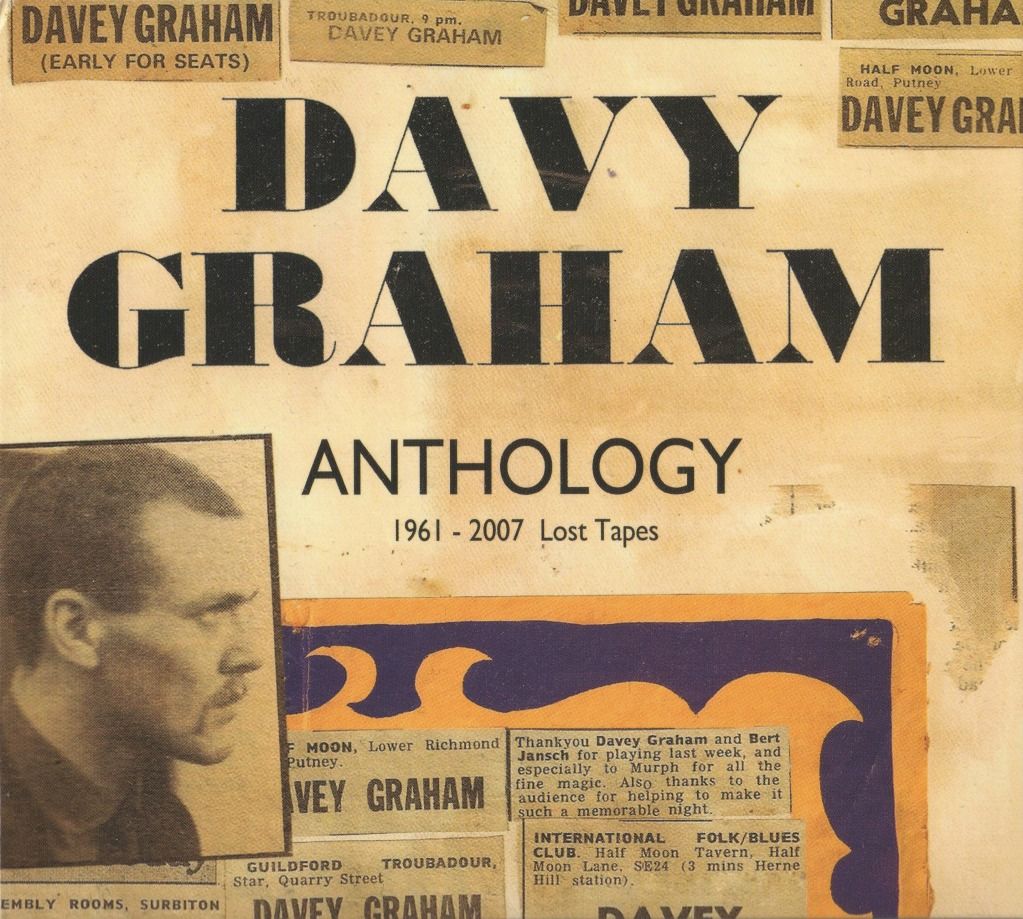
Davy Graham - Anthology: 1961-2007 Lost Tapes


Almost four years after Davy Graham's death, the folks at Les Cousins Music are still working not only to preserve his officially-recorded legacy, but also to expand the scope and depth of his output, making it clearer for those who weren't there why the guitarist was the undisputed king of the 1960's English folk revival.  Nostalgically packaged in a collage of images gleaned from Graham's personal scrapbook (and simultaneously displaying both spellings of the guitarist's first name he confoundingly vacillated between), this three-CD collection anthologizes no less than 54 tracks across more than 2 1/2 hours of unreleased recordings.  Count me in!

It's a fool's errand to attempt a track-by-track analysis of an anthology so deep, so I'll attempt to convey some general impressions and reference tracks where appropriate.  Having been a Davy Graham fan for several years, I think I'm finally starting to understand how, as Roy Harper says, Graham "never managed to turn his talent into a brand that people could go out and buy and enjoy," yet every other guitarist from the same time period and beyond cites Graham as a towering giant of the six-string.  After five years of absorbing Graham's studio output I'm still at a loss to recommend a single album of his that fully conveys and encompasses what was so revolutionary about his playing, and not having been there it's been hard to picture myself in that bright-eyed hopeful time and imagine myself at some bohemian party with Graham conjuring untold spirits out of an acoustic while everyone just sits and listens.  Enter this anthology, which as far as I've heard does the best job this side of After Hours at Hull University of recreating such a scene.  The sound quality (especially on the first two discs) is almost exclusively of home/bootleg quality and most of the performances are solo, with Graham positively shredding in front of small audiences as he sends jazz, folk, blues and "world music" (before such a term existed) through a blender and we get to hear what comes out.

Since it's mostly just an acoustic with or without vocals, the sound quality isn't much of a bother--if anything, it enhances the intimacy of the performances, which find Graham energetically blasting solo performances of many of the folk and blues songs found on his albums as well as never-before-heard tracks.  Throughout, his technique is astounding, transitioning as quickly as ever between lead and rhythm, melody and harmony, from style to style.  Somehow the setting's informality allows the guitarist's hard-won chops to shine brighter with none of the studio adornments meant to commercialize his sound, and we instead get to hear him exclaim "Ah, fuck" after some imperceptible mistakes during a lightning-fast take on Leadbelly's "Fannin Street" with nary a missed note, as well as a verbal introduction to his classic instrumental "Anji" (there are two versions here, along with an unreleased track and album highlight "Anji's Greek Cousin") that details how he wrote the tune.  While the live renditions of guitar-and-vocal folk/blues tunes present uniformly great guitar and often contain vocals that are superior to the studio versions, they also miss the mark when it comes to what made the guitarist unique--more than almost any other Graham album, this anthology conveys the strange alchemy that occurred between Graham's musical influences, his fingers and his guitar, and these discs present ample, undiluted evidence of what was possible when only these elements were on display.

Of the three discs, the third is probably the least essential, reflecting the diminishing returns that Graham's post-60's releases offer, yet it often sounds more vital than studio recordings from the same period.  Though Graham's lifestyle choices and age would gradually slow his playing and attenuate his already limited vocals, we still get some surprisingly good representations of the more delicate British folk, jazz, medieval-sounding instrumentals and world folk music explorations he continued to make through the 70's and beyond.  "The Gold Ring" shows his pull-off speed undiminished, "Sita Ram" and "Mevlut" pair his further eastern experiments with appropriate accompaniment, and "DeVisee Suite" shows a subtle, slower side to his playing that was all but absent in the early days.  The final late-period tracks remind us that we're summing up the career accomplishments and contributions of a distinctive force in 20th century popular music.  As with his 2007 swansong Broken Biscuits, the joy here comes less from marveling at jaw-dropping speed, but more from giving credit where it's due and appreciating that the man's muse was still active at the end.

While I still think it's impossible to recommend an accurate starting point for a prospective Davy Graham fan (it takes more than the average time investment to really "get" him as an artist), this anthology is a surprisingly worthy addition to even a modest Davy Graham collection.  Unlike so many retrospective collections, it manages (with the help of Graham's considerable skill and restlessness) to make familiar songs sound fresh and new songs sound immediate and relevant to the further-broadening portrait available of Graham as an artist. 

Get it here.

Wednesday, May 16, 2012

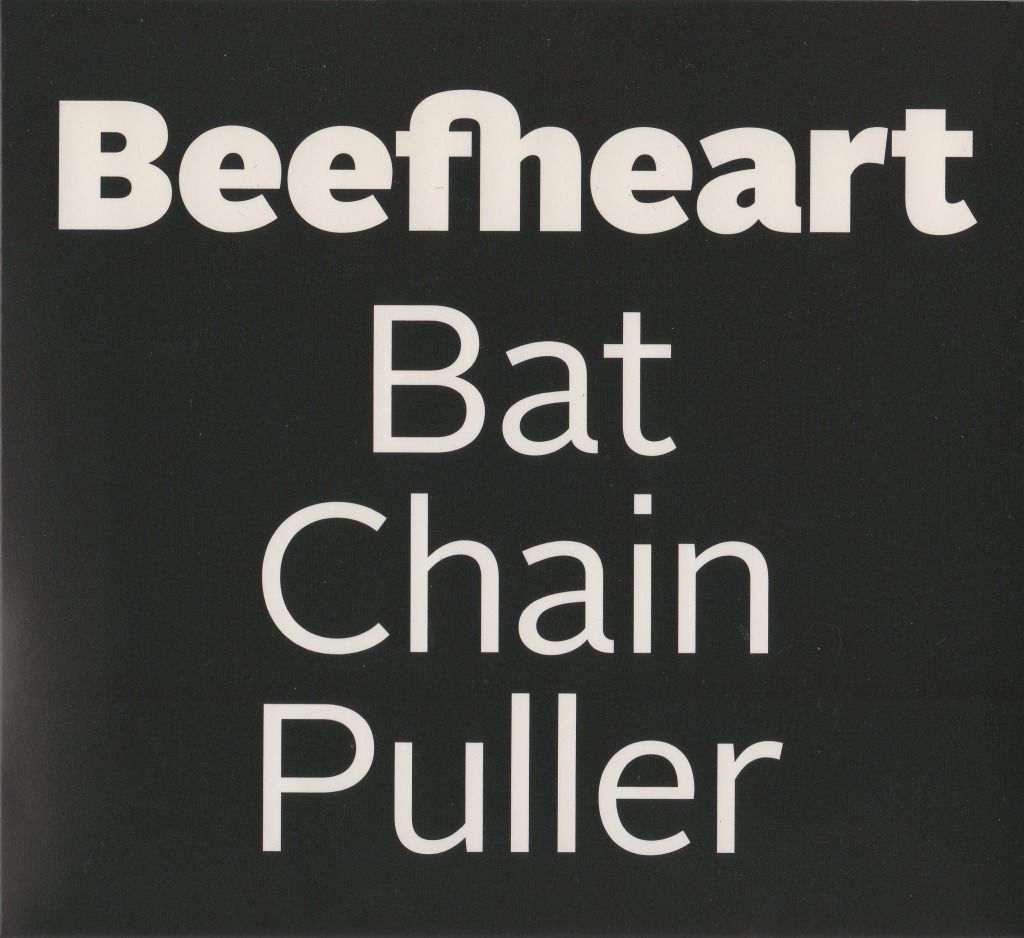
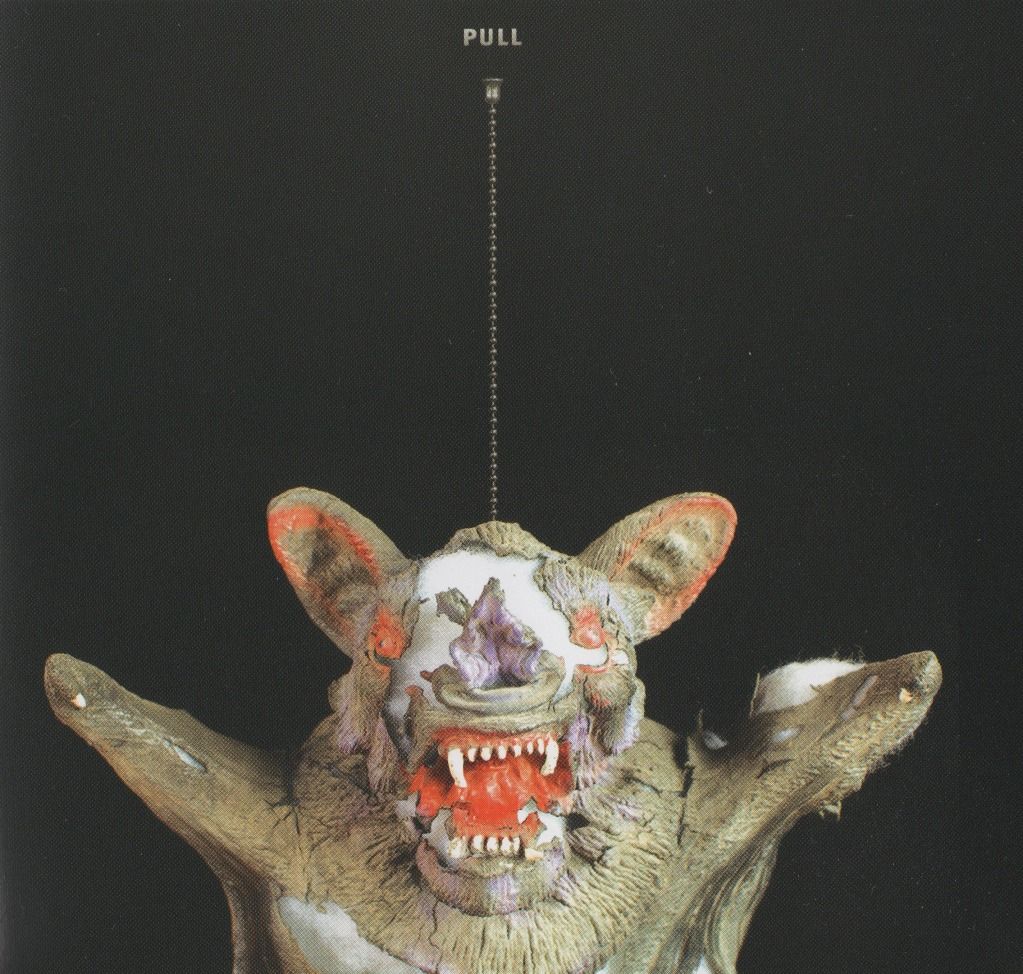
Captain Beefheart - Bat Chain Puller


It's been well over a year since I kicked off the reviews division of this site with a review of Captain Beefheart and the Magic Band's Shiny Beast (Bat Chain Puller), and considering how much the Captain's work has continued to influence my approach to music and writing I'm surprised I haven't waxed poetic about any of his other classic albums.  Technically, today still isn't that day--I'm here to gush about the "brand new" 2012 Captain Beefheart release, the lost 1976 first studio version of Bat Chain Puller, just released this spring (to disappointingly limited fanfare) on the Frank Zappa record label and nearly exclusively available for purchase here (which just might be why the album's gotten so little press).

To describe the genesis of this release briefly, Don Van Vliet decided in 1976 to return to the avant-garde and stage a creative comeback.  Herb Cohen (Frank Zappa's manager) secretly used Zappa's money to fund the project and the two had a falling out upon Zappa's return from tour, resulting in Cohen's seizure of many of Zappa's assets, unreleased Bat Chain Puller masters included. Zappa eventually reclaimed his property through legal means, but by that time Van Vliet had re-recorded most of the material on his final albums.  Since then Zappa, and now his widow Gail, have been busy enough managing Zappa's gargantuan legacy that the tapes have remained neglected in the vaults...until now!

With 10 of 12 tracks already appearing on Captain Beefheart albums that have been available for 30 years, the biggest worry with Bat Chain Puller is that it'll come across as merely supplementary to those "definitive" versions, or worse that it'll sound only partially complete in comparison to the later recordings.  Thankfully, the disc falls prey to neither possibility, playing like the hazy, dream-like album-that-never-was that it's always been!

After listening to these different versions of familiar songs and becoming familiarized with the new track sequencing, I'm left with the strong impression that this album has an undeniably distinct feel, especially in relation to Shiny Beast (Bat Chain Puller) in terms of its accessibility.  Compared to Shiny Beast's almost exclusively song-based program, this Bat Chain Puller is very much a venture split between songs, spoken word-over-music and pure poetry.  Sure, it's still considerably more mainstream than the hallowed stuff of Doc at the Radar Station, but even compared with Doc's orchestrated prickles, the poetry/music tracks here feel much more spontaneously arranged and the sonic palette more often unexpectedly drops down to just one instrument or Van Vliet's voice in some very effective instances. 

Perhaps as expected, some of the material here isn't significantly different from later versions--the arrangement of "Harry Irene" (never one of my favorite later Beefheart tracks, but an important contributor to this album's accessibility) includes guitar, but otherwise isn't much different.  The title track has its own subtle identity (further shaded by a third version here in bonus track form), bristling with kinetic motion (it's easy as ever to hear how Van Vliet originally pulled the rhythm from windshield wipers), more of an organic feel with cranked harmonica and just-barely-conflicting guitar layers (though the ever-important synths are still there) and outstanding vocal delivery (dig the the naked place he takes "their very remains and belongings").  Right off the bat, my highest hopes are kindled--one of my disappointments with later Beefheart albums is the marked reduction in the elasticity of Van Vliet's voice and additionally, in the case of Ice Cream for Crow, an overall dip in energy and compositional effort--here the Captain's voice still possesses a razor's edge and he takes enough risks that we can almost forgive him wasting the early/mid-70's trying to become a mainstream star.  "Owed T'Alex" burns with a reinvigorated closeness that's magnified further on "Floppy Boot Stomp," where the band's joyous delirium pushes the vocals so close that it sounds like the Captain's ranting all the way inside your brain. 

The most exciting aspect of Bat Chain Puller, of course, is the brand new material, namely the poetry/music hybrids "Seam Crooked Sam" and "Odd Jobs."  The former is a moody guitar/electric piano duet with Van Vliet's downbeat-yet-intense images spinning seemingly unrelated on top, while the latter is more of a full band piece with tunefully-spun vagrant imagery while the band shifts ever so slightly into what must be the first kernel of Shiny Beast's "Tropical Hot Dog Night."

Evaluating these pieces has helped me identify a couple of the specific traits that make Captain Beefheart one of my top favorite artists--first, it's the way his poetry mirrors the music, flowing smoothly then stopping, jerking, suddenly rhyming or playfully riffing off of a phrase's connotations or expected syntactical outcome.  Unsurprisingly, Van Vliet chooses words like paint colors on a palette, not necessarily concerned with their logical or expository value but rather their energy, emotional color, and the way they sound.  When I hear these songs, there are countless unexpected images and feelings popping into my head, and I can't think of too many other poets in the popular music sphere who can achieve that.  And yet, there's a strange logic or narrative to many of these pieces--what at first seems like incoherent rambling in "81 Poop Hatch," for example, gradually reveals itself to be an impressionistic panoramic scene including Van Vliet's beloved natural imagery as well as a view of his internal landscape--at least, that is, until he leaps mid-sentence to somewhere completely different; every piece seems to be at its root a rational enigma with unlimited emotional potential.

Secondly, the compositions here are a dazzling presentation of Van Vliet's painterly approach implemented in yet another aspect of the music.  More than on any of his other albums we hear open, warm-sounding jazz harmony on songs like "Seam Crooked Sam" and "Ah Carrot Is As Close As Ah Rabbit Gets To Ah Diamond."  Again, though, Van Vliet applies these combinations of notes intuitively and without regard to how theoretical rules say they're "supposed" to be used.  Fragile, sweet harmony can dissolve into dissonant, minor darkness just as quickly as it can pursue a completely fresh melodic path, as evidenced on "The Human Totem Pole (The 1,000th And 10th Day Of The Human Totem Pole)," one of two album-closing commentaries on the human race's cumulative achievements (or lack thereof) and precarious current position on earth.  Here he fuses this weird compositional approach with one of his more straightforward (yet most compelling) poems, sketching a partially-obscured picture of the skin-crawling, comical-yet-repulsive "pole," and delivering it all with a seething creepy mystery that trumps the Ice Cream for Crow version within just a few seconds..."the man on the top was starrrrrrrrvinnnnng" indeed!  Now is probably an important time to laud the contributions of the rest of the band--this music certainly couldn't have been made without the conscientious talent and attention of the rest of the band, especially drummer/guitarist John French, who also performed a crucial "music director" role in transcribing Van Vliet's hastily-blurted musical ideas into a form that the other band members could understand and memorize--just listen to the through-composed spacious atmosphere as the song sputters out in a denouement that takes up over half the song's length.  The idea that it's possible and even ideal to consent to the urge to compose and arrange notes and sounds in whatever way sounds intuitively best (regardless of the rules) is one of the important lessons I've learned from Van Vliet's music and attempted to apply to my own process.  Though the difficulty of successfully communicating such an idiosyncratic method to collaborating musicians is challenging to overcome, the singular character of the end result can really be worth the sweat.  It's also one of the few lessons any artist can potentially adapt from Van Vliet's work without necessarily ripping off his total sound wholesale--it's possible, no matter what Tom Waits tells you!

In the end, this album is like a gift sent from beyond Van Vliet's grave (though very real thanks are due to all of the living collaborators who finally brought this album to release).  Amazingly, it never sounds unnecessary in comparison with the later albums--"Brick Bats" is the only song that sounds more unfocused than its later version, with a much looser guitar arrangement, less effective vocal delivery and a fun but meandering free jazzy end section made more effective in the shorter Doc at the Radar Station version.  Nor does this earlier album obviate the ones that follow (except Ice Cream for Crow, which was always teetering on the brink of being a "completists only" release, especially now that two of its best tracks are revealed to belong to a more vital earlier work), with Shiny Beast (Bat Chain Puller) still best straddling avant-garde and pop and Doc at the Radar Station best warping Trout Mask Replica poetic/musical craziness into a newer, mature and carefully-integrated form.  Thankfully, we now have all three to consider as required listening--though the price of this CD is still uncommonly high (it cost me $27 including shipping and tax), it's worth the added expense and work it takes to track it down--let's hope there's some wider distribution on the way to make it a little easier to get the word out about this remarkable album's first issue.

Monday, April 30, 2012

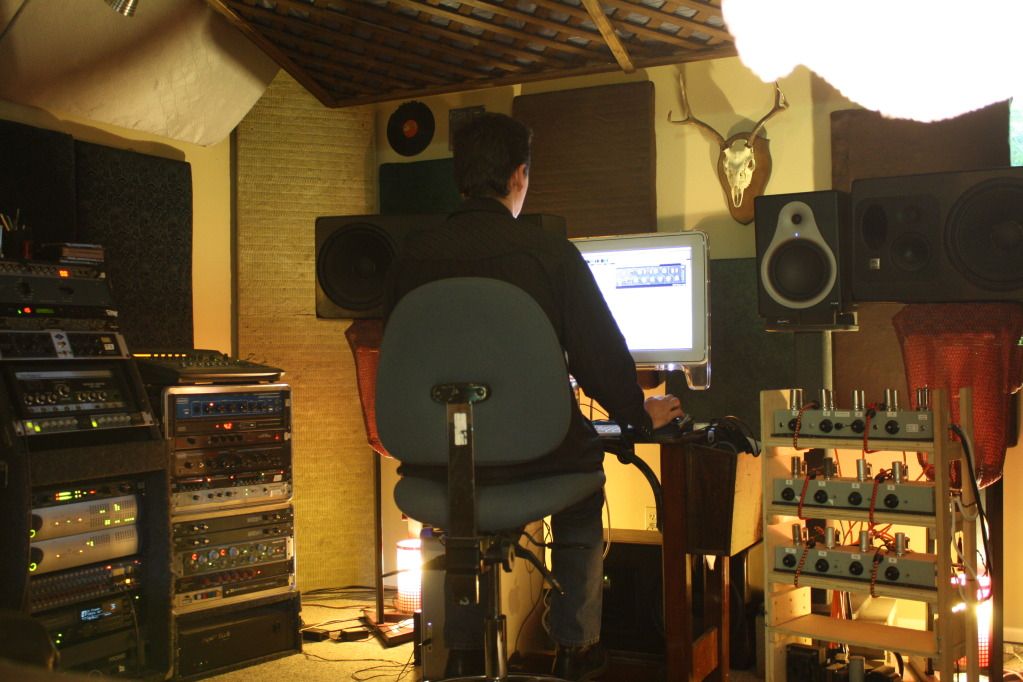
Cheap Seats 3: A Day in the Studio

The blog is back, and why is that?!  Last week I reached a surreal milestone in the recording of my next album--I've pretty much finished tracking overdubs; just one more drum session and we're on to mixing, mastering and release!  This means the blogging time I had to sacrifice to recording-related work is all freed-up and you can expect resumption of a steady stream of reviews and Cheap Seats content!


To keep the Cheap Seats ball rolling, I've decided that the next logical step is to delve a bit deeper into the technical details of the recording process itself.  Based on conversations I've had with friends and family, most people are pretty unfamiliar with the process by which music is recorded in a professional studio.  This blog's readership includes quite a number of music enthusiasts who probably have an above-average understanding of the recording process and terminology--at the risk of insulting your intelligence, please permit me to define some of the basics as I describe a recent day in the studio.

.......................................

April 25, 2012: It's day three of a five-day session week.  The recording is in its twilight phase--we're starting the 20th day of what will probably be 26 total studio days to track the whole album.  At this point, almost all of the songs are pretty fleshed-out and Justin and I are adding some of the final parts to the songs at Cloud City Sound.  Things are starting to get a little bit surreal, as the project has been going for almost six months and we're finally getting to the point where we're doing "the last" of things--yesterday we recorded the last of the woodwind parts (good riddance, as far as I'm concerned--my wind chops plateaued in 1999) and today's going to be most of the final guitar parts.  What we're doing is called "overdubbing," a process where new parts are added to a pre-existing recording.  Most recording sessions start with what's called "basic tracking," where several members of the ensemble record a number of instruments simultaneously; usually it's at least the rhythm section with at least the bass, drums, guitar, keys etc. laying down a recording of the song's core parts, after which the vocals, extra guitar parts, horns, etc. are overdubbed.  Of course, every recording and group is different--for example, a lot of jazz groups are doing everything live, so there won't really be any overdubs, whereas a lot of rock groups may have four members playing on a song with three or four guitar parts, so it won't be physically possible the play all of the parts live, and vocals are often overdubbed because of the technical issues of getting a hi-fi recording of a voice while lots of other noise is happening.  In the case of this project, where I play almost all of the instruments, there wasn't really such a thing as basic tracking--for each song there was a day when I recorded the first part (usually either an electric or acoustic guitar) to a "click track" (a recording of a metronome) which will be used as a guide throughout the rest of the recording project and removed in the final recording--everything else from there on out is an overdub!

It's been a fun week so far--we've worked on a lot of songs, recorded a lot of different instruments (including the studio's awesome vintage Hammond B3 organ) and made some serious progress.  Monday was a fun day because my jazz pianist friend Peter tracked some slick piano on three of the songs, making him the second musician besides myself to contribute to the album (more on the special guests later!).  Being a one-man recording project has its positives and negatives.  On the one hand, I've usually got extremely specific ideas and goals I want to get across and playing every part gives me the maximum amount of control and cuts down on the sometimes difficult process of communicating desires and instructions to other musicians.  On the other hand, it can be extremely time-consuming to compose, arrange and rehearse (if I even get around to that phase) parts for numerous instruments--some of which I am barely familiar with--and in spite of my confidence in my own ideas, I'm always humbled by the fresh air that a skilled collaborator can breathe into arrangements that are in danger of becoming claustrophobic; it's thrilling to see someone else's ideas transform a piece of music I thought I'd considered from all angles into something more

Emboldened by my recent woodwind accomplishment, I've decided that today's the day to finish most of the final electric guitar overdubs.  Justin's job title is audio engineer, which means he performs a number of different duties crucial to the recording process.  Firstly, there's the physical engineering of the sound--selecting the microphones and preamps best suited to whatever instrument we're recording, and setting the volume and compression levels to get the best possible sound for the part.  Secondly, there's the actual recording of the instrument--Justin uses his thorough knowledge and years of experience with industry-standard ProTools recording software to set up tracks for each instrument, hits "record" over...and over...and over...and applies editing wizardry where needed to compensate from the fact that this isn't actually a live recording and to make things as smooth and seamless as possible.  Later, these skills will reach their culmination when we mix and master the raw tracks we've been recording.  Simply having a professional engineer means that this project is instantly worlds more high-quality than In Not-Even-Anything Land, and Justin's particular expertise and sympathetic attitude to the material has really taken things to the next level. 

When it comes to recording guitar for this album, we've used countless combinations of mics, guitars and amplifiers to give each part a distinctive character and ensure that this will be a kick-ass guitar album with awesome tone that matches the often ear-challenging guitar parts.  We start our 10-hour day two hours later than usual at 12 pm, loading three amps into the isolation booth (the tiny room next to Justin's office where I've been recording vocals, horns and various acoustic instruments).  From there, we'll send out cables and I'll sit right next to Justin while I play and he records.  The guitar parts for this album can be roughly divided into three categories--composed rhythm parts, composed lead parts and more improvisational textural parts.  Today, we're recording some of both of the latter two categories.  While it's anathema to what a lot of musicians and music fans think the recording process "should be," the creation of this album has been an unusual and painstaking one.  The process starts at home, where I compose the parts in demo form using Apple's free recording software, GarageBand.  The sound quality is horrible and the performances are often pretty lackluster, but the main function is to figure out what the instruments are playing and give me a chance to hear what things sound like together, as I work primarily by ear.  At this time, if I'm "working smart," I'll also be transcribing the part I'm composing either with standard music notation onto a five-bar staff, or onto a guitar tablature sheet for later reference in the studio (one of the earliest lessons I learned is that the inconvenience of transcribing a part as I'm writing it pales in comparison with having to go back and figure out what I played two weeks ago).  Ideally, I'd then practice the parts at home in advance of the session to ensure smooth reproduction of the ideas for the final recording.  In reality, though, my time is limited--I work to pay for the privilege of recording this music, and during the last six months my free time at home has been more often spent writing, arranging and composing the next parts for whatever songs are coming down the pipe, and my rehearsal discipline has suffered accordingly. 

When it comes to recording the parts in the studio, I sit with my notes in front of me and a copy of the demo queued up on my iPod for immediate reference.  Here's where things start to become anathema to some people's expectations.  Of the aforementioned three guitar part categories, the first two are meticulous in their specificity and can be extremely time-consuming.  While some believe that guitar parts should be recorded all in one pass or compiled from several complete takes, that's simply not how we've recorded the guitar for this album.  ProTools has a function called "punching in," where the engineer can roll the recording and start and stop recording with the click of a button.  The function is designed to fix small mistakes, continue a take where maybe the first half was keep-able but the performer stopped playing, etc., by giving the performer a chance to play perhaps just one missed note correctly without having to record a whole take.  From what I understand, this process has been around since the analog days, but digital technology makes punching in much easier and more controllable.  Not to pull the curtain back too far, but in the case of my sometimes-labyrinthine composed guitar parts, they are most often recorded using a punch-heavy technique where sections of the part are recorded one at a time.  The composed rhythm parts tend to be less difficult and can be recorded in larger chunks, but some of the more difficult lead parts eventually have to be broken down phrase-by-phrase in order to accurately achieve the part I've composed, often including a formidable amount of rigidity and precision  in terms of interlocking parts and counterpoint.  I'm sure some purists scoff at the approach and I can understand why; it's natural for a musician's ego to demand an uninterrupted live performance, which is one of music's core avenues of expression.  In truth, I would love to have prepared the parts to technical perfection and recorded them in just a couple of passes, but the reality is that some of the parts I wrote are so difficult that rehearsing them all to perfection would probably add another year onto what's already been a half-year-long recording process!  Beside, the "off the cuff" approach is pretty much abandoned the minute you decide you're going to record a one-man project. 

There's also the objection that the element of spontaneity is lost when all of the parts are pre-composed.  In relation to my artistic goals, this objection is beside the point--the ultimate goal here is the final product, which is the total experience of an album-long recorded piece of music.  Whatever it takes to get there is what has to be done.  Again, I'd love to be able to simply improvise these parts in the studio, but my guitar part goals usually center on coming up with the most out-there and cliché-avoiding parts possible; only improvisers of unbelievable skill (i.e., definitely not I) are capable of ad libbing such parts (indeed, most improvisation actually tends toward the spontaneous reassembly of what can fairly be described as...clichés), and the benefit of hindsight allows me to fine-tune the parts I've written in order to improve them before they're set in stone.  It's true that I could eliminate the middleman by doing the part-composing in the studio, but that situation would remove the option to tweak the part later and would not be a cost effective use of my studio time--for every hour I spend reproducing a composed part in the studio there's at least two to three hours of hair-pulling and composition at home.  The punch-in recording method is likely to be a surprise for a lot of music listeners, but the truth is--though they aren't using the functionality to quite the same painstaking extent--almost all recording artists use punch-ins, editing and take compilation to create the best recordings possible.  In the case of my project, it's simply what the process is--the compositions, ideas and listening experience are the ultimate goals, and those goals take however much time and whatever means necessary. 

So, Justin and I sit down to start the day, choose a song, and fire away.  I've decided to use the morning's freshness on one of the more difficult parts left to record, and away we go--there's lots of "again please, same punch," a lot of swearing on my part, and a lot of digital clean-up needed when all's said and done, but the parts get done and it takes as long as it takes--the record for this album is five hours for a four minute lead part!  Whatever it takes for the ultimate goal!  At this point in the session Justin and I have gotten our system in place and things tend to go faster--one to two hours for a difficult lead part, and I've been playing so much guitar that I've gotten much better at hitting the parts in fewer tries.  At this point Justin performs one of his most important duties: quality control--paying attention to timing and synch while I do my best to hit the parts and keep the energy up in what's often an energy-draining situation.  Today we've got three difficult lead parts (two of which are in the same song) and some more textural, improvised stuff.  Each song change necessitates a change of guitar and amp, a resetting of levels and another adventure--luckily we can alternate between tough parts and improvised/textural ones, which gives me a break from the demands of brutal precision, and gives Justin's punch finger and patience a much-needed break.  We break for lunch around 2:00 (today's a big milestone; I'm redeeming my buy-seven-get-one-free coupon at the Safeway deli) and get back to work around 2:30.  By 8:30 we've recorded guitar for eight different songs and the scheduled guitar program is finished.  I decide to spend the last 90 minutes hitting a few backing vocals, which provides a nice cool-down for a day of hard work.  Tomorrow will be the final acoustic guitar overdubs, more vocals and starting the last of the bass recordings. 
.......................................

And that's how it goes...the days are long and things can get frustrating, but hearing everything together (which has been happening more and more as time goes on) is worth it for many reasons, not least of which is that the sound quality blows the demos out of the water.  This'll probably be the last really "technical" post until we get to mixing (others will probably focus more on the artistic and aesthetic aspects), but a lot of people have been asking me since as early as January, "So, you're almost done?"  I hope the detail here has helped clarify my "No, it's going to be a long time" reply and, as is the overarching goal of the Cheap Seats series, I hope it's given you some more pieces of the puzzle of what exactly goes into the production of an independent album and the way we can attempt to quantify and express the ultimate value of this kind of thing.  More soon!

Cheap Seats Part 1
Cheap Seats Part 2: Non-Commercial Music