Showing posts with label 1975. Show all posts

Monday, November 21, 2011

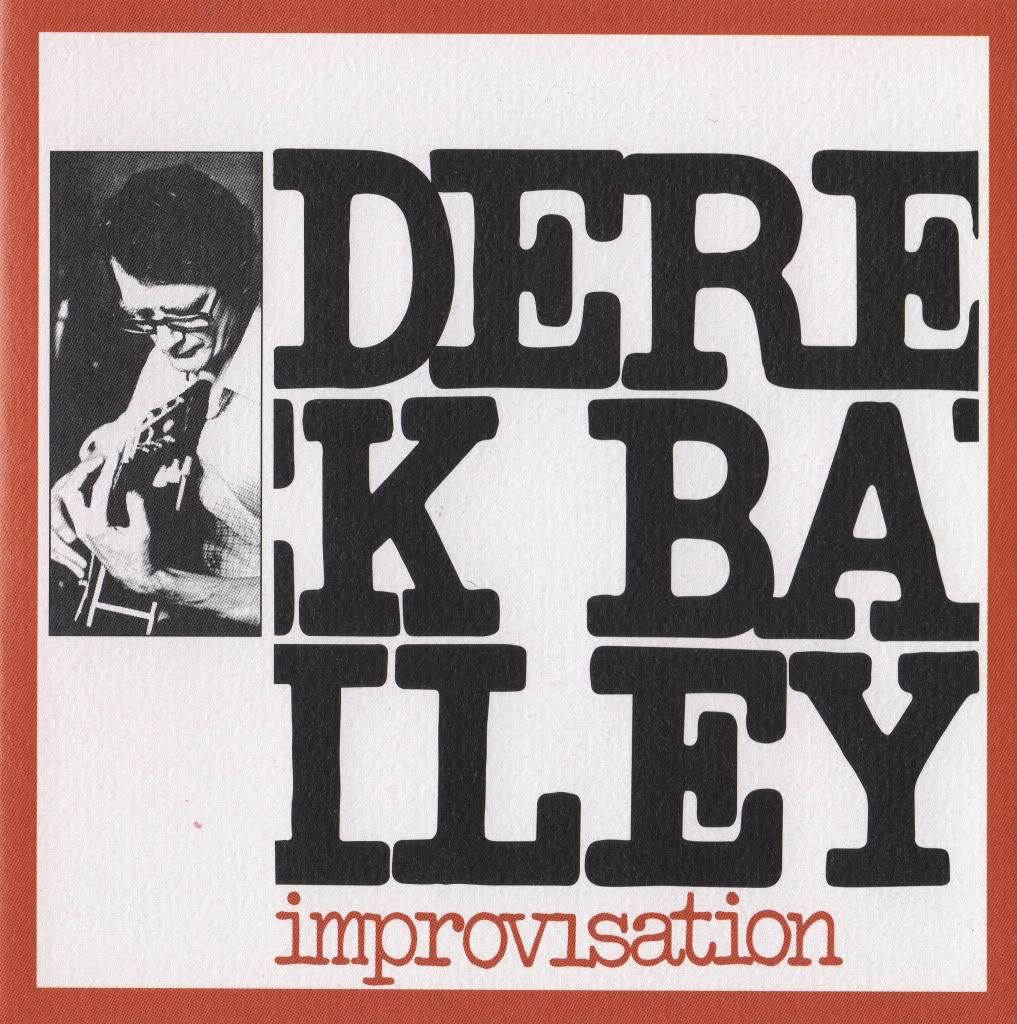
Derek Bailey - Improvisation


Derek Bailey is known for two things: being a grouchy old man when he wasn't even old, and for single-handedly creating his own free improvisation idiom on the six-string guitar.  Right up my alley on both counts!  By the time Bailey recorded Solo Guitar Volume One in 1971, he'd already been a prominent figure in the British and European free jazz circuits, performing with people like saxophonists Evan Parker and Peter Brötzmann and bassist Dave Holland, and by the time this 1975 album was released he had refined his solo improvisational technique (which came across as a bit tentative in his debut) to the rarefied level it remained for most of the rest of his career.

Listening to Derek Bailey for the first time can be a disorienting--his style is thoroughly and often brutally atonal, arrhythmic and usually very nonrepetitive.  It's also most assuredly the type of music that sounds like an irritating mess if the volume is low and you're only half paying attention.  Crank it up so your surrounded by Bailey's sound world and focus on what he's doing and an exciting (if somewhat cold) sense of adventure-in-logic dominates every move the guitarist makes.

While Keith Rowe is responsible for making equally influential advances in the guitar free improvisation realm, Bailey's music sounds much more like a conventional guitar played to an exponentially "out" degree; in fact, his amplification is so clean it's almost difficult to discern that he's playing an electric guitar on this album.  Though he almost exclusively flatpicks, Bailey's style relies heavily on harmonics, muting and exploiting the instrument's natural sustain and decay.  This can be easily heard on "M4" and to even greater depth on "M8," where Bailey's harmonics and string bends pit two strings against one another on nearly the same note, deftly controlling the oscillation between the two notes as they eerily decay into space.  At other points Bailey embarks on furious runs across bizarre intervals, sporadically halting to interject with brief spurts of silence or allowing a note to ring before again changing direction completely with some explosively percussive cluster chords ("M10").

One of the things I love most about Bailey's style is how fluidly he moves from one idea to the next; though there really isn't any melody to his playing, it's usually easy to discern what is fascinating him at any given moment, and the thrill of his free improvisation is in the headlong rush into whatever the next idea might be.  Sometimes the difference lies in the textural discrepancy between harmonics, standard string plucking and jabbing chords ("M13"), and at other points it might be a digression into exploring the percussive potential of the instrument with skittering string scrapes ("M14") or interjecting taps on the guitar top between the string's tonal sounds.  Finally, and perhaps most subtly, Bailey uses a two-amplifier setup and volume/swell pedals to dynamically pan the output of his guitar, which adds a richness and mobility to his fretboard wandering (especially noticeable on "M5").  While not quite as finely controllable as Fred Frith's dual pickup/output experiments, it's easy to see that Frith's guitar solos owe a sizable debt to the pioneering done by Bailey.

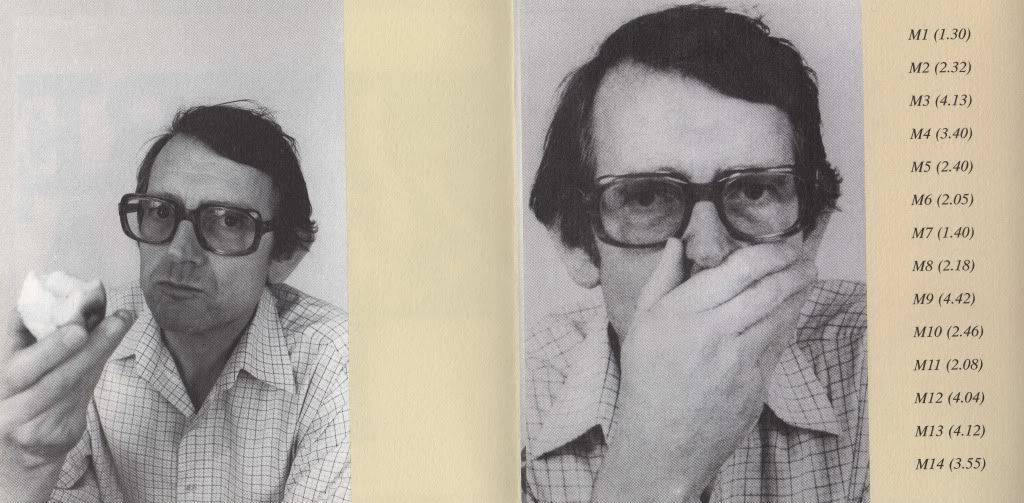
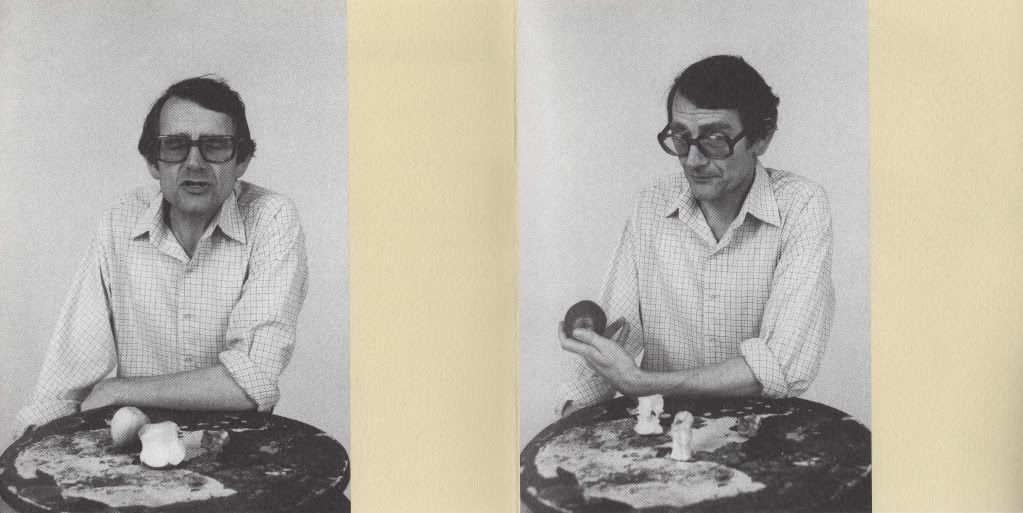
While he's got more epic albums (Aida is often regarded as his best), I think Improvisation is just as strong and is probably a better introduction to Bailey's challenging style because the track lengths are short and can be more easily focused on and digested.  Though my interest in Bailey has been tempered by the realization that his style became formalized mid-70's and didn't develop much further, revisiting his best works reminds me that 1) his style is so radically different from those who came before him that he didn't really need to reinvent himself to maintain his validity and 2) his style is so all-over-the-place that there isn't a whole lot more he could do to develop it further.  Bailey's playing is an inescapable golden standard for atonal guitar as well as an audacious challenge to all followers to conjure something else new and exciting from those six strings.  Please enjoy these pictures of Derek Bailey eating some apples.
Get it here.

Wednesday, November 16, 2011

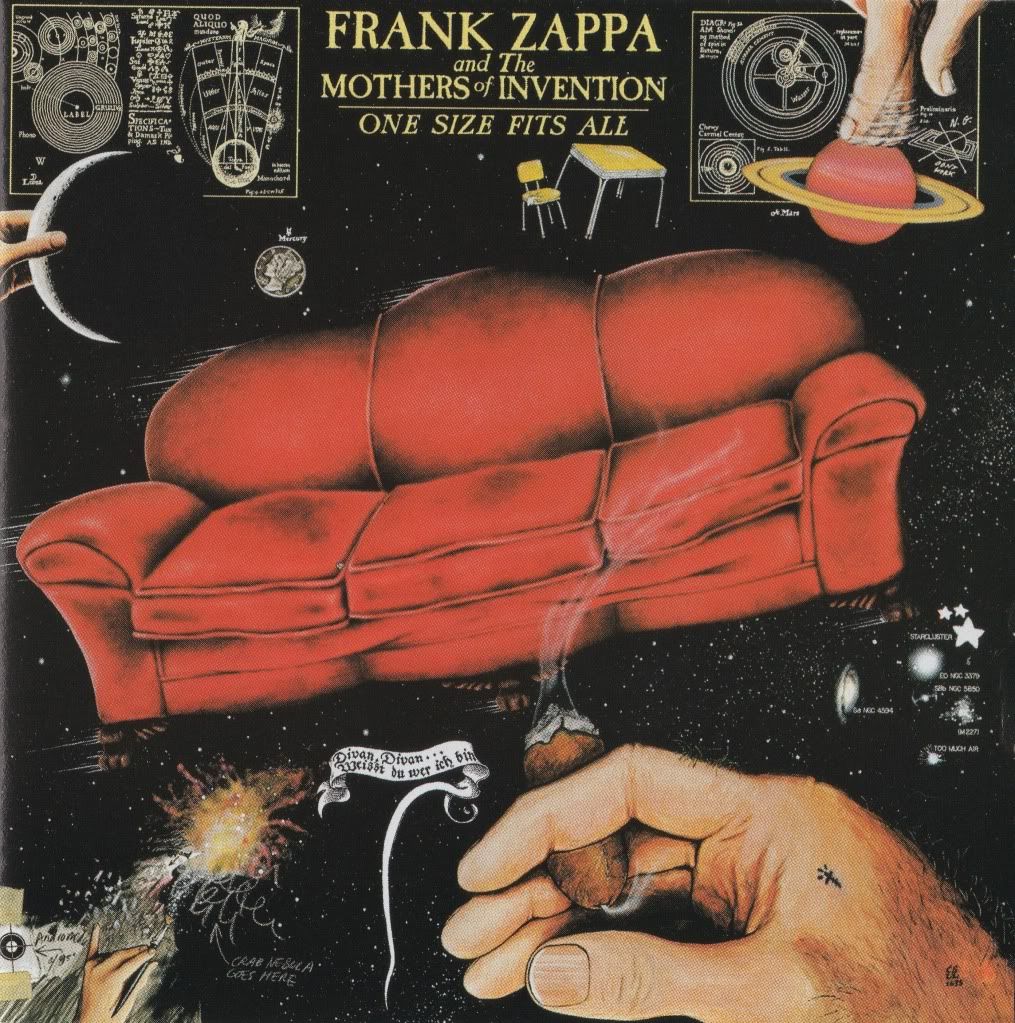
Frank Zappa and the Mothers of Invention - One Size Fits All


While his skills as a composer and guitarist are self-evident on everything I've ever heard by him, Frank Zappa hasn't ever really clicked with me as a personal favorite.  I think it might have something to do with the tension between his obvious seriousness and discipline as a composer and player but the apparently complete lack of seriousness when it comes to thoroughly crafting an album or imbuing his songs with anything but the most lightweight of messages.  I know, I know--it's just how Zappa is, but the slapdash composite of dense jazz rock, rock and roll parody and novelty song that makes up most of his fans' favorite albums just hasn't satisfied me to the point of admitting that any of them are really great.

One Size Fits All is about as enjoyable as others I've heard, though.  The dense, twinkling jazz rock that initiates the album with "Inca Roads" is my favorite part; these compositions are fluid, full of little ostinati and vibraphone/vocal runs that precariously and quickly speed through a jaw-dropping number of notes.  Zappa could always build a band, and in terms of musicianship, there are virtually no chinks in the armor here, especially in the rhythm section.  For his part, Zappa's playing runs the typical mix of able but jammy blues-inflected lead guitar interspersed with some more interesting standout ideas.  For example, his fun but repetitive fuzz solo on "Po-Jama People" sounds really familiar, while the twiddly clean riff near the end of "Sofa No. 1" sounds like only Zappa could have written it.  Obviously, I prefer the more peculiar and idiosyncratic stuff, and there's at least an adequate amount of it here, thanks to the late-game clutch pull of "Andy," with more ridiculous vocal arrangements, freely-flowing ideas, and a little bit of atypical guitar playing. 

Though I don't really find the songwriting especially consistent, the sound on this album definitely is--wide open, major seventh, ninth and eleventh chords give the music a happy feel and provide a lot of roaming territory for the vocalists, which are another strength--Zappa's proficient but limited voice is aided quite ably by some of the African American members of his band, including a welcome guest appearance by Johnny "Guitar" Watson on "San Ber'dino," which almost sounds like ELO (sorry, bigtime Zappa fans!).  As a much bigger fan of groups from the Canterbury scene (most of which are undeniably influenced by Zappa's earlier work), I can hear traces of Hatfield and the North in some of this album's intricate jazz rock, but the idea of a group from Canterbury managing to successfully include black American music in their blend is laughable.  In this way, Zappa is to Canterbury almost like extreme fascism is to extreme communism--almost the exact same thing, but somehow fundamentally and permanently separate.  For me, at least, the Canterbury bands usually did a better job of looking at the big picture and creating really solid albums, even if the music gets a little darker and less "fun," and for some reason I find their sense of humor more compelling.  And the problem for me with Zappa's idea of fun, on this album, at least, is that most of the songs are merely just goofy and rarely cross over into a level of humor that actually makes me laugh--"Po-Jama People" seems to be trying to be satirical but the identity of Zappa's actual target remains a mystery to me, while the punchline to all of the verbosity on "Evelyn, A Modified Dog" is merely "arf."  I thoroughly understand that Zappa's "I don't give a shit" attitude is deliberate and is precisely what a lot of people love about his music, but for me it's more attractive in theory than in practice.  He does come close, though, on the rock and roll bum send-up "Can't Afford No Shoes" with "maybe there's a bundle of rags that I can use."

Maybe I just need to keep sorting through the favored albums of the Zappa-converted for a couple more to help me really appreciate the man's music and humor, but for now I prefer the more successful satire of We're Only in It for the Money and Hot Rats is still my go-to for concentrated playing and compositions.  Recommendations welcome!

Get it here.

Friday, April 22, 2011

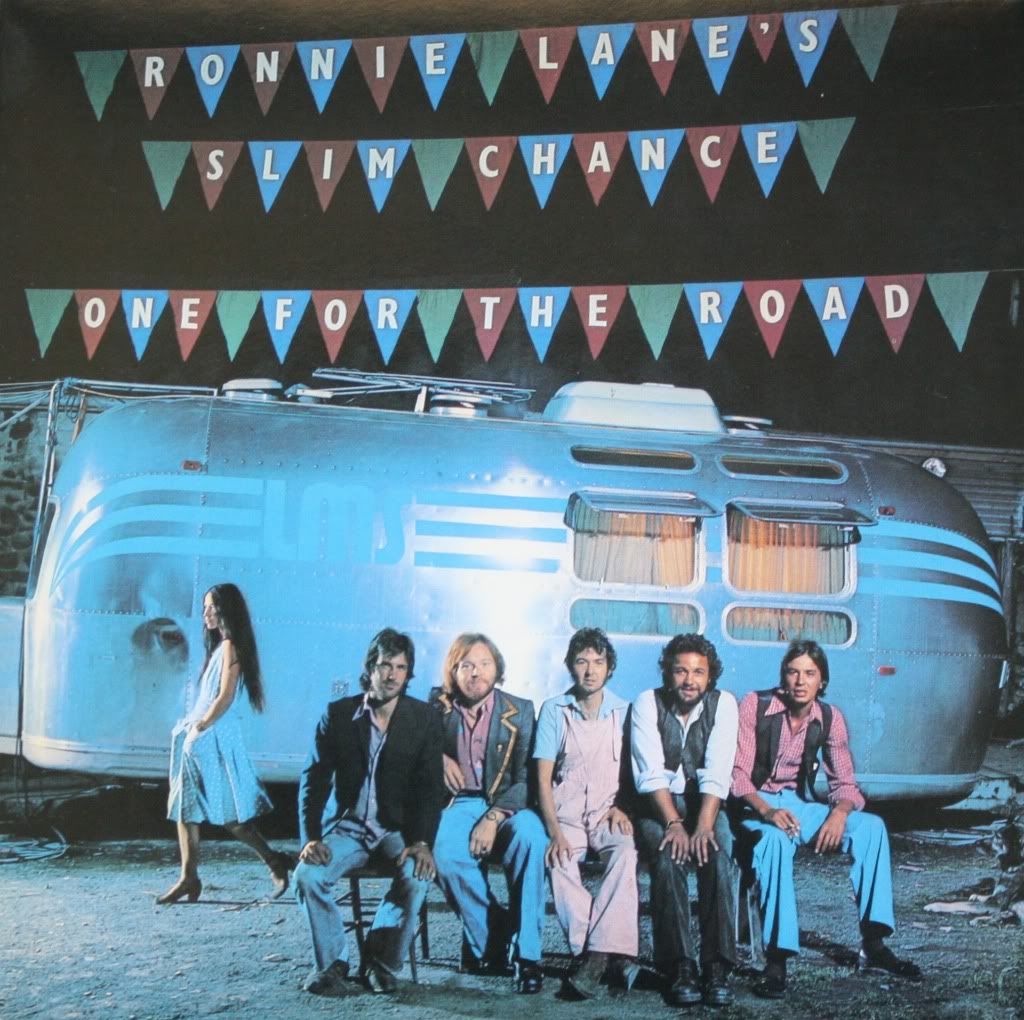
Ronnie Lane's Slim Chance - One for the Road


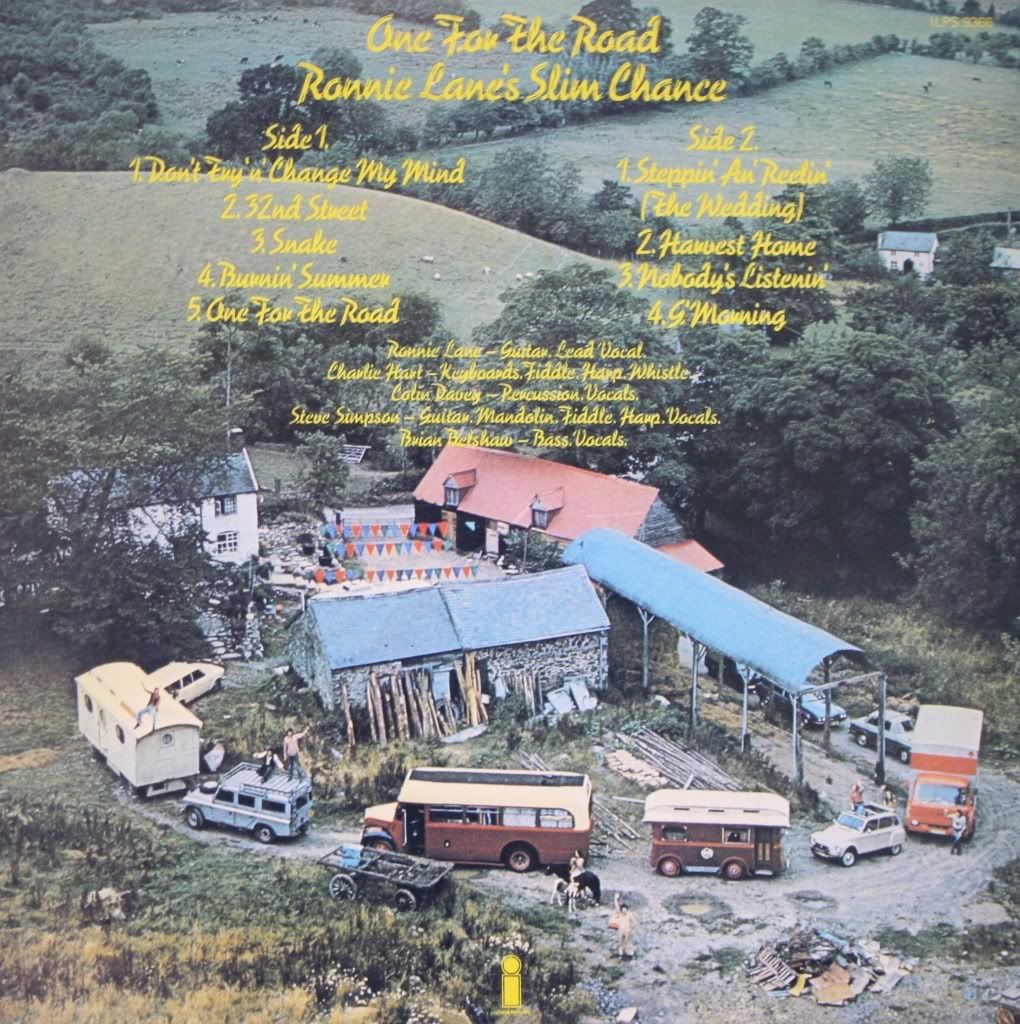
Although this is is my first Ronnie Lane review, One for the Road represents the tail end of Ronnie Lane's remarkable 2-year stint as a solo artist--one last blazing home fire of an album before his dreams of surviving in a traveling musical caravan (see the back of the album cover below) buckled under financial pressure and criminally poor album sales.  Excepting the pretty good Pete Townshend collaboration Rough Mix, this is Lane's creative and energetic swansong.

Even more than its two predecessors (Anymore for Anymore and Slim Chance), this is an album of struggle against the pressure to live a mainstream life and an expression of the pure joy of living in connection with nature and self-developed values.  For all his skills as a songwriter and lyricist, Lane's words are deceptively simple.  At times he rants and raves like a man pacing around in a prison cell--"Give me just one wish and leave me be," or "I'd rather have a bad time than no time at all" from "32nd Street"--while tossed off observations like "I've just been where I been/Just seen what I seen/Nothin' more" ("Don't Try'n' Change My Mind") belie the hard wisdom his working-class background and financial struggles must surely have earned him.  Elsewhere it's the simple pleasures he extolls, like a rural wedding ("Steppin' and Reelin'"), waking up with the sun ("G'morning"), and the slow burn-out of late summer ("Burnin' Summer").  Despite his obvious frustration with the societal pressures he so concertedly contradicts, Lane never sounds bitter.  His voice, at times a rough growl and at others a soulful croon, is an ever-present reminder that this is a man laying his passion and struggle bare for all to see.

Ronnie Lane's earlier contributions to the Small Faces and The Faces certainly hinted at the direction his solo career took, but who would have ever guessed his sound would ever get as organic, joyous and soulful as it is here?  Slim Chance not only employs typical rock band instrumentation, there's also fiddle, accordion and mandolin--not bad for just five dudes.  They're also able back-up singers, making songs like "One for the Road," "32nd Street" and "Nobody's Listenin'" some of the most raucous shout-alongs Lane ever laid to tape.  In my mind, Ronnie Lane's Slim Chance is about as close as anyone else has ever gotten to the Band's confluence of soul, genre-blending, songwriting, earthy feel and purity of feel--and Slim Chance only has one lead vocalist.  In today's musical era of anachronistic old-timey so-called "Americana," trumped-up agrarian costumery and forced vocal affectations, more than a few performers could learn something from Lane's authenticity, both as a songwriter and performer--he uses simple instruments not to look backward, but to conjure the timeless energy of a group of friends playing and singing together, and his songs still sound fresh because they tap into his passionate self-expression, not some imagined sepia folk world.  With simple music that sounds as instantly familiar as this, that's what separates the few kernels of wheat from the god-awfully huge piles of chaff--even though the system eventually battered Ronnie Lane into submission, he's got at least three shining albums of beautiful defiance that escape commercial surrender and stand proud on their own distinctive spirit.

You can get this (nearly complete) album here, along with almost all of Slim Chance.  Also highly-recommended is The Passing Show , a film documentary that follows Lane from his Small Faces days to his tragic MS-related death.
Saturday, April 9, 2011

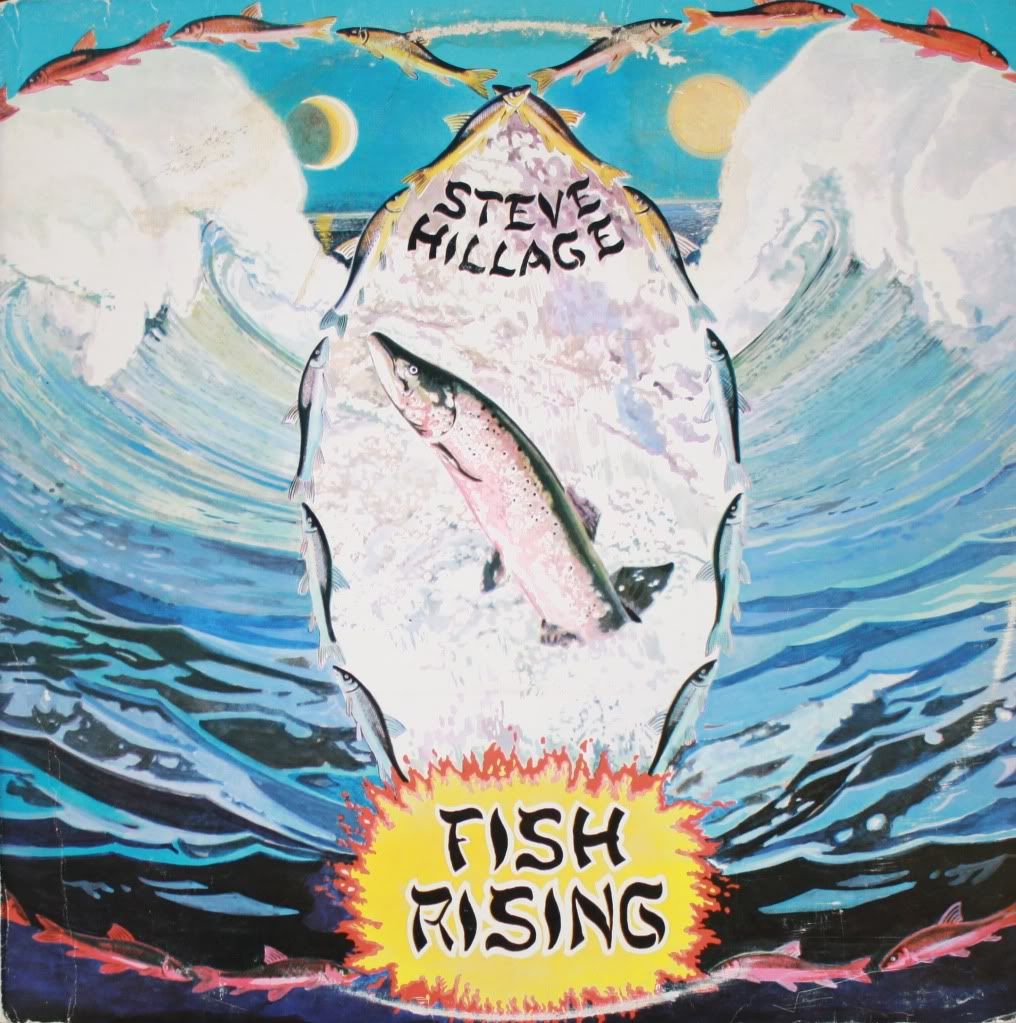
Steve Hillage - Fish Rising


Here's another later Canterbury favorite.  Due to its associations with jazz, the Canterbury scene was never as guitar-centric as mainstream rock.  Nevertheless, Steve Hillage is certainly one of the biggest Canterbury guitar heroes and probably the most accessible one in terms of his style and technique.  He was a member of both Arzachel and Khan, then joined Gong in the early 70's.  This, his first solo album, features numerous Gong members as well as Henry Cow's Lindsay Cooper on bassoon and Egg/Hatfield and the North/National Health keyboardist Dave Stewart.

Like a lot of the classic Canterbury albums, I treasure this one for its variety, intelligence and light-heartedness.  1970's progressive rock music is often associated with bloated epics, overseriousness and romantic-period leanings, but I believe that the music on albums like this is actually more progressive in the literal meaning of the word--yes, there are epics (steer clear if you don't like long songs!) but the primary goal is advancing music past the established forms and status quo.  Hillage manages to challenge us with his compositions but simultaneously provides some of the tastiest guitar ever laid to tape.

The opening suite is the longest on the album, building from gentle psychedelia with jazzy soloing to a harder sound, more reminiscent of Gong.  This is much more centered on Hillage, though, and the compositions are organized around nice, identifiable guitar riffs and themes, though there's a great ostinato section with some furious soloing by Stewart.  "Fish" and "Meditation of the Snake" are shorter experiments, the first being a fast-paced Gong-like discussion of different fish and the second being a delay-guitar soundscape.

Side two is more hypnotic and repetitive than the first--"Salmon Song" may be my favorite track, with a spacey riff and a barnstorming set of dual solos.  Similarly, "Aftaglid" features several repeating patterns that act as platforms for Hillage's guitar soloing.  The key to these long songs is organization, as the mood segues seamlessly between gentler, quieter parts and heavier soloing, never wearing out each riff and always following with a change of texture.

The only bad thing about this album is that I bought three more Steve Hillage albums hoping they'd come close and none of them quite match the glory of Fish Rising--I don't mind Hillage's voice, but the New Age lyrics get heavier and heavier-handed on later efforts, and though the more song-oriented sound is in some places successful, many of the guitar ideas are just restatements of things heard here and on earlier Hillage collaborations.  It's a bit disappointing, but this album is so good and so full of ideas that Hillage can't be blamed for being unable to match their breadth and quality on every other album.  At least we've got Fish Rising. 

Observant readers may notice that this one is another deep pull from my tiny but cherished vinyl collection.  Out of the few records I own, I have to say that this one sounds better in its remastered CD version; the vinyl is actually a bit muddy (not well-balanced between clarity and heaviness the way my Captain Beyond LP is), making it hard to catch the small details that this album is packed with--I think I know what's going on because I recognize the riffs but closer listening reveals numerous quieter passages and depth uncommon in guitar-oriented rock. 

Get the CD or MP3s here.

Friday, April 8, 2011

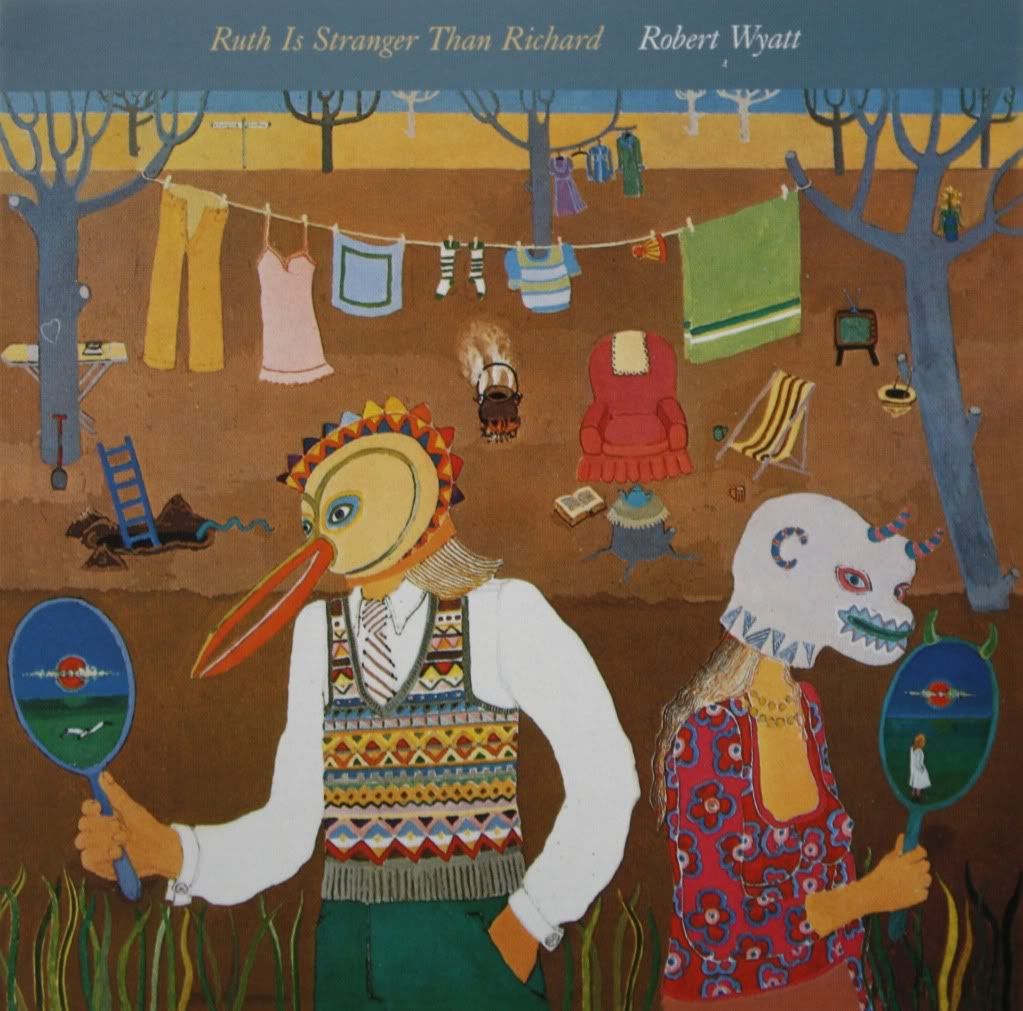
Robert Wyatt - Ruth Is Stranger Than Richard


Robert Wyatt's first album after the career-defining Rock Bottom is not likely to satisfy any relative newcomers looking for a reprise of its predecessor's dark catharsis and cohesive brilliance.  To longer-term initiates, though, it's a solid representation of what's most often expected from Wyatt from his Soft Machine days to his more recent work.  In many ways, I think this album sets the template for his material from the last 15 years in terms of the wealth of guest contributions (John Greaves and Fred Frith from Henry Cow, Phil Manzanera and Brian Eno) and its unevenness.

Like most of Wyatt's post-accident music, the sounds here are gentle but quirky, moodily psychedelic and jazzy in that classic Canterbury way.  The whimsical, melodically-challenging "Muddy Mouse" segments punctuate the first, "Richard" side of the album (or second, depending which version you have), breaking up the hypnotic groove and progressive sonic layering of "Solar Flares" and the equally languid, spine-tingling "Five Black Notes and One White Note," which plays with gorgeous intervals on a magnified level, similarly to some of his later work on Dondestan.  Wyatt accomplishes some of his best vocal trumpet impressions on the side-closing "Muddy Mouth" as well as some pretty humorous and casual singing regarding the world's oceans.

The other, "Ruth" side of the album is rather different, featuring much more conventional song structures, as on the jazzy sort-of-funny (mostly for the words) "Soup Song" and the slightly quirky blues of "Sonia."  "Team Spirit" is a more rocking, long-form song about a football that stretches into more interesting territory with some cool sonic excursions.  The dirge-like "Song for Che" closes the album on a fittingly valedictory note.

While Ruth Is Stranger Than Richard rarely succeeds in the same ways Rock Bottom did, it's pretty typical of later Wyatt--despite its status as a mixed bag of sorts, there is plenty of experimentation going on and it's a pleasant listen without ever being too hard on the ears.  If you manage your expectations and can forgive the album's inability to stack up to its predecessor, it'll be a good gauge of how much you'll likely enjoy Wyatt's later albums. 

Get it here on CD, or here on MP3.

Thursday, March 24, 2011

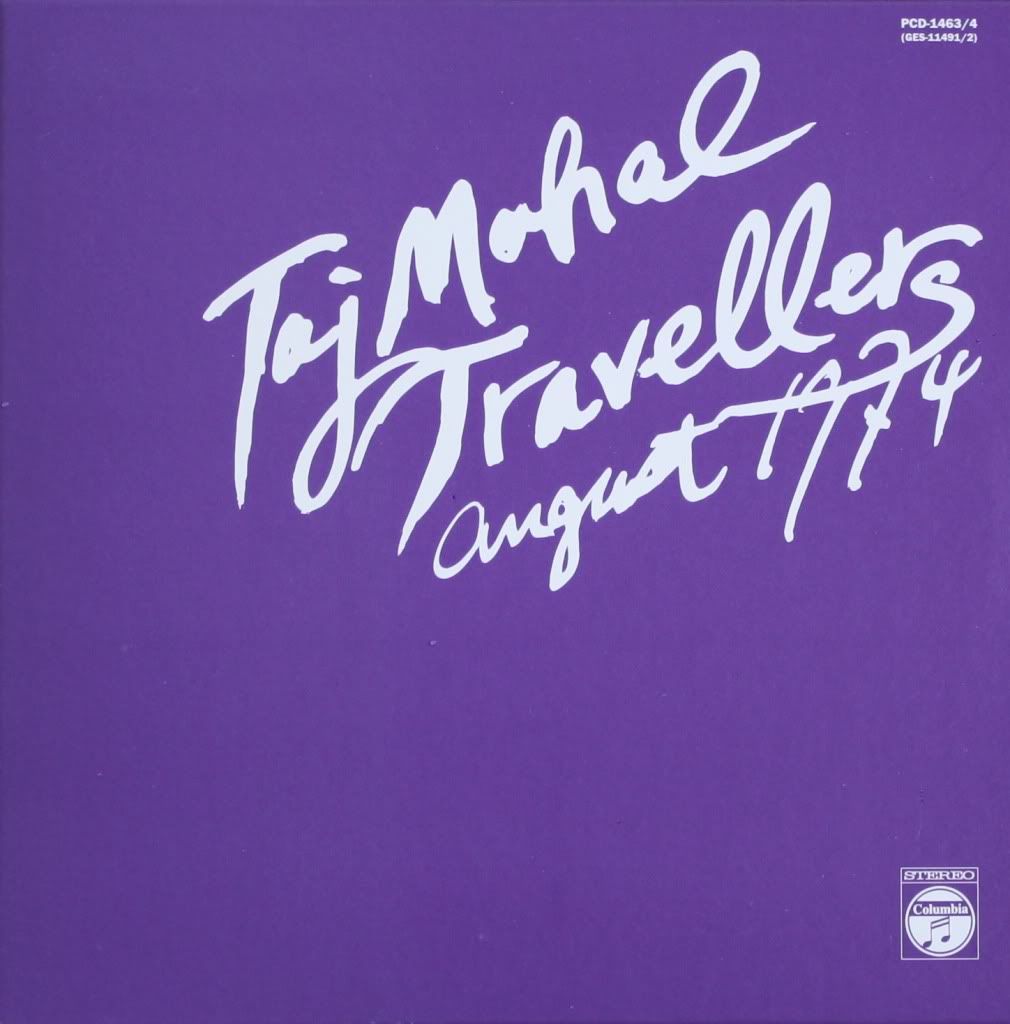
Taj Mahal Travellers - August 1974


Taj Mahal Travellers has nothing to do with American blues rock, or anything to do with the Indian mausoleum, for that matter--they're Japanese.  This is another great example of music that should not be judged by traditional aesthetic standards as well as a good comparison/contrast to the AMM album I wrote about earlier this week.

The particulars of this music are actually easy to describe--few instruments are usually playing at the same time, there's little in the way of tonal development, and it's quite repetitive.  Though each track fades out at the end, it appears to be a continuously-recorded performance.  The backbone of the group's sound is drone; the recording moves incredibly slowly and deals with huge blocks of tone.  For instance, at the album's outset the main drone is a bowed electric guitar, which plays more or less continuously on the same note while hand percussion, wooden xylophone, synthesizer, some sort of brass instrument, harmonica and voices all fade in and out.  The instruments make and repeat short statements, or they let loose long threads of tone, layering with the guitar (for now) into the texture of the overall drone.  Add to the list of instruments a few traditional Japanese instruments and a violin and you've basically got the sonic palette for the whole album, and it's a double.

Yes, it's easy to describe what's being done for over 80 minutes worth of music, and yet, when it comes to describing just why this album is so righteously awesome, the right words just can't be found.  Though the style of music is totally different, on one level this album is strongly reminiscent of Miles Davis' On The Corner.  At any given time, there aren't really that many instruments playing, but if you pay attention you start to notice that an instrument will appear in the mix, hang around for a few minutes then fade out just as delicately as it originally appeared, contributing a texture or color to the sound without altering the overall mood.  After a while, though, you might notice that none of the instruments that were playing 20 minutes ago are still playing.  The overall mood and quality of the sound moves similarly, changing slowly and subtly but hitting a few fairly distinctive areas over the course of the album.  My favorite passage happens about a third of the way through the second track, where the layered wordless voices and dulcimer-like Japanese folk instruments reach a soaring, epic swell.  The third track has some pretty awesome primal percussion/synth jams, and the fourth has a lot of delay-treated violin.  This is one of my favorite mood-centric albums--the overall feeling is mysterious, cathartic, and at times pretty weird.  While it's pretty moody, it's not really too dark, and it functions equally well as a meditative soundtrack as it does for close-listening.  The emphasis on shifting texture, the change between spaciousness and thick soundscapes, and especially the sound-exaltation that's possible when you really lose yourself in the timbre of the droning instruments offers an experience unlike a lot of mainstream music, but at the same time fairly accessible.  It's not quite as sonically-challenging as the less-repetitious and more freely-atonal works of a group like AMM, but this (and their strongly-recommended first album) demonstrates that experiments with free improvisation can deliver widely differing but similarly rewarding results.

This album is out of print...find it here.