
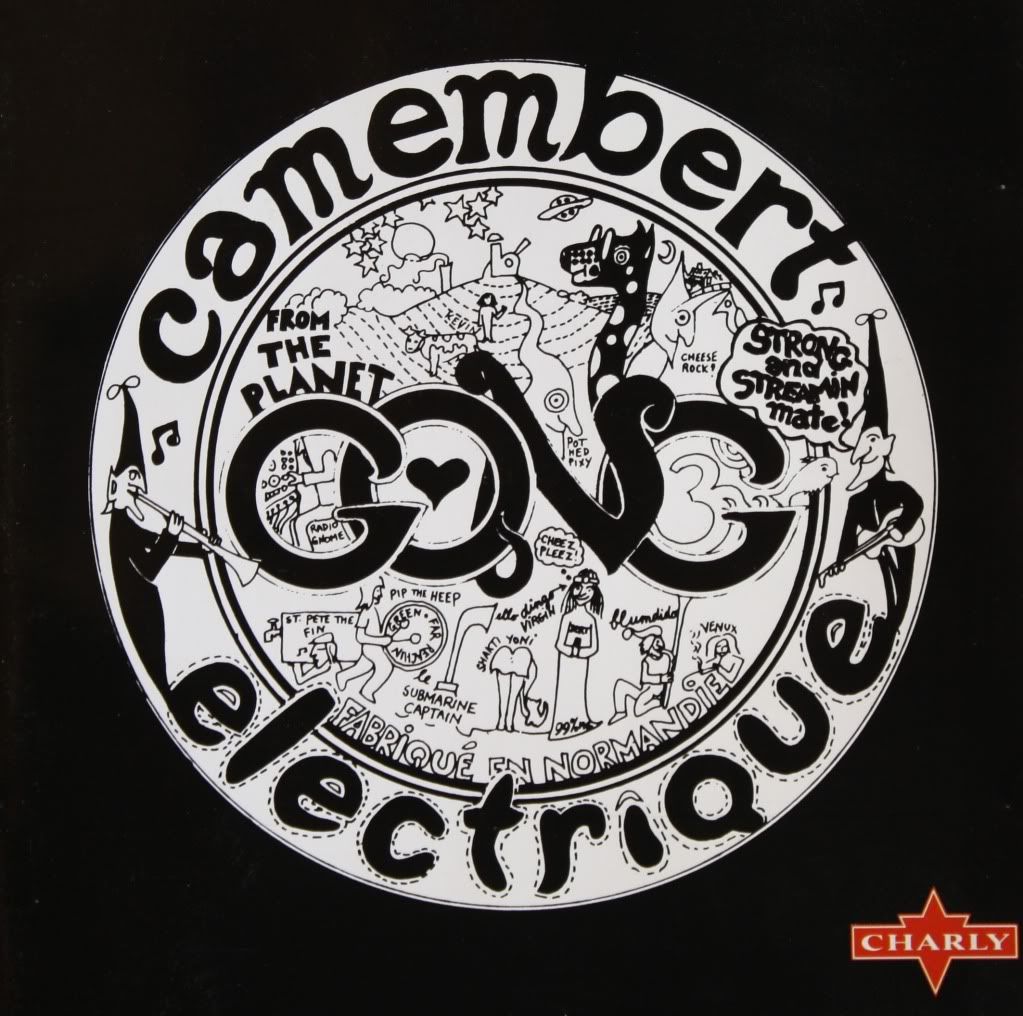
Back to the Canterbury scene, but certainly not too far of a step away from free jazz or even RIO, here we've got one of the all-time great Canterbury albums and one of the most frenetic psychedelic rock albums of the early 70's. Even though he's not British, Aussie Gong bandleader Daevid Allen was a member of that most embryonic of Canterbury groups--The Soft Machine--which, along with other proto-Canterbury group The Wilde Flowers, was at one time home to members of most of the scene's later core bands. If ever there was a hippie, it would be Daevid Allen--he was famously refused reentry into the UK when attempting to return from Europe because of overstaying his visa on a previous trip, so he remained in Europe (mostly France) and formed Gong. It's for this reason that Gong is one of the most (if not the most) international of the original Canterbury bands.
Although Cambembert Electrique isn't the Gong debut (that honor goes to 1970's Magick Brother), it's undeniably the beginning of what most people consider the classic form of Gong--the one that concerns itself with Allen's hippie mystical and anti-establishment vision shrouded in mythology of teapots, Pothead Pixies and mythical planets, all displayed over some of the craziest jazz-influenced psychedelic music to be heard in the entire era. The story of the planet Gong is first broached in the sound-effect heavy opening introductory snipped voiced by the "Radio Gnome"--from there on out, though, the album is a nearly nonstop barrage of weirdness, humor, noise, rock and jazz that knows no equal--in the Gong discography and elsewhere.
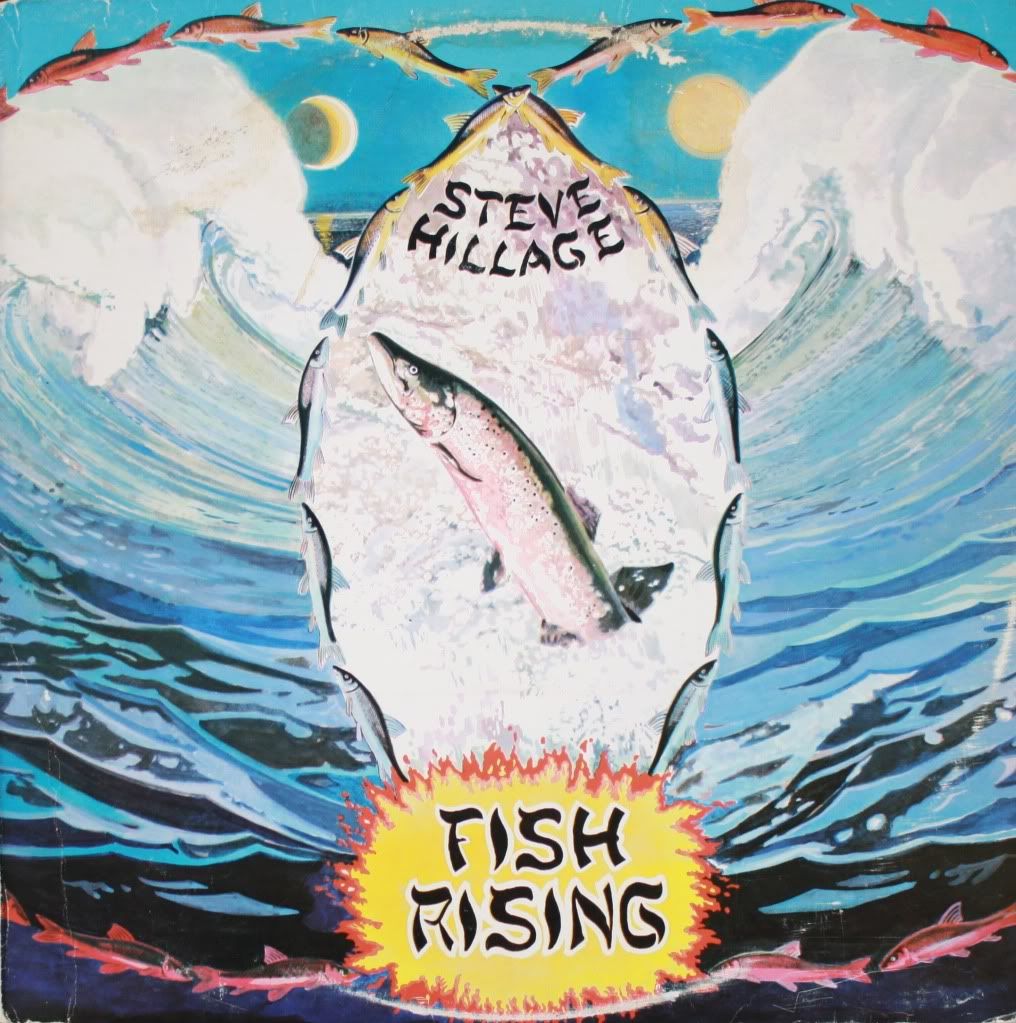
"You Can't Kill Me" offers a pretty solid template for the album--Allen's winding but catchy compositions feature a lot of repeating figures and ostinati, looping rhythms and noise, while the lyrics hilariously toy with ideas of reincarnation and karma, while his partner Gilli Smyth contributes heavily-reverbed high-pitched moans, groans and what became known as "space whispers." Though on first listen this music might sound like utter chaos (well, it is chaotic, but not necessarily utterly), closer attention reveals an almost punk rock-like attitude supplemented by Didier Malherbe (distinctly "French" saxophone style) and Pip Pyle (unparalleled prowess on the drum kit, later to become one of the most experienced Canterbury journeymen) both of whom seem to have no difficulty negotiating Allen's compositions and their innumerable and quickly-transitioning ideas. Though the tumultuous Gong lineup later featured the more-lauded guitar hero Steve Hillage on lead guitar, I find Allen's guitar style particularly impressive for its audacity (just listen to the noise he conjures up on "You Can't Kill Me").
The album continues to plow an increasingly eclectic furrow with the organ-driven music hall "I've Been Stoned Before," where Allen goes from comical farce to sounding like he's going to shred his vocal chords in torment in just about 2 1/2 minutes. "Mr. Long Shanks" (see above video) transistions from gleeful carnival jazz rock ("The man in the parlor/you know what he's after") to a Gilli Smyth space whisper tour-de-force at its halfway point, while "I Am Your Animal" finds the female vocalist projecting a more aggressive (even x-rated) performance over Allen's spiky repeated riff, which morphs into a rapid-fire vocal barrage that ends with Allen madly yelling about licking the moon.
After a couple of sound collage interludes ("Tu veux un Camembert?") the band returns with the forward-looking (to later Gong albums) "Fohat Digs Holes in Space," which spins an atmosphere out of Allen's "glissando" slide guitar--the part when he seamlessly drops from the eerie high register into the midrange before 40 seconds is breathtaking. I'm not sure if glissando is really the correct word for the playing style, but that's what Gong fans have decided to call it--anyway, it's that echoey spacey sound that starts about 30 seconds in. The song's eventual rock riff is one of the album's catchiest, with Allen extolling some beat-cum-hippie poetry ("mirror mirror, on the wall, who's the biggest fool of all?") before another overdriven sax and lead guitar breakdown. The beginning of "And You Tried So Hard" is the closest thing to folk rock to be found on the album, though it quickly weirds itself out with more Gong flavor. The album closes just as powerfully as it opened with "Tropical Fish"--one of the band's most effective mechanisms is doubling the melodies on guitar and sax for a stabbing effect--with a heaping handful of bizarre riffs and lyrics ("seem like a typical witch to me/seem like a tropical fish to me"), a spaced-out interstellar desert in the middle ("I couldn't believe my eyes....") and closing with the almost martial invocation of the moon goddess, "Selene," and a recapitulation of the album's earlier machine-gun lyrical themes. The Radio Gnome returns to remind you that the ride's only just beginning, and you'd better believe him.
Although the full on Gong mythology isn't in narrative form here, the lyrical themes set the scene for the epic Radio Gnome Trilogy to come. Though Gong may have equaled the fun, trippiness and quality and ideological resourcefulness found here on later albums, they did it from a spacier angle, and sadly this album is in many ways one-of-a-kind with its energy, barrage of ideas, and noisy edginess. It manages to incorporate a lot of jazz influence without committing to long-form jazzy passages (like so many later groups, including Gong would do) by radically changing from idea to idea in short periods of time. Their arrangement style here is one that was certainly emulated by later Canterbury bands, and it's easy to tell that Allen's association with Robert Wyatt and Kevin Ayers was a mutually-enriching one; his idiosyncratic sense of humor obviously influenced to a large extent the sense of whimsy and insubordination prevalent in a lot of the Canterbury scene's later music. My only complaint with the Charly CD reissue of this album is sound, which is quiet, treble-heavy and not as full as I imagine it should be. Let's hope for a good remaster.
Until then, you can get it here on CD or MP3
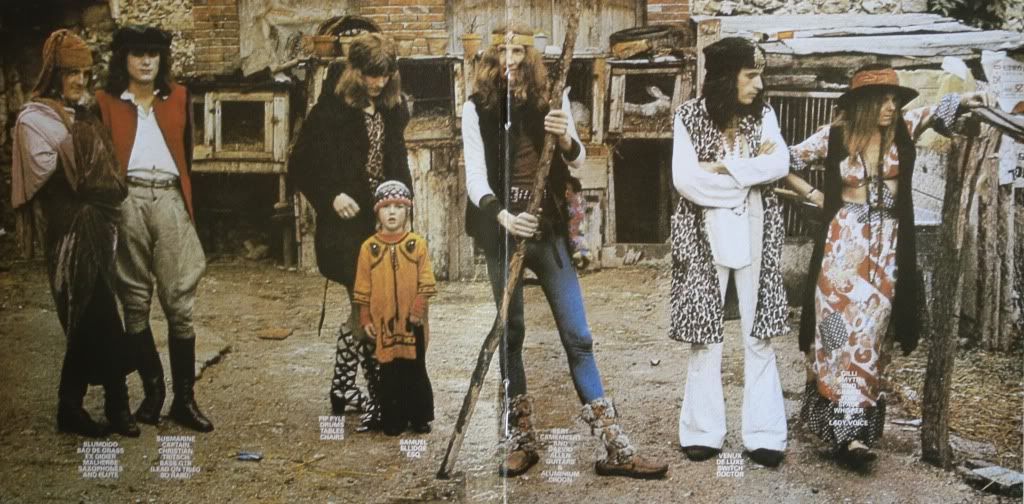
 . Oh, and if you listen to any of this and think Gong don't sound like typical hippies, take a gander at their ridiculous get-ups. Allen appears not to mind being stapled in the face...and that's quite a wizard staff.


 .