Showing posts with label Psychedelic. Show all posts

Monday, September 10, 2012

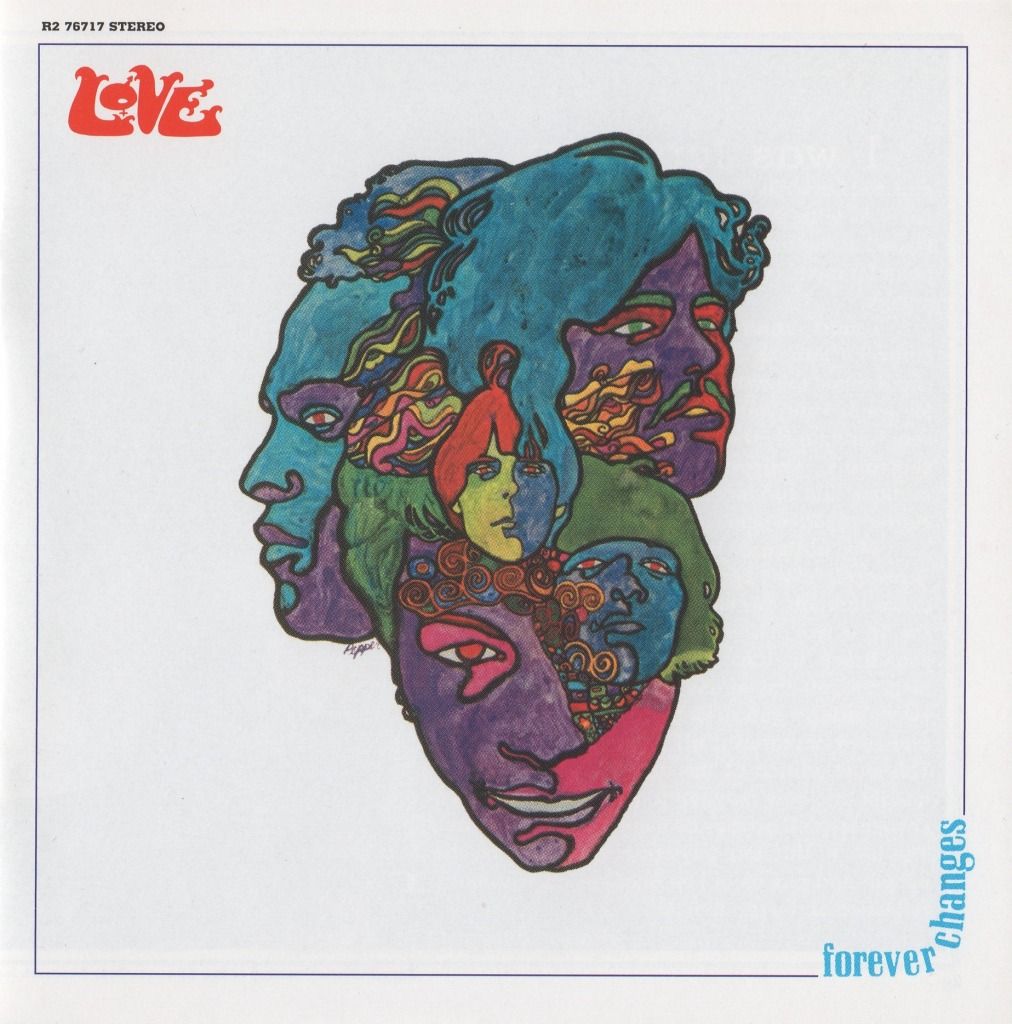
Love - Forever Changes


The past year has been so busy with recording and evaluating my own music that I've had much less time to listen to other people's sounds, which means I've focused a lot more on the "new" music I'm finding instead of revisiting old favorites.  When I do get around to albums I've heard many times, the experience is often quite illuminating.  Especially after doing so much critical evaluation of music on this blog, I sometimes realize that my "5 star" albums, upon relistening, aren't necessarily free from the kinds of things I might label as "flaws" in other music, and that ultimately, designating something "as good as it gets" rests on a certain feeling of affection or nostalgia toward the music, or at least an assertion that the great things in the music are so good that any "flaws" come across more as endearing idiosyncrasies.  In other words (and yet again), it's all subjective!  The fun part about analyzing music in writing is the disjuncture between personal preference and the fact that yes, we actually can (and should) identify and judge specific characteristics in the music that justify how "good" we say it is, but also that "good" will always be individual, and reading music reviews and blogs is ultimately most useful as a way of pairing others' tastes with your own to discover music you might enjoy. 

Forever Changes is one of those albums that winds up on innumerable critics' top lists, but has somehow kept a much lower mainstream profile in comparison with its contemporary "classics."  You never hear any Love songs on the radio or in movies etc., and you'll be lucky if you hear anyone talking about them outside of musicians and critics.  And yet, pick up Forever Changes and give it time to work its magic and you'll most likely understand why it quietly persists as a milestone in psychedelic folk-rock and as one of the best albums of the 1960's.

Like many great albums, Forever Changes is so great because it's often a bizarre combination of unquantifiable elements.  There's the fact that it's a much mellower affair than Love's previous two albums--the more garage-like electric sound of Love and Arthur Lee's aggressive vocal style on Da Capo mostly replaced by acoustic guitar and orchestral textures--and yet it's still insidiously edgy.  There's the album's unique twist on psychedelia, which often takes the form of hard-panned instrumental tracks (the nylon-stringed acoustic is so far to the right it's almost gone!) and brief additions of reverb as well as arrangement choices like having the background singers say a different word at the same time.  There's Arthur Lee's obvious magnetism as a front man, which twists together the role of a sort of tormented seer with a dark fragility, surprising poetic capabilities, an ability to distill the countless clashing emotions of the 60's into songs that are simultaneously emotionally gripping and ultimately ethereal, as well as being a larger-than-life historical legend, somehow more than fulfilling Da Capo's thwarted potential here but quickly unraveling into mental and artistic instability (he was reportedly sure his death was imminent during the creation of this album) in the following years--still capable of creating good music but never coming close to reaching the same level of insight (especially lyrically) repeatedly on display here.  And finally, in spite of Lee's dominant persona, there's the fact that the band was undeniably a collaboration, that Bryan MacLean's songwriting contributions and classical guitar contributions are as important to the album's success as any of the other elements, and that Lee's decision to disband the Forever Changes lineup soon after the album's release was a terrible blunder. 

The distinctive characteristic that most people note about Forever Changes is the inclusion of orchestral arrangements, especially prevalent on the MacLean numbers--the balance is sweet and delicate on "Alone Again Or," "Andmoreagain" and "Old Man," songs whose optimism counterbalance some of Lee's desperate worldview with detours into romantic euphoria.  Elsewhere, though, the strings and horns just as aptly provide a creepy, unsettling edge, as on the paranoid "The Red Telephone" and robotically closing "The Good Humor Man He Sees Everything Like This" (gotta love those Dylanesque 60's track titles), as well as brilliantly cathartic, as on the Latin-tinged "Maybe The People Would Be The Times Or Between Clark And Hilldale" (which boasts some of the album's most sly lyrical conceits, with expected rhymes interrupted by staccato horns only to appear to begin the next line...until the instrumental breaks, that is) and the transcendent album-closing "You Set the Scene."  The cleverest part of the delicate arrangements is how well the rock moments stick out--"A House is Not a Motel" sounds like the heaviest rock you've ever heard, despite the fact that at least half of the song doesn't even have electric guitar, and the solo on "Live and Let Live" is insanely scorching because there's nothing "hard" to compete with it.  Relistening I'm really surprised at how simple the arrangements actually are in comparison with the songs' complexity, usually consisting of just a standard two-guitar rock band with maybe a bit of piano and the aforementioned strings--the band's ability to make each part indispensable is a testament to the skill and care on display.

Lyrically, the album literally never lets up.  While it's often difficult to discern what exactly Lee is singing about in each song, the impressionistic moments paint a collectively awe-inspiring picture of urgent searching, resultant disillusionment, distress, cynicism and ultimately grasping a fleeting sort of brilliant something that makes it all worth it...a something that might just be the absence of alternatives.  Lee manages to toss out piercing one-liners right next to surreal scene-painting with the spontaneous force of a man possessed by something larger than his own conscious decision to create, and somehow manages to do so without completely slipping off the edge into incoherence.  Despite the fact that the album is so very 1960's, his struggle and observations about the world's contradictions can't help but still ring true.

Perhaps this is the only truly great album Arthur Lee had in him, but its quality does seem to justify its singularity.  Though it will likely always remain lauded but obscure, Forever Changes continues to humble me every time I revisit it--albums like this are something more than just old friends, comforting and diverting but always capable of teaching us something new.

Get it here.

Monday, January 16, 2012

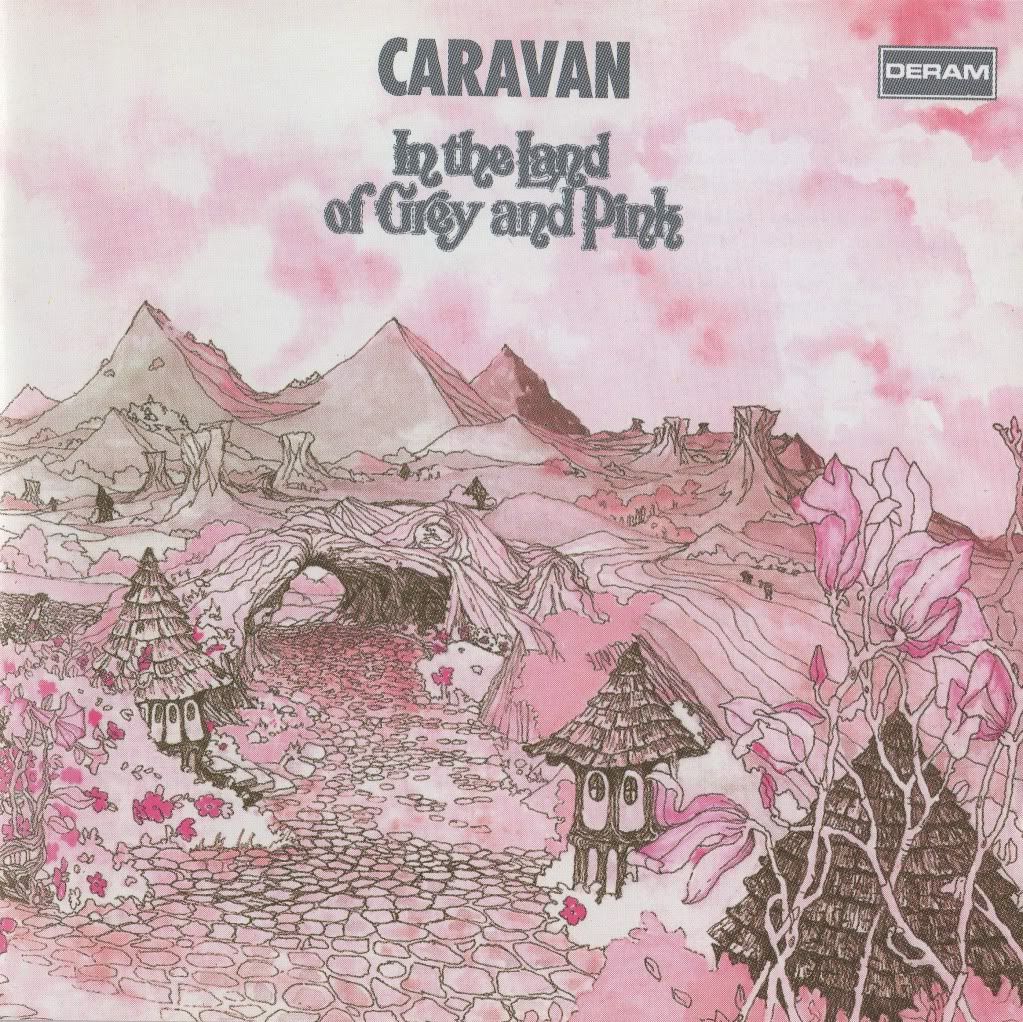
Caravan - In the Land of Grey and Pink


It's been a while since I've written about any Canterbury Scene bands, and I'd still like to further explore how the music has expanded past its original physical scene into a recognizable style, but also what it was like when the style and membership of the scene was still concentrated in just a few bands.  You can't do that without talking about Caravan, which--aside from Soft Machine--probably has the most members closely tied with the early Canterbury Scene.  Like Soft Machine, Caravan started in the late 60's, boasting members from the formative Canterbury band Wilde Flowers.  Also like Soft Machine, Caravan was instrumental in defining what has come to be known as the Canterbury sound, although in a considerably different way from the Softs.  Even at its early poppiest, Soft Machine's sound was always firmly rooted in jazz, while I'd say Caravan is more tied to psychedelic rock with some elements of jazz and progressive, and by most accounts they perfected this distinctive blend with this, 1971's In the Land of Grey and Pink.

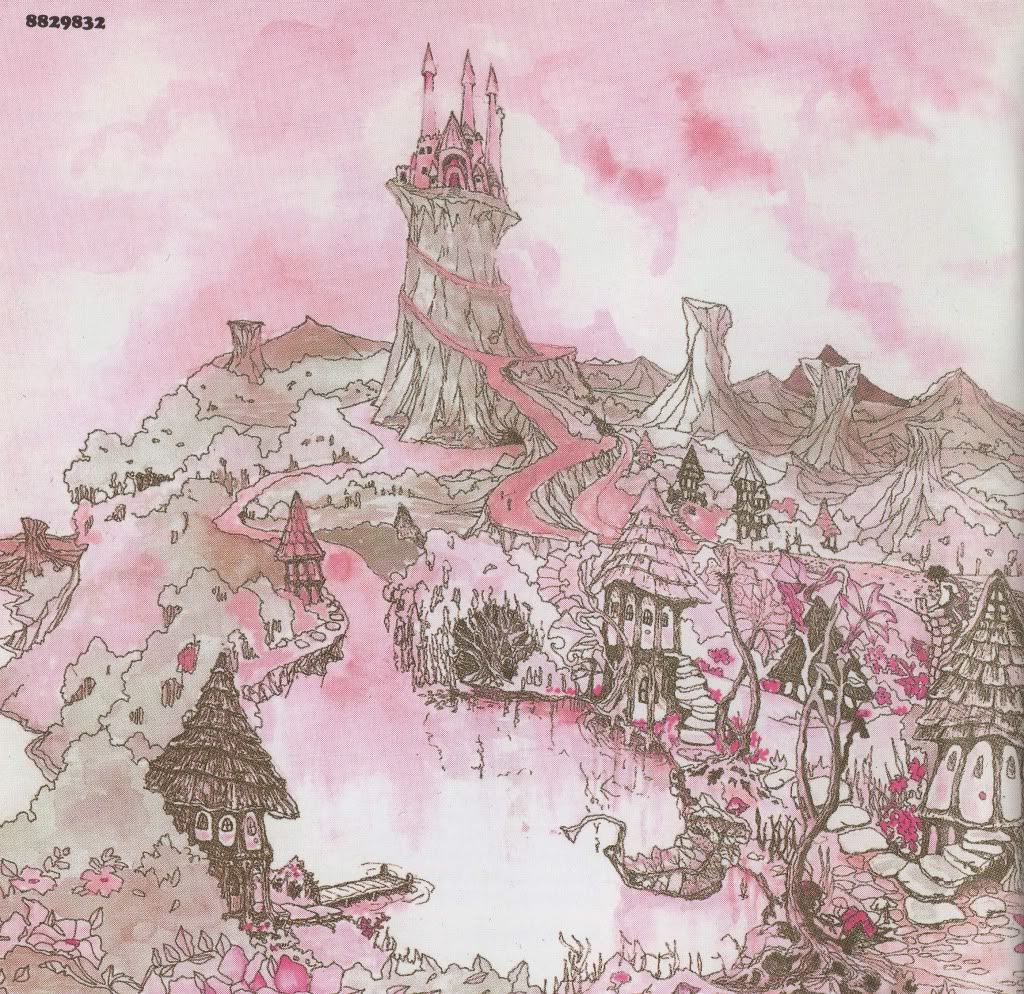
In case you were worried, the bouncy opener, "Golf Girl" assures us of this album's origin--the trombone, flute, juiced-up organ and goofy lyrics ("on the golf course/we talk in Morse") are undeniably Canterbury.  Compared with Soft Machine, though, this is definitely rock, and while it seems Robert Wyatt was mostly just screwing around (albeit quite entertainingly) with his lyrics, there's a sincerity with Richard Sinclair's words and delivery that adds a dimension of warmth to Caravan's whimsy.  "Winter Wine" turns a 180, with a psychedelic folk bent and a bunch of fantasy imagery that seems to support the album cover (which, by the way, is fucking awesome--I want to go there).  Though Sinclair's vocals do seem a little inconspicuous on first listen, a surprising amount of nuance becomes apparent when you come to learn the songs a bit better.  The mutual Canterbury influence is apparent in how he and guitarist/vocalist Pye Hastings make up a sort of two-man approximation of Wyatt--Hastings' vocals rest in the thin, upper register Wyatt treads so often (check out the delirious cowbell pop of "Love to Love You (And Tonight Pigs Will Fly)", while Sinclair's lower range seems to prefigure the fragile humility so often found in Wyatt's post-Soft Machine work. 

The title track revisits the "Golf Girl" feel with some more stoner-hippie-fantasy-nonsense imagery ("we'll pick our fill of punk weed and smoke it it till we bleed--that's all we'll need") as well as some sparkling piano and a great organ solo.  I find it interesting how the band employs a classic Canterbury (Mike Ratledge) innovation like the fuzz organ, but use it in a totally different way.  This brings me to the epic, side-long closer "Nine Feet Underground," which assures us without a doubt that Caravan's lead solo instrument is Dave Sinclair's organ.  While the other Canterbury groups are no strangers to long solos, Caravan seems content to set up a fairly straightforward rock riff-based jam and allow Dave Sinclair to stretch out with several minutes-long organ solos.  While it's a repetitive approach and Sinclair's style is nowhere near as technically erudite as Mike Ratledge's or Dave Stewart's, for example, there's something about Caravan's hazy/catchy psychedelic atmosphere and the tone and Sinclair's tone and note choice that just clicks perfectly.  It's amazing how well a 22 minute-long song can mostly subsist on jams and organ solos (though Pye Hastings and Richard Sinclair each contribute a vocal section) but I think it owes to memorable, melodic chord progressions and Sinclair's willingness to effectively alter the tone and effects of his instrument to expand his ideas and change up the palette.  The song's conclusion pits barnstorming riff sections against some of Sinclair's most groovily aggressive soloing (though some say it rips of "Sunshine of Your Love," I'm not sure Cream can really lay creative claim to an entire musical interval--suffice to say the two riffs are similar-sounding and Cream's came first).  Amazing--that is, if you like longform jamming.

It seems there's a Canterbury Scene band for every mood and season (well, not really, but the scene demonstrates surprising depth while still conveying a distinctive sound), and for me Caravan is the catchiest, most mainstream of the lot, which is probably why they remain one of the bands who is more often discovered by younger listeners, even achieving mention in Mojo, which sports nary a mention of most other Canterbury luminaries, except Robert Wyatt, who seems to show up several times an issue these days.  This album is warmly recommended to psych/prog fans as well as Canterbury disciples, and it's worth mentioning that If I Could Do It All Over Again, I'd Do It All Over You and Caravan for Girls Who Grow Plump in the Night are nearly as rewarding.

Get it here, or deluxe here.

Please enjoy the back cover, too:

Friday, January 6, 2012

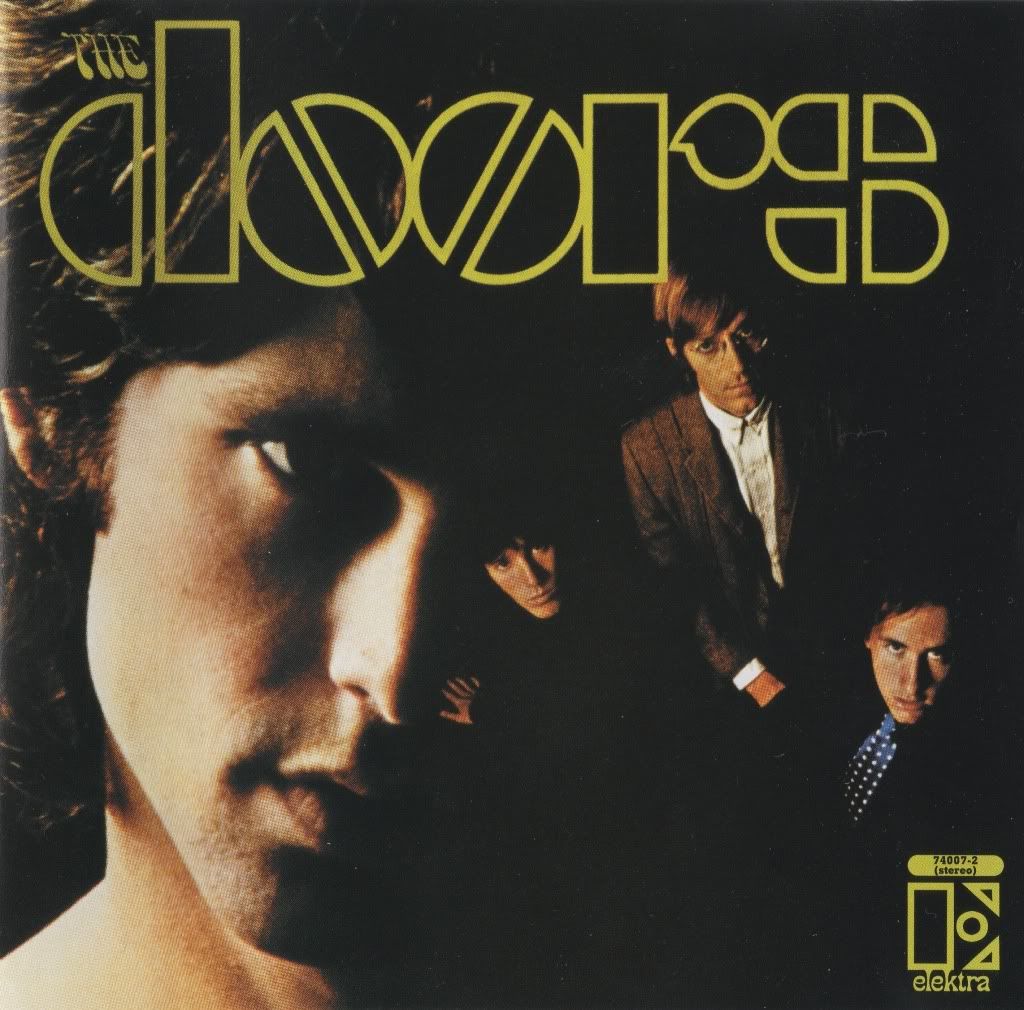
The Doors - The Doors

Jim's left eye is...John Densmore's face?

It's been a while since I've undertaken the carefree task of writing about something really popular and well-known, so why not talk about The Doors' 1967 self-titled debut?  Now that this album is pushing 50, it's a little easier to take its legendary status with a grain of salt, and I find it easiest to evaluate when taken as what it really is--pop music, pure and simple!  When you think about these songs as something "the kids" were supposed to go crazy for and buy in wheelbarrowfuls, the facts that Jim Morrison's "poetry" is mostly inane clichĂ© rhymes and that the music here isn't really challenging or as dark as the image the band cultivated don't really matter--it's pop, and pretty great pop, for that matter.

Not that The Doors wasn't a revolutionary or nearly completely fresh album at the time it emerged--it pretty much made Elektra Records into a successful rock label, proved the marketability of a dark, distinctive version of US psychedelic rock that had little to do with the typical West Coast sound, and demonstrated that there was plenty of room in the pantheon of teen idols for a raw, sexual, and darkly pseudo-artistic figure like Jim Morrison, paving the way for a lot more experimentation in US pop music. 

What made The Doors so different and successful?  To my eyes and ears, it's the fact that they backed up their unique, marketable image with such a distinctive style.  While Morrison's poetic pretensions are often hard to swallow, the rest of the band really did fulfill the dark, artsy image that's represented so well by the cover art--Ray Manzarek's roots were classical, Robby Krieger purportedly never played an electric guitar (he was a flamenco player) before joining the group, and John Densmore's jazz chops are probably the best thing the group's got going for itself instrumentally.  That murky, dark sound typified by heavily-reverbed Morrison vocals (the power of his voice as an instrument is tough to deny, especially when he swings between baritone crooning and animalistic shrieks) and piercing organ high-end was pretty much unheard-of, and even if a lot of the material is ultimately lightweight, it certainly fits the group's image in mood and bluster.  Whoever had the idea to include the Brecht/Weill "Alabama Song" and blues standard "Back Door Man" was on the right track, fleshing out the group's druggier originals with the drunken carnival leer of a sex-crazed pervert that Morrison would continue to embrace, probably to his great personal detriment.  Of course, the original that cements these covers' filthy promise is the immortal "The End," in most parts not so much a song as it is a musical texture backdrop for Morrison's closest attempt at poetry on the album, with some controversial sex noises and mother-f'er talk.

What really made the album sell, though, is the wealth of melody and hooks that reside in most of the songs--"Break On Through" and "Light My Fire" combine late night drug imagery (though most people probably haven't heard the unedited "Break On Through," where Morrison clearly shouts "she get high") with pop-perfect breaks and simple melodies delivered with apt doom by Morrison's god voice.  It's impressive how many other potential hits are on here, though, like the funky organ/guitar combo on "Soul Kitchen" and "Twentieth Century Fox," not to mention the schmaltzy mystery of "The Crystal Ship."  And surprisingly, a couple deep cuts are just as catchy--the garagey start/stop of "I Looked At You" makes for a great false ending, and the thinly-veiled sexual imagery of "Take It As It Comes" is probably the only thing that held it back from single-dom.

Though their edginess makes them appear unique, The Doors' career started like so many other great, wide-eyed rock bands, with a group whose instincts were pure but whose vision into the future was short-sighted due to the fact that they barely knew what they were doing when they were doing it--there's about three repetitive keyboard basslines that Manzarek recycles across all of these songs, while Krieger's nascent relationship with his electric guitar evidences itself in a limited range of ideas and a virtually identical guitar solo on "Soul Kitchen" and "Twentieth Century Fox."  The familiar commercial pressure to repeat the debut's success made for diminishing returns after the group's sophomore album, but when they eventually gained confidence as a working unit their diverse and unusual identities shone through for some weirder and more experimental compositions, but I think the perfect storm and untainted energy of this one will probably stand in most people's minds as their definitive statement.  Just don't take it too seriously. 

Get it here.

Friday, December 30, 2011

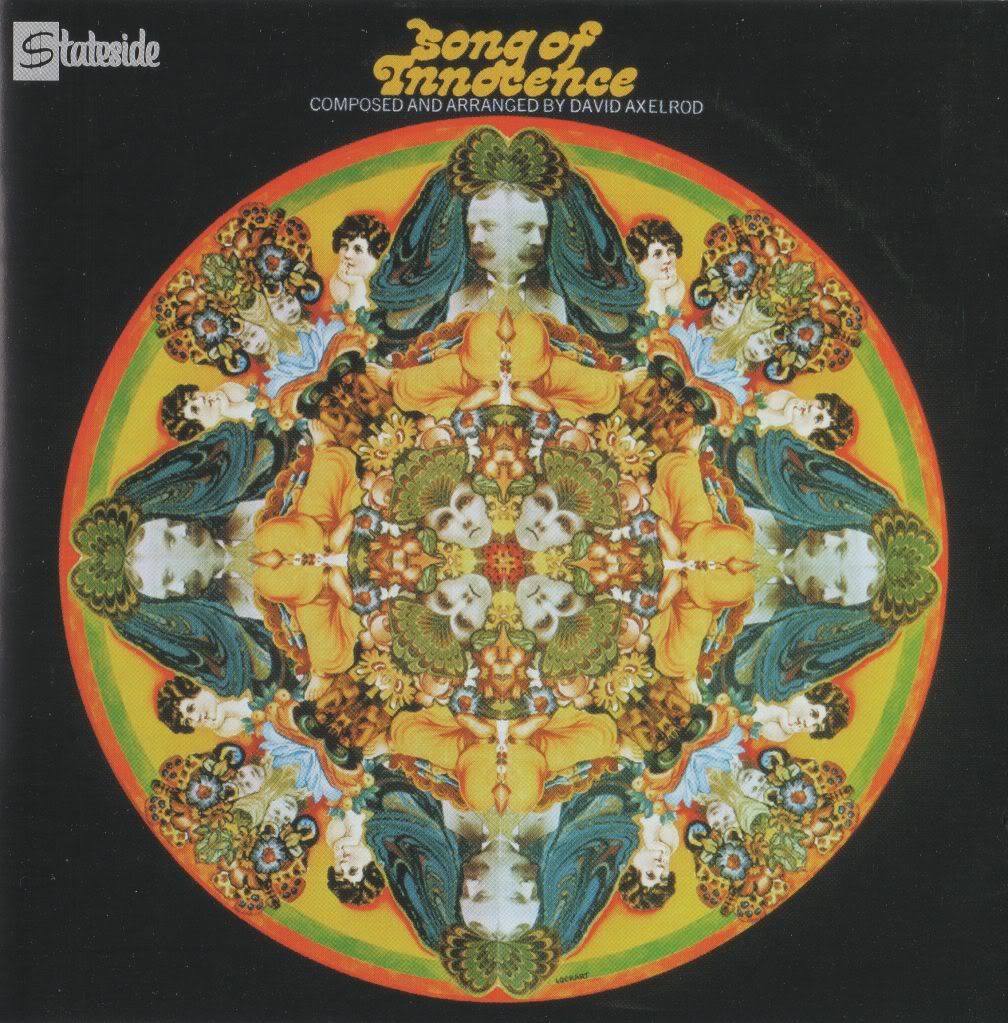
David Axelrod - Song of Innocence


Here's a longtime favorite from producer David Axelrod, who worked with Lou Rawls, Cannonball Adderly, the Electric Prunes and others as well as producing a pretty consistent string of solo albums through the late 60's and 70's.  This album and its 1969 follow-up Songs of Experience are notable for being based on the poetry of William Blake and being sampled by quite a few hip hop artists.  While the suite's sound is undeniably 60's, I always enjoy how Axelrod managed to take bits and pieces of several styles and make something that really has no stylistic equal that I've heard.

Perhaps I'm reading too much into the album title (and keep in mind I have no familiarity with Blake's poetry), but to my ears the "innocence" of Axelrod's compositions here is manifest in the simplicity of the riffs and themes (especially in comparison with this album's follow-up).  Most of the songs are built on repeating two-note riffs or ascending and descending scales in deliberately-paced quarter notes, delivered by the orchestral instruments--sweeping strings and a lot of swelling brass.  The creepy string fanfare that opens "Urizen" definitely sets the tone, which is often dark but always groovy.  In my mind's eye I always picture the orchestra facing a rock trio, blasting out the dramatic and cinematic themes while the bass and drums lay down some visceral funky beats and the guitarist (probably the main reason this album gets tagged "psychedelic") cuts loose with distorted soloing.  Bridging the gap between the orchestra's lofty sounds and the drive of the rock instrumentation are a few really well-placed and arranged jazz instruments--piano, organ and vibraphone manage to tie the album's disparate purposes together and enhance the lounge-like atmosphere, as well as provide some of the best details--like the vibraphone breakdown right before the two-minute mark of the oft-sampled "Holy Thursday," which builds into one of the album's most tremendous climaxes.

It may take several listens before the album's melodic cohesion stops sounding like homogeneity, like the subtle twist between the descending two-note riff of "Holy Thursday" and the ascending two-note riff of "The Smile," and subtle shadings like the groovily baroque harpsichord start to poke out.  While it's still pretty far off from the joyousness to be found on Songs of Experience, "A Dream" breaks the album's minor template with lovely restraint.  "Song of Innocence" is an example of one of the best-realized longer tracks of the album, blending some truly sick drumming with dissonant tension in the strings, an uncharacteristically clean volume pedal guitar solo and a dizzying orchestral conclusion.  "Merlin's Prophecy" develops the album's themes with more energy and complexity, progressively pushing the tempo as the track concludes, while "The Mental Traveler" closes the album with a forceful return to the earlier minor textures, including a righteous Morricone-like guitar melody and a dynamic false ending before the strings eerily bleed out into the beyond.

When I share Song of Innocence, it often provokes laughter--it's true that the style is pretty schmaltzy and our ears are conditioned to treat strings and horns as movie soundtrack music, but I find the atmosphere here really great and the session playing rivals many other jazz-pop crossovers of the late 60's--it's easy to hear how influential Axelrod continues to be from trip-hop and beyond.

Get it here.

Saturday, December 17, 2011

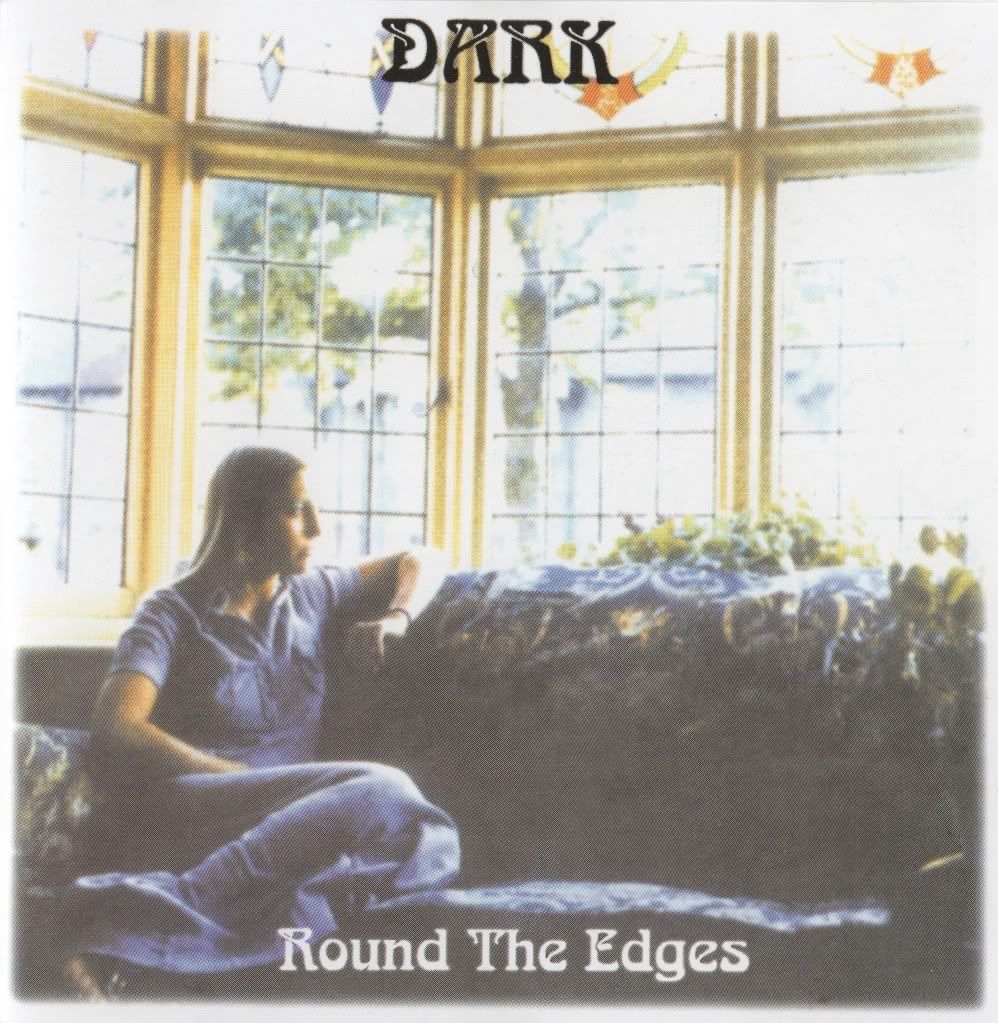
Dark - Round the Edges


Time for another installment of Know Your Enemy--this time it's not the band or the music, but the consumer attitude surrounding the album--excessive hype.  One of the interesting facets of underground and obscure music hunting is that hype is often as common and potent in its ability to mislead as it is when it's found in relation to mainstream music.  Dark's sole 70's release Round the Edges is in my opinion the perfect example of this phenomenon.  It's not that Round the Edges is a bad album, it's just not worth the thousands of dollars that record collectors are apparently willing to pay for the original vinyl run.  There's something about the power of rarity that will always make people certain people say "this is great" or make other people say "I know somebody told me this wasn't that good, but people are paying thousands of dollars so maybe it actually is." 

When you actually get your hands on a copy (probably digital or CD reissue), you'll find that this album isn't some sort of mold-breaking visionary masterpiece, but rather something very much of its time.  Its six tracks are relatively long and the focus is on dual guitar interplay with plenty of fuzzy distortion and the occasional wah solo.  While the songwriting isn't particularly developed or notable in its creativity, the long songs have their moments--my favorite is probably the opener, "Darkside," which boasts a few interesting and distinctive sections including a tom-and-guitar intro, a spacious jazzy section that pits the left channel's open riffs against the right channel's reverbed lead lines, and some faster riffing that morphs into a beautifully crunchy bending lead line.  It's also one of the songs where the vocalist's dour-but-sort-of-jazzy-at-their-best vocals seem to mesh well with the music.  At most other times the singer's smooth, emotionless Eric Clapton delivery seems at odds with the guitars' grit, or at best the vocals just fall behind the much more interesting guitar sounds.

The drum/guitar interplay of "Darkside" returns quite satisfyingly on "R.C.8." but its impact is dulled by some less impressive song construction and shudder-inducing lyrics ("everybody loves a little baby/don't you tell me now that that's a lie") that are even worse than the ones that mar the otherwise dreamy soundscape of "Maypole" with confused attempts at cleverness by likening some chick's appearance to Michael Caine's...yikes.  Fortunately, the album ends pretty strongly; "The Cat" represents a common occurrence with early 70's bands like Dark--when they run out of weird, proto-progressive ideas they always seem to fall back on their late-60's blues roots.  Luckily in this case it's one of the most energetic tracks for the ensemble, giving the drummer a chance to channel Mitch Mitchell and it's even got a spacey middle section so it's not too different from the rest of the album's vibe.  The closer, "Zero Time," is also one of the album's strongest tracks--though there isn't a particularly large amount of intricate guitar work, the main riff makes for a sense of drama and spaciousness that doesn't quite come together in the rest of the album, and the way the vocal melodic refrain bleeds across the beginning of the riff is an awesome idea.

It's clear that Dark was onto something here--there are bits and pieces of good ideas in all the right areas (atmosphere, playing, songwriting) but the common Achilles heel of an insufficient vocalist combined with the album's distant, garagey production hold this one down firmly in the second tier, for me at least.  Not that that's a fatal flaw--a lot of great early 70's hard rock bands required a few years and so-so albums to shed their origins and blossom creatively--but unfortunately Round the Edges is the only Dark memento we've got and the band wasn't able to continue in its promising direction.  In my opinion as a moderate fan of this kind of music, it's good enough to seek out if you're a big fan, but there are quite a few similar albums I'd recommend first that don't require nearly as much barrel scraping for those with a casual interest.  Excessive hype, you are not our friend!

Get it here.

Wednesday, November 9, 2011

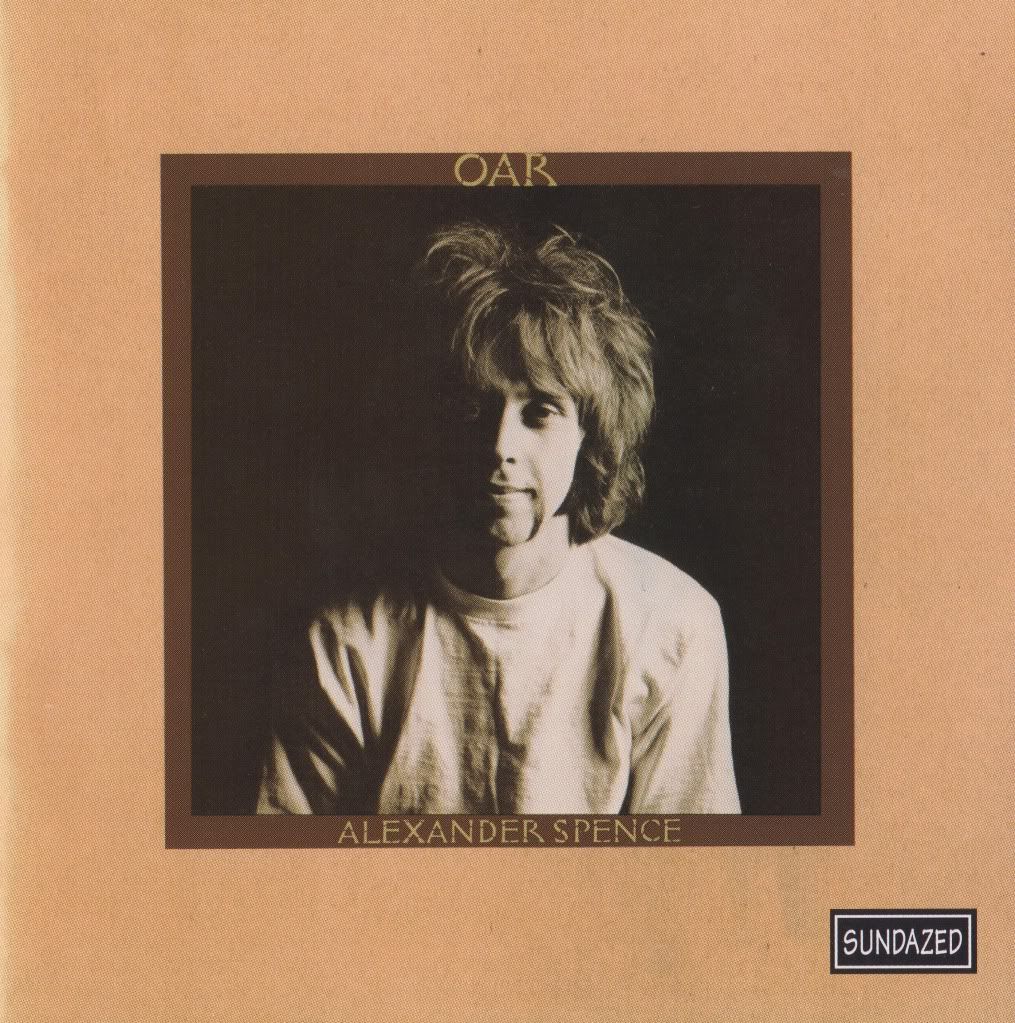
Alexander Spence - Oar


I always thought that Skip Spence was the least technically proficient of Moby Grape's three guitarist/vocalists, but that he always made up for it with unmatched manic energy and that unquantifiable magic in his songwriting that few career songwriters manage to conjure.  Of course, by 1969 and the release of this much-celebrated (but still obscure) solo album, Skip (now billed as Alexander) was long gone from the ranks of Moby Grape.  There's a lot of mythology surrounding Spence's departure from the band, his time in Bellevue Hospital and the genesis of this album, which has generated a sort of Syd Barrett-like reputation for Spence as some sort of acid messiah.  While I think it's easy to project an impression of the man's mental state onto this collection of songs, I think it holds up as fascinating and idiosyncratic work without reading too much into or presuming too much about its creator's psyche.

Probably the album's defining characteristic is that it was recorded in seven days with Spence playing all of the instruments (mostly guitar, bass and drums), which gives the album a loose, tentative feel that occasionally comes across as sort of half-assed and shambling.  What continually fascinates me on repeated listens, though, is that the rushed, uncertain mood sort of fades away like a patina being polished to reveal songwriting that's often full of musical nuances and clever wordplay and not nearly as tossed-off as it seems.  Like Syd Barrett, Spence has a reputation for sort of spontaneously firing great material straight out of his drug and illness-wracked brain, but I think he's a lot more in control than the songs' cowboy ballad structures and sketchy, plodding arrangements would suggest.  Take the tongue-in-cheek mockery of Eastern religion-obsessed hippies of "Dixie Peach Promenade," the hilarious wordplay of "Broken Heart" ("an Olympic super swimmer whose belly doesn't flop/a super race car driver whose pit it can't be stopped") or the more somber punning "weighted/waited" turnaround of the country lament, "Weighted Down (The Prison Song)."  Spence clearly has a knack for sharp satire, a taste for evocative images and an eye for the overall structure and flow that is so crucial to "classically" good songwriting. 

While the album's songs veer toward a folk/country ballad style more often than not, it wouldn't have gained its cult status without some overt psychedelia--the opening "Little Hands" has the album's most hippie-ish message and amply demonstrates Spence's ability to blend droning acoustic guitar with clean electric parts for a unique texture.  This palette reappears on the hazy "All Come to Meet Her," the closer, "Grey/Afro," which drones a little aimlessly but pays off with some cool bass/drum interplay at the end, and the album's psychedelic crown jewel "War in Peace," where Spence's delay and reverb-treated whispery vocals float above a sinuous, repeatedly swelling chord progression that finally breaks open with some understated but well-chosen lead guitar notes.  Spence's delayed vocal sound effects twitter in between blooming guitar strums as the song fades out over a forgivable ripoff of the "Sunshine of Your Love" riff.

I sometimes wonder what this album had been like if Spence had demoed the songs and rehearsed a lot more before going into the professional studio.  It certainly would have smoothed the rough edges on some of the wheezy vocals and tightened up the tendency of the drums and bass to emulate drunken lurching (hear both on "Lawrence of Euphoria").  Then again, I think the ragged feel is part of the album's charming appeal--it's almost like a trick, duping the listener into believing the music is garbage when in reality all of the most important melodic, structural and creative elements are there in droves.  Consequently, the low-key sound means the songs are never really obtrusive despite their psychedelic tinges but anyone really paying attention will be rewarded by Spence's craftsmanship, which comes across as confused muttering if the disc is played as background music.  This deceptively casual veneer has got to be one of the reasons this album is so popular with musicians--it's not easy to pull off, and the minimalism of the album's template means the songs could be (and were) embellished in unlimited ways.  I can think of few other albums quite as effortlessly subtle, and none that do it in quite this way. 

Get it here.

Monday, October 31, 2011

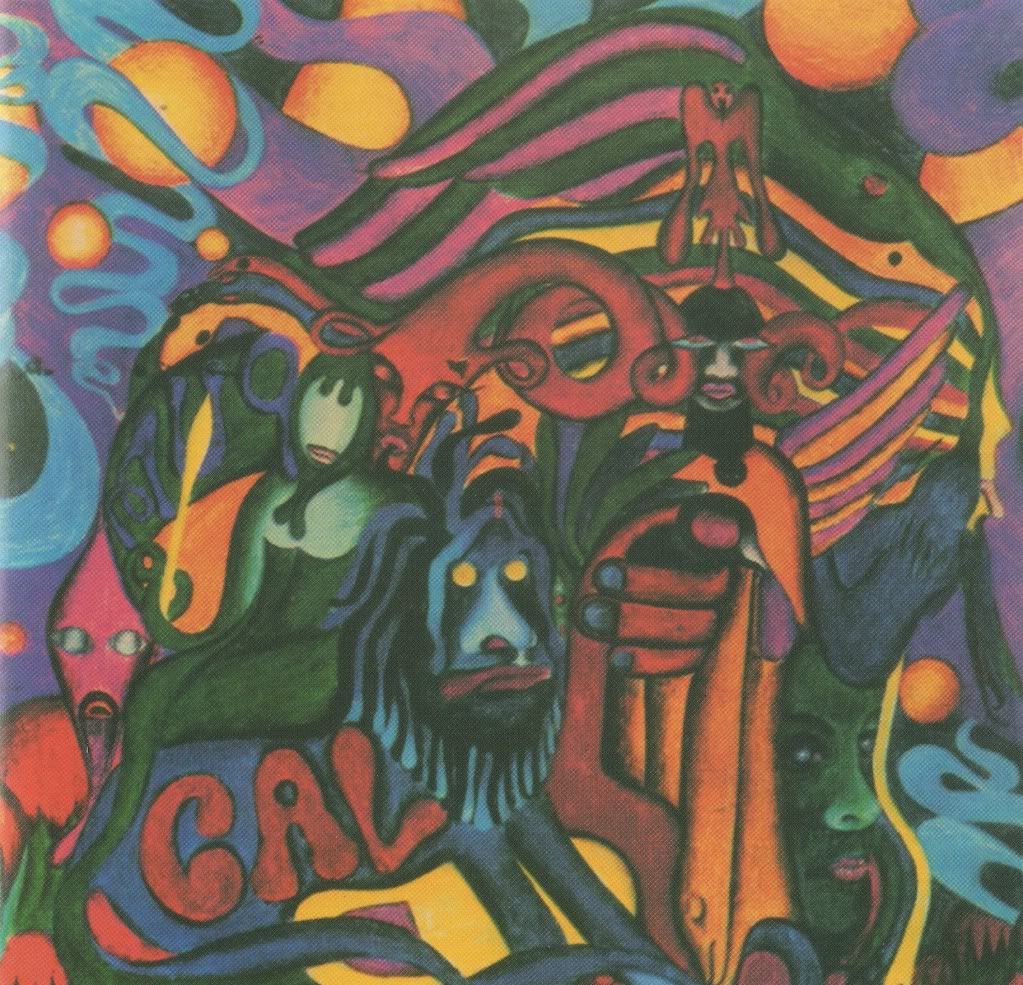
Gal Costa - Gal


A long way off from the last MPB I posted, Gal Costa's second eponymous 1969 album is firmly in the Tropicália camp with wild eclecticism, psychedelic production and bristling with the untamed energy that the Brazilian military government found so threatening at the time.  Worlds away from her more chanteuse-like debut, Gal even blows away a lot of the Tropicália competition in terms of craziness--I put it down to Gal's staggering vocal range and personality, which is self-evident on this album from the very get-go.  The syncopated beat and fuzz guitar opening of "Cinema Olympia" drops out almost immediately as Gal's seductive voice creates more of a lounge atmosphere, which soon disappears as well when the beat picks back up--by the time the chorus happens, Gal's hollering about matinee films at the Cinema Olympia over pounding snares and furious clean guitar riffing--heavy reverb and delay gradually accumulate on Gal's vocals as her wordless shouts and moans multiply before abruptly disappearing in a haze of strings...and then it's on to something completely different!  The detuned nylon string acoustic guitar and snake charmer reeds of "Tuareg" veer immediately left, and yet Costa seems to have no trouble keeping up when the bass grove kicks in and the chorus lifts the dark Eastern atmosphere back into pop territory.

It's easy to be impressed with both the stylistic breadth and quality of the songwriting on this album, and a glance at the credits confirms this gut reaction--there's three Gilberto Gil songs and two each from the pens of Caetano Veloso and Jorge Ben.  One of my favorite things about the late-60's Brazilian music scene is how communal and supportive it seems to be--all of these artists not only manage to co-exist, they also push each other into new directions and also manage to create a collective genre that's more than the sum of the bands that make it up.  The sky is the limit for the rest of the songs on this album--Gal ranges from ethnic Brazil flavor on Ben's "PaĂ­s Tropical," unexpectedly into sweeping string-arranged vocal pop (and a host of Tropicália artist name-dropping) on "Meu Nome É Gal" ("My Name is Gal") all the way to batshit crazy on the sound collage cut-up-cum-big band showcase for Costa's rapid delivery and upper-register bends on "Objeto Sim, Objeto NĂŁo."  Though I've got a feeling a lot of this can come across as too jumpy and frantic for a lot of listeners, the radical and immediate mood and texture shifts in this album are probably my favorite part--a song like "Com MĂ©do, Com Pedro" snaps between quiet, jazzy strings and Hendrix-like hard rock, and Costa even trades between sexy and psychotic in the same lines!

The fact that these frenetic songs somehow hold together and make sense grouped on the same album has to be credited to both the songwriters and the backing band, who manage to not only keep up with the stylistic swings, but also to masterfully manage a chaotic atmosphere with deft control.  Listening to music like this, it almost feels like psychedelic music was created for the explicit purpose of being given to the already-able musicians of Brazil and mutated into something the British and Americans weren't even capable of imagining.  The eclectic mood, awesome power of Gal's voice, and simultaneous pop/avant garde atmosphere of this album make it probably my favorite Tropicália album, and it's also probably the most cohesively "listenable" (aside from the eccentricity) as well, since there's no obligatory six-minute tape manipulation freakout (though "Objeto Sim, Objeto NĂŁo" comes close).   If you check this out and enjoy it, good news--there's a whole lot more great music where this came from!

Wednesday, October 26, 2011

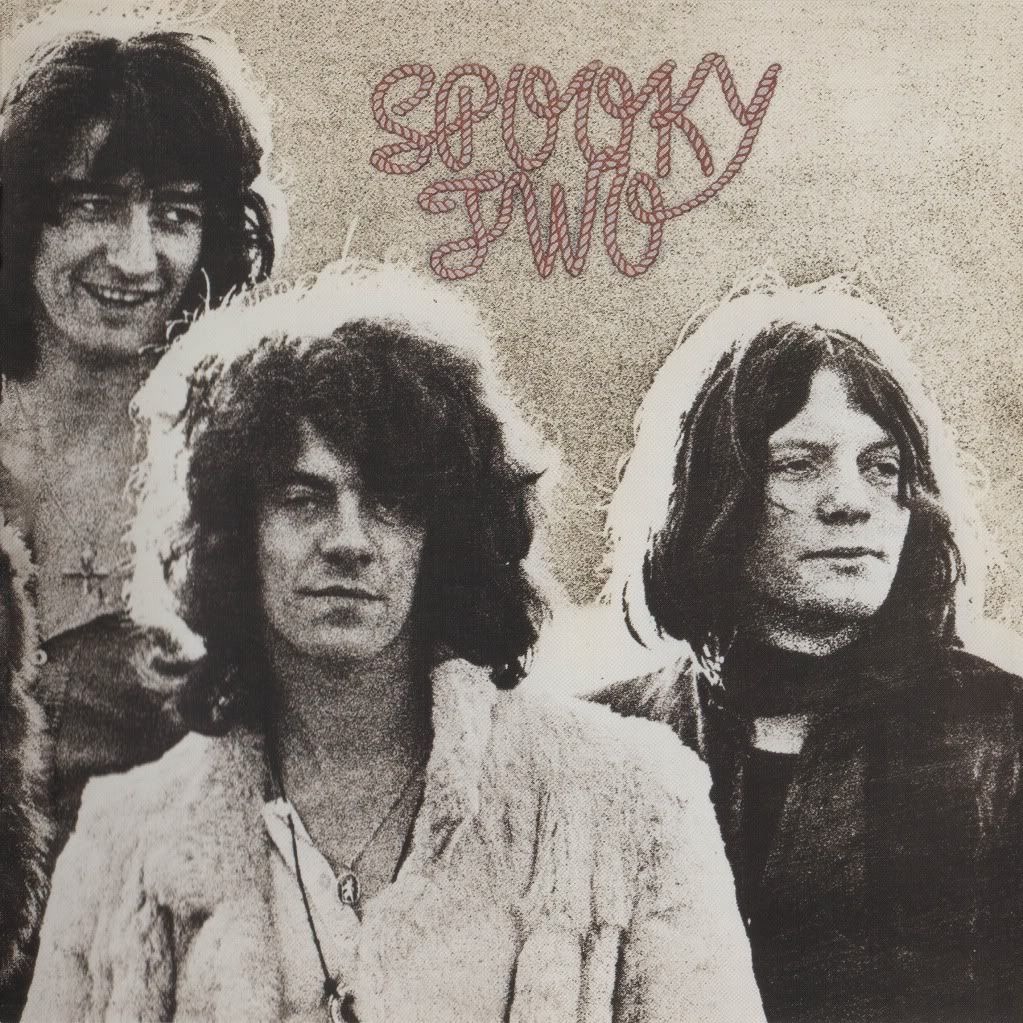
Spooky Tooth - Spooky Two


Spooky Two's 1969 sophomore effort definitely stands as one of those albums I've listened to so many times that it gets more difficult to back away and think analytically about it.  Revisiting it, though, I'm reminded just why I've listened to it so much--it's pretty awesome.  While late 60's hard rock isn't everybody's flavor of choice in 2011, for those who enjoy it I can think of few forgotten bands who do it as well as Spooky Tooth.

What I notice most re-listening to this is how well everything comes together to make the album comprehensively strong.  In the end, it's not really an album where the quality of the songs carries the music past the performances or the production masks a lack of passion or attention to detail in arranging.  Rather, all of these elements are paradoxically workmanlike yet outstanding in the way they complement each other and the overall cohesion of the album.  Take, for example, the lead-off "Waitin' for the Wind," (I love how musicians are never satisfied with just dropping the "g" when singing; they have to make sure the word ends in an apostrophe in the song title, even when the words aren't actually in the song).  It's the perfect opener--30 seconds of drum beat that gets some delay slapped on it around the 20 second mark, and finally a bass/organ riff that sounds like the heaviest thing you've ever heard.  Dual vocalists Mike Harrison and Gary Wright start singing about...well, nobody really knows what the hell they're singing about on most of these songs (something about the wind giving the narrator life advice), but it sounds awesome because they sing with such undeniable conviction.  For such a hard-rocking song, there's hardly any guitar--just on the chorus, where heavily-reverbed harmony vocals lift the energy above the already-driving main groove.  Such is the strength of this whole album--the band hits the sweet spot in all areas without really standing out in any one of them.  As far as I'm concerned, that's as worthy a musical goal as any, and a thoroughly excellent album is probably one of the hardest achievements to rack up.

Sound-wise, Spooky Tooth sets themselves apart from the rest of their UK contemporaries by slathering their sound with heavy gospel influences (the aforementioned reverb, female backing singers and a whole lot of keyboards) and maintaining a fine balance between eclectic songwriting and a cohesive, recognizable sound.  The gospel influence comes through strongest in "I've Got Enough Heartaches," where the backing vocalists share center stage as much as Harrison and Wright, and to a somewhat less classifiable extent on "Feelin' Bad," where the band wrings unbelievable heaviness out of the production and low piano keys.  Elsewhere, though, the band diverges quite successfully into poppy country rock, catchy hard riffing, anthemic folk rock, and heavier vestiges of the psychedelia of their nearly-as-formidable debut, It's All About Spooky Tooth.  Principal songwriter (and the band's only American member) Gary Wright (yes, that Gary Wright) certainly deserves credit for bridging so many styles, even if he now feels embarrassed by his falsetto singing.  On that subject, half the fun here comes from the juxtaposition of Wright's ridiculous head voice and Mike Harrison's awesomely thick, manly and soulful pipes (he's got one of the best rock voices I've ever heard, somehow able to out-Steve-Mariott Steve Mariott, at least in the vocal department).  On the subject of dual lead singers, nowhere is this more righteous than on "Evil Woman," (no, not that "Evil Woman"), probably the album's most epic cut.  The song also features what's really the only guitar solo on the album, which reminds me of my original summation of this album's balance--Grosvenor's solo is so wickedly grimy that it proves his chops in one fell swoop, yet the band as a whole acknowledges that the rest of the songs don't really call for solos and refrain from any excessive lead parts.  It's this restraint that I find most inspiring about this album--the ability to recognize what's actually best for the songs and the overall album isn't an easy one to acquire, and it elevates these guys from a second-tier group of rock journeymen to a level of judgment few big stars ever even reach.

Sadly--if predictably--the band's creative balance didn't last, with The Last Puff proving Harrison couldn't really hold up the whole band without Wright's vocal counterpoint and songwriting, and Witness showing that the duo's chemistry alone couldn't really make up for less-inspired writing from Wright and the absence of some original members.  As it stands, Spooky Two is a treasured example of everything coming together for a group, and--perhaps even more importantly--it's a glaring reminder that the conservative collection of mega hits packaged and branded by music and radio corporations as "classic rock" isn't doing us any favors when it comes to revealing the totality of good music that was produced during the period.  Shame on them for making us work so hard, but the effort is worth it when you find albums as good as this!

Monday, October 10, 2011

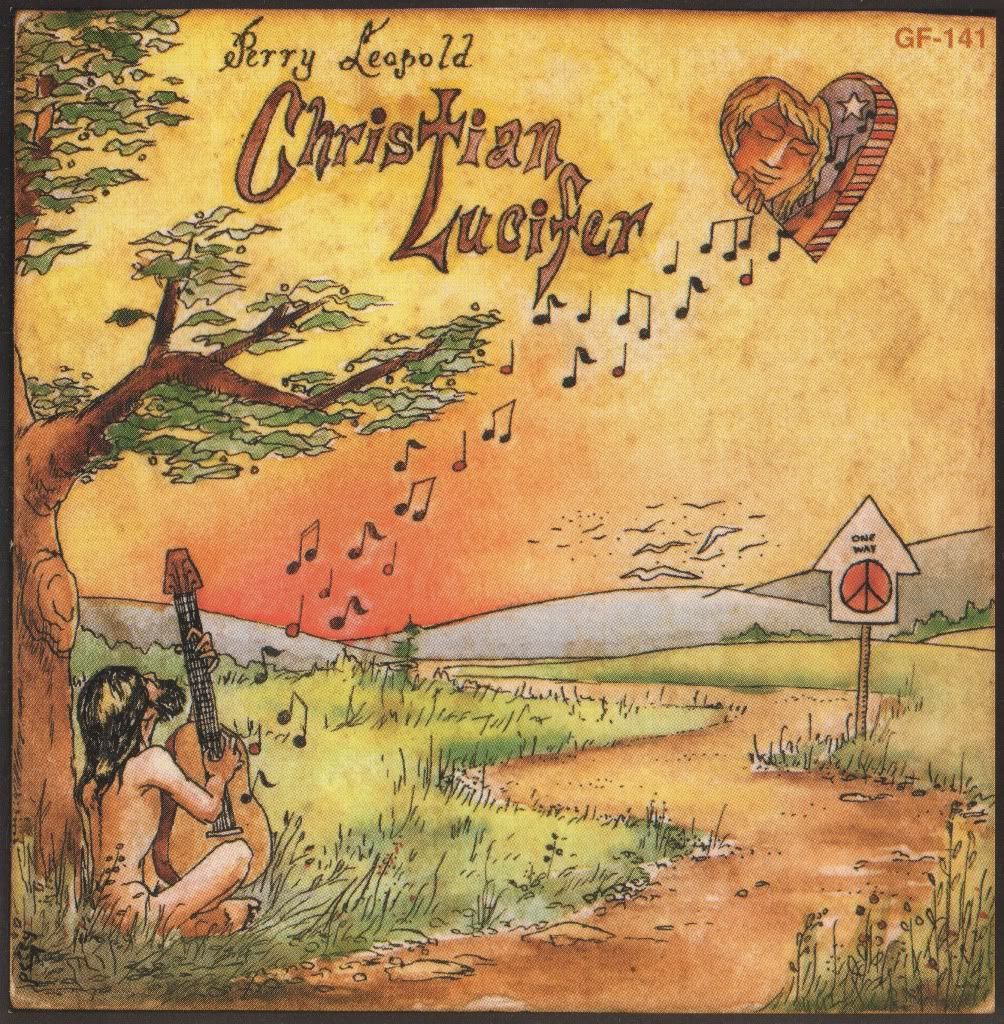
Perry Leopold - Christian Lucifer


The acid folk genre is a lonely and under-appreciated one in terms of mainstream recognition, especially when it comes to American artists.  Since there's never really been a commercial market for it, those of us who enjoy experimental, genre-bending singer/songwriter music often have to spend some time digging and take chances on obscure albums like this in order to locate some hidden gems.  Leopold's second (of two) album's, 1973's Christian Lucifer is a well-realized attempt at one of progressive folk's more popular facets--fusing acoustic singer/songwriter material with lush orchestral arrangements and classical composition techniques.

As the title more than suggests, Christian Lucifer is spiritually-focused. Thankfully, though, it's not that kind of explicit worship theme that verges on dreaded "Christian rock" and threatens to derail even the delightful period kitsch of artists like Judee Sill.  Rather, Leopold manages to provide depth to his personal spiritual conflict by using accessible imagery and evocative language that holds up well without attention to the subtle Christian underpinnings.  Throughout the set, Leopold frets over questions of love, despair, overcoming of adversity, and redemption, rarely invoking typical Christian lyrical tropes with the notable (and effective) exception of the valedictory "Lord I love you" refrain of "Vespers," the album's closing track.

Probably what this album has going for it most is a cohesive atmosphere.  Leopold's lyrical subjects are for the most part somber and reflective, moods that are exceedingly well-represented by the album's arrangements and songwriting.  Most of the songs are based on 12- or 6-string acoustic guitar parts, often strummed and occasionally fingerpicked.  Surrounding and layered on top of those guitar parts, though, are orchestral arrangements filled with both wind instruments and strings, electric keyboards, lead guitar, some subtle hand percussion, and an airplane hangar's worth of reverb, which is used a little for psychedelic ends in "Serpentine Lane," but more often for general atmosphere. 

Interestingly, I find the album's arrangements and production simultaneously subtly detailed and impenetrably dense.  While there are many moments where delicate wind lines (often oboe) rise above the other instruments or a keyboard riff sounds out audibly for a few seconds, equally as often there's so much instrumentation that it all blends into a homogeneous river of sound.  Though it's tempting to start using the music critic-favored "over-produced" criticism, it's actually one of my pet peeves, in part because it's most often used as a broad-brush dismissal and very rarely do critics develop the reasons why they think something is over-produced.  In my mind, the first question is "Would these songs succeed with only a guitar [in this case] and vocals?" and the second is "Does each added instrument or production element add something distinctive and justify itself on an ideological basis?"  If the answer to the first question is "no," then you've got music that either attempts to compensate for a lack of substance with production or simply needs all of the instruments and production to be properly conveyed--there's nothing wrong with that and, if true, it almost invariably means that the answer to the second question is "yes."  If the answer to the second question is a "no," then I think we're getting into the territory of unnecessary production and perhaps again into reasonable claims that the production is an attempt to mask songwriting inadequacies. 

In the case of Christian Lucifer, I think the songs' core arrangements could certainly stand alone, but when it comes to the orchestral part-writing, things are often a little muddy and parts do come across as unnecessary because they're in another instrument's register, doubling numerous other instruments rhythmically, or there's simply so much sound happening that things are lost.  Now, the "dense sound" school of thought has advantages when it comes to tonal color and the creation of a thick-yet-subtle sound monolith, but to achieve the proper balance is to toe a very thin line.  My criticism of this album's orchestrations is similar to the beef I have with a lot of arrangements I hear in new music--the heavy blanket of sound seems to be there because "it seemed like a good idea" and because strings etc. seem to add drama and class just by dint of being included.  Rather than imbuing each part with an individual sense of purpose and pursuing the potential for melodic enhancement, development, or counterpoint, the orchestrations float like a vague, noodly cloud above and around the guitar/vocal core, never really managing to achieve the sort of integration into the actual structure of the song that seems to me to be the ultimate ideal of including such lush instrumentation. 

What the production sacrifices in space and well-developed intent it gains partially back with a sense of gravitas and cohesiveness in mood.  It helps that Leopold wrote a few really good melodies for his songs and includes some memorable hooks, partially obscured as they may be at times.  "The Starewell" includes a surprising minor/major change with an almost Cat Stevens-like verse sound, also including some of the most rhythmic/energetic dynamism of the album, while "The Anunciation" boasts a great vocal arrangement that effectively juxtaposes double-tracked recordings of Leopold's thick baritone (which somehow reminds me a little of Tom Rush's).  While I generally prefer either a bit more instrumental verve (Pete Fine's On a Day of Crystalline Thought, in spite of its hippie-dippyness) or just a bit more sophistication in arrangement and integration of orchestration (Tudor Lodge), Christian Lucifer is always a pleasant and relaxing listen with a lot to discover with repeated spins--it's neither the most psychedelic lost acid folk gem nor the most instrumentally engaging, but it's popularity with other aficionados attests to the passion and authenticity of Leopold's personal expression.

Tune in next time for a contrasting example of singer/songwriter orchestral integration that I think is really well-done. 

Thursday, September 22, 2011

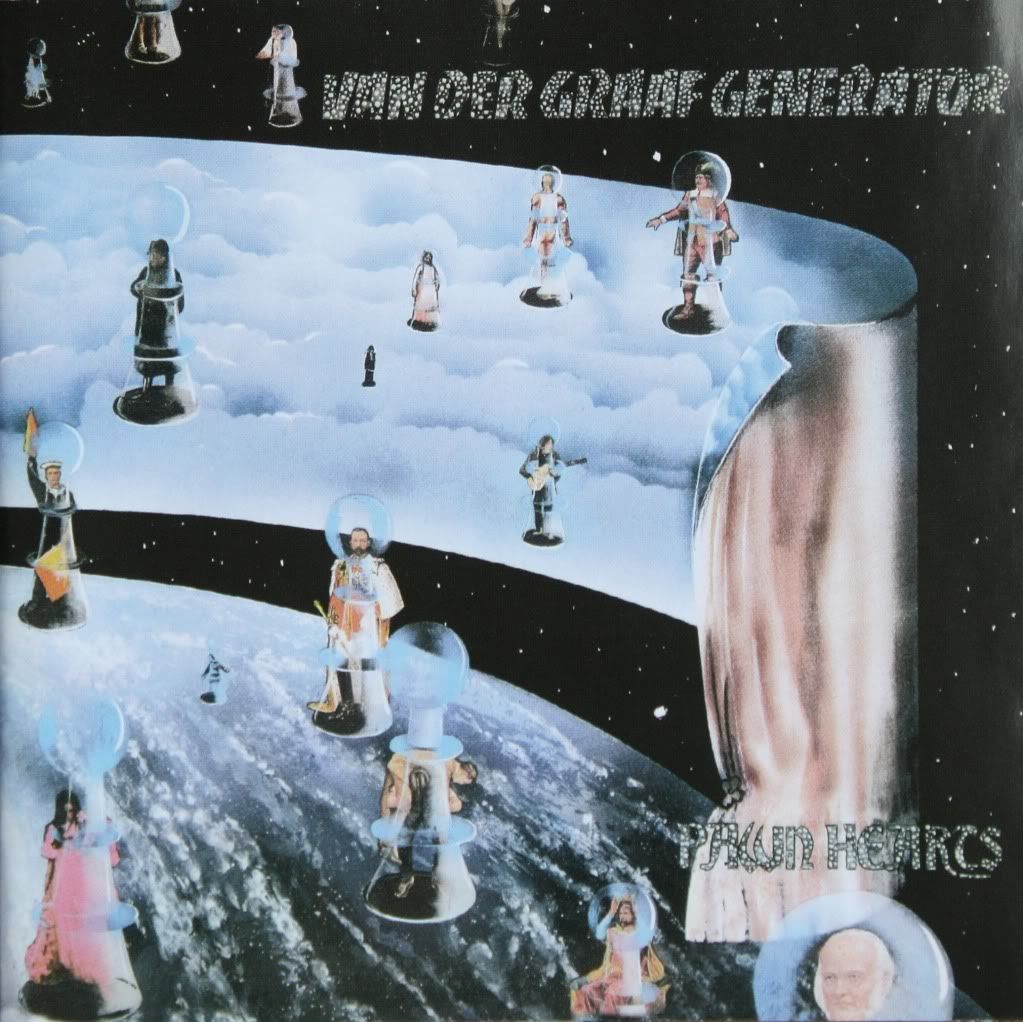
Van Der Graaf Generator - Pawn Hearts

Though Robert Fripp and King Crimson are probably most widely-known as the dark lords of 70's progressive rock, I think Peter Hammill (who I've already introduced with Over) and Van der Graaf Generator do a better job of combining an ominous sound with focused lyrics that actually conceptually match that dark sound.  I won't go into the group's needlessly convoluted history, but suffice to say that this was the last of the first four of their albums recorded before the band went on effective hiatus until their other masterpiece, 1975's Godbluff.  Amongst the landscape of 70's prog bands, Van der Graaf Generator are known for being one of the best bands to largely avoid guitar in favor of a sound that combines unusually aggressive-sounding keyboards (Hugh Banton) and saxophone (David Jackson).  The group additionally distinguished itself by being much more successful in Italy than in its native Britain, and by having a few of the worst-realized album covers in all of the progressive boom (and that's really saying something).

In my view, Pawn Hearts makes good on the promise of its predecessors, especially H to He Am the Only One, insofar as the band manages to flesh Hammill's lyrical and songwriting vision more cohesively and provide some of the most interesting, intense and engaging music they'd so far committed to tape.  As I've kind of already mentioned, Peter Hammill is the deal-breaker for Van der Graaf Generator--you either like his balls-to-the-wall, theatrical, choirboy-cum-chainsaw vocals and find his perpetual interest in the blurry borders between psychology, metaphysics and science fiction compelling, or you simply don't.  For me, his style is so original and varied that I'd probably like it even if I didn't find it aesthetically appealing, though I do occasionally feel he treads familiar lyrical thematic pathways a little too often (isolation being one).  So, the Van der Graaf Generator sound is often expressed using Hammill's vocals as the prime melodic device, placing especial emphasis on his words and the drama of his delivery.

Like so many hallmark 70's prog albums, Pawn Hearts consists of only three tracks.  The first two, "Lemmings" and "Man-Erg" could accurately be described as refined summations of where the band had already been.  "Lemmings" is a sweeping expression of the album's concepts, describing mankind as lemmings rushing toward a clifftop.  After a brief atmospheric introduction featuring Hammill's understated acoustic guitar strumming, the band launches into an odd-meter unison riff (one of their most distinctive devices) that powerfully joins Hammill's voice with the organ and saxophone.  I'll readily admit that most everything Hammill writes is dark to the point of dourness and humorlessness, but I'll be damned if the hairs on the back of my neck don't stand up on end every single time I hear him sing "There is no escape except to go forward!"  Though the subject matter is bleak, I think there's far too few lyricists willing to face up and address the particulars of humankind's ultimate destination and looming self-destruction.  Not that they need necessarily be addressed so grandiosely or even darkly at all, but for me it's a refreshing change of pace from the blithe escapism offered by most pop music.  Across the song's mottled landscape (there are all kinds of great singular moments built into the composition) Hammill's desperation grows to the point that he pleads, "What choice is there left to die/in search of something we're not quite sure of?"  The song's rousing middle section combines an interlocking riff based on Jackson's dual saxophone (he'd play two at once) and Banton's juicily-overdriven organ.  By the time the song winds back around to its recapitulation and climax, it's apparent that Hammill's outlook isn't quite as pessimistic as it originally appeared--in the face of an indifferent universe, he decides, "What choice is there left but to live/In the hope of saving our children's children's little ones?"  The humanistic message rings in the air over one of my favorite parts of the song in which two of the melodic themes overlap and repeat, warping each time into an uncertain haze, musically complicating Hammill's conclusion.

"Man-Erg," perhaps best described as a power ballad, weaves a well-trod style for the band with the Pawn Hearts concept (which I interpret to generally encompass the unsure and unstoppable motion of the human race and each human's seemingly insignificant role in it--both externally and metaphysically).  As the lyrics quote from the band's earlier works (both "Killer" and "Refugees"), Hammill passionately treads the floorboards over his dual nature as a killer and an angel, eventually realizing that he encompasses all aspects of human nature.  The song's deliberate but anthemic pacing as well as another aggressive and dissonant middle section with some frenetic vocals set the track apart from some very similar earlier ballads in the group's history, and some jazz harmony in the second half adds a welcome dimension to the relatively straightforward ballad style.

"A Plague of Lighthouse Keepers," the album's 23 minute-long second half, is predictably less focused.  The epic track trades straightforwardness for some of the album's most spacious atmosphere, though, and it's also got some of the most musically progressive composition of the band's entire output.  I've heard a number of listeners write the song off as directionless, which I think is easy to do when a song is over 20 minutes long--personally, I think it takes quite a few plays and some close attention before songs like this really open up and I try to withhold judgment until I've at least listened enough to recall from memory the song's general structure and some of the melodic elements.  If I'd written this review six months ago (even after having heard it many times over the course of two years), I'd be far less kind to this song, but I've come to appreciate its many nooks and crannies, wealth of melodic ideas and repeated brazenness much more in the interim.  I still don't feel like I've got a strong grip on the lyrical subject matter (the beauty of forming a long term relationship with good albums), but I think the song's strengths certainly outweigh its weaknesses, with some breathtaking unison arpeggios, some of the most searing dissonance on the album, and some genuine scariness.  I would say, though, that the 70's progressive period did produce a few more cohesive epics; "Lighthouse Keepers" at times plays like several nearly-a-song sections interspersed with musically interesting but somewhat unrelated vignettes.  For an epic of this length, I'd hope for a little more unified purpose, but the parts are of high enough quality that it's still pretty engaging. 

I've maintained for a while now that, though it may not accurately be described as the way "forward," atonality in both melody and harmony seems to be the most shamefully underutilized 20th century music advancement of all when it comes to pop music.  Instead of passing the last 100 years retraining our ears to appreciate the innumerable combinations and "millions of colors" possible through the varied application of atonality, we've clung to practically the same conservative, inflexibly traditionalist, oh-so-Western, "16 colors" conception of harmony we've been fearfully clutching more or less since Beethoven.  It's with great pleasure that I welcome this group's experimentation with atonality in "Lighthouse Keepers'" more violent sections as well as the depth it adds to some of the more ethereal passages.  Though 70's progressive rock eventually became hated by some for its less attractive aspects and exponents, to the point that the word "progressive" almost exclusively conjures sounds of Hammond organs, Moog synthesizers, romantic composition and 20 minute songs, I long for a future in which the word "progressive" returns to its literal meaning and can be used to describe music whose intent is to continue music's progress and (ideally) perpetual journey to become something it wasn't already before.  Sadly, we've instead got "Art Rock," "Experimental," "Post-Rock," "Post-Punk" and "Noise" all using increasingly vague synonyms to distance themselves from the period flavor of 70's progressive music when in reality they're often attempting to achieve similar goals.  That said, I think Van der Graaf Generator (though obviously of the 70's in sound) puts a distinctive spin on the period's common tropes and provides enough interesting experimentation that they're still worth checking out and deserve their cult status as one of the best of the original waves of progressive bands.  While I don't think any of their albums are flawless, I do think the uncommon number of risks they take more than adequately justifies the flaws.

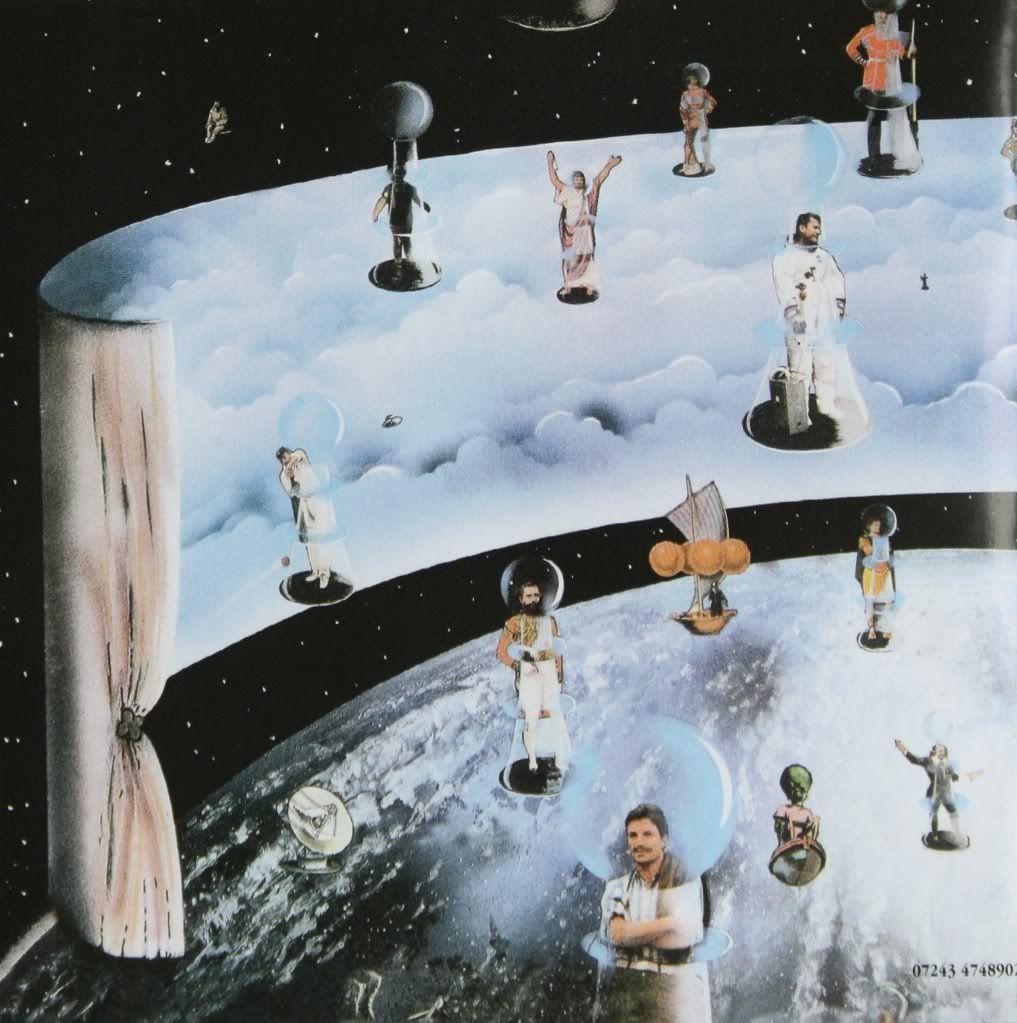
In celebration of the horrible album art, here's the back cover.

Sunday, August 28, 2011

The Incredible String Band - The 5000 Spirits or the Layers of the Onion


The Incredible String Band managed to make a pretty impressive change between the tame contemporary folk of their 1966 debut and this, their second long-player, which finds the core duo formulating their idiosyncratic classic sound around an increasingly strong set of songs.  It's also the first album where Mike Heron and Robin Williamson begin to live up to the promise of their band's name, expanding their instrumental repertoire to include sitar, gimbri, oud, and tamboura, in addition to the more traditional guitar, fiddle and mandolin they'd already been using.

Of course, playing weird instruments alone a great album does not necessarily make.  Without Heron and Williamson's songwriting, chemistry as performers, and the bizarre fusion of world music, more traditional blues and folk, progressive song structures and budding interest in world religions, The Incredible String Band might just sound like every other British 60's folk revival group.  The more I revisit my favorite ISB albums, the more interesting I find the combination of Heron's and Williamson's songs.  As far as I know, they never really collaborated in co-writing, yet there's a wide-eyed optimism and mystical euphoria that pervades both writers' contributions.  With further listening, though, it becomes easier to identify Heron's (the deeper, rounder voice) songs for their whimsy and pop instincts, and Williamson's (the more nasally voice) for their focus on narration and more abstract, eerie imagery.  Most people I've talked to about the ISB have a preference for one or the other (I probably like Williamson's more, though Heron's voice is easier on the ears), but the magic of the duo is how well their albums flow between the two writers' songs and how well they both contribute to one another's songs.

By most music fans' standards, The Incredible String Band is quite eccentric and usually elicits divisive reactions.  Interestingly enough, the things that most haters complain about--the vocal style, the duo's amateur skills at some of their strange stringed instruments, their hippie ideals, and their proclivity for meandering, twee and overt mysticism--are the precise things that fans of the group love about them.  While I totally understand many of these criticisms (many of these songs aren't really the kind of "pretty" music you'd probably expect from a 60's folk duo), I'm obviously in the latter camp.  I'd even go so far as to say that there haven't been enough groups making music like this, and that it's heavily influenced my own choices as a musician.  That is, acoustic music that is experimental, eclectic, heedless of fashion and conventions, and also transcends the typical trappings of folk, singer/songwriter and pop (other notable practitioners of this underdeveloped approach include Comus, Roy Harper, Tudor Lodge, and maybe Kevin Coyne and Robbie Basho).  The Incredible String Band is gloriously unusual in a way that's both deliberate and completely natural, and I don't think they've been matched in their field.

While the band's next album, The Hangman's Beautiful Daughter, is probably their strongest and most imbued with vision and taste, this album has some of their finest (simply) songs.  From infectiously catchy and whimsical Heron contributions like the hand-percussion workout "Little Cloud," the sweet metaphor and harmonies of "Painting Box," and Caribbean inflection and great slide guitar of "The Hedgehog's Song" to Williamson's tender highlight "First Girl I Loved" and twisted folk revival deconstruction "No Sleep Blues," the duo turns in some of the most accessible songcraft of their career.  And then there's songs like the hazy "Chinese White" with its incantatory rhythm and fiddle, and Williamson's fantastically knobbly "The Mad Hatter's Song," which reveals its author as both a progressive visionary and an able poet.  Though a few songs lean a little too heavily on established folk music tropes and a few others fail to be made of the memorable stuff of the album's highlights, The 5000 Spirits or the Layers of the Onion is a worthy cornerstone in the ISB's discography and one of the furthest-out albums of 1967.  To say that this album and its successor profoundly influenced a lot of great British psychedelic and progressive music that was soon to come would be a flagrant understatement. 

Tuesday, August 16, 2011

Gentle Giant - In a Glass House


With at least five solid albums, a lineup full of virtuoso multi-instrumentalists and a totally unique sound, to me, Gentle Giant is a great band.  While their counterpoint-focused arrangements and penchant for unsettling busy-ness and atonality were probably too sophisticated to garner the group mainstream success (even in the early 70's), looking across their discography it's clear that even in 1973 the band was aiming for a more commercial sound.  While many people point at Octopus as their best (and it probably does the best job of fusing their more experimental side with a less dated sound and strong songs), In a Glass House is probably my favorite in their discography for its graceful first statement of the classic mid-70's Gentle Giant sound, its many memorable moments, and some of the strongest songs on any of their albums.  Make no mistake, though--this is 70's prog, and there's little on this disc to make you forget.

In a lot of ways, Gentle Giant are like some weird progressive version of the Band--their verve is infectious as the band members swap vocals and trade around on something like 30 different instruments based on the needs of each song.  Like many of the later Gentle Giant albums, In a Glass House is loosely based on the title's concept, which plays out generally in a set of songs that focuses inward on matters of psychological introspection and interpersonal relationships.  While it's hardly a meticulously laid-out treatise, the themes add cohesion and the lyrics are always intriguing if sometimes inscrutable.

While the songs are mostly long (four of six are over seven minutes long), they're distinctly songs and feature compelling examples of the band's trademark fusion of rock, classical, folk and the occasional soul and funk elements.  In addition to a good flow between rockers and quiet reflections, there are loads of great moments, like the gleefully atonal xylophone solo on the opener "The Runaway," which also manages to state themes of complex counterpoint, psychedelic and spacey vocal arrangements, hypnotic guitar riffs, and some great folky flute breakdowns.  As always, the transitions are seamless and the music is anchored by a fat, funky bottom provided by the bass and drums.  "An Inmate's Lullaby" features only percussion instruments and uses some great overlapping vocal production to enhance a first-person narration of a mental ward and the gray area that is "madness" (a classic theme in British music of the 60's and 70's).

"Way of Life" is maybe the least listenable track, with a slightly frantic opening riff, but it's certainly dynamic and a great example of how good the band is at juxtaposing Derek Shulman's ballsy lead vocals with Kerry Minnear's delicate vocals, which show up on a great pump organ section that emulates church music.  "Experience" is more classic Gentle Giant, with lots of contrast between odd-metered violin/guitar riffs, medieval-sounding vocal harmonies and a simple repetitive bass riff.  Gary Green's mid-song guitar solo, while not the proggiest thing on the album, is glorious for its razor-sharp tone, a perfect helping of slappy reverb, and the way it fits so well over the aforementioned bass riff.  Similarly crushing is the heaviness of the main riff of "In a Glass House," which has both a flitting, jazzy opening section and a ballad in the previous song ("A Reunion") to make it sound even heavier and worthy of its place as the album-closer.  While bands like Henry Cow employ a similar amount of counterpoint but focus on an edgier and more experimental brand of progressive music, it's hard to complain about how Gentle Giant manages to make such geeky music so catchy.  They pursued this album's template with admirable success through The Power and the Glory, Free Hand, and Interview, but I think it was definitely at its freshest state here.  Great album.

Sunday, July 31, 2011

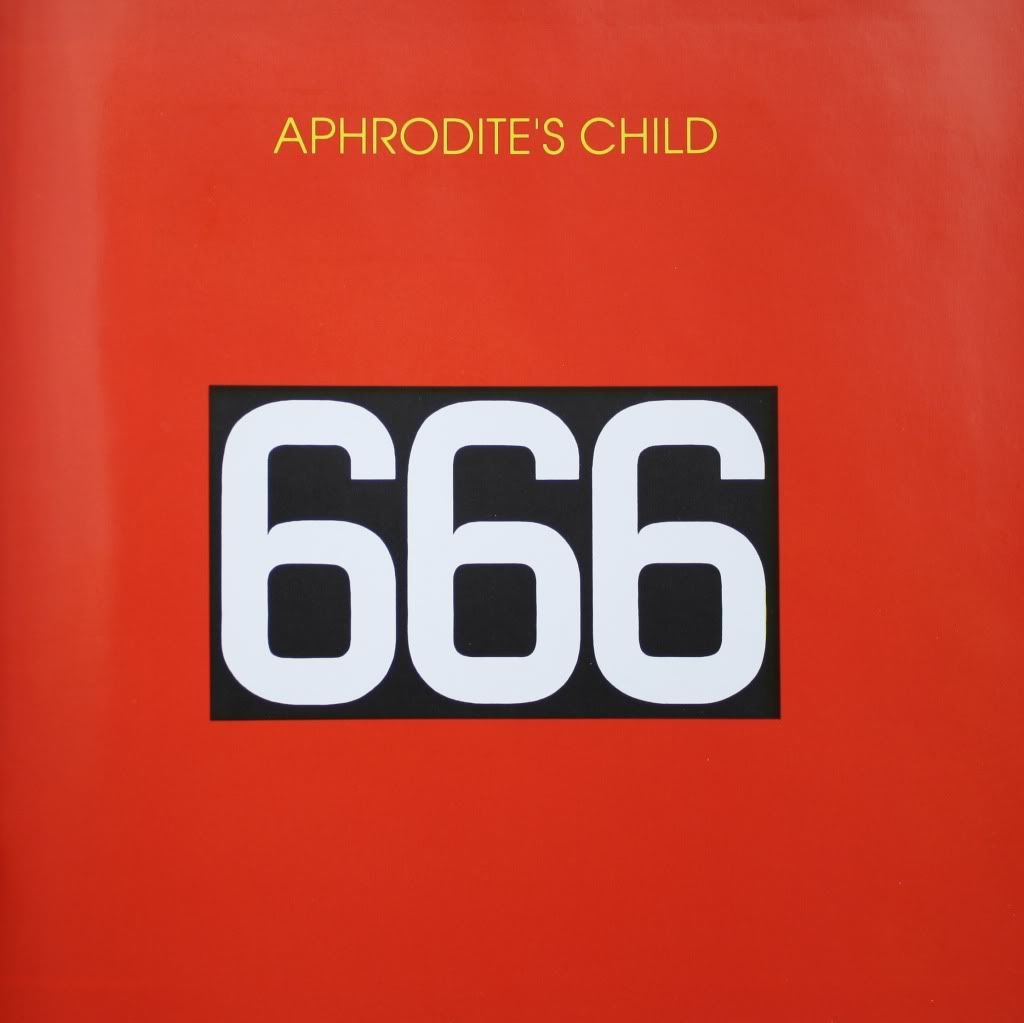
Aphrodite's Child - 666


You probably wouldn't guess it from listening to this epic 1972 concept album, but Greek ex-patriate group Aphrodite's Child was actually a pretty standard rock quartet featuring drums, bass, guitar and keyboards.  Of course, the group was led by Vangelis Papathanassiou (later to achieve worldwide notoriety as the soundtrack composer for films like Chariots of Fire and Blade Runner), so its leader's vision demanded substantial studio augmentation, and the end results take on quite a bit of theatricality and an operatic expansiveness thanks to a wealth of different instruments, production techniques and vocal contributions from a number of non-band-members.  Without getting too far into the band's history, I'll say that this undeniably ambitious project took the group far outside their pop-oriented roots into the realm of long-form rock music narrative, touching upon psychedelic rock, European folk melodies and instrumentation, avant-garde performance art and studio composition, and lightly (if mostly in its weird and eclectic spirit, if not compositionally) upon progressive rock. 

Despite the fact that it's credited to Aphrodite's Child, 666 is a creative collaboration between Vangelis Papathanassiou and lyricist Costas Ferris and is an attempt to adapt the New Testament's Book of Revelation to a musical setting.  Though it's a concept album, there isn't really a plot or discernible narrative, not to mention an overtly Christian message (thankfully).  Instead, the combination of music and words evokes a dramatic conflict focusing on characters the Lamb and the Beast, and using familiar elements like the Four Horsemen of the Apocalypse, the number seven, as well as significant number of references to the social unrest that typified the late 60's and early 70's.  In many ways, I find 666 to be a remarkable and successful piece of work--the music covers quite a lot of ground, from the band's pop origins (on the catchy, horn-backed, Beatle-esque "Babylon" and "Hic and Nunc," "The Beast," and valedictory ballad "Break") to a significantly harder brand of psychedelic rock.  This second style is exemplified both in traditional song form on one of the album's best songs, "The Four Horsemen," which alternates between atmospheric folk sections and pounding invocations of the different horsemen and their visages, ably cried out by bassist/vocalist Demis Roussos.  Similarly trippy is the instrumental/spoken word song "Aegian Sea," which features heavily-reverbed guitar and vocal arrangements reminiscent of both early- and mid-70's Pink Floyd both melodically and in overall sound, and especially in Silver Koulouris' guitar sound. 

The band also capably handles shorter heavy rock instrumentals like "The Battle of the Locusts" and "Do It," as well of some of the album's most interesting fusions of psychedelic rock and Mediterranean folk music in the driving furiousness of "The Lamb," "Seven Bowls," "The Wakening Beast," "Lament" "The Marching Beast."  This fusion is one of the most distinctive things about Aphrodite's Child's sound; despite the album's scope and the quality of the playing, much of the instrumental palette sounds pretty familiar in that 70's sort of way, so some more ethnic sounds freshen up the more orthodox sounds.  One of my favorite of these moments comes on "Altamont," where the band whips up a hpnotic piano/horn/vibraphone/wordless vocal riff that presages the similar sound and ad nauseum repetition that Christian Vander and Magma would doggedly pursue in the next few years as they created Zeuhl.  The track evokes the real-world incident it's named after and builds to an effective spoken word climax that's one of the most humanity-affirming moments on the album.  In spite of Vangelis' varied capabilities as a composer, the musicians occasionally fail to communicate a sense of individual identity on their instruments--that magic element that can elevate more pedestrian material above the mere stuff of its making. 

That said, there are some genuinely "out" moments throughout the course of the album.  The spoken narrations (many provided by "John Forst") provide an excellent mood and sense of foreboding that support the music's darker leanings, while providing opportunities to expand Vangelis' compositions, even if the tracks are less than a minute long.  "" is one of the most notable avant-garde tracks, featuring a modern vocal performance by Irene Papas in which she repeats "I was, I am, I am to come I was" over a percussion backing provided by Vangelis.  Papas' controversial performance blends the allusion and multifaceted meanings of the mantra with the singer's graphic imitation of an orgasm into a package that might even make Marvin Gaye (king of the female orgasm sound byte) blush in embarrassment.  The nearly side-long "All the Seats Were Occupied" consolidates the entire album's disparate threads into an epic rock instrumental and sound collage in which bits of the previous songs reemerge and build into a pretty grand and satisfying climax, even if the track takes a few more minutes than necessary in getting there. 

Ultimately, 666 is definitely good enough to justify its enduring cult popularity--its ambitious scope, the strength and variety of Vangelis' compositions and plenty of great rock and dramatic moments make it a thoroughly enjoyable listen, especially for fans of music like Pink Floyd where the texture and atmosphere are as important as the songs themselves and there's plenty of sound snippets and spoken sections (though Vangelis does get quite a bit more dissonant and weird than Pink Floyd did by the time they achieved worldwide popularity).  If the music here suffers, it's primarily from sounding a little unimaginative when the songs are analyzed close-up, and a bit generically "of its time" 40 years later and, like most double albums, requiring a long attention span to absorb completely.  While it'll probably never rise above its cult obscurity, 666 is certainly a worthy and enjoyable next step for people who've exhausted the more well-known, accessibly mainstream psych/progressive bands of the early 70's--just don't expect it to shatter your musical world. 

Thursday, July 21, 2011

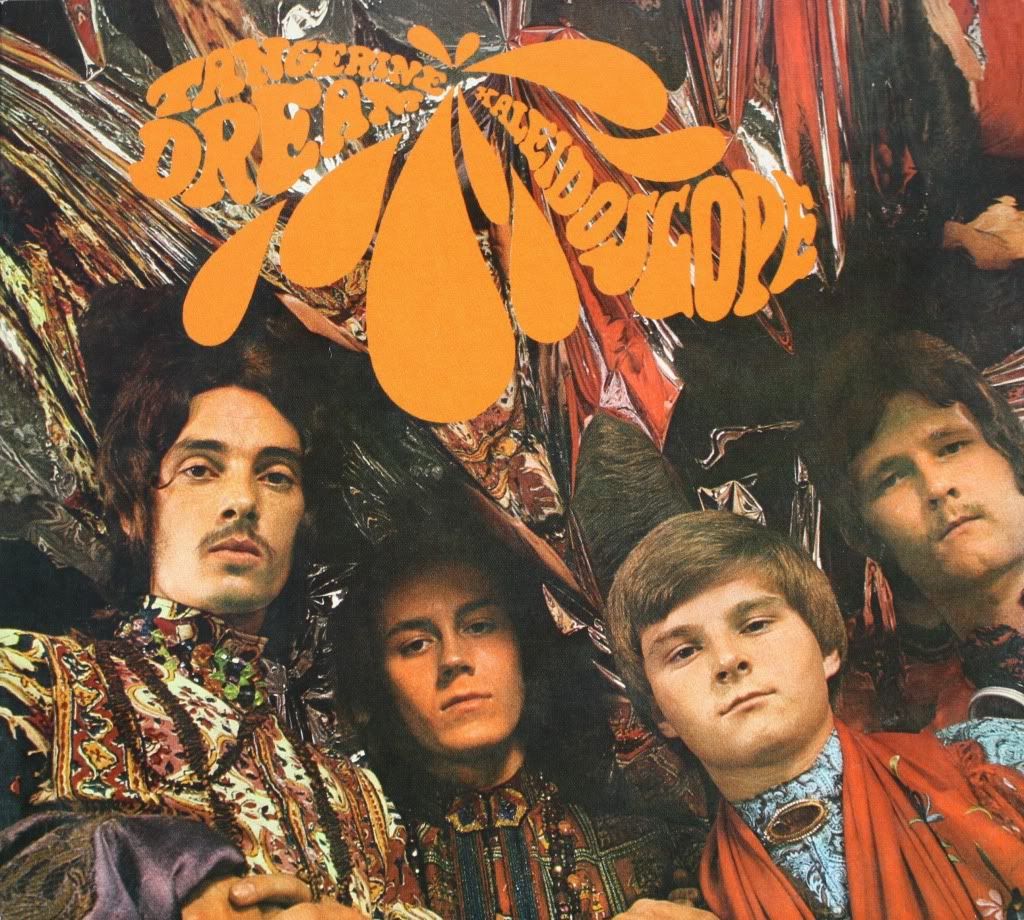
Kaleidoscope - Tangerine Dream


 In 1967 the psychedelic movement was at its peak in both the UK and the United States.  Like any good fad, the movement produced some extremely good music, some extremely popular music (not always both at the same time), and quite a bit of forgettable music that--especially in retrospect--sounds quite derivative in relation to the more popular and innovative psych releases of the day.  For this reason, much of the music from the period has a sort of "time capsule" feel to it and is usually clearly datable.  I'm not one to disparage music because it sounds like it was created the year it was created, but by the same token I most appreciate psychedelic albums that were either innovative with their ideas (after all, there was a lot of fresh stuff happening during the period, especially by pop music standards) or at least exemplify the best things about the period and do psychedelic well.  Although there are quite a few psych releases that are among my top albums and I regularly listen to and enjoy a broad selection of psych, it's not really my main interest and as a collector and listener I have less interest and tolerance in the more marginal (quality-wise, that is) releases.  Probably the main reason for this is that the musical ideas expressed during the movement, great though they are, seem to be finite and recycled to an extent that many of the "lost" psych albums are a source of frustration and diminishing returns rather than revelation.  So, with that preface I'd like to talk about some hallmark psychedelic rock that isn't especially innovative but, for me, exemplifies the movement and sounds great--over and over and over.

Perhaps unsurprisingly, the psychedelic movement spawned two Kaleidoscopes--a US version and a UK version.  The party line is that this, the UK band, is the one worth talking about.  I tend to agree--to me, UK psychedelic music is quite a bit more compelling, as I think its movement produced the most interesting ideas, and the dumbed-down endless jamming of West Coast psych bands like Quicksilver Messenger Service and Grateful Dead never really did it for me.  There are some great obscure examples though, and you can't go wrong with a lot of the well-known stuff from Hendrix, the Doors, Love, Dylan's more psychedelic material and, of course, Captain Beefheart.  When it comes to British psych I tend to separate groups roughly between psychedelic pop and the edgier, darker and weirder stuff.  Kaleidoscope fits firmly in the former category, influenced most by (and most exemplifying) the whimsy, melancholy, subtle strangeness in sound and subject matter of the Beatles, Donovan and especially Syd Barrett-era Pink Floyd.  Like those groups, though, Kaleidoscope place utmost emphasis on pop songcraft.

Unlike a lot of psych bands, Kaleidoscope employ mainly standard rock band instrumentation--the band's eponymous opening track opens mysteriously with the invocation, "Relax your eyes, for after all--we can but share these minutes," before kicking into an upbeat slice of pop propelled by piano, heavy drums, overdriven electric guitar and cascading vocal harmonies framing a simple melody and lyrics that describe the goings-on of the world as seen through a kaleidoscope.  The track's buoyed by the wide-eyed energy of youth and, undoubtedly, wonderment at drug experiences.  It's this guileless sincerity that lifts most of the album above its forgotten peers to the level of rewarding our ears over 40 years later.  The arrangements continue to show a penchant for nylon-stringed guitar on the beautifully despondent "Please Excuse My Face."  "Dive Into Yesterday" is one of my favorites, with some noisy surf-influenced guitar, a progressive arrangement, a gorgeous, droning/rippling bridge and a reprise of the "relax your eyes" invocation for added cohesion.

Familiar UK psych tropes crop up repeatedly--"Flight from Ashiya" and "Mr. Small, The Watch Repairer Man" tap into the pervasive influence of "Eleanor Rigby" in terms of illustrating human helplessness and the loneliness of outsider characters.  The creative hooks make the tracks though; the former's jaunty pace and "we're poor little lambs/who've lost our way/bahh bahh bahh" effectively contrast the lyric's description of a plane crash in progress, and the latter brilliantly utilizes the familiar sound of a clock chime as the melody for the tale of a lonely watch repairer.  The song's "la-la-la-la" refrain again strongly echoes Syd Barrett, as does "Arnold Layne"-esque "The Murder of Lewis Tollani."  To round things off, there's also an overt Dylan influence in the words of "In The Room of Percussion" and elsewhere.

No review worth its salt consists merely of name-dropping and influence finger-pointing.  The point is that the band managed to create an immensely enjoyable collection of songs in spite of telegraphing their influences.  Peter Daltrey's (leader and singer) voice perfectly fits the material, capable of a rock edge but also of quavering sincerity, and the vocal lines are full of youthfully attractive harmony experiments that endearingly drop out when the line becomes too difficult.  Likewise, the production sounds great.  The piano, electric guitar and drums especially are miked so hot that they're right up in your face, and at its high points the album offers some extremely majestic moments.  One of those is the nearly indefinitely-prolonged "The Sky Children," which sweeps by with an airy sing-song melody, catchy 12-string electric guitar and tinkling chimes.  It's songs like this that get to the heart of why I continue to reach for this album--the innocent positivity and wonderment are so sincere that it's infectious, and to me that's the essence of the psychedelic movement.  Through the a confluence of counter culture, newly-available information, social freedom and drugs, the youth of the 60's cohesively created their own movement based on love, experimentation and open-mindedness, and all the record companies could do was try and facilitate a genre they knew nothing about.  This attitude shows in this music and even in the faces of the people who made it on the album cover--they were just kids themselves.  On top of that, the album perfectly inhabits its moment in time with the immature "wisdom" and pseudo-moralizing of "A Lesson Perhaps," probably the album's weakest track.  The pitfalls that ultimately undid the movement (naivetĂ© and ignorance of the more complex and darker aspects of human interaction which would take much more real prominence at the end of the decade) already show in spite of the album's glistening beauty--a silver cloud with a dark lining.

According to the liner notes, some executives at Fontana had a lot of faith in Kaleidoscope's potential and poured a significant amount of money into this album and its follow-up, Faintly Blowing.  Sadly, the fact that they gave Kaleidoscope a full-length LP deal before making the band prove themselves with a hit single (as was standard practice in the day) is reflected in the label's poor instincts in choosing singles for the album--"Flight From Ashiya" wouldn't be my first choice ("Kaleidoscope," anyone?), nor would the horn-arranged satire of "Holiday Maker" or the catchier but still sub-"See Emily Play" tinkly toy piano of "A Dream for Julie."  By the time they chose the sublimely catchy "Jenny Artichoke," it was 1968 and the psychedelic boat was sailing along with Kaleidoscope's chances of wide recognition.  The band changed its name to Fairfield Parlour after Faintly Blowing and suffered more rather unjustified obscurity in a slightly more progressive vein before ultimately disbanding in 1972, when the psychedelic movement that spawned it was a distant memory.  Though the movement was short-lived, one of its lasting benefits was the fact that record labels were much more open to funding and taking risks on bands they didn't quite understand in hopes that the kids would go crazy for it.  A lot of great and eccentric albums would never have been made if not for this practice (including the entire progressive rock movement, for better or worse), and it sadly fell out of practice toward the mid-70's where the seeds of today's corporate music culture, with its willingness to autocratically tell listeners what they want and/or immediately seize and over-commercialize new music that listeners found for themselves, were sown.  Still, Kaleidoscope's period piece debut remains a  testament to the joys of innocence, pop, and searching that still sounds charming today.

Get it on CD here.

Monday, July 18, 2011

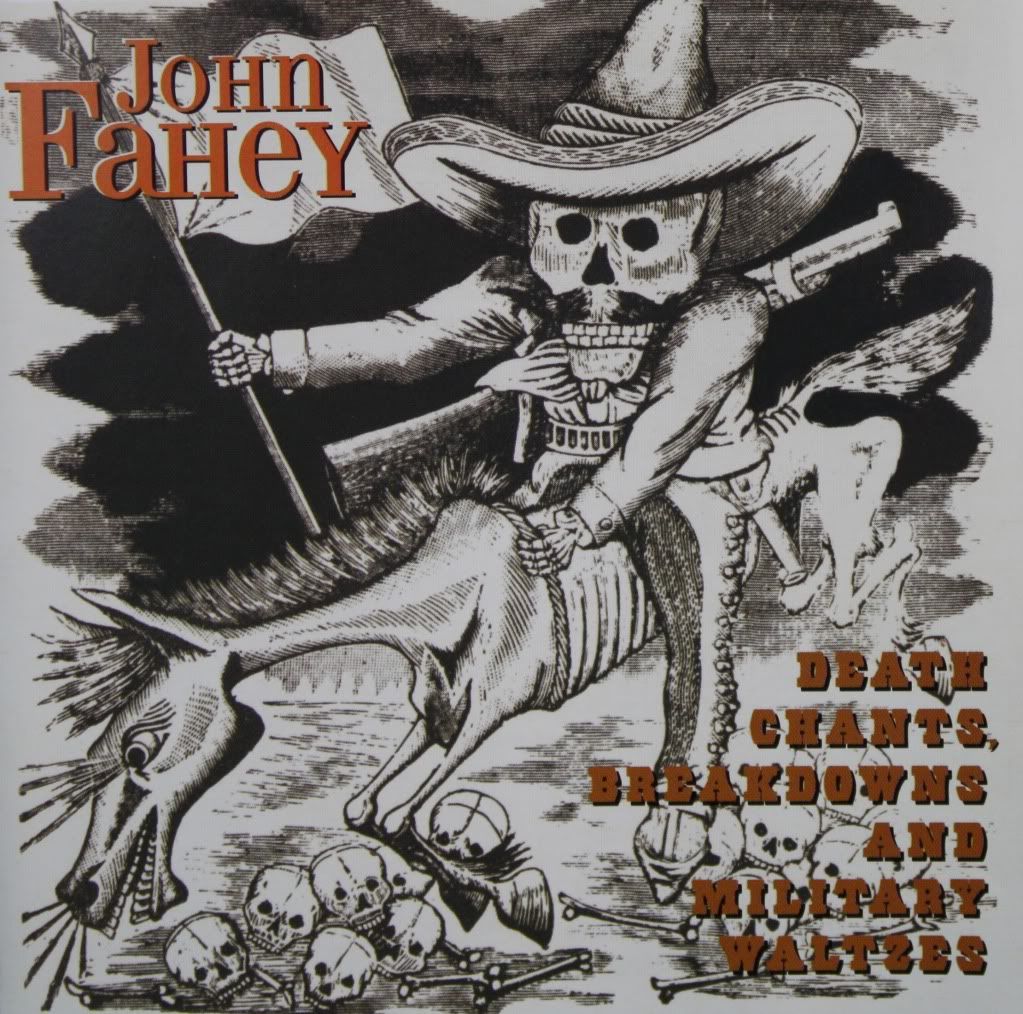
John Fahey - Death Chants, Breakdowns and Military Waltzes


In laying out markers for my musical landscape and contextualizing some of the other reviews I've written, I've been totally remiss in not yet mentioning John Fahey--sole creator of the solo steel string guitar genre, acoustic blues fanatic, composer and innovator--so I'll start with my first Fahey disc, and an enduring favorite from a man whose first 15 recorded years spanned an astonishing array of progression while still remaining anchored in the blues.

Death Chants, Breakdowns and Military Waltzes is John Fahey's second album, released on his own Takoma Records in 1963, four years after his unassuming but iconic debut.  The intervening years allowed Fahey to significantly refine his technique (mostly open tunings, allowing for lots of octave Travis picking, arpeggiatos and some majestic slow strums with blues-cum-classical melodies played on the high strings) as well as his compositional style, which sees the song lengths stretching out and the compositions featuring more surprising changes and contrasting movements.  Take "Stomping Tonight on the Pennsylvania/Alabama Border," which begins with a string-bending slow blues with a turnaround, mutates into a free, ascending arpeggio on the high strings, then again to a crushing minor blues dirge before revisiting each of its sections and closing on an arpeggio that crosses through dissonance to a dreamy major 7th concluding passage. 

Like a lot of albums that have become long-term favorites of mine, part of what I love about this album is how it sounds--the recording quality isn't great, but since it's (mostly) just one instrument, everything's still audible and the music is laced with an antique atmosphere--and the room reverb is awesome.  There are a few moments where the volume of Fahey's guitar threatens to distort the recording equipment (to its great) as on the slide glissando of "On the Beach of Waikiki," or where the distance of the guitar to the microphone lends a raucous feel, as on the energetic "Spanish Dance," and then on "John Henry Variations" when the instrument's slightly out-of-tune harmonic overtones warble with an unsettling but hypnotic pulse.  If I call some of this album "psychedelic," it's these sort of extra-melodic elements that I'm talking about, like 3:15 into "America" where (through the use of tape editing, I assume) the guitar timbre suddenly changes from bassy fingerstyle to tinny high-neck strumming, or 1:06 into "When the Springtime Comes Again," when the key abruptly shifts from minor to major but the theme remains almost the same--there's something within those quavering intervals that lingers on the precipice of some forgotten memory that never ceases to make my hairs stand on end.  The piece would continue to fascinate Fahey the composer as it evolved into numerous versions on the 1967 re-recording of this album, in numerous live recordings, and on 1971's America as "Mark 1:15"--each time expanding on the last but somehow leaving a trail of discrete incarnations, each with its own particular magic.

The dark corners of this album aren't without some extreme eccentricities, either, like the dissonant strumming on the flute duet, "The Downfall of the Adelphi Rolling Grist Mill" (Fahey's titles were often almost as great as the songs they labeled).  Ultimately, though, Fahey's genius substantially rests on his ability to bizarrely marry the familiar harmony and structure of the blues with the dissonance and imagination of 20th century classical composers.  For someone like myself who gets bored with the repetition inherent in a lot of blues music, hearing Fahey deconstruct his beloved genre and reassemble its innards into dazzling piecemeal sculptures breathes new life into what's usually a compositionally inert idiom.  His preternatural melodic abilities provide melodic lines that sink into the brain slowly but insidiously--not sounding like much at first, but ultimately sounding as beautiful as any music possibly could--I really love the way his sweeping melodies traverse multiple string plucks, simultaneously savoring a note and impatiently re-sounding it before the sound has a chance to decay.

I've got a feeling that whichever Fahey album most people name as their favorite is one of the first (if not the first) that they hear.  Though his early career covered expansive ideological and theoretical territory, it did so at a modest pace and Fahey would often repeat the same ideas either explicitly or intuitively.  At the time he was only pressing hundreds of copies of each album, so how was he to know how things would sound when his discography was considered retrospectively?  For example, he re-recorded and re-released most of the songs from this album (to be reviewed at a later date) in 1967, and the advancements he made in technique and composition are noticeable.  What I'm trying to convey is that, beautiful as they are, some of his ideas lose that "first time" magic when they crop up elsewhere, and where you hear them first tends to remain the most memorable.  For me, it was here with Death Chants, Breakdowns and Military Waltzes--I still think it's a great place to start with Fahey as it states many of the ideas he would continue to pursue--compositionally, technically, sonically (he'd continue to experiment with tape editing as the 60's wore on), and arrangement-wise (many more of his albums feature his own adaptations of Episcopal hymns as closers)--but it all comes in a relatively digestible form, mostly adhering to compartmentalized song structures and resonating with some sort of pop instinct in terms of flow and melody.  I've got several John Fahey favorites, but this is probably the one I'd give up last--you can pry this album from my corpse's withered fingers.