Showing posts with label 1971. Show all posts

Monday, January 16, 2012

Caravan - In the Land of Grey and Pink


It's been a while since I've written about any Canterbury Scene bands, and I'd still like to further explore how the music has expanded past its original physical scene into a recognizable style, but also what it was like when the style and membership of the scene was still concentrated in just a few bands.  You can't do that without talking about Caravan, which--aside from Soft Machine--probably has the most members closely tied with the early Canterbury Scene.  Like Soft Machine, Caravan started in the late 60's, boasting members from the formative Canterbury band Wilde Flowers.  Also like Soft Machine, Caravan was instrumental in defining what has come to be known as the Canterbury sound, although in a considerably different way from the Softs.  Even at its early poppiest, Soft Machine's sound was always firmly rooted in jazz, while I'd say Caravan is more tied to psychedelic rock with some elements of jazz and progressive, and by most accounts they perfected this distinctive blend with this, 1971's In the Land of Grey and Pink.

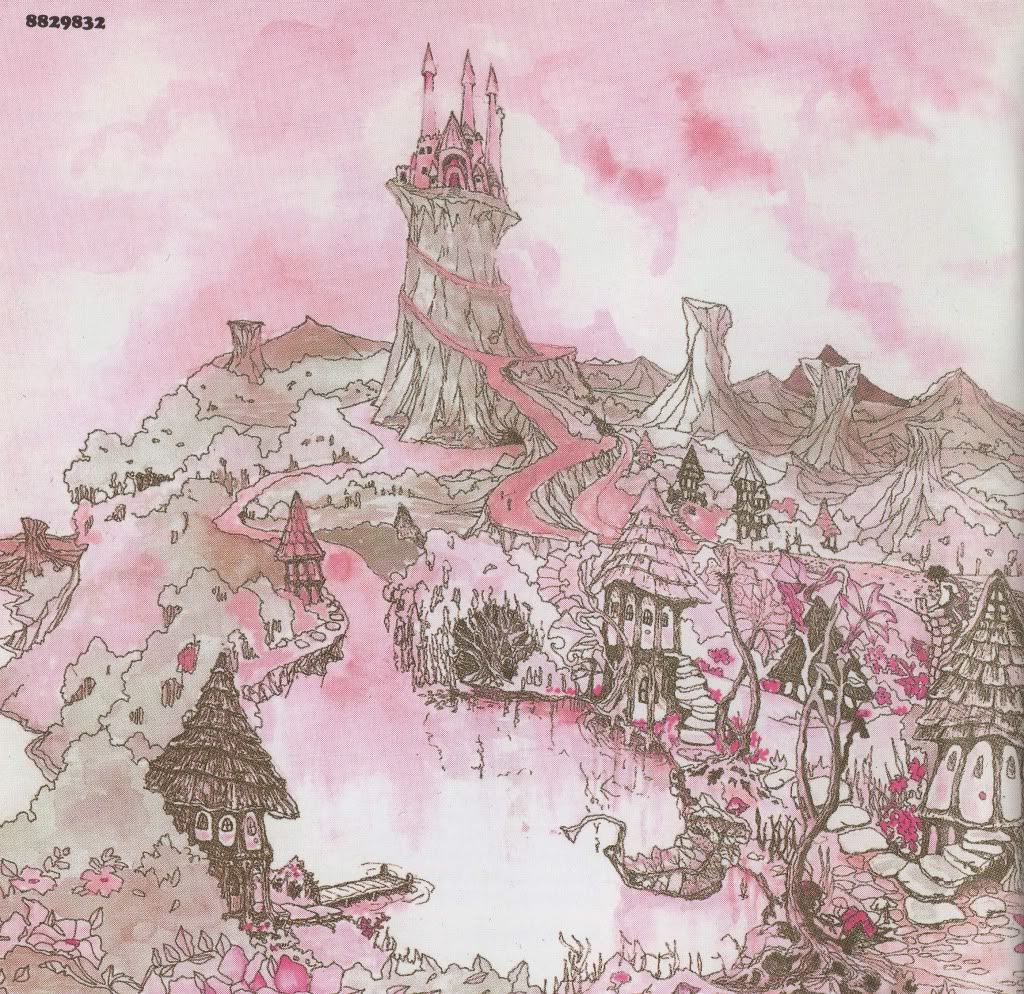
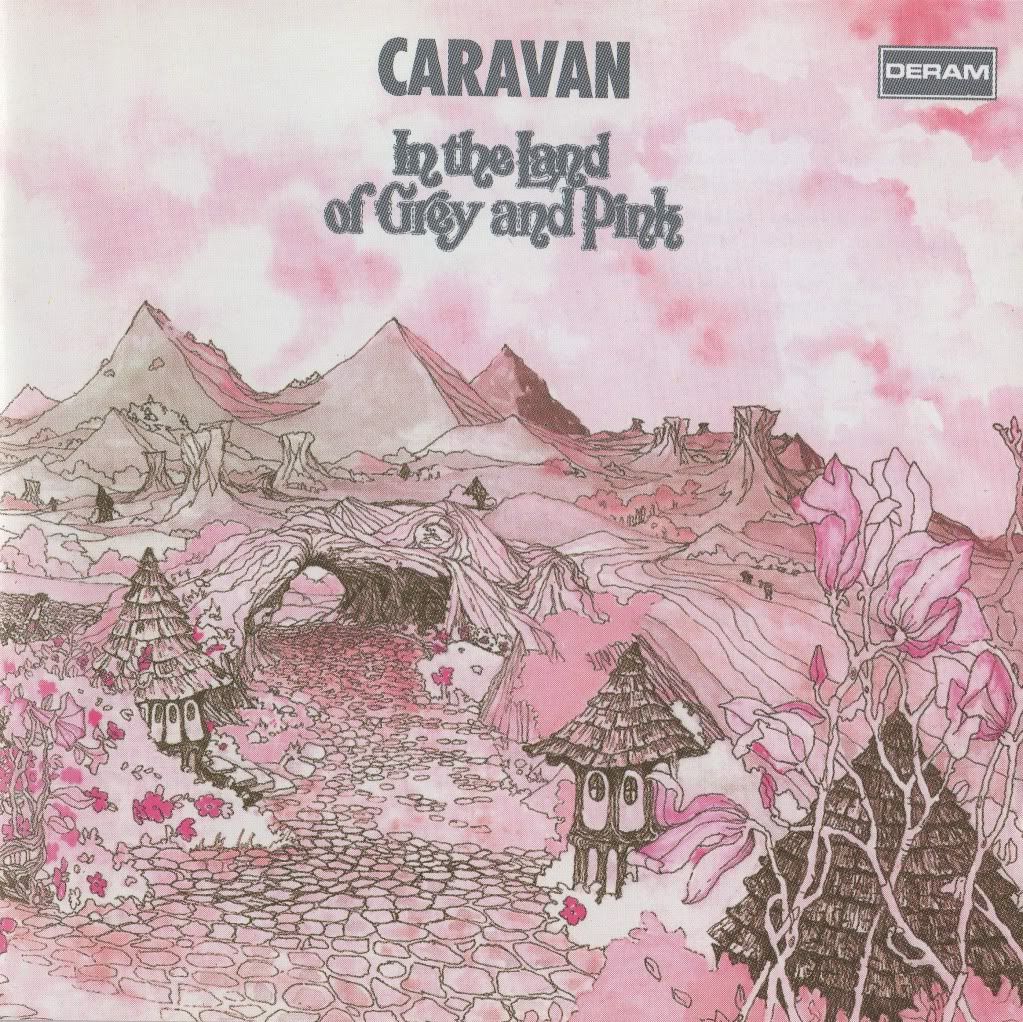
In case you were worried, the bouncy opener, "Golf Girl" assures us of this album's origin--the trombone, flute, juiced-up organ and goofy lyrics ("on the golf course/we talk in Morse") are undeniably Canterbury.  Compared with Soft Machine, though, this is definitely rock, and while it seems Robert Wyatt was mostly just screwing around (albeit quite entertainingly) with his lyrics, there's a sincerity with Richard Sinclair's words and delivery that adds a dimension of warmth to Caravan's whimsy.  "Winter Wine" turns a 180, with a psychedelic folk bent and a bunch of fantasy imagery that seems to support the album cover (which, by the way, is fucking awesome--I want to go there).  Though Sinclair's vocals do seem a little inconspicuous on first listen, a surprising amount of nuance becomes apparent when you come to learn the songs a bit better.  The mutual Canterbury influence is apparent in how he and guitarist/vocalist Pye Hastings make up a sort of two-man approximation of Wyatt--Hastings' vocals rest in the thin, upper register Wyatt treads so often (check out the delirious cowbell pop of "Love to Love You (And Tonight Pigs Will Fly)", while Sinclair's lower range seems to prefigure the fragile humility so often found in Wyatt's post-Soft Machine work. 

The title track revisits the "Golf Girl" feel with some more stoner-hippie-fantasy-nonsense imagery ("we'll pick our fill of punk weed and smoke it it till we bleed--that's all we'll need") as well as some sparkling piano and a great organ solo.  I find it interesting how the band employs a classic Canterbury (Mike Ratledge) innovation like the fuzz organ, but use it in a totally different way.  This brings me to the epic, side-long closer "Nine Feet Underground," which assures us without a doubt that Caravan's lead solo instrument is Dave Sinclair's organ.  While the other Canterbury groups are no strangers to long solos, Caravan seems content to set up a fairly straightforward rock riff-based jam and allow Dave Sinclair to stretch out with several minutes-long organ solos.  While it's a repetitive approach and Sinclair's style is nowhere near as technically erudite as Mike Ratledge's or Dave Stewart's, for example, there's something about Caravan's hazy/catchy psychedelic atmosphere and the tone and Sinclair's tone and note choice that just clicks perfectly.  It's amazing how well a 22 minute-long song can mostly subsist on jams and organ solos (though Pye Hastings and Richard Sinclair each contribute a vocal section) but I think it owes to memorable, melodic chord progressions and Sinclair's willingness to effectively alter the tone and effects of his instrument to expand his ideas and change up the palette.  The song's conclusion pits barnstorming riff sections against some of Sinclair's most groovily aggressive soloing (though some say it rips of "Sunshine of Your Love," I'm not sure Cream can really lay creative claim to an entire musical interval--suffice to say the two riffs are similar-sounding and Cream's came first).  Amazing--that is, if you like longform jamming.

It seems there's a Canterbury Scene band for every mood and season (well, not really, but the scene demonstrates surprising depth while still conveying a distinctive sound), and for me Caravan is the catchiest, most mainstream of the lot, which is probably why they remain one of the bands who is more often discovered by younger listeners, even achieving mention in Mojo, which sports nary a mention of most other Canterbury luminaries, except Robert Wyatt, who seems to show up several times an issue these days.  This album is warmly recommended to psych/prog fans as well as Canterbury disciples, and it's worth mentioning that If I Could Do It All Over Again, I'd Do It All Over You and Caravan for Girls Who Grow Plump in the Night are nearly as rewarding.

Get it here, or deluxe here.

Please enjoy the back cover, too:
Friday, November 25, 2011

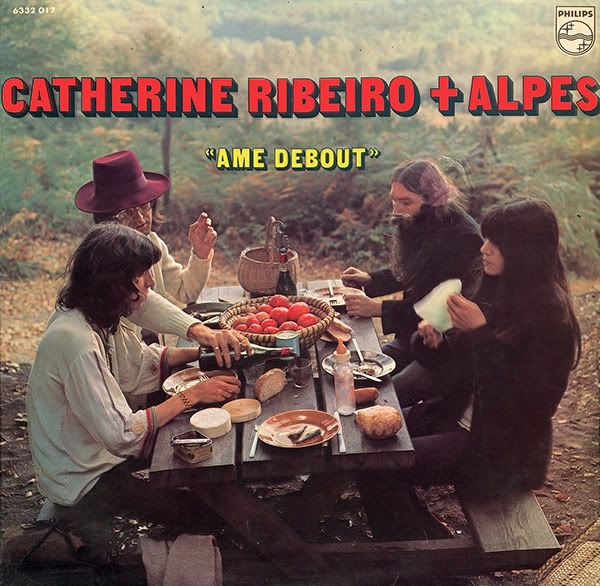
Catherine Ribeiro et Alpes - Ame Debout


We're not done with you yet, France.  In spite of all of my spirited attempts to express what I do and don't like about music into writing, sometimes it actually feels good to have those words and opinions shoved right back down my throat.  The exceptional work of singer and poet Catherine Ribeiro and her sometime-group Alpes (consisting primarily of guitarist and composer Patrice Moullet) not only defies all of my complaints about excessive repetition, its use of repetition in and across all of the album's tracks is often the precise reason why it's so great.

Rather than attempting to fuse any real recognizable styles of music with lyrics and vocals, Alpes' relationship with Ribeiro is at once more complicated and more elemental.  The band's sound is indeed consistent on most of these songs, formed primarily of repeating hand drum, bass, violin and guitar figures and droning organ and synth tones supplemented by a couple of bizarre instruments (the percuphone and the cosmophone).  The repetitious sounds are stretched long across time--minutes of the same textures, shifting perhaps ever so slightly, but rarely ever responding directly to Ribeiro's vocals rhythmically.  Instead, the music floats like an uneasy sea beneath Ribeiro's, swelling to support her vocals harmonically but rarely (if ever) displaying enough ego to act as anything other than a perfect platform for her existential angst.  For her part, Ribeiro displays peerless skills as both a singer and an actress, projecting a distilled humanity with a powerful, husky low register and desperate, cracking high range, sometimes speak-singing, sometimes freely vocalizing with moans, growls, whispers and frantic pleas.

The superb title track demonstrates the band's unique aesthetic with grace and power, as the droning instrumentation fades in with subtle dynamism and Ribeiro's vocals soar and dive as if she's pacing inside a six foot cell.  A spare organ backdrop is all that's needed to supplement the chanteuse's vocals "Le Kleenex, Le Drap De Lit Et L'etendard," wherein the bitter irony of a line like "je cherche un kleenex" sits bizarrely comfortably next to the singer's pleas to "regarde-moi, ecoute-moi."  The heart-rending "Diborowska" is undoubtedly the most compelling song melodically, with its harrowing "le train en partance pour Diborowska" merging tragically with the song's arpeggiated nylon string guitar and eerie train whistles.  The band manages to assert that its fleeting, gossamer instrumentation can arguably stand alone without Ribeiro's words with a few instrumentals, including the atmospheric "Alpes 1," the bizarre, unintelligible vocalizations of "Alpes 2" and Ribeiro's ghostly wordless vocal on "Aria Populaire."  The album comes to a folky, pounding close with "Dingue," which combines the folkiness of Ribeiro's earlier recordings with 2 Bis with a similar sort of energy to early Leonard Cohen with even more bile and energy in the vocals.

While the compositional elements and harmony employed by this music are really quite simple, there's an emotional expression happening in the combination of the vocals and music that is so rare and direct that I can't say I've ever heard anything quite like it, even in the realm of similar artists like Peter Hammill.  It's almost like the instrumentation is there for the explicit purpose of putting Ribeiro in the zone to extemporaneously conjure her deepest self onto tape, and it's always inspiring to hear.  As much as I'll probably continue to rail against excessive repetition in all forms of music, this album (along with the rest of Ribeiro's work from the same period) is a humbling reminder that there is never one single right way to make music, and the effort to conceptualize and verbalize a musical aesthetic is only an imperfect attempt to reach the sort of unquantifiable magic found here, using incomplete means.  If you can achieve this level of intuitive expression, it doesn't really matter to me how many chords are in the song or how many times you play the same note in a row.  Unfortunately most of us mortals lack the innate spark required and must attempt to find our lesser inspiration by toying with established theory and idioms down in the everyday muck.  It's absolutely criminal that these albums are out of print and Ribeiro's music is even harder to find out about than it should be.

For now, you can find it here.

Thursday, September 22, 2011

Van Der Graaf Generator - Pawn Hearts

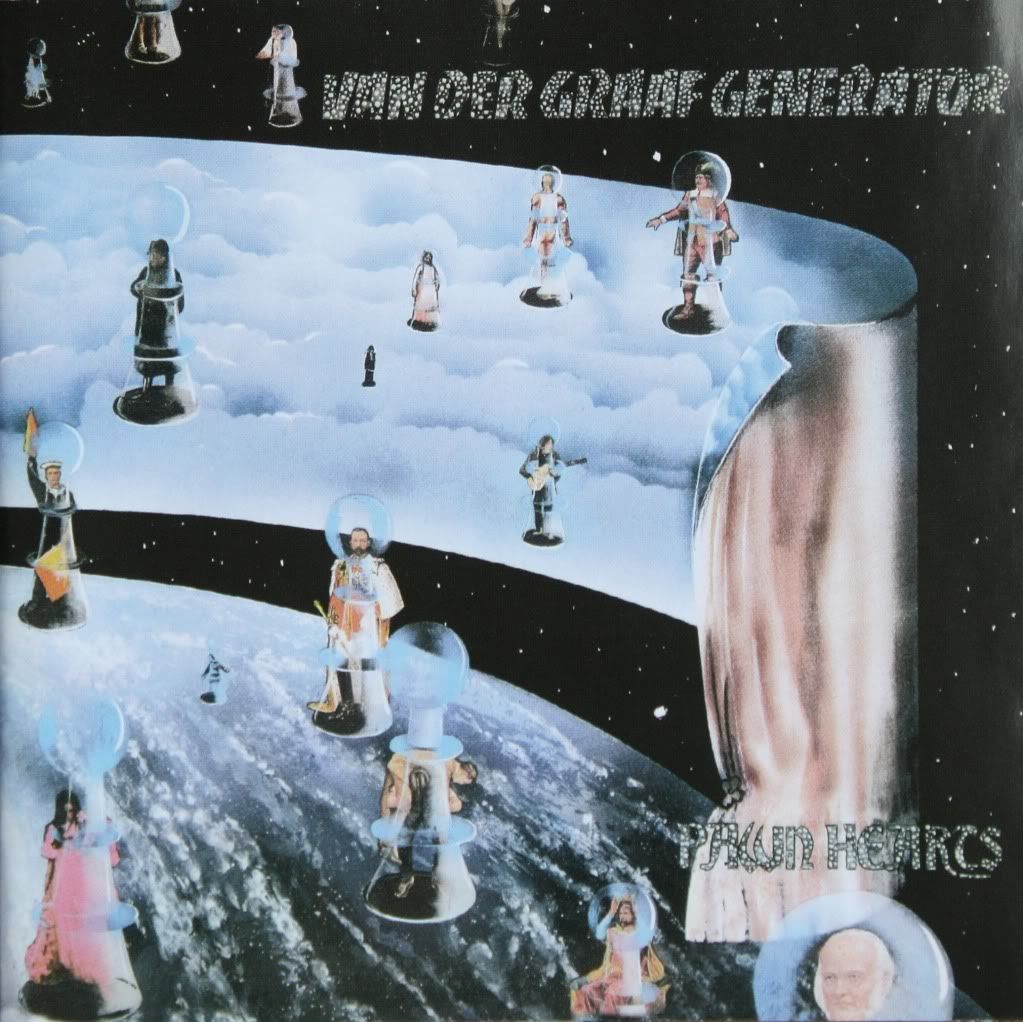
Though Robert Fripp and King Crimson are probably most widely-known as the dark lords of 70's progressive rock, I think Peter Hammill (who I've already introduced with Over) and Van der Graaf Generator do a better job of combining an ominous sound with focused lyrics that actually conceptually match that dark sound.  I won't go into the group's needlessly convoluted history, but suffice to say that this was the last of the first four of their albums recorded before the band went on effective hiatus until their other masterpiece, 1975's Godbluff.  Amongst the landscape of 70's prog bands, Van der Graaf Generator are known for being one of the best bands to largely avoid guitar in favor of a sound that combines unusually aggressive-sounding keyboards (Hugh Banton) and saxophone (David Jackson).  The group additionally distinguished itself by being much more successful in Italy than in its native Britain, and by having a few of the worst-realized album covers in all of the progressive boom (and that's really saying something).

In my view, Pawn Hearts makes good on the promise of its predecessors, especially H to He Am the Only One, insofar as the band manages to flesh Hammill's lyrical and songwriting vision more cohesively and provide some of the most interesting, intense and engaging music they'd so far committed to tape.  As I've kind of already mentioned, Peter Hammill is the deal-breaker for Van der Graaf Generator--you either like his balls-to-the-wall, theatrical, choirboy-cum-chainsaw vocals and find his perpetual interest in the blurry borders between psychology, metaphysics and science fiction compelling, or you simply don't.  For me, his style is so original and varied that I'd probably like it even if I didn't find it aesthetically appealing, though I do occasionally feel he treads familiar lyrical thematic pathways a little too often (isolation being one).  So, the Van der Graaf Generator sound is often expressed using Hammill's vocals as the prime melodic device, placing especial emphasis on his words and the drama of his delivery.

Like so many hallmark 70's prog albums, Pawn Hearts consists of only three tracks.  The first two, "Lemmings" and "Man-Erg" could accurately be described as refined summations of where the band had already been.  "Lemmings" is a sweeping expression of the album's concepts, describing mankind as lemmings rushing toward a clifftop.  After a brief atmospheric introduction featuring Hammill's understated acoustic guitar strumming, the band launches into an odd-meter unison riff (one of their most distinctive devices) that powerfully joins Hammill's voice with the organ and saxophone.  I'll readily admit that most everything Hammill writes is dark to the point of dourness and humorlessness, but I'll be damned if the hairs on the back of my neck don't stand up on end every single time I hear him sing "There is no escape except to go forward!"  Though the subject matter is bleak, I think there's far too few lyricists willing to face up and address the particulars of humankind's ultimate destination and looming self-destruction.  Not that they need necessarily be addressed so grandiosely or even darkly at all, but for me it's a refreshing change of pace from the blithe escapism offered by most pop music.  Across the song's mottled landscape (there are all kinds of great singular moments built into the composition) Hammill's desperation grows to the point that he pleads, "What choice is there left to die/in search of something we're not quite sure of?"  The song's rousing middle section combines an interlocking riff based on Jackson's dual saxophone (he'd play two at once) and Banton's juicily-overdriven organ.  By the time the song winds back around to its recapitulation and climax, it's apparent that Hammill's outlook isn't quite as pessimistic as it originally appeared--in the face of an indifferent universe, he decides, "What choice is there left but to live/In the hope of saving our children's children's little ones?"  The humanistic message rings in the air over one of my favorite parts of the song in which two of the melodic themes overlap and repeat, warping each time into an uncertain haze, musically complicating Hammill's conclusion.

"Man-Erg," perhaps best described as a power ballad, weaves a well-trod style for the band with the Pawn Hearts concept (which I interpret to generally encompass the unsure and unstoppable motion of the human race and each human's seemingly insignificant role in it--both externally and metaphysically).  As the lyrics quote from the band's earlier works (both "Killer" and "Refugees"), Hammill passionately treads the floorboards over his dual nature as a killer and an angel, eventually realizing that he encompasses all aspects of human nature.  The song's deliberate but anthemic pacing as well as another aggressive and dissonant middle section with some frenetic vocals set the track apart from some very similar earlier ballads in the group's history, and some jazz harmony in the second half adds a welcome dimension to the relatively straightforward ballad style.

"A Plague of Lighthouse Keepers," the album's 23 minute-long second half, is predictably less focused.  The epic track trades straightforwardness for some of the album's most spacious atmosphere, though, and it's also got some of the most musically progressive composition of the band's entire output.  I've heard a number of listeners write the song off as directionless, which I think is easy to do when a song is over 20 minutes long--personally, I think it takes quite a few plays and some close attention before songs like this really open up and I try to withhold judgment until I've at least listened enough to recall from memory the song's general structure and some of the melodic elements.  If I'd written this review six months ago (even after having heard it many times over the course of two years), I'd be far less kind to this song, but I've come to appreciate its many nooks and crannies, wealth of melodic ideas and repeated brazenness much more in the interim.  I still don't feel like I've got a strong grip on the lyrical subject matter (the beauty of forming a long term relationship with good albums), but I think the song's strengths certainly outweigh its weaknesses, with some breathtaking unison arpeggios, some of the most searing dissonance on the album, and some genuine scariness.  I would say, though, that the 70's progressive period did produce a few more cohesive epics; "Lighthouse Keepers" at times plays like several nearly-a-song sections interspersed with musically interesting but somewhat unrelated vignettes.  For an epic of this length, I'd hope for a little more unified purpose, but the parts are of high enough quality that it's still pretty engaging. 

I've maintained for a while now that, though it may not accurately be described as the way "forward," atonality in both melody and harmony seems to be the most shamefully underutilized 20th century music advancement of all when it comes to pop music.  Instead of passing the last 100 years retraining our ears to appreciate the innumerable combinations and "millions of colors" possible through the varied application of atonality, we've clung to practically the same conservative, inflexibly traditionalist, oh-so-Western, "16 colors" conception of harmony we've been fearfully clutching more or less since Beethoven.  It's with great pleasure that I welcome this group's experimentation with atonality in "Lighthouse Keepers'" more violent sections as well as the depth it adds to some of the more ethereal passages.  Though 70's progressive rock eventually became hated by some for its less attractive aspects and exponents, to the point that the word "progressive" almost exclusively conjures sounds of Hammond organs, Moog synthesizers, romantic composition and 20 minute songs, I long for a future in which the word "progressive" returns to its literal meaning and can be used to describe music whose intent is to continue music's progress and (ideally) perpetual journey to become something it wasn't already before.  Sadly, we've instead got "Art Rock," "Experimental," "Post-Rock," "Post-Punk" and "Noise" all using increasingly vague synonyms to distance themselves from the period flavor of 70's progressive music when in reality they're often attempting to achieve similar goals.  That said, I think Van der Graaf Generator (though obviously of the 70's in sound) puts a distinctive spin on the period's common tropes and provides enough interesting experimentation that they're still worth checking out and deserve their cult status as one of the best of the original waves of progressive bands.  While I don't think any of their albums are flawless, I do think the uncommon number of risks they take more than adequately justifies the flaws.

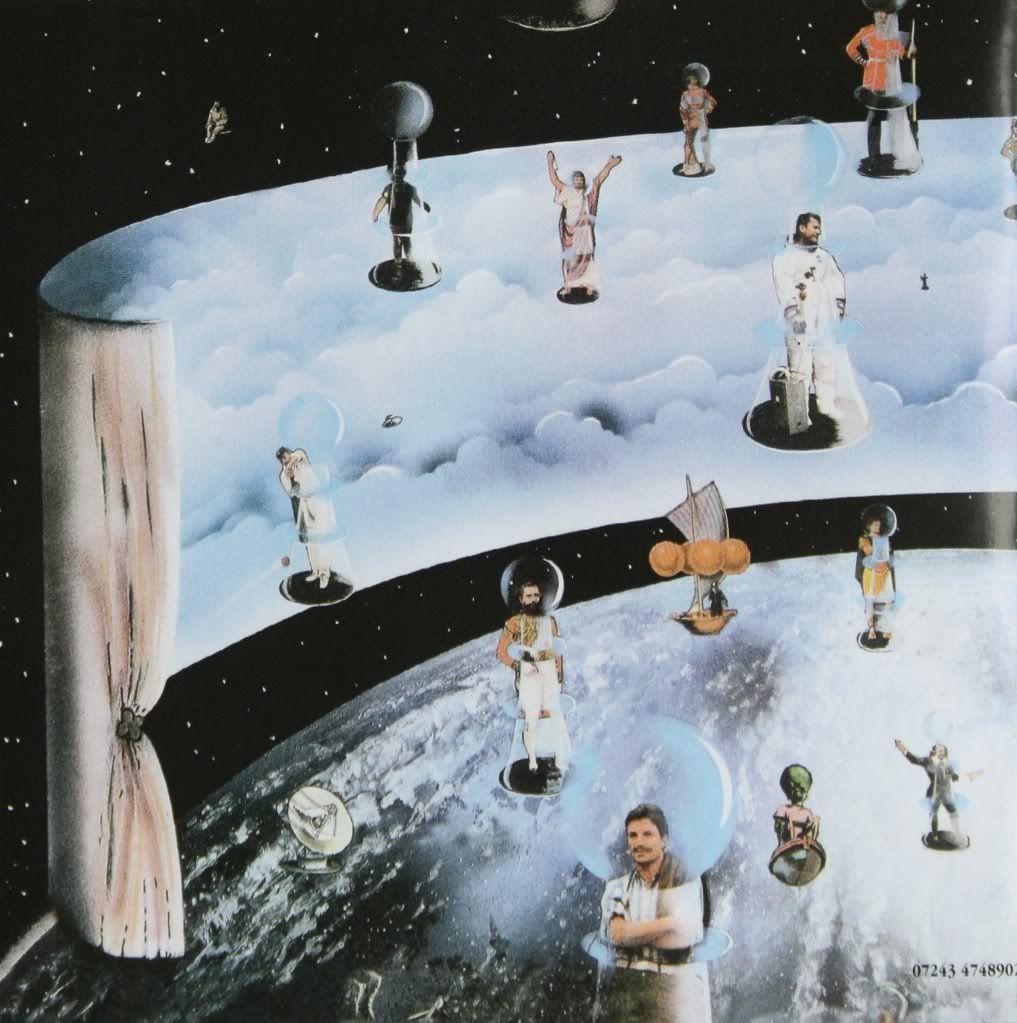
In celebration of the horrible album art, here's the back cover.

Friday, June 24, 2011

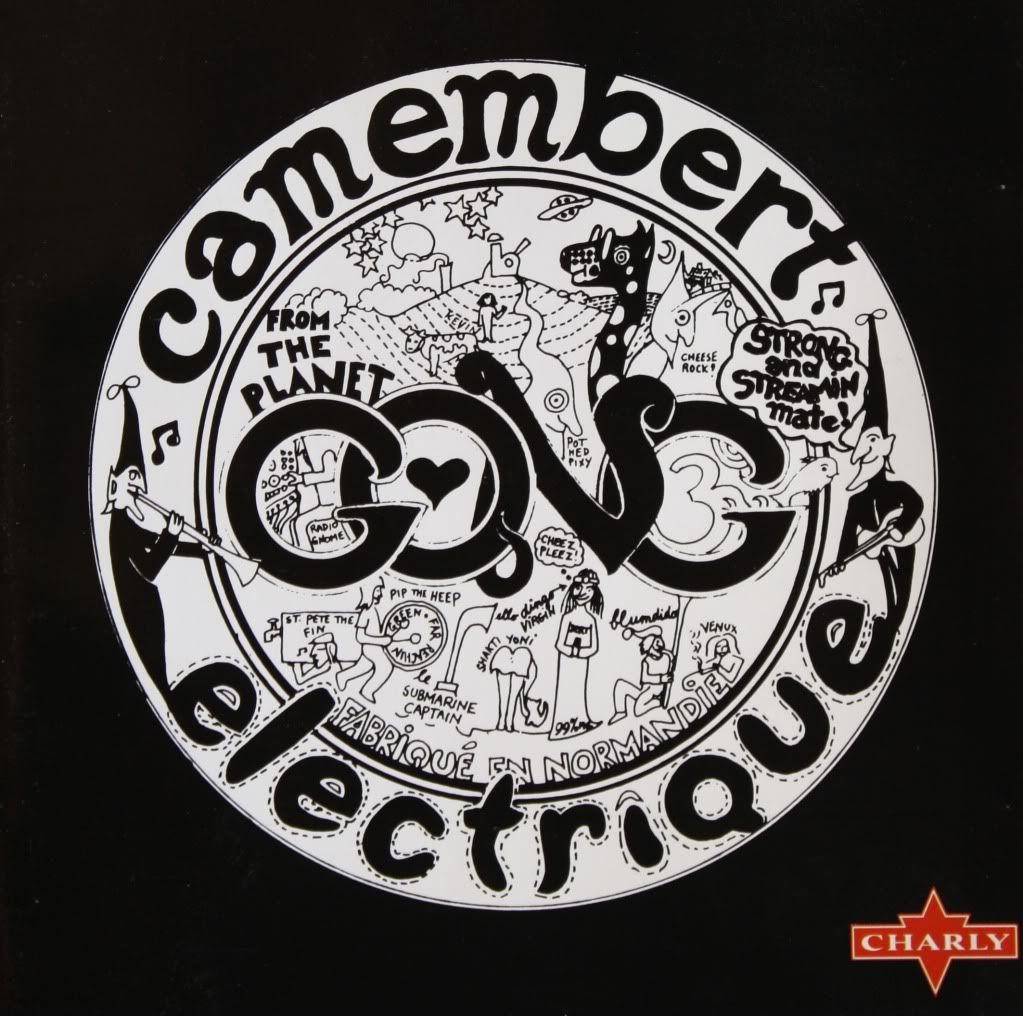
Gong - Camembert Electrique


Back to the Canterbury scene, but certainly not too far of a step away from free jazz or even RIO, here we've got one of the all-time great Canterbury albums and one of the most frenetic psychedelic rock albums of the early 70's.  Even though he's not British, Aussie Gong bandleader Daevid Allen was a member of that most embryonic of Canterbury groups--The Soft Machine--which, along with other proto-Canterbury group The Wilde Flowers, was at one time home to members of most of the scene's later core bands.  If ever there was a hippie, it would be Daevid Allen--he was famously refused reentry into the UK when attempting to return from Europe because of overstaying his visa on a previous trip, so he remained in Europe (mostly France) and formed Gong.  It's for this reason that Gong is one of the most (if not the most) international of the original Canterbury bands. 

Although Cambembert Electrique isn't the Gong debut (that honor goes to 1970's Magick Brother), it's undeniably the beginning of what most people consider the classic form of Gong--the one that concerns itself with Allen's hippie mystical and anti-establishment vision shrouded in mythology of teapots, Pothead Pixies and mythical planets, all displayed over some of the craziest jazz-influenced psychedelic music to be heard in the entire era.  The story of the planet Gong is first broached in the sound-effect heavy opening introductory snipped voiced by the "Radio Gnome"--from there on out, though, the album is a nearly nonstop barrage of weirdness, humor, noise, rock and jazz that knows no equal--in the Gong discography and elsewhere.

"You Can't Kill Me" offers a pretty solid template for the album--Allen's winding but catchy compositions feature a lot of repeating figures and ostinati, looping rhythms and noise, while the lyrics hilariously toy with ideas of reincarnation and karma, while his partner Gilli Smyth contributes heavily-reverbed high-pitched moans, groans and what became known as "space whispers."  Though on first listen this music might sound like utter chaos (well, it is chaotic, but not necessarily utterly), closer attention reveals an almost punk rock-like attitude supplemented by Didier Malherbe (distinctly "French" saxophone style) and Pip Pyle (unparalleled prowess on the drum kit, later to become one of the most experienced Canterbury journeymen) both of whom seem to have no difficulty negotiating Allen's compositions and their innumerable and quickly-transitioning ideas.  Though the tumultuous Gong lineup later featured the more-lauded guitar hero Steve Hillage on lead guitar, I find Allen's guitar style particularly impressive for its audacity (just listen to the noise he conjures up on "You Can't Kill Me").

The album continues to plow an increasingly eclectic furrow with the organ-driven music hall "I've Been Stoned Before," where Allen goes from comical farce to sounding like he's going to shred his vocal chords in torment in just about 2 1/2 minutes.  "Mr. Long Shanks" (see above video) transistions from gleeful carnival jazz rock ("The man in the parlor/you know what he's after") to a Gilli Smyth space whisper tour-de-force at its halfway point, while "I Am Your Animal" finds the female vocalist projecting a more aggressive (even x-rated) performance over Allen's spiky repeated riff, which morphs into a rapid-fire vocal barrage that ends with Allen madly yelling about licking the moon.

After a couple of sound collage interludes ("Tu veux un Camembert?") the band returns with the forward-looking (to later Gong albums) "Fohat Digs Holes in Space," which spins an atmosphere out of Allen's "glissando" slide guitar--the part when he seamlessly drops from the eerie high register into the midrange before 40 seconds is breathtaking.  I'm not sure if glissando is really the correct word for the playing style, but that's what Gong fans have decided to call it--anyway, it's that echoey spacey sound that starts about 30 seconds in.  The song's eventual rock riff is one of the album's catchiest, with Allen extolling some beat-cum-hippie poetry ("mirror mirror, on the wall, who's the biggest fool of all?") before another overdriven sax and lead guitar breakdown.  The beginning of "And You Tried So Hard" is the closest thing to folk rock to be found on the album, though it quickly weirds itself out with more Gong flavor.  The album closes just as powerfully as it opened with "Tropical Fish"--one of the band's most effective mechanisms is doubling the melodies on guitar and sax for a stabbing effect--with a heaping handful of bizarre riffs and lyrics ("seem like a typical witch to me/seem like a tropical fish to me"), a spaced-out interstellar desert in the middle ("I couldn't believe my eyes....") and closing with the almost martial invocation of the moon goddess, "Selene," and a recapitulation of the album's earlier machine-gun lyrical themes.  The Radio Gnome returns to remind you that the ride's only just beginning, and you'd better believe him.

Although the full on Gong mythology isn't in narrative form here, the lyrical themes set the scene for the epic Radio Gnome Trilogy to come.  Though Gong may have equaled the fun, trippiness and quality and ideological resourcefulness found here on later albums, they did it from a spacier angle, and sadly this album is in many ways one-of-a-kind with its energy, barrage of ideas, and noisy edginess.  It manages to incorporate a lot of jazz influence without committing to long-form jazzy passages (like so many later groups, including Gong would do) by radically changing from idea to idea in short periods of time.  Their arrangement style here is one that was certainly emulated by later Canterbury bands, and it's easy to tell that Allen's association with Robert Wyatt and Kevin Ayers was a mutually-enriching one; his idiosyncratic sense of humor obviously influenced to a large extent the sense of whimsy and insubordination prevalent in a lot of the Canterbury scene's later music.  My only complaint with the Charly CD reissue of this album is sound, which is quiet, treble-heavy and not as full as I imagine it should be.  Let's hope for a good remaster.

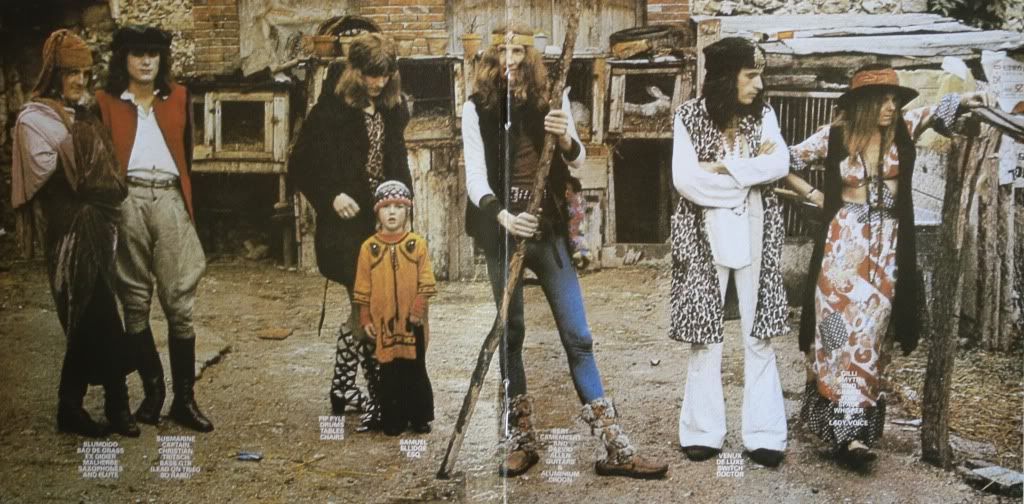
Until then, you can get it here on CD or MP3.  Oh, and if you listen to any of this and think Gong don't sound like typical hippies, take a gander at their ridiculous get-ups.  Allen appears not to mind being stapled in the face...and that's quite a wizard staff.
Sunday, June 19, 2011

Françoise Hardy - La Question


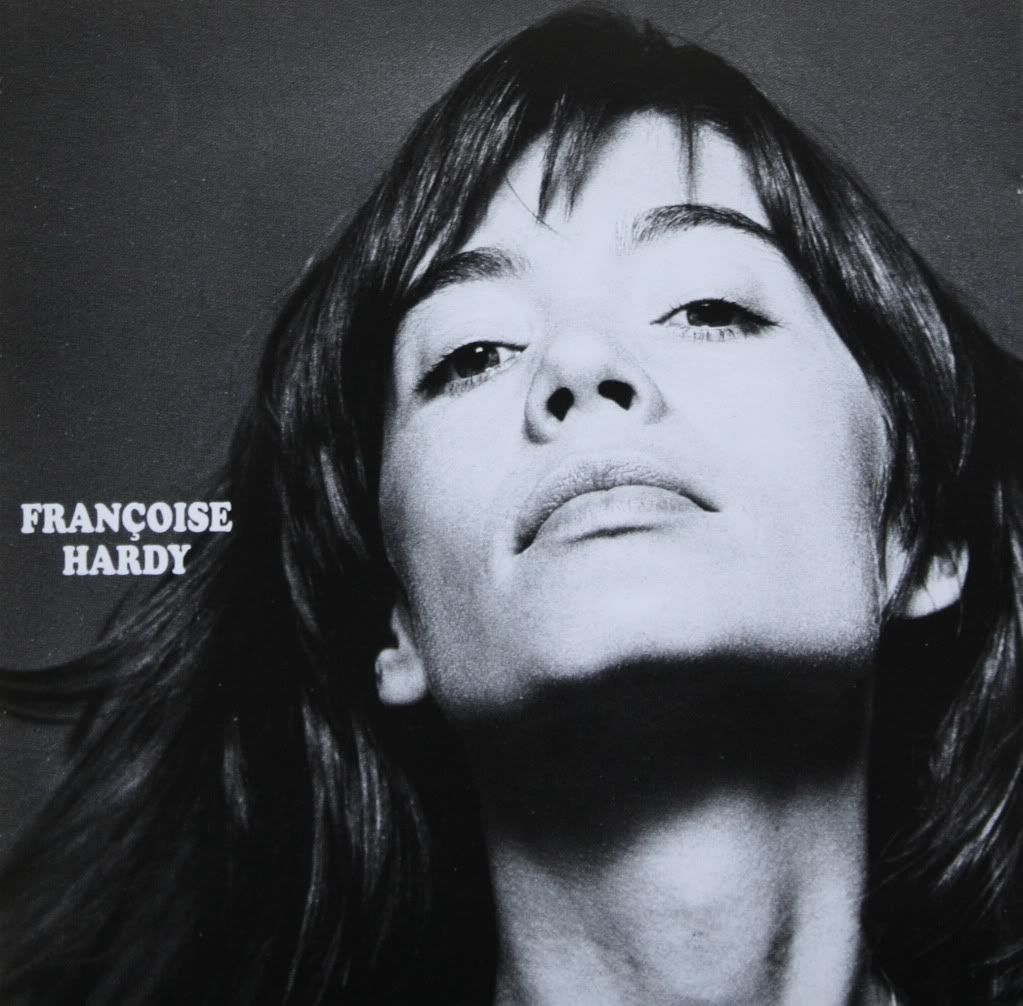
After nine years and over 15 releases in the teen idol "Yé-yé" French pop style that first garnered her fame with 1962's hit Tous les garçons et les filles, Françoise Hardy decided to change gears.  While some critics paint the stylistic shift that happened with La Question as some sort of radical change for Hardy, in reality it's less of an audacious move away from pop music and more of a subtle shift within pop to a more mysterious, atmospheric, and jazzy sound.   Rather than the catchy but generic bubblegum pop sound of her early records where the limits of her vocal technique were often made obvious by the material, the soft dynamics and spacious mystery of this album's songs places more of an emphasis on the singer's personality while simultaneously cultivating a palpable mood.  Hardy sings in a breathier, whispery style, only occasionally lifting her voice into the upper register--the contrast only makes the music more dramatic, and the feel more, well, like that look she's got on the cover.

Instrumentally, the album relies on the nylon-stringed acoustic guitar of co-writer and producer Tuca (a fairly obscure Brazillian performer), acoustic and electric bass, subtle percussion and occasional orchestrations.  The swelling "Oui je dis adieu" gracefully bounces back and forth between the strings and guitar in simple yet effective counterpoint, while "Chanson d'O" showcases Hardy's seductively breathy vocals.  An almost David Axelrod-esque tension drives the dark, cello-suffused opener, "Viens," and returns again on the disquieting opening of "Le Martien," though Tuca's bossa guitar riff eventually softens the ambiance.  The only track that really breaks the dusky atmosphere is the sing-songy "Bati Mon Nid," with its "la-la-la" chorus where a male singer joins Hardy on vocals.

While hardly left-field, La Question is totally a high-water mark in Hardy's discography and one that holds up really well in spite of its age.  The record's sultry atmosphere can't be beat when you're in the mood, but it also holds up pretty well if you're actually paying attention.

Get it here on CD, or on MP3.

Saturday, April 23, 2011

Ramases - Space Hymns


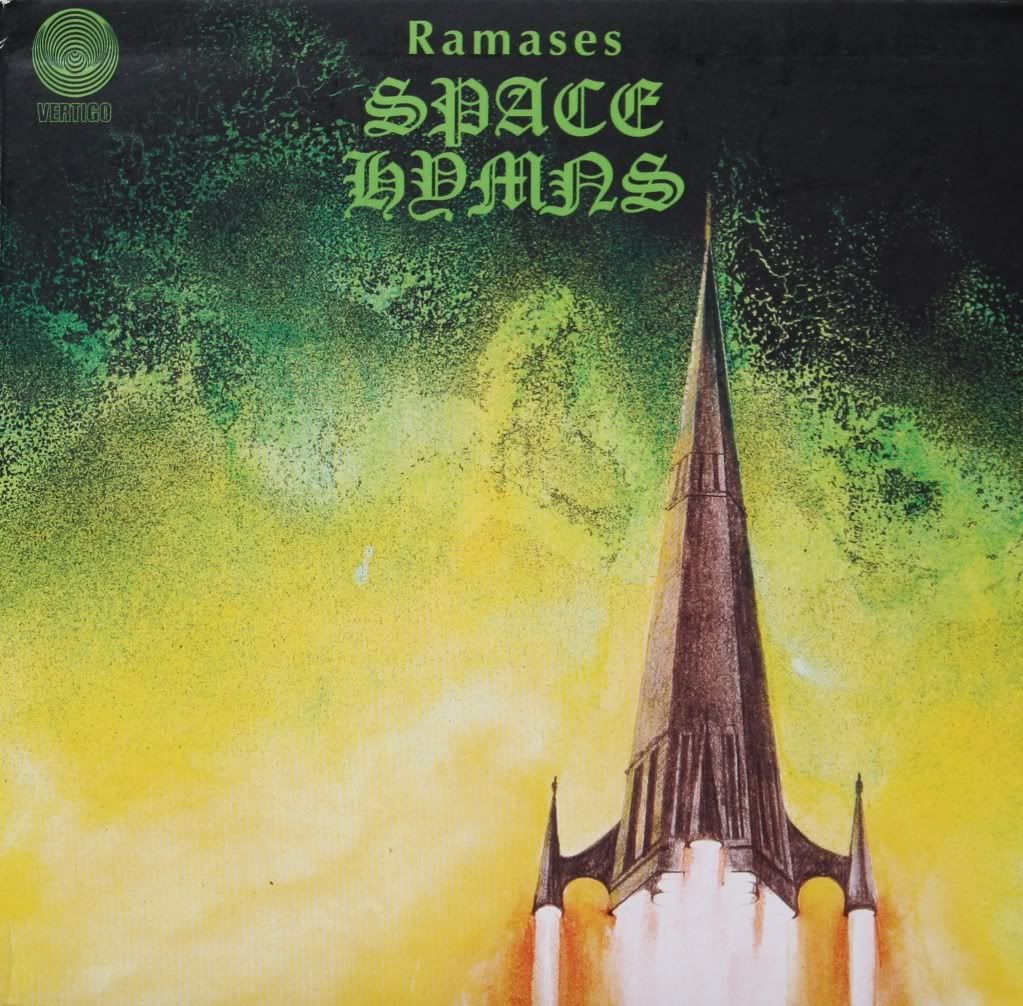
Here's an obscure one.  Ramases' 1971 debut is a great example of what the record label situation was like in the early 70's--with the success of psychedelia from the Beatles and the growing popularity of early progressive groups like King Crimson and the Moody Blues, major labels were much more interested in throwing wacky music at the wall to see if it would stick--commercially, that is.  A lot of weird people who no present-day label would pay attention to got fully-funded releases, which makes for quite a few interesting artifacts and a few stone cold classics.  This album belongs to the former category--you at least hope you're in for a few interesting moments when you know that the main guy claims to be from a different planet, sent to educate the earth people with his alien knowledge.  At the very least, the concept gets us a ridiculously awesome Roger Dean cover with a church steeple taking off into space.  Oh, and 10cc is the backing band.

The opener, "Life Child," is easily the hardest cut on the album, boasting a funky riff and some fuzzy guitar solos--unfortunately its promise of hard psychedelia and edgy angry affronts to the earth people is rarely repeated during the rest of the album.  However, we do get quite a bit of weirdness--"Quasar One" is dedicated to Ramases' homeworld and features some pretty sweet chanting, while "Molecular Delusions" experiments with a Gregorian chant style.  "Journey to the Inside" is probably the trippiest track on the disc, replete with cascading backward recordings and closing the album with Ramases somewhat interestingly discussing the fact that the distance between the planets is comparative to the distance between electrons and nuclei before losing us again by fading out saying "If you took a pill to get smaller..."

The alien concept is at times rewarding and at other times frustrating--rewarding on the rather pastoral stoned reverie "And the Whole World" as well as the mysteriously creepy "Earth-People"--then frustrating when the solution for the "Earth-People" is the return of Jesus (track 10, "Jesus").  A little creative follow-through, please?  Elsewhere limp writing holds back some catchy folk-pop in "Baloon" ("just off the surface of the moon"...yikes; don't worry--he also rhymes "bubble" and "trouble" later in the same song).  Aside from the songwriting issues and failure to go for broke on the weird alien concept, the music here is held back by Sel's (Ramases' wife) nasal vocals, which are usually present in the form of unison backing vocals (couldn't even write some harmony parts) as well as unnecessary repetition of vocal lines and ideas.  Case in point, "Molecular Delusions," which presents an interesting 20-second idea, then proceeds to repeat it for four minutes.  "You're the Only One (Joe)" has potential to be the creepiest Earth-people finger-pointer on the whole album but spoils the idea with irritating vocals that repeat again and again (is the line paying homage to Midnight Cowboy, is it an indictment of mankind's collective selfishness, or is it just annoying?).

This album always gives me a little pleasure whenever I give it a spin--at least in the act of imagining a world where record labels fund this kind of thing--but I'm always left frustrated at its many areas of unfulfilled potential.

You can find it here on CD, if you really want to.  And, I've just noticed, the long out-of-print follow-up, Glass Top Coffin has finally seen CD release.  It's even less heavy than Space Hymns, but is probably a better album.
Thursday, March 3, 2011

Gene Clark - White Light


This album is probably one of those to which I've become too close to properly review.  I've listened to the whole thing upwards of 35 times, according to iTunes, to the point that the songs are totally ingrained into the fabric of who I am.  Like Linda Perhacs' Parallelagrams, I still remember the first time I listened to it about five years ago, sitting there still on my bed, not doing anything else.  40 minutes seems like a long time when you're just sitting there focusing on an album you've never heard before, and I remember thinking "Huh," when the album finished--neither impressed nor displeased.  That's the beauty of Gene Clark--it's a "huh" the first time you listen, then gradually it's an "oh my god this is awesome" as the plays increase.  I know some No Other fans find this album boring, but I can't see why, other than that the instrumentation is less ornate and there's perhaps a little bit less drama.

To me, this album is perfect singer/songwriter, through and through.  Gene's voice is so achingly plaintive, his words are deceptively simple the mood is meditative, and the playing is ear-catching enough to reward attention but never overshadows the songs.  A lot of the credit's probably due to producer/guitarist Jesse Davis, whose subtly deft, wrinkled arrangements reward multiple listens and whose slide guitar backs many of the tracks with the slightest bit of muscle.

The love songs here are tough to match anywhere--"With Tomorrow," just Gene and his guitar, subtly slays, with Clark imortally intoning "it was more like a dream than reality/I must have thought it was a dream when you were here with me" that marks the maturation of the "less-is-more" ethos that made "I'll Feel a Whole Lot Better" the best Byrds song on record.  Likewise, the slow-burning "Because of You" is pure emotion, founded on a subtly catchy guitar riff and lifted into the clouds with some atmospheric organ work.

My favorite tracks, though, come from Clark's more inscrutable side.  That Gene Clark was a mystic I have no doubt--it's pretty clear from No Other's torturous catharsis--but here we have an even quieter type of probing the beyond.  The rapturous "White Light" portrays the mystical experience like some sort of back porch hoedown (my heart always pounds when he joyously calls out "white light"), while the waltzing "For A Spanish Guitar" finds Gene in the ages-old struggle between a man's sense of self and...everything else.  The most glorious thing about this is it's not a description, not an explanation--it's just Clark expressing this quiet, ineffable combat as if he were just talking to himself (we'll forgive him the misuse of the word "whom").  To me, the album's production mimics the same ineffability--just the way it sounds feels so good (seriously, the opening five seconds are like a gust of warm air).

The album ends with a Dylan cover (ironic, considering that the music could easily be described as "Dylanesque" but that it also transcends the trappings of Dylan's writing style) and the entirely impenetrable rocker "1975;" I've talked with a few people who find this album boring--so it may be, but such a judgment should be made after at least a few close listens.  I don't think I've ever been bowled over by a Gene Clark album on first listen, but I can think of at least three that will remain safe in my cold dead clutches.  For those of us with sympathetic tastes, White Light is an unassuming masterpiece of form and performance and a lifelong companion.

Get it here on CD or MP3, with bonus tracks.

Monday, February 28, 2011

Merle Haggard - Someday We'll Look Back


Merle Mondays continue with the Hag's 1971 tour de force.  As if releasing a progressive gem in Hag earlier in the year wasn't enough, Merle saw fit to bestow upon us an even better album of bewitchingly eclectic Bakersfield country in Someday We'll Look Back.

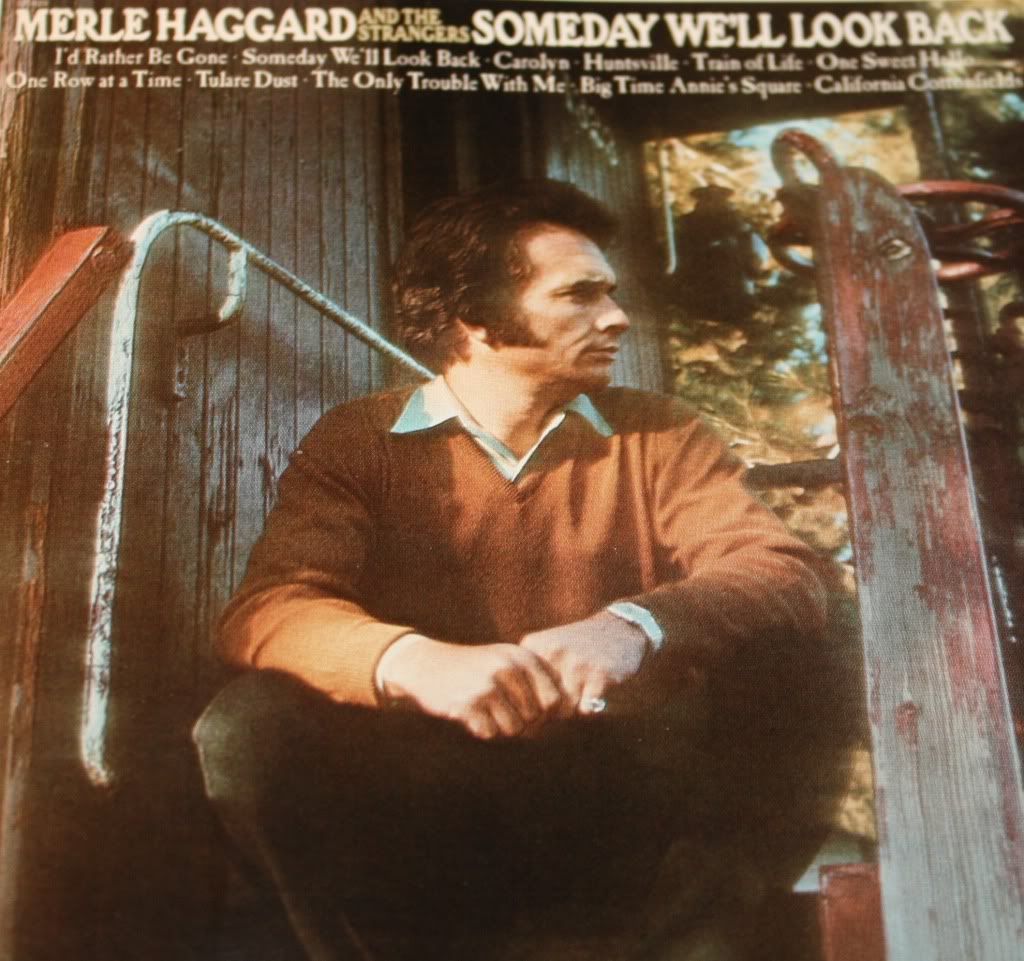
Although my favorite side of Merle is the hard-edged Bakersfield honky-tonk sound with lots of steel guitar, I just can't fault this album (or Merle's entry in the "widest sideburn in the world" competition).  This album blends Merle's songwriting mastery (it's clear that by 1971 he'd achieved an uncommon level of assurance in his songwriting abilities) with some of his most mature vocals and a dizzying array of country blended from everything from Latin to blues on through to jazz, swing and even straight-up pop.

Though it's a mellow listen, this is classic Hag through and through--we get a dig at hippies in "Big Time Annie's Square," a badass prison song in "Huntsville" ("the man better keep both eyes on me/or they're gonna lose ol' Hag"), and some crushing heartbreak laments like "I'd Rather Be Gone."  What really tugs at my heart strings, though, is the authentic nostalgia that pervades the whole set--from the hit title track to the wistful, bittersweet imagery of "California Cottonfields," "Tulare Dust" and "One Row at a Time," Haggard has a way of sizing up his past in such a way that the emotion and sense of remembrance is overwhelming--when Merle sings "California cottonfields--as close to wealth as daddy ever came," you know he lived it.  There are Haggard albums I reach for more often, but this album is like a warm embrace from a relative you haven't seen in years.

Get it here on CD or MP3, along with the similarly strong Hag.

Saturday, February 19, 2011

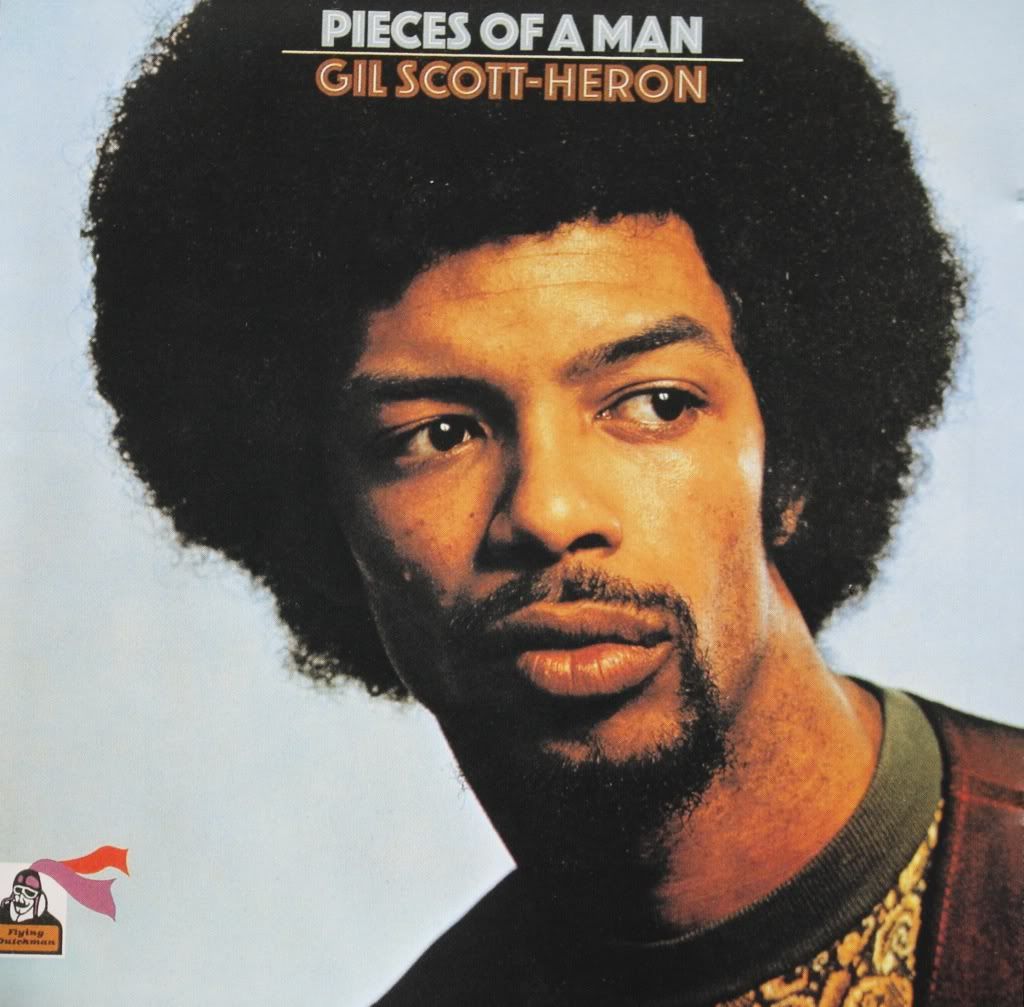
Gil Scott-Heron - Pieces of a Man


Although I've chosen some favorites to start off the review side of this blog, I'm unfortunately not completely in love with every album I review.  Not to say I don't enjoy this album, it's just too easy to describe the ways it doesn't fit with what I look for in this type of music and to list choices I wouldn't have made if I were the artist or producer.

Then again, it's pretty hard to fault the opening track--the one everyone thinks of when they think of Gil Scott-Heron--"The Revolution Will Not Be Televised."  This is the song people are thinking of when they say Gil Scott-Heron was the first rapper (or somesuch fanfare), and it's unarguably the freshest thing on the disc with Scott-Heron's rapid-fire, cutting assessment of black America's imperatives in 1971 (as he sees it) over funky drum and bass, supported by a jazzy flute.  This is one of those cases, though, where almost all of the album is totally different from the flagship song.

The rest of Pieces of a Man sees Scott-Heron considering the state of his fellow man, often through the lens of what he's feeling about himself.  On the one hand, it's fascinating from a historical perspective--it's clear that socially-conscious black artists in the early 70's were processing their world musically in a pretty different way than their analogs do today.  The problem is that none of the other songs here capture the wit or verve of the leadoff track.  Instead of using irony to prove his point with a bit of sting, Gil seems content to rely on relentlessly earnest exposition.

This problem could be thoroughly alleviated by the music; lyrics don't get much more severe than Curtis or What's Going On, but the orchestral sweep of both albums and the frantic, redemptive highs found on the former fill the words with a sense of gravitas that overcomes the seriousness of the words.  Here we get an organic (lots of flute), jazzy type of soul that seems like it would have already fallen out of fashion by 1971.  Now, that's an artistic choice I don't totally agree with, but there are issues here that go beyond taste.  First off, Scott-Heron's voice isn't up to the challenge.  There are plenty of vocally-limited artists I love: Allen Toussaint is one, and an R&B artist.  Whereas Toussaint plays to his abilities by singing simple, catchy melodies that present him as an endearing personality, Scott-Heron attempts to hit notes and run off on flourishes that he can't nail.  Moreover, there's a distinct melodic deficit in a lot of these songs--most have at least a hook or two, sometimes around the chorus, but the verses show a pretty distinct lack of attention--like he decided on the chords but didn't bother to think about which notes he was singing as long as they fit the harmonic structure.  Perhaps less important but still irritating to me personally is that, for someone who's reputedly strongest on the lyrical/poetic side of things, Scott-Heron also pays little attention to how the meter of his words fits with the rhythm of each song, running fast to fit words in too small a space or awkwardly stretching a couple of words to fill a blank space demanded by the rather rigid, unimaginative song structures.  You can't expect the artist to cover all of these bases every time, but a good producer would have at least found one way to tighten things up a little bit.

It sounds like I really hate this album.  Not so; despite the ill-fitting music and cheese ("When You Are Who You Are," "I Think I'll Call It Morning"), there are some moments where it gels and gets worked-up the way it should--"Home is Where the Hatred Is" conjures an appropriate dark edginess, and "Pieces of a Man" overcomes its Van Morrison lounge feel to do the words justice with a pretty solid vocal performance.  Overall, Pieces of a Man is actually a pleasant listen (I actually play it fairly regularly) and a pretty cohesive album, it's just that the unique promise and potential of the first track is nowhere to be found as the album progresses.  And that, my friends, is not a classic.

Get it here--out of print, but affordable on MP3.