Showing posts with label 1977. Show all posts

Wednesday, November 23, 2011

Etron Fou Leloublan - Batelages


Back to mainland Europe and one of the first groups of bands invited by Henry Cow to join the Rock in Opposition festival--France's Etron Fou Leloublan.  Along with the recent Zappa post, this album is a great example of one of the common trade-offs found in experimental rock: if you want to hear some unorthodox ideas, don't expect the album to be uniformly coherent.  As much as I obsess over the album-as-ultimate-pop-music-artistic-statement, I also acknowledge that the effort it takes to produce unique musical ideas is often so creatively taxing that the band seems to have little energy left to expend attentively cultivating their album's big picture--flow, connectedness, uniformly high quality, or even the strength of the individual songs wherein the unique ideas reside.  As a result, some experimental albums turn out to be confused messes, while some more successful ones still tend to come across as good but wildly scattershot and inaccessibly eclectic (to some, at least).  This reality makes the truly great experimental albums full of truly great ideas so rare that they're like precious diamonds to behold.  In pursuit of that elusive ideal, though, I've found a need to shift my expectations when listening to experimental music from album consistency to subjectively evaluating the presence and quality of interesting ideas.  In other words, it can be just as entertaining to listen to a group attempt and not fully succeed at doing something that's never quite been done before as it is to listen to an artist make a thoroughly great album in a style that's already been done a million times.  What better music to illustrate this experience than Etron Fou Leloublan's 1977 debut, Batelages?

The group is surely one of the most curious of RIO outfits, consisting of just a drummer, a saxophonist and a bassist who occasionally plays guitar.  Their roots are unique within RIO too, sounding much less like Henry Cow and with more of a performance art/dance hall vibe.  The epic tracks that bookend the album demonstrate quite well the relative success and failure of an experimental approach, with "L'Amulette et le Petit Rabbin" showcasing all of the group's strengths in one long narrative.  The track opens with acoustic guitar, abruptly shifting to a punk rock-like blast of electric guitar, drums and raw but playful vocals that initiate the ironic tale of the titular "little Rabbi."  The ensuing 14 or so minutes blend the band's ribald humor and vocal/poetic acting with hypnotically interlocking bass and drum figures (probably their strongest characteristic) and cabaret-like saxophone melodies.  The story is pretty absurd and funny, but there's enough feeling in the vocals and musical depth to hold the interest of non-Francophones--like when the beat changes around 9 minutes from dance hall striptease music to bass chording and stutter-stop drum interplay.  While some may prefer more smoothness and dovetailed segues between the different sections of music, I really enjoy the immediacy and surprise that comes when the band jaggedly and instantaneously changes gears from one mood to another.  And if there was any question regarding whether or not you can play difficult, complex music and still enjoy it, just listen to the last two minutes!

Conversely, "Histoire de Graine" offers another longform statement that is much less impressive.  While the narrative elements are still strong, the ideas are fewer and further between, with considerably more repetition.  The vocalist (I'm not sure whether it's saxophonist Chris Chanet or bassist Ferdinand Richard) is considerably tamer than the first track's, and things tend to drag with less energy and more of a feeling of musical stagnation.  Still, it becomes apparent that the goal of the song is a cacophonous crescendo.  While not the most economical ratio of ideas to minutes, the build-up is not necessarily unsuccessful.  In the middle of the two epics we're treated to a solo percussion performance and a 30 second saxophone-led instrumental (both of which reinforce the band's circus-like image) and the fascinating instrumental "Madame Richard/Larika," which features a doubletracked, almost avant-classical bass intro and more of the noisy trio grooves that make the first track one of the best.  Probably the most carefully-composed piece, it's also easier to grasp the relationship between the band's freer and more aggressive tendencies and their inklings as composers.

Like a lot of the uncommercial bands that made up RIO, Etron Fou Leloublan's albums play like snapshots of what they were doing live at the time; they're not so much carefully crafted studio statements (indeed evident by the charmingly lo-fi production) as they are attempts to document the achievements of a group trying (and sometimes succeeding) at combining disparate crazy elements in one place and having a great time doing it.  Though their later albums shed some of the feral energy found here, I'm happy we have both sides of the band documented in order to compare unbridled and spontaneous creativity with a more refined and thoughtful take on some of the same ideas.  When it comes to the tension between searching for perfect albums and interesting ideas, I think this one has enough inspiration to make it worth listening to and keeping in spite of tenuously gelling as a good album--chaos is often beautiful in its own way!

Get it here.

Thursday, September 15, 2011

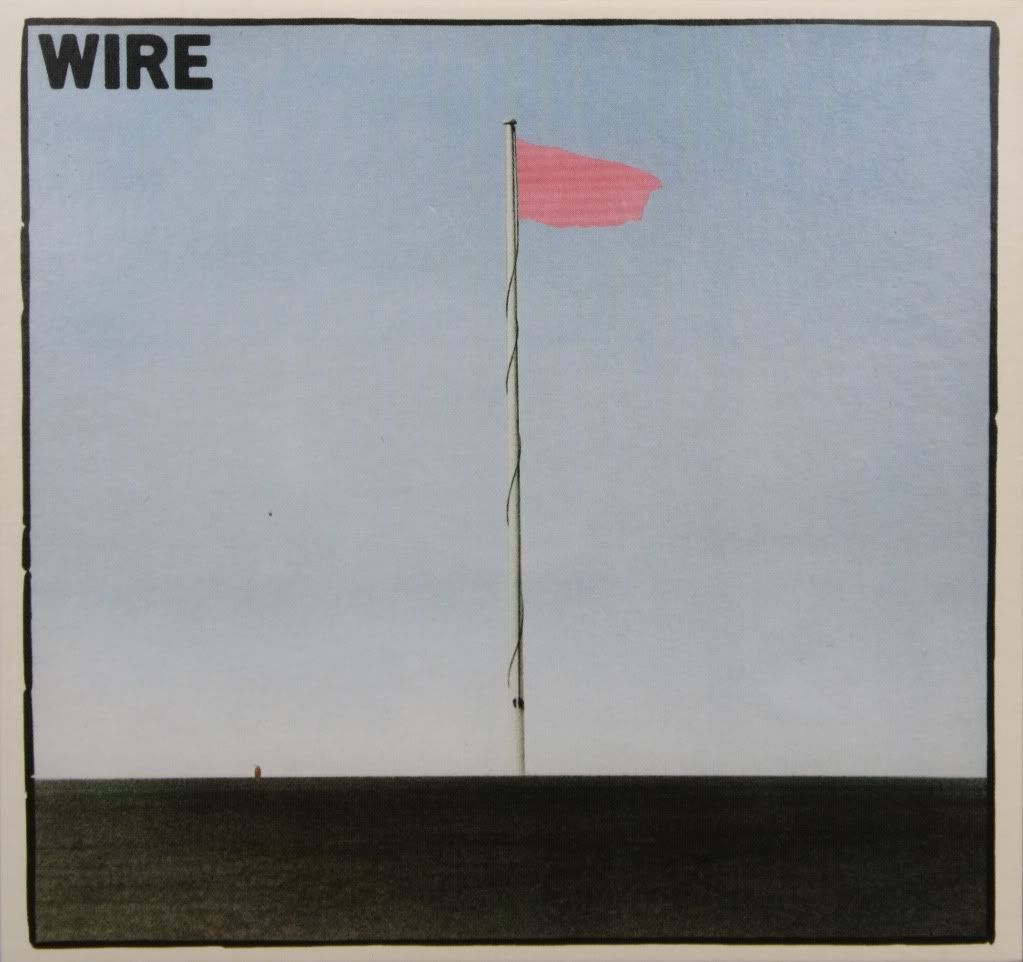
Wire - Pink Flag


It's pretty heartening to see that, even in the heyday of British punk rock's emphasis on simplicity and aggressive emotions, there were still a few bands willing to marry those ideals with intelligence, experimentalism and a high level of attention to creativity.  While I freely admit it's not my most-explored area of interest or expertise, I can easily say that of all of the "post-punk" outfits I've heard, Wire--at least on this album--bears the strongest aural relationship to actual punk.  The genius of Wire's debut is how the band manages to fashion punk's back-to-basics aesthetic and vitriol into a new incarnation without turning to elements of the psychedelic, experimental and progressive music against which punk was supposedly a reaction, which is more than can be said for most of the other post-punk bands I've heard.

Probably the most impressive twist Wire makes on the punk formula is one that can actually be productively applied to all types of music--they make an effort to turn each song into a terse statement where the ideas are clearly stated but not smothered to death through repetition.  The result is a 21-song, 35 1/2 minute-long album with nary a wasted second and a shining wealth of ideas.  Lately, this pursuit of succinctness is one that has interested me more and more both as a musician and as a listener.  The beauty of Wire's solution is that the ideas are oftentimes stated only once--though some songs have repeating verse and chorus structure, there's also some more through-composed pieces like "Field Day for the Sundays," which subsists on about 2 riffs (one of which becomes even shorter when it returns at the end of the song) and is over in 28 seconds!

It seems the concept's successful application hinges on a delicate balance between the quality of the ideas and how often they recur.   While Wire often finds artistic success in paring down their songs to sub-1-minute lengths, I don't think short song lengths are necessarily the only way to successfully implement brevity.  It seems to me that the real enemy here is excessive repetition which, in my mind, is the not-so-silent killer of interesting ideas and the bane of a huge swath of popular music both past and present: an artist takes what once was an interesting idea and hammers it into the ground with repetition (either in the same song or across multiple songs) providing little or no variation or expansion on the original idea.  With ideas stated so sparingly, the songs never overstay their welcome; while some might argue that this approach is deficient in terms of development, I don't see an issue when so-called "development" usually just consists of to-the-note repetition.  As a kindred creative spirit, I think the grace of this type of brevity is that the development or repetition of an idea is implied and left up to the listener's imagination and previous experience.  Our ears are accustomed enough to melody and structure that, if we're paying attention, it's easy to extrapolate a brief idea and fully complete the relatively unimportant repetitive material that isn't there with the condensed pith that actually is.  Rather than heavy-handedly forcing the melodies and ideas into the listener's memory, this method alluringly waits for the listener to meet the ideas halfway, and for me this engagement is a large part of the fun; further listens reveal more and more as the ideas expand in your head.  If you want to hear more of the same riff--listen to the song again.  Meanwhile, the artist is able to focus on surprising the listener's ear with the next idea rather than providing it with ear-predictable chaff, and can potentially pack more ideas into one album than many bands manage in an entire discography.

Now, it's not that any repetition is bad or even that conciseness is the only way to pack music with ideas (compositional guidelines for development in classical music and improvisational comping in jazz are a couple of examples of traditions in long-form music that manage to keep the interesting ideas flowing).  The point is that we've gotten somewhere interesting--we're now focusing on ideas as the building blocks of good music; the interesting and infinitely-discussable issue of whether we fully agree on the method becomes more of a matter of preference, subordinate to the more important common goal--the avoidance of a zombie-like, by-the-numbers approach to music. 

Of course, short track lengths alone don't guarantee great ideas--luckily, Wire hold up the other end of the bargain.  Despite the fact that the songs are pretty much exclusively guitar-bass-drums, the band manages to squeeze what seems like a limitless number of great riffs, vocal arrangements and hooks out of such classic instrumentation.  The songs range from the juicy distortion of anthemic punk sing-alongs like "Ex Lion Tamer," "It's So Obvious" and "Mr. Suit" to some glorious, occasionally light-hearted hard pop with the likes of "Three Girl Rhumba," and especially "Fragile" and the ridiculously catchy "Mannequin."  I also really like how well they manage to meld the punk ethos with more experimental (and occasionally slower) material, like the album's dire opener, "Reuters," the detuned rage of the title track, and the simultaneously bluesy and weird "Strange"--the album's longest track at 3:59.  Special mention should be made of the sometimes impenetrable but always evocative poetry (thanks, I think, to vocalist Colin Newman) that makes up the lyrics.  While Newman's suitably untrained and raw delivery often makes understanding the words difficult, searching some lyrics on the internet gives the already engaging music even more depth and helps the songs' linear structures make even more sense. 

Like a lot of classic albums, Wire's debut will please more than just punk fans with its pop sensibility, experimental edge and timeless rock and roll spirit.  While it's sort of easy to understand that the band's creative approach guaranteed the album's initial commercial failure, today it's seen by most as a classic and probably the purest example I can think of to illustrate the type of idea-to-minute ratio that more artists should aspire to.

Thursday, April 7, 2011

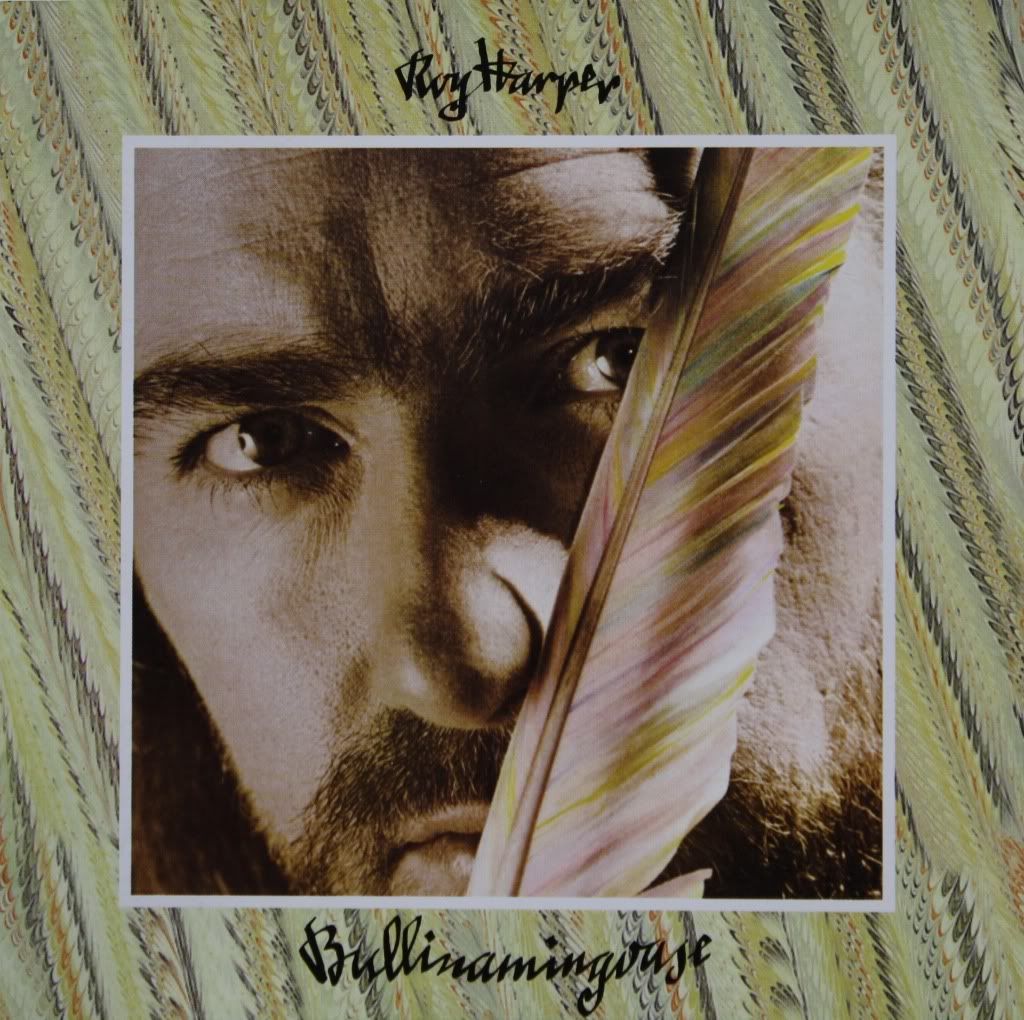
Roy Harper - Bullinamingvase


Bullinamingvase (apologetically titled One of Those Days in England for the US release) is Roy Harper's last album of the 1970's as well as his last truly great album for at least eight years (or more, depending on whose opinion you're hearing).  Like HQ before it, this album delves further into a full band sound with slight progressive and psychedelic flourishes.  Although the band is different and a bit less distinctive (no more Bill Bruford or Chris Spedding, unfortunately), the production is probably even more diverse than HQ's and the overall flow is smoother and more coherent--the album succeeds because Harper's songs exemplify the things that made his earlier works unique while at the same time entering territories as yet untrod by the the songwriter. 

Listening to the "One of Those Days in England (Part 1)," it's hard to imagine the track was only worked up at the behest of the label in order to provide a single for the album--though the words are light, the song (in addition to being catchy with a great steel guitar riff and Paul and Linda McCartney on backing vocals) establishes a dreamy, wistful tone that permeates much of the album, not to mention the fact that it first introduces the melodic theme that will return several times in the song's later parts.  "These Last Days" is a fascinating Harper song to which I find myself continually returning.  In it the oft-indignant singer takes on a tone of acquiescence, singing "we might have to take the world the way we've made it"... "I'm not sure that any side is right/any side."  The subtly jazzy harmony of the music is suitably narcotic for the song's message, and the final lines "Some of us ain't satisfied with less than any universe/Well hell I'll have to go along with that, 'cause I've got mine" eerily predict the self-absorbed malaise that seems to have stifled any chance at an efficacious counterculture movement in the 30+ years since the song was recorded.

"Cherishing the Lonesome," a hopeful love song is another favorite, with a dynamic arrangement that showcases Harper's inimitable fingerstyle guitar but also crescendos into a progressive full-band arrangement with overdriven electrics and some well-placed xylophone.  "The Naked Flame" (a perpetual live performance survivor) is country-tinged with more steel guitar, recounting a dissolving relationship with some more great lines ("I can't believe we'll just exist/as figments of each other's past"), while the absurdly irreverent "Watford Gap" is a hoe-down singalong that rips the shit out of a roadside diner often frequented by touring bands.  After listening to some of the lines ("the city's like a goolie in a groupie's stagnant womb," par example) it's easy to tell why early versions of the album excised the track for fear of legal reprisals.  No one can accuse Roy of completely abandoning controversy despite this being one of his more meditative outings.

Of course, the sidelong "One of Those Days in England (Parts 2-10)" is the album's crown jewel--the pinnacle that the rest of the album's formidable poetry hints at.  Harper's last great epic is suffused with English mythology, imagery and history and glows with sentimental  passion.  Harper employs parallel structure to simultaneously consider his changing homeland as well as the nature and trajectory of the human race and the passing of time.  Throughout, Harper's humanistic outlook is at its most compelling, tempering his fire with the salt and wisdom of life experience, along with some vivid recollections of early-40's England.  Where numerous singer/songwriters fail to provide interesting arrangements when playing in a full-band setting, Roy adorns his core voice/guitar nucleus with some great piano, a bit of harp, and plenty of (relatively) hard rock interludes and varying tempos and textures.

Though the songs on this album are geared toward a full band setting, Harper's at heart an intimate character--the songs play equally well in an all-acoustic setting, and the backing band is never the center of the show the way it almost was at times on HQ.  Still, the production Roy was granted by EMI and Harvest is undeniably high-class, demanding that the music be taken seriously by simply sounding good.  Not a lot of madcaps of Roy's stripe had so many opportunities to fully realize their musical visions, especially not at the end of the 1970's, and Bullinamingvase makes good on the investment (well, artistically, if not especially commercially, though I think the album performed fairly well in comparison with Roy's other releases).  Though Roy's later career has had numerous peaks, Bullinamingvase is his last big success with a big label, fully utilizing the professional support without the bitterness or dodgy production judgment that would follow on The Unknown Soldier and Commercial Breaks.

You can buy it from Roy here, or here.

Thursday, February 24, 2011

Peter Hammill - Over


Over is probably the Peter Hammill album that's received the most mainstream acclaim, a fact which is aided in no small part by the fact that it's the ultimate breakup album.  A fair number of critics (ah, the critics) praise Hammill's move from sci-fi existentialism to a more "mature" interpersonal lyrical bent.  This riles me for a number of reasons, chief among them being popular music's oversaturation with trite lyrics about love and breakups, and the fact that Hammill's earlier solo and Van der Graaf Generator works act as a cleansing and inspirational alternative in their passion and fascinating depth.  All value judgments regarding lyrical subjects aside, though, Over succeeds in spades at examining oft-repeated material from a fresh perspective and an honesty that makes it seem like the first breakup album ever made.

What I really love about this album is how hard on himself Hammill is--sure, there are the shallow accusations and laments that plague every breakup song, but they always sit side-by-side with Hammill's barbed, self-directed insults and self-blame.  This isn't merely a self-pity party, it's a man wrestling passionately with his mistakes in a vain effort to rise above his own faults.  In this way, Over takes the breakup beyond musical clichés--reminding us all that we're ultimately responsible for our actions--and lifts it to a level of psychological accuracy that most resembles the actual experience of an awful falling-out of any attempt that I've ever heard on record.  The emotions on this album bounce between self-pity, self-loathing, finger-pointing, outward blame, pure sorrow, confusion, anger, regret, betrayal and longing--just like you feel when a relationship disintegrates.  This turbulent stream of consciousness spans almost all of the songs (excepting the parent/child-themed "Autumn," and perhaps the ghostly "This Side of the Looking Glass," which mostly conveys despair); they could easily be strung together as one long internal dialogue.  That's not to say the songs sound samey--there's just an extremely cohesive mood.

Musically, there's much more demarcation.  Hammill's voice has filled out a little since the early 70's, though he's still capable of formidable rasps and pitch-perfect falsetto; he sounds great.  The song styles run the gamut from rockers ("Crying Wolf") to brooding acoustic numbers ("Alice [Letting Go]" and "[On Tuesdays She Used to do] Yoga") to lush, string-backed ballads ("Autumn" and "Betrayed" are like some kind of fucked-up version of Colin Blunstone's One Year) to extended, multi-part progressive suites ("Time Heals" and "Lost and Found").  Hammill's songwriting skills are in full force, and the changing instrumentation and dynamics perfectly suit his inner battles.  In the end, just like in real life, there's no true resolution--just the promise of new love and a hope that history won't completely repeat itself.

My only complaints about Over pertain to Hammill's instrumental prowess (here I'm suddenly wishing for Roy Harper's guitar abilities and Death or Glory?, my second-favorite breakup album)--if ever there were a musical visionary whose instrumental limitations necessitate compensatory collaborators, it'd be Hammill.  He comes up with fine riffs and guitar and piano figures for his songs but too often stiffly plays too many instruments by himself when his songs' creative turns are begging to have their ideas fleshed out by a more skilled guitarist and/or keyboardist--probably why Van der Graaf Generator worked so well.  Really, though, it's a minor issue as this album is a towering masterpiece of song, mood and evocation of one person's intense experience.  Over is far too complex of an album to do justice to in a few paragraphs; it's gnarled, circuitous and achingly beautiful (often in its ugliness)--time to just listen to it.


Get it here on CD, or here on MP3.