Showing posts with label Pop. Show all posts
Tuesday, June 26, 2012
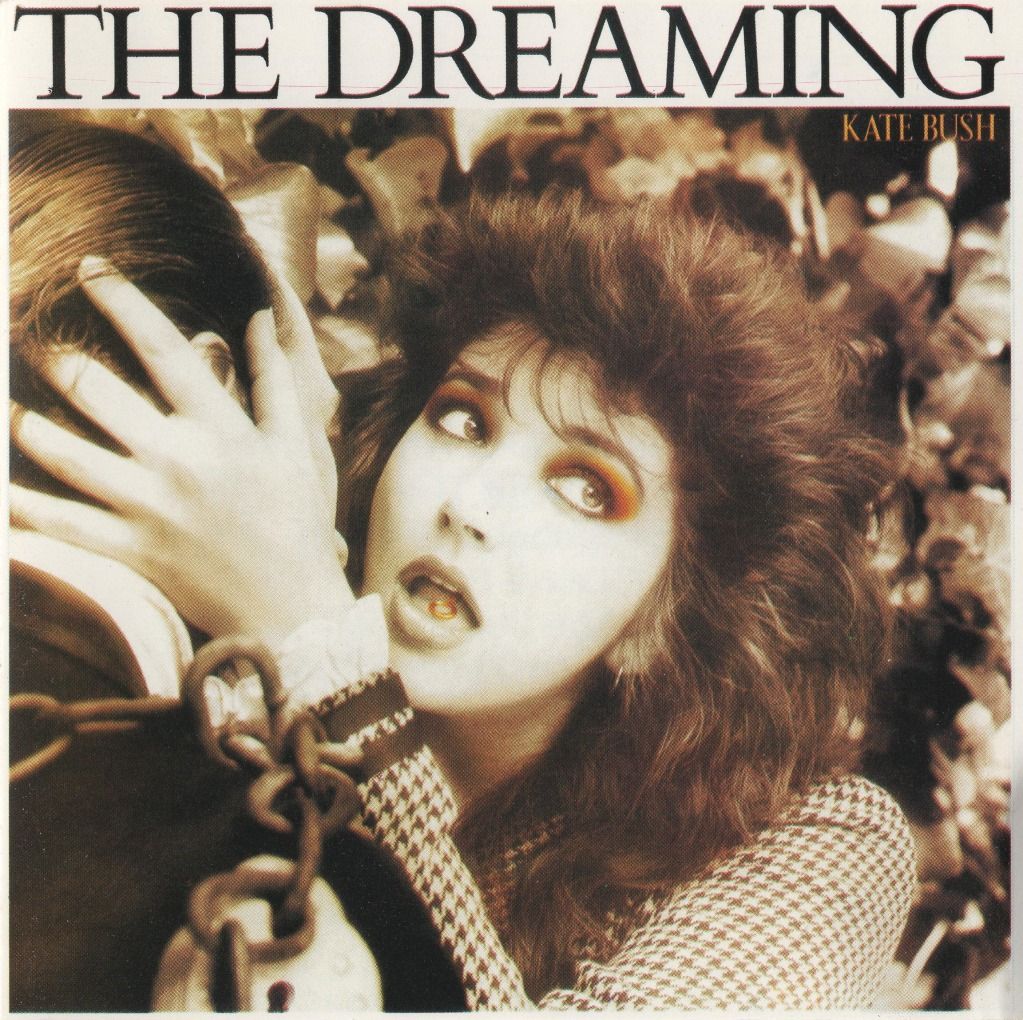
Kate Bush - The Dreaming
The Dreaming--Kate Bush's fourth album, arriving less than five years after her debut--has got me thinking about a whole mess of different things. Approaching her music fairly indirectly (not having been around when the music was new [no real change there!], or being a hardcore fan, and not having much of an interest in 80's pop music) made for slow progress in appreciating it, but a couple of years have provided an enlightening and broadening experience in getting to know and learn from this music.
While I agree with most fans that Hounds of Love is her most distinctive and cohesive set, this album makes a close second for many of the same reasons. Partially fulfilling her move toward tighter pop structures and chic sounds of the day, the songs here continue to move away from the more traditional (especially piano-dominated) instrumentation of her first albums into an area where 80's synths and effects surround the songs' core piano parts and multi-part structures juxtapose wildly different styles within pop-length tracks, with Bush's multi-tracked vocals calling and responding in an often bizarre array of different vocal deliveries. Needless to say, these songs can come across as difficult to penetrate at first, a fact that's not helped by the fact that the late-80's CD reissue is in dire need of remastering, making the already-difficult songscapes even tougher to perceive because of the mediocre sound reproduction.
Nevertheless, this shit's awesome! What's especially interested me lately is the fine balance Bush strikes between weirdness, progressive and experimental complexity, and pop accessibility. When I say "weirdness" I mean things like singing in a weird voice (like those shrill backing vocals that nobody else has really done the same way), laying a really strange-sounding effect on a guitar line, or singing Australian narratives and utilizing native Australian instruments. Weirdness is a great attention-getter, and is a great way to make music distinctive and set it apart from the vast pack of musicians out there just trying to make something that sounds pretty and inoffensive in hopes that it'll appeal to the largest audience possible. However, weirdness alone isn't enough to keep my attention long-term. Really, the lukewarm feelings I get from a lot of today's music come from a feeling that weirdness and style often outweigh the actual content of the songs, music, lyrics etc. Not that every artist should be changing time signatures every two measures and shredding ridiculously difficult guitar parts for music to be considered good, but there's more to making some distinctive music than singing a tired indie breakup song in an overwrought plaintive voice over eighth-note staccato power chords.
What I love about Kate Bush is how well she backs up her weirdness with musical substance--every song has a discreet feel, be it narrative or more philosophical, and upon close examination it seems that every element of the song is carefully tailored to fulfill the song's conceptual promise, from playfully poetic lyrics to song sections that brilliantly channel Bush's twisting moods with shifting timbres and pacing (see "Pull Out the Pin," "Night of the Swallow") to vastly differing stylistic experiments between pounding, expansive rock like "Sat In Your Lap" and waltzing existential pop like "Suspended in Gaffa."
Finally, I'm continually amazed by how poppy the music ultimately is--in spite of the fact that she's often reimagining and further developing a lot of concepts explored by then-and-now-villified progressive musicians when the genre was all but completely forced from mainstream interest, Bush manages to maintain a pure, sincere emotional core along with a buoyant conciseness that makes these songs accessible in spite of their complexity. Even more, she's still making new fans 30 years later in spite of the extreme 80's vibe, although that's a retro aesthetic that's still currently regarded as "ok" with today's young music fans. I'm sure it doesn't hurt that her visual aesthetic pretty much rivaled her musical one--if only today's pop songstresses could back up their audacious imagery with such equally challenging music! Anyway, good on KB for proving that great pop doesn't have to skimp on nuance, and for helping me expand into some new musical areas. This makes me want to check out some of her more recent work...
Get it here.
Friday, January 6, 2012
The Doors - The Doors
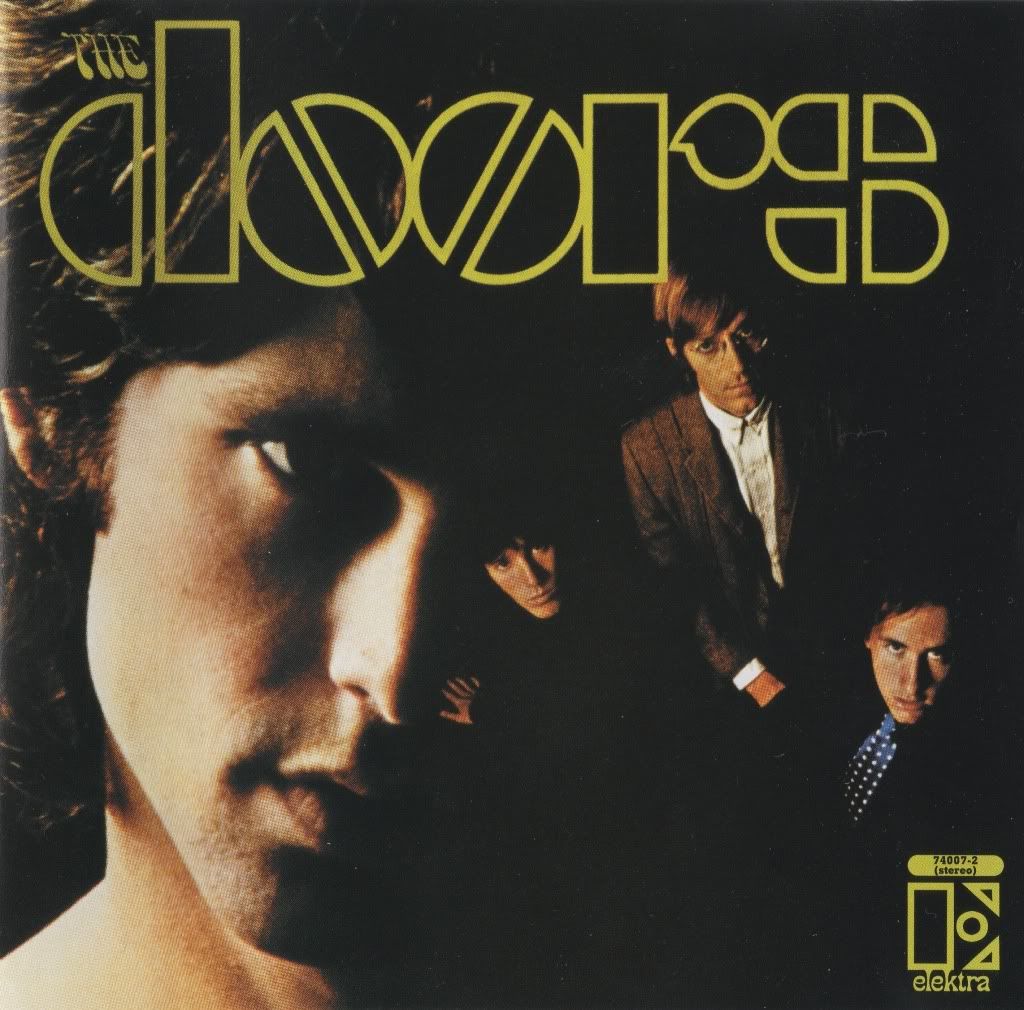
| Jim's left eye is...John Densmore's face? |
It's been a while since I've undertaken the carefree task of writing about something really popular and well-known, so why not talk about The Doors' 1967 self-titled debut? Now that this album is pushing 50, it's a little easier to take its legendary status with a grain of salt, and I find it easiest to evaluate when taken as what it really is--pop music, pure and simple! When you think about these songs as something "the kids" were supposed to go crazy for and buy in wheelbarrowfuls, the facts that Jim Morrison's "poetry" is mostly inane cliché rhymes and that the music here isn't really challenging or as dark as the image the band cultivated don't really matter--it's pop, and pretty great pop, for that matter.
Not that The Doors wasn't a revolutionary or nearly completely fresh album at the time it emerged--it pretty much made Elektra Records into a successful rock label, proved the marketability of a dark, distinctive version of US psychedelic rock that had little to do with the typical West Coast sound, and demonstrated that there was plenty of room in the pantheon of teen idols for a raw, sexual, and darkly pseudo-artistic figure like Jim Morrison, paving the way for a lot more experimentation in US pop music.
What made The Doors so different and successful? To my eyes and ears, it's the fact that they backed up their unique, marketable image with such a distinctive style. While Morrison's poetic pretensions are often hard to swallow, the rest of the band really did fulfill the dark, artsy image that's represented so well by the cover art--Ray Manzarek's roots were classical, Robby Krieger purportedly never played an electric guitar (he was a flamenco player) before joining the group, and John Densmore's jazz chops are probably the best thing the group's got going for itself instrumentally. That murky, dark sound typified by heavily-reverbed Morrison vocals (the power of his voice as an instrument is tough to deny, especially when he swings between baritone crooning and animalistic shrieks) and piercing organ high-end was pretty much unheard-of, and even if a lot of the material is ultimately lightweight, it certainly fits the group's image in mood and bluster. Whoever had the idea to include the Brecht/Weill "Alabama Song" and blues standard "Back Door Man" was on the right track, fleshing out the group's druggier originals with the drunken carnival leer of a sex-crazed pervert that Morrison would continue to embrace, probably to his great personal detriment. Of course, the original that cements these covers' filthy promise is the immortal "The End," in most parts not so much a song as it is a musical texture backdrop for Morrison's closest attempt at poetry on the album, with some controversial sex noises and mother-f'er talk.
What really made the album sell, though, is the wealth of melody and hooks that reside in most of the songs--"Break On Through" and "Light My Fire" combine late night drug imagery (though most people probably haven't heard the unedited "Break On Through," where Morrison clearly shouts "she get high") with pop-perfect breaks and simple melodies delivered with apt doom by Morrison's god voice. It's impressive how many other potential hits are on here, though, like the funky organ/guitar combo on "Soul Kitchen" and "Twentieth Century Fox," not to mention the schmaltzy mystery of "The Crystal Ship." And surprisingly, a couple deep cuts are just as catchy--the garagey start/stop of "I Looked At You" makes for a great false ending, and the thinly-veiled sexual imagery of "Take It As It Comes" is probably the only thing that held it back from single-dom.
Though their edginess makes them appear unique, The Doors' career started like so many other great, wide-eyed rock bands, with a group whose instincts were pure but whose vision into the future was short-sighted due to the fact that they barely knew what they were doing when they were doing it--there's about three repetitive keyboard basslines that Manzarek recycles across all of these songs, while Krieger's nascent relationship with his electric guitar evidences itself in a limited range of ideas and a virtually identical guitar solo on "Soul Kitchen" and "Twentieth Century Fox." The familiar commercial pressure to repeat the debut's success made for diminishing returns after the group's sophomore album, but when they eventually gained confidence as a working unit their diverse and unusual identities shone through for some weirder and more experimental compositions, but I think the perfect storm and untainted energy of this one will probably stand in most people's minds as their definitive statement. Just don't take it too seriously.
Get it here
Monday, November 28, 2011
Harry Nilsson - Son of Schmilsson
No matter what institution you're a part of, be it politics, academia or just an everyday workplace, it's always good for perspective to have somebody around who's bound and determined to demonstrate on a daily basis that it's all ultimately just a pile of horseshit. For early 70's rock, that man is undoubtedly Harry Nilsson. When it comes to being the neighborhood subversive asshole, the usual weapons of choice are humor, satire and mockery, and Nilsson's got them in droves. As far as I can tell, the only thing he actually cares about is singing ridiculously awesomely. The rest seems to be an indiscriminate sampling and deconstruction of pop music in all its myriad forms with an emphasis on the puerile. It worked pretty well for Nilsson on the previous year's breakthrough album Nilsson Schmilsson (though he'd already had successful singles and was well-known for a cover of Fred Neil's "Everybody's Talkin'"). When crafting a follow-up, it would appear that Harry's main goal was to throw the record label's desires to revisit his previous success back in their face with an album so full of jokey throwaways that it was pretty much guaranteed not to be as successful as its predecessor.
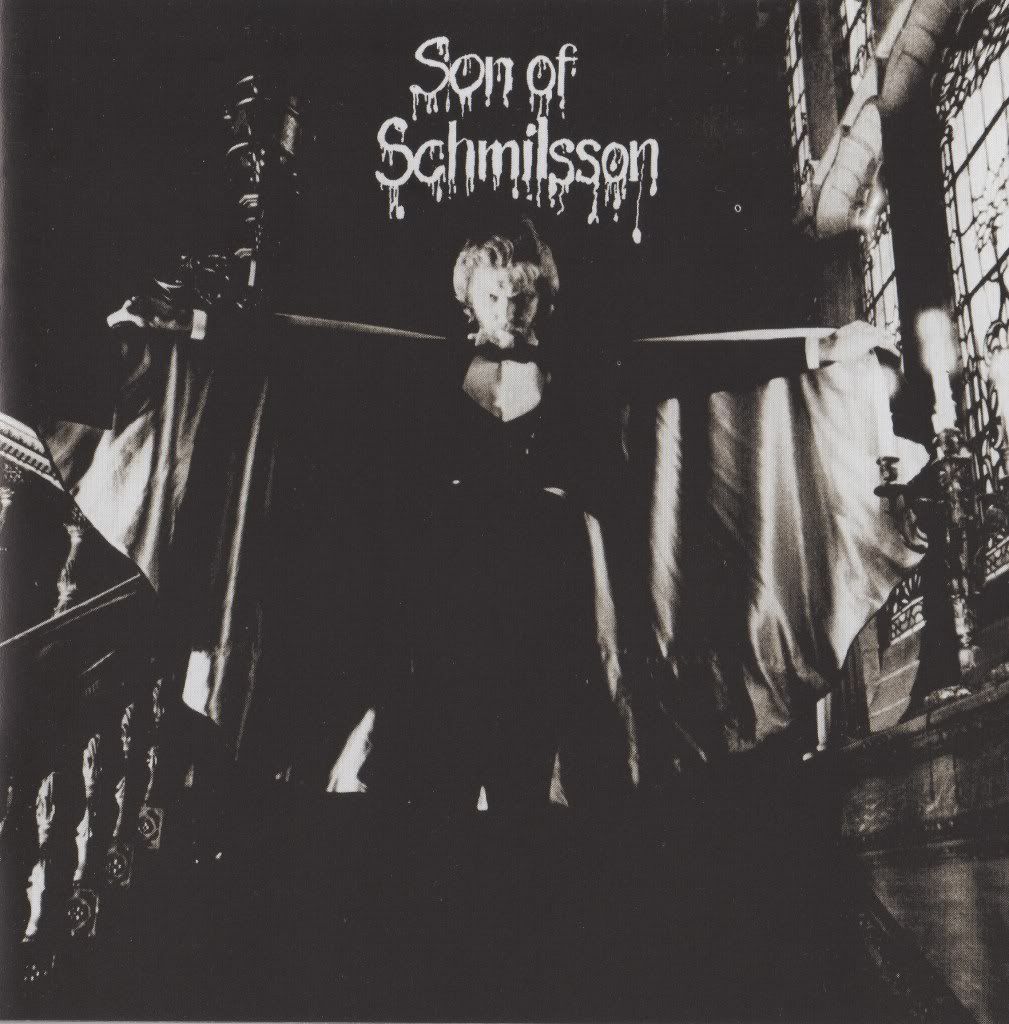
And yet, Son of Schmilsson just might be my favorite Harry Nilsson, from its righteous B horror movie cover (and sound effects at the end of the first track) to all of the burping and gargling (for serious) to the kid-in-a-candy-store smorgasbord of musical styles represented here, this album is pretty much a party record all the way. Old school rock and roll is probably the genre of choice, as in "Take 54" where Harry "sings [his] balls off" to impress a woman who wanders into the studio, or "You're Breakin' My Heart," where Nilsson's sudden profanity sits at odds with the song's bouncy piano riff, or on the fake live boogie of "At My Front Door." But there's so much more than rock and roll, which obviously isn't Nilsson's musical passion--"Joy" has got to be my favorite, sending up country music with all of the common tropes (spoken word, Latin flourishes, cheesy puns); I can't help but laugh every time when Nilsson sneers "good...bad...good bad" toward the end. There's also ridiculous pseudo-Caribbean music on "The Most Beautiful World in the World" and sort of a musical theater vibe on "I'd Rather Be Dead," which famously features a chorus of retirement home residents singing about how they'd "rather be dead than wet my bed" (make sure to watch the equally hilarious documentary about the making of this album for more on that detail).
At its base level, though, this is a pop album, full of great melodies, catchy changes and Nilsson's voice and personality pushed to the front by anonymous session musicians playing a million different instruments. For all the ridiculousness and the fact that the songs are pretty easy to grasp after a couple of listens, Nilsson's voice is (as always) a revelation, silky smooth but capable of brilliant natural distortion and some ornamentations other singers could only dream of on songs like "Take 54," "At My Front Door" and "Spaceman." Don't tell anybody, but the merry prankster exhibits signs of actually having a heart on the velvety ballad "Remember (Christmas)" and the thoughtful "Turn on Your Radio." Depending on which way you look at it, these songs are almost all throwaway novelty tunes or this is just a good time party album. Either way, I think it's one hell of a fun ride with no strings attached and only a slight hangover.
Get it here
Friday, November 11, 2011
Morcheeba - Big Calm
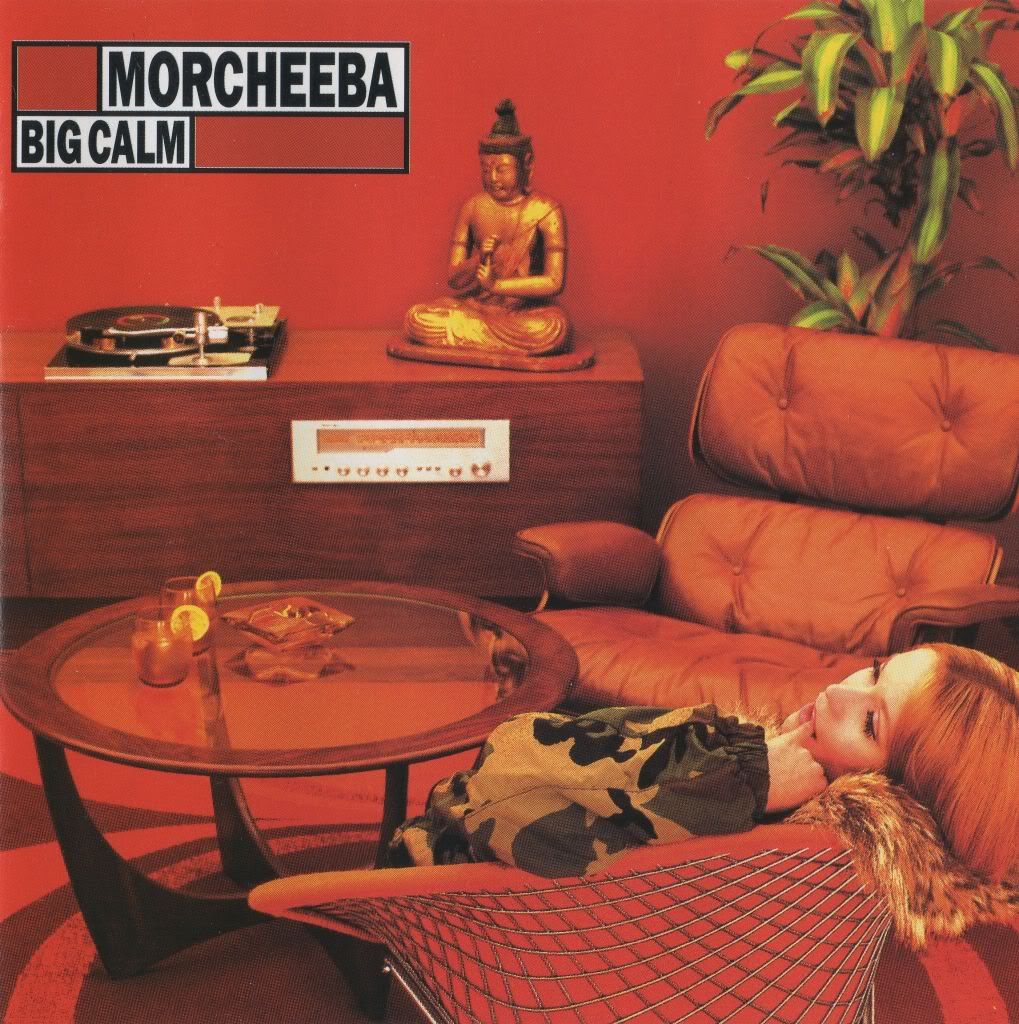
Morcheeba's second album has been a longtime favorite since I first heard it in a New Zealand airport music shop back in 2001. Even 10 years ago, trip-hop was on its way out of mainstream popularity, but this album always brings back good memories of my life at the time and holds up pretty well even now that the trip-hop fad has long since expired. I think it's also another good example of what happens when a large number of good characteristics that pop up disparately in a band's other works align and the result is a thoroughly good album.
Like a lot of trip-hop acts, Morcheeba's status as a "band" is a little nebulous, but less so than some--Paul (DJ) and Ross (guitarist/multi-instrumentalist) Godfrey, and vocalist Skye Edwards. Personally, I've found the revolving vocalist chair approach of some trip-hop bands a little annoying, and the fact that Edwards' vocals are explored in-depth adds cohesion to Morcheeba as a group. While there is a bit of session musician anonymity to the wide range of different instruments played on the album, both Godfrey brothers do possess distinctive skills; the beats and samples are both quite tasteful and well-timed, and there are definitely some great guitar moments to liven the album with a more organic energy.
What really sets this album apart from the rest of Morcheeba's (and most other trip-hop acts, for that matter) catalogue is, unsurprisingly, the songs. Whereas the group's songwriting on other albums sometimes comes across as a little emotionally vacant and assembly-line, the songs here are mostly crafted with more attention, are really adventurous in their eclecticism, and contain some truly compelling moments. The level of detail on string and orchestral arrangements, scratching as an instrument and chill-yet-upbeat atmosphere is quite apparent on the band's breakout single, "The Sea," but returns in equal measure when the psychedelic sitar/tabla atmosphere breaks open on "Shoulder Holster," and on the darkly seductive "Blindfold." Edwards' voice is undoubtedly one of the biggest draws here, with its silky smoothness, appealing accent and its tendency to somehow attractively waver off-key (thank goodness this is pre-auto-tune). I really love how many risks the band takes with its songwriting, taking on reggae/dub in "Friction," more of a country sound on "Part of the Process," less beat-centric balladry in "Over and Over," blues in "Diggin' A Watery Grave," and instrumental psychedelic rock in "Big Calm" (which also features rap vocals) and the brilliantly dramatic "Bullet Proof," which perfectly juxtaposes Paul's beats and samples with rhodes and wailing guitar from brother Ross. While many bands seem afraid of losing their identity by experimenting with different genres, Morcheeba proves that such experiments can result in the expansion (not abandonment) of a distinctive identity. The icing on the cake is that the lyrics (not always the band's strong point) are actually pretty strong in places. Rather than always sounding like vague contractual obligations (though they still do in places), the lyrics like those on the hopeful "Part of the Process" and the exquisite "Fear and Love" ("fear can stop you loving/love can stop your fear/but it's not always that clear") twist common ideas with just enough cleverness and manage to give Skye some emotional concepts to dig into rather than just sounding cool while vocalizing pastiches of unrelated half-baked metaphors and turns-of-phrase. In many places, though, it's still up for debate whether or not the group even knows what point it's trying to get across.
It's interesting to consider the artistic success of Big Calm in light of later Morcheeba discography--the pleasant-sounding lack of inspiration that would surface on Charango's attempt to recreate this album can already be heard in some of the commonalities between melodic lines and harmonies, and it doesn't take too much of a critical ear to assert that the band's level of emotional investment in the music isn't as high as the desire to make it "good-sounding," but then again that tension usually crops up when you're in trip-hop territory. The reduction in the dub tendencies of Who Can You Trust and pursuit of pop ideals reached its peak/nadir in the bubblegum trip-hop of Fragments of Freedom, and since 2003 the band has struggled to maintain its identity without self-plagiarizing and falling prey to the reasonable criticism that they don't have much new to say. Even at their most detached, though, Morcheeba always succeed in offering some mellow listening pleasure--given the current date it's hard to believe they'll ever top Big Calm without completely reinventing their sound, but it'll always stand as one of my top trip-hop discs to reach for as a focused pop palate cleanser right behind the dark experimentation of any Portishead album.
Get it here
Monday, November 7, 2011
Galactic - Ruckus
Nothing earth-shattering this morning; just some kick-ass funky jams from the group I've seen live the most times--New Orleans' Galactic. Though I've lost track of them a little since their singer Theryl "Houseman" De'Clouet departed, Galactic has long been a source of a lot of listening pleasure. Their jams blend funk and heavier Hendrix-like guitar rock with some formidable jazz chops on the part of reed man Ben Ellman, keyboardist Richard Vogel and drummer Stanton Moore. While they'd been including vocals since their first album, most of their early releases mimicked their live shows, with vocal tunes interspersed with longer instrumentals, some of which were attempts to re-create the band's sense of energy and build-up that makes their live shows so exciting. On 2003's Ruckus, though, the group made a concerted effort to hone their pop instincts, hiring hip-hop producer Dan the Automator, enlisting the editorial aid of a couple of outside songwriters, upping the number of vocal tracks, and reigning in the run-time of the instrumentals. The result, in my opinion, is far and away their tightest and most cohesive album.
The biggest immediate difference here is that Stanton Moore's drum sound--always a defining element of the band's sound--has been amped even more, and it's also a lot less jazzy. A heaviness of the low midrange is also more apparent, with Jeff Raines' guitar and Rich Vogel's synths, organ and clavinette often doubling to give the songs a thick backbone. While some of the vocal tunes could fit comfortably in the context of earlier Galactic albums (the pounding unison of "All Behind You Now," the clean funky riffing of "Never Called You Crazy,"), the band really explores some new territory in some songs, making use of softer, more soulful sounds (except for the drums of course) and Houseman's pedigree on the sultry "Paint," the downright poppy "Uptown Odyssey" and the left-field General Public cover, "Tenderness." In other places the band manages to conjure some unforeseen magic by weaving brief vocal passages with mostly instrumental music--"Kid Kenner" is electronic-tinged, trading between ridiculously heavy drum loops and an ethereal vocal section, while "The Beast" merges Moore's weighty drums with the guitar for one of the heaviest beats of the album while the mysterious vocal sort of merges with the groove like an incantation. They even manage something really strange on the awesome "Gypsy Fade," one of the most interesting songs of their discography--sort of a funk dirge, where the bittersweet harmonica and acoustic guitar somehow coexist with heavy overdrive and synth sounds.
I remember being a little disappointed in the instrumentals when I first bought this album at the time of its release--where was the loose jazzy element that made some of their earlier stuff so epic? The drum sound, though heavy and impressive, seemed a little too rigid and repetitive, and the songs hardly have any soloing at all. Needless to say, repeated listens made it apparent that these instrumentals aren't about jamming, but about melody and pop structure. For the most part, they succeed--"Bongo Joe" blends samples and an eastern melody to great effect, "Mercamon" plays with different textures and riff-based melodies, and "The Moil" has got to be one of the hottest, most exciting songs in the band's entire discography, whereas "Doomed" is a little vacant in the melody department and seems a little superfluous in the wake of the valedictory "All Behind You Now." Even when not much melody is happening, though, the beat is difficult to deny--it's obviously one of the best things Ruckus has going for it, and it's possible to just feel the drums for the album's duration and still be highly entertained. My only other complaint is that the lyrics are mostly pretty superficial (the wordplay on "Tenderness" easily trumps anything the band wrote here), but it's not like Galactic was ever about deep messages or wordcraft, and neither is most pop music!
It's hard to believe this album is eight years old, and that Houseman departed the group for health reasons only a month or so after its release. While the purpose of this recording doesn't really match the loose jamming that live Galactic past and present continues to purvey, the songs and overall sound here is so fresh, tight and catchy it's hard to believe that the album didn't make a bigger splash for the band and they never tried to follow up on the template it set. I suppose nonstop touring has always been Galactic's bread-and-butter and that albums have been more of a begrudging necessity. To me, though, this unrepresentative disc still stands as their best studio achievement, not to mention a great reminder of how much can be gained from concentrating on focus and brevity.
Get it here
Wednesday, November 2, 2011
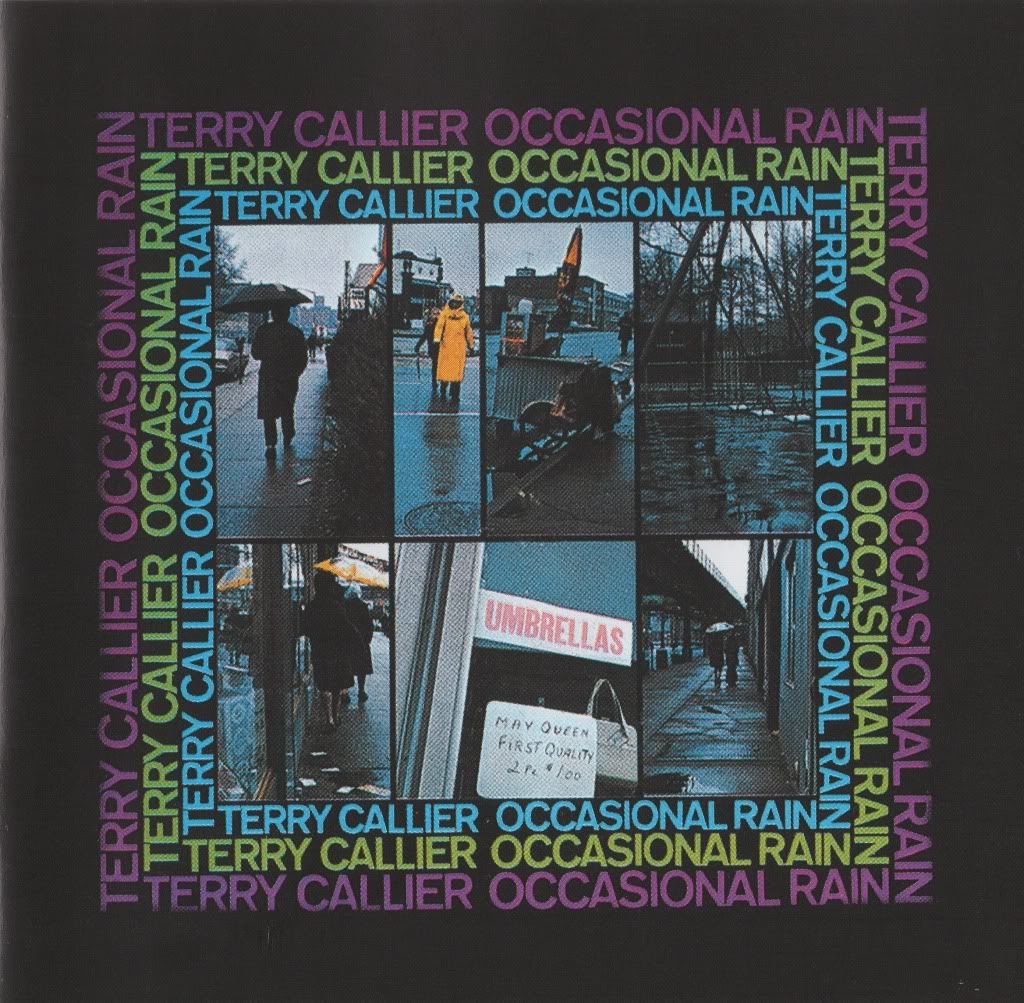
Terry Callier - Occasional Rain
Though it seems most intrepid music searchers choose What Color Is Love for a first taste of folk/soul guru Terry Callier's music (I'm sure it has nothing to do with the fact that there's a naked woman on the cover), Occasional Rain is in my books just as worthy a place to start or continue appreciating Callier's totally unique style.
On paper, it would appear tough get too excited about this music--it's slow-moving, combines folk and soul with occasionally extravagant orchestral and choral arrangements, and Callier sings about social unrest, heartbreak and mystical insights in a husky baritone that's never far away from a wide, smooth vibrato. In spite of the fact that people have outright laughed when I played this for them, I've always loved Terry Callier's music. Maybe it's his deep sincerity or his ability to turn a profound phrase out of nowhere, but once you suspend your sense of being too cool to hear a man channel his deepest feelings into a pop music context, it's actually not that difficult to take this music seriously. Actually, I don't even know why I'm writing so defensively about Callier's music--this is an awesome album!
The only vestiges of Callier's folk debut (eight years old at the time of this recording) show up in a broken up blues called "Go Head On," which is used as segue material between the rest of the tracks, which amply demonstrate that something changed for Callier in the interim that suddenly made him capable of fusing black and white music (a bizarre artistic choice that few other black artists seemed interested in making) with an unadorned but brilliantly perceptive poetic instinct in his lyric writing. Combine his strange amalgamation of styles with the arranging skills of Charles Stepney (of Rotary Connection and later of Earth, Wind and Fire fame) and the brew becomes even more unusual--there's a Burt Bacharach-like schmaltz (especially on things like the bouncy "Ordinary Joe" and pop blues of "Sweet Edie-D" to these arrangements, but somehow it's always justified by Callier's passionate energy and words, which freely leap from one insight to the next without ever abandoning the consistent mood of each song.
Actually, I think in some places Stepney's production is actually one of the best things about this album--he seems to know just what to use and when, like the clean cello arrangement that accompanies Callier's spare guitar and vocal parts on "Blues for Marcus," and the spine tingling organ and twinkling choral interjections (that's Minnie Riperton singing soprano!) that make "Occasional Rain" the most psychedelic thing on the album. In other places the quality of the choral arrangements is absolutely hair-raising ("Lean On Me" is the best build-up on the album, and an excellent climax as well). The dusky mood and extemporaneous feel of "Trance On Sedgwick Street" foreshadows the epic grandeur of Callier's forthcoming works--revisiting these songs I can't help but think that Stepney's influence expanded Callier's songwriting imagination in a way that paved the path forward to his most distinctive work. Occasional Rain is a confidant for those moments of introspection and deep soul, and (for me, at least) it never fails to remind of the smoldering beauty that can be found in those quiet, honest spaces.
Monday, October 31, 2011
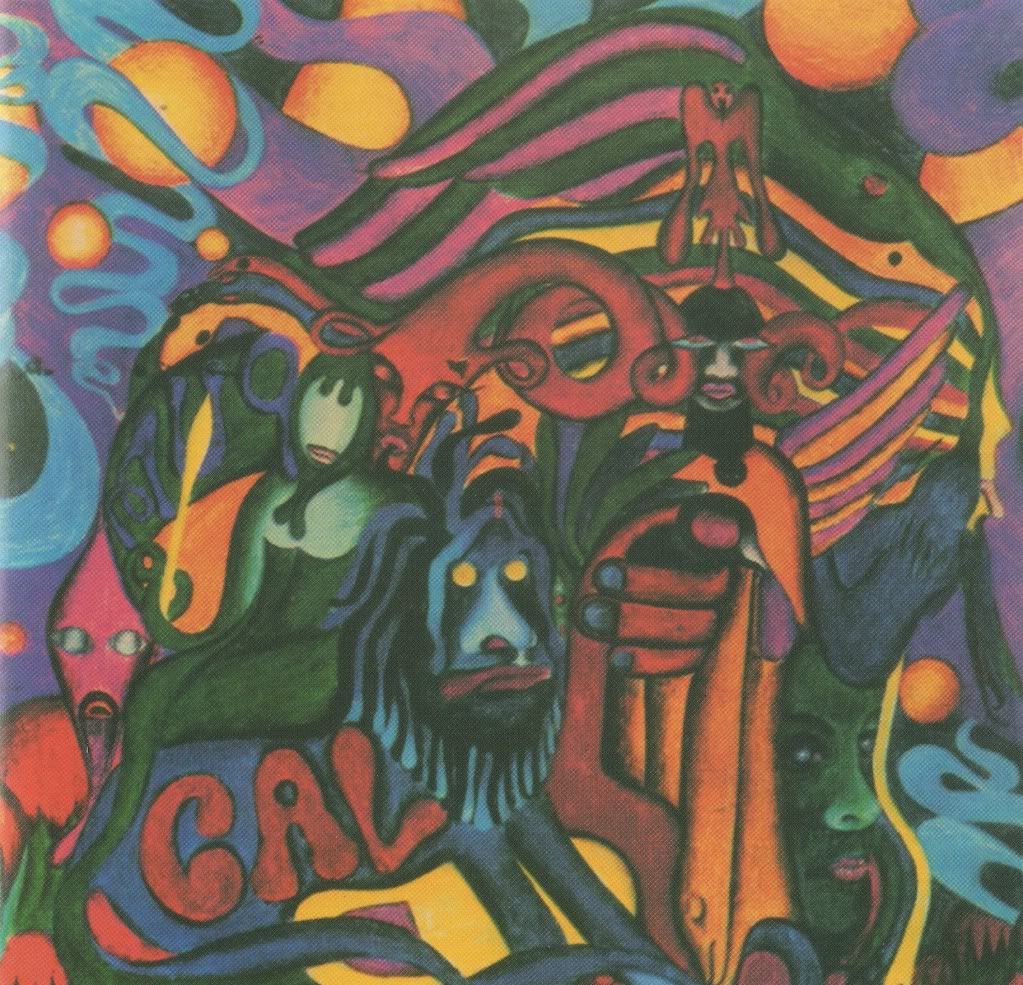
Gal Costa - Gal
A long way off from the last MPB I posted, Gal Costa's second eponymous 1969 album is firmly in the Tropicália camp with wild eclecticism, psychedelic production and bristling with the untamed energy that the Brazilian military government found so threatening at the time. Worlds away from her more chanteuse-like debut, Gal even blows away a lot of the Tropicália competition in terms of craziness--I put it down to Gal's staggering vocal range and personality, which is self-evident on this album from the very get-go. The syncopated beat and fuzz guitar opening of "Cinema Olympia" drops out almost immediately as Gal's seductive voice creates more of a lounge atmosphere, which soon disappears as well when the beat picks back up--by the time the chorus happens, Gal's hollering about matinee films at the Cinema Olympia over pounding snares and furious clean guitar riffing--heavy reverb and delay gradually accumulate on Gal's vocals as her wordless shouts and moans multiply before abruptly disappearing in a haze of strings...and then it's on to something completely different! The detuned nylon string acoustic guitar and snake charmer reeds of "Tuareg" veer immediately left, and yet Costa seems to have no trouble keeping up when the bass grove kicks in and the chorus lifts the dark Eastern atmosphere back into pop territory.
It's easy to be impressed with both the stylistic breadth and quality of the songwriting on this album, and a glance at the credits confirms this gut reaction--there's three Gilberto Gil songs and two each from the pens of Caetano Veloso and Jorge Ben. One of my favorite things about the late-60's Brazilian music scene is how communal and supportive it seems to be--all of these artists not only manage to co-exist, they also push each other into new directions and also manage to create a collective genre that's more than the sum of the bands that make it up. The sky is the limit for the rest of the songs on this album--Gal ranges from ethnic Brazil flavor on Ben's "País Tropical," unexpectedly into sweeping string-arranged vocal pop (and a host of Tropicália artist name-dropping) on "Meu Nome É Gal" ("My Name is Gal") all the way to batshit crazy on the sound collage cut-up-cum-big band showcase for Costa's rapid delivery and upper-register bends on "Objeto Sim, Objeto Não." Though I've got a feeling a lot of this can come across as too jumpy and frantic for a lot of listeners, the radical and immediate mood and texture shifts in this album are probably my favorite part--a song like "Com Médo, Com Pedro" snaps between quiet, jazzy strings and Hendrix-like hard rock, and Costa even trades between sexy and psychotic in the same lines!
The fact that these frenetic songs somehow hold together and make sense grouped on the same album has to be credited to both the songwriters and the backing band, who manage to not only keep up with the stylistic swings, but also to masterfully manage a chaotic atmosphere with deft control. Listening to music like this, it almost feels like psychedelic music was created for the explicit purpose of being given to the already-able musicians of Brazil and mutated into something the British and Americans weren't even capable of imagining. The eclectic mood, awesome power of Gal's voice, and simultaneous pop/avant garde atmosphere of this album make it probably my favorite Tropicália album, and it's also probably the most cohesively "listenable" (aside from the eccentricity) as well, since there's no obligatory six-minute tape manipulation freakout (though "Objeto Sim, Objeto Não" comes close). If you check this out and enjoy it, good news--there's a whole lot more great music where this came from!
Labels:
1969,
MPB,
Pop,
Psychedelic,
Reviews,
Rock,
Tropicália
Thursday, September 15, 2011
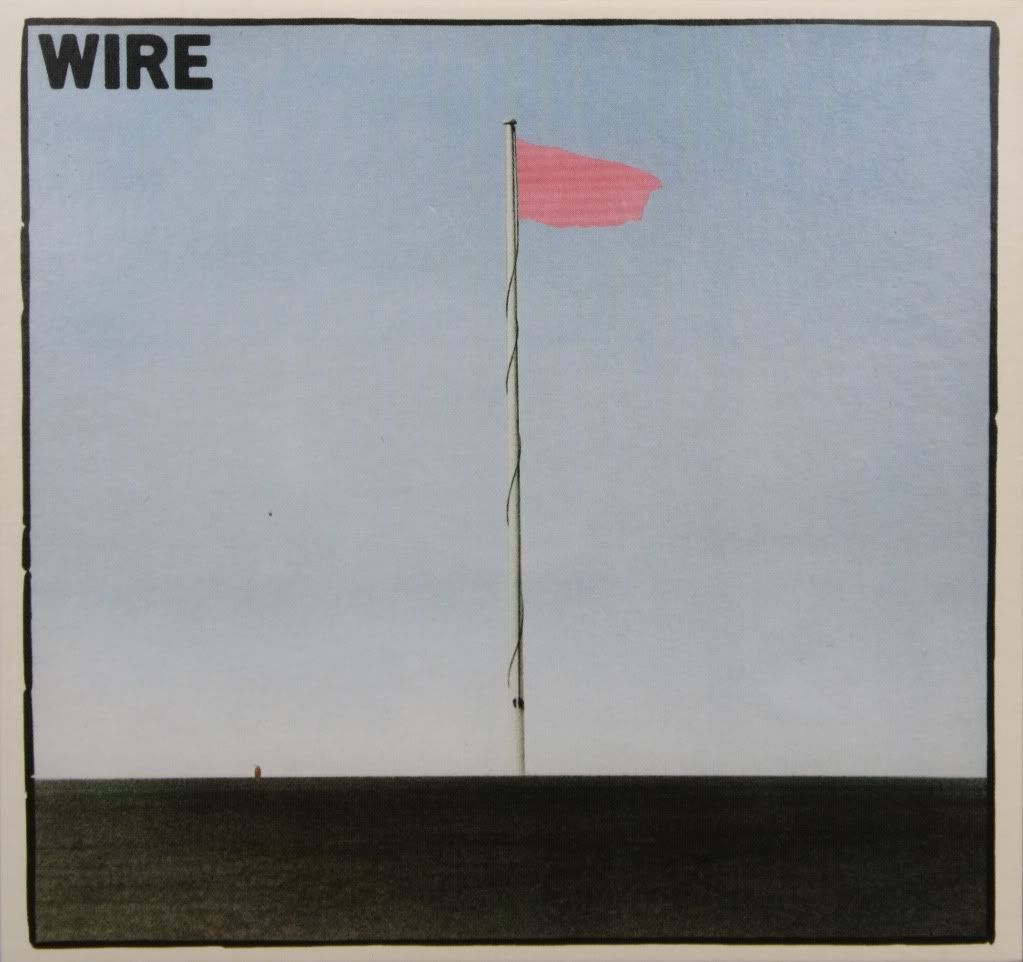
Wire - Pink Flag
It's pretty heartening to see that, even in the heyday of British punk rock's emphasis on simplicity and aggressive emotions, there were still a few bands willing to marry those ideals with intelligence, experimentalism and a high level of attention to creativity. While I freely admit it's not my most-explored area of interest or expertise, I can easily say that of all of the "post-punk" outfits I've heard, Wire--at least on this album--bears the strongest aural relationship to actual punk. The genius of Wire's debut is how the band manages to fashion punk's back-to-basics aesthetic and vitriol into a new incarnation without turning to elements of the psychedelic, experimental and progressive music against which punk was supposedly a reaction, which is more than can be said for most of the other post-punk bands I've heard.
Probably the most impressive twist Wire makes on the punk formula is one that can actually be productively applied to all types of music--they make an effort to turn each song into a terse statement where the ideas are clearly stated but not smothered to death through repetition. The result is a 21-song, 35 1/2 minute-long album with nary a wasted second and a shining wealth of ideas. Lately, this pursuit of succinctness is one that has interested me more and more both as a musician and as a listener. The beauty of Wire's solution is that the ideas are oftentimes stated only once--though some songs have repeating verse and chorus structure, there's also some more through-composed pieces like "Field Day for the Sundays," which subsists on about 2 riffs (one of which becomes even shorter when it returns at the end of the song) and is over in 28 seconds!
It seems the concept's successful application hinges on a delicate balance between the quality of the ideas and how often they recur. While Wire often finds artistic success in paring down their songs to sub-1-minute lengths, I don't think short song lengths are necessarily the only way to successfully implement brevity. It seems to me that the real enemy here is excessive repetition which, in my mind, is the not-so-silent killer of interesting ideas and the bane of a huge swath of popular music both past and present: an artist takes what once was an interesting idea and hammers it into the ground with repetition (either in the same song or across multiple songs) providing little or no variation or expansion on the original idea. With ideas stated so sparingly, the songs never overstay their welcome; while some might argue that this approach is deficient in terms of development, I don't see an issue when so-called "development" usually just consists of to-the-note repetition. As a kindred creative spirit, I think the grace of this type of brevity is that the development or repetition of an idea is implied and left up to the listener's imagination and previous experience. Our ears are accustomed enough to melody and structure that, if we're paying attention, it's easy to extrapolate a brief idea and fully complete the relatively unimportant repetitive material that isn't there with the condensed pith that actually is. Rather than heavy-handedly forcing the melodies and ideas into the listener's memory, this method alluringly waits for the listener to meet the ideas halfway, and for me this engagement is a large part of the fun; further listens reveal more and more as the ideas expand in your head. If you want to hear more of the same riff--listen to the song again. Meanwhile, the artist is able to focus on surprising the listener's ear with the next idea rather than providing it with ear-predictable chaff, and can potentially pack more ideas into one album than many bands manage in an entire discography.
Now, it's not that any repetition is bad or even that conciseness is the only way to pack music with ideas (compositional guidelines for development in classical music and improvisational comping in jazz are a couple of examples of traditions in long-form music that manage to keep the interesting ideas flowing). The point is that we've gotten somewhere interesting--we're now focusing on ideas as the building blocks of good music; the interesting and infinitely-discussable issue of whether we fully agree on the method becomes more of a matter of preference, subordinate to the more important common goal--the avoidance of a zombie-like, by-the-numbers approach to music.
Of course, short track lengths alone don't guarantee great ideas--luckily, Wire hold up the other end of the bargain. Despite the fact that the songs are pretty much exclusively guitar-bass-drums, the band manages to squeeze what seems like a limitless number of great riffs, vocal arrangements and hooks out of such classic instrumentation. The songs range from the juicy distortion of anthemic punk sing-alongs like "Ex Lion Tamer," "It's So Obvious" and "Mr. Suit" to some glorious, occasionally light-hearted hard pop with the likes of "Three Girl Rhumba," and especially "Fragile" and the ridiculously catchy "Mannequin." I also really like how well they manage to meld the punk ethos with more experimental (and occasionally slower) material, like the album's dire opener, "Reuters," the detuned rage of the title track, and the simultaneously bluesy and weird "Strange"--the album's longest track at 3:59. Special mention should be made of the sometimes impenetrable but always evocative poetry (thanks, I think, to vocalist Colin Newman) that makes up the lyrics. While Newman's suitably untrained and raw delivery often makes understanding the words difficult, searching some lyrics on the internet gives the already engaging music even more depth and helps the songs' linear structures make even more sense.
Like a lot of classic albums, Wire's debut will please more than just punk fans with its pop sensibility, experimental edge and timeless rock and roll spirit. While it's sort of easy to understand that the band's creative approach guaranteed the album's initial commercial failure, today it's seen by most as a classic and probably the purest example I can think of to illustrate the type of idea-to-minute ratio that more artists should aspire to.
Sunday, July 31, 2011
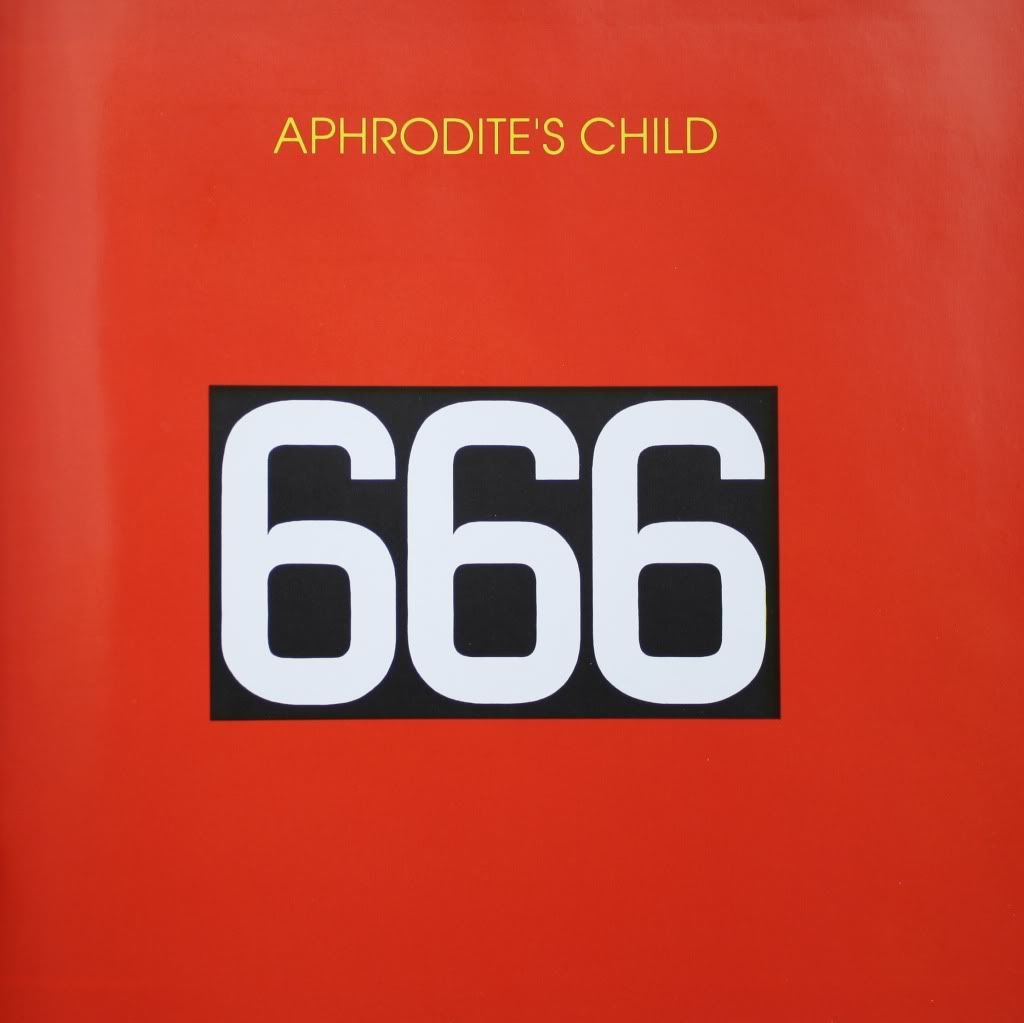
Aphrodite's Child - 666
You probably wouldn't guess it from listening to this epic 1972 concept album, but Greek ex-patriate group Aphrodite's Child was actually a pretty standard rock quartet featuring drums, bass, guitar and keyboards. Of course, the group was led by Vangelis Papathanassiou (later to achieve worldwide notoriety as the soundtrack composer for films like Chariots of Fire and Blade Runner), so its leader's vision demanded substantial studio augmentation, and the end results take on quite a bit of theatricality and an operatic expansiveness thanks to a wealth of different instruments, production techniques and vocal contributions from a number of non-band-members. Without getting too far into the band's history, I'll say that this undeniably ambitious project took the group far outside their pop-oriented roots into the realm of long-form rock music narrative, touching upon psychedelic rock, European folk melodies and instrumentation, avant-garde performance art and studio composition, and lightly (if mostly in its weird and eclectic spirit, if not compositionally) upon progressive rock.
Despite the fact that it's credited to Aphrodite's Child, 666 is a creative collaboration between Vangelis Papathanassiou and lyricist Costas Ferris and is an attempt to adapt the New Testament's Book of Revelation to a musical setting. Though it's a concept album, there isn't really a plot or discernible narrative, not to mention an overtly Christian message (thankfully). Instead, the combination of music and words evokes a dramatic conflict focusing on characters the Lamb and the Beast, and using familiar elements like the Four Horsemen of the Apocalypse, the number seven, as well as significant number of references to the social unrest that typified the late 60's and early 70's. In many ways, I find 666 to be a remarkable and successful piece of work--the music covers quite a lot of ground, from the band's pop origins (on the catchy, horn-backed, Beatle-esque "Babylon" and "Hic and Nunc," "The Beast," and valedictory ballad "Break") to a significantly harder brand of psychedelic rock. This second style is exemplified both in traditional song form on one of the album's best songs, "The Four Horsemen," which alternates between atmospheric folk sections and pounding invocations of the different horsemen and their visages, ably cried out by bassist/vocalist Demis Roussos. Similarly trippy is the instrumental/spoken word song "Aegian Sea," which features heavily-reverbed guitar and vocal arrangements reminiscent of both early- and mid-70's Pink Floyd both melodically and in overall sound, and especially in Silver Koulouris' guitar sound.
The band also capably handles shorter heavy rock instrumentals like "The Battle of the Locusts" and "Do It," as well of some of the album's most interesting fusions of psychedelic rock and Mediterranean folk music in the driving furiousness of "The Lamb," "Seven Bowls," "The Wakening Beast," "Lament" "The Marching Beast." This fusion is one of the most distinctive things about Aphrodite's Child's sound; despite the album's scope and the quality of the playing, much of the instrumental palette sounds pretty familiar in that 70's sort of way, so some more ethnic sounds freshen up the more orthodox sounds. One of my favorite of these moments comes on "Altamont," where the band whips up a hpnotic piano/horn/vibraphone/wordless vocal riff that presages the similar sound and ad nauseum repetition that Christian Vander and Magma would doggedly pursue in the next few years as they created Zeuhl. The track evokes the real-world incident it's named after and builds to an effective spoken word climax that's one of the most humanity-affirming moments on the album. In spite of Vangelis' varied capabilities as a composer, the musicians occasionally fail to communicate a sense of individual identity on their instruments--that magic element that can elevate more pedestrian material above the mere stuff of its making.
That said, there are some genuinely "out" moments throughout the course of the album. The spoken narrations (many provided by "John Forst") provide an excellent mood and sense of foreboding that support the music's darker leanings, while providing opportunities to expand Vangelis' compositions, even if the tracks are less than a minute long. "∞" is one of the most notable avant-garde tracks, featuring a modern vocal performance by Irene Papas in which she repeats "I was, I am, I am to come I was" over a percussion backing provided by Vangelis. Papas' controversial performance blends the allusion and multifaceted meanings of the mantra with the singer's graphic imitation of an orgasm into a package that might even make Marvin Gaye (king of the female orgasm sound byte) blush in embarrassment. The nearly side-long "All the Seats Were Occupied" consolidates the entire album's disparate threads into an epic rock instrumental and sound collage in which bits of the previous songs reemerge and build into a pretty grand and satisfying climax, even if the track takes a few more minutes than necessary in getting there.
Ultimately, 666 is definitely good enough to justify its enduring cult popularity--its ambitious scope, the strength and variety of Vangelis' compositions and plenty of great rock and dramatic moments make it a thoroughly enjoyable listen, especially for fans of music like Pink Floyd where the texture and atmosphere are as important as the songs themselves and there's plenty of sound snippets and spoken sections (though Vangelis does get quite a bit more dissonant and weird than Pink Floyd did by the time they achieved worldwide popularity). If the music here suffers, it's primarily from sounding a little unimaginative when the songs are analyzed close-up, and a bit generically "of its time" 40 years later and, like most double albums, requiring a long attention span to absorb completely. While it'll probably never rise above its cult obscurity, 666 is certainly a worthy and enjoyable next step for people who've exhausted the more well-known, accessibly mainstream psych/progressive bands of the early 70's--just don't expect it to shatter your musical world.
Labels:
1972,
Avant-Garde,
Pop,
Psychedelic,
Reviews,
Rock
Thursday, July 21, 2011
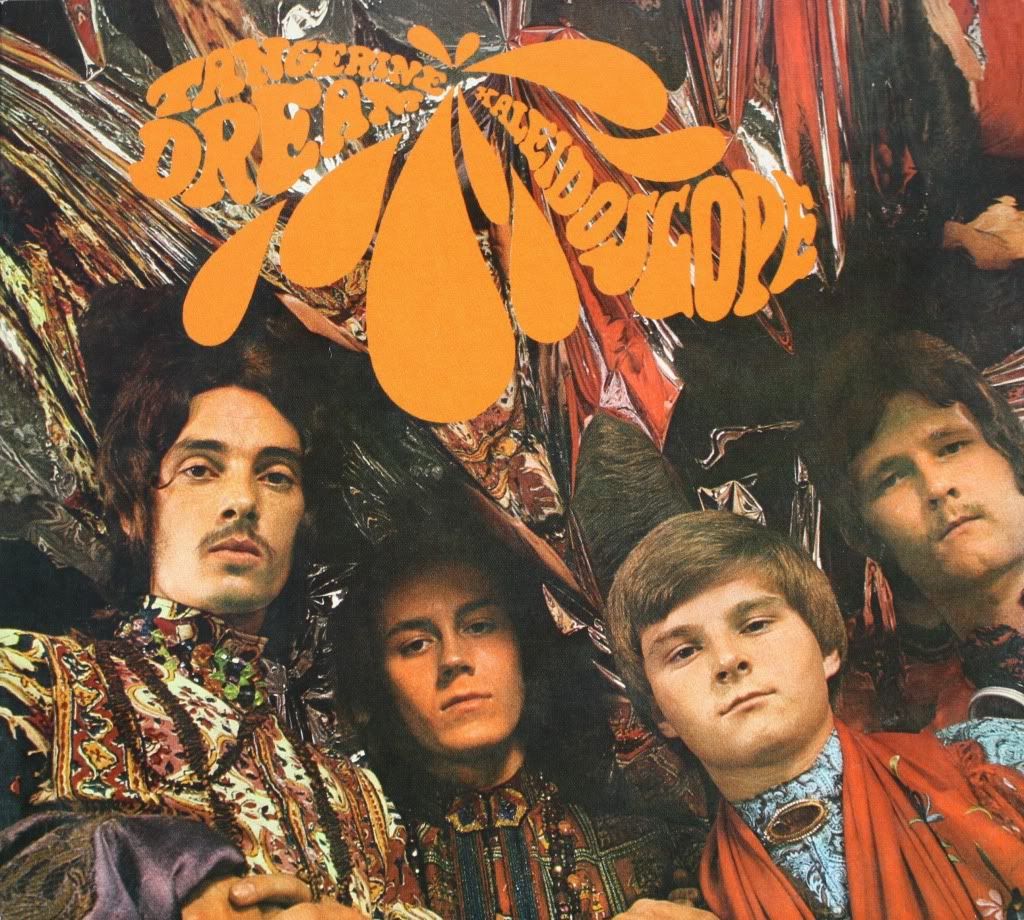
Kaleidoscope - Tangerine Dream
In 1967 the psychedelic movement was at its peak in both the UK and the United States. Like any good fad, the movement produced some extremely good music, some extremely popular music (not always both at the same time), and quite a bit of forgettable music that--especially in retrospect--sounds quite derivative in relation to the more popular and innovative psych releases of the day. For this reason, much of the music from the period has a sort of "time capsule" feel to it and is usually clearly datable. I'm not one to disparage music because it sounds like it was created the year it was created, but by the same token I most appreciate psychedelic albums that were either innovative with their ideas (after all, there was a lot of fresh stuff happening during the period, especially by pop music standards) or at least exemplify the best things about the period and do psychedelic well. Although there are quite a few psych releases that are among my top albums and I regularly listen to and enjoy a broad selection of psych, it's not really my main interest and as a collector and listener I have less interest and tolerance in the more marginal (quality-wise, that is) releases. Probably the main reason for this is that the musical ideas expressed during the movement, great though they are, seem to be finite and recycled to an extent that many of the "lost" psych albums are a source of frustration and diminishing returns rather than revelation. So, with that preface I'd like to talk about some hallmark psychedelic rock that isn't especially innovative but, for me, exemplifies the movement and sounds great--over and over and over.
Perhaps unsurprisingly, the psychedelic movement spawned two Kaleidoscopes--a US version and a UK version. The party line is that this, the UK band, is the one worth talking about. I tend to agree--to me, UK psychedelic music is quite a bit more compelling, as I think its movement produced the most interesting ideas, and the dumbed-down endless jamming of West Coast psych bands like Quicksilver Messenger Service and Grateful Dead never really did it for me. There are some great obscure examples though, and you can't go wrong with a lot of the well-known stuff from Hendrix, the Doors, Love, Dylan's more psychedelic material and, of course, Captain Beefheart. When it comes to British psych I tend to separate groups roughly between psychedelic pop and the edgier, darker and weirder stuff. Kaleidoscope fits firmly in the former category, influenced most by (and most exemplifying) the whimsy, melancholy, subtle strangeness in sound and subject matter of the Beatles, Donovan and especially Syd Barrett-era Pink Floyd. Like those groups, though, Kaleidoscope place utmost emphasis on pop songcraft.
Unlike a lot of psych bands, Kaleidoscope employ mainly standard rock band instrumentation--the band's eponymous opening track opens mysteriously with the invocation, "Relax your eyes, for after all--we can but share these minutes," before kicking into an upbeat slice of pop propelled by piano, heavy drums, overdriven electric guitar and cascading vocal harmonies framing a simple melody and lyrics that describe the goings-on of the world as seen through a kaleidoscope. The track's buoyed by the wide-eyed energy of youth and, undoubtedly, wonderment at drug experiences. It's this guileless sincerity that lifts most of the album above its forgotten peers to the level of rewarding our ears over 40 years later. The arrangements continue to show a penchant for nylon-stringed guitar on the beautifully despondent "Please Excuse My Face." "Dive Into Yesterday" is one of my favorites, with some noisy surf-influenced guitar, a progressive arrangement, a gorgeous, droning/rippling bridge and a reprise of the "relax your eyes" invocation for added cohesion.
Familiar UK psych tropes crop up repeatedly--"Flight from Ashiya" and "Mr. Small, The Watch Repairer Man" tap into the pervasive influence of "Eleanor Rigby" in terms of illustrating human helplessness and the loneliness of outsider characters. The creative hooks make the tracks though; the former's jaunty pace and "we're poor little lambs/who've lost our way/bahh bahh bahh" effectively contrast the lyric's description of a plane crash in progress, and the latter brilliantly utilizes the familiar sound of a clock chime as the melody for the tale of a lonely watch repairer. The song's "la-la-la-la" refrain again strongly echoes Syd Barrett, as does "Arnold Layne"-esque "The Murder of Lewis Tollani." To round things off, there's also an overt Dylan influence in the words of "In The Room of Percussion" and elsewhere.
No review worth its salt consists merely of name-dropping and influence finger-pointing. The point is that the band managed to create an immensely enjoyable collection of songs in spite of telegraphing their influences. Peter Daltrey's (leader and singer) voice perfectly fits the material, capable of a rock edge but also of quavering sincerity, and the vocal lines are full of youthfully attractive harmony experiments that endearingly drop out when the line becomes too difficult. Likewise, the production sounds great. The piano, electric guitar and drums especially are miked so hot that they're right up in your face, and at its high points the album offers some extremely majestic moments. One of those is the nearly indefinitely-prolonged "The Sky Children," which sweeps by with an airy sing-song melody, catchy 12-string electric guitar and tinkling chimes. It's songs like this that get to the heart of why I continue to reach for this album--the innocent positivity and wonderment are so sincere that it's infectious, and to me that's the essence of the psychedelic movement. Through the a confluence of counter culture, newly-available information, social freedom and drugs, the youth of the 60's cohesively created their own movement based on love, experimentation and open-mindedness, and all the record companies could do was try and facilitate a genre they knew nothing about. This attitude shows in this music and even in the faces of the people who made it on the album cover--they were just kids themselves. On top of that, the album perfectly inhabits its moment in time with the immature "wisdom" and pseudo-moralizing of "A Lesson Perhaps," probably the album's weakest track. The pitfalls that ultimately undid the movement (naiveté and ignorance of the more complex and darker aspects of human interaction which would take much more real prominence at the end of the decade) already show in spite of the album's glistening beauty--a silver cloud with a dark lining.
According to the liner notes, some executives at Fontana had a lot of faith in Kaleidoscope's potential and poured a significant amount of money into this album and its follow-up, Faintly Blowing. Sadly, the fact that they gave Kaleidoscope a full-length LP deal before making the band prove themselves with a hit single (as was standard practice in the day) is reflected in the label's poor instincts in choosing singles for the album--"Flight From Ashiya" wouldn't be my first choice ("Kaleidoscope," anyone?), nor would the horn-arranged satire of "Holiday Maker" or the catchier but still sub-"See Emily Play" tinkly toy piano of "A Dream for Julie." By the time they chose the sublimely catchy "Jenny Artichoke," it was 1968 and the psychedelic boat was sailing along with Kaleidoscope's chances of wide recognition. The band changed its name to Fairfield Parlour after Faintly Blowing and suffered more rather unjustified obscurity in a slightly more progressive vein before ultimately disbanding in 1972, when the psychedelic movement that spawned it was a distant memory. Though the movement was short-lived, one of its lasting benefits was the fact that record labels were much more open to funding and taking risks on bands they didn't quite understand in hopes that the kids would go crazy for it. A lot of great and eccentric albums would never have been made if not for this practice (including the entire progressive rock movement, for better or worse), and it sadly fell out of practice toward the mid-70's where the seeds of today's corporate music culture, with its willingness to autocratically tell listeners what they want and/or immediately seize and over-commercialize new music that listeners found for themselves, were sown. Still, Kaleidoscope's period piece debut remains a testament to the joys of innocence, pop, and searching that still sounds charming today.
Get it on CD here
Sunday, June 19, 2011
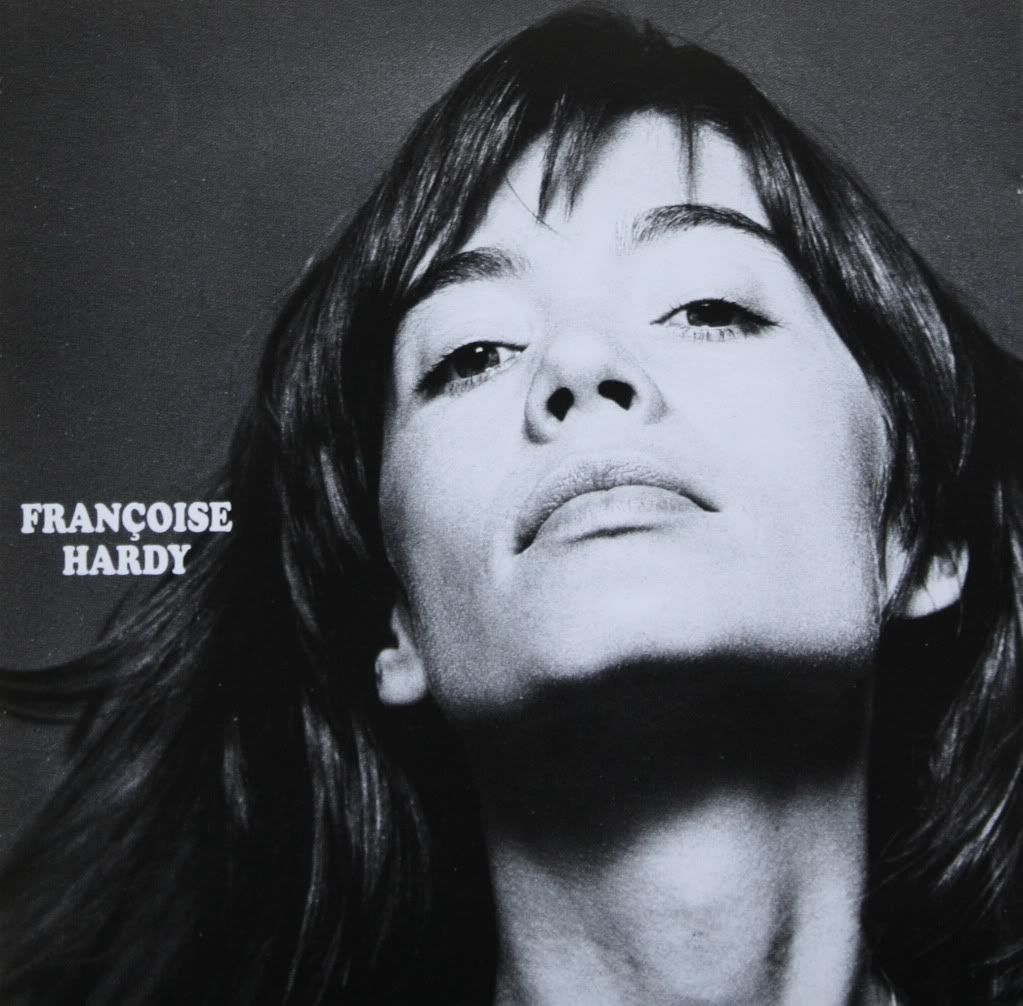
Françoise Hardy - La Question
After nine years and over 15 releases in the teen idol "Yé-yé" French pop style that first garnered her fame with 1962's hit Tous les garçons et les filles, Françoise Hardy decided to change gears. While some critics paint the stylistic shift that happened with La Question as some sort of radical change for Hardy, in reality it's less of an audacious move away from pop music and more of a subtle shift within pop to a more mysterious, atmospheric, and jazzy sound. Rather than the catchy but generic bubblegum pop sound of her early records where the limits of her vocal technique were often made obvious by the material, the soft dynamics and spacious mystery of this album's songs places more of an emphasis on the singer's personality while simultaneously cultivating a palpable mood. Hardy sings in a breathier, whispery style, only occasionally lifting her voice into the upper register--the contrast only makes the music more dramatic, and the feel more, well, like that look she's got on the cover.
Instrumentally, the album relies on the nylon-stringed acoustic guitar of co-writer and producer Tuca (a fairly obscure Brazillian performer), acoustic and electric bass, subtle percussion and occasional orchestrations. The swelling "Oui je dis adieu" gracefully bounces back and forth between the strings and guitar in simple yet effective counterpoint, while "Chanson d'O" showcases Hardy's seductively breathy vocals. An almost David Axelrod-esque tension drives the dark, cello-suffused opener, "Viens," and returns again on the disquieting opening of "Le Martien," though Tuca's bossa guitar riff eventually softens the ambiance. The only track that really breaks the dusky atmosphere is the sing-songy "Bati Mon Nid," with its "la-la-la" chorus where a male singer joins Hardy on vocals.
While hardly left-field, La Question is totally a high-water mark in Hardy's discography and one that holds up really well in spite of its age. The record's sultry atmosphere can't be beat when you're in the mood, but it also holds up pretty well if you're actually paying attention.
Get it here on CD
Monday, April 4, 2011
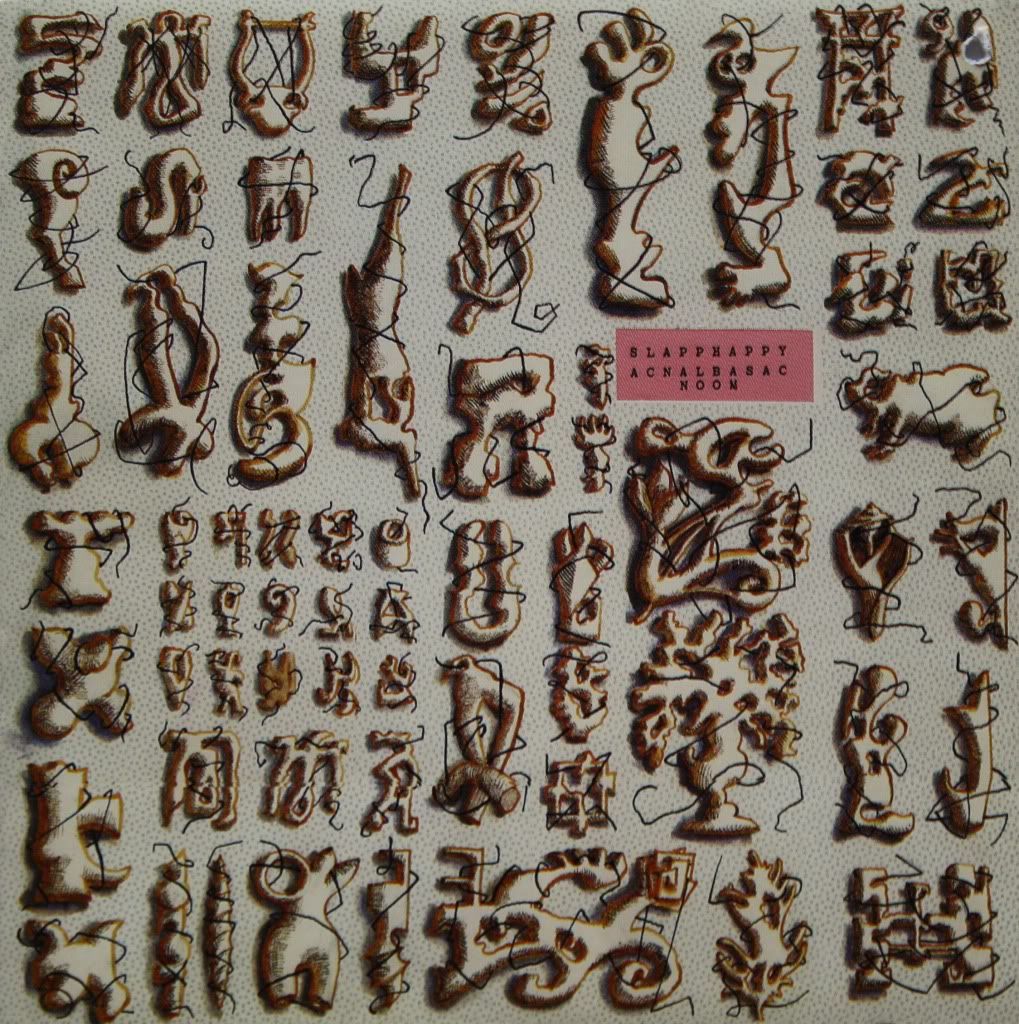
Slapp Happy - Acnalbasac Noom
Since this isn't a download blog and a lot of my traffic comes from facebook, I've decided to start linking to YouTube for at least one song mentioned in each review, so use your mouse to find some Easter eggs and match some sounds to the words.
A release with an entirely befuddling genesis, Acnalbasac Noom was recorded for Polydor by the core Slapp Happy trio (Dagmar Krause, vocals; Peter Blegvad, guitar; Anthony Moore, keys) with Faust as a backing band in 1973. The songs were re-recorded for Virgin in 1974 and released as the self-titled Slapp Happy. The original recordings finally saw release on Recommended Records in 1980 as Slapp Happy or Slapp Happy, then (here comes the really confusing part) reissued again by Recommended as Acnalbasac Noom. Today, if you want the original Faust version, your best bet is on CD, titled Acnalbasac Noom.
Acnalbasac Noom is pop music with brains--eclectic, jazzy, psychedelic, experimental and intelligent, but never prone to lengthy instrumental passages or songwriting that could be considered "progressive" in the early 70's meaning of the word. Instead, it's an album that exudes wit; a clever spin on convention that won't assault anyone's expectations but subtle--slightly subversive. The focus of the show is on Dagmar Krause's vocals singing Blegvad's lyrics. For those familiar with Krause's later material (Henry Cow, Art Bears etc.), her performances here are much more traditional and even the timbre of her voice sounds quite different. Here, it's a bit on the nasally side, sweetly but sharply adding an odd sultry edge to much of the lounge-flavored material and occasionally delving deeper into a more technically-proficient Nico-like register.
The real joy comes when you dig past Krause's rather thick but attractive German accent to find Blegvad's adroit way with words. Take the album-opening words on the spy-themed title track: "He used to wear fedoras/but now he sports a fez/There's Kabbalistic innuendos/in everything he says." The text of this album is a veritable treasure trove of clever rhyme, boundless vocabulary, humor and wit. At times, it borders on smarmy, but despite their intelligence Blegvad's songs are blithely unpretentious--a rare combination. The music is unobtrusively melodic, with pretty standard rock group arrangements with the occasional flittering synthesizer, and in addition to the aforementioned lounge-style pop there's some joyous almost bubblegum pop in "Charlie and Charlie," "Michelangelo," and "The Secret," while "A Little Something" lays down a bossa nova rock groove and "Mr. Rainbow" and "The Drum" tread into demonstrably heavier psychedelic territory. The CD reissue sports a pretty wicked aerobics-themed bonus track, too, entitled "Everybody's Slimmin'", which is just as awesome as it sounds ("shake your yamma yamma like you're humping a ghost").
If you listen to this and can't stand Dagmar Krause's voice, there's probably little hope you'll enjoy Art Bears or her work with Henry Cow. On the other hand, if you're already a fan of those, you might find this album a less demanding pleasure. Either way, you can crawl further down the experimental pop deconstruction rabbit hole with Desperate Straights, Slapp Happy's 1975 collaboration with Henry Cow.
Get the CD here
Subscribe to:
Posts (Atom)