Showing posts with label 1964. Show all posts

Thursday, October 20, 2011

Eric Dolphy - Out to Lunch!


If I had to credit one album for inciting my recent obsession with jazz, it would have to be Eric Dolphy's 1964 crowning achievement, Out to Lunch!  Before then, I'd found something of a backward insertion point into jazz by moving into free jazz from the less idiomatic free improvisation realm.  After hearing this album, though, I realized that there's an entire movement within jazz (generally known as avant-garde jazz) that overlaps with free jazz in terms of soloist expression but also focuses heavily on expanding the compositional palette of bop and post-bop to a wide variety of places it'd never been before--undoubtedly, avant-garde jazz is the jazz for me!

By 1964 Eric Dolphy had had a storied career as both a sideman (supporting, among others, John Coltrane and Charles Mingus) and as a leader, recording several studio and live albums since his bandleader debut on 1960's Out There.  It's unsurprising that Dolphy was in great demand as a session and live ensemble member, as he could play alto saxophone, flute and bass clarinet--the wider success of which in jazz music he can arguably credited--with comparable (but always idiosyncratic) virtuosity.  Though he was playing "out" for years before the date of this recording, Out to Lunch! is the first (and last, since he died within months of its recording) of Dolphy's albums to feature only his own compositions.  As I've increasingly found among successful avant-garde jazz albums, the combination between the adventurousness and innovation of the compositions and the freedom, creativity and chemistry of the performers creates a perfect storm of blissful, challenging sounds.

On the compositional side, Dolphy provides songs that run the gamut between dissonant odd-metered avant-garde ("Out to Lunch," "Straight Up and Down," "Hat and Beard," dedicated to Thelonious Monk, one of the only jazz composers who could be said to foreshadow Dolphy's style), early 1900's gospel jazz (the ballad "Something Sweet, Something Tender") and frantic, twisted bop riffing ("Gazzelloni").  On the more dominant weird stuff, Dolphy strikes a fascinating balance between abstractness (which often pleasingly extends typical jazz harmony to the brink of atonality) and Ornette Coleman's sinuous sense of head melody.  "Hat and Beard," with its constantly mutating descending scale and lurching unison non-melody, fits the former category, while the title track fits the latter with a seemingly never-ending head that winds around in spiraling circles, somehow never separating the tight unison between trumpet and alto sax.  The final track, "Straight Up and Down" is supposed to emulate a drunken stagger but, really, the same could be said of most of the rhythms here!  What I really love about Dolphy's compositions is that they travel well beyond the head-solo-head formula that sometimes hangs like an albatross from so much ultra-orthodox jazz; sure, the songs have recognizable and recapitulated heads, but there are innumerable pockets of group dynamic shifts, coordinated rhythmic interplay and near complete dropouts that you never get the sense that things are happening without a good reason.

As far as the playing goes, like I said earlier, this is an undeniable example of a perfect storm where a dream team of players come together over a set that pushes them all to places they've never been before.  The absence of piano means that vibraphonist Bobby Hutcherson carries the mid-range chromatic accompaniment on his shoulders, which means a lot of the accompaniment is more spacious than the type of comping that piano usually provides.  I really enjoy how Hutcherson swaps between helping state the songs' melodies, comping with two or three-note chords over occasionally strange intervals, and spontaneously supporting solos with minor melodic excursions.  While Hutcherson's replacement of piano on this album is often lauded (as must be his ability to make one of the geekiest jazz instruments as cool as it could possibly be), I think some credit is also due to bassist Richard Davis, who often uses two-note chords (sometimes with a bow) in addition to a more standard walking style to emulate the piano's absent tonal cluster effect.  The tightness of Hutcherson and Davis allows Tony Williams free reign to play counter-rhythm to the vibes, alternate between blasting and delicate fills out of nowhere, and keep the ideas coming one after another without obsessing about blatantly stating the beat--sometimes it's just implied, and that space is one of the best parts about this music.  Trumpeter Freddie Hubbard could easily be labeled this set's least adventurous performer, but there's really no denying his chops; though he can't compete with Dolphy in terms of out-ness, he ably makes up for his relative conventionality with furious energy, which just might be considered out on its own.

Finally, Dolphy manages to consolidate his well-documented strengths on all three instruments by stealing his own show.  I can never get enough of his bass clarinet playing--the instrument's ear candy timbre is enjoyable on its own, but in the hands of someone like Dolphy, it becomes something else entirely.  Especially with the bass clarinet, his intuitive feel for the instrument's range and voicing allows him to employ it quite vocally, screeching through wide intervals just as often as he blurts out vaguely tonal (but always strangely melodic) fragments.  The beauty of this approach comes out even more on "Something Sweet, Something Tender," where the slow tempo and old-timey feel allow for some wide vibrato and compelling emotional expression.  Dolphy's alto saxophone chops are another thing entirely; his tone is so flagrant it sounds like he's blowing fire out of his horn and the mics can barely handle it.  "Gazzelloni" is the only flute showcase, which seems like a good ratio--the vibraphone seems to overlap in terms of timbre, so one example of Dolphy's rapid fire, often viscerally percussive flute style satisfies quite well.

It's a shame Dolphy wasn't able to follow up this masterpiece with a few more albums of his own compositions--he was clearly on a roll.  Fortunately, there are numerous great examples of his ability as a sideman (my picks for a balance between Dolphy's chops and adventurous composition are Andrew Hill's Point of Departure, George Russell's Ezz-thetics, and Ornette Coleman's iconic Free Jazz), and if you just want to hear the man play, his Wikipedia page comprehensively lists his discography as a leader and sideman--enjoy the trip.  It's disappointing that few contemporary jazz artists have attempted to push the genre forward in this way--there's clearly lots of space left to fill with audacious sounds, and it's hard to argue that these guys didn't have a great time making this music.

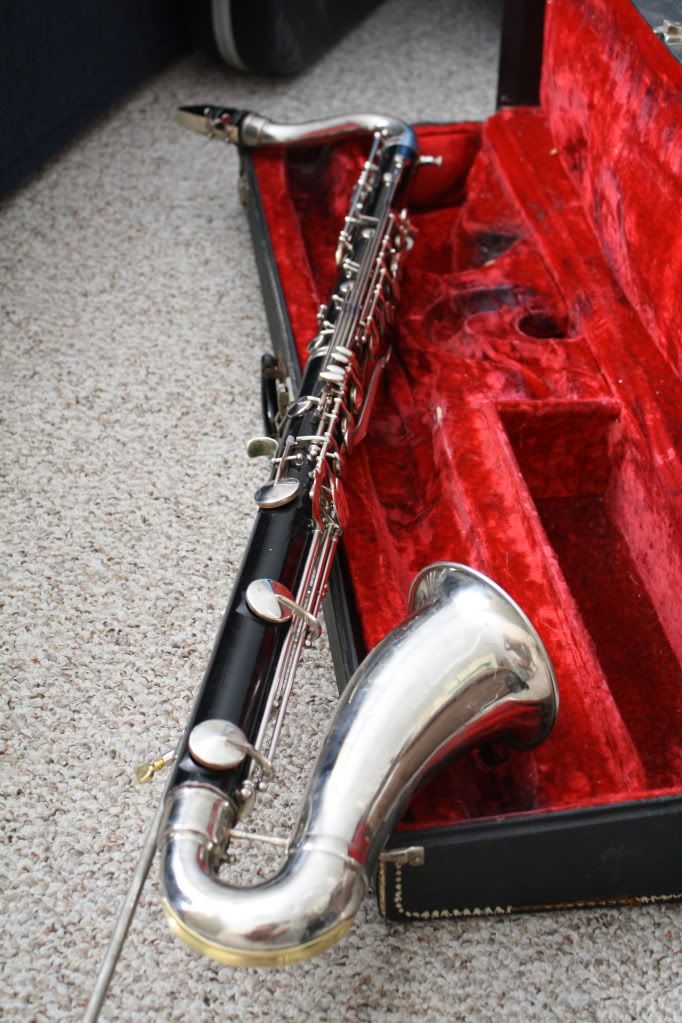
On a side note, here's what happens when you listen to too much Eric Dolphy...for use on my upcoming recording project.
Saturday, June 18, 2011

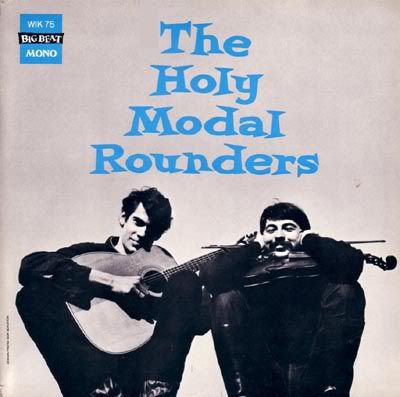
The Holy Modal Rounders - The Holy Modal Rounders

In my opinion, the word "folk" is egregiously overused.  From Mumford and Sons to America to Iron and Wine, the genre "folk music" is broadly applied to groups that emphasize acoustic instrumentation, don't have a heavy rock sound, and rarely have anything to do with the folk tradition. That is, the playing of actual folk music; traditional songs that have been passed down for generations and continually altered by performers insofar as the music becomes a living tradition that's continually changing and evolving.  While I agree that there can be a difficulty in accurately describing the type of music that the aforementioned artists make, it's really not folk in any technical sense, and so describing it only dilutes the potency and clarity of a great word and concept--"folk" can be used to describe all manner of participation in the folk tradition from the likes of Ralph Vaughan Williams' and Béla Bartók's collection and assimilation of folk melodies into their classical works, to Harry Smith's anthology of various real people playing their renditions of American folk songs, to Bob Dylan's wholesale "theft" (a cornerstone of the folk tradition) and reassembly of everything from folk melodies, folk lyrics, literary and historical figures, and pop culture, which just might stand as the single greatest modern expression of the living folk idiom seen in the 20th century.  Anyway, the totality of the folk tradition is both messy and diffuse and I have no intention to stridently decide who is and isn't a folk artist (part of the allure is folk's all-encompassing, diverse nature), but one of the groups and albums that most immediately comes to mind when I think of the precise definition of "folk" is The Holy Modal Rounders and their 1964 debut.

Though it later swelled in its later-60's incarnations, the Rounders started as a duo--Steve Weber and Peter Stampfel (with whom I'm proud to say I'm facebook friends), who were highly active in the NYC folk revival of the early 60's and were also involved in The Fugs.  That association alone might give you a pretty good clue as to the Rounders' approach to folk music--irreverance abounds as Weber (guitar) and Stampfel (fiddle, banjo) trade vocals in ridiculous voices (Weber's got the sort of wheezy one and Stampfel's the nasaly one) across a selection of Rounders-arranged traditional folk tunes like the classic "The Cuckoo," "Same Old Man," "Give the Fiddler A Dram" and "Bound to Lose."  As folk musicians are wont to do, the pair not only arrange the songs with a number of comic flourishes, they also mess around with some of the lines to make the songs their own.  Although the arrangements are simple, they're subtle--Weber's guitar forms the framework for many of the songs, like "Blues in the Bottle," where he lays down the guitar foundation and Stampfel's fiddle periodically appears to lend its scratchy warmth to the melodic refrain--much more effective than if it were played for the song's entirety. 

What really sets this album above the standard folk fare (especially the kind of contrived anachronistic old-timey stuff that a lot of today's folk revivalists are into) are the excellent handful of original songs peppered throughout the collection--the fantastic "Hesitation Blues," which just might feature the first recorded use of the word "psych-o-delic" (as the band says it) and some subtle harmony vocals.  And then there's the hilarious nonsense and onomatopoeia of "Mr. Spaceman," and the druggy glory of "Euphoria" [Update 2/20/12: I'm told "Hesitation Blues" actually isn't an original tune but an update of a song recorded earlier by Crying Sam Collins, thanks Mel!]  The duo manage to adapt their original tunes to their folk style with traditional-sounding melodies and the most important ingredient of folk music--collective fun.  If only they'd broken beyond cult status, perhaps more of today's folkies would be playing their own versions of Rounders' originals.  As it stands, this album is a great time and a shot in the arm for what's sometimes a pretty musty genre.

You can get it on CD here, along with their enjoyable but not quite as sparkling second album.
Sunday, April 3, 2011

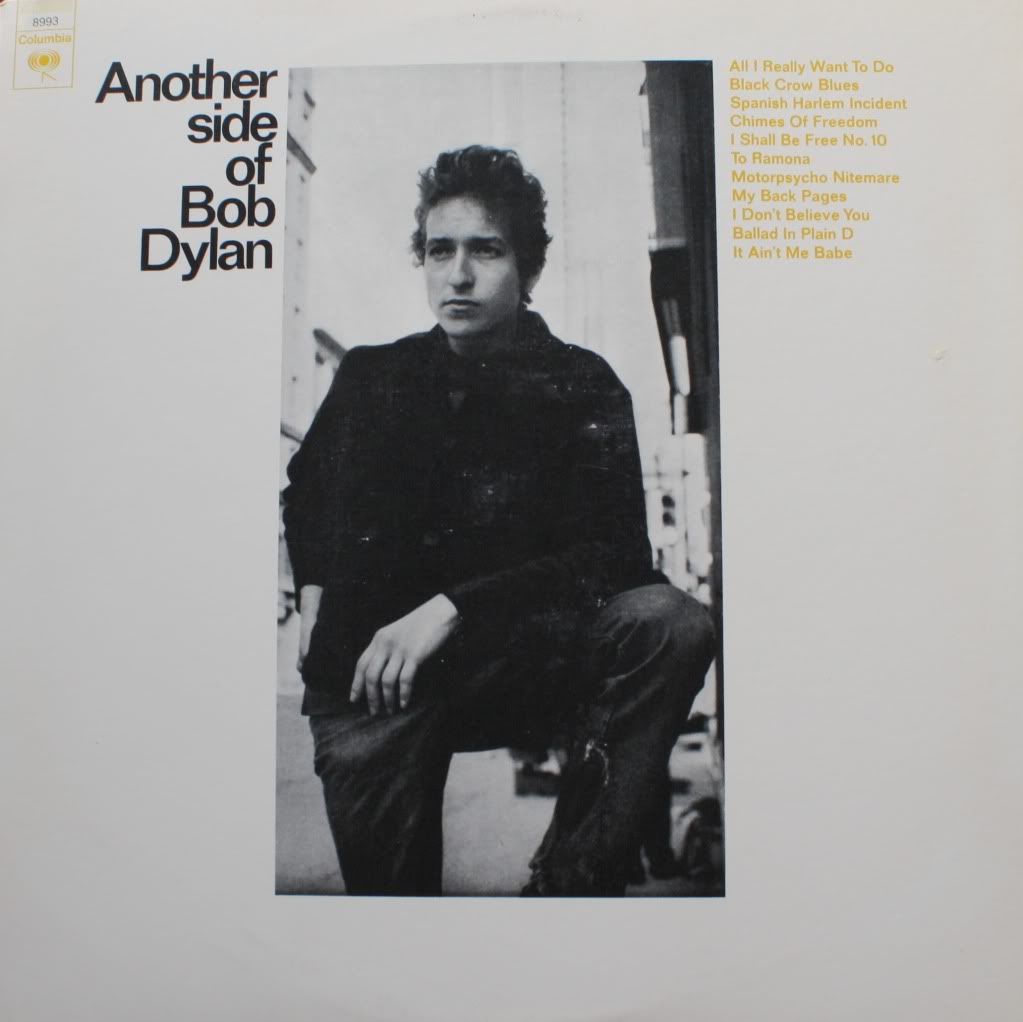
Bob Dylan - Another Side of Bob Dylan


What? An album people have actually heard of?!  I never said that only obscure music is good--more, I like to hope that just because an artist or album isn't well known doesn't necessarily mean it's because they're bad (though some definitely are).  And naturally, the opposite goes for some extremely popular artists! 

Another Side of Bob Dylan sits smack in the middle of one of the greatest runs of great albums in history--after The Freewheelin' Bob Dylan and The Times They Are A-Changin', and right before Bringing It All Back Home--so it's usually appraised quite highly, perhaps by association.  In my opinion, the album can be fairly assessed as a minor but artistically necessary entry in an extremely fertile artistic period.

Whether the title is intentional or more of a record label decision, it's pretty apt--here Dylan deliberately distances himself from the mantle of neo-folk protest king that his previous two albums earned him--only the oblique "Chimes of Freedom" could be remotely linked with protest music, while "My Back Pages" (the undisputed best song of the set) denies the self-serious sanctimoniousness of his earlier material with lush imagery and an immortal refrain.  On other songs ("All I Really Want to Do," "It Ain't Me Babe") it seems he'd rather not be held responsible for anything at all!

So, in absence of an overarching social theme, what does Dylan offer as a replacement?  Well, in some ways not much--when it comes to new ideas, Another Side is a pretty slight.  In some ways, it borrows too heavily from Freewheelin'; "Motorpsycho Nightmare" and "I Shall Be Free no. 10" attempt (with mixed results) to recapture the wry wit of his second album's comic relief, while "I Don't Believe You" and "To Ramona" attempt to recapture some of the tongue-in-cheek romantic flavor that was absent on Times They Are A-Changin'.  "Spanish Harlem Incident" and "Black Crow Blues" are pretty bland, while the long and uncomfortable "Ballad in Plain D" (recounting the dissolution of his relationship with Suze Rotolo) forays almost bizarrely into confessional singer/songwriter territory in a way that Dylan would purposely avoid until Blood On The Tracks.  For someone whose personality and music was deliberately assembled as a dazzling patchwork of prevarications and theft, the song's directness is at once fascinating and a bit repulsive as it conveys firsthand the consequences of such a persona.  In any case, it's more of a curiosity compared with what most people love about Dylan from this era.

Probably the best thing this album has going for itself is Dylan's pop instincts--though they rarely deal with weighty subjects, there are a healthy handful of great-to-classic songs that plenty of other artists had hits with.  Though it's short on revelation, Another Side is an amicable listen for the warmth of Dylan's personality and its laid-back mood--another great thing about Dylan from this period.  A lot is made about his transition from acoustic "folk" to electric rock on the following album, but what's more striking to me is the pre-flowering of his surrealist words.  The change is hinted at on "Chimes of Freedom" and "My Back Pages," but it's nothing compared with what would come on songs like "Gates of Eden" and "It's Alright Ma" and later glories.  Ironically, though he usually manages to toss in some humorous throwaways, Dylan's later success can arguably be attributed to his return to serious subject matter--he just happened to drop the black-and-white moral stance and approach the topics from a much more artistically-developed and open-ended angle.  I guess Another Side can be viewed as the shrugging off of the shackles that was necessary for his continued artistic development.

Get it here on CD or MP3.