Showing posts with label Eric Dolphy. Show all posts

Wednesday, December 14, 2011

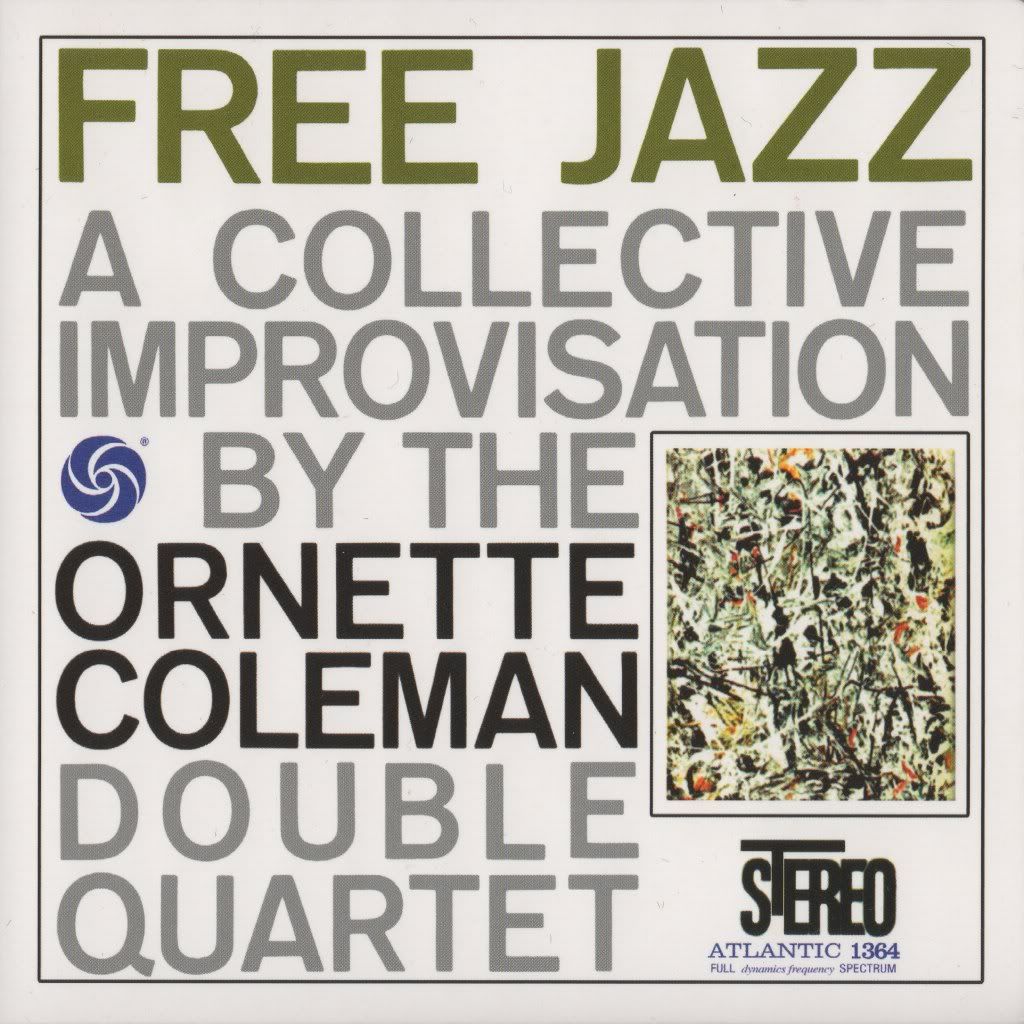
Ornette Coleman - Free Jazz


Though he'd already been prolifically recording for a few years by 1961 and had already thrown down the free soloing gauntlet with The Shape of Jazz to Come in 1959, Ornette Coleman's 1961 Free Jazz album continues to stand as a peak among peaks in Coleman's celebrated early discography and as one of the earliest and most fully-developed statements that would define the loose but enduring free jazz movement.  For me, the thrill of Free Jazz is the feeling of looking into a petri dish as something utterly unprecedented happens for the first time.  The album's form intersperses lengthy solo sections (Coleman's saxophone solo is the longest) with rhythmically-composed atonal horn fanfares, a typically labyrinthine Coleman-ian 'melodic' head and a closing duet for each rhythm section duo.  The double quartet (Coleman on alto, Eric Dolphy on bass clarinet, Coleman stalwart Don Cherry and Freddie Hubbard on trumpet, Scott LaFaro and Charlie Haden on bass, and Billy Higgins and Ed Blackwell on drums) is arranged in stereo, with one quartet on each side.  The result makes the bass interplay much clearer (the bassists decide, for the most part to stick to different octave registers to stay out of each other's way), but for some reason the drums are difficult to discern--reaffirming my usual opinion that dual drum kits are a concept that sounds good on paper but usually comes across as excessive in real life.

This tension between concept and practice is what's most exciting to me about Free Jazz; clearly Coleman thought out the large pieces of the puzzle quite well, but it had still never been done before.  He exhorted his side-men to contribute whenever they felt the urge and play as expressively as possible without connections to any recognizable pieces of music or styles, but the end product swings like a mother and Coleman's instructions didn't stop Hubbard from quoting "Jingle Bells" at one point ("don't pour salt in your eyes, don't pour salt in your eyes").  What always captivates me when listening is the range of development in "freeness" that's on display.  It's almost like looking at that classic image of human development; Coleman and Dolphy had both already reached a comfortable level of freedom in their playing (which is still extremely melodic [at least in Coleman's case] and fluid if idiosyncratic), and Don Cherry isn't far behind, no doubt aided by his tenure in Coleman's quartet.

Of the horn players, Freddie Hubbard is undoubtedly the weak link in terms of freeness, which might be the most interesting in terms of historical context.  His inability to really wrap his brain (and chops) around Coleman's concepts are evidenced in his tentative stop/start soloing which ultimately owes more to the theoretical constraints of bop than any sort of previously uncharted territory (it's particularly evident in the CD reissue "first take" bonus track, where Hubbard's feet are audibly cold and his solo's conventionality comes across as the equal and opposite reaction to the excitement and hurried uncertainty of the song's "first go").  It's funny to hear Dolphy pedagogically prodding at Hubbard during his solo, mimicking the trumpeter's ideas with repeated derangement, throwing in squawking vocalizations and wonky riffs--it's as if he's saying "let it go man, try it like this."  Dolphy's accompaniment might be even better than his formidable solo--when he and Hubbard start team-riffing to Ornette's solo, things get really fun, and though his bass clarinet seems to be miked really poorly, the character of his atonal hooting not only accentuates Coleman's soloing, it pours directly into the raucous, party-like atmosphere that's central to this session.

Finally, and in a more meta sense, Free Jazz is a reminder of the areas of "out" and free jazz that had not yet been explored.  While Coleman's compositional framework abandons many of the classic tropes, it's also still pretty close to jazz tradition in terms of solo vocabulary (compared with some of Sun Ra's stuff, for example), rhythm (compared with, say, Spiritual Unity), and overall composition--Free Jazz still paints (though in broader brush strokes) a quite clear picture of dedicated solo sections and sometimes leans on obligatory building blocks like the extended bass and drum sections (compared with something like the impressionistic structures of something like Peter Brötzmann's Machine Gun) in a way that suggests automatic impulse in place of a well-considered original idea.  These are just historical/theoretical observations, though--people who argue about how Free Jazz isn't really free seem to me to miss the point.  It's not about trying to pursue only freedom, but to show how much the jazz idiom opens up to new directions, ideas, and expression of emotion if players and composers start casting off some of the conventions that have become stale.  Sure, this album is cacophonous and not always easy listening, but its richness in ideas and energy remain undimmed and helped catalyze a movement that produced some of the most interesting music made in history of jazz.

Get it here.

Thursday, October 20, 2011

Eric Dolphy - Out to Lunch!


If I had to credit one album for inciting my recent obsession with jazz, it would have to be Eric Dolphy's 1964 crowning achievement, Out to Lunch!  Before then, I'd found something of a backward insertion point into jazz by moving into free jazz from the less idiomatic free improvisation realm.  After hearing this album, though, I realized that there's an entire movement within jazz (generally known as avant-garde jazz) that overlaps with free jazz in terms of soloist expression but also focuses heavily on expanding the compositional palette of bop and post-bop to a wide variety of places it'd never been before--undoubtedly, avant-garde jazz is the jazz for me!

By 1964 Eric Dolphy had had a storied career as both a sideman (supporting, among others, John Coltrane and Charles Mingus) and as a leader, recording several studio and live albums since his bandleader debut on 1960's Out There.  It's unsurprising that Dolphy was in great demand as a session and live ensemble member, as he could play alto saxophone, flute and bass clarinet--the wider success of which in jazz music he can arguably credited--with comparable (but always idiosyncratic) virtuosity.  Though he was playing "out" for years before the date of this recording, Out to Lunch! is the first (and last, since he died within months of its recording) of Dolphy's albums to feature only his own compositions.  As I've increasingly found among successful avant-garde jazz albums, the combination between the adventurousness and innovation of the compositions and the freedom, creativity and chemistry of the performers creates a perfect storm of blissful, challenging sounds.

On the compositional side, Dolphy provides songs that run the gamut between dissonant odd-metered avant-garde ("Out to Lunch," "Straight Up and Down," "Hat and Beard," dedicated to Thelonious Monk, one of the only jazz composers who could be said to foreshadow Dolphy's style), early 1900's gospel jazz (the ballad "Something Sweet, Something Tender") and frantic, twisted bop riffing ("Gazzelloni").  On the more dominant weird stuff, Dolphy strikes a fascinating balance between abstractness (which often pleasingly extends typical jazz harmony to the brink of atonality) and Ornette Coleman's sinuous sense of head melody.  "Hat and Beard," with its constantly mutating descending scale and lurching unison non-melody, fits the former category, while the title track fits the latter with a seemingly never-ending head that winds around in spiraling circles, somehow never separating the tight unison between trumpet and alto sax.  The final track, "Straight Up and Down" is supposed to emulate a drunken stagger but, really, the same could be said of most of the rhythms here!  What I really love about Dolphy's compositions is that they travel well beyond the head-solo-head formula that sometimes hangs like an albatross from so much ultra-orthodox jazz; sure, the songs have recognizable and recapitulated heads, but there are innumerable pockets of group dynamic shifts, coordinated rhythmic interplay and near complete dropouts that you never get the sense that things are happening without a good reason.

As far as the playing goes, like I said earlier, this is an undeniable example of a perfect storm where a dream team of players come together over a set that pushes them all to places they've never been before.  The absence of piano means that vibraphonist Bobby Hutcherson carries the mid-range chromatic accompaniment on his shoulders, which means a lot of the accompaniment is more spacious than the type of comping that piano usually provides.  I really enjoy how Hutcherson swaps between helping state the songs' melodies, comping with two or three-note chords over occasionally strange intervals, and spontaneously supporting solos with minor melodic excursions.  While Hutcherson's replacement of piano on this album is often lauded (as must be his ability to make one of the geekiest jazz instruments as cool as it could possibly be), I think some credit is also due to bassist Richard Davis, who often uses two-note chords (sometimes with a bow) in addition to a more standard walking style to emulate the piano's absent tonal cluster effect.  The tightness of Hutcherson and Davis allows Tony Williams free reign to play counter-rhythm to the vibes, alternate between blasting and delicate fills out of nowhere, and keep the ideas coming one after another without obsessing about blatantly stating the beat--sometimes it's just implied, and that space is one of the best parts about this music.  Trumpeter Freddie Hubbard could easily be labeled this set's least adventurous performer, but there's really no denying his chops; though he can't compete with Dolphy in terms of out-ness, he ably makes up for his relative conventionality with furious energy, which just might be considered out on its own.

Finally, Dolphy manages to consolidate his well-documented strengths on all three instruments by stealing his own show.  I can never get enough of his bass clarinet playing--the instrument's ear candy timbre is enjoyable on its own, but in the hands of someone like Dolphy, it becomes something else entirely.  Especially with the bass clarinet, his intuitive feel for the instrument's range and voicing allows him to employ it quite vocally, screeching through wide intervals just as often as he blurts out vaguely tonal (but always strangely melodic) fragments.  The beauty of this approach comes out even more on "Something Sweet, Something Tender," where the slow tempo and old-timey feel allow for some wide vibrato and compelling emotional expression.  Dolphy's alto saxophone chops are another thing entirely; his tone is so flagrant it sounds like he's blowing fire out of his horn and the mics can barely handle it.  "Gazzelloni" is the only flute showcase, which seems like a good ratio--the vibraphone seems to overlap in terms of timbre, so one example of Dolphy's rapid fire, often viscerally percussive flute style satisfies quite well.

It's a shame Dolphy wasn't able to follow up this masterpiece with a few more albums of his own compositions--he was clearly on a roll.  Fortunately, there are numerous great examples of his ability as a sideman (my picks for a balance between Dolphy's chops and adventurous composition are Andrew Hill's Point of Departure, George Russell's Ezz-thetics, and Ornette Coleman's iconic Free Jazz), and if you just want to hear the man play, his Wikipedia page comprehensively lists his discography as a leader and sideman--enjoy the trip.  It's disappointing that few contemporary jazz artists have attempted to push the genre forward in this way--there's clearly lots of space left to fill with audacious sounds, and it's hard to argue that these guys didn't have a great time making this music.

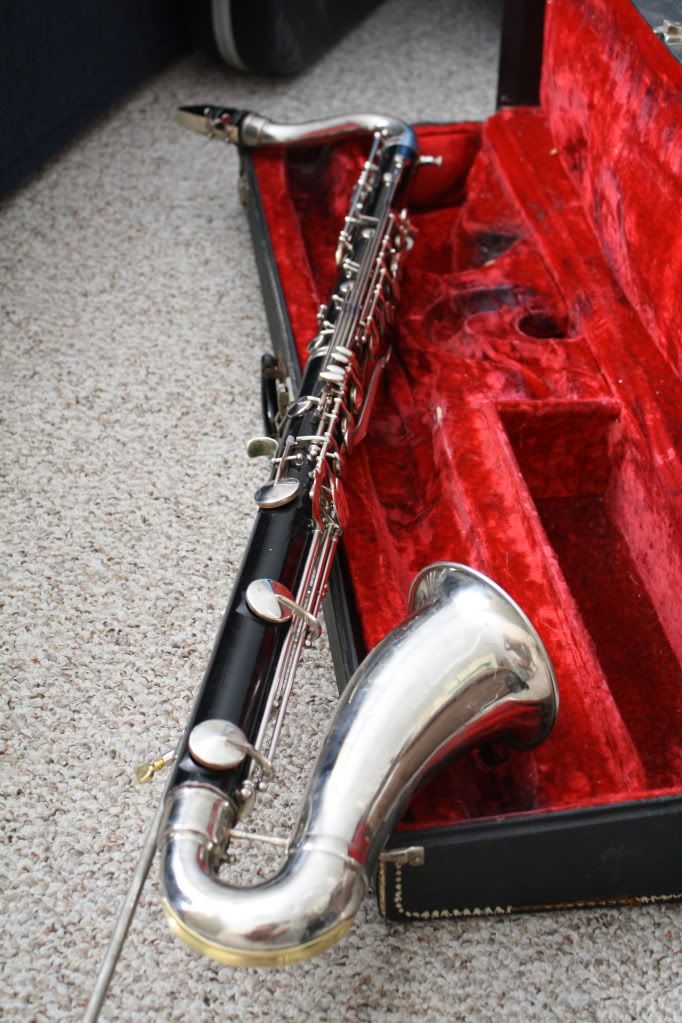
On a side note, here's what happens when you listen to too much Eric Dolphy...for use on my upcoming recording project.