Showing posts with label Blues. Show all posts

Tuesday, June 5, 2012

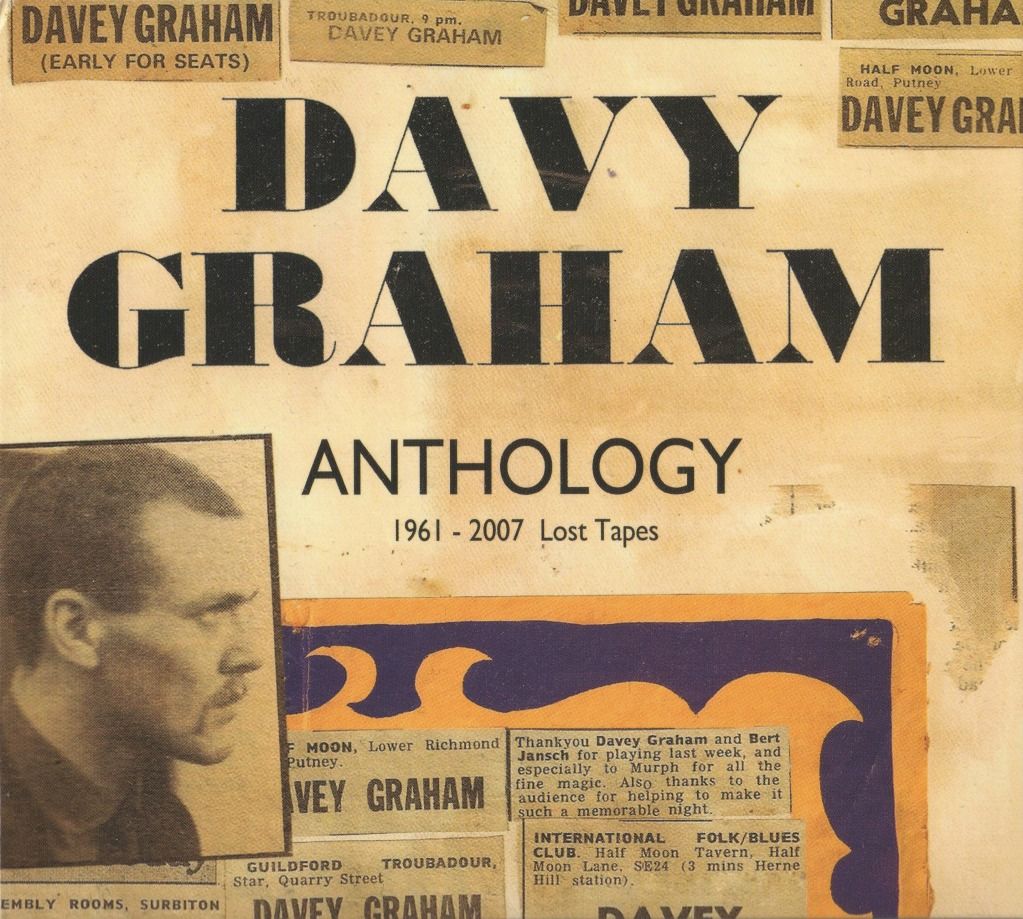
Davy Graham - Anthology: 1961-2007 Lost Tapes


Almost four years after Davy Graham's death, the folks at Les Cousins Music are still working not only to preserve his officially-recorded legacy, but also to expand the scope and depth of his output, making it clearer for those who weren't there why the guitarist was the undisputed king of the 1960's English folk revival.  Nostalgically packaged in a collage of images gleaned from Graham's personal scrapbook (and simultaneously displaying both spellings of the guitarist's first name he confoundingly vacillated between), this three-CD collection anthologizes no less than 54 tracks across more than 2 1/2 hours of unreleased recordings.  Count me in!

It's a fool's errand to attempt a track-by-track analysis of an anthology so deep, so I'll attempt to convey some general impressions and reference tracks where appropriate.  Having been a Davy Graham fan for several years, I think I'm finally starting to understand how, as Roy Harper says, Graham "never managed to turn his talent into a brand that people could go out and buy and enjoy," yet every other guitarist from the same time period and beyond cites Graham as a towering giant of the six-string.  After five years of absorbing Graham's studio output I'm still at a loss to recommend a single album of his that fully conveys and encompasses what was so revolutionary about his playing, and not having been there it's been hard to picture myself in that bright-eyed hopeful time and imagine myself at some bohemian party with Graham conjuring untold spirits out of an acoustic while everyone just sits and listens.  Enter this anthology, which as far as I've heard does the best job this side of After Hours at Hull University of recreating such a scene.  The sound quality (especially on the first two discs) is almost exclusively of home/bootleg quality and most of the performances are solo, with Graham positively shredding in front of small audiences as he sends jazz, folk, blues and "world music" (before such a term existed) through a blender and we get to hear what comes out.

Since it's mostly just an acoustic with or without vocals, the sound quality isn't much of a bother--if anything, it enhances the intimacy of the performances, which find Graham energetically blasting solo performances of many of the folk and blues songs found on his albums as well as never-before-heard tracks.  Throughout, his technique is astounding, transitioning as quickly as ever between lead and rhythm, melody and harmony, from style to style.  Somehow the setting's informality allows the guitarist's hard-won chops to shine brighter with none of the studio adornments meant to commercialize his sound, and we instead get to hear him exclaim "Ah, fuck" after some imperceptible mistakes during a lightning-fast take on Leadbelly's "Fannin Street" with nary a missed note, as well as a verbal introduction to his classic instrumental "Anji" (there are two versions here, along with an unreleased track and album highlight "Anji's Greek Cousin") that details how he wrote the tune.  While the live renditions of guitar-and-vocal folk/blues tunes present uniformly great guitar and often contain vocals that are superior to the studio versions, they also miss the mark when it comes to what made the guitarist unique--more than almost any other Graham album, this anthology conveys the strange alchemy that occurred between Graham's musical influences, his fingers and his guitar, and these discs present ample, undiluted evidence of what was possible when only these elements were on display.

Of the three discs, the third is probably the least essential, reflecting the diminishing returns that Graham's post-60's releases offer, yet it often sounds more vital than studio recordings from the same period.  Though Graham's lifestyle choices and age would gradually slow his playing and attenuate his already limited vocals, we still get some surprisingly good representations of the more delicate British folk, jazz, medieval-sounding instrumentals and world folk music explorations he continued to make through the 70's and beyond.  "The Gold Ring" shows his pull-off speed undiminished, "Sita Ram" and "Mevlut" pair his further eastern experiments with appropriate accompaniment, and "DeVisee Suite" shows a subtle, slower side to his playing that was all but absent in the early days.  The final late-period tracks remind us that we're summing up the career accomplishments and contributions of a distinctive force in 20th century popular music.  As with his 2007 swansong Broken Biscuits, the joy here comes less from marveling at jaw-dropping speed, but more from giving credit where it's due and appreciating that the man's muse was still active at the end.

While I still think it's impossible to recommend an accurate starting point for a prospective Davy Graham fan (it takes more than the average time investment to really "get" him as an artist), this anthology is a surprisingly worthy addition to even a modest Davy Graham collection.  Unlike so many retrospective collections, it manages (with the help of Graham's considerable skill and restlessness) to make familiar songs sound fresh and new songs sound immediate and relevant to the further-broadening portrait available of Graham as an artist. 

Get it here.

Wednesday, May 16, 2012

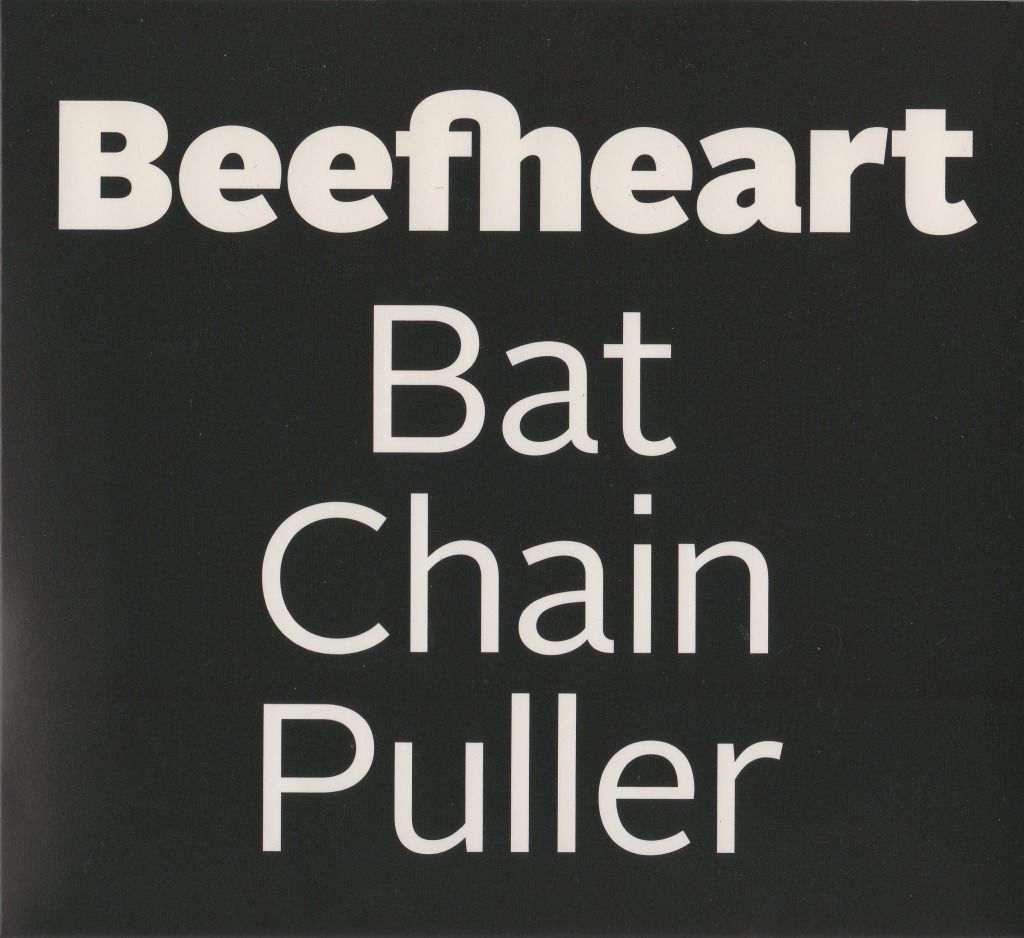
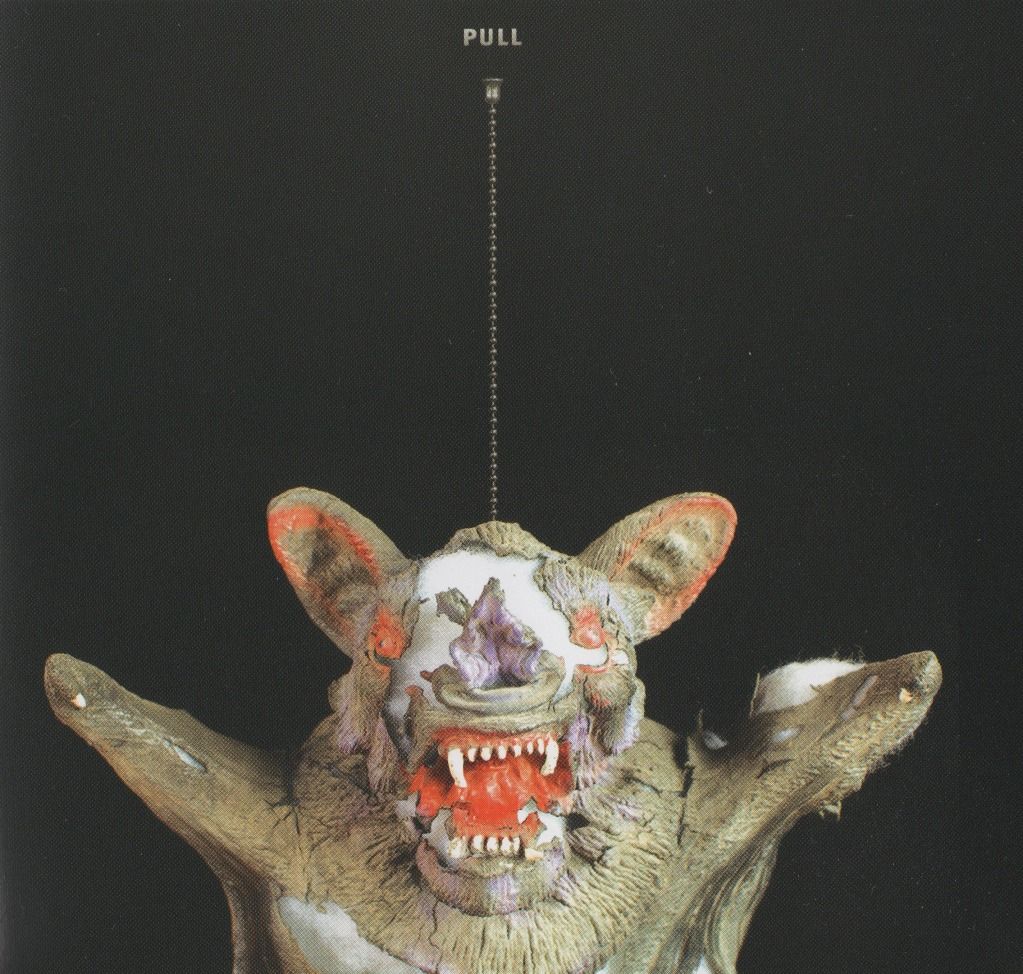
Captain Beefheart - Bat Chain Puller


It's been well over a year since I kicked off the reviews division of this site with a review of Captain Beefheart and the Magic Band's Shiny Beast (Bat Chain Puller), and considering how much the Captain's work has continued to influence my approach to music and writing I'm surprised I haven't waxed poetic about any of his other classic albums.  Technically, today still isn't that day--I'm here to gush about the "brand new" 2012 Captain Beefheart release, the lost 1976 first studio version of Bat Chain Puller, just released this spring (to disappointingly limited fanfare) on the Frank Zappa record label and nearly exclusively available for purchase here (which just might be why the album's gotten so little press).

To describe the genesis of this release briefly, Don Van Vliet decided in 1976 to return to the avant-garde and stage a creative comeback.  Herb Cohen (Frank Zappa's manager) secretly used Zappa's money to fund the project and the two had a falling out upon Zappa's return from tour, resulting in Cohen's seizure of many of Zappa's assets, unreleased Bat Chain Puller masters included. Zappa eventually reclaimed his property through legal means, but by that time Van Vliet had re-recorded most of the material on his final albums.  Since then Zappa, and now his widow Gail, have been busy enough managing Zappa's gargantuan legacy that the tapes have remained neglected in the vaults...until now!

With 10 of 12 tracks already appearing on Captain Beefheart albums that have been available for 30 years, the biggest worry with Bat Chain Puller is that it'll come across as merely supplementary to those "definitive" versions, or worse that it'll sound only partially complete in comparison to the later recordings.  Thankfully, the disc falls prey to neither possibility, playing like the hazy, dream-like album-that-never-was that it's always been!

After listening to these different versions of familiar songs and becoming familiarized with the new track sequencing, I'm left with the strong impression that this album has an undeniably distinct feel, especially in relation to Shiny Beast (Bat Chain Puller) in terms of its accessibility.  Compared to Shiny Beast's almost exclusively song-based program, this Bat Chain Puller is very much a venture split between songs, spoken word-over-music and pure poetry.  Sure, it's still considerably more mainstream than the hallowed stuff of Doc at the Radar Station, but even compared with Doc's orchestrated prickles, the poetry/music tracks here feel much more spontaneously arranged and the sonic palette more often unexpectedly drops down to just one instrument or Van Vliet's voice in some very effective instances. 

Perhaps as expected, some of the material here isn't significantly different from later versions--the arrangement of "Harry Irene" (never one of my favorite later Beefheart tracks, but an important contributor to this album's accessibility) includes guitar, but otherwise isn't much different.  The title track has its own subtle identity (further shaded by a third version here in bonus track form), bristling with kinetic motion (it's easy as ever to hear how Van Vliet originally pulled the rhythm from windshield wipers), more of an organic feel with cranked harmonica and just-barely-conflicting guitar layers (though the ever-important synths are still there) and outstanding vocal delivery (dig the the naked place he takes "their very remains and belongings").  Right off the bat, my highest hopes are kindled--one of my disappointments with later Beefheart albums is the marked reduction in the elasticity of Van Vliet's voice and additionally, in the case of Ice Cream for Crow, an overall dip in energy and compositional effort--here the Captain's voice still possesses a razor's edge and he takes enough risks that we can almost forgive him wasting the early/mid-70's trying to become a mainstream star.  "Owed T'Alex" burns with a reinvigorated closeness that's magnified further on "Floppy Boot Stomp," where the band's joyous delirium pushes the vocals so close that it sounds like the Captain's ranting all the way inside your brain. 

The most exciting aspect of Bat Chain Puller, of course, is the brand new material, namely the poetry/music hybrids "Seam Crooked Sam" and "Odd Jobs."  The former is a moody guitar/electric piano duet with Van Vliet's downbeat-yet-intense images spinning seemingly unrelated on top, while the latter is more of a full band piece with tunefully-spun vagrant imagery while the band shifts ever so slightly into what must be the first kernel of Shiny Beast's "Tropical Hot Dog Night."

Evaluating these pieces has helped me identify a couple of the specific traits that make Captain Beefheart one of my top favorite artists--first, it's the way his poetry mirrors the music, flowing smoothly then stopping, jerking, suddenly rhyming or playfully riffing off of a phrase's connotations or expected syntactical outcome.  Unsurprisingly, Van Vliet chooses words like paint colors on a palette, not necessarily concerned with their logical or expository value but rather their energy, emotional color, and the way they sound.  When I hear these songs, there are countless unexpected images and feelings popping into my head, and I can't think of too many other poets in the popular music sphere who can achieve that.  And yet, there's a strange logic or narrative to many of these pieces--what at first seems like incoherent rambling in "81 Poop Hatch," for example, gradually reveals itself to be an impressionistic panoramic scene including Van Vliet's beloved natural imagery as well as a view of his internal landscape--at least, that is, until he leaps mid-sentence to somewhere completely different; every piece seems to be at its root a rational enigma with unlimited emotional potential.

Secondly, the compositions here are a dazzling presentation of Van Vliet's painterly approach implemented in yet another aspect of the music.  More than on any of his other albums we hear open, warm-sounding jazz harmony on songs like "Seam Crooked Sam" and "Ah Carrot Is As Close As Ah Rabbit Gets To Ah Diamond."  Again, though, Van Vliet applies these combinations of notes intuitively and without regard to how theoretical rules say they're "supposed" to be used.  Fragile, sweet harmony can dissolve into dissonant, minor darkness just as quickly as it can pursue a completely fresh melodic path, as evidenced on "The Human Totem Pole (The 1,000th And 10th Day Of The Human Totem Pole)," one of two album-closing commentaries on the human race's cumulative achievements (or lack thereof) and precarious current position on earth.  Here he fuses this weird compositional approach with one of his more straightforward (yet most compelling) poems, sketching a partially-obscured picture of the skin-crawling, comical-yet-repulsive "pole," and delivering it all with a seething creepy mystery that trumps the Ice Cream for Crow version within just a few seconds..."the man on the top was starrrrrrrrvinnnnng" indeed!  Now is probably an important time to laud the contributions of the rest of the band--this music certainly couldn't have been made without the conscientious talent and attention of the rest of the band, especially drummer/guitarist John French, who also performed a crucial "music director" role in transcribing Van Vliet's hastily-blurted musical ideas into a form that the other band members could understand and memorize--just listen to the through-composed spacious atmosphere as the song sputters out in a denouement that takes up over half the song's length.  The idea that it's possible and even ideal to consent to the urge to compose and arrange notes and sounds in whatever way sounds intuitively best (regardless of the rules) is one of the important lessons I've learned from Van Vliet's music and attempted to apply to my own process.  Though the difficulty of successfully communicating such an idiosyncratic method to collaborating musicians is challenging to overcome, the singular character of the end result can really be worth the sweat.  It's also one of the few lessons any artist can potentially adapt from Van Vliet's work without necessarily ripping off his total sound wholesale--it's possible, no matter what Tom Waits tells you!

In the end, this album is like a gift sent from beyond Van Vliet's grave (though very real thanks are due to all of the living collaborators who finally brought this album to release).  Amazingly, it never sounds unnecessary in comparison with the later albums--"Brick Bats" is the only song that sounds more unfocused than its later version, with a much looser guitar arrangement, less effective vocal delivery and a fun but meandering free jazzy end section made more effective in the shorter Doc at the Radar Station version.  Nor does this earlier album obviate the ones that follow (except Ice Cream for Crow, which was always teetering on the brink of being a "completists only" release, especially now that two of its best tracks are revealed to belong to a more vital earlier work), with Shiny Beast (Bat Chain Puller) still best straddling avant-garde and pop and Doc at the Radar Station best warping Trout Mask Replica poetic/musical craziness into a newer, mature and carefully-integrated form.  Thankfully, we now have all three to consider as required listening--though the price of this CD is still uncommonly high (it cost me $27 including shipping and tax), it's worth the added expense and work it takes to track it down--let's hope there's some wider distribution on the way to make it a little easier to get the word out about this remarkable album's first issue.

Saturday, January 14, 2012

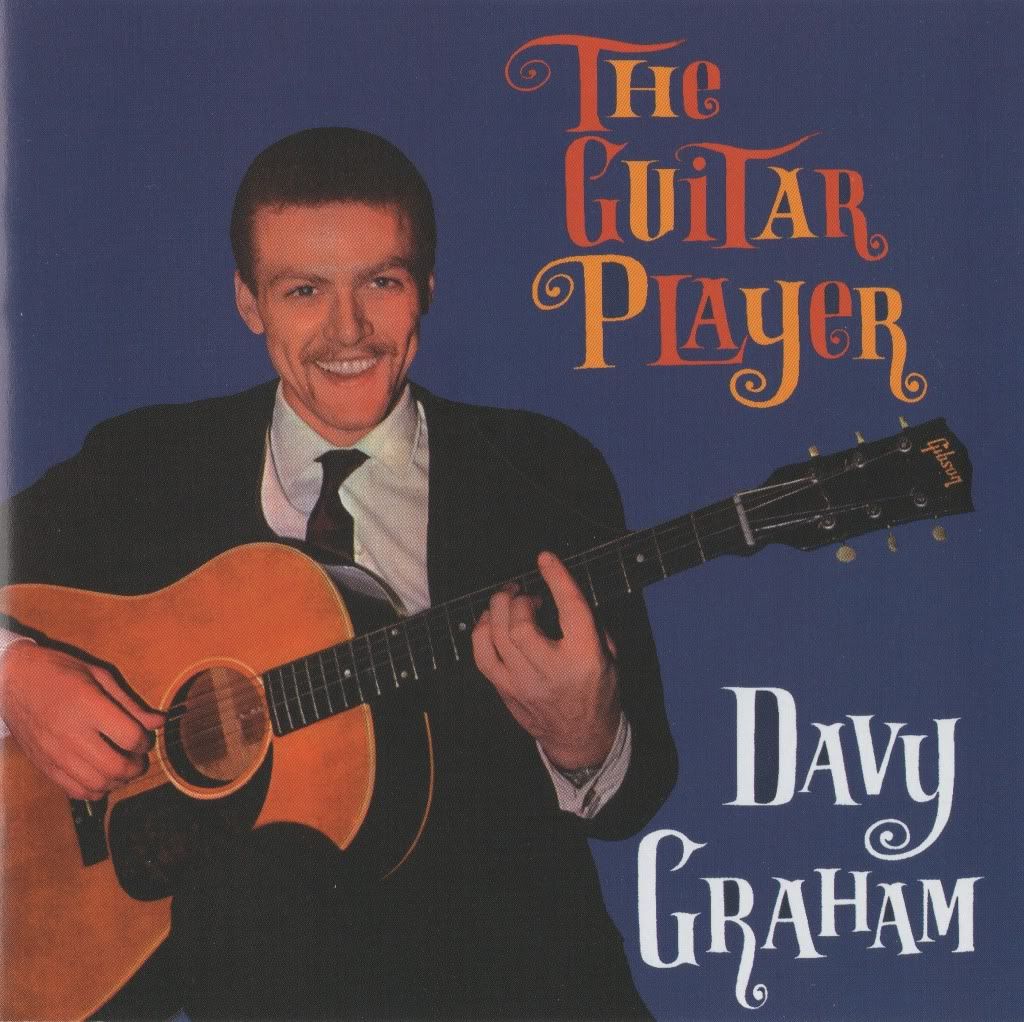
Davy Graham - The Guitar Player


If you're interested in delving into the influential and often mind-blowing rabbit hole that is Davy Graham's guitar playing and inimitable fusion of jazz and blues with folk from across the world, I urge you not to start here!  That's right, it's another installment of the only-very-occasionally-controversial Know Your Enemy series.  This time it's not really poor Davy or his fleet fingers, but rather his presumed audience who's the enemy.  It's got to be pretty much impossible to reckon how many great artists' originality and instincts have been stifled (either by their record labels or by themselves) in hopes of presenting their music as inoffensive and appealing to the largest and most middle-of-the-road audience possible.  By this album's 1963 release, Davy had already been doing the things that made him a legend among many British musicians who would find considerably more fame (things like showing up to a party and playing a single-guitar arrangement of Ravel's Boléro).  Instead of committing his unrivaled guitar excursions to tape, Pye subsidary Golden Guinea decided it would be more commercially accessible to pair Graham with a jazz session drummer and record an inoffensive mix of jazz and blues standards.

And so, we have The Guitar Player, whose title and cover promises an aural vision of Graham it doesn't deliver, at least in relation to his historical reputation.  We get "Take Five" and "Cry Me A River" (an earlier filmed version of which secured Graham this record deal) as well as Cannonball Adderly's "Sermonette."  While the material is in places somewhat mundane, Graham's playing is always flowingly organic (the tempo ebbs and flows with quite a bit of endearing imperfection) and it's fascinating to hear him collapse all the vocal and instrumental parts of a song like "Ray Charles' "Hallelujah, I Love Her So" into a single fingerstyle guitar part.  Disappointingly, most of the songs veer toward jazzy blues (or maybe bluesy jazz, as many Graham's mini-fills tend to riff on blues scales), though there are a few outliers that hint at the man's true passion--"The Ruby and the Pearl" injects a satisfying amount of minor Latin into the mix (and the drummer manages to play the sticks in a considerably more complementary way than he often does elsewhere, or maybe it's the fact that it's just acoustic guitar and drums that makes some of the arrangements sound  just a bit hollow).

Re-listening to this album, I'm reminded how much of a joy it is to listen to Graham's guitar playing, no matter what the context--sort of the guitar equivalent of saying you'd be OK listening to your favorite singer singing names out of the phone book.  It's just the knowledge that Graham had much bigger ideas to share and the way the songs are all so self-consciously happy sounding that rings somewhat forced.  The liner notes Davy writes "I sincerely hope you enjoy this record either to listen to or as a background to a good conversation," which just about sums it up--cowering in submission to your hoped-for audience so very rarely produces the stuff from which legends are born.  The CD reissue of this album seems determined to apologize for the original album's timidness, including examples of what actually made Graham legendary (raga-infused Irish folk in "She Moved Thru' The Bizarre/Blue Raga," Greek folk in "Miserlou" and a considerably more eclectic selection of songs from Graham's later-70's All That Moody, including his legendary instrumental "Anji").  Still, the unfortunate truth is that, pleasant as it is, this album doesn't come close to doing Graham's contributions justice.  While Graham would have career-long troubles finding a marketable niche for himself and regularly seemed to make artistic choices in hopes of endearing himself to an intangible audience, he at least managed to create a concurrent legacy of music that more successfully represented his unique and unprecedented vision.  While it's frustrating that he never produced an epic, vocal-less collection of his genre-shattering experiments (I'm sure partly owing to the fact that solo acoustic guitar as a genre was pretty much just getting going in the early 1960's), there are much better places to start than The Guitar Player.

You can get it here.

Wednesday, October 26, 2011

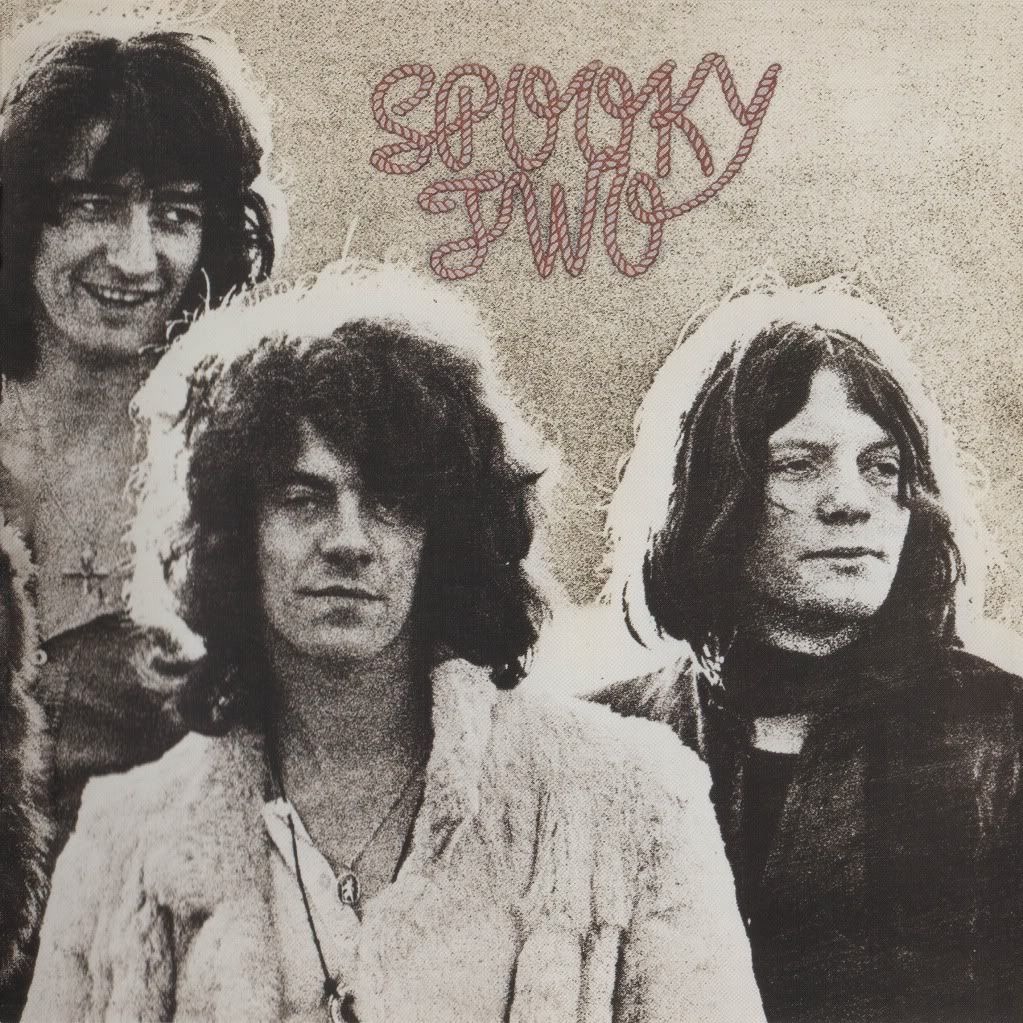
Spooky Tooth - Spooky Two


Spooky Two's 1969 sophomore effort definitely stands as one of those albums I've listened to so many times that it gets more difficult to back away and think analytically about it.  Revisiting it, though, I'm reminded just why I've listened to it so much--it's pretty awesome.  While late 60's hard rock isn't everybody's flavor of choice in 2011, for those who enjoy it I can think of few forgotten bands who do it as well as Spooky Tooth.

What I notice most re-listening to this is how well everything comes together to make the album comprehensively strong.  In the end, it's not really an album where the quality of the songs carries the music past the performances or the production masks a lack of passion or attention to detail in arranging.  Rather, all of these elements are paradoxically workmanlike yet outstanding in the way they complement each other and the overall cohesion of the album.  Take, for example, the lead-off "Waitin' for the Wind," (I love how musicians are never satisfied with just dropping the "g" when singing; they have to make sure the word ends in an apostrophe in the song title, even when the words aren't actually in the song).  It's the perfect opener--30 seconds of drum beat that gets some delay slapped on it around the 20 second mark, and finally a bass/organ riff that sounds like the heaviest thing you've ever heard.  Dual vocalists Mike Harrison and Gary Wright start singing about...well, nobody really knows what the hell they're singing about on most of these songs (something about the wind giving the narrator life advice), but it sounds awesome because they sing with such undeniable conviction.  For such a hard-rocking song, there's hardly any guitar--just on the chorus, where heavily-reverbed harmony vocals lift the energy above the already-driving main groove.  Such is the strength of this whole album--the band hits the sweet spot in all areas without really standing out in any one of them.  As far as I'm concerned, that's as worthy a musical goal as any, and a thoroughly excellent album is probably one of the hardest achievements to rack up.

Sound-wise, Spooky Tooth sets themselves apart from the rest of their UK contemporaries by slathering their sound with heavy gospel influences (the aforementioned reverb, female backing singers and a whole lot of keyboards) and maintaining a fine balance between eclectic songwriting and a cohesive, recognizable sound.  The gospel influence comes through strongest in "I've Got Enough Heartaches," where the backing vocalists share center stage as much as Harrison and Wright, and to a somewhat less classifiable extent on "Feelin' Bad," where the band wrings unbelievable heaviness out of the production and low piano keys.  Elsewhere, though, the band diverges quite successfully into poppy country rock, catchy hard riffing, anthemic folk rock, and heavier vestiges of the psychedelia of their nearly-as-formidable debut, It's All About Spooky Tooth.  Principal songwriter (and the band's only American member) Gary Wright (yes, that Gary Wright) certainly deserves credit for bridging so many styles, even if he now feels embarrassed by his falsetto singing.  On that subject, half the fun here comes from the juxtaposition of Wright's ridiculous head voice and Mike Harrison's awesomely thick, manly and soulful pipes (he's got one of the best rock voices I've ever heard, somehow able to out-Steve-Mariott Steve Mariott, at least in the vocal department).  On the subject of dual lead singers, nowhere is this more righteous than on "Evil Woman," (no, not that "Evil Woman"), probably the album's most epic cut.  The song also features what's really the only guitar solo on the album, which reminds me of my original summation of this album's balance--Grosvenor's solo is so wickedly grimy that it proves his chops in one fell swoop, yet the band as a whole acknowledges that the rest of the songs don't really call for solos and refrain from any excessive lead parts.  It's this restraint that I find most inspiring about this album--the ability to recognize what's actually best for the songs and the overall album isn't an easy one to acquire, and it elevates these guys from a second-tier group of rock journeymen to a level of judgment few big stars ever even reach.

Sadly--if predictably--the band's creative balance didn't last, with The Last Puff proving Harrison couldn't really hold up the whole band without Wright's vocal counterpoint and songwriting, and Witness showing that the duo's chemistry alone couldn't really make up for less-inspired writing from Wright and the absence of some original members.  As it stands, Spooky Two is a treasured example of everything coming together for a group, and--perhaps even more importantly--it's a glaring reminder that the conservative collection of mega hits packaged and branded by music and radio corporations as "classic rock" isn't doing us any favors when it comes to revealing the totality of good music that was produced during the period.  Shame on them for making us work so hard, but the effort is worth it when you find albums as good as this!

Monday, July 18, 2011

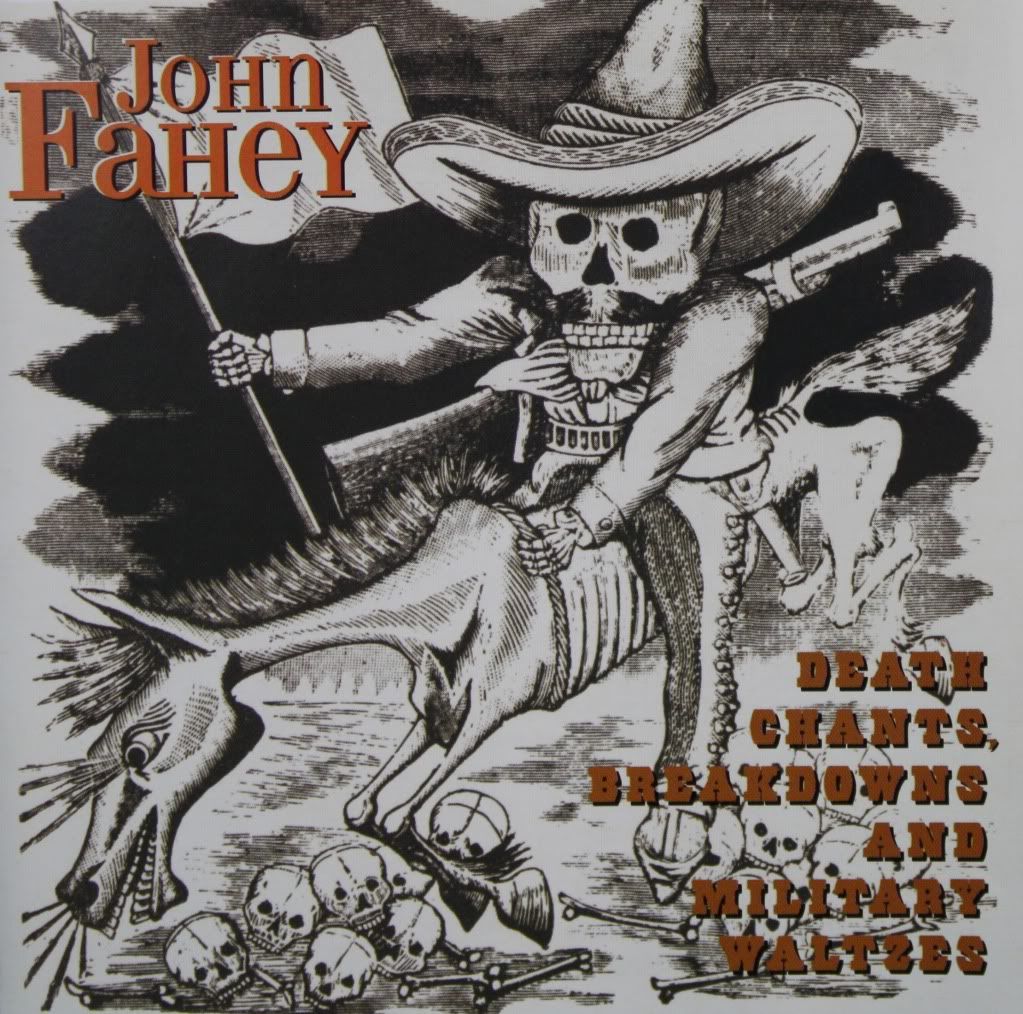
John Fahey - Death Chants, Breakdowns and Military Waltzes


In laying out markers for my musical landscape and contextualizing some of the other reviews I've written, I've been totally remiss in not yet mentioning John Fahey--sole creator of the solo steel string guitar genre, acoustic blues fanatic, composer and innovator--so I'll start with my first Fahey disc, and an enduring favorite from a man whose first 15 recorded years spanned an astonishing array of progression while still remaining anchored in the blues.

Death Chants, Breakdowns and Military Waltzes is John Fahey's second album, released on his own Takoma Records in 1963, four years after his unassuming but iconic debut.  The intervening years allowed Fahey to significantly refine his technique (mostly open tunings, allowing for lots of octave Travis picking, arpeggiatos and some majestic slow strums with blues-cum-classical melodies played on the high strings) as well as his compositional style, which sees the song lengths stretching out and the compositions featuring more surprising changes and contrasting movements.  Take "Stomping Tonight on the Pennsylvania/Alabama Border," which begins with a string-bending slow blues with a turnaround, mutates into a free, ascending arpeggio on the high strings, then again to a crushing minor blues dirge before revisiting each of its sections and closing on an arpeggio that crosses through dissonance to a dreamy major 7th concluding passage. 

Like a lot of albums that have become long-term favorites of mine, part of what I love about this album is how it sounds--the recording quality isn't great, but since it's (mostly) just one instrument, everything's still audible and the music is laced with an antique atmosphere--and the room reverb is awesome.  There are a few moments where the volume of Fahey's guitar threatens to distort the recording equipment (to its great) as on the slide glissando of "On the Beach of Waikiki," or where the distance of the guitar to the microphone lends a raucous feel, as on the energetic "Spanish Dance," and then on "John Henry Variations" when the instrument's slightly out-of-tune harmonic overtones warble with an unsettling but hypnotic pulse.  If I call some of this album "psychedelic," it's these sort of extra-melodic elements that I'm talking about, like 3:15 into "America" where (through the use of tape editing, I assume) the guitar timbre suddenly changes from bassy fingerstyle to tinny high-neck strumming, or 1:06 into "When the Springtime Comes Again," when the key abruptly shifts from minor to major but the theme remains almost the same--there's something within those quavering intervals that lingers on the precipice of some forgotten memory that never ceases to make my hairs stand on end.  The piece would continue to fascinate Fahey the composer as it evolved into numerous versions on the 1967 re-recording of this album, in numerous live recordings, and on 1971's America as "Mark 1:15"--each time expanding on the last but somehow leaving a trail of discrete incarnations, each with its own particular magic.

The dark corners of this album aren't without some extreme eccentricities, either, like the dissonant strumming on the flute duet, "The Downfall of the Adelphi Rolling Grist Mill" (Fahey's titles were often almost as great as the songs they labeled).  Ultimately, though, Fahey's genius substantially rests on his ability to bizarrely marry the familiar harmony and structure of the blues with the dissonance and imagination of 20th century classical composers.  For someone like myself who gets bored with the repetition inherent in a lot of blues music, hearing Fahey deconstruct his beloved genre and reassemble its innards into dazzling piecemeal sculptures breathes new life into what's usually a compositionally inert idiom.  His preternatural melodic abilities provide melodic lines that sink into the brain slowly but insidiously--not sounding like much at first, but ultimately sounding as beautiful as any music possibly could--I really love the way his sweeping melodies traverse multiple string plucks, simultaneously savoring a note and impatiently re-sounding it before the sound has a chance to decay.

I've got a feeling that whichever Fahey album most people name as their favorite is one of the first (if not the first) that they hear.  Though his early career covered expansive ideological and theoretical territory, it did so at a modest pace and Fahey would often repeat the same ideas either explicitly or intuitively.  At the time he was only pressing hundreds of copies of each album, so how was he to know how things would sound when his discography was considered retrospectively?  For example, he re-recorded and re-released most of the songs from this album (to be reviewed at a later date) in 1967, and the advancements he made in technique and composition are noticeable.  What I'm trying to convey is that, beautiful as they are, some of his ideas lose that "first time" magic when they crop up elsewhere, and where you hear them first tends to remain the most memorable.  For me, it was here with Death Chants, Breakdowns and Military Waltzes--I still think it's a great place to start with Fahey as it states many of the ideas he would continue to pursue--compositionally, technically, sonically (he'd continue to experiment with tape editing as the 60's wore on), and arrangement-wise (many more of his albums feature his own adaptations of Episcopal hymns as closers)--but it all comes in a relatively digestible form, mostly adhering to compartmentalized song structures and resonating with some sort of pop instinct in terms of flow and melody.  I've got several John Fahey favorites, but this is probably the one I'd give up last--you can pry this album from my corpse's withered fingers.

Tuesday, July 5, 2011

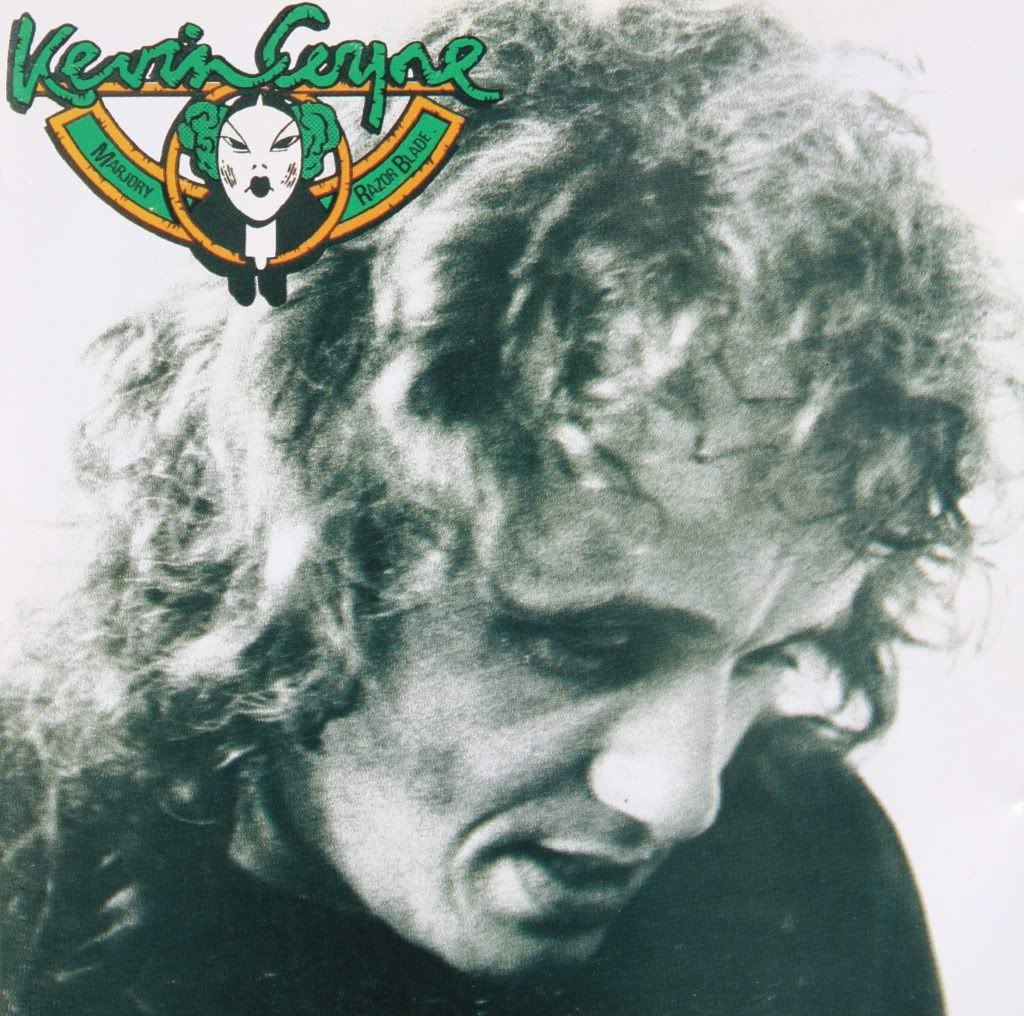
Kevin Coyne - Marjory Razorblade


One of my favorite weird singer/songwriters is the enduringly obscure Kevin Coyne.  Though he started his career with a rather generic blues-rock outfit called Siren, Coyne eventually embarked on a solo career that occasionally brilliantly, almost always interestingly, and usually commercially unsuccessfully straddled the line between intense singer/songwriter, blues, and avant-garde material.  If you've read or heard about Kevin Coyne, it's probably been this 1973 album, his second solo outing and his undisputed high point--Marjory Razorblade.

A sprawling double album, Marjory Razorblade manages to cover a quite wide subject matter swath while maintaining a coherent sound typified by plenty of acoustic and bluesy electric guitars, Dobro, organ and an occasionally boisterous rhythm section.  If you start reading about Kevin Coyne, it won't be too long before you see him compared with Van Morrison--listen to the joyous, organ-suffused "Marlene" to have this comparison confirmed (except, what are those weird Captain Beefheart noises he starts making toward the end...?), then listen to, say, "Nasty," to have the comparison become nearly meaningless--though their vocal styles are somewhat comparable, Van Morrison and Kevin Coyne are worlds apart when it comes to their respective songwriting intentions.

It's often repeated that, earlier in his life, Kevin Coyne had worked in mental health institutions, which would later inform his songwriting muse.  While this detail might appear as the sort of sensational lore that is often tossed around to romanticize artists' work, there are quite a few songs that deal directly with mental instability, like the thinly-veiled desperation of "Talking to No-One," the anxious "Good Boy," and especially the heartbreaking "House on the Hill," which specifically describes the alienating environment of a mental institution and one man's struggle to reconcile his troubled psyche with the pressures of society.  One aspect of Coyne's songwriting I find fascinating is his ability to conjure acutely-detailed impressions of various outsider characters often through the use of first-person narration/monologue.  I don't quite understand how, but Coyne manages to variously imagine himself into the role of silent, desperate searcher on "Talking to No-One," "Everybody Says," and "House on the Hill," resentful, patronizing parent on "Good Boy," paranoid tourist on "This Is Spain," and a couple of uneasily bizarre characters whose precise summation escapes description on "Nasty" and "Jackie and Edna." The final 10 seconds of the latter--it should be noted--states (out of nowhere) but deigns not to develop a pure distillation of the essence of twee folk pop (one of the most over-developed genres of recent times).  What's more, Coyne channels all these characters with gut-wrenching empathy, graceful detail, and a gentle wit that amuses often without laughing at the fragile characters in a malicious way.

Though the album does experience the unavoidable double-album flaw of having a potentially-fatiguing length, the quality across its entirety is remarkably consistent.  Even the inclusion of traditional material like "Lonesome Valley" (on which Coyne sings call-and-response with himself) and "Heaven in My View" succeeds because of Coyne's energy and inventive arrangements.  Similarly, more straight-ahead blues material like "Mummy" ("Way way way way WAYYYYYYYYYYY"), "Chicken Wing" and "Cheat Me" is engaging because of the band's interplay, musicianship and energy.  We even get a few heavier tracks like the dire "Eastbourne Ladies" and a sort of surrealist Bringing it All Back Home-era solo acoustic Bob Dylan/Roy Harper absurd diatribe against religion in "Dog Latin."  The latter is also a pretty good example of Coyne's unusual and idiosyncratic guitar style--big chords with a lot of dissonance, drone strings, but melodic riffing within the core of the noise. 

It probably goes without saying that Kevin Coyne's style is undeniably eccentric--there are enough incidences of sarcastic goofy drama and Coyne's vocals dipping or soaring into bizarre territories to mean that Marjory Razorblade will sound "weird" to most mainstream music fans, but anybody who enjoys music with a pinch of absurdity will probably find his personality fascinating.  Coyne's later career featured quite a few more surprisingly avant-garde tendencies and strange collaborations with other artists, but Marjory Razorblade remains his simultaneously creepy-but-accessible peak.