Showing posts with label Rock. Show all posts

Monday, November 7, 2011

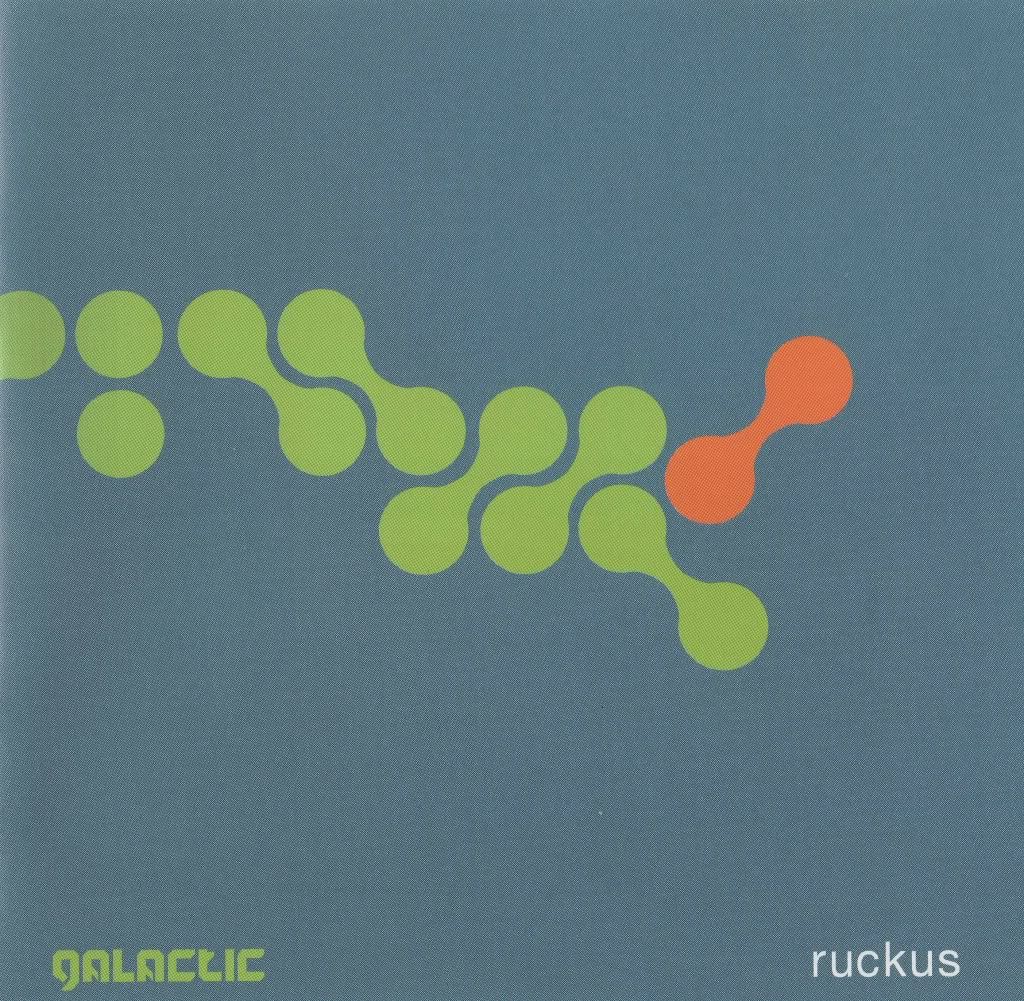
Galactic - Ruckus


Nothing earth-shattering this morning; just some kick-ass funky jams from the group I've seen live the most times--New Orleans' Galactic.  Though I've lost track of them a little since their singer Theryl "Houseman" De'Clouet departed, Galactic has long been a source of a lot of listening pleasure.  Their jams blend funk and heavier Hendrix-like guitar rock with some formidable jazz chops on the part of reed man Ben Ellman, keyboardist Richard Vogel and drummer Stanton Moore.  While they'd been including vocals since their first album, most of their early releases mimicked their live shows, with vocal tunes interspersed with longer instrumentals, some of which were attempts to re-create the band's sense of energy and build-up that makes their live shows so exciting.  On 2003's Ruckus, though, the group made a concerted effort to hone their pop instincts, hiring hip-hop producer Dan the Automator, enlisting the editorial aid of a couple of outside songwriters, upping the number of vocal tracks, and reigning in the run-time of the instrumentals.  The result, in my opinion, is far and away their tightest and most cohesive album.

The biggest immediate difference here is that Stanton Moore's drum sound--always a defining element of the band's sound--has been amped even more, and it's also a lot less jazzy.  A heaviness of the low midrange is also more apparent, with Jeff Raines' guitar and Rich Vogel's synths, organ and clavinette often doubling to give the songs a thick backbone.  While some of the vocal tunes could fit comfortably in the context of earlier Galactic albums (the pounding unison of "All Behind You Now," the clean funky riffing of "Never Called You Crazy,"), the band really explores some new territory in some songs, making use of softer, more soulful sounds (except for the drums of course) and Houseman's pedigree on the sultry "Paint," the downright poppy "Uptown Odyssey" and the left-field General Public cover, "Tenderness."  In other places the band manages to conjure some unforeseen magic by weaving brief vocal passages with mostly instrumental music--"Kid Kenner" is electronic-tinged, trading between ridiculously heavy drum loops and an ethereal vocal section, while "The Beast" merges Moore's weighty drums with the guitar for one of the heaviest beats of the album while the mysterious vocal sort of merges with the groove like an incantation.  They even manage something really strange on the awesome "Gypsy Fade," one of the most interesting songs of their discography--sort of a funk dirge, where the bittersweet harmonica and acoustic guitar somehow coexist with heavy overdrive and synth sounds.

I remember being a little disappointed in the instrumentals when I first bought this album at the time of its release--where was the loose jazzy element that made some of their earlier stuff so epic?  The drum sound, though heavy and impressive, seemed a little too rigid and repetitive, and the songs hardly have any soloing at all.  Needless to say, repeated listens made it apparent that these instrumentals aren't about jamming, but about melody and pop structure.  For the most part, they succeed--"Bongo Joe" blends samples and an eastern melody to great effect, "Mercamon" plays with different textures and riff-based melodies, and "The Moil" has got to be one of the hottest, most exciting songs in the band's entire discography, whereas "Doomed" is a little vacant in the melody department and seems a little superfluous in the wake of the valedictory "All Behind You Now."  Even when not much melody is happening, though, the beat is difficult to deny--it's obviously one of the best things Ruckus has going for it, and it's possible to just feel the drums for the album's duration and still be highly entertained.  My only other complaint is that the lyrics are mostly pretty superficial (the wordplay on "Tenderness" easily trumps anything the band wrote here), but it's not like Galactic was ever about deep messages or wordcraft, and neither is most pop music!

It's hard to believe this album is eight years old, and that Houseman departed the group for health reasons only a month or so after its release.  While the purpose of this recording doesn't really match the loose jamming that live Galactic past and present continues to purvey, the songs and overall sound here is so fresh, tight and catchy it's hard to believe that the album didn't make a bigger splash for the band and they never tried to follow up on the template it set.  I suppose nonstop touring has always been Galactic's bread-and-butter and that albums have been more of a begrudging necessity.   To me, though, this unrepresentative disc still stands as their best studio achievement, not to mention a great reminder of how much can be gained from concentrating on focus and brevity.

Get it here.

Monday, October 31, 2011

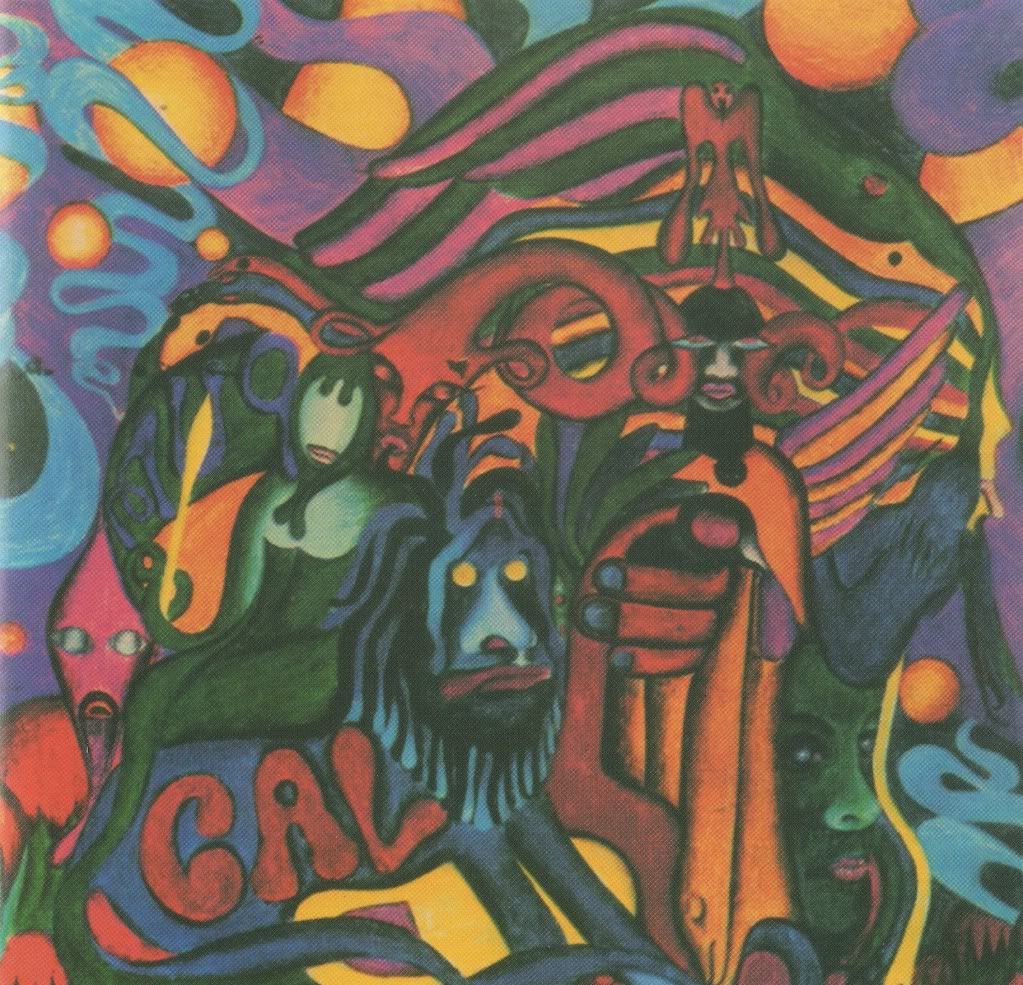
Gal Costa - Gal


A long way off from the last MPB I posted, Gal Costa's second eponymous 1969 album is firmly in the Tropicália camp with wild eclecticism, psychedelic production and bristling with the untamed energy that the Brazilian military government found so threatening at the time.  Worlds away from her more chanteuse-like debut, Gal even blows away a lot of the Tropicália competition in terms of craziness--I put it down to Gal's staggering vocal range and personality, which is self-evident on this album from the very get-go.  The syncopated beat and fuzz guitar opening of "Cinema Olympia" drops out almost immediately as Gal's seductive voice creates more of a lounge atmosphere, which soon disappears as well when the beat picks back up--by the time the chorus happens, Gal's hollering about matinee films at the Cinema Olympia over pounding snares and furious clean guitar riffing--heavy reverb and delay gradually accumulate on Gal's vocals as her wordless shouts and moans multiply before abruptly disappearing in a haze of strings...and then it's on to something completely different!  The detuned nylon string acoustic guitar and snake charmer reeds of "Tuareg" veer immediately left, and yet Costa seems to have no trouble keeping up when the bass grove kicks in and the chorus lifts the dark Eastern atmosphere back into pop territory.

It's easy to be impressed with both the stylistic breadth and quality of the songwriting on this album, and a glance at the credits confirms this gut reaction--there's three Gilberto Gil songs and two each from the pens of Caetano Veloso and Jorge Ben.  One of my favorite things about the late-60's Brazilian music scene is how communal and supportive it seems to be--all of these artists not only manage to co-exist, they also push each other into new directions and also manage to create a collective genre that's more than the sum of the bands that make it up.  The sky is the limit for the rest of the songs on this album--Gal ranges from ethnic Brazil flavor on Ben's "País Tropical," unexpectedly into sweeping string-arranged vocal pop (and a host of Tropicália artist name-dropping) on "Meu Nome É Gal" ("My Name is Gal") all the way to batshit crazy on the sound collage cut-up-cum-big band showcase for Costa's rapid delivery and upper-register bends on "Objeto Sim, Objeto Não."  Though I've got a feeling a lot of this can come across as too jumpy and frantic for a lot of listeners, the radical and immediate mood and texture shifts in this album are probably my favorite part--a song like "Com Médo, Com Pedro" snaps between quiet, jazzy strings and Hendrix-like hard rock, and Costa even trades between sexy and psychotic in the same lines!

The fact that these frenetic songs somehow hold together and make sense grouped on the same album has to be credited to both the songwriters and the backing band, who manage to not only keep up with the stylistic swings, but also to masterfully manage a chaotic atmosphere with deft control.  Listening to music like this, it almost feels like psychedelic music was created for the explicit purpose of being given to the already-able musicians of Brazil and mutated into something the British and Americans weren't even capable of imagining.  The eclectic mood, awesome power of Gal's voice, and simultaneous pop/avant garde atmosphere of this album make it probably my favorite Tropicália album, and it's also probably the most cohesively "listenable" (aside from the eccentricity) as well, since there's no obligatory six-minute tape manipulation freakout (though "Objeto Sim, Objeto Não" comes close).   If you check this out and enjoy it, good news--there's a whole lot more great music where this came from!

Tuesday, October 4, 2011

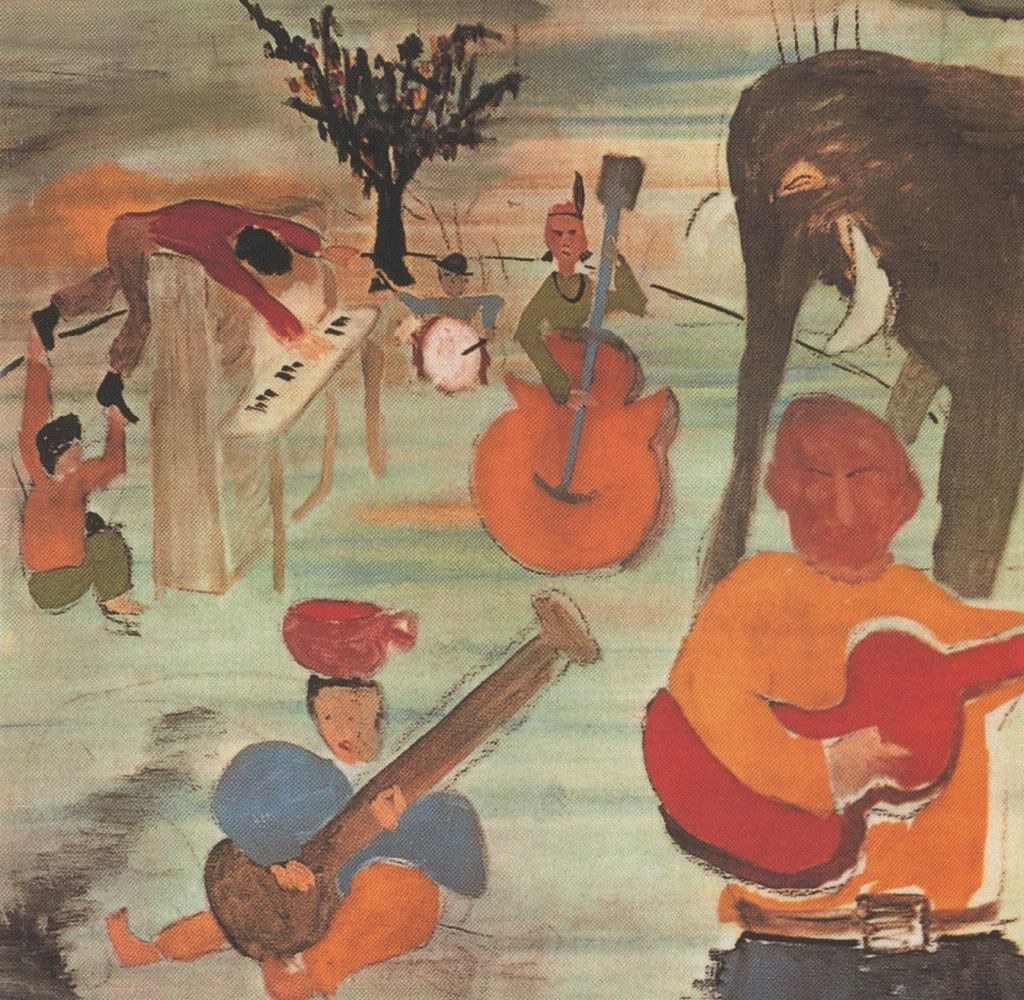
The Band - Music From Big Pink


When it comes to The Band, Music From Big Pink is simultaneously the most obvious and most misleading place to start.  For a group that most writers describe with a heavy dose of historical context and mythology, it can be difficult to separate both the association with Bob Dylan that preceded this album and the widespread fame and musical accomplishments to come from the actual music contained herein.  After long years of fandom and complete subsumption into these sounds (The Band's first three albums still sit firmly atop my iTunes play count list) I find it a little easier to bracket the legendry and approach the music directly, which has in turn led to an odd sort of historical contextualization in my own mind.

Part of the reason I've chosen to review Music From Big Pink is that I've recently spent an inordinate number of keystrokes bitching about musicians not working hard enough to make music that is completely unprecedented when, in fact, I don't believe that that's the only valid approach to music-making.  Case in point, The Band--sure, they laid down some undeniably innovative songs and sounds (though it's arguable that it was a little easier to innovate within a roots rock context back in 1968), but really their genius lies in those pedestrian virtues of group interplay, emotional delivery and great songwriting.  Such is the individual instrumental idiosyncrasy and group chemistry of each band member that even their worst albums are at least pleasant listens, and at their best, hearing Richard Manuel, Rick Danko and Levon Helm rotate in between lead and backing vocals, and hearing everyone swap instruments with carefree abandon to serve each song becomes a dizzying and rapturous spectacle.  Naturally, it helps that the songs are uniformly great--Dylan/Manuel's "Tears of Rage" becomes a New Orleans dirge when Manuel's Canadian Ray Charles falsetto and Danko's aching harmony blends with a weepy horn arrangement, while Manuel's own "Lonesome Suzie" puts Manuel's pathos center stage but wryly winds into a pickup line by the song's end.

The group also betrays a budding interest and capable hand at country and folk on "I Shall Be Released," "The Weight," and a definitive version of "Long Black Veil," which the group immeasurably elevates with the addition of electric piano and the multi-textured combination of Rick Danko's mournful lead with Helm's twang and Manuel's ethereal top third.  This is exactly what I'm talking about--if you're this good at simple melody, harmony and straightforward songwriting, why would you even feel the need to subvert the basic principles of pop music-making?  The problem is, the vast pack of songwriters and performers (both past and present) attempting to achieve transcendence with these simple elements just don't have the knack, the ear, or the equipment to pull it off and end up blending genially but forgettably with the rest.  There are very good reasons why a song like "The Weight" never sounds as good note-for-note on The Band cover albums, without Danko's quivering, that thunderous Danko/Helm bottom and Garth Hudson's all-penetrating class on those honky-tonk octave piano runs (Hudson, by the way, just might be the group's musical linchpin, somehow molding his erudite classical and jazz chops with the rest of the group's self-trained abilities so effortlessly that it's easy to forget that most in his position can't overcome the rigidity of their academic training). 

The songs that really sustain my fascination these days, though, are the gnarled, weird ones--the pseudo-Baroque psychedelic dreamland of "In A Station," the reeling melancholy and bluesy escapism of "Caledonia Mission," and especially the lurching transitions between pounding rock and some some kind of drunken, swinging R&B or jazz on "We Can Talk" and "Chest Fever," the latter of which unites Hudson's icy classical Lowrey organ tones with some of the album's funkiest riffing before the aforementioned teetering interlude.  With all of the genre blending, strange musical cul-de-sacs and weirdness, I'm tempted to even refer to this music as progressive in a very literal sense.  Across the board, the group's (and Dylan's) lyrics perfectly match the album's off-kilter tendencies, combining religious and rural imagery with fragmented, hazy narratives--never quite telling a whole story, but choosing just the right words to evoke endless speculation and fascination--and somehow the skills of the three talented but discretely idiosyncratic vocalists overcome the sketchiness of the words to create authentic emotional depth, every single time.

As I mentioned earlier, I've personally come to view this album in a historical context different from the received narrative; for me, the most engaging progression between The Band's albums is the creative one, in which Music From Big Pink occupies a totally unique place.  While mid-career (and especially nowadays) The Band became known for reassembling an appealingly anachronistic vision of "Americana" in a rock music context, there was a time before the formula that would later limit the group was standardized and the songwriting and playing was considerably more impulsive.  If there's one endearing flaw to The Band's music, it's got to be Robbie Robertson's tendency toward a slightly academic, contrived feel when it comes to his attempts to imagine himself into old-timey America, which I think pops up quite often and became a songwriting crutch later in his time with The Band, especially as the songwriting workload became increasingly his responsibility.  With Music From Big Pink, though, there's a sense of innocence and freshness in the approach that arguably exists only on this album (and maybe on The Basement Tapes).  In spite of years of experience professionally touring, the group was on its maiden voyage as a project imbued with creative vision, and their lack of exposure and the album's long creative gestation made for a wholly eccentric debut.  I think it's this fact coupled with the bizarre mix of Dylan's influence, country, soul, folk, rock, beat poetry and searching that make Music From Big Pink The Band's least accessible album.  Before critics and the public consistently (if somewhat quietly) applauded the album's merits and the group decided to continue further down the nostalgic rural America avenue on their second album, there was just a group of musicians who realized that they could do anything they wanted with the songs they were writing and playing.  It really shows in the fact that the songs are uncompromisingly quirky, but the guys play them like they really mean it.  As the group's tenure progressed, this freshness and excitement was gradually replaced by a workmanlike attempt to recreate the elements about their most-loved songs, and while they repeatedly succeeded in creating deeply resonant, emotional music, they never again reached this album's peaks of unspoilt spontaneity of vision.

Friday, September 30, 2011

Amplifier - The Octopus


The last 2011 album I'm reviewing this week, Amplifier's The Octopus is as vulnerable or more to cries of "hype" as Matana Roberts' Coin Coin, already drawing extreme plaudits (my CD copy had a sticker on it declaring The Octopus to be "the grand standard against which all prog albums will be judged" or some such hyperbole) as well as some rather focused ire from music fans.  Similarly to my experience with Coin Coin, I had read some glowing reviews for this album (the mainstream music press has been quite kind to it) so I was really excited to check it out--how often do you hear music critics putting progressive rock albums in their top albums of the year in 2011?  After investing considerable time in this album  (it's two hours long with an average song length of 7:30) I regret to say that I'm disappointed enough with it that this review will be the second installment of my Know Your Enemy series.

Let's start with the good things about The Octopus, and let's be clear that there are plenty of good things.  Firstly, I want to praise the band's pop instincts--probably the best thing about this album is its melodicism and the amount of catchiness to be found in pretty much every song.  The major/minor shift on "Minion's Song" results in an instantly catchy vocal melody, while songs like "Trading Dark Matter on the Stock Exchange," "The Sick Rose" and "The Wave" are all based on melodic guitar hooks, with plenty more to be found elsewhere.  Similarly, the band is capable of impressive musicianship--the drumming is pretty solid throughout the album, and there are moments where it's obvious the guitarist has got chops (about four minutes before the end of "Trading Dark Matter on the Stock Exchange" is a good one).  The songs here "rock" to the extent that that band's chemistry and energy are evident even though the album's a studio production.  Finally, I think the band's ambition has to be applauded--they're clearly trying to create something epic with The Octopus, managing at times to create an atmosphere of grand proportions and tying the album with an intractably esoteric concept, not to mention the fact that they wrote and recorded the album without label support.  On paper, there's a lot to admire about this effort.

Unfortunately, there is so much about this music that goes against what I stand for musically that the two hours required to listen to it drag by in slow motion, the minutes blending together into a dull aching throb.  To start with, the album is billed as progressive rock.  While a discussion about whether or not this music categorically is or isn't progressive is neither interesting nor productive, it might be illuminating to point out some of the characteristics of progressive music in relation to The Octopus.  If long song lengths, spacey synth sound effects and song introductions, science fiction lyrics and a complicated concept define a music as progressive, then so be it--this album exhibits all of those components.  If "progressive" implies some sort of innovation, surprising content, attempt to move music forward, or at the very least an impressive display of erudite musicianship in composition or playing, then this album falls far short of the mark.  As professionally executed as it is, I hear virtually nothing in The Octopus that we haven't already heard before.  The really disappointing thing is, most of it we've heard from non-progressive music; these guys aren't even plundering classic prog!  In spite of the long song lengths, the band presents us with standardized verse/chorus songwriting, straight-ahead 4/4 time signatures and an ultra-orthodox sense of harmony and melody.  I also have to take issue with those who compliment the band's "intricate" arrangements--despite the guitarist's frustrating display of ability, most of the parts played here are based on achingly simple riffs or clean arpeggios that repeat over and over without embellishment or development across minutes and minutes of track length.  Similarly, the band's interplay pretty much never rises above predictable rock unison riffs and "dramatic" breaks, failing heavily when it comes to subverting the formula.  Combine these structural weaknesses with production that reeks alternately of the heavily processed guitar tone that innumerable bands like Tool have been implementing since the 90's, and synth sounds, effects and samples that sound like they've been excreted by a computer, and most of the music here comes across as the hollow, sterile type of alternative rock that--again--innumerable bands have been producing since the 90's.

If the band marketed itself as a straight-ahead alternative rock band, these commonplace creative choices would at least fit the bill.  Instead, they wrap pedestrian substance with a stylistic sheen that implies "this is gonna blow your mind."  And how is this mind-blowing achieved?  Mostly through the fact that nearly every song is bookended by at least a minute of spacey intro and outro sound effects with no connection whatsoever to the music that eventually appears, not to mention how poorly-integrated and gimmicky they are when they actually appear within the songs.  It's like the band wants to recreate "Shine on You Crazy Diamond" without realizing that the song's atmospheric segues actually contain their own melodic framework and act as commentary on the core song's elements; just because you're playing notes doesn't mean you're producing meaningful musical content.  The album could have easily saved at least a half hour by removing these interludes without even touching the primary content of the songs (which also could stand to have some fat trimmed).  If I'd known how unimaginatively "contemporary alternative" this was going to be, I probably would have been happy to say "that's not really my thing" and leave it alone.  Instead, I'm told it's a great new version of something I love only to find out that it's something else in disguise.

Speaking of disguises, let's get to the lyrics, which probably bother me more than anything else here.  In support of their labyrinthine concept, the band has chosen to present the narrative with an indecipherable stream of pseudo-trippy clichés and embarrassingly cheesy metaphors and images, including (but not limited to): "ice age cometh;" "we're livin' on borrowed time;" "let empires fall;" "cross your heart and hope to die/don't take it personal" (two in a row there!); "don't you know that we belong somewhere over a rainbow/in the wreckage of the UFO;" "faster than a laser beam [beowwww; immediate laser beam sound effect];" "I know that you set the controls for the heart of the sun" (one of the most obvious Pink Floyd references imaginable); "this could be your lucky day;" "well ha fucking ha" (maybe my most hated lyric of the whole album); "divided and conquering;" "ignorance is bliss;" and "reach for the stars, you might grab one."  Rather than attempting to convey the cosmic trip to which they so desperately aspire by using words to disorient and give life to an alien experience, Amplifier is content to undescriptively state their purpose with bland lines like "step inside/take a ride to another dimension," repeated ad nauseum.  Don't forget--these words are sung by a voice that at times sounds eerily similar to Chris Martin's and has the grating habit of pronouncing long "i" sounds as "iiiiii-eeeee-iiiiii."

All in all, I applaud Amplifier's work ethic as an independent group and don't begrudge them their success--it's rare that independent artists can generate so much heat without the aegis of a label (though, to be fair, much the groundwork for their notoriety was laid when they were signed to a label, which I'm sure doesn't hurt).  What upsets me most is the complacency evident on the part of the band and listeners' willingness to assert that this album is a real trip, mind-bending, and weird, when on some pretty objective levels it's far more regressive than it is forward-looking.  I hope that if Amplifier continues to build on their success they'll decide to use their increased means to strive for something a little more outside the box--as of right now, they're about as far in there as you can get.

Thursday, September 22, 2011

Van Der Graaf Generator - Pawn Hearts

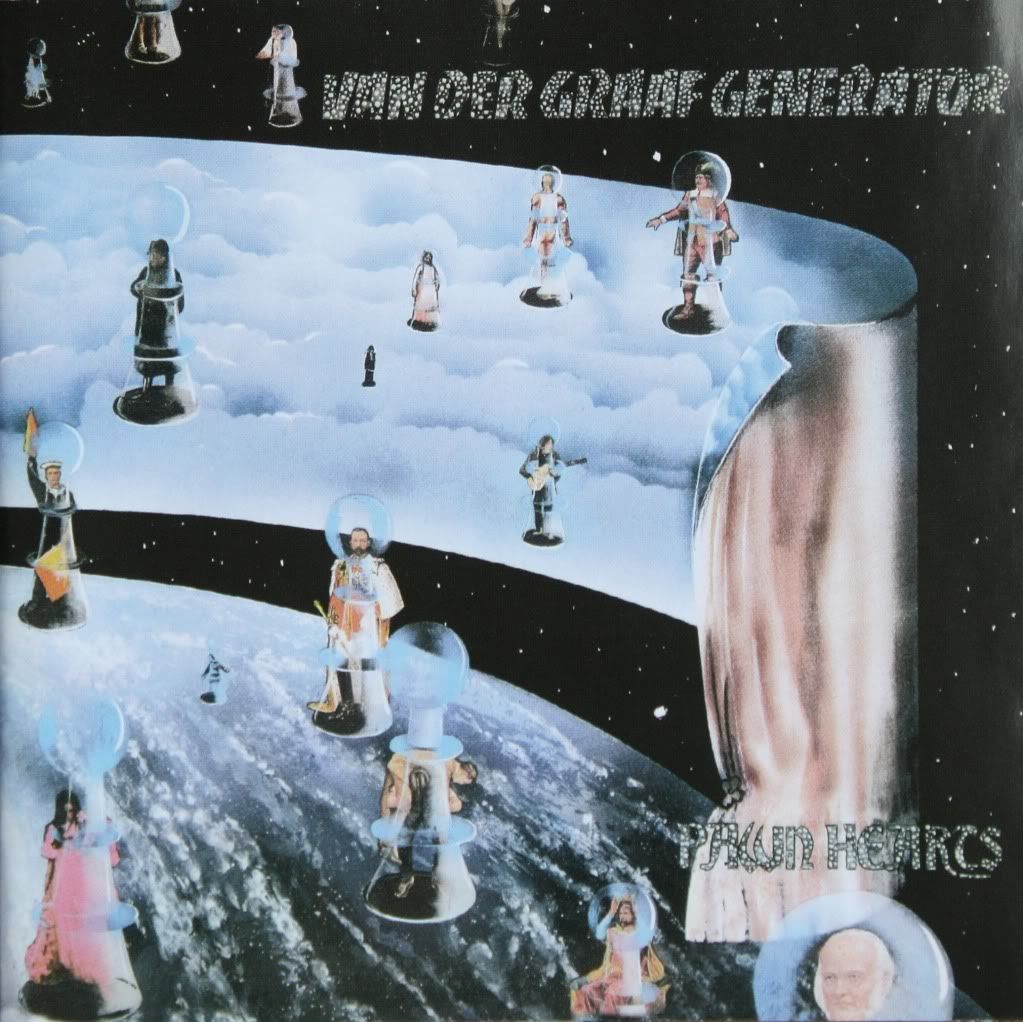
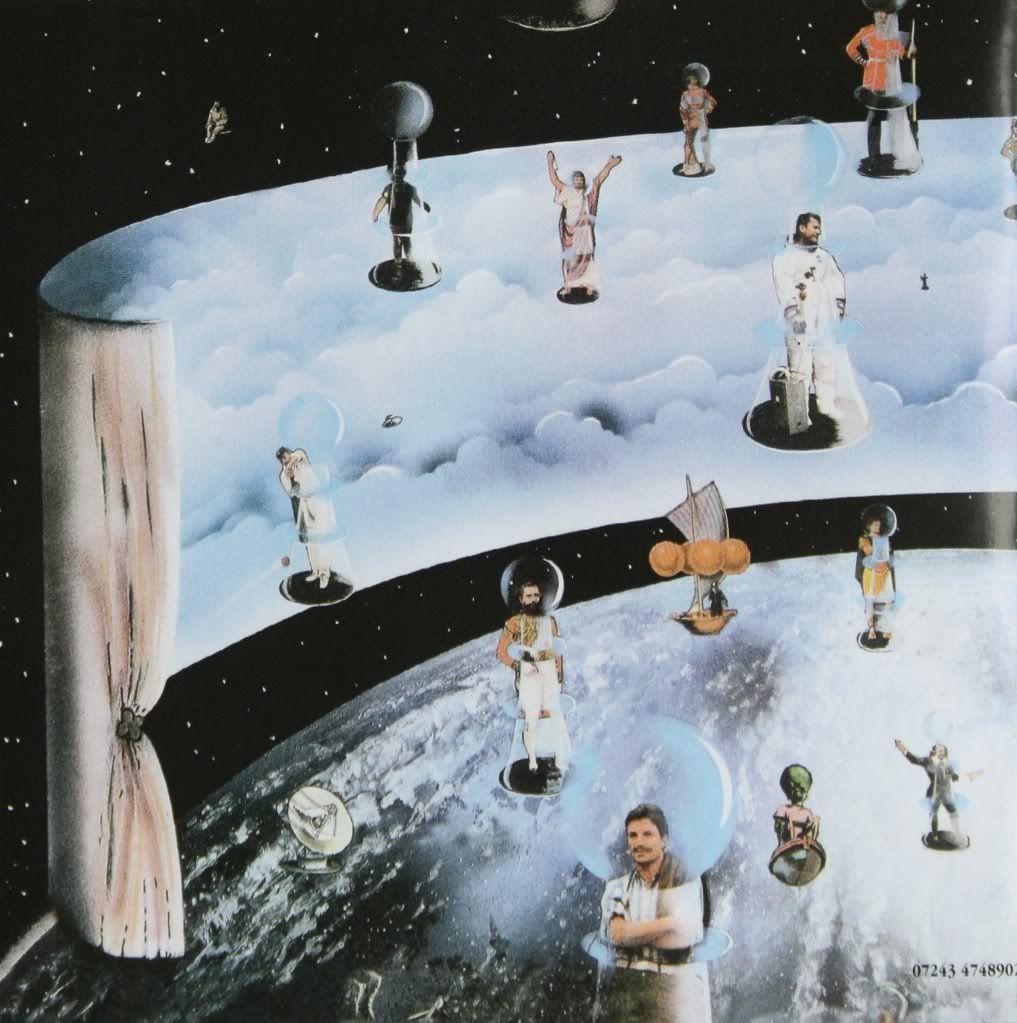
Though Robert Fripp and King Crimson are probably most widely-known as the dark lords of 70's progressive rock, I think Peter Hammill (who I've already introduced with Over) and Van der Graaf Generator do a better job of combining an ominous sound with focused lyrics that actually conceptually match that dark sound.  I won't go into the group's needlessly convoluted history, but suffice to say that this was the last of the first four of their albums recorded before the band went on effective hiatus until their other masterpiece, 1975's Godbluff.  Amongst the landscape of 70's prog bands, Van der Graaf Generator are known for being one of the best bands to largely avoid guitar in favor of a sound that combines unusually aggressive-sounding keyboards (Hugh Banton) and saxophone (David Jackson).  The group additionally distinguished itself by being much more successful in Italy than in its native Britain, and by having a few of the worst-realized album covers in all of the progressive boom (and that's really saying something).

In my view, Pawn Hearts makes good on the promise of its predecessors, especially H to He Am the Only One, insofar as the band manages to flesh Hammill's lyrical and songwriting vision more cohesively and provide some of the most interesting, intense and engaging music they'd so far committed to tape.  As I've kind of already mentioned, Peter Hammill is the deal-breaker for Van der Graaf Generator--you either like his balls-to-the-wall, theatrical, choirboy-cum-chainsaw vocals and find his perpetual interest in the blurry borders between psychology, metaphysics and science fiction compelling, or you simply don't.  For me, his style is so original and varied that I'd probably like it even if I didn't find it aesthetically appealing, though I do occasionally feel he treads familiar lyrical thematic pathways a little too often (isolation being one).  So, the Van der Graaf Generator sound is often expressed using Hammill's vocals as the prime melodic device, placing especial emphasis on his words and the drama of his delivery.

Like so many hallmark 70's prog albums, Pawn Hearts consists of only three tracks.  The first two, "Lemmings" and "Man-Erg" could accurately be described as refined summations of where the band had already been.  "Lemmings" is a sweeping expression of the album's concepts, describing mankind as lemmings rushing toward a clifftop.  After a brief atmospheric introduction featuring Hammill's understated acoustic guitar strumming, the band launches into an odd-meter unison riff (one of their most distinctive devices) that powerfully joins Hammill's voice with the organ and saxophone.  I'll readily admit that most everything Hammill writes is dark to the point of dourness and humorlessness, but I'll be damned if the hairs on the back of my neck don't stand up on end every single time I hear him sing "There is no escape except to go forward!"  Though the subject matter is bleak, I think there's far too few lyricists willing to face up and address the particulars of humankind's ultimate destination and looming self-destruction.  Not that they need necessarily be addressed so grandiosely or even darkly at all, but for me it's a refreshing change of pace from the blithe escapism offered by most pop music.  Across the song's mottled landscape (there are all kinds of great singular moments built into the composition) Hammill's desperation grows to the point that he pleads, "What choice is there left to die/in search of something we're not quite sure of?"  The song's rousing middle section combines an interlocking riff based on Jackson's dual saxophone (he'd play two at once) and Banton's juicily-overdriven organ.  By the time the song winds back around to its recapitulation and climax, it's apparent that Hammill's outlook isn't quite as pessimistic as it originally appeared--in the face of an indifferent universe, he decides, "What choice is there left but to live/In the hope of saving our children's children's little ones?"  The humanistic message rings in the air over one of my favorite parts of the song in which two of the melodic themes overlap and repeat, warping each time into an uncertain haze, musically complicating Hammill's conclusion.

"Man-Erg," perhaps best described as a power ballad, weaves a well-trod style for the band with the Pawn Hearts concept (which I interpret to generally encompass the unsure and unstoppable motion of the human race and each human's seemingly insignificant role in it--both externally and metaphysically).  As the lyrics quote from the band's earlier works (both "Killer" and "Refugees"), Hammill passionately treads the floorboards over his dual nature as a killer and an angel, eventually realizing that he encompasses all aspects of human nature.  The song's deliberate but anthemic pacing as well as another aggressive and dissonant middle section with some frenetic vocals set the track apart from some very similar earlier ballads in the group's history, and some jazz harmony in the second half adds a welcome dimension to the relatively straightforward ballad style.

"A Plague of Lighthouse Keepers," the album's 23 minute-long second half, is predictably less focused.  The epic track trades straightforwardness for some of the album's most spacious atmosphere, though, and it's also got some of the most musically progressive composition of the band's entire output.  I've heard a number of listeners write the song off as directionless, which I think is easy to do when a song is over 20 minutes long--personally, I think it takes quite a few plays and some close attention before songs like this really open up and I try to withhold judgment until I've at least listened enough to recall from memory the song's general structure and some of the melodic elements.  If I'd written this review six months ago (even after having heard it many times over the course of two years), I'd be far less kind to this song, but I've come to appreciate its many nooks and crannies, wealth of melodic ideas and repeated brazenness much more in the interim.  I still don't feel like I've got a strong grip on the lyrical subject matter (the beauty of forming a long term relationship with good albums), but I think the song's strengths certainly outweigh its weaknesses, with some breathtaking unison arpeggios, some of the most searing dissonance on the album, and some genuine scariness.  I would say, though, that the 70's progressive period did produce a few more cohesive epics; "Lighthouse Keepers" at times plays like several nearly-a-song sections interspersed with musically interesting but somewhat unrelated vignettes.  For an epic of this length, I'd hope for a little more unified purpose, but the parts are of high enough quality that it's still pretty engaging. 

I've maintained for a while now that, though it may not accurately be described as the way "forward," atonality in both melody and harmony seems to be the most shamefully underutilized 20th century music advancement of all when it comes to pop music.  Instead of passing the last 100 years retraining our ears to appreciate the innumerable combinations and "millions of colors" possible through the varied application of atonality, we've clung to practically the same conservative, inflexibly traditionalist, oh-so-Western, "16 colors" conception of harmony we've been fearfully clutching more or less since Beethoven.  It's with great pleasure that I welcome this group's experimentation with atonality in "Lighthouse Keepers'" more violent sections as well as the depth it adds to some of the more ethereal passages.  Though 70's progressive rock eventually became hated by some for its less attractive aspects and exponents, to the point that the word "progressive" almost exclusively conjures sounds of Hammond organs, Moog synthesizers, romantic composition and 20 minute songs, I long for a future in which the word "progressive" returns to its literal meaning and can be used to describe music whose intent is to continue music's progress and (ideally) perpetual journey to become something it wasn't already before.  Sadly, we've instead got "Art Rock," "Experimental," "Post-Rock," "Post-Punk" and "Noise" all using increasingly vague synonyms to distance themselves from the period flavor of 70's progressive music when in reality they're often attempting to achieve similar goals.  That said, I think Van der Graaf Generator (though obviously of the 70's in sound) puts a distinctive spin on the period's common tropes and provides enough interesting experimentation that they're still worth checking out and deserve their cult status as one of the best of the original waves of progressive bands.  While I don't think any of their albums are flawless, I do think the uncommon number of risks they take more than adequately justifies the flaws.

In celebration of the horrible album art, here's the back cover.

Thursday, September 15, 2011

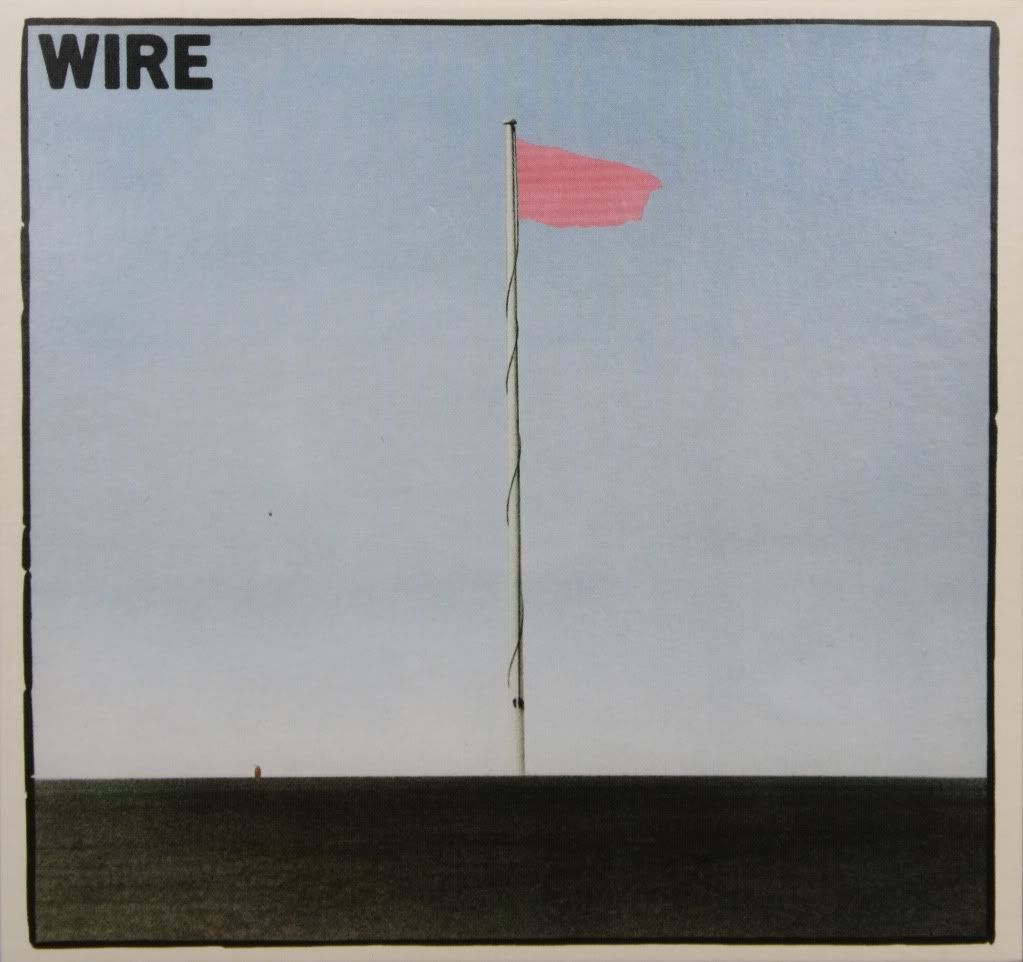
Wire - Pink Flag


It's pretty heartening to see that, even in the heyday of British punk rock's emphasis on simplicity and aggressive emotions, there were still a few bands willing to marry those ideals with intelligence, experimentalism and a high level of attention to creativity.  While I freely admit it's not my most-explored area of interest or expertise, I can easily say that of all of the "post-punk" outfits I've heard, Wire--at least on this album--bears the strongest aural relationship to actual punk.  The genius of Wire's debut is how the band manages to fashion punk's back-to-basics aesthetic and vitriol into a new incarnation without turning to elements of the psychedelic, experimental and progressive music against which punk was supposedly a reaction, which is more than can be said for most of the other post-punk bands I've heard.

Probably the most impressive twist Wire makes on the punk formula is one that can actually be productively applied to all types of music--they make an effort to turn each song into a terse statement where the ideas are clearly stated but not smothered to death through repetition.  The result is a 21-song, 35 1/2 minute-long album with nary a wasted second and a shining wealth of ideas.  Lately, this pursuit of succinctness is one that has interested me more and more both as a musician and as a listener.  The beauty of Wire's solution is that the ideas are oftentimes stated only once--though some songs have repeating verse and chorus structure, there's also some more through-composed pieces like "Field Day for the Sundays," which subsists on about 2 riffs (one of which becomes even shorter when it returns at the end of the song) and is over in 28 seconds!

It seems the concept's successful application hinges on a delicate balance between the quality of the ideas and how often they recur.   While Wire often finds artistic success in paring down their songs to sub-1-minute lengths, I don't think short song lengths are necessarily the only way to successfully implement brevity.  It seems to me that the real enemy here is excessive repetition which, in my mind, is the not-so-silent killer of interesting ideas and the bane of a huge swath of popular music both past and present: an artist takes what once was an interesting idea and hammers it into the ground with repetition (either in the same song or across multiple songs) providing little or no variation or expansion on the original idea.  With ideas stated so sparingly, the songs never overstay their welcome; while some might argue that this approach is deficient in terms of development, I don't see an issue when so-called "development" usually just consists of to-the-note repetition.  As a kindred creative spirit, I think the grace of this type of brevity is that the development or repetition of an idea is implied and left up to the listener's imagination and previous experience.  Our ears are accustomed enough to melody and structure that, if we're paying attention, it's easy to extrapolate a brief idea and fully complete the relatively unimportant repetitive material that isn't there with the condensed pith that actually is.  Rather than heavy-handedly forcing the melodies and ideas into the listener's memory, this method alluringly waits for the listener to meet the ideas halfway, and for me this engagement is a large part of the fun; further listens reveal more and more as the ideas expand in your head.  If you want to hear more of the same riff--listen to the song again.  Meanwhile, the artist is able to focus on surprising the listener's ear with the next idea rather than providing it with ear-predictable chaff, and can potentially pack more ideas into one album than many bands manage in an entire discography.

Now, it's not that any repetition is bad or even that conciseness is the only way to pack music with ideas (compositional guidelines for development in classical music and improvisational comping in jazz are a couple of examples of traditions in long-form music that manage to keep the interesting ideas flowing).  The point is that we've gotten somewhere interesting--we're now focusing on ideas as the building blocks of good music; the interesting and infinitely-discussable issue of whether we fully agree on the method becomes more of a matter of preference, subordinate to the more important common goal--the avoidance of a zombie-like, by-the-numbers approach to music. 

Of course, short track lengths alone don't guarantee great ideas--luckily, Wire hold up the other end of the bargain.  Despite the fact that the songs are pretty much exclusively guitar-bass-drums, the band manages to squeeze what seems like a limitless number of great riffs, vocal arrangements and hooks out of such classic instrumentation.  The songs range from the juicy distortion of anthemic punk sing-alongs like "Ex Lion Tamer," "It's So Obvious" and "Mr. Suit" to some glorious, occasionally light-hearted hard pop with the likes of "Three Girl Rhumba," and especially "Fragile" and the ridiculously catchy "Mannequin."  I also really like how well they manage to meld the punk ethos with more experimental (and occasionally slower) material, like the album's dire opener, "Reuters," the detuned rage of the title track, and the simultaneously bluesy and weird "Strange"--the album's longest track at 3:59.  Special mention should be made of the sometimes impenetrable but always evocative poetry (thanks, I think, to vocalist Colin Newman) that makes up the lyrics.  While Newman's suitably untrained and raw delivery often makes understanding the words difficult, searching some lyrics on the internet gives the already engaging music even more depth and helps the songs' linear structures make even more sense. 

Like a lot of classic albums, Wire's debut will please more than just punk fans with its pop sensibility, experimental edge and timeless rock and roll spirit.  While it's sort of easy to understand that the band's creative approach guaranteed the album's initial commercial failure, today it's seen by most as a classic and probably the purest example I can think of to illustrate the type of idea-to-minute ratio that more artists should aspire to.

Sunday, July 31, 2011

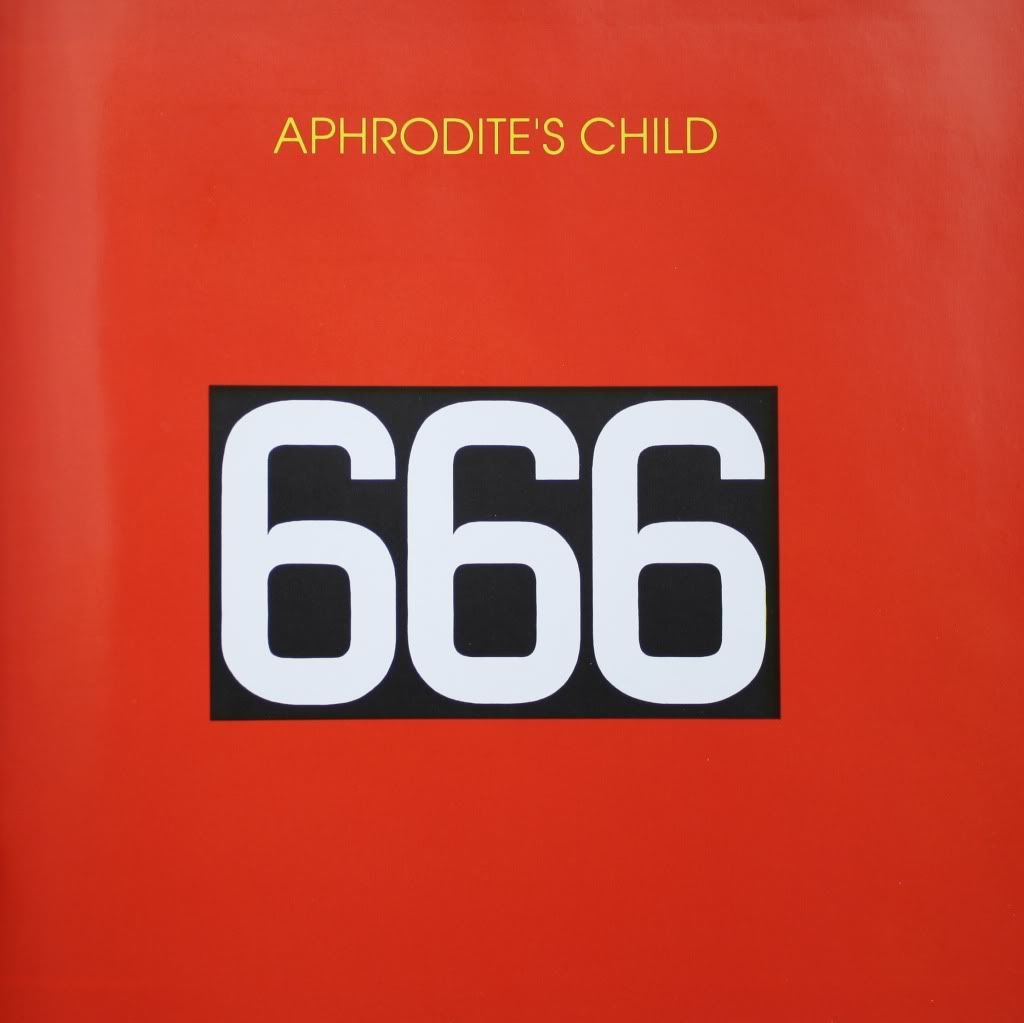
Aphrodite's Child - 666


You probably wouldn't guess it from listening to this epic 1972 concept album, but Greek ex-patriate group Aphrodite's Child was actually a pretty standard rock quartet featuring drums, bass, guitar and keyboards.  Of course, the group was led by Vangelis Papathanassiou (later to achieve worldwide notoriety as the soundtrack composer for films like Chariots of Fire and Blade Runner), so its leader's vision demanded substantial studio augmentation, and the end results take on quite a bit of theatricality and an operatic expansiveness thanks to a wealth of different instruments, production techniques and vocal contributions from a number of non-band-members.  Without getting too far into the band's history, I'll say that this undeniably ambitious project took the group far outside their pop-oriented roots into the realm of long-form rock music narrative, touching upon psychedelic rock, European folk melodies and instrumentation, avant-garde performance art and studio composition, and lightly (if mostly in its weird and eclectic spirit, if not compositionally) upon progressive rock. 

Despite the fact that it's credited to Aphrodite's Child, 666 is a creative collaboration between Vangelis Papathanassiou and lyricist Costas Ferris and is an attempt to adapt the New Testament's Book of Revelation to a musical setting.  Though it's a concept album, there isn't really a plot or discernible narrative, not to mention an overtly Christian message (thankfully).  Instead, the combination of music and words evokes a dramatic conflict focusing on characters the Lamb and the Beast, and using familiar elements like the Four Horsemen of the Apocalypse, the number seven, as well as significant number of references to the social unrest that typified the late 60's and early 70's.  In many ways, I find 666 to be a remarkable and successful piece of work--the music covers quite a lot of ground, from the band's pop origins (on the catchy, horn-backed, Beatle-esque "Babylon" and "Hic and Nunc," "The Beast," and valedictory ballad "Break") to a significantly harder brand of psychedelic rock.  This second style is exemplified both in traditional song form on one of the album's best songs, "The Four Horsemen," which alternates between atmospheric folk sections and pounding invocations of the different horsemen and their visages, ably cried out by bassist/vocalist Demis Roussos.  Similarly trippy is the instrumental/spoken word song "Aegian Sea," which features heavily-reverbed guitar and vocal arrangements reminiscent of both early- and mid-70's Pink Floyd both melodically and in overall sound, and especially in Silver Koulouris' guitar sound. 

The band also capably handles shorter heavy rock instrumentals like "The Battle of the Locusts" and "Do It," as well of some of the album's most interesting fusions of psychedelic rock and Mediterranean folk music in the driving furiousness of "The Lamb," "Seven Bowls," "The Wakening Beast," "Lament" "The Marching Beast."  This fusion is one of the most distinctive things about Aphrodite's Child's sound; despite the album's scope and the quality of the playing, much of the instrumental palette sounds pretty familiar in that 70's sort of way, so some more ethnic sounds freshen up the more orthodox sounds.  One of my favorite of these moments comes on "Altamont," where the band whips up a hpnotic piano/horn/vibraphone/wordless vocal riff that presages the similar sound and ad nauseum repetition that Christian Vander and Magma would doggedly pursue in the next few years as they created Zeuhl.  The track evokes the real-world incident it's named after and builds to an effective spoken word climax that's one of the most humanity-affirming moments on the album.  In spite of Vangelis' varied capabilities as a composer, the musicians occasionally fail to communicate a sense of individual identity on their instruments--that magic element that can elevate more pedestrian material above the mere stuff of its making. 

That said, there are some genuinely "out" moments throughout the course of the album.  The spoken narrations (many provided by "John Forst") provide an excellent mood and sense of foreboding that support the music's darker leanings, while providing opportunities to expand Vangelis' compositions, even if the tracks are less than a minute long.  "" is one of the most notable avant-garde tracks, featuring a modern vocal performance by Irene Papas in which she repeats "I was, I am, I am to come I was" over a percussion backing provided by Vangelis.  Papas' controversial performance blends the allusion and multifaceted meanings of the mantra with the singer's graphic imitation of an orgasm into a package that might even make Marvin Gaye (king of the female orgasm sound byte) blush in embarrassment.  The nearly side-long "All the Seats Were Occupied" consolidates the entire album's disparate threads into an epic rock instrumental and sound collage in which bits of the previous songs reemerge and build into a pretty grand and satisfying climax, even if the track takes a few more minutes than necessary in getting there. 

Ultimately, 666 is definitely good enough to justify its enduring cult popularity--its ambitious scope, the strength and variety of Vangelis' compositions and plenty of great rock and dramatic moments make it a thoroughly enjoyable listen, especially for fans of music like Pink Floyd where the texture and atmosphere are as important as the songs themselves and there's plenty of sound snippets and spoken sections (though Vangelis does get quite a bit more dissonant and weird than Pink Floyd did by the time they achieved worldwide popularity).  If the music here suffers, it's primarily from sounding a little unimaginative when the songs are analyzed close-up, and a bit generically "of its time" 40 years later and, like most double albums, requiring a long attention span to absorb completely.  While it'll probably never rise above its cult obscurity, 666 is certainly a worthy and enjoyable next step for people who've exhausted the more well-known, accessibly mainstream psych/progressive bands of the early 70's--just don't expect it to shatter your musical world. 

Thursday, July 21, 2011

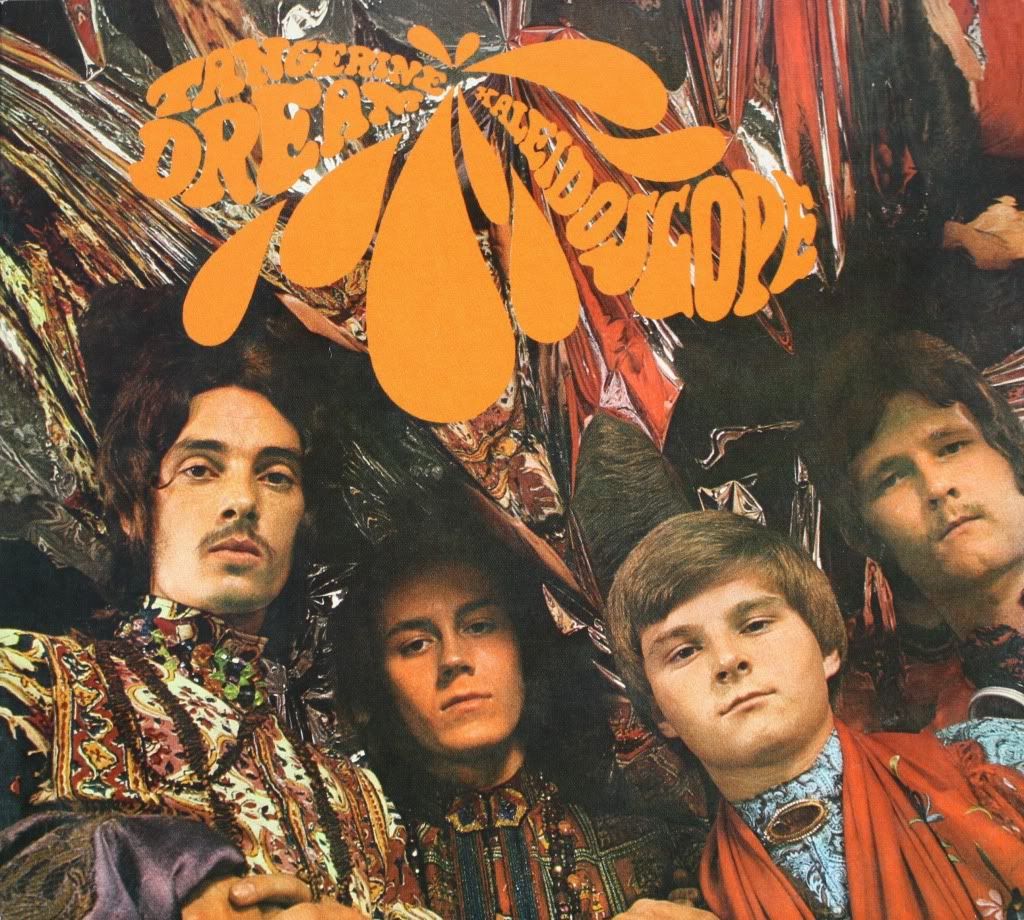
Kaleidoscope - Tangerine Dream


 In 1967 the psychedelic movement was at its peak in both the UK and the United States.  Like any good fad, the movement produced some extremely good music, some extremely popular music (not always both at the same time), and quite a bit of forgettable music that--especially in retrospect--sounds quite derivative in relation to the more popular and innovative psych releases of the day.  For this reason, much of the music from the period has a sort of "time capsule" feel to it and is usually clearly datable.  I'm not one to disparage music because it sounds like it was created the year it was created, but by the same token I most appreciate psychedelic albums that were either innovative with their ideas (after all, there was a lot of fresh stuff happening during the period, especially by pop music standards) or at least exemplify the best things about the period and do psychedelic well.  Although there are quite a few psych releases that are among my top albums and I regularly listen to and enjoy a broad selection of psych, it's not really my main interest and as a collector and listener I have less interest and tolerance in the more marginal (quality-wise, that is) releases.  Probably the main reason for this is that the musical ideas expressed during the movement, great though they are, seem to be finite and recycled to an extent that many of the "lost" psych albums are a source of frustration and diminishing returns rather than revelation.  So, with that preface I'd like to talk about some hallmark psychedelic rock that isn't especially innovative but, for me, exemplifies the movement and sounds great--over and over and over.

Perhaps unsurprisingly, the psychedelic movement spawned two Kaleidoscopes--a US version and a UK version.  The party line is that this, the UK band, is the one worth talking about.  I tend to agree--to me, UK psychedelic music is quite a bit more compelling, as I think its movement produced the most interesting ideas, and the dumbed-down endless jamming of West Coast psych bands like Quicksilver Messenger Service and Grateful Dead never really did it for me.  There are some great obscure examples though, and you can't go wrong with a lot of the well-known stuff from Hendrix, the Doors, Love, Dylan's more psychedelic material and, of course, Captain Beefheart.  When it comes to British psych I tend to separate groups roughly between psychedelic pop and the edgier, darker and weirder stuff.  Kaleidoscope fits firmly in the former category, influenced most by (and most exemplifying) the whimsy, melancholy, subtle strangeness in sound and subject matter of the Beatles, Donovan and especially Syd Barrett-era Pink Floyd.  Like those groups, though, Kaleidoscope place utmost emphasis on pop songcraft.

Unlike a lot of psych bands, Kaleidoscope employ mainly standard rock band instrumentation--the band's eponymous opening track opens mysteriously with the invocation, "Relax your eyes, for after all--we can but share these minutes," before kicking into an upbeat slice of pop propelled by piano, heavy drums, overdriven electric guitar and cascading vocal harmonies framing a simple melody and lyrics that describe the goings-on of the world as seen through a kaleidoscope.  The track's buoyed by the wide-eyed energy of youth and, undoubtedly, wonderment at drug experiences.  It's this guileless sincerity that lifts most of the album above its forgotten peers to the level of rewarding our ears over 40 years later.  The arrangements continue to show a penchant for nylon-stringed guitar on the beautifully despondent "Please Excuse My Face."  "Dive Into Yesterday" is one of my favorites, with some noisy surf-influenced guitar, a progressive arrangement, a gorgeous, droning/rippling bridge and a reprise of the "relax your eyes" invocation for added cohesion.

Familiar UK psych tropes crop up repeatedly--"Flight from Ashiya" and "Mr. Small, The Watch Repairer Man" tap into the pervasive influence of "Eleanor Rigby" in terms of illustrating human helplessness and the loneliness of outsider characters.  The creative hooks make the tracks though; the former's jaunty pace and "we're poor little lambs/who've lost our way/bahh bahh bahh" effectively contrast the lyric's description of a plane crash in progress, and the latter brilliantly utilizes the familiar sound of a clock chime as the melody for the tale of a lonely watch repairer.  The song's "la-la-la-la" refrain again strongly echoes Syd Barrett, as does "Arnold Layne"-esque "The Murder of Lewis Tollani."  To round things off, there's also an overt Dylan influence in the words of "In The Room of Percussion" and elsewhere.

No review worth its salt consists merely of name-dropping and influence finger-pointing.  The point is that the band managed to create an immensely enjoyable collection of songs in spite of telegraphing their influences.  Peter Daltrey's (leader and singer) voice perfectly fits the material, capable of a rock edge but also of quavering sincerity, and the vocal lines are full of youthfully attractive harmony experiments that endearingly drop out when the line becomes too difficult.  Likewise, the production sounds great.  The piano, electric guitar and drums especially are miked so hot that they're right up in your face, and at its high points the album offers some extremely majestic moments.  One of those is the nearly indefinitely-prolonged "The Sky Children," which sweeps by with an airy sing-song melody, catchy 12-string electric guitar and tinkling chimes.  It's songs like this that get to the heart of why I continue to reach for this album--the innocent positivity and wonderment are so sincere that it's infectious, and to me that's the essence of the psychedelic movement.  Through the a confluence of counter culture, newly-available information, social freedom and drugs, the youth of the 60's cohesively created their own movement based on love, experimentation and open-mindedness, and all the record companies could do was try and facilitate a genre they knew nothing about.  This attitude shows in this music and even in the faces of the people who made it on the album cover--they were just kids themselves.  On top of that, the album perfectly inhabits its moment in time with the immature "wisdom" and pseudo-moralizing of "A Lesson Perhaps," probably the album's weakest track.  The pitfalls that ultimately undid the movement (naiveté and ignorance of the more complex and darker aspects of human interaction which would take much more real prominence at the end of the decade) already show in spite of the album's glistening beauty--a silver cloud with a dark lining.

According to the liner notes, some executives at Fontana had a lot of faith in Kaleidoscope's potential and poured a significant amount of money into this album and its follow-up, Faintly Blowing.  Sadly, the fact that they gave Kaleidoscope a full-length LP deal before making the band prove themselves with a hit single (as was standard practice in the day) is reflected in the label's poor instincts in choosing singles for the album--"Flight From Ashiya" wouldn't be my first choice ("Kaleidoscope," anyone?), nor would the horn-arranged satire of "Holiday Maker" or the catchier but still sub-"See Emily Play" tinkly toy piano of "A Dream for Julie."  By the time they chose the sublimely catchy "Jenny Artichoke," it was 1968 and the psychedelic boat was sailing along with Kaleidoscope's chances of wide recognition.  The band changed its name to Fairfield Parlour after Faintly Blowing and suffered more rather unjustified obscurity in a slightly more progressive vein before ultimately disbanding in 1972, when the psychedelic movement that spawned it was a distant memory.  Though the movement was short-lived, one of its lasting benefits was the fact that record labels were much more open to funding and taking risks on bands they didn't quite understand in hopes that the kids would go crazy for it.  A lot of great and eccentric albums would never have been made if not for this practice (including the entire progressive rock movement, for better or worse), and it sadly fell out of practice toward the mid-70's where the seeds of today's corporate music culture, with its willingness to autocratically tell listeners what they want and/or immediately seize and over-commercialize new music that listeners found for themselves, were sown.  Still, Kaleidoscope's period piece debut remains a  testament to the joys of innocence, pop, and searching that still sounds charming today.

Get it on CD here.