Showing posts with label 1968. Show all posts

Saturday, January 28, 2012

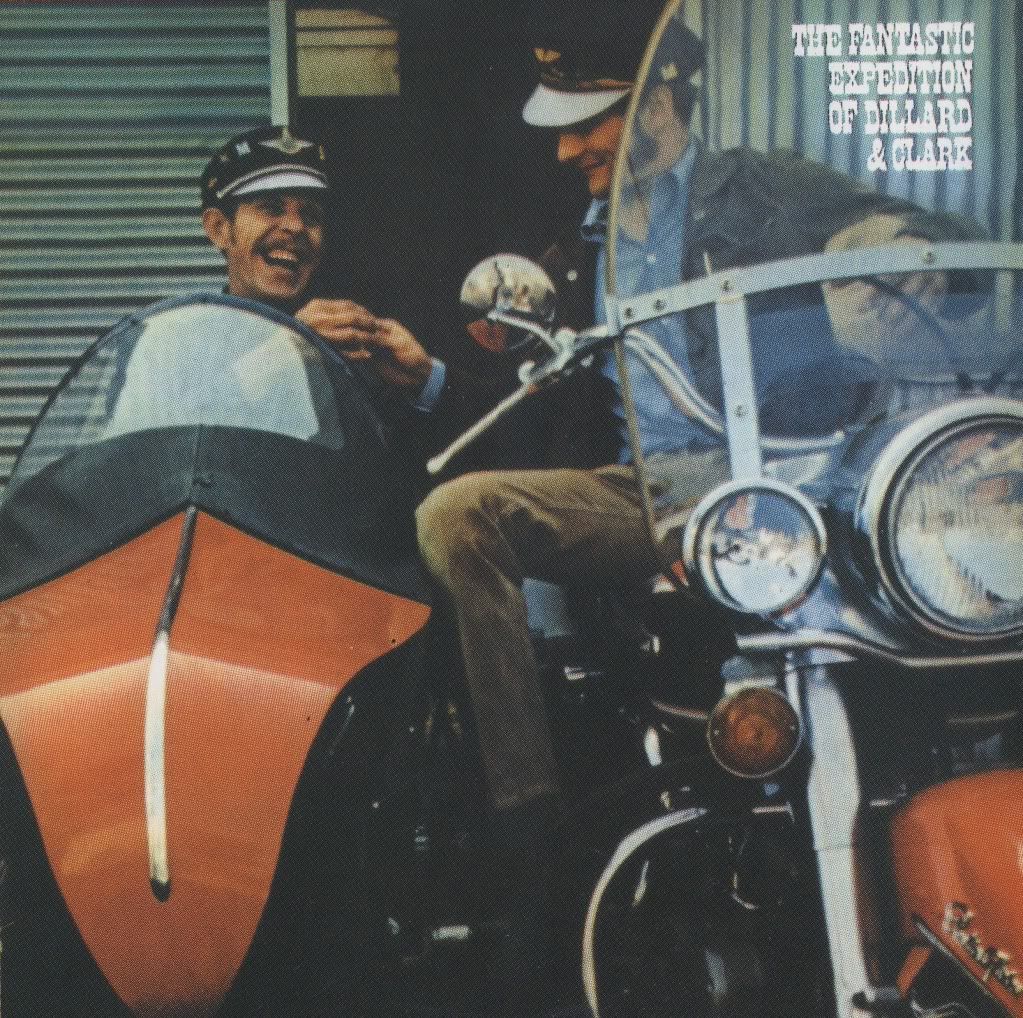
Dillard and Clark - The Fantastic Expedition of Dillard and Clark


The other night I was having trouble choosing something to listen to--ultimately, instead of one of my recent jazz purchases, I reached for this--Gene Clark's first (of two) albums with bluegrass virtuoso Doug Dillard, sandwiched between his post-Byrds solo debut Gene Clark With The Gosdin Brothers and the stunning White Light.  While a lot of country rock aficionados like to place this album as one of the first country rock collections, I prefer to think of it in the context of Gene Clark's discography as both his first masterpiece as a performer and songwriter as well as the only full album where he's complemented by an instrumentalist with an equally impressive and distinctive personality.

It's a Gene Clark album, so of course there are some great songs--"Train Leaves Here This Morning" is likely many people's favorite with its laid-back swing and one of Gene's best ambiguous chorus lines since "I'll Feel A Whole Lot Better" with "there's a train leaves here this morning/I'm not sure what I might be on."  The arrangements still show a Byrds-like penchant for thick harmony vocal arrangements, but to my ears Dillard and company provide considerably stronger accompaniment.  Also quickly noticeable are "Out On the Side," which showcases Clark's aching emotional vocal delivery backed by a full band (organ included) arrangement, and "Don't Come Rollin'," which starts as a loose harmonica jam and builds into a buoyantly conversational tell-off replete with some fast-talking from Clark, not to mention a hash reference. 

As usual, though, the songs that withhold their treasures for patient attention are ultimately just as interesting--"She Darked the Sun" proves Clark was able to adapt his songwriting to an old-timey bluegrass aesthetic while at the same time dropping crushingly modern lines like "with the length of her mind she darked the sun."  Even more affecting is the album's one-two closing punch--the jubilant banjo and familiar bass pattern of "The Plan" belie Clark's desperate existential searching, and "Something's Wrong," focuses the songwriter's profound melancholy into one of the most powerful coming-of-age songs I've ever heard, full of childhood reminiscences and a devastating bridge--and with its album-closing fiddle denouement it still clocks in under three minutes. 

These would still be great songs even if Clark were just singing them with an acoustic guitar, but Dillard (as well as Bernie Leadon) provide a shimmering backdrop of banjo, mandolin and lead acoustic guitar that adds both depth and warmth to Clark's songs as well as playing that's worthy of focusing on for its beauty alone.  Dillard's banjo skills in particular are mesmerizing--his speed is remarkable, but even more so is his ability to change up his picking patterns on the fly, providing a rhythm/lead accompaniment that constantly and fluidly changes.  It's also worth noting how well the album incorporates subtle psychedelic production elements--the harmonies in particular lend themselves to such treatment, as the brilliant instrumental section, break, and final chorus of "With Care From Someone" demonstrate, and the inclusion of harpsichord on a number of songs adds a sort of exoticism that again reminds us that what we're listening to is more than just a bluegrass album with original songs--check out the trippy swelling atmosphere at the end of "The Radio Song"--it was 1968, after all. 

Even though this album clocks in under 30 minutes and the follow-up utterly fails to live up to its predecessor, The Fantastic Expedition of Dillard and Clark lives on in my collection as a perfect collection of songs and performances--listening to it the other night was like having a conversation with an old friend.

Get it here.

Friday, December 30, 2011

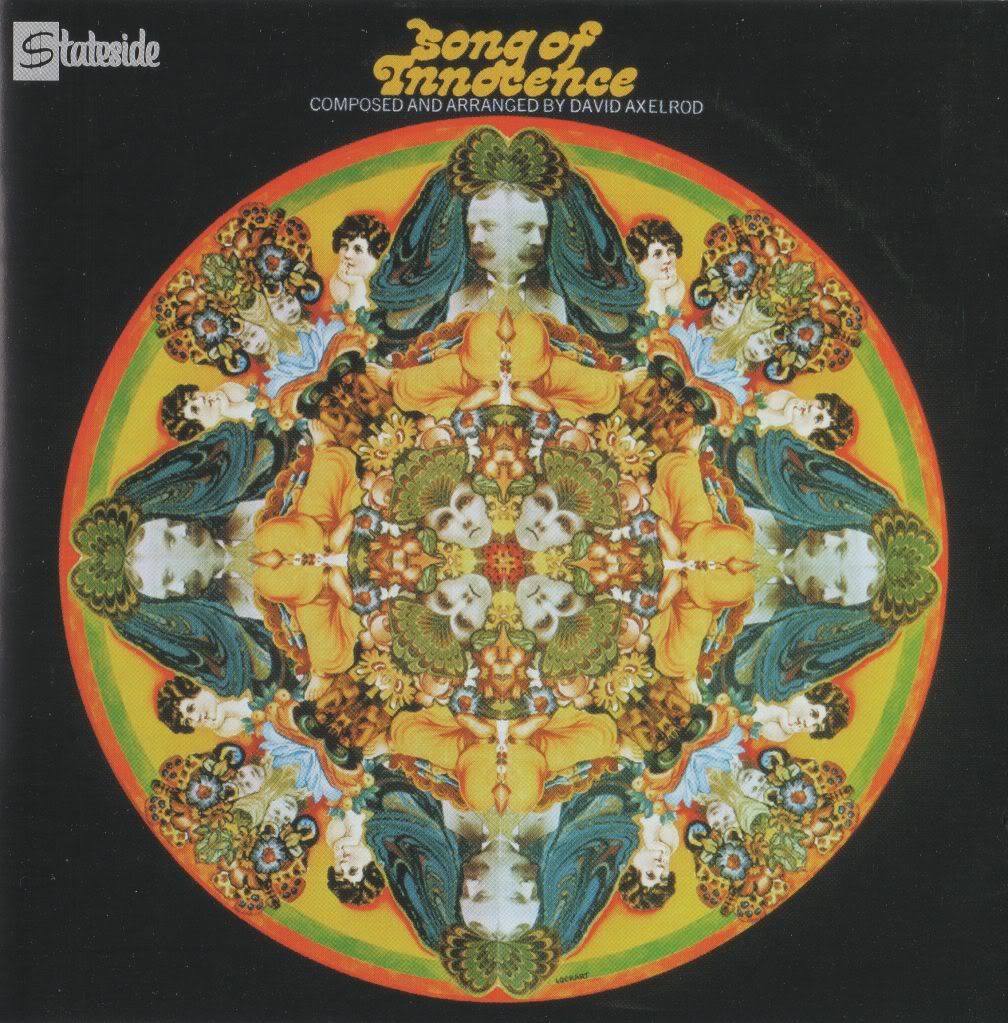
David Axelrod - Song of Innocence


Here's a longtime favorite from producer David Axelrod, who worked with Lou Rawls, Cannonball Adderly, the Electric Prunes and others as well as producing a pretty consistent string of solo albums through the late 60's and 70's.  This album and its 1969 follow-up Songs of Experience are notable for being based on the poetry of William Blake and being sampled by quite a few hip hop artists.  While the suite's sound is undeniably 60's, I always enjoy how Axelrod managed to take bits and pieces of several styles and make something that really has no stylistic equal that I've heard.

Perhaps I'm reading too much into the album title (and keep in mind I have no familiarity with Blake's poetry), but to my ears the "innocence" of Axelrod's compositions here is manifest in the simplicity of the riffs and themes (especially in comparison with this album's follow-up).  Most of the songs are built on repeating two-note riffs or ascending and descending scales in deliberately-paced quarter notes, delivered by the orchestral instruments--sweeping strings and a lot of swelling brass.  The creepy string fanfare that opens "Urizen" definitely sets the tone, which is often dark but always groovy.  In my mind's eye I always picture the orchestra facing a rock trio, blasting out the dramatic and cinematic themes while the bass and drums lay down some visceral funky beats and the guitarist (probably the main reason this album gets tagged "psychedelic") cuts loose with distorted soloing.  Bridging the gap between the orchestra's lofty sounds and the drive of the rock instrumentation are a few really well-placed and arranged jazz instruments--piano, organ and vibraphone manage to tie the album's disparate purposes together and enhance the lounge-like atmosphere, as well as provide some of the best details--like the vibraphone breakdown right before the two-minute mark of the oft-sampled "Holy Thursday," which builds into one of the album's most tremendous climaxes.

It may take several listens before the album's melodic cohesion stops sounding like homogeneity, like the subtle twist between the descending two-note riff of "Holy Thursday" and the ascending two-note riff of "The Smile," and subtle shadings like the groovily baroque harpsichord start to poke out.  While it's still pretty far off from the joyousness to be found on Songs of Experience, "A Dream" breaks the album's minor template with lovely restraint.  "Song of Innocence" is an example of one of the best-realized longer tracks of the album, blending some truly sick drumming with dissonant tension in the strings, an uncharacteristically clean volume pedal guitar solo and a dizzying orchestral conclusion.  "Merlin's Prophecy" develops the album's themes with more energy and complexity, progressively pushing the tempo as the track concludes, while "The Mental Traveler" closes the album with a forceful return to the earlier minor textures, including a righteous Morricone-like guitar melody and a dynamic false ending before the strings eerily bleed out into the beyond.

When I share Song of Innocence, it often provokes laughter--it's true that the style is pretty schmaltzy and our ears are conditioned to treat strings and horns as movie soundtrack music, but I find the atmosphere here really great and the session playing rivals many other jazz-pop crossovers of the late 60's--it's easy to hear how influential Axelrod continues to be from trip-hop and beyond.

Get it here.

Tuesday, October 4, 2011

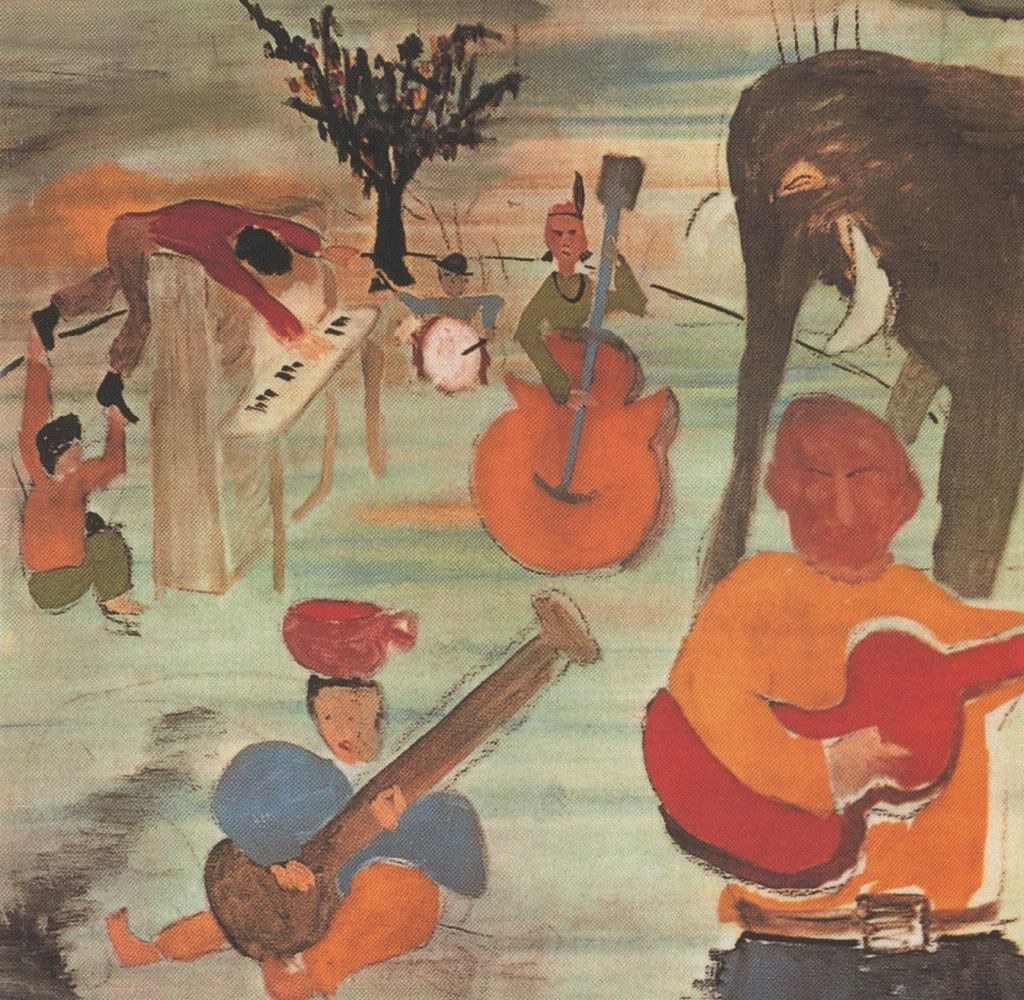
The Band - Music From Big Pink


When it comes to The Band, Music From Big Pink is simultaneously the most obvious and most misleading place to start.  For a group that most writers describe with a heavy dose of historical context and mythology, it can be difficult to separate both the association with Bob Dylan that preceded this album and the widespread fame and musical accomplishments to come from the actual music contained herein.  After long years of fandom and complete subsumption into these sounds (The Band's first three albums still sit firmly atop my iTunes play count list) I find it a little easier to bracket the legendry and approach the music directly, which has in turn led to an odd sort of historical contextualization in my own mind.

Part of the reason I've chosen to review Music From Big Pink is that I've recently spent an inordinate number of keystrokes bitching about musicians not working hard enough to make music that is completely unprecedented when, in fact, I don't believe that that's the only valid approach to music-making.  Case in point, The Band--sure, they laid down some undeniably innovative songs and sounds (though it's arguable that it was a little easier to innovate within a roots rock context back in 1968), but really their genius lies in those pedestrian virtues of group interplay, emotional delivery and great songwriting.  Such is the individual instrumental idiosyncrasy and group chemistry of each band member that even their worst albums are at least pleasant listens, and at their best, hearing Richard Manuel, Rick Danko and Levon Helm rotate in between lead and backing vocals, and hearing everyone swap instruments with carefree abandon to serve each song becomes a dizzying and rapturous spectacle.  Naturally, it helps that the songs are uniformly great--Dylan/Manuel's "Tears of Rage" becomes a New Orleans dirge when Manuel's Canadian Ray Charles falsetto and Danko's aching harmony blends with a weepy horn arrangement, while Manuel's own "Lonesome Suzie" puts Manuel's pathos center stage but wryly winds into a pickup line by the song's end.

The group also betrays a budding interest and capable hand at country and folk on "I Shall Be Released," "The Weight," and a definitive version of "Long Black Veil," which the group immeasurably elevates with the addition of electric piano and the multi-textured combination of Rick Danko's mournful lead with Helm's twang and Manuel's ethereal top third.  This is exactly what I'm talking about--if you're this good at simple melody, harmony and straightforward songwriting, why would you even feel the need to subvert the basic principles of pop music-making?  The problem is, the vast pack of songwriters and performers (both past and present) attempting to achieve transcendence with these simple elements just don't have the knack, the ear, or the equipment to pull it off and end up blending genially but forgettably with the rest.  There are very good reasons why a song like "The Weight" never sounds as good note-for-note on The Band cover albums, without Danko's quivering, that thunderous Danko/Helm bottom and Garth Hudson's all-penetrating class on those honky-tonk octave piano runs (Hudson, by the way, just might be the group's musical linchpin, somehow molding his erudite classical and jazz chops with the rest of the group's self-trained abilities so effortlessly that it's easy to forget that most in his position can't overcome the rigidity of their academic training). 

The songs that really sustain my fascination these days, though, are the gnarled, weird ones--the pseudo-Baroque psychedelic dreamland of "In A Station," the reeling melancholy and bluesy escapism of "Caledonia Mission," and especially the lurching transitions between pounding rock and some some kind of drunken, swinging R&B or jazz on "We Can Talk" and "Chest Fever," the latter of which unites Hudson's icy classical Lowrey organ tones with some of the album's funkiest riffing before the aforementioned teetering interlude.  With all of the genre blending, strange musical cul-de-sacs and weirdness, I'm tempted to even refer to this music as progressive in a very literal sense.  Across the board, the group's (and Dylan's) lyrics perfectly match the album's off-kilter tendencies, combining religious and rural imagery with fragmented, hazy narratives--never quite telling a whole story, but choosing just the right words to evoke endless speculation and fascination--and somehow the skills of the three talented but discretely idiosyncratic vocalists overcome the sketchiness of the words to create authentic emotional depth, every single time.

As I mentioned earlier, I've personally come to view this album in a historical context different from the received narrative; for me, the most engaging progression between The Band's albums is the creative one, in which Music From Big Pink occupies a totally unique place.  While mid-career (and especially nowadays) The Band became known for reassembling an appealingly anachronistic vision of "Americana" in a rock music context, there was a time before the formula that would later limit the group was standardized and the songwriting and playing was considerably more impulsive.  If there's one endearing flaw to The Band's music, it's got to be Robbie Robertson's tendency toward a slightly academic, contrived feel when it comes to his attempts to imagine himself into old-timey America, which I think pops up quite often and became a songwriting crutch later in his time with The Band, especially as the songwriting workload became increasingly his responsibility.  With Music From Big Pink, though, there's a sense of innocence and freshness in the approach that arguably exists only on this album (and maybe on The Basement Tapes).  In spite of years of experience professionally touring, the group was on its maiden voyage as a project imbued with creative vision, and their lack of exposure and the album's long creative gestation made for a wholly eccentric debut.  I think it's this fact coupled with the bizarre mix of Dylan's influence, country, soul, folk, rock, beat poetry and searching that make Music From Big Pink The Band's least accessible album.  Before critics and the public consistently (if somewhat quietly) applauded the album's merits and the group decided to continue further down the nostalgic rural America avenue on their second album, there was just a group of musicians who realized that they could do anything they wanted with the songs they were writing and playing.  It really shows in the fact that the songs are uncompromisingly quirky, but the guys play them like they really mean it.  As the group's tenure progressed, this freshness and excitement was gradually replaced by a workmanlike attempt to recreate the elements about their most-loved songs, and while they repeatedly succeeded in creating deeply resonant, emotional music, they never again reached this album's peaks of unspoilt spontaneity of vision.

Tuesday, August 2, 2011

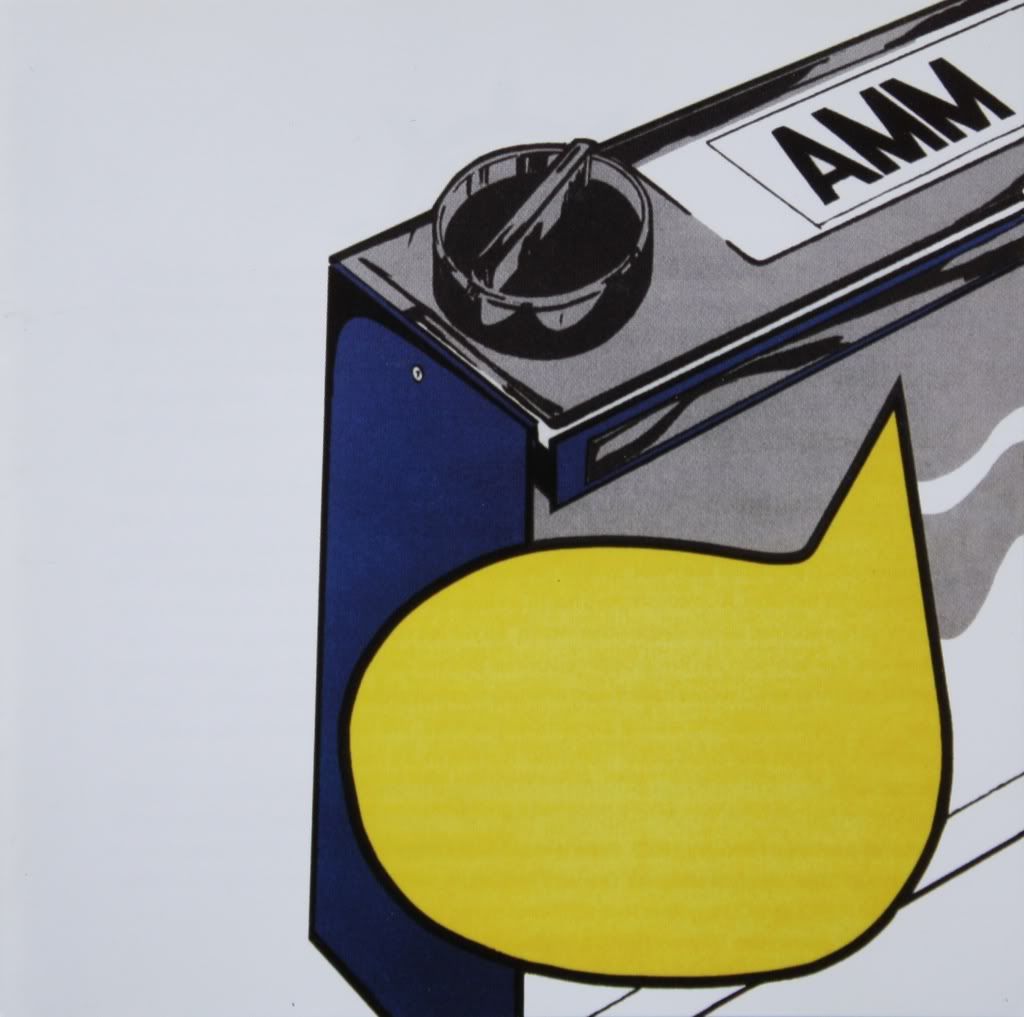
AMM - The Crypt: 12th June 1968


It's been a while since my last AMM review--with The Crypt we move to the primary album outside of AMM's 1967 debut AMMMusic that points to the foundations of their immortality in the world of avant-garde music.  Despite my passion for AMM and other free improvisation and avant-garde groups, writing about music like this is at once easier and more difficult than writing about traditional styles or genres.  Easier because the lack of structure and outrageously long tracks usually demand considerably less writing, since there aren't any lyrics or a large number of individual "songs" to describe and evaluate, and more difficult because the music bears little relation to most traditional music and the vocabulary used to describe such music is of little use.  It may or may not help to reference an earlier essay in which I tried to articulate some aesthetic concepts that more accurately apply to music like this.  Either way, I'll do my best to describe in a meaningful just what it is that I enjoy in The Crypt: 12th June 1968.

By this time in the collective's history, the core group of Eddie PrĂ©vost (percussion), Lou Gare (saxophone), Keith Rowe (guitar/transistor radio) and Cornelius Cardew (cello/piano) were augmented by percussionist Christopher Hobbs; absent from the AMMMusic lineup is multi-instrumentalist Laurence Sheaff.  It's not my primary focus in these reviews to chronicle groups' membership and instrumental roles--the main reason I mention it is because, when the music starts, there's really no way to discern who's making which sound and what the audible instruments even are.  The concert begins with a couple of seconds of high-pitched feedback, a couple of seconds of dissonance not unlike the sound of an orchestra tuning, and then around the seven second mark, a thick howl is undeniably the center of attention, as it will be for over a half hour of this 90-minute set.  "Noise"-haters, please exit through the wings--I'm not here to argue about whether or not this is "noise" or music, nor am I here to apologize for the characteristics of the sounds contained here; I wholly understand that most people probably won't enjoy how this sounds, but the validity of the assertion that someone can and does enjoy this isn't up for debate.  Not that the two are mutually exclusive, but one great thing about being an AMM fan compared with loving Captain Beefheart and Trout Mask Replica is, for the most part, you don't have a chorus of sanctimonious people telling you that you're lying about liking how it sounds--even fewer people give a shit about AMM.

When I think about The Crypt, it's this howling sound is the first thing that comes to mind.  The sustained collective sound is the most purposeful study of timbre I can call to mind; it's not the note or pitch that attracts attention, but the quality of the sound.  Hearing the undulating screech as the layered instruments blend and enfold only to compete again, the descriptors that come to mind pertain to the sense of touch--rasping roughness drags across the seconds, and a certain viscosity seems to govern the pace with which each instrument's sound slowly evolves across time, and the primal sense of vibration happening between the different sound sources shifts at what seems like a glacial pace between the miniature warbles of dissonance to the earthquake rattling of flagrantly high volume.  Also particularly noticeable are definite spatial feelings--the music sounds at some points like it's expanding omni-directionally into an endless void and at other times it conjures a feeling of rapidly speeding through a narrow tunnel.  In one sense, the collective sound is liquid in the way it seems to move within itself slowly and naturally, but there's simultaneously a dryness to the collective sound, as if every sound source is being scraped to produce the sound.  When it comes to declaring that this is "good" (implying that there's similar music that isn't), my first instinct is to say that it's the collectivity that elevates this music above the quality of so-called "noise rock" for me.  It's likely that Keith Rowe's prepared guitar and electronics account for the backbone of the sound, but without the shadings and constant flux of the other players (keep in mind there's a saxophone, percussion, cello and piano contributing, though, as the liner notes so eloquently state, "It was not uncommon for the musician to wonder who or what was creating a particular sound, stop playing, and discover that it was he himself who had been responsible") that separates the subtlety of this sound from just a couple of guys seeing how loud they can get their distorted guitars to feedback. Though the sound is ultimately inseparable and cohesive, all of the players' personalities are perceptible to an extent; like the best free jazz that came before free improvisation, each person leaves enough space for the others.

The dynamics of the epic howl ebb and flow past the half-hour point, at which time the proceedings become significantly quieter.  It's pretty surprising, actually, how similarly the second disc sounds to the AMM of the 90's and 00's; the contributions of each member are quite a bit more audible, though it's not a lot easier to discern what the instruments are (percussion aside).  Interestingly, the droning of the first half is still present, but in an attenuated form--it's almost like a different version of the same thing, more distant or more spacious.  In this way, part of the magic of The Crypt is the way in which it plays with the experience of time.  The music could easily be summed up thus: "A really loud screechy howling noise, then more quieter droning with a bit more space and silence with some intermittent crescendos."  Thing is, it takes 90 minutes for all of that to happen--it's like the shriek of a hawk slowed to 5,000 times the original length of the cry.  If you're not paying attention, time disappears and a limitless pool of sound is the only thing there is.  I can only imagine how awe-inspiring it must have been to experience the concert live, in the moment, without the ability to replay the recording over and over.  As anathema as recordings are to the AMM school of improvisation, albums like The Crypt bear repeated listening remarkably well.  Beholding the sounds the group produces is like turning over a crystal in front of your eyes--there are innumerable intricacies and crannies to be found.  There's also something to be said for the cathartic effect produced by the band's immediate sonic assault and the lengthy but punctuated denouement.

There are AMM albums with more variety, more changes in dynamics and diversity in instrument color and perhaps more relatable musical structures, but I'd be hard pressed to find one that's more intense or one that goes any deeper in pursuit of a single idea than The Crypt.  In closing, I take enjoyment in recollecting the first time I realized that the track titles on this (as well as some on AMMMusic) come from my favorite Daoist text, and a major influence on In Not-Even-Anything Land, the Zhuangzi (the liner notes quote the part of the text that "Box Elder" is based on, though they call him Kwang-sze).  Strangely enough I leaned heavily on the Zhuangzi when first attempting to wrap my head around music like AMM and Henry Cow's free improvisation--the text's exhortations to strip away preconceptions in pursuit of the gnarled beauty that lies in spontaneity and the natural state of things were key to my understanding of the music.  Nice to hear that I'm not the only person who thinks the Zhuangzi might have something useful to say about music appreciation.

CD available here.

Friday, July 29, 2011

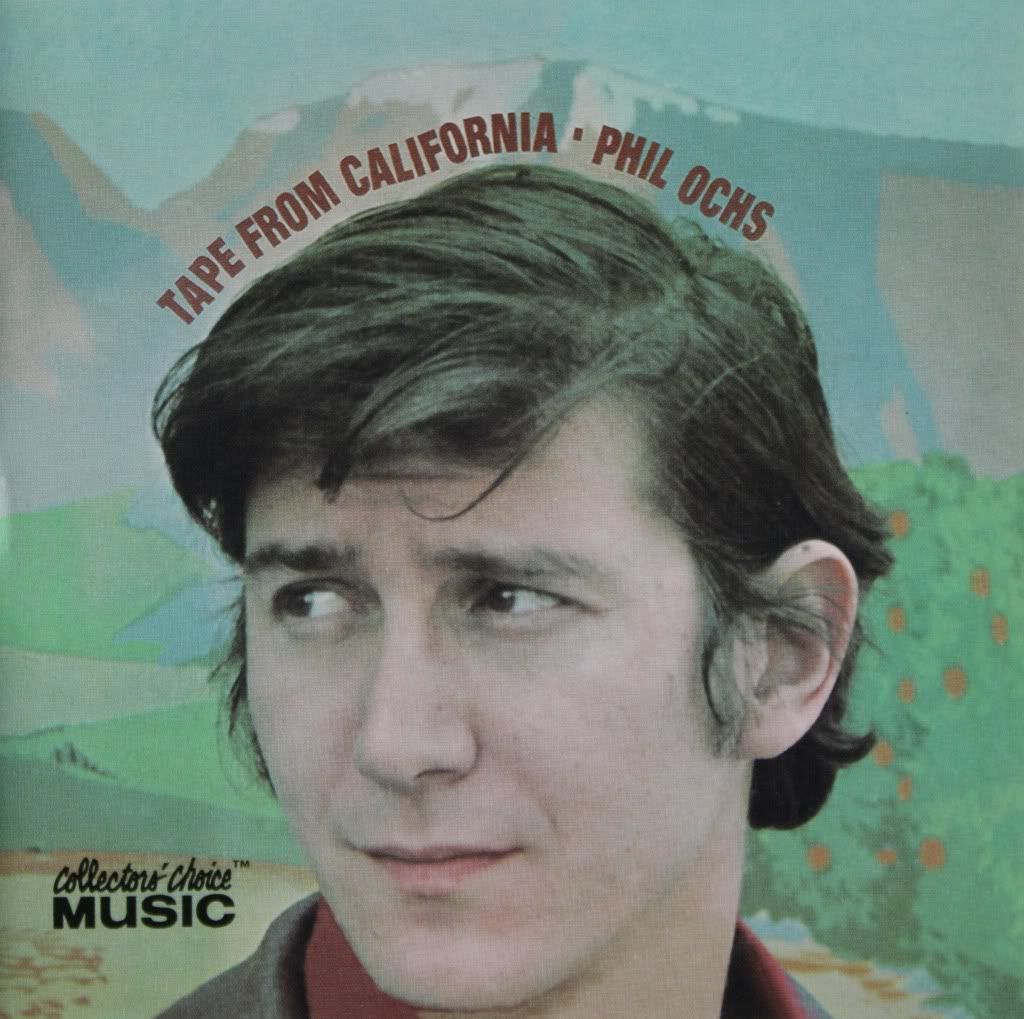
Phil Ochs - Tape From California


The passage of time hasn't been kind to Phil Ochs' (pronounced "oaks") legacy--while at one time he was arguably second only to Bob Dylan as the most famous contemporary folk singer/songwriter in the USA, today his name (let alone his music) inspires nary a hint of recognition and his discography is in a lamentable state--few of his classic 60's releases are even available on CD and it would seem that he's on a steady path to further obscurity.  It's a shame, since he's the man who competed the most fervently with Dylan when both were writing their most overt topical material and Ochs embraced the label "singing journalist" a bit more readily than Dylan.  As the 60's wore on, though, Ochs was also inclined to expand his scope as a songwriter and performer, albeit in a way quite different from Dylan, with the electric, jazz and modern classical-influences of his creative high-water mark, 1967's Pleasures of the Harbor.  Unfortunately Ochs' popularity failed to grow at the rate Dylan's did; a year later he produced Tape From California, wherein his talents and his frustrations seem to share the spotlight equally.

On paper, there seems to be little difference between the creative template for both albums, but under the surface lies an unprecedented tension and sense of frustration that wasn't previously evident.  On Pleasures of the Harbor Ochs sounded like a master coming into his own, the earnest sanctimoniousness of his earlier albums leavened with even more sarcasm, some gallows humor and an unseen complexity and maturity as a composer and arranger, but on Tape From California he sounds like a jaded genius preparing to become a hermit after one last scathing summation of the world he's about to spurn.

His words are just as rich and opaque as they were on Harbor and the arrangements are just as lush, but it sounds as though Ochs has decided that the social change he so zealously pursued before is in fact unachievable.  The album's title track, with its dual electric piano and harpsichord, reflects both disenchantment and detachment with the world as the singer continually reminds us he doesn't have time to talk, but he'll send us tape from California; Ochs' reedy voice and vibrato are just as strong as they were on Harbor, though.  As the album unfolds, the melodic lines are also familiarly reminiscent of Ochs' earlier works in both their beauty and construction--the songwriter's change in direction is more subtle.  The trumpets and martial drumming of "White Boots Marching in a Yellow Land," for example, reflects the doomed Vietnam conflict--try as he might to escape, it would appear that California isn't quite far enough for Ochs to escape the myriad, paradoxical ways in which his country and society have failed his hopes.  We get another marching band-backed, brilliant comment on war in "The War is Over," which toys with the idea that ending war is a conscious choice.  At other times the production verges on bizarre, as with "Half A Century High," on which provocative words and a chilling vision are somewhat dampened by the decision to make Ochs' vocals sound as if they're coming out of a phonograph.  "The Harder They Fall," on the other hand, supports another indecipherable and at times morbid message about society's decrepit state with sweeping strings and hand drums.

The two songs that perhaps stand out the most are the two longest--the folky "Joe Hill," which borrows its melody from Woody Guthrie's "Tom Joad" and features Ramblin' Jack Elliott (who was apparently nearly too drunk to perform) on guitar.  The song's something of a combination between Upton Sinclair's The Jungle and the real life story of Sacco and Vanzetti, with a protest singer twist and a murky ending.  The centerpiece of the album, though, must be "When In Rome," which depicts the fall of an empire over the course of its 13 minutes with at times gruesome detail and Ochs returning sneeringly with the "When in Rome, do as the Romans do" refrain. 

As Ochs' artistic impulses creep higher and higher, it's often difficult to discern just exactly what he's hoping to communicate, but what screams loudest in my ears is that all-too-personally-familiar sound of a man surrounded by all that he stands against and howling, powerless to change the situation.  Though it's easy to retroactively apply his eventual suicide to his earlier work, I think it's fair to say that his frustration with his lack of large scale success in the music business also resulted in some serious bitterness toward his craft, which was focused on attempting to rally people around social change.  The artistic merits of this album are pretty high; though there are a few missteps and the baroque, symphonic and jazz elements aren't as fresh and don't fit quite as comfortably as they did on Pleasures of the Harbor, it's the sense of distress and dark fragility that makes this album fascinating the way that a car accident is, rather than in a way that inspires celebration.  I hold this album in pretty high regard but it's always painful to hear such a talented artist in the throes of desperation.

Though the CD is out of print, you can thankfully still get a high quality MP3 here.

Monday, June 6, 2011

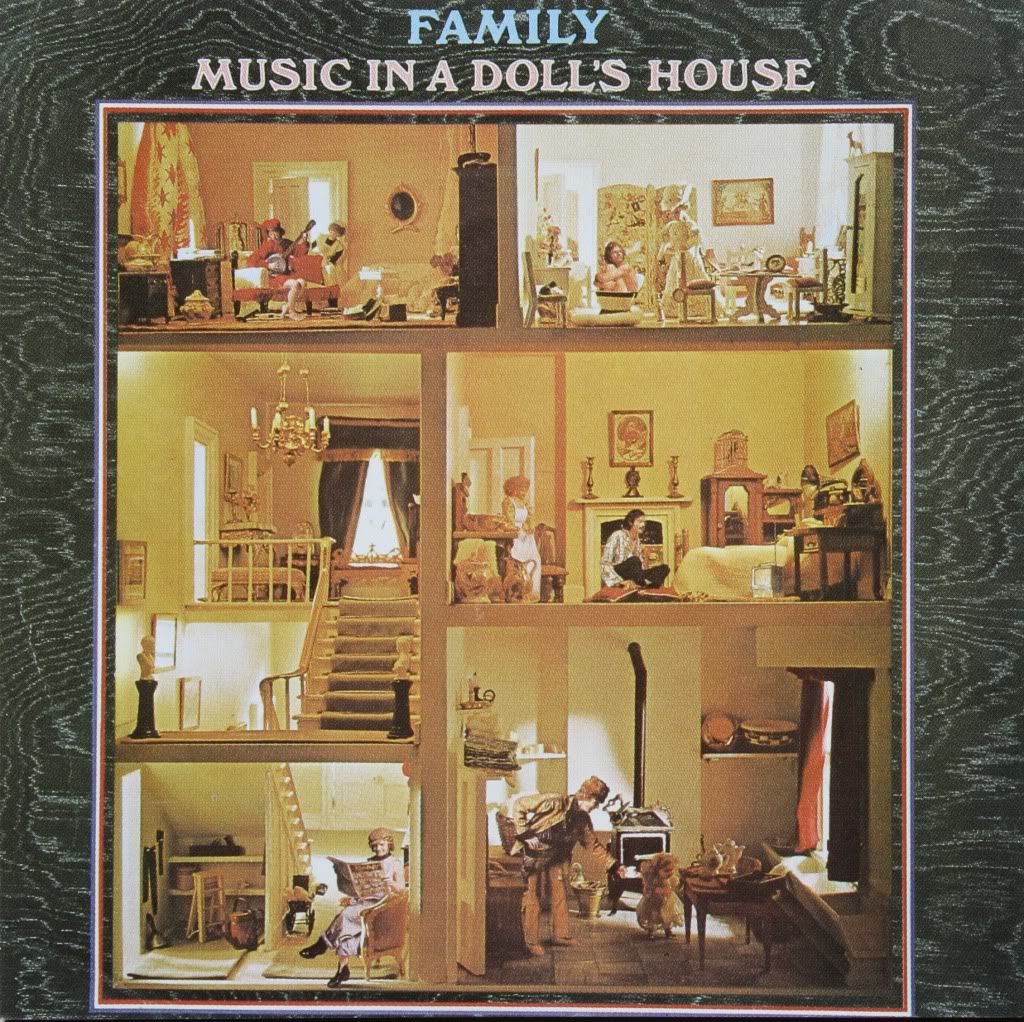
Family - Music In A Doll's House


When Family's debut hit the shelves in 1968, it must have sounded like positively nothing else--retrospectively, it's hard to really tie them to any other specific movements or bands, with their layered sound employing familiar rock instrumentation as well as saxophone, brass horns, harmonica, strings and mellotron.  The closest I can come is perhaps Traffic, but Traffic's sound is so married with pop, soul and blues that it can't hold a candle to Family in terms of sheer weirdness.

Of course, a good deal of the band's strangeness is owed to lead singer Roger Chapman's powerfully thick, tremulous vocals.  As far as I know, he's got no stylistic equal in the history of rock music, and his brio certainly adds a unifying, distinctive character to what is an extremely eclectic collection of songs.  The demonic wailing that kicks off "The Chase" should be evidence enough that you're in for a strange trip, and as the track gallops through baroque textures and detuned horns, you know you're not coming back for a good 40 minutes.  From the opener out, it's an unpredictable ride through shimmering ballads ("Mellowing Gray," "The Breeze"), trippy pop ("Never Like This," "Winter," "3 X Time"), blues broken up by progressive interludes ("Old Songs For New Songs," "Hey Mr. Policeman"), and dark rock of a definite other quality ("Me My Friend," "Voyage," "Peace of Mind," "See Through Windows"), to which I find myself gravitating the most--the latter combines an addictive psychedelic guitar riff with perfect timing lyrically--"See through...windows...Look...at things."

For what's ostensibly a rock album, it takes quite a few listens to fully apprehend all that transpires within--the songs are short, mostly under three minutes, and there are even shorter interludes in between that play with a handful of the songs' melodies and briefly present them in different settings.  With all of the eclecticism and wealth of ideas presented here, I'm pretty much obligated to artistically appreciate this album, which I do--I especially admire the band's ability to pack in the ideas and different textures within the space of short songs, often stating ideas without overly repeating them (nothing's worse than heavy-handed repetition).  Still, a couple things hold this album back from the next level for me.  First, in spite of the diversity in songwriting and instrumentation, I often find myself hoping for something harder--Chapman's voice is probably the hardest thing on the album, and a lot of the songs feel weirdly lush without carrying as much force as they feel like they should.  Additionally, there's something unquantifiable about some of the melodies and ideas that indicates they don't always have the natural flair for distinction and memorability that sets good bands apart from great ones.  This is probably the most artistically troubling thing about this album for me personally--that you can put the effort in to really cram an album with surprises every few seconds and it still isn't "great."  Who knows--perhaps I just haven't listened enough times to assimilate all the data.  After all, that is one of the best things about music that's dense with ideas. 

Ultimately, Music In A Doll's House sits in that strange gap between late-60's psychedelia and 70's progressive rock.  Strangely, I like it a lot more than most proto-progressive albums I've heard, as there is some genuinely feverish experimentation happening from a songwriting perspective, and despite the eclecticism the band has a certain focus.  Unfortunately, the further Family went, the less focused they became--even their second album featured the drastic change of handing Chapman (by far their most distinctive element) only half of the lead vocals.  Many a good band has been mired in mediocrity thanks to an overemphasis on democracy--sometimes, there's something to be said for numerous players supporting the vision of one or two in the name of better results.

Get it here on CD.

Saturday, May 14, 2011

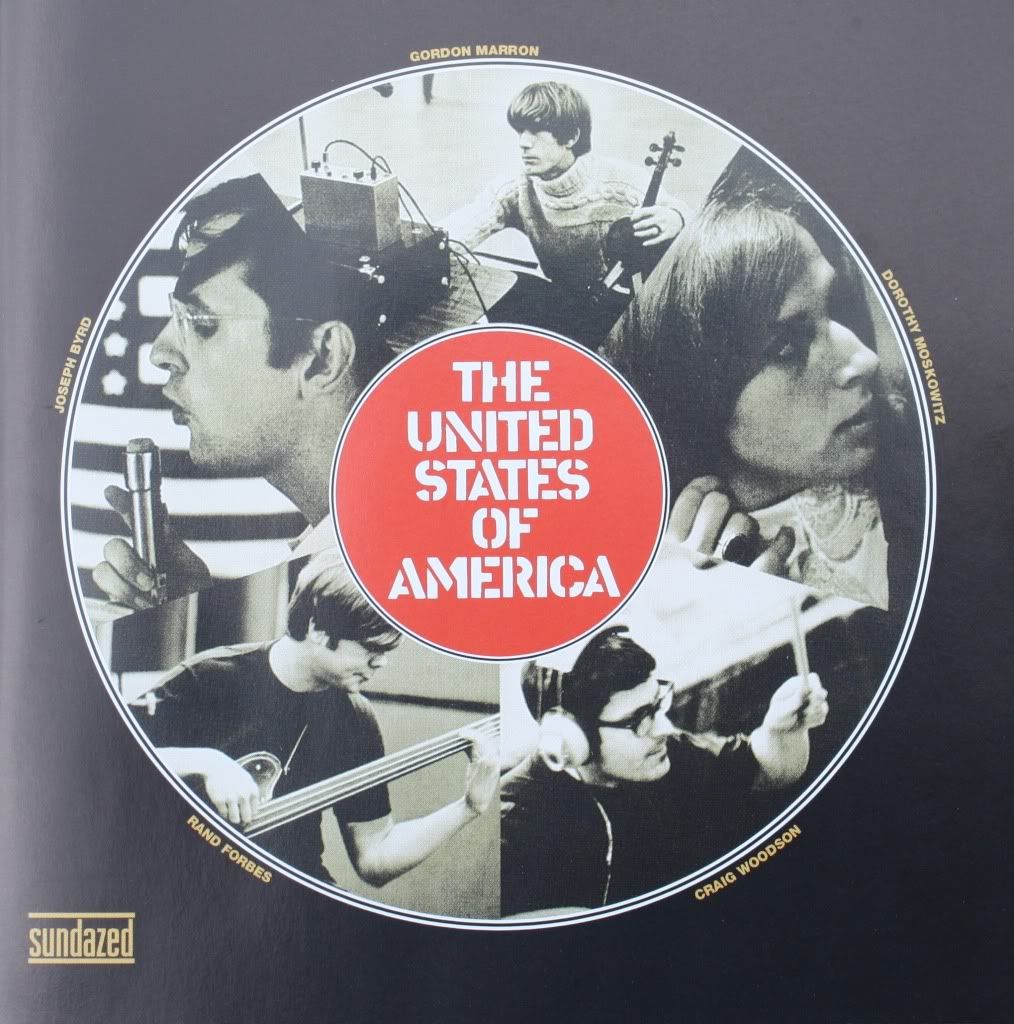
The United States of America - The United States of America (1968)


I'm feeling a bit saucy today so I'll begin with a contentious declaration--The United States of America's self-titled 1968 debut (and sole album) is the best American psychedelic album of the 1960's.  As usual, such things are firmly a matter of taste, but for me this band and album exemplify the psychedelic movement sonically and ideologically in a way that many British (but pathetically few American) bands could successfully accomplish.  Although there are numerous great US albums with psychedelic elements (Blonde on Blonde and Forever Changes, for example), this one positively oozes psychedelia from its overt LSD references, mad sound excursions and defiantly interrogative attitude.

For me, the band's interest 20th century classical music (the members were bigtime John Cage devotees, apparently) perfectly marries with the (at the time) chic psychedelic aesthetic--after all, most of the recording techniques, early synthesizers and theoretical precepts of the psychedelic era had already worked themselves through the more arcane and intellectual world of "classical" music starting around fifty years earlier.  The polytonal album-opening collage of carnival organ music, marching band and piano fades into the hazy "The American Metaphysical Circus," featuring Dorothy Moskowitz's ring modulator-treated vocals over an increasingly heavy drum-and-bass dirge with an ample cacophonous backdrop of early synthesizer blurps and effect-laden violin.  Dissonance abounds, and it's impossible to deny your in for a real trip as Moskowitz's vocals get steelier and steelier.  The lyrics first broach the dominant themes of the album (and band--their name is no accident), creepily allegorizing the cheap facade of post WWII consumerist, suburban America as a sort of nightmarish bordello in which "the price is right/the cost of one admission is your mind." 

Let's not jump to the conclusion that this is all clinical academic music theory, though.  "Hard Coming Love" immediately follows with an uptempo blast hard pop, with a mouth-wateringly noisy and overdriven violin solo--the vocals don't even come in until 1:30.  It's the clear aim of the band not to supplant the form of pop music but to warp such undeniably catchy tunes with trippy atonality and downright weird sounds (check out the twittering synth interludes after each chorus).  "The Garden of Earthly Delights" and "Coming Down" are similarly rocking-yet-hooky with some pretty out-there lyrics, with the latter pretty clearly pondering an acid comedown.  The false sheen of suburban conformity is again sent-up in the hilarious dixieland jazz of "I Won't Leave My Wooden Wife for You, Sugar" and the melancholic "Stranded in Time"(both sung by the band's leader, Joseph Byrd) while the capitalist system's seedy underbelly is further considered by "The American Way of Love," a mighty album closing suite that variously mocks "respectable" white businessmen, perverts surf pop and pastiches another sound collage culled from the preceding tracks in one final mind-expanding resolution.  What really impresses me is the astute compositional variety on display here--in addition to marches, ballads, rock, jazz, pop, and chamber music arrangements, we get a sinisterly anthemic meditation on the irretrievability and inscrutability of the past set to a warped blend of Gregorian chant and rock ("Where Is Yesterday").

Despite the musicians' clear musical erudition, they manage to walk a fine line of challenging accessibility, never letting us forget that they're having a hell of a good time doing it--Moskowitz has a great voice that is strangely sexy despite some of the lyrical content, and Byrd's voice makes up for its mere technical passability with plenty of sneering ironic attitude.  The heavy drums and fuzz bass are serious draws, with some of the sickest basslines I've heard in any genre, while the electronics are probably the best-integrated synths of the late 60's on tape, often functioning compositionally rather than just as a strange noisy backdrop (as in Fifty Foot Hose's Cauldron, for example).  And, oh yeah, there's no guitar (please accept my apologies for not beginning my review with this fact--it's amazing how nervous and apologetic critics get when the trusty six-string is nowhere to be heard)!  This is one of those few guitarless instances where I truly don't miss it; it's more than replaced by the aggressive violin and agile bass playing. 

Unfortunately the sound quality isn't the greatest--the details of the cacophony get steamrolled by treble-heavy speakers--I often forget how good this album is since there are situations in which I just can't play it, but whenever I catch up with it on good headphones or a nice system I wish it was more conducive to all listening settings.  I should also add that the liner notes for the CD remaster are great--illuminating interviews with both Byrd and Moskowitz on the band's fascinating history and artistic principles.  I won't lie--this album sounds very much of its time, probably sounding to some like a throwback time capsule--but it's got that stylish 60's atmosphere (the female vocals help) that will always be classy to my ears.  Strange how that mood all but disappeared from the early 70's on.  There are more popular American psychedelic albums (how so many West coast bands re-regurgitated the same bland "psychedelic" blues jams ad nauseum and became touted as the best psychedelic music the country produced is beyond me), but none are as intelligent, satirical and vividly crazy as this, the thinking man's American psychedelic album.

Get it here on CD, or MP3, or vinyl reissue.

Monday, March 14, 2011

Merle Haggard - Sing Me Back Home


As whole albums go, Sing Me Back Home is a relatively minor entry into Merle Haggard's early catalog.  Most of the early Capitol Hag albums are built around a hit, a few potential hits, and some filler.  While you can't name a 60's Merle Haggard album that I don't enjoy from beginning to end, it's true that the good stuff is more concentrated on some albums than it is on others.  In other words, an album stands or falls based on the quality of the filler, and Sing Me Back Home has quite a bit more filler than it has potential hits.

The title track is nice and solid--stately and emotional, with a sort of anthemic quality that's a new thing for Haggard at this point in his career.  There are a couple of good drinking songs--"Wine Take Me Away" and the heartbroken "I'll Leave the Bottle On the Bar," as well as the catchy mid-tempo "Where Does the Good Times Go?"  "Seeing Eye Dog" is the most Bakersfield-sounding track on the disc and probably my favorite, with a pounding tempo, nimble steel guitar and some powerful vocals from Merle.  Add to the list the well-handled novelty tune "Son of Hickory Holler's Tramp" (it's a surprisingly jolly tune about an abandoned single mother who provides for her 14 children by becoming a prostitute) and you've hit the album's brightest spots, songwriting-wise.  Elsewhere Merle mines the songs of his Bakersfield forbears, with the somewhat out-of-place "Mom and Dad's Waltz" and tosses off the similar yet similarly out-of-place "Home is Where a Kid Grows Up." Songs like "Look Over Me," "If You See My Baby" and "My Past is Present" lack the wit, verve and hooks of their like on earlier Hag albums, though there's nothing objectively wrong with them.

Still, Sing Me Back Home is an enjoyable listen irrespective of the quality of the individual songs--the production is sterling, with a lot of close-miked guitars, drum kits and backing vocals, and Merle's vocals are worth paying close attention to for an entire listen for the depth of nuance and subtle emotion; he's not quite singing the phone book, but it's clear that his (and his band's) abilities as performers are capable of elevating material much higher than its weaknesses would seem to allow.

Get it here on CD or MP3.

Thursday, March 10, 2011

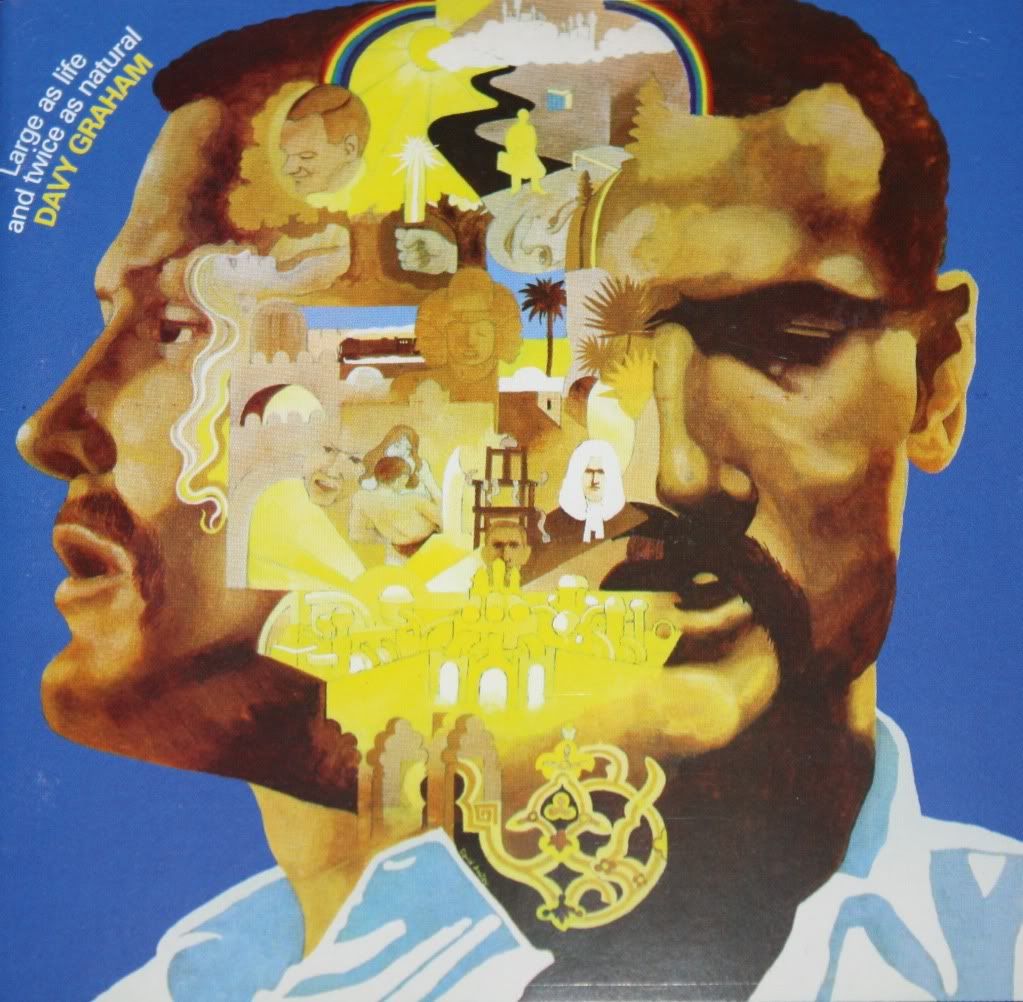
Davy Graham - Large As Life and Twice As Natural


Time to turn our probing ears to another unjustly-overlooked guitarist.  Today, few have even heard of Davy Graham, but he's unanimously considered "important" by those who have--a host of better-known performers and guitarists are quick to drop his name (Bert Jansch, John Renbourn, John Martyn, Paul Simon, Ralph McTell, Roy Harper, Jimmy Page, Martin Carthy, the list goes on...) as the most adventurous and eclectic guitarist of the early 60's English folk revival, yet his actual work remains painfully obscure (though thankfully currently in print).

Davy Graham's fourth LP, Large As Life and Twice As Natural (genius title!) presents equal justification for his esteemed reputation it does evidence for his failure to achieve commercial success.  The solo guitar "Tristano" reveals Graham as a virtuoso of the truest stripe, capable of seamless transition between (or simultaneous juggling of both) rhythm and lead parts, while the song itself fuses jazz, blues, folk and middle-Eastern modalities in a way that nobody in the mid-60's could have even imagined.  That's how Davy is usually described by the converted--a loner whose penchant for world-traveling gave him an untouchable breadth of experience which, combined with his seemingly boundless imagination and ungodly chops, meant he was fusing Irish folk songs with Indian ragas and Eastern-izing obscure blues songs (by all accounts he invented DADGAD guitar tuning) while his later followers were aping Anthology of American Folk Music standards and worshiping Dylan.  In reality, though, very little of Graham's recorded output consists of solo guitar, which I think might have played a role in his commercial difficulties.

More representative of Davy's standard MO would be his expansive reading of classic British folk song "Bruton Town," where the guitar flits jazzily around the traditional melody, refusing to adhere to traditional folk rules.  Graham's voice is probably his greatest limitation--not bad (I actually enjoy it) but certainly not traditionally "beautiful" or as marketable as his guitar abilities.  Likewise, "Both Sides Now" is a revelatory opener--its languorous, modal opening makes you wonder if this is actually the same "Both Sides Now" you thought it was, then BAM!  The bass and drums kick in and Davy presents us with an uncannily energetic and imaginative reading of Joni Mitchell's oft-covered standard.  The cacophonous rhythm section ably handles the eclectic mix of styles present here (Pentangle's Danny Thompson has got to be one of the best session bassists of the time period), bringing lots of ethnic flair to the Eastern songs (the major-key "Sunshine Raga" and minor-key "Blue Raga," as well as the hypnotic "Jenra") and provide a suitably grinding bottom to the  blues numbers ("Freight Train Blues" has some awesome cymbal work and Davy's singing is pretty rocking).

The whole album feels like it was recorded live (there are plenty of vocal imperfections and loose improvisation to attest to this observation) and the sound is great--nobody else's guitar sounded like Graham's.  The commercial flaws of the albums can be seen a mile off, though--it's neither folk (too experimental and eclectic) nor folk-rock (too jazzy and accoustic), and it's got nothing to do with psychedelia (apart from the delirium-inducing guitar excursions), which was the rage in 1968--how do you market that, and to whom?  Perhaps Davy's eclecticism became his career's undoing (deliberately becoming addicted to heroin in order to emulate his jazz idols probably didn't help either) but for me it's the best thing about him--you never know where the next song is going and his playing is full of surprises both compositionally and technically.  Here Graham might not quite fuse as many genres within the same song as he does on Folk, Blues and Beyond, but it's a fine representation of his style and contains some career highlights. 


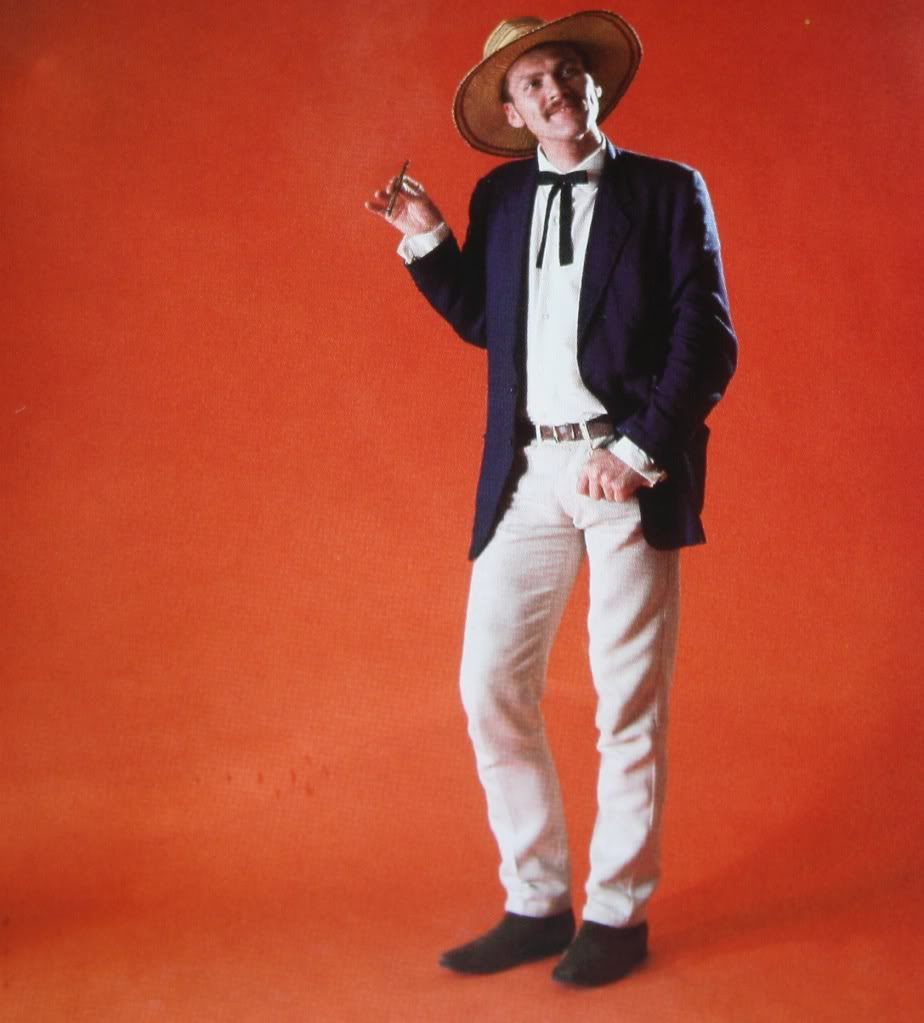
I couldn't resist including this shot from the album notes--what a cigarillo-smoking, big straw hat-wearing ladies man.  Thanks Davy. Get the CD here.