Showing posts with label MPB. Show all posts
Monday, October 31, 2011
Gal Costa - Gal
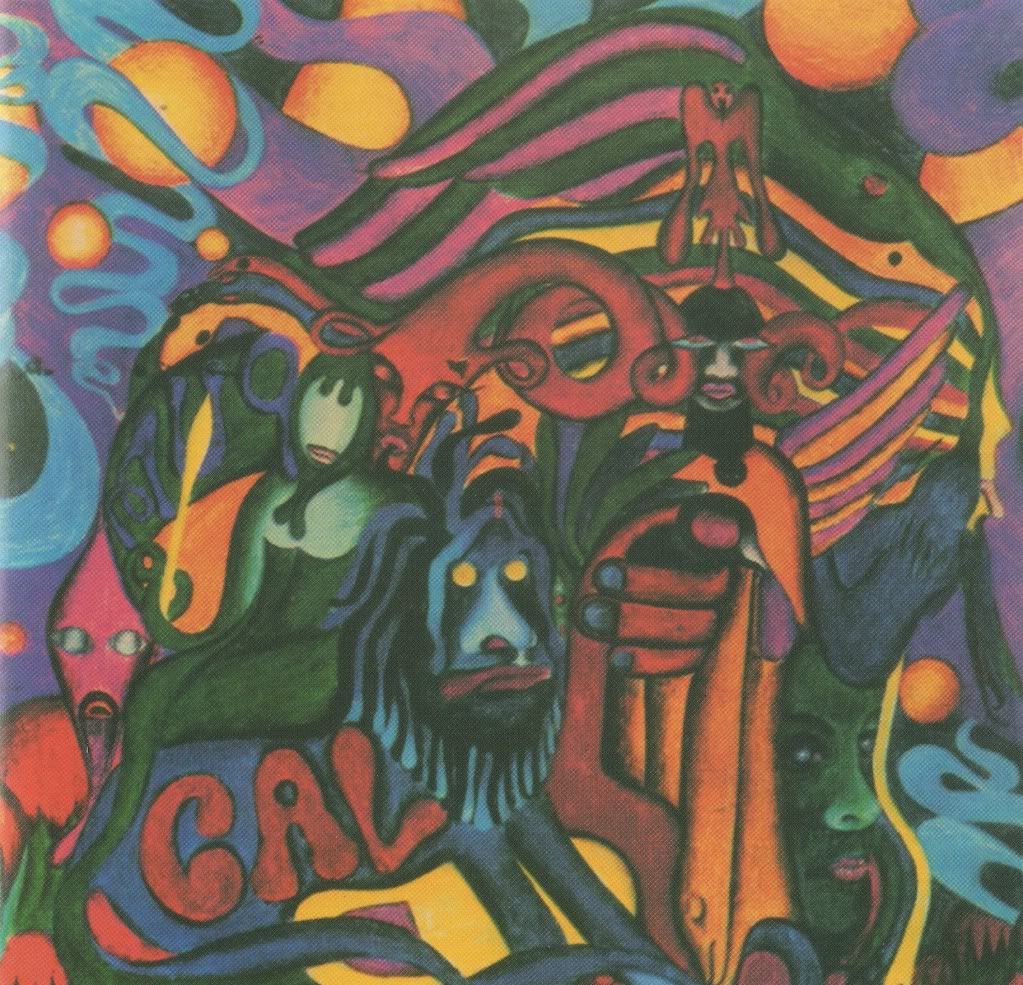
A long way off from the last MPB I posted, Gal Costa's second eponymous 1969 album is firmly in the Tropicália camp with wild eclecticism, psychedelic production and bristling with the untamed energy that the Brazilian military government found so threatening at the time. Worlds away from her more chanteuse-like debut, Gal even blows away a lot of the Tropicália competition in terms of craziness--I put it down to Gal's staggering vocal range and personality, which is self-evident on this album from the very get-go. The syncopated beat and fuzz guitar opening of "Cinema Olympia" drops out almost immediately as Gal's seductive voice creates more of a lounge atmosphere, which soon disappears as well when the beat picks back up--by the time the chorus happens, Gal's hollering about matinee films at the Cinema Olympia over pounding snares and furious clean guitar riffing--heavy reverb and delay gradually accumulate on Gal's vocals as her wordless shouts and moans multiply before abruptly disappearing in a haze of strings...and then it's on to something completely different! The detuned nylon string acoustic guitar and snake charmer reeds of "Tuareg" veer immediately left, and yet Costa seems to have no trouble keeping up when the bass grove kicks in and the chorus lifts the dark Eastern atmosphere back into pop territory.
It's easy to be impressed with both the stylistic breadth and quality of the songwriting on this album, and a glance at the credits confirms this gut reaction--there's three Gilberto Gil songs and two each from the pens of Caetano Veloso and Jorge Ben. One of my favorite things about the late-60's Brazilian music scene is how communal and supportive it seems to be--all of these artists not only manage to co-exist, they also push each other into new directions and also manage to create a collective genre that's more than the sum of the bands that make it up. The sky is the limit for the rest of the songs on this album--Gal ranges from ethnic Brazil flavor on Ben's "País Tropical," unexpectedly into sweeping string-arranged vocal pop (and a host of Tropicália artist name-dropping) on "Meu Nome É Gal" ("My Name is Gal") all the way to batshit crazy on the sound collage cut-up-cum-big band showcase for Costa's rapid delivery and upper-register bends on "Objeto Sim, Objeto Não." Though I've got a feeling a lot of this can come across as too jumpy and frantic for a lot of listeners, the radical and immediate mood and texture shifts in this album are probably my favorite part--a song like "Com Médo, Com Pedro" snaps between quiet, jazzy strings and Hendrix-like hard rock, and Costa even trades between sexy and psychotic in the same lines!
The fact that these frenetic songs somehow hold together and make sense grouped on the same album has to be credited to both the songwriters and the backing band, who manage to not only keep up with the stylistic swings, but also to masterfully manage a chaotic atmosphere with deft control. Listening to music like this, it almost feels like psychedelic music was created for the explicit purpose of being given to the already-able musicians of Brazil and mutated into something the British and Americans weren't even capable of imagining. The eclectic mood, awesome power of Gal's voice, and simultaneous pop/avant garde atmosphere of this album make it probably my favorite Tropicália album, and it's also probably the most cohesively "listenable" (aside from the eccentricity) as well, since there's no obligatory six-minute tape manipulation freakout (though "Objeto Sim, Objeto Não" comes close). If you check this out and enjoy it, good news--there's a whole lot more great music where this came from!
Labels:
1969,
MPB,
Pop,
Psychedelic,
Reviews,
Rock,
Tropicália
Thursday, June 16, 2011
Jorge Ben - A Tábua De Esmeralda
I'm excited today to delve into some areas I haven't yet written about on this blog. Jorge Ben is one of the most popular and enduring Brazilian artists of the past 50 years, so featuring one of his best albums is a good way to start discussing Brazilian popular music of the 60's and 70's.
1974's A Tábua De Esmeralda is widely viewed as a high-water mark for both Ben and the MPB (Música Popular Brasileira) genre as a whole. While MPB is a rather broad term that's used to describe almost any popular usic coming out of Brazil in the 60's and 70's, its lack of specificity is often reflected in the blinding eclecticism of the artists it's used to describe. Jorge Ben is a perfect example--his songs' rhythms and distinctive nylon-string guitar style gives the music away as samba, but there's so much more to it than that! The album-starting "Os alquimistas estão chegando os alquimistas" (which is about alchemists, of all things) fits the samba mold with Ben's upbeat strumming, a bouncy beat, hand percussion and a small chorus backing up the Ben's smooth but expressive vocals. And yet, the track opens with some Portuguese mumbling and the track is adorned with sweeping strings and flutes, which build like a storm in the background toward the track's end. Similarly, the second track, "O homem da gravata florida" is deceptively straightforward in its simplicity, but Ben's vocals are increasingly reverbed and delayed to the point that things get a little...well, trippy. This mood reaches a peak on one of my favorite cuts, "Errare humanum est," which opens with an innocent "la la" chorus melody but progresses into a moody, layered atmosphere where pumping cellos duel with the drummer's pounding toms and Ben's plaintive vocals effortlessly dance between his reedy mid register and smooth falsetto and cascade into an infinity of cavernous echoes. How he manages to achieve a mood that's simultaneously joyful, dark, mellow and energetic is beyond me.
While the production flourishes do add a psychedelic flavor to the songs, this is a long way from the sometimes-manic style to be found in late-60's Tropicália, a much more political and edgy subset of MPB spearheaded by artists like Caetano Veloso and Gilberto Gil--there's no sanity-threatening sonic collages or bursts of noise. Instead, Ben's songs--brimming with melody--and his personality as a performer carry the show. While in some ways the strings and echo make the album, it's easy to imagine these songs standing on their own in a live setting with a smaller, mostly acoustic ensemble. While I freely admit that Portuguese is impenetrable to my ears, this album is close to the top of my list of foreign language records where it doesn't matter if you don't understand the words--of course, it helps that a lot of the refrains are wordless. I can only imagine how knowing the words would enhance this already sumptuous listening experience. Of course, there is one song sung in English--"Brother"--which sort of breaks the spell with its Jesus message, but it's one of the catchiest cuts on the album, so it's hard to begrudge it for its mundane religious message alone.
Of the Jorge Ben albums I own, this one regularly dukes it out for top spot with his also-brilliant Africa Brasil from 1976. Unfortunately this album (along with much of the tragically poorly-curated Tropicalia and MPB legacy) is out of print, but it's available used and in high quality MP3 for a reasonable price here.
Labels:
1974,
Jorge Ben,
MPB,
Psychedelic,
Reviews,
Samba,
Singer/Songwriter,
Soul
Subscribe to:
Posts (Atom)