Showing posts with label Jazz. Show all posts

Friday, June 22, 2012

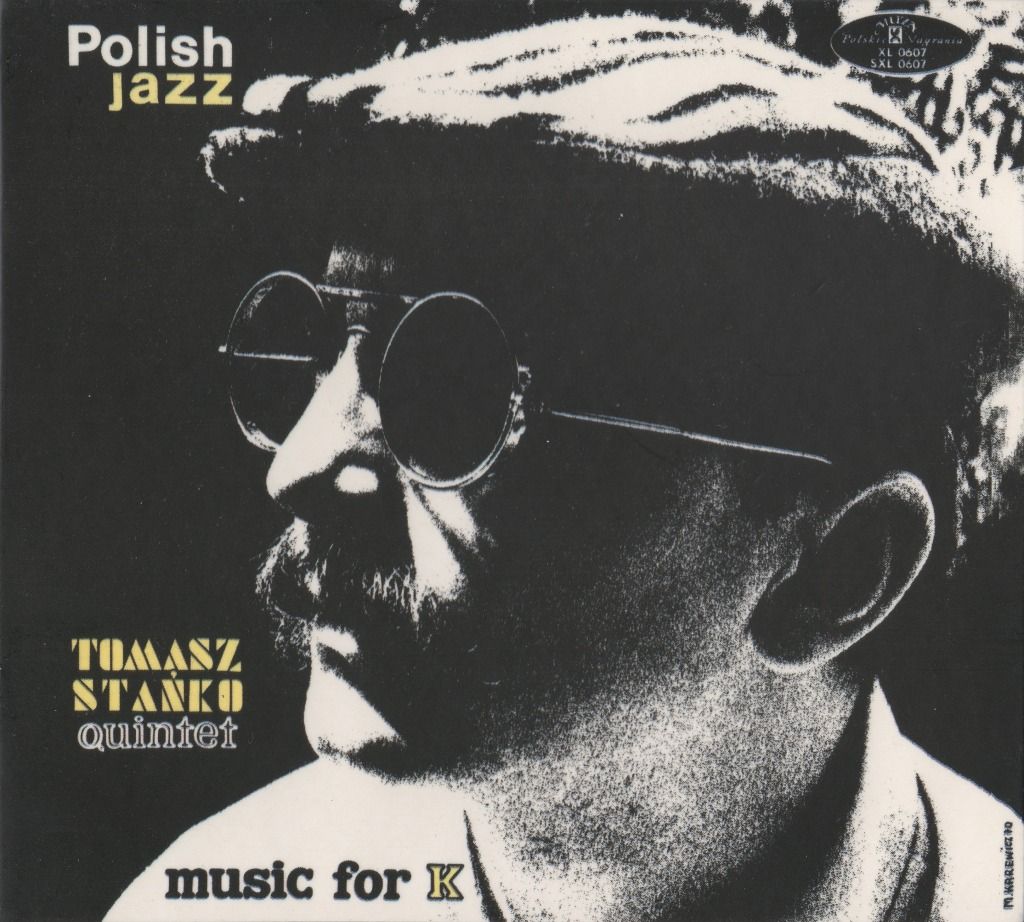
Tomasz Stańko - Music for K


These days, what's probably the biggest obstacle for Polish trumpeter Tomasz Stańko's 1970 debut is that it says "Polish Jazz" in the top left corner, leading to some reasonable assumptions that it's going to be some sort of fusion of polka or mazurka and American jazz, and some perhaps less justified assumptions that it'll be crap jazz because it's not American.  Not only are both of these assumptions proven incorrect by the music contained in these (digital) grooves, an album like this provides key evidence of the roots of the compositional framework that British/European jazz fusion bands like Nucleus and The Soft Machine utilized in the mid-1970's, but also that the narrative of jazz history in Europe is unjustifiably incomplete and marginalized in comparison with that of America.

Now, anybody in the know about this period of European jazz will probably acknowledge that I'm sort of getting ahead of myself by starting with Stańko's debut--many would cite Krzysztof Komeda's 1966 album Astigmatic as the most important illustration of the above points...in my own feeble defense, let's just say that this was the album I decided to review today for no other reason than that it's the one my eyes landed upon and seemed like a good one to write about.  Music for K is indeed a tribute to the late Komeda, on whose watershed Astigmatic album Stańko also played trumpet, and who is credited with contributing heavily to the development of a distinct flavor of European jazz that started in the 1960's and has continued to present.  Assigning credit is important but not as much as acknowledging a quality piece of work.  Here the influence of Komeda (who also had extensive film score experience including Roman Polanski's Rosemary's Baby) and Astigmatic are felt both in a sense of cinematic drama and a tonal palette that trades much of American jazz's jubilant euphoria for a darker, more cerebral form of expression.

The opener "Czatownik" both recalls Komeda's descending chromatic piano themes and predicts the tangled melodies that the aforementioned electric fusion groups would favor, with alto and tenor saxophones blurting rapid fire unison themes with the trumpet before things start to get more shambling, with each voice separating into an upward call that again lines up for a dramatic fanfare.  One of the things I really appreciate about this music is the shifting dynamics--things can go from blaring horns to sizzling quiet in an instant--the bass and drum interaction is prime here (check out that drum sound around 3:30)--and the piano-less lineup both points to the absent Komeda  and allows for alternation between skeletal frameworks and a spotlight on the wind instruments' melodies, not to mention a huge potential for free playing, of which there is an abundance.

In trying to define the specifics of a "European" jazz sensibility, my instincts are to point at its richly developed classical tradition, which seems to be borne out in a predilection for ostinato (check out the gently pulsing reeds in "Nieskonczenie Maly," and their darker, more anguished and dissonant counterparts in "Cry") and song structures that seem more linear than the typical circular jazz structures (head, solo:, head).  Things reach their freest and most intense in the 16-minute title track, which climbs a series of crescendos and mini-dips to a collective caterwaul, then steps back down across one of the album's greatest drum showcases to a squawking conclusion.

More than anything, the quality and energy of the playing on this album raises questions about the relative obscurity of the players here and severely shakes my confidence in a completely American-centric jazz narrative...we need better informational resources and access to more great music like this!  On the plus side, if you're feeling like you've exhausted the available avant-garde American jazz and everything's sounding a bit too happy and boppy for you, maybe there's hope in the Old World's "new" jazz--who knows what else we're still missing!

Get it here.

Wednesday, January 25, 2012

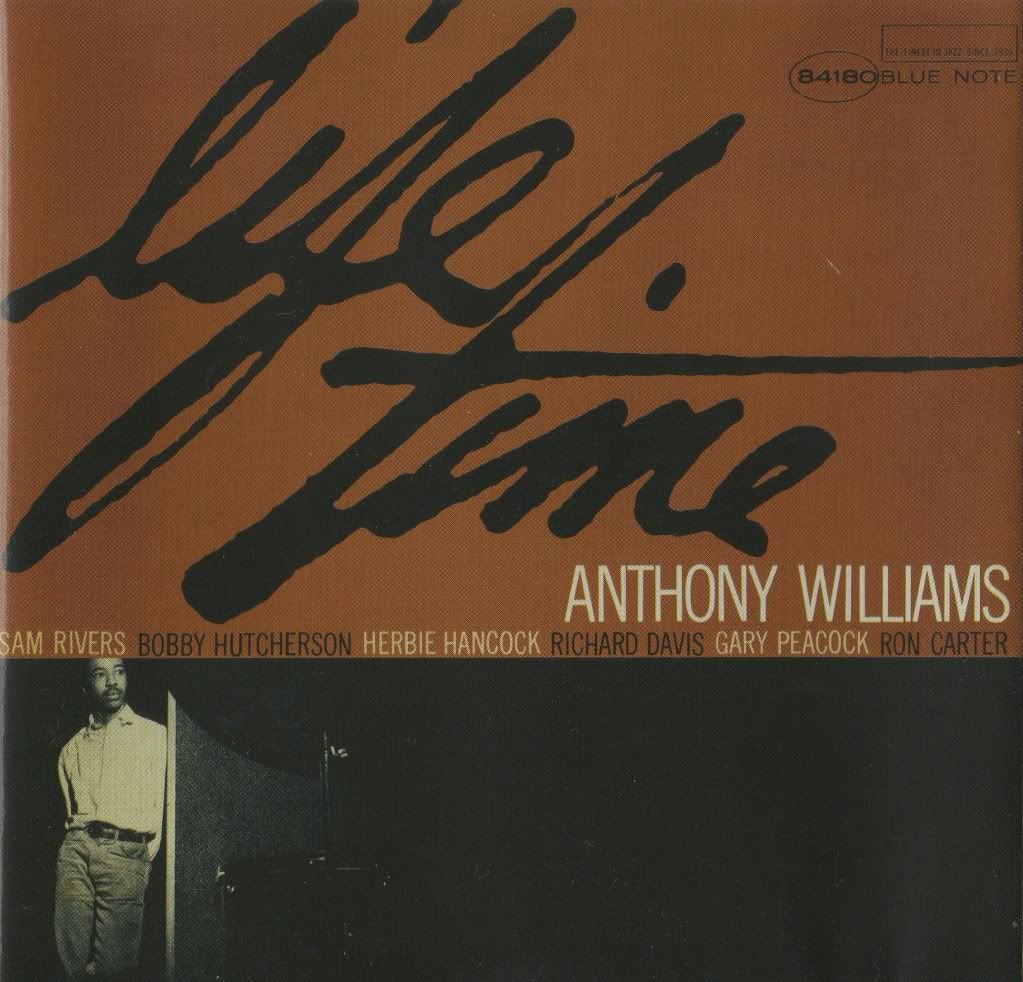
Tony Williams - Life Time


By 1965 and this--drummer Tony Williams' first set as a leader--the then-17-year-old had already been working with a slew of talented and innovative jazz artists, including Herbie Hancock, Eric Dolphy, Andrew Hill, Sam Rivers, Jackie McLean and Grachan Moncur III (not to mention his recent incorporation into Miles Davis' Second Great Quintet).  Listening to Life Time, it's clear that Williams was listening closely to what the latter two were doing, especially on the sessions for McLean's One Step Beyond and Moncur III's Evolution.  For me, this album represents one of several high points from the period when it comes to a distinctive brand of avant-garde jazz that seems to favor space over wild soloing.

You know from the eerie, quietly intense opening melody of "Two Pieces of One: Red" that this isn't going to be a typical bop album, but as Sam Rivers' tenor fades out and dual bowed basses from Richard Davis and Gary Peacock gently arpeggiate it's apparent that this subtle opening isn't going for the explosion your ears might expect.  One of the bassists takes the first solo, and from then on you can rest assured that we're not returning to the usual structures or sounds for the rest of the album.  "Two Pieces of One: Red" and the rest of Life Time are typified by a restrained, spacious atmosphere wherein solos take place with very little backing instrumentation (aided considerably by the fact that there's no piano on three of five tracks) and rarely take off into the rapid-fire solo excursions popular even with some of the players on this disc--Sam Rivers is surprisingly subdued here, but he manages to ride the transition with little difficulty, relying more on dynamics and the presence/non-presence duality that's much more of an option when you're playing in a musical landscape as open as this one.  Indeed, the overall sound of this album owes as much to the theoretical advancements of John Cage as it does to free jazz pioneers, setting up blocks of silence as both an effective compositional tool (making it easier to tell when the sometimes skeletal compositions are moving to another section) and as an invisible member of the combo, giving the players another (absence of) sound to play off and somehow adding depth and intensity to the sounds that are actually present.  Williams' drums in particular seem to particularly smolder in the open, reverb-heavy environment, with his brushwork lifelike in its texture and his cymbal work especially benefiting from miles of reverb and a lack of competition with other instruments (and himself, for that matter--this music wouldn't be so great if the players didn't match the mood by leaving a little space in their own playing).

"Two Pieces of One: Green" is the album's longest track, with Rivers contributing some more of his characteristic fire and blasting some really juicy overtones, while Williams explores the toms and un-snared snare.  While the subtle melody of some of the album's other tracks gradually reveals itself, this track is one of the freest of the bunch, demonstrating amply that free jazz doesn't have to always consist of several instruments blaring at the same time.  "Tomorrow Afternoon" comes closest to hard bop in melody and swing, but gradually breaks up into greater and greater caverns of space, like the floor is dropping away from the comfortable atmosphere that was so briefly established.  "Memory" drops Rivers and brings vibraphonist Bobby Hutcherson and Herbie Hancock in for a bassless free improvisation that sees Hutcherson and Williams riffing off one another quite effectively, with the vibes providing just enough of a tonal anchor; with Williams' wood block and other hand percussion providing yet another noticeable textural contribution.  The arrangement is so sparse that when Hancock finally asserts himself around 5:30 with a brief chord, it sounds like the loudest, most melodic thing you've ever heard.  The album ends with "Barb's Song to the Wizard," a piano and bass duet with no drums--the tense melody nods to Williams' aforementioned work with Moncur III and McLean.  Unlike those great albums, though, Williams always seems to take things one step further, providing no real traditional bop tunes to appease nervous listeners and committing fully to the album's mission statement.

The fact that this album works so well with such a piecemeal, rotating assortment of players exclusively playing the compositions of a 17-year-old drummer is a testament both to Williams' skill and unheard-of musical maturity at the time, but also to whatever it was in the air at the time that made all of these players so assured in their judgment, synchronicity and adventurousness.  Life Time is a grower in the best sense of the word--sounding like nothing much on first listen but gradually unfolding into a paradoxically dense work, considering its relative quietness--and every time I listen to it I find myself asking "Why isn't there more free jazz like this?!"  Luckily a little research into the discographies of the artists involved here yield further pairings in the same time period and several great albums in the same vein.  While Williams would go on in the next few years to collaborate with some of avant-garde jazz's most acclaimed albums (as well as Miles Davis' less challenging but equally iconic work [I bet he hated this album]) before heading into fusion territory, he did reconvene with some of these players for the nearly-as-excellent Spring, but no album I've found has done such a good job of fusing an AMM-like free improv space aesthetic with "traditional" free jazz harmony and melody--recommendations welcome!

Get it here.

Saturday, January 14, 2012

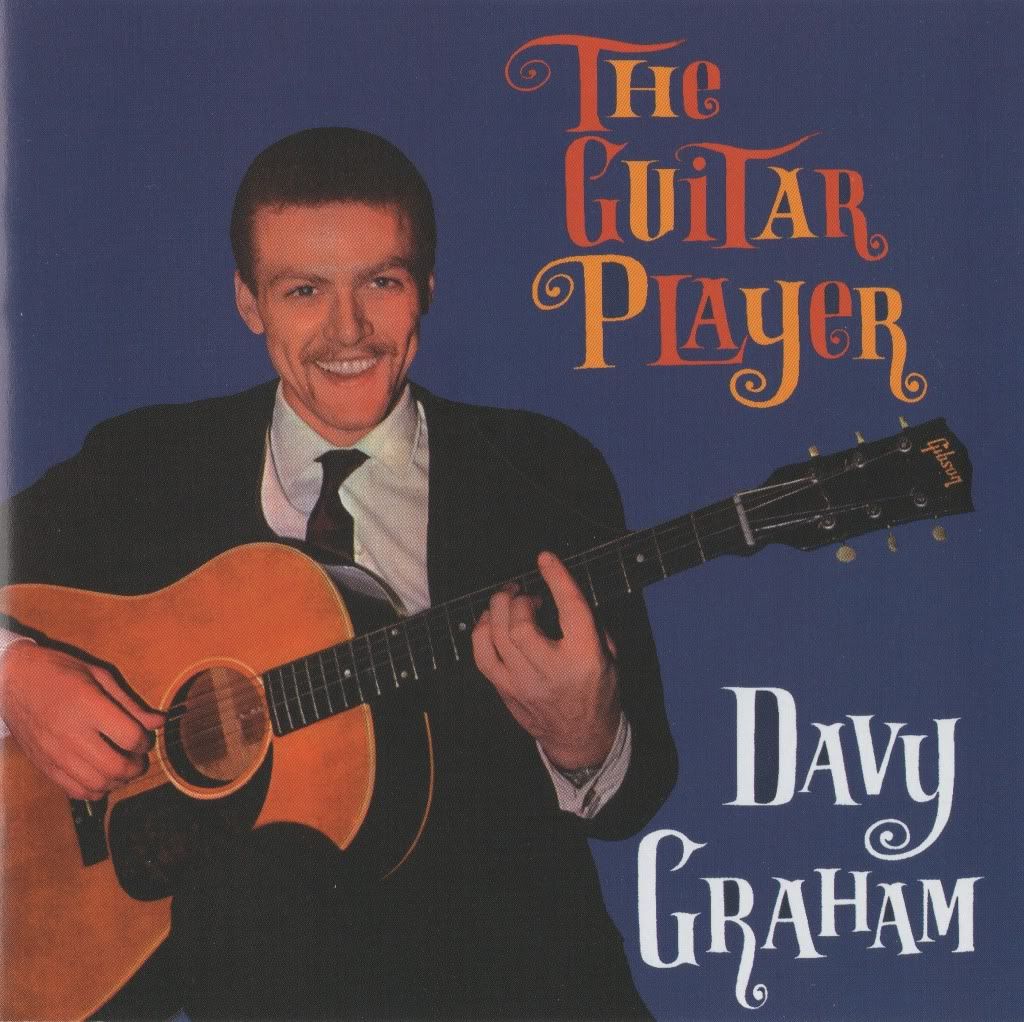
Davy Graham - The Guitar Player


If you're interested in delving into the influential and often mind-blowing rabbit hole that is Davy Graham's guitar playing and inimitable fusion of jazz and blues with folk from across the world, I urge you not to start here!  That's right, it's another installment of the only-very-occasionally-controversial Know Your Enemy series.  This time it's not really poor Davy or his fleet fingers, but rather his presumed audience who's the enemy.  It's got to be pretty much impossible to reckon how many great artists' originality and instincts have been stifled (either by their record labels or by themselves) in hopes of presenting their music as inoffensive and appealing to the largest and most middle-of-the-road audience possible.  By this album's 1963 release, Davy had already been doing the things that made him a legend among many British musicians who would find considerably more fame (things like showing up to a party and playing a single-guitar arrangement of Ravel's Boléro).  Instead of committing his unrivaled guitar excursions to tape, Pye subsidary Golden Guinea decided it would be more commercially accessible to pair Graham with a jazz session drummer and record an inoffensive mix of jazz and blues standards.

And so, we have The Guitar Player, whose title and cover promises an aural vision of Graham it doesn't deliver, at least in relation to his historical reputation.  We get "Take Five" and "Cry Me A River" (an earlier filmed version of which secured Graham this record deal) as well as Cannonball Adderly's "Sermonette."  While the material is in places somewhat mundane, Graham's playing is always flowingly organic (the tempo ebbs and flows with quite a bit of endearing imperfection) and it's fascinating to hear him collapse all the vocal and instrumental parts of a song like "Ray Charles' "Hallelujah, I Love Her So" into a single fingerstyle guitar part.  Disappointingly, most of the songs veer toward jazzy blues (or maybe bluesy jazz, as many Graham's mini-fills tend to riff on blues scales), though there are a few outliers that hint at the man's true passion--"The Ruby and the Pearl" injects a satisfying amount of minor Latin into the mix (and the drummer manages to play the sticks in a considerably more complementary way than he often does elsewhere, or maybe it's the fact that it's just acoustic guitar and drums that makes some of the arrangements sound  just a bit hollow).

Re-listening to this album, I'm reminded how much of a joy it is to listen to Graham's guitar playing, no matter what the context--sort of the guitar equivalent of saying you'd be OK listening to your favorite singer singing names out of the phone book.  It's just the knowledge that Graham had much bigger ideas to share and the way the songs are all so self-consciously happy sounding that rings somewhat forced.  The liner notes Davy writes "I sincerely hope you enjoy this record either to listen to or as a background to a good conversation," which just about sums it up--cowering in submission to your hoped-for audience so very rarely produces the stuff from which legends are born.  The CD reissue of this album seems determined to apologize for the original album's timidness, including examples of what actually made Graham legendary (raga-infused Irish folk in "She Moved Thru' The Bizarre/Blue Raga," Greek folk in "Miserlou" and a considerably more eclectic selection of songs from Graham's later-70's All That Moody, including his legendary instrumental "Anji").  Still, the unfortunate truth is that, pleasant as it is, this album doesn't come close to doing Graham's contributions justice.  While Graham would have career-long troubles finding a marketable niche for himself and regularly seemed to make artistic choices in hopes of endearing himself to an intangible audience, he at least managed to create a concurrent legacy of music that more successfully represented his unique and unprecedented vision.  While it's frustrating that he never produced an epic, vocal-less collection of his genre-shattering experiments (I'm sure partly owing to the fact that solo acoustic guitar as a genre was pretty much just getting going in the early 1960's), there are much better places to start than The Guitar Player.

You can get it here.

Wednesday, December 21, 2011

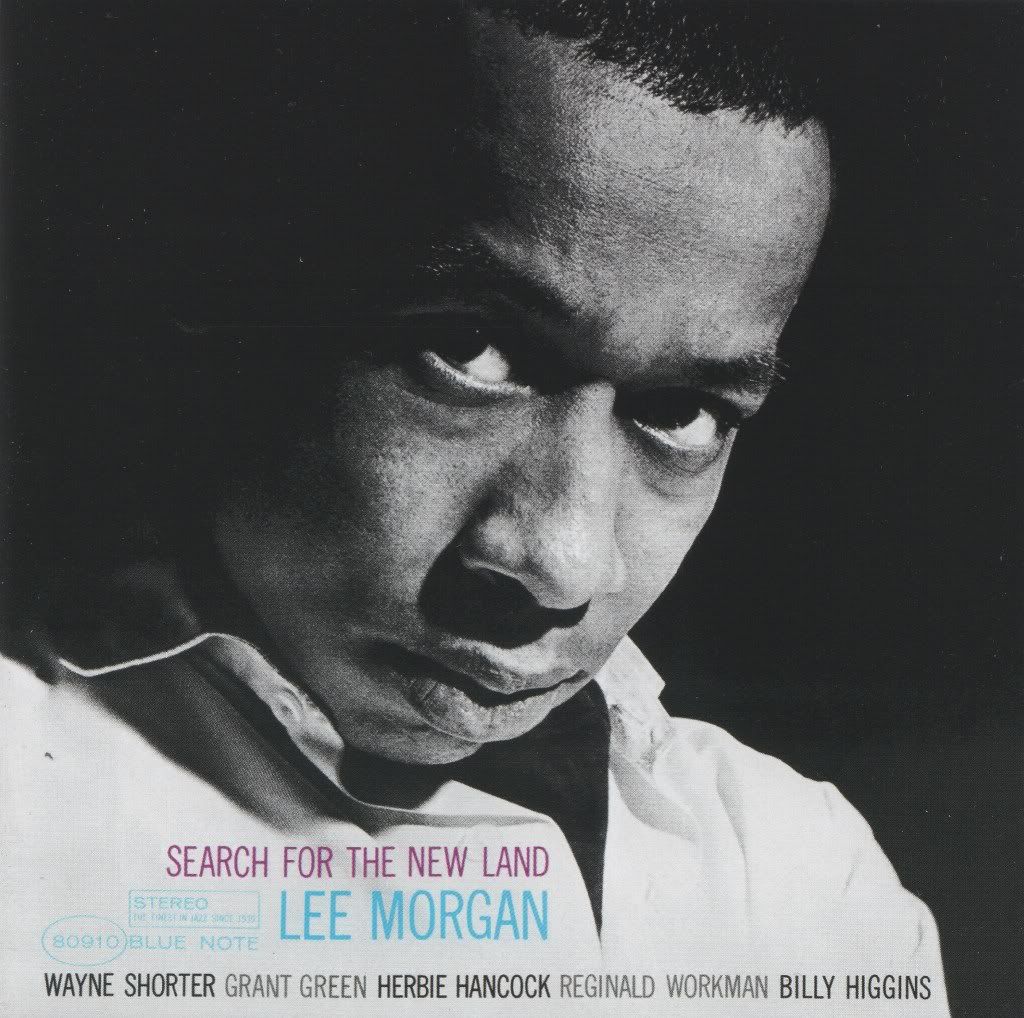
Lee Morgan - Search for the New Land


Though I'm gaining more and more of an appreciation for it, I still find jazz to be one of the most difficult genres to critically evaluate.  Since I'm not a jazz musician I have very little knowledge of jazz-specific theory, and though it's easy to tell when a soloist has particularly good chops from the speed, fluidity or emotion of his or her playing, if jazz albums were to be rated on the soloists' skills alone, there would be a lot of 5-star jazz albums out there (though learned jazz musicians may contend that there's a whole lot of space between "good" and "bad" in terms of soloist quality).  So, in evaluating jazz albums with a critical ear I tend to do so both from the perspective of my experience with other types of music and theory, but also more in the way that non-musicians evaluate most music--based on intuitive reactions and emotional response.  Though today's crop of conservative jazz élite probably feel differently, what I'm looking for isn't a theoretically-sound rehash of the same museum-piece territory that was first explored 50 years ago.  Like with most genres, if I'm interested in established ideas, I'd rather go straight to the source and experience them in their original form and hope that any new music I check out has something new to say to make it more worth listening to than the ideas' palpably exciting genesis in the aforementioned classics.  Right now I'm mostly fascinated with the birth and heyday of avant-garde jazz and free jazz in the 60's, and Lee Morgan's 1966 album Search for the New Land is probably a pretty good one to illustrate an album that features fine playing from a number of jazz greats but leaves my emotional and intellectual responses feeling a little cold. 

It's hard to pick holes in this album's lineup, which includes trumpeter Lee Morgan (close off the heels of his commercially successful The Sidewinder), Wayne Shorter on tenor saxophone, Billy Higgins on drums, Herbie Hancock on piano, Reginald Workman on bass, and Grant Green on guitar.  Based on the intensely arty portrait on the cover and the title's provocative title, this should ostensibly be Morgan's foray into the "out" beyond.  Unfortunately, aside from the title track's majesty and moody atmosphere, there's little on here musically to indicate Morgan is interested in abandoning the comforts of hard bop.  For anyone who owns several mid-60's bop albums, the only real draw for this album is "Search for the New Land," which presents a mysterious melody with stately flourishes only to re-state the same melody with a speedier, boppier energy.  I dig this idea, especially since the melody's a good one.  What I don't dig, though, is that Morgan proceeds to show us that his idea of an epic track is just to repeat the same slow melody over and over, interspersed with solo sections for four of the players.  While the music is well-played, there really isn't a whole lot that happens in the track's 15 minutes, especially not in terms of development.  Guitarist Grant Green's solo is pretty simplistic--dare I say boring--and he's so poorly integrated into the arrangement (the only other thing he does is textural octave tapping in the melodic section) that it almost seems like Morgan just included him because "having a guitar seems out."  Hancock and Shorter both deliver enjoyable solos that fit the song's mood well, but I can't help but be reminded of Hancock's own "Maiden Voyage," which delivers a similar feeling with more of a natural feeling and compositional flair.

Aside from the opener, the rest of the album is a pretty straightforward bop affair--"The Joker" is finely-played but unmemorable (at least Green is better integrated into the ensemble and contributes more to the accompaniment and turns in a more interesting solo), while "Melancholee" is the stereotypical obligatory ballad that's easy to pass over unnoticed.  "Mr. Kenyatta" is one of the best tracks to my ears, subtly tense and edgy while at the same time laid back and swinging--exactly the type of composition I think the phrase "post-bop" applies to; not quite in and not quite out.  The closer, "Morgan the Pirate" is similarly satisfying, contrasting some Andrew Hill-like piano riffing from Hancock with a nice, bouncy bop melody. 

While there's far from anything objectionable about this music, it's neither a great hard bop album nor does it deliver on its implied promise to plumb some uncharted depths.  In my nascent attempts to try and articulate what separates a workmanlike, well-played jazz album from a really great one, this album is a god example and reference point to show that sometimes a great lineup doesn't quite click with the magic that elevates the best albums to those rarely-reached heights.  The great thing about jazz, though, is that even with a relative disappointment like this album, it's still a pleasure to listen to and achieves a pretty sizable amount of the pleasure that comes from all well-played jazz.

Get it here.

Monday, November 14, 2011

Portico Quartet - Isla


I read about this album while perusing a list of top albums of 2009 on Rate Your Music.  Inspired by the beautiful album art and a perpetual hope that there can still be good new jazz, I took a chance and was pretty well rewarded for it.  To sum up the band's general style, I'd say it's a very modern type of jazz with ethnic elements not unlike those found in places on Robert Wyatt's most recent albums, and owing a pronounced debt to the type of minimalism that Philip Glass pioneered in the 80's.  While this blend will probably do little to satisfy modern hard bop traditionalists or jazz fans hoping for something really avant-garde, it's reasonable to say that the band manages to maintain a delicate (precarious, even) balance within their chosen style and produce a work that avoids most of the obvious pitfalls that style entails.

Sonically, the most distinctive marker of this band's sound is the presence of hang drums played by either or both of the quartet's two drummers.  The instrument's timbre (like a more subdued steel drum) lends an immediately perceptible atmosphere to the music, and the deceptively simple sound of the shifting, pulsing melodic/rhythmic fragments the arrangements call for immediately tie the music to the type of cell construction that the aforementioned Glass and other minimalist composers have now been purveying for decades.   In spite of the obviousness of the influence, the band manages to individualize the concept to their style and the album has a satisfying consistency because of it.

If I had to predict a negative critical assessment of Isla, it would probably be that the band's alto/soprano sax and hang drum sound is too consistent and that the band's style, though incrementally distinctive, is homogeneous within the entire album.  And yet, even listening closely with this criticism in mind, I'm impressed with how often the band manages to surprise and subvert their own formula, even if it's in small and subtle ways.  Every time things start sounding too genteel, some noisy free-leaning squawking like the end of "Su-Bo's Mental Meltdown" comes to break up the niceness (the band uses delay and reverb--uncommon production effects in a lot of traditional jazz--to great effect).  When the melodies on tracks like "Life Mask" get a little too syrupy (many of these melodies owe more to indie rock and pop than they do to anything closely jazz-related), something like "Clipper," with its Latin rhythms, skronking saxophone and kick-ass bassline remind that this is still jazz...at least in some way. 

In some ways, the songs here aren't as melodic as they could be--"Dawn Patrol" and "Line" seem solely focused on the tension-release dynamics reminiscent of bands like Explosions in the Sky--which makes me wonder why it's necessary for the hang drum and sax noodling to sound quite so tonally-centered; couldn't the absence of a domineering melody be a little more freeing?  When the group does focus on melody though, the results can be beautiful, as on "Paper Scissors Stone," which twists quieter late Coltrane moments with minimalistic repetition, or the swelling emotion of "The Visitor," where it's disturbing how a track that verges so closely to smooth jazz can be so enjoyable and dense with details.  If there's something I'd like to see more of without changing the band's core mission, it'd be more looseness and less rigidity in the rhythm section--the saxophone seems to be the only instrument that's allowed to play around, which only adds to the smooth jazz impression.  You know something's wrong when a jazz band has to self-congratulatorily title one of their songs "Improv No 1" in parentheses, especially when that song sounds virtually the same as the composed pieces!

All in all, I'm looking forward to the next Portico Quartet release--I can see them filling a niche really well and making inroads beyond the European market--but I hope their sound continues to develop, just not too smoothly.  It's interesting to me that a group can create a unique sound purely by combining a couple of well-established genres.  If that's the future of music (and especially jazz, where it's "developed" by being cut with every other musical style out there), we could have much, much less enjoyable music to listen to than Portico Quartet's melancholy dreamscapes, but I'll always hope that there's somebody out there whose imagination stretches beyond merely rearranging pre-existing puzzle pieces.

Get it here.

Thursday, October 20, 2011

Eric Dolphy - Out to Lunch!


If I had to credit one album for inciting my recent obsession with jazz, it would have to be Eric Dolphy's 1964 crowning achievement, Out to Lunch!  Before then, I'd found something of a backward insertion point into jazz by moving into free jazz from the less idiomatic free improvisation realm.  After hearing this album, though, I realized that there's an entire movement within jazz (generally known as avant-garde jazz) that overlaps with free jazz in terms of soloist expression but also focuses heavily on expanding the compositional palette of bop and post-bop to a wide variety of places it'd never been before--undoubtedly, avant-garde jazz is the jazz for me!

By 1964 Eric Dolphy had had a storied career as both a sideman (supporting, among others, John Coltrane and Charles Mingus) and as a leader, recording several studio and live albums since his bandleader debut on 1960's Out There.  It's unsurprising that Dolphy was in great demand as a session and live ensemble member, as he could play alto saxophone, flute and bass clarinet--the wider success of which in jazz music he can arguably credited--with comparable (but always idiosyncratic) virtuosity.  Though he was playing "out" for years before the date of this recording, Out to Lunch! is the first (and last, since he died within months of its recording) of Dolphy's albums to feature only his own compositions.  As I've increasingly found among successful avant-garde jazz albums, the combination between the adventurousness and innovation of the compositions and the freedom, creativity and chemistry of the performers creates a perfect storm of blissful, challenging sounds.

On the compositional side, Dolphy provides songs that run the gamut between dissonant odd-metered avant-garde ("Out to Lunch," "Straight Up and Down," "Hat and Beard," dedicated to Thelonious Monk, one of the only jazz composers who could be said to foreshadow Dolphy's style), early 1900's gospel jazz (the ballad "Something Sweet, Something Tender") and frantic, twisted bop riffing ("Gazzelloni").  On the more dominant weird stuff, Dolphy strikes a fascinating balance between abstractness (which often pleasingly extends typical jazz harmony to the brink of atonality) and Ornette Coleman's sinuous sense of head melody.  "Hat and Beard," with its constantly mutating descending scale and lurching unison non-melody, fits the former category, while the title track fits the latter with a seemingly never-ending head that winds around in spiraling circles, somehow never separating the tight unison between trumpet and alto sax.  The final track, "Straight Up and Down" is supposed to emulate a drunken stagger but, really, the same could be said of most of the rhythms here!  What I really love about Dolphy's compositions is that they travel well beyond the head-solo-head formula that sometimes hangs like an albatross from so much ultra-orthodox jazz; sure, the songs have recognizable and recapitulated heads, but there are innumerable pockets of group dynamic shifts, coordinated rhythmic interplay and near complete dropouts that you never get the sense that things are happening without a good reason.

As far as the playing goes, like I said earlier, this is an undeniable example of a perfect storm where a dream team of players come together over a set that pushes them all to places they've never been before.  The absence of piano means that vibraphonist Bobby Hutcherson carries the mid-range chromatic accompaniment on his shoulders, which means a lot of the accompaniment is more spacious than the type of comping that piano usually provides.  I really enjoy how Hutcherson swaps between helping state the songs' melodies, comping with two or three-note chords over occasionally strange intervals, and spontaneously supporting solos with minor melodic excursions.  While Hutcherson's replacement of piano on this album is often lauded (as must be his ability to make one of the geekiest jazz instruments as cool as it could possibly be), I think some credit is also due to bassist Richard Davis, who often uses two-note chords (sometimes with a bow) in addition to a more standard walking style to emulate the piano's absent tonal cluster effect.  The tightness of Hutcherson and Davis allows Tony Williams free reign to play counter-rhythm to the vibes, alternate between blasting and delicate fills out of nowhere, and keep the ideas coming one after another without obsessing about blatantly stating the beat--sometimes it's just implied, and that space is one of the best parts about this music.  Trumpeter Freddie Hubbard could easily be labeled this set's least adventurous performer, but there's really no denying his chops; though he can't compete with Dolphy in terms of out-ness, he ably makes up for his relative conventionality with furious energy, which just might be considered out on its own.

Finally, Dolphy manages to consolidate his well-documented strengths on all three instruments by stealing his own show.  I can never get enough of his bass clarinet playing--the instrument's ear candy timbre is enjoyable on its own, but in the hands of someone like Dolphy, it becomes something else entirely.  Especially with the bass clarinet, his intuitive feel for the instrument's range and voicing allows him to employ it quite vocally, screeching through wide intervals just as often as he blurts out vaguely tonal (but always strangely melodic) fragments.  The beauty of this approach comes out even more on "Something Sweet, Something Tender," where the slow tempo and old-timey feel allow for some wide vibrato and compelling emotional expression.  Dolphy's alto saxophone chops are another thing entirely; his tone is so flagrant it sounds like he's blowing fire out of his horn and the mics can barely handle it.  "Gazzelloni" is the only flute showcase, which seems like a good ratio--the vibraphone seems to overlap in terms of timbre, so one example of Dolphy's rapid fire, often viscerally percussive flute style satisfies quite well.

It's a shame Dolphy wasn't able to follow up this masterpiece with a few more albums of his own compositions--he was clearly on a roll.  Fortunately, there are numerous great examples of his ability as a sideman (my picks for a balance between Dolphy's chops and adventurous composition are Andrew Hill's Point of Departure, George Russell's Ezz-thetics, and Ornette Coleman's iconic Free Jazz), and if you just want to hear the man play, his Wikipedia page comprehensively lists his discography as a leader and sideman--enjoy the trip.  It's disappointing that few contemporary jazz artists have attempted to push the genre forward in this way--there's clearly lots of space left to fill with audacious sounds, and it's hard to argue that these guys didn't have a great time making this music.

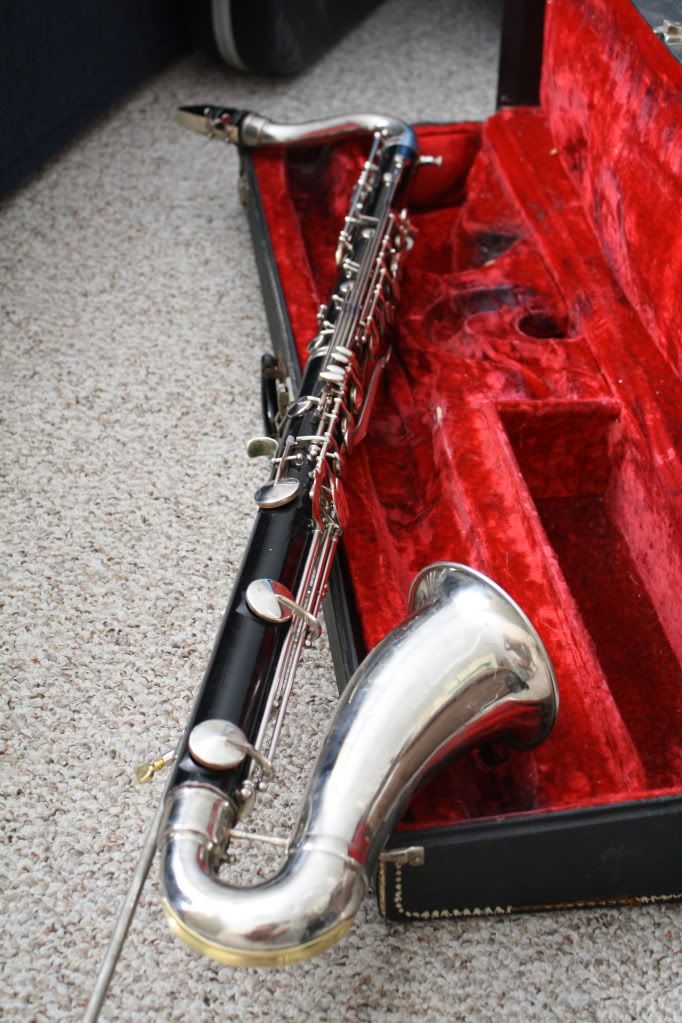
On a side note, here's what happens when you listen to too much Eric Dolphy...for use on my upcoming recording project.

Thursday, October 6, 2011

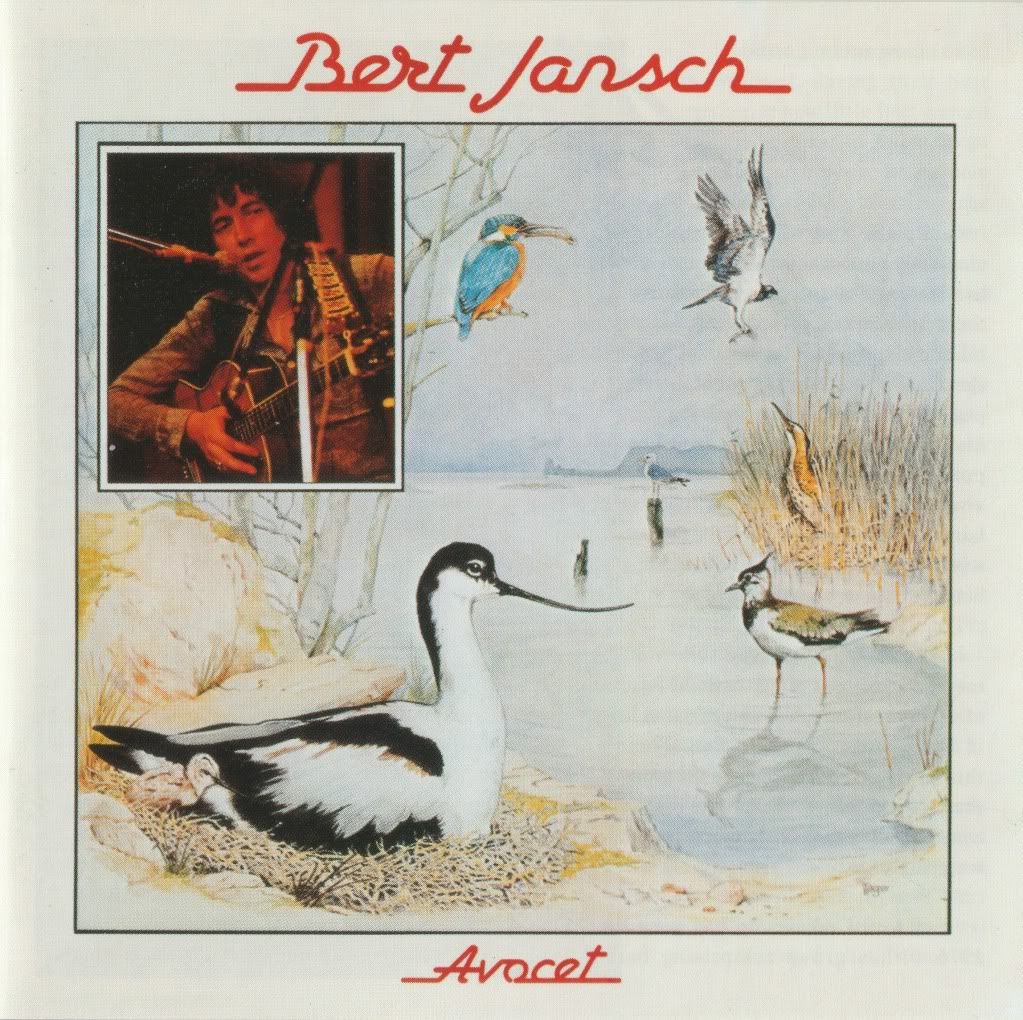
Bert Jansch - Avocet


In observance of Bert Jansch's passing yesterday, I think it's fitting to feature what's probably my favorite Bert Jansch album, 1979's Avocet.  Though Bert had already flirted with pure instrumentals on his solo albums, as far as I know Avocet is his only all-instrumental album.  While it may not get the attention Bert's earlier solo records generated, I think it's a fine showcase for Bert's abilities as a guitarist as well as a composer, and a sort of detour I always wish he would have pursued further on other albums.

The lengthy title track occupies the first side of the album and is thus its centerpiece.  It's easy to realize right away that this is what music critics love to call a "pastoral" album (I wouldn't be surprised to hear the words "very British" either).  The focus, of course, is on Jansch's fingerpicked acoustic guitar, supported by all-around double bass badass Danny Thompson and English folk journeyman Martin Jenkins on violin, flute, mandolin and mandocello (don't get to hear that one very often), who often carries the songs' melodic burden.  Jansch's playing is typically beautiful, seamlessly superimposing arpeggios, single-note lines and multi-string leads on top of his characteristic Travis picking.  I'm always struck by how understated yet impressive Jansch's playing is when viewed close-up; it doesn't sound like he's showing off, but the amount of string bending, pattern-changing and fluid stylistic variation is constant and awesome in its scope.  "Avocet" meanders gently through its many parts, providing plenty of melody to anchor the musicianship--though it's not the most focused extended instrumental, it manages to weave a recurring melody across major/minor subsections that span folk, jazz and more of a renaissance flavor before gently coming to rest with Jansch's uniquely mellow-yet-somehow-violent plucking.

Call me a rogue, but the album's second side sounds even better to my ears--the shorter song lengths seem to lend themselves to more distinctive structures.  "Lapwing" transcends Jansch's rudimentary piano technique to deliver a pensive minor melody, while "Bittern" introduces a hypnotic, swaying waltz melody and showcases Thompson's righteous bass skills (I can't decide if he's simply an awesome bassist, or it's just that he's miked hotter than most, or [more likely] both).  Things get jazzy on the darker "Kingfisher," which features some of the album's more surprising chord changes.  The 5/4 time of "Osprey" and the lush lyricism and guitar/mandolin doubling "Kittewake" close the album at its most melodic, proving that, though the title and mood of the disc connote nature documentary background music, there's more than enough substance here to justify close listening.  After reacquainting my ears with these songs, I think Avocet is a fitting representation of Bert Jansch the musician--unassuming and humble, yet full of complex and effortless beauty--you just have to take the time to pay attention.

Wednesday, September 28, 2011

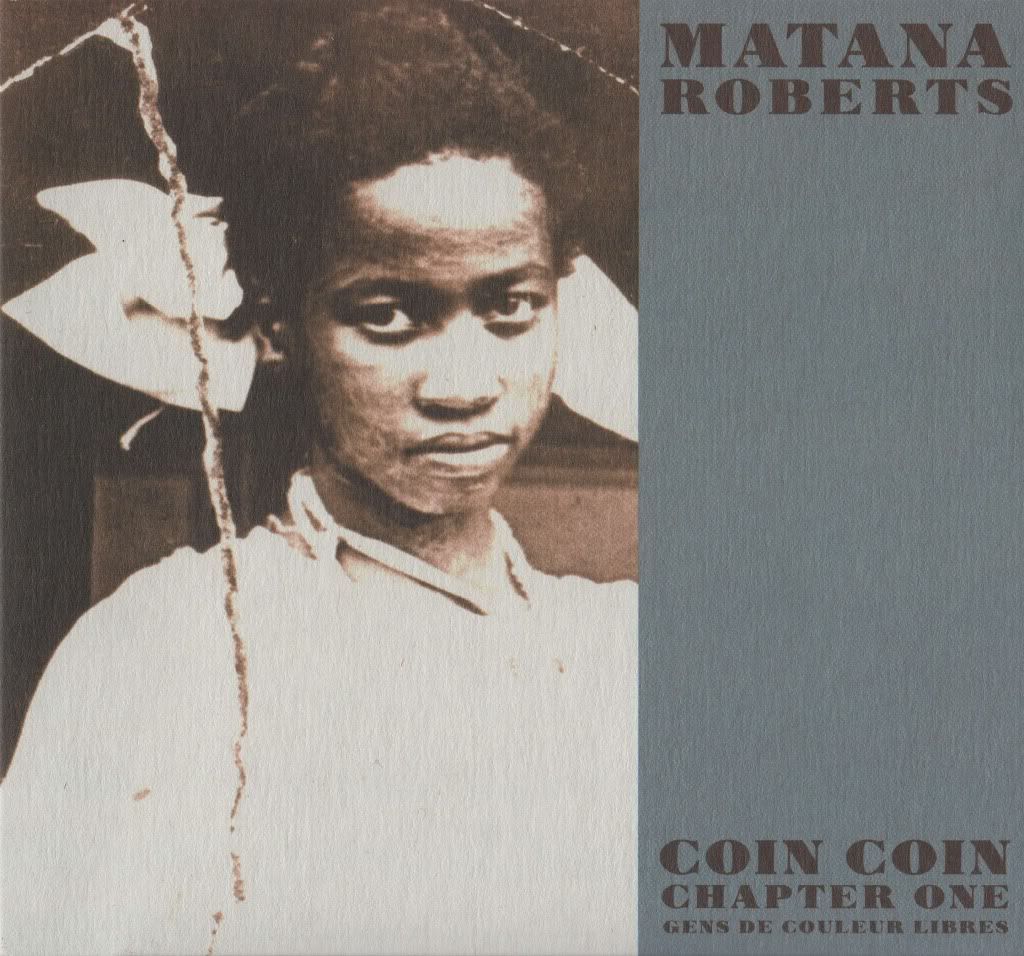
Matana Roberts - Coin Coin Chapter One: Gens de couleur libres


As unfortunate as it may sound, it's unusual in 2011 to have a challenging new jazz release to get excited about, but New York (via Chicago) alto saxophonist Matana Roberts has undeniably produced one.  Though she's been publicly active since the early 2000's, the first "chapter" of her ambitious planned 12-part Coin Coin series seems to have been Roberts' biggest break to date, getting her a lot of exposure in print and online.  People have already been talking about this album enough that the word "hype" is getting tossed around, which usually results in heavy skepticism and considerably less interesting conversations.  After getting to know this album I don't feel any need to declare it the "best" anything of 2011, but I do agree with the growing number of people out there that it's an uncommon album in the contemporary jazz landscape and well worth checking out.

Coin Coin Chapter One is probably best described as a conceptual piece of performance art, which covers the wide variety of musical styles it incorporates as well as the use of poetry and narrative that are central to its purpose.  The core themes of the work are memory, history and shared human experience, focusing primarily on subject matter relating to historical African Americans in slavery and positions of adversity, drawing from Roberts' own explorations of her family history and ancestry.  This subject matter is presented over and together with a diverse backdrop of different jazz styles, including avant-garde jazz, free jazz, dixieland, blues, and more.  While I think it's a valid point that the subject of the African American slavery is arguably not immediately relevant to most people's present-day lives and that it can be "too easy" of a choice (for obvious reasons relating to the horrors that countless African Americans have experienced throughout history) when it comes to eliciting a strong emotional response, I think these objections are a little too dualistic.  When confronted with Roberts' vision, it's clear that her exploration of the historical black American experience remains a living, vital part of her (and I'm sure innumerable others') identity, and the authenticity and emotion of her presentation soon dispels any attempt at dismissing the subject matter as purely contrived.

The most powerful pieces on Coin Coin Chapter One are undoubtedly those that feature Roberts' voice either singing or reciting spoken word.  In the Coin Coin world, Coin Coin is a sort of "every person" spirit who repeatedly appears in different people's lives across history, reinforcing the concept of shared experience that seems central to Roberts' project.  In "Pov Piti," "Kersaia" and "I Am," Roberts introduces Coin Coin's different manifestations with anguished cries, powerfully conveying the spirit's rebirth through another African American's existence.  Each song continues, describing each character's experience through Roberts' spoken word.  It's hard not to admit that these pieces are crushingly compelling in their emotional message, as Roberts' lilting spoken word describes episodes of yellow fever, slave rape, and redemption through freedom and the jaw-dropping concept of buying back children who were taken and sold as slaves.  I really love her poetic delivery; the meter is flowing, organic, and wholly reminiscent of instrumental improvisation--she stops, starts and repeats lines as if she's blowing a horn, imbuing the words with rhythm and often downplaying the force of the ideas, casually dropping blood-freezing lines like "I have seen so much but yet have experienced less than most dogs" and "I am twenty-five; there will never be any pictures of me."  Her lyrical concerns also come to fruition through sung vocals, as on the bitterly sarcastic auction block vocal blues parody "Libation for Mr. Brown: Bid 'Em In," and more contemporarily on the dedication "How Much Would You Cost?"

Musically, Roberts' vision is as sweeping and all-inclusive of African American history as her narrative is, drawing together a smattering of all of the historical jazz developments imaginable and weaving them together into a smoothly-flowing collage.  The opener, "Rise" recalls Coltrane's A Love Supreme in both title and its incantatory feeling, though its cacophony eventually marries modern electric instrumentation with more of a Pharoah Sanders-like free jazz sound.  The mercurial, progressively shifting main theme that introduces the album's spoken word pieces possesses the album's most memorable instrumental melody, effectively aurally tying the recurring themes together, and including a vocal arrangement that recalls 40's film scores.  "Song for Eulalie" blends ominous piano riffing with some nice free duet playing between Roberts (whose alto saxophone tone variously recalls both Coltrane and Sanders as well as the keening gospel sounds of Albert Ayler), while the album closing waltz ends on an uplifting note with the disc's most unassuming and most compelling vocal melody.

Though there are numerous brief kernels of vibrant and effective composition, I think one of Coin Coin Chapter One's weakest aspects is that it often plays like an all-inclusive pastiche; its eclecticism is only occasionally displayed in fully-formed songs and more often occurs willy-nilly across songs that seem to have little in the way of structure.  While the mood and playing of "Rise," for example, display a slight modern twist on free jazz, the track presents little in the way of recognizable melody or memorable elements.  Consequently, when the album ends the actual compositional elements seem rather slight and repetitive--the repeating theme, a couple of traditional songs, and a whole lot of episodic genre sampling spanning over 60 minutes, with a number of ideas taking up a bit more time than they probably justify.  Since Roberts has already announced that Coin Coin will be a 12-part series, it's hard not to start wondering if the musical approach will be the same for the entire work, which I fear could result in some artistic stagnation.  Though, as far as I know, this album is strikingly original in the jazz world (the closest thing I'm aware of is Max Roach's We Insist!: Freedom Now Suite), it's arguably only original in its performance art/narrative approach and wide-reaching inclusion of different styles.  Without Roberts' concept, words and voice, I think the music would come off as a bit unremarkable and unfocused in its scope.  I sympathize with Roberts' ambitions, since creating something simultaneously eclectic, developed, and original requires a sort of unidentifiable magic touch.  I hope that later installments in the series retain her obvious passion with a stronger focus on composition and hopefully her emergence as a truly original musical voice, neither of which I think have happened quite yet on this release.  Either way, I'll be first in line to pick up chapter two whenever it's released, and I hope those jazz artists listening to Matana Roberts achieve a little bit of inspiration to stretch past the hard bop regurgitation that so much contemporary jazz seems to cling to.  Whether or not it "lives up to the hype" (probably the most boring discussion imaginable when confronted with an album like this), I think Coin Coin Chapter One is unarguably an uncommon work and worthy of the interest it's received.

Monday, September 19, 2011

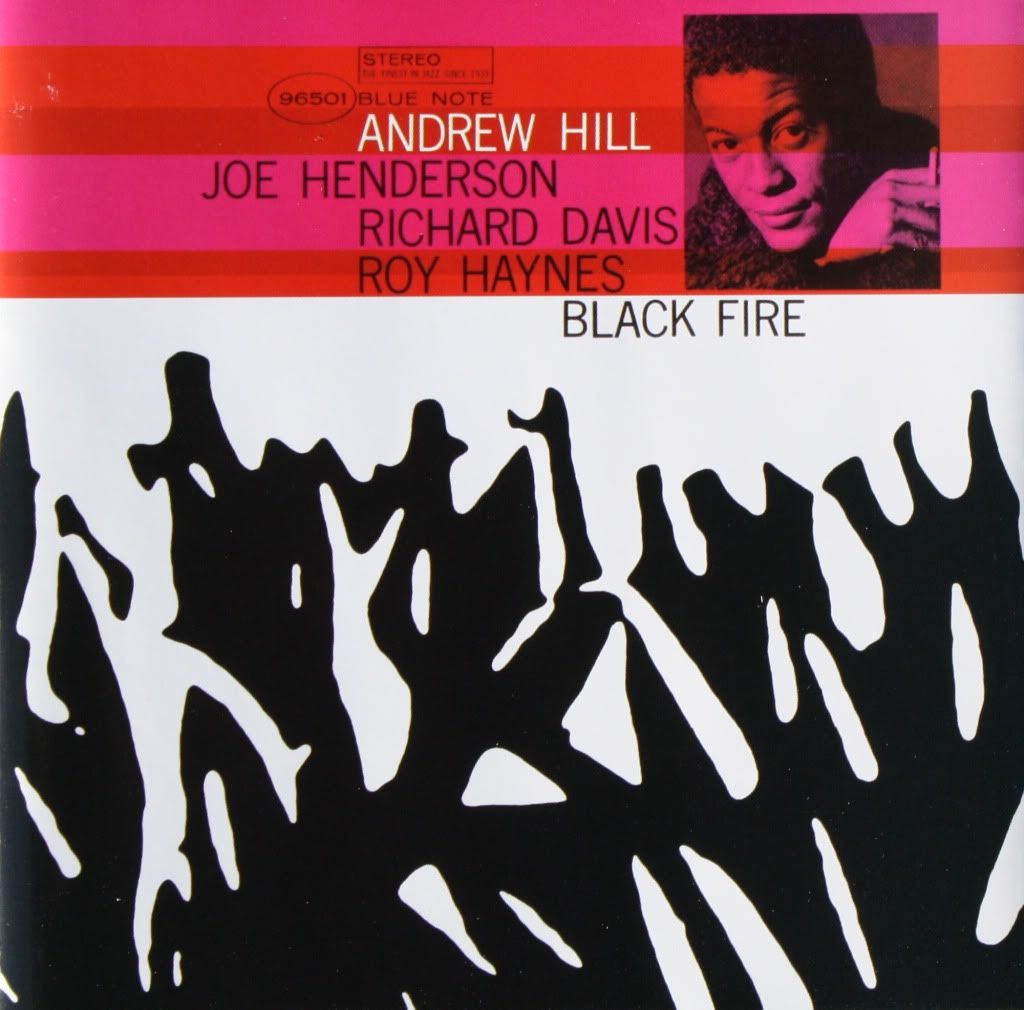
Andrew Hill - Black Fire

 
The path that's led me from dispassionate appreciation to real enjoyment of jazz has been a serpentine one, coming to like the genre not from its more accessible and well-known forms but backward from things like jazz-rock, the Canterbury scene and from experimental and free improvisation music to the more "out" forms of jazz like free jazz and avant-garde jazz.  I'm not sure if it was repeated exposure to jazz harmony (whose distinctive sound sometimes lacks the pointed directness of the more simplistic harmony employed by most pop music) or just the fact that I found jazz that's more up my alley, but after years of unsuccessfully trying to enjoy the genre, something finally clicked a few months ago and I'm pretty happy about it--there is a whole lot of great jazz out there, even within short 10 year spans (most of the jazz I've taken to seems to come from the 60's).  With jazz's current cultural dominance in an extremely attenuated form and many young people coming to jazz as outsiders, there's potential for jazz to sound samey; extended solo breaks, walking bass lines and a lot of commonality between different players' vocabulary can make it tough to distinguish between songs, styles and players, but repeated acquaintance with a couple of albums and the tenets of the style (most basic jazz compositions feature a melody or "head" that's stated a couple of times, embellished through one or more solos, and repeated again at the end of the song) make it a little easier to view jazz as something decipherable and not just a bunch of honking, noodling, or uncool music fit only for background at a restaurant.  In a suitably backward way, I've already introduced free jazz and jazz fusion on the blog, but have yet to share an album from the post-bop or avant-garde jazz styles.  It's fair to say that in the early 60's the dominant form of jazz was probably hard bop, known for its liveliness, dance-ability and connection to R&B, gospel and blues.  As early as the late 50's, though, there were jazz artists starting to stretch the somewhat conservative boundaries of bop both in their playing and compositions to such an extent that some jazz became different enough that new labels were needed to describe it.  In my understanding, at the time, jazz musicians referred to this trend using the adjective "out," and when free jazz started emerging there were enough people doing it that it was being referred to as "the new thing."  Nowadays we have varying descriptive shades from the mild alterations and expansions on the formula found in post-bop (probably the only time I'm comfortable using "post" as part of a genre title, as it represents changes in the music that really were unprecedented and couldn't be described by existing vocabulary) to the nebulous but definitely more acute abandonment of bop's rules found in avant-garde jazz, to the very "out" and least structured form that would become known as free jazz.  The terms usually aren't mutually exclusive and often don't describe in a hard-and-fast way what the music will sound like, only that it will be different and probably more adventurous than the bop, modal jazz, and cool jazz that preceded it--sounds like the jazz for me! 

On to the actual disc at hand, pianist Andrew Hill's debut for avant-garde and post-bop watershed label Blue Note, 1964's Black Fire.  Though he's best known for his star-studded 1965 album Point of Departure, Hill's career as both a sideman and band leader is  prolific, varied and vibrant--at this point in my fledgling jazz fandom, he might be my favorite jazz artist.  I think it has something to do with his ability to ride the line between edgy and accessible, the wide variety of styles his compositions cover, and the fact that he's got a million great albums.  Black Fire is a perfect example to introduce both avant-garde jazz and post-bop, and I'd venture to say it's a great gateway album through which the uninitiated can get into jazz.

What distinguishes this album most as avant-garde and post bop is definitely Hill's compositions, which are at times irreverent to jazz custom and obviously sound beyond the boundaries of bop.  "Pumpkin" opens the album with an uptempo and edgy bang, teetering between a dark minor theme stated by Joe Henderson on tenor saxophone and a rapid sax/piano run that gives way to a dissonant and playful counterpoint riff between the piano and sax.  Hill takes the first solo, ranging between flitting runs, rapid interval two-note chords, and a lot of inventive and acrobatic maintenance and embellishment of the repeating quarter note triplet riff that punctuates the song every several bars.  As with any good jazz album, the interplay between the players is top notch--in addition to Henderson and Hill, journeymen Roy Haynes and Richard Davis ably hold down the drum stool and double bass, respectively.  Even this early in his band leader discography, Hill's piano style and compositions are heavily rhythmic; his repeating riffs often form poly-rhythmic counterpoint with Haynes' aggressive drum style, leaving Davis to keep the steady pulse uninterrupted.

"Subterfuge" is another driving minor number, with Hill's percussive left hand riffing and two-hand unison riffs stating the melody.  The saxophone-less track leaves lots of room for unexpected turns in texture and mood in Hill's solos and makes space for a great drum solo from Haynes.  The title track lightens the mood with a lithe and cheerfully knotty saxophone melody and a lot more rhythmic juxtaposition between the low keys and the drums.  "Cantarnos" has more wonky rhythmic interplay, this time around a Latin-inflected riff and long-note legato melody from Henderson.  Things get slightly less driving on the bluesy and again horn-less "Tired Trade" and the album's only brief ballad, "McNeil Island."  The dizzying, stuttery and awesomely-titled "Land of Nod" closes the album with an excellent summation of the album's strengths and points the direction to Hill's later, even stranger compositions.

Black Fire is a great example of jazz that's simultaneously very listenable, extremely melodic (I can think of few jazz albums with melodies so instantly memorable), yet still strange and outside the bounds of what most jazz composers were doing in 1963.  Andrew Hill is as able a sideman as he is a composer and soloist; he never hogs the stage and displays impeccable taste when it comes to showing off his chops or supplementing the other players; such is the mercurial quality of truly great jazz musicians.  To speak in terms of my last two reviews, other than the risky compositions there isn't a lot formally to differentiate this music from the standard jazz formula, and yet there's no shortage of ideas regularly flowing out of all four players--the beauty of jazz is its liquidity.  All four are accomplished enough that they comp inventively and unpredictably around the chord changes and each others' solos, making for music that is founded on fixed elements but avoids repetition through in-the-moment and unrepeatable imagination.  Ideas are tossed out, perhaps repeated and slightly mutated a few times, then the player alters the idea enough that it's become something completely different, heading off into another direction like a feather in the wind.  Of course, it helps that Hill's compositions are so subtly unusual--I'm sure the weirdness lends itself to great idea-making in the minds of the sidemen.  There is much more great material to come from Andrew Hill and avant-garde jazz in general, but Black Fire is as good a place as any to get your first taste.

Wednesday, August 24, 2011

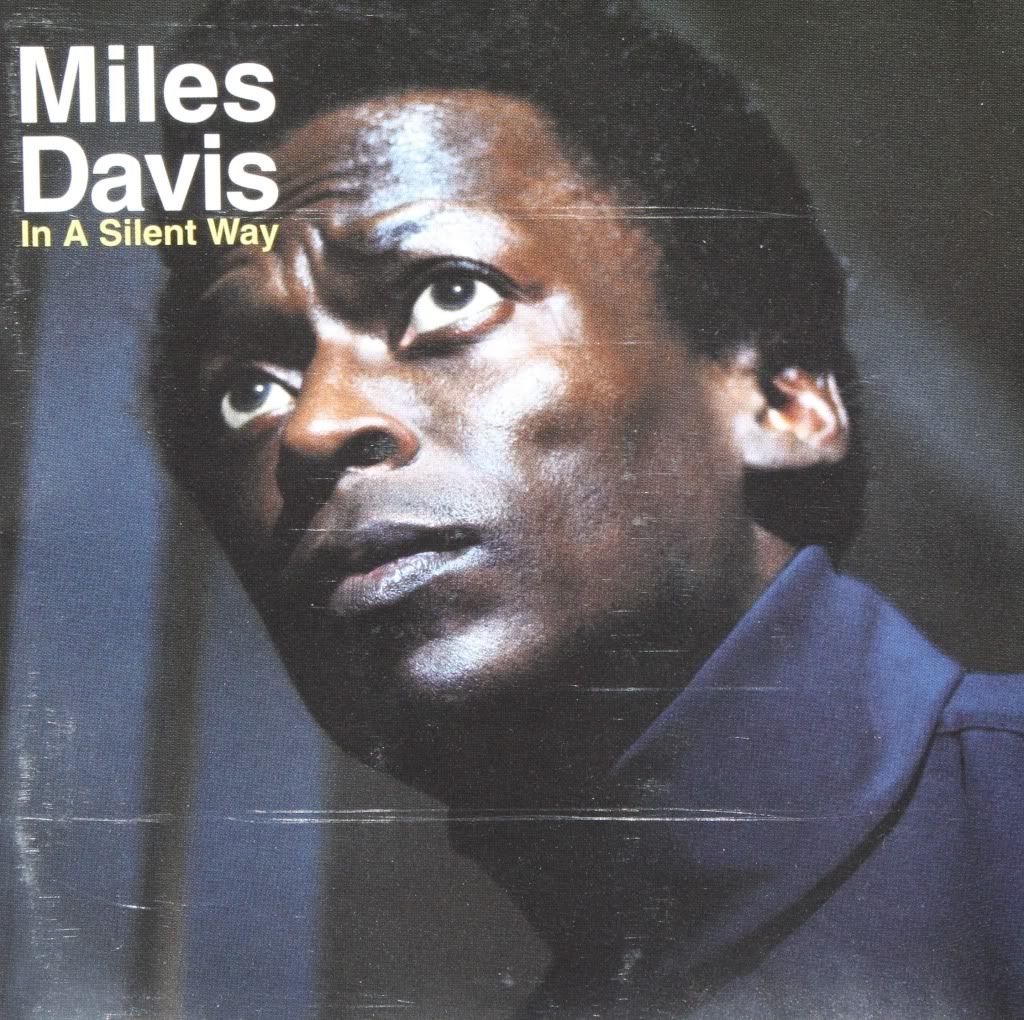
Miles Davis - In a Silent Way


From the intense turtleneck cover shot to the audacity of consisting of only two tracks to the brilliantly succinct poetry of the title (as in, "do that in a silent way" and when used like "I'm in a real bad way"), it's easy to see that In a Silent Way is a classic Miles Davis album.  With a lineup that would become a virtual who's-who of jazz fusion music by the end of the 70's (including Chick Corea, Herbie Hancock, Tony Williams, Joe Zawinul, and John McLaughlin), the album is literally a first statement of the vocabulary that many other early fusion efforts reiterated close to verbatim.

From Hancock's (or is it Corea's--they both play electric piano) dissonant opening chord cluster to the last ringing guitar notes, the album is like a warm bath of pure tone.  Historically, a lot is made both of Davis' unprecedented and extensive use of electric keyboards and electric guitar as well as his pioneering introduction of rock rhythms into the jazz idiom.  Listening over 40 years later, when all of these things are commonplace, I'm struck--not with surprise at Davis' irreverent artistic choices, but more by a sense of how much better he did it than countless other followers who managed to turn fusion from an exciting and edgy novelty to a naughty word (much like "prog," hmmm...) in fewer than 10 years.

What's the secret?  It's hard to say, but near the top of my list has got to be taste, variously on the parts of Davis as a bandleader, the rest of the players, and producer Teo Macero.  As an avowed fan, I'll take the risk and say that I appreciate Miles Davis even more as a bandleader than I do as a player.  All you have to do is look at the careers he helped start or further (from the first and second great quintets on through the 70's) to see that he had a keen ear for talent, an ability to properly employ his bandmates, and an uncanny ability to nurture them and propel them to successful, often visionary careers of their own.  While most of the artists in this band weren't fresh (McLaughlin was practically unknown, though), Davis puts them to work with impeccable taste, fusing and contrasting two electric pianos, using organ as both a tonal and atmospheric device, slowing the guitar down in its statement of major melodies and laying out its full harmonic range, and employing an unbelievably great rhythm section (Dave Holland and Tony Williams) in some of the most boring and repetitive patterns seen in the history of jazz--because it's what the compositions need.

On the part of the players, infallible taste crops up again and again in their willingness to leave space for each other (after all, it's a pretty big band--show me footage of Davis from the 70's or 80's ever attempting to wring so much quietness out of such a large ensemble) and space for nothing at all.  Players take relatively long breaks between phrases, allowing the timbral subtleties to contrast without competition, and the keys and especially the guitar manage to produce enough jaw-dropping fills that full-fledged solos seem unnecessary.   Wayne Shorter's role on soprano saxophone, limited though it is, has got to be one of the most restrained and atypical soprano performances I've ever heard.  For his part, Miles provides undeniable cool (even quoting [or self plagiarizing, depending on how generous you want to be] his landmark "So What" solo in "Shhh/Peaceful") as well as just a bit of speed when the energy ramps up.  The entire performance, really, exudes an air of collective purpose that melds Davis' well-established cool with a sort of spare, breath-holding restrained energy--while few jazz albums even have a collective purpose, even fewer actually pull it off.

Likewise, Teo Macero's contributions to this (and numerous Davis albums to come) are integral to the album's success.  While I feel it sort of breaks the final studio album's inimitable spell, the Complete In a Silent Way Sessions box set makes obvious the differences between the traditional ballad style and final album version of "In a Silent Way" (the song) as well as the longer jams and final versions that were "It's About That Time" and "Shhh/Peaceful," differences which seem like insurmountable gulfs.  Macero's editing provides subtle but crisp breaks that punctuate the otherwise homogeneous extended tracks, especially within "Shhh/Peaceful" (listen for those lower-register electric piano riffs) and right before the "In A Silent Way" theme is repeated right at 15:35 in the second track--these moments of gentle juxtaposition, heretical as they may be to jazz's organic and spontaneous origins, are pure magic.  While the entire album has been accused of not going anywhere (though I believe describing the music as ambient or even proto-ambient is a laughable proposition; let's not confuse a de-emphasis on obvious melody with a genre solely focused on exploring one--and only one--of music's many great characteristics), I think the beauty lies in the subtlety--crank up the sound to soak up those glorious analog keys and guitar, and by the time the crescendo in "It's About That Time" happens, you know that things are changing.  I think Macero's editing is again crucial, since the songs--long though they are--use vaguely classical structures to state themes, travel elsewhere, then return.

Like I hear it is for many people, Miles Davis was one of the very first jazz artists that got me more interested in trying to understand and enjoy the genre.  The more I explore avant-garde and free jazz, the more I realize that while those movements are aimed at stretching the expressive, compositional and pure sound aspects of jazz to the fullest extent, Davis never really went that direction and was almost always focused on jazz as a pop form.  Now, both approaches are equally valid and I'm not saying "pop" as in lightweight, lowest-common-denominator or shallow, but rather as an ideal of accessibility and an attempt to acknowledge what the people are listening to.  As he began to transcend the trappings of cool, modal and bop forms of jazz, Davis attempted to combining jazz with other forms of popular music, including rock, blues, R&B, funk, and folk music from around the world in effort to keep the genre evolving.   While it worked brilliantly more than once for Davis and nearly as well for some others, it's debatable whether it was healthy for the genre's identity in the long run to continue attenuating its key characteristics and adding more and more generic content (much like what's happened to country music since the 70's).  Stuffy historical observations aside, In a Silent Way remains a revelatory experience with every spin and a great jazz album for people who don't even like jazz. 

Wednesday, June 22, 2011

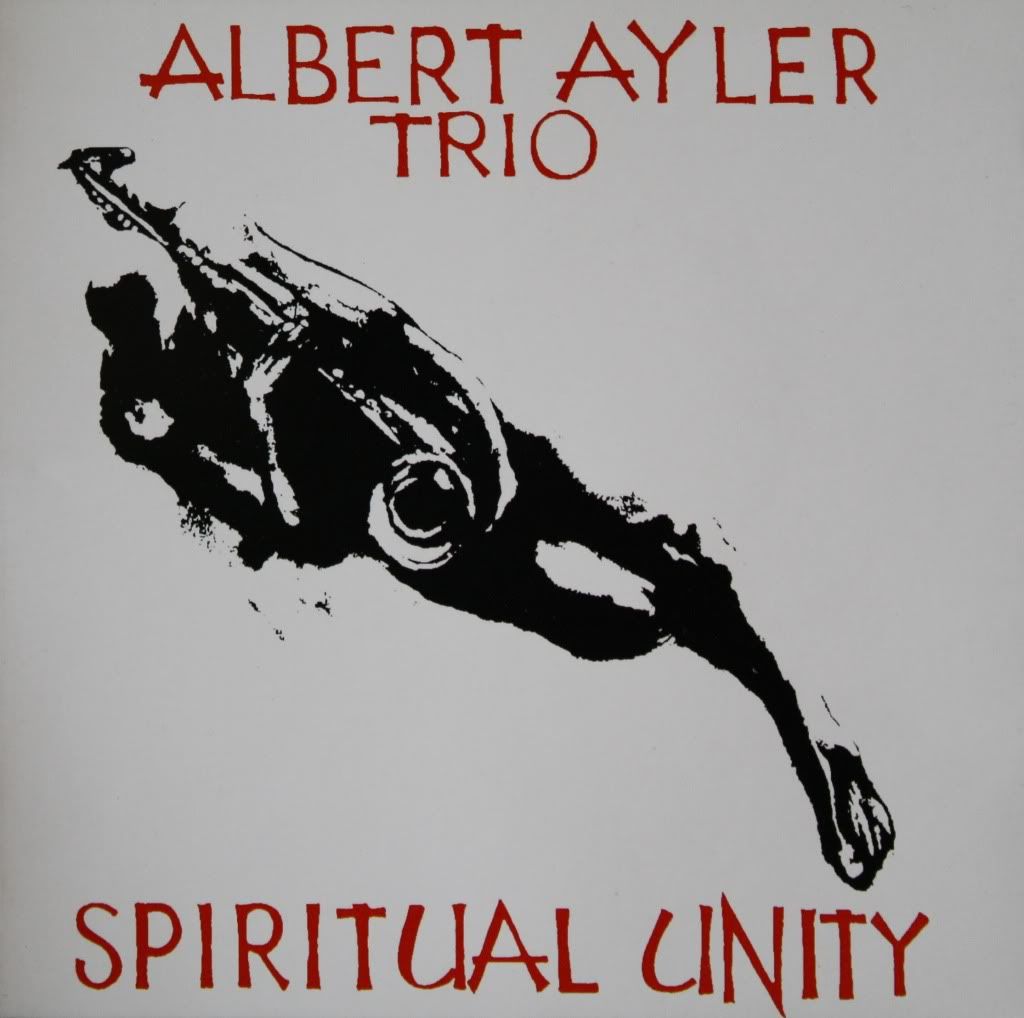
Albert Ayler - Spiritual Unity


Although I've mentioned free jazz a few times, I still haven't ever actually defined it or reviewed a full-on free jazz release.  Although free jazz is a widely-accepted subdivision of the jazz genre, it came about gradually over a couple of decades (mostly the 1950's and 60's) and through the work of a number of pioneers, so it can be difficult to pin down exactly what its characteristics are.  There is, for instance, a big difference between Ornette Coleman's unrestrained soloing over a relatively orthodox rhythm section in The Shape of Jazz to Come and some of the 20+ minute raging noisefests in Sun Ra's more audacious outings.  The unifying principle behind most music labeled "free jazz," though, is the elimination of some of the more traditional restrictions of the jazz idiom--be they adhering to chord changes when soloing, playing the instrument in a traditional way, including a repeating melody in the song, ensemble members playing in the same key (or even the same tempo), or ensemble members paying attention to what the others are doing.  It would also seem that free jazz places utmost importance on emotional expression--famous players have sought to avoid limitations in order to more authentically communicate their emotions through improvisation.  There will always be critics who argue that no jazz is actually "free," pointing out that there's always some structure, repetition, or limit to how the music will sound, but I think this observation misses the point--few free jazz players have ever claimed complete freedom; rather, the idea is to become freer from the traditional structures of jazz.  To this end, something that's interested me is the difference between free improvisation, a few examples of which I've already reviewed, and free jazz.  It's usually pretty easy to identify free jazz from free improvisation or atonal modern classical music, as the instrumentation is usually traditional, and the style of playing seems almost always to obviously fall within the jazz idiom (a saxophonist's phrasing, for example) no matter how noisy or atonal it is.  Free improvisation, on the other hand, often seems hell-bent on avoiding connections with any established musical idioms and more in combining elemental sound with the energy and unpredictability of improvisation.  While I'm neither a jazz musician nor particularly knowledgeable on the subject, I've recently gotten to a place where I feel like I'm starting to appreciate the tenets of jazz (especially of the free variety) and can enjoy and talk about it on specific aesthetic grounds.

Albert Ayler's 1965 album Spiritual Unity seems to me to be a great introduction to free jazz as it bridges the gap between early free jazz efforts and the much more ethereal works to come.  Ayler is widely regarded as one of the greatest free jazz saxophonists for his emphasis on timbre and characteristic vibrato-heavy style.  The album is book ended by two different versions of a tune called "Ghosts."  The first variation beautifully illustrates Ayler's stance in the free jazz movement--the piece opens with Ayler belting a winding gospel-influenced melody before gradually disassembling it over the course of the next five minutes only to recapitulate the original theme at the end.  It's thrilling to listen as Ayler inverts intervals between the notes, perverting what was originally an extremely recognizable melody into an at times hilarious and at other times furiously energetic caricature.  No matter how wild his trills and runs get, though, they still fit within the rhythmic footprint of the original theme.  The drums and bass are barely on the map, too, wildly filling the space with sound and energy, which seems to suffice in place of an actual beat.  

"The Wizard" continues to showcase Ayler's playing, beginning on an even shorter melodic motif before devolving into some of his rawest playing on the album--his harmonics and overblowing sound so amazing that it's easy to understand why some of the fathers of the movement believed texture alone could replace melody and harmony as the centerpiece of a solo.  "Spirits" brings the tempo down, showcasing the rhythm section with a little more space and room for the bass and drums to play off of each other, while Ayler's tremulous vibrato communicates a wailing sort of mourning sound reminiscent of a New Orleans jazz funeral.  The relatively short album closes with a second variation of "Ghosts" in which Ayler stretches beyond even the theme's rhythmic form, running all over the map during his solo and returning for more soloing after the bass and drum break before returning to the theme.  Spiritual Unity unifies free soloing with highly unstructured rhythm section playing to delve pretty deeply into free jazz territory, but its utilization of recognizable themes and loose but undeniable song structures make it considerably more accessible than some free jazz outings.  My only gripe is with the drummer, who spends too much time on the ride for my tastes, but I've got nothing bad to say about Ayler's stunning chops and energy. 

Get it here on CD or MP3.

Saturday, February 19, 2011

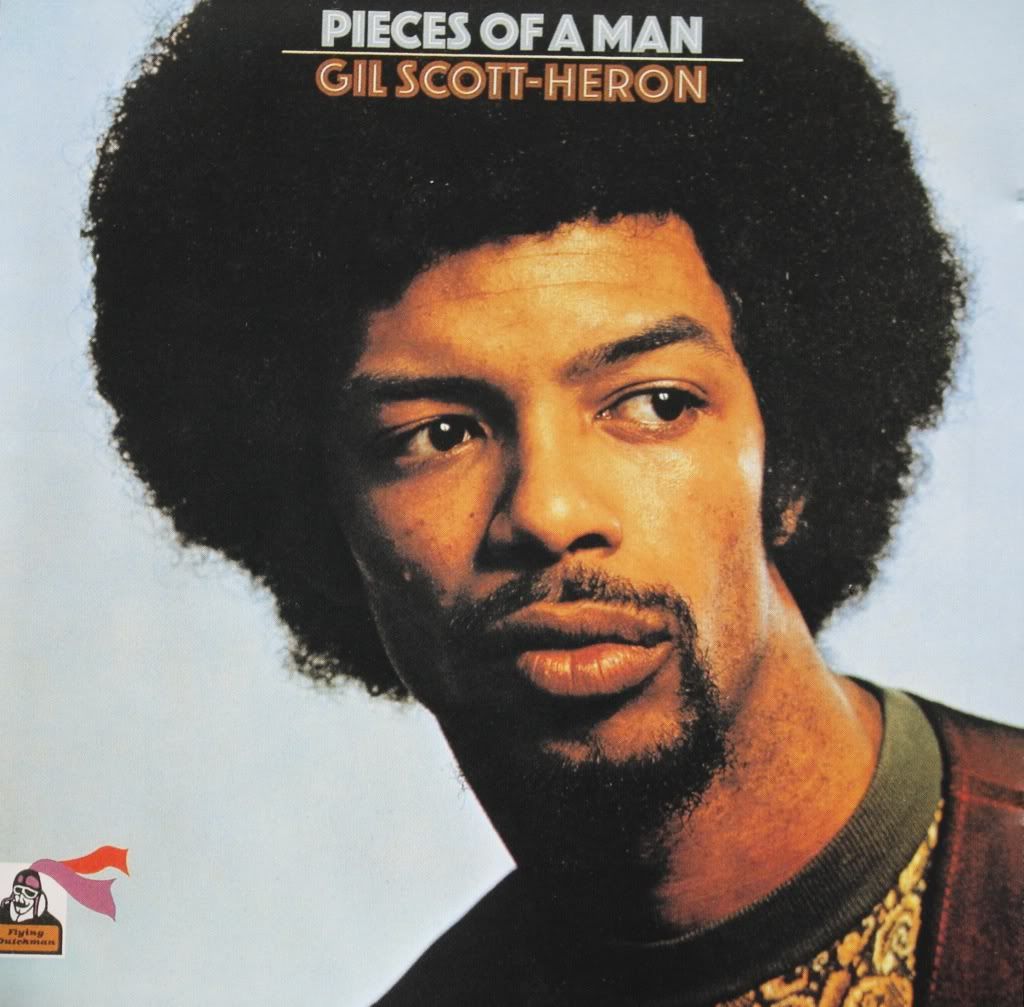
Gil Scott-Heron - Pieces of a Man


Although I've chosen some favorites to start off the review side of this blog, I'm unfortunately not completely in love with every album I review.  Not to say I don't enjoy this album, it's just too easy to describe the ways it doesn't fit with what I look for in this type of music and to list choices I wouldn't have made if I were the artist or producer.

Then again, it's pretty hard to fault the opening track--the one everyone thinks of when they think of Gil Scott-Heron--"The Revolution Will Not Be Televised."  This is the song people are thinking of when they say Gil Scott-Heron was the first rapper (or somesuch fanfare), and it's unarguably the freshest thing on the disc with Scott-Heron's rapid-fire, cutting assessment of black America's imperatives in 1971 (as he sees it) over funky drum and bass, supported by a jazzy flute.  This is one of those cases, though, where almost all of the album is totally different from the flagship song.

The rest of Pieces of a Man sees Scott-Heron considering the state of his fellow man, often through the lens of what he's feeling about himself.  On the one hand, it's fascinating from a historical perspective--it's clear that socially-conscious black artists in the early 70's were processing their world musically in a pretty different way than their analogs do today.  The problem is that none of the other songs here capture the wit or verve of the leadoff track.  Instead of using irony to prove his point with a bit of sting, Gil seems content to rely on relentlessly earnest exposition.

This problem could be thoroughly alleviated by the music; lyrics don't get much more severe than Curtis or What's Going On, but the orchestral sweep of both albums and the frantic, redemptive highs found on the former fill the words with a sense of gravitas that overcomes the seriousness of the words.  Here we get an organic (lots of flute), jazzy type of soul that seems like it would have already fallen out of fashion by 1971.  Now, that's an artistic choice I don't totally agree with, but there are issues here that go beyond taste.  First off, Scott-Heron's voice isn't up to the challenge.  There are plenty of vocally-limited artists I love: Allen Toussaint is one, and an R&B artist.  Whereas Toussaint plays to his abilities by singing simple, catchy melodies that present him as an endearing personality, Scott-Heron attempts to hit notes and run off on flourishes that he can't nail.  Moreover, there's a distinct melodic deficit in a lot of these songs--most have at least a hook or two, sometimes around the chorus, but the verses show a pretty distinct lack of attention--like he decided on the chords but didn't bother to think about which notes he was singing as long as they fit the harmonic structure.  Perhaps less important but still irritating to me personally is that, for someone who's reputedly strongest on the lyrical/poetic side of things, Scott-Heron also pays little attention to how the meter of his words fits with the rhythm of each song, running fast to fit words in too small a space or awkwardly stretching a couple of words to fill a blank space demanded by the rather rigid, unimaginative song structures.  You can't expect the artist to cover all of these bases every time, but a good producer would have at least found one way to tighten things up a little bit.

It sounds like I really hate this album.  Not so; despite the ill-fitting music and cheese ("When You Are Who You Are," "I Think I'll Call It Morning"), there are some moments where it gels and gets worked-up the way it should--"Home is Where the Hatred Is" conjures an appropriate dark edginess, and "Pieces of a Man" overcomes its Van Morrison lounge feel to do the words justice with a pretty solid vocal performance.  Overall, Pieces of a Man is actually a pleasant listen (I actually play it fairly regularly) and a pretty cohesive album, it's just that the unique promise and potential of the first track is nowhere to be found as the album progresses.  And that, my friends, is not a classic.

Get it here--out of print, but affordable on MP3.