Showing posts with label Female Artist. Show all posts

Thursday, November 8, 2012

Cheap Seats 9: Anna Coogan Interview

The Cheap Seats train rolls on--this time we've got an interview with Anna Coogan, a talented songwriter and artist working roughly in the Americana vein.  A seasoned independent musician since her days with north19, Anna now has three solo albums and numerous tours of the US and Europe under her belt, as well as a continuing portfolio of good press.  I'm excited to interview Anna as her career has seen her begin as a regionally-successful artist and grow from national to international touring, not to mention the great leap she's taken from musician-with-a-day-job to full-time musician.  Take it from Anna's experience--if you want to progress in the independent music world, you'll need to cultivate some perseverance.   

Photo: Marcel Houweling, taken at Roepaen Podium in Ottersum, NL.

As a musician who's been doing this for a number of years, how have things changed across your career, both in terms of how you make and release your music, and in how you've attempted to promote and advance it?  What are some of the most valuable lessons/tricks you've picked up?


A lot of things have changed so much, and a lot of things have stayed the same over the past ten years.  I started playing at the most turbulent, exciting, and vulnerable time in the music industry--right around 2002--and so much has changed since then for everybody.  Sometimes I kick myself for not getting into it a few years earlier, but things work out the way they work.

Mostly I have learned how to treat it like a business, with a balance sheet and a realistic view.  What is going in (financially, emotionally, and time-wise) and what is coming out?  Are these things balancing out?  How many years of investment are you willing to make before you want to see some returns?  What kind of returns are you looking for?

The thing that seems to be most important is to hire a good team to help promote you – and that can take years to find.  But I think if you are good, and you are relentless, and you tour your brains out and make records and videos and send a lot of emails and show up on time and are polite and friendly to people, eventually you will build a good group of people who care about you and are willing to help you out, and that makes all the difference.

Saturday, September 29, 2012

Cheap Seats 7: Alicia Dara Interview

As part of the continuing Cheap Seats series I've conducted a handful of interviews with independent artist friends from the Pacific Northwest and beyond.  So far, this series has focused on my own experiences making and promoting independent music, but the reality is that each artist interacts and responds to the challenges and necessities of the independent music world in his or her own unique way.  In this first interview, conducted in early July, I'm excited to feature Alicia Dara of Seattle-based bands The Volcano Diary (with Gus Palaskas and Dave Bush) and Diamondwolf (with Glen Cooper).  Alicia has been an active independent musician for over 15 years and brings a wide-range of experiences in the music industry to her ever-evolving mission as an independent musician.

Alicia performs with The Volcano Diary

As a musician who's been doing this for a number of years, how have things changed across your career, both in terms of how you make and release your music, and in how you've attempted to promote and advance it?  What are some of the most valuable lessons/tricks you've picked up?


The most awesome, fantastic, and nightmarish event in my career was the advent of the internet. I started way back in 1997, before FB, Twitter, Wikipedia, Reverbnation, and MySpace. There was email and there were websites, which weren't very interactive and tended to crash while listening to MP3's (remember them?) if you stayed on too long. Before that I had been making cassette tapes of my songs in my tiny bathroom on my friend's 8-track recorder. That bathroom was fully tiled and created the best echo/reverb effect ever. I'm still trying to find a plug-in effect that can beat it!

I was raised by classical musicians who never touched a computer in their lives, so I had absolutely zero tech background to draw from as I slogged my way through the maze of the internet, and the various ways that the music business was working to stay one step ahead of it. I had had some radio play locally and on a few stations on the West Coast before internet radio but I was pretty frickin' pleased to discover there was some demand for my music online, on the early stations like mp3.com.

Once mp3.com took off it was like the gold rush; everybody wanted a piece of the action, and the industry responded accordingly. I started making records on digital recorders in people's home studios, because all that recording equipment was suddenly affordable. I like being in the studio a lot, but I work quickly, and it was tough on my patience back then while everyone was learning these new programs called "Logic" and "QBase."  I was quite grumpy during that era.

These days when you Google my name you can find over 6 million results, which on a good day makes me feel like I'm getting somewhere. But the reality is that since music became "free" I know very few musicians who are able to make a living at it. I am fortunate enough to pay the bills through a combination of teaching, singing session work (adding my vocals to commercials and other people's music projects), and soundtrack work for film, TV, and Internet stuff. Live shows are my passion but they pay so little unless you're in a national touring band. Record labels--contrary to popular belief--are still very much alive, and they are the ones that sign and promote the bands you've heard of in the last 10 years. They also act as filters for music, though in many cases their taste is at best questionable and at worst horrific.

There are 2 things that I've learned over the past decade. The first is my great strength, which is that I can walk away from anything. If you mistreat me, if you disrespect me or my bandmates, if you do not honor the contract I signed or if you change it without informing my lawyer, I will take my toys and go home--and I will never look back. This saves me some headaches.

The second is that I am able to see into the future a bit and know which projects are worth my time and which ones aren't. I value my time.  Granted, I get paid a great big hourly rate to sing on commercials, and I do that even when I don't really want to. But I also know in my soul how short this life truly is, and I (mostly) refuse to spend it on shit that doesn't make me feel sublimely on fire.

What's been the most difficult challenge to overcome?


The biggest challenge to overcome was adjusting to the lifestyle of being an independent artist. It took awhile, and it was a bumpy ride. Making music is its own reward; you have to love it more than being loved. Everyone around me was telling me to go back to school, get a degree, learn a trade or skill that would bring a mountain of cash to my door. But I look around at the world and I see an awful lot of lost souls with fat paychecks. I don't envy them one bit.

Tuesday, June 26, 2012

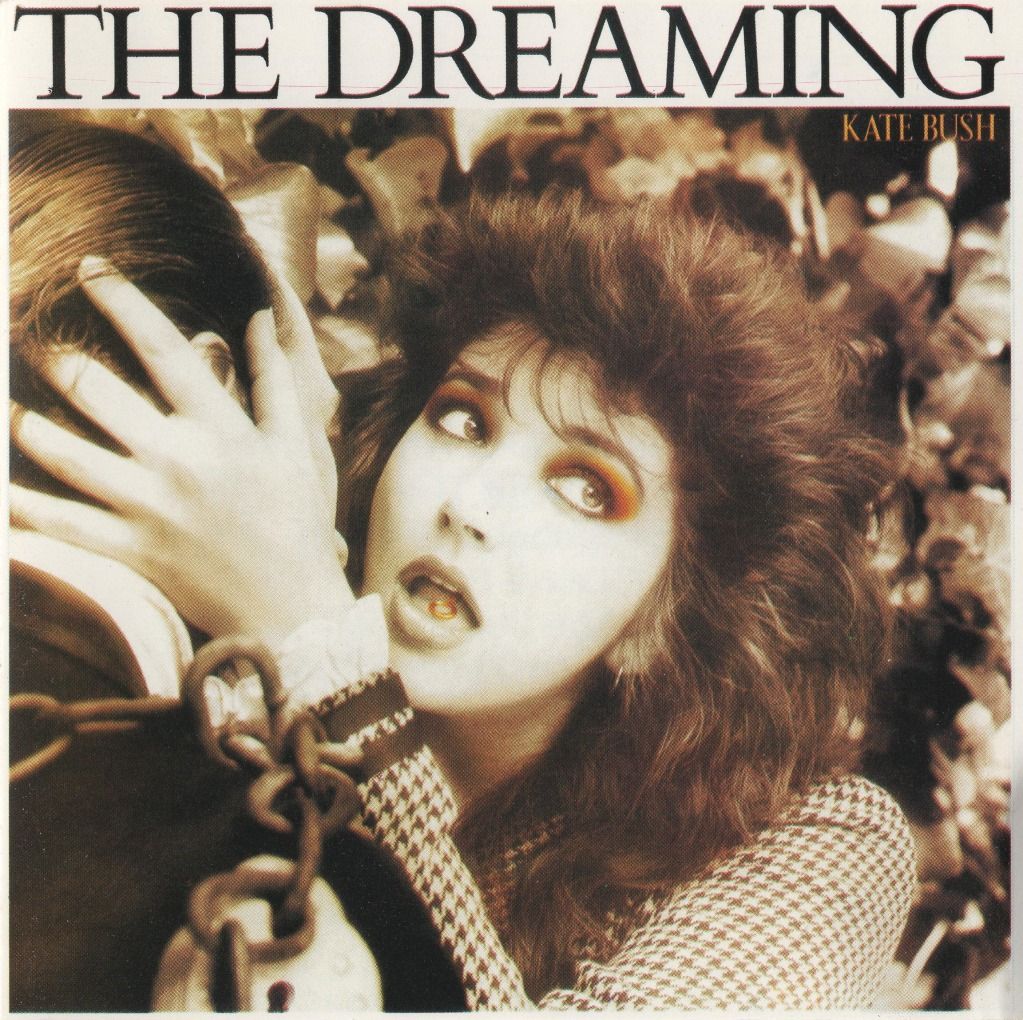
Kate Bush - The Dreaming


The Dreaming--Kate Bush's fourth album, arriving less than five years after her debut--has got me thinking about a whole mess of different things.  Approaching her music fairly indirectly (not having been around when the music was new [no real change there!], or being a hardcore fan, and not having much of an interest in 80's pop music) made for slow progress in appreciating it, but a couple of years have provided an enlightening and broadening experience in getting to know and learn from this music.

While I agree with most fans that Hounds of Love is her most distinctive and cohesive set, this album makes a close second for many of the same reasons.  Partially fulfilling her move toward tighter pop structures and chic sounds of the day, the songs here continue to move away from the more traditional (especially piano-dominated) instrumentation of her first albums into an area where 80's synths and effects surround the songs' core piano parts and multi-part structures juxtapose wildly different styles within pop-length tracks, with Bush's multi-tracked vocals calling and responding in an often bizarre array of different vocal deliveries.  Needless to say, these songs can come across as difficult to penetrate at first, a fact that's not helped by the fact that the late-80's CD reissue is in dire need of remastering, making the already-difficult songscapes even tougher to perceive because of the mediocre sound reproduction. 

Nevertheless, this shit's awesome!  What's especially interested me lately is the fine balance Bush strikes between weirdness, progressive and experimental complexity, and pop accessibility.  When I say "weirdness" I mean things like singing in a weird voice (like those shrill backing vocals that nobody else has really done the same way), laying a really strange-sounding effect on a guitar line, or singing Australian narratives and utilizing native Australian instruments.  Weirdness is a great attention-getter, and is a great way to make music distinctive and set it apart from the vast pack of musicians out there just trying to make something that sounds pretty and inoffensive in hopes that it'll appeal to the largest audience possible.  However, weirdness alone isn't enough to keep my attention long-term.  Really, the lukewarm feelings I get from a lot of today's music come from a feeling that weirdness and style often outweigh the actual content of the songs, music, lyrics etc.  Not that every artist should be changing time signatures every two measures and shredding ridiculously difficult guitar parts for music to be considered good, but there's more to making some distinctive music than singing a tired indie breakup song in an overwrought plaintive voice over eighth-note staccato power chords. 

What I love about Kate Bush is how well she backs up her weirdness with musical substance--every song has a discreet feel, be it narrative or more philosophical, and upon close examination it seems that every element of the song is carefully tailored to fulfill the song's conceptual promise, from playfully poetic lyrics to song sections that brilliantly channel Bush's twisting moods with shifting timbres and pacing (see "Pull Out the Pin," "Night of the Swallow") to vastly differing stylistic experiments between pounding, expansive rock like "Sat In Your Lap" and waltzing existential pop like "Suspended in Gaffa." 

Finally, I'm continually amazed by how poppy the music ultimately is--in spite of the fact that she's often reimagining and further developing a lot of concepts explored by then-and-now-villified progressive musicians when the genre was all but completely forced from mainstream interest, Bush manages to maintain a pure, sincere emotional core along with a buoyant conciseness that makes these songs accessible in spite of their complexity.  Even more, she's still making new fans 30 years later in spite of the extreme 80's vibe, although that's a retro aesthetic that's still currently regarded as "ok" with today's young music fans.  I'm sure it doesn't hurt that her visual aesthetic pretty much rivaled her musical one--if only today's pop songstresses could back up their audacious imagery with such equally challenging music!  Anyway, good on KB for proving that great pop doesn't have to skimp on nuance, and for helping me expand into some new musical areas.  This makes me want to check out some of her more recent work...


Get it here.

Friday, November 25, 2011

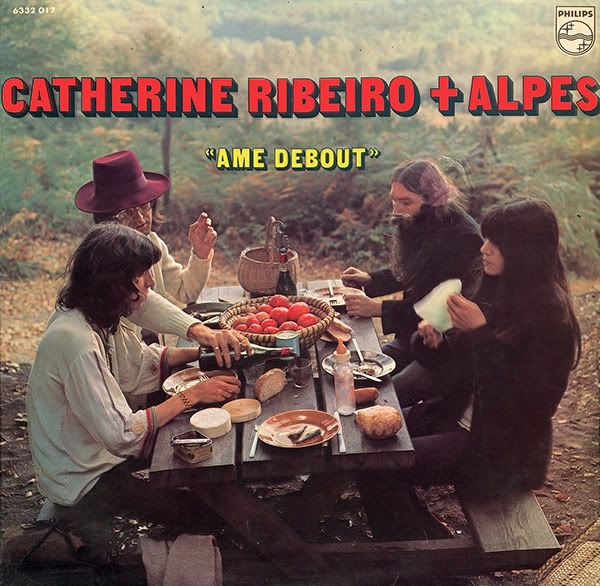
Catherine Ribeiro et Alpes - Ame Debout


We're not done with you yet, France.  In spite of all of my spirited attempts to express what I do and don't like about music into writing, sometimes it actually feels good to have those words and opinions shoved right back down my throat.  The exceptional work of singer and poet Catherine Ribeiro and her sometime-group Alpes (consisting primarily of guitarist and composer Patrice Moullet) not only defies all of my complaints about excessive repetition, its use of repetition in and across all of the album's tracks is often the precise reason why it's so great.

Rather than attempting to fuse any real recognizable styles of music with lyrics and vocals, Alpes' relationship with Ribeiro is at once more complicated and more elemental.  The band's sound is indeed consistent on most of these songs, formed primarily of repeating hand drum, bass, violin and guitar figures and droning organ and synth tones supplemented by a couple of bizarre instruments (the percuphone and the cosmophone).  The repetitious sounds are stretched long across time--minutes of the same textures, shifting perhaps ever so slightly, but rarely ever responding directly to Ribeiro's vocals rhythmically.  Instead, the music floats like an uneasy sea beneath Ribeiro's, swelling to support her vocals harmonically but rarely (if ever) displaying enough ego to act as anything other than a perfect platform for her existential angst.  For her part, Ribeiro displays peerless skills as both a singer and an actress, projecting a distilled humanity with a powerful, husky low register and desperate, cracking high range, sometimes speak-singing, sometimes freely vocalizing with moans, growls, whispers and frantic pleas.

The superb title track demonstrates the band's unique aesthetic with grace and power, as the droning instrumentation fades in with subtle dynamism and Ribeiro's vocals soar and dive as if she's pacing inside a six foot cell.  A spare organ backdrop is all that's needed to supplement the chanteuse's vocals "Le Kleenex, Le Drap De Lit Et L'etendard," wherein the bitter irony of a line like "je cherche un kleenex" sits bizarrely comfortably next to the singer's pleas to "regarde-moi, ecoute-moi."  The heart-rending "Diborowska" is undoubtedly the most compelling song melodically, with its harrowing "le train en partance pour Diborowska" merging tragically with the song's arpeggiated nylon string guitar and eerie train whistles.  The band manages to assert that its fleeting, gossamer instrumentation can arguably stand alone without Ribeiro's words with a few instrumentals, including the atmospheric "Alpes 1," the bizarre, unintelligible vocalizations of "Alpes 2" and Ribeiro's ghostly wordless vocal on "Aria Populaire."  The album comes to a folky, pounding close with "Dingue," which combines the folkiness of Ribeiro's earlier recordings with 2 Bis with a similar sort of energy to early Leonard Cohen with even more bile and energy in the vocals.

While the compositional elements and harmony employed by this music are really quite simple, there's an emotional expression happening in the combination of the vocals and music that is so rare and direct that I can't say I've ever heard anything quite like it, even in the realm of similar artists like Peter Hammill.  It's almost like the instrumentation is there for the explicit purpose of putting Ribeiro in the zone to extemporaneously conjure her deepest self onto tape, and it's always inspiring to hear.  As much as I'll probably continue to rail against excessive repetition in all forms of music, this album (along with the rest of Ribeiro's work from the same period) is a humbling reminder that there is never one single right way to make music, and the effort to conceptualize and verbalize a musical aesthetic is only an imperfect attempt to reach the sort of unquantifiable magic found here, using incomplete means.  If you can achieve this level of intuitive expression, it doesn't really matter to me how many chords are in the song or how many times you play the same note in a row.  Unfortunately most of us mortals lack the innate spark required and must attempt to find our lesser inspiration by toying with established theory and idioms down in the everyday muck.  It's absolutely criminal that these albums are out of print and Ribeiro's music is even harder to find out about than it should be.

For now, you can find it here.

Friday, November 11, 2011

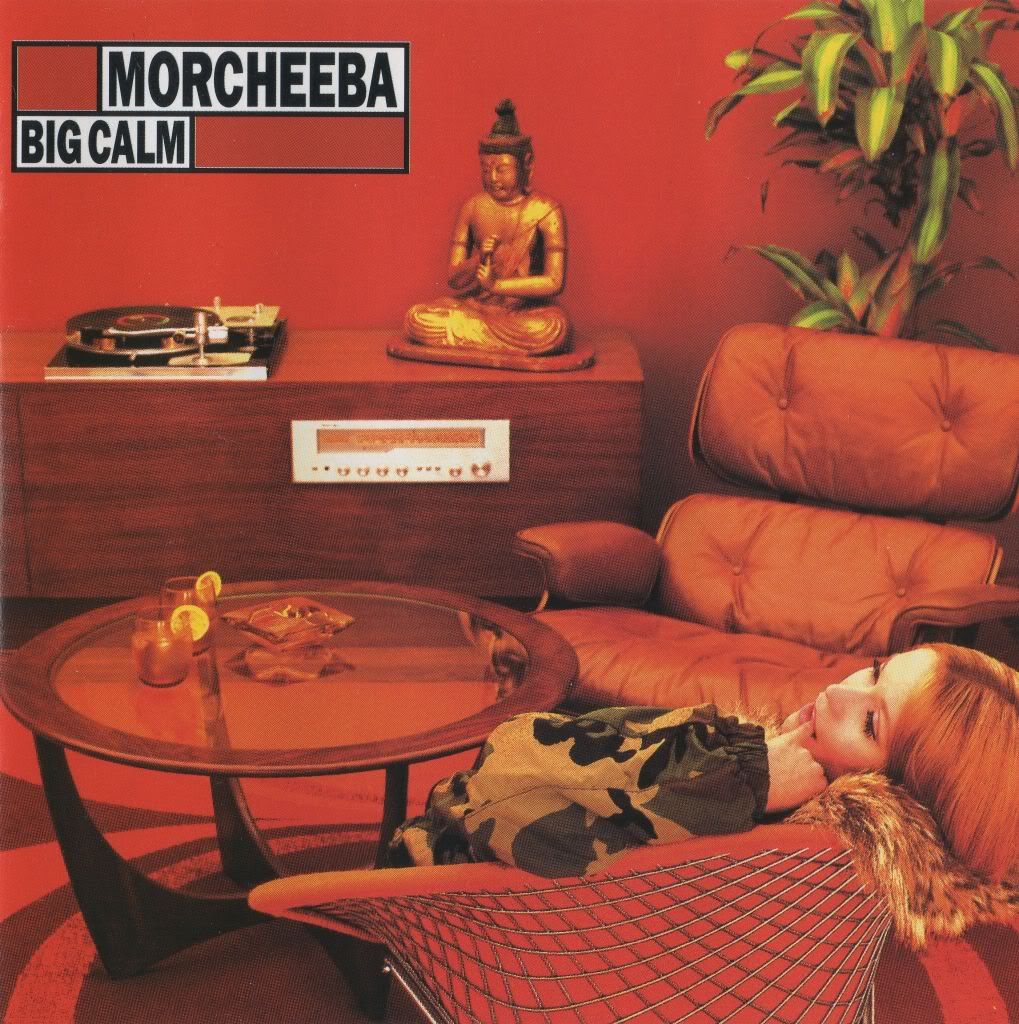
Morcheeba - Big Calm


Morcheeba's second album has been a longtime favorite since I first heard it in a New Zealand airport music shop back in 2001.  Even 10 years ago, trip-hop was on its way out of mainstream popularity, but this album always brings back good memories of my life at the time and holds up pretty well even now that the trip-hop fad has long since expired.  I think it's also another good example of what happens when a large number of good characteristics that pop up disparately in a band's other works align and the result is a thoroughly good album.

Like a lot of trip-hop acts, Morcheeba's status as a "band" is a little nebulous, but less so than some--Paul (DJ) and Ross (guitarist/multi-instrumentalist) Godfrey, and vocalist Skye Edwards.  Personally, I've found the revolving vocalist chair approach of some trip-hop bands a little annoying, and the fact that Edwards' vocals are explored in-depth adds cohesion to Morcheeba as a group.  While there is a bit of session musician anonymity to the wide range of different instruments played on the album, both Godfrey brothers do possess distinctive skills; the beats and samples are both quite tasteful and well-timed, and there are definitely some great guitar moments to liven the album with a more organic energy.

What really sets this album apart from the rest of Morcheeba's (and most other trip-hop acts, for that matter) catalogue is, unsurprisingly, the songs.  Whereas the group's songwriting on other albums sometimes comes across as a little emotionally vacant and assembly-line, the songs here are mostly crafted with more attention, are really adventurous in their eclecticism, and contain some truly compelling moments.  The level of detail on string and orchestral arrangements, scratching as an instrument and chill-yet-upbeat atmosphere is quite apparent on the band's breakout single, "The Sea," but returns in equal measure when the psychedelic sitar/tabla atmosphere breaks open on "Shoulder Holster," and on the darkly seductive "Blindfold."  Edwards' voice is undoubtedly one of the biggest draws here, with its silky smoothness, appealing accent and its tendency to somehow attractively waver off-key (thank goodness this is pre-auto-tune).  I really love how many risks the band takes with its songwriting, taking on reggae/dub in "Friction," more of a country sound on "Part of the Process," less beat-centric balladry in "Over and Over," blues in "Diggin' A Watery Grave," and instrumental psychedelic rock in "Big Calm" (which also features rap vocals) and the brilliantly dramatic "Bullet Proof," which perfectly juxtaposes Paul's beats and samples with rhodes and wailing guitar from brother Ross.  While many bands seem afraid of losing their identity by experimenting with different genres, Morcheeba proves that such experiments can result in the expansion (not abandonment) of a distinctive identity.  The icing on the cake is that the lyrics (not always the band's strong point) are actually pretty strong in places.  Rather than always sounding like vague contractual obligations (though they still do in places), the lyrics like those on the hopeful "Part of the Process" and the exquisite "Fear and Love" ("fear can stop you loving/love can stop your fear/but it's not always that clear") twist common ideas with just enough cleverness and manage to give Skye some emotional concepts to dig into rather than just sounding cool while vocalizing pastiches of unrelated half-baked metaphors and turns-of-phrase.  In many places, though, it's still up for debate whether or not the group even knows what point it's trying to get across.

It's interesting to consider the artistic success of Big Calm in light of later Morcheeba discography--the pleasant-sounding lack of inspiration that would surface on Charango's attempt to recreate this album can already be heard in some of the commonalities between melodic lines and harmonies, and it doesn't take too much of a critical ear to assert that the band's level of emotional investment in the music isn't as high as the desire to make it "good-sounding," but then again that tension usually crops up when you're in trip-hop territory.  The reduction in the dub tendencies of Who Can You Trust and pursuit of pop ideals reached its peak/nadir in the bubblegum trip-hop of Fragments of Freedom, and since 2003 the band has struggled to maintain its identity without self-plagiarizing and falling prey to the reasonable criticism that they don't have much new to say.  Even at their most detached, though, Morcheeba always succeed in offering some mellow listening pleasure--given the current date it's hard to believe they'll ever top Big Calm without completely reinventing their sound, but it'll always stand as one of my top trip-hop discs to reach for as a focused pop palate cleanser right behind the dark experimentation of any Portishead album.

Get it here.

Wednesday, September 28, 2011

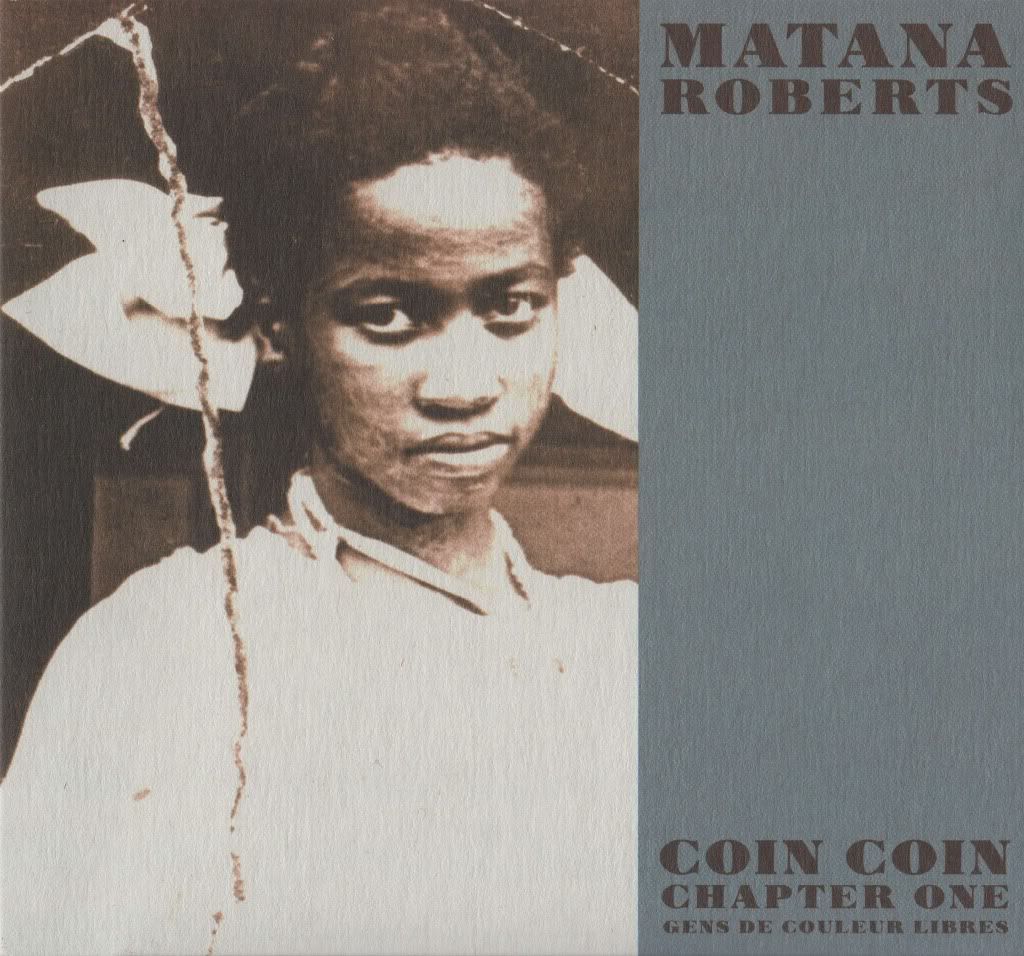
Matana Roberts - Coin Coin Chapter One: Gens de couleur libres


As unfortunate as it may sound, it's unusual in 2011 to have a challenging new jazz release to get excited about, but New York (via Chicago) alto saxophonist Matana Roberts has undeniably produced one.  Though she's been publicly active since the early 2000's, the first "chapter" of her ambitious planned 12-part Coin Coin series seems to have been Roberts' biggest break to date, getting her a lot of exposure in print and online.  People have already been talking about this album enough that the word "hype" is getting tossed around, which usually results in heavy skepticism and considerably less interesting conversations.  After getting to know this album I don't feel any need to declare it the "best" anything of 2011, but I do agree with the growing number of people out there that it's an uncommon album in the contemporary jazz landscape and well worth checking out.

Coin Coin Chapter One is probably best described as a conceptual piece of performance art, which covers the wide variety of musical styles it incorporates as well as the use of poetry and narrative that are central to its purpose.  The core themes of the work are memory, history and shared human experience, focusing primarily on subject matter relating to historical African Americans in slavery and positions of adversity, drawing from Roberts' own explorations of her family history and ancestry.  This subject matter is presented over and together with a diverse backdrop of different jazz styles, including avant-garde jazz, free jazz, dixieland, blues, and more.  While I think it's a valid point that the subject of the African American slavery is arguably not immediately relevant to most people's present-day lives and that it can be "too easy" of a choice (for obvious reasons relating to the horrors that countless African Americans have experienced throughout history) when it comes to eliciting a strong emotional response, I think these objections are a little too dualistic.  When confronted with Roberts' vision, it's clear that her exploration of the historical black American experience remains a living, vital part of her (and I'm sure innumerable others') identity, and the authenticity and emotion of her presentation soon dispels any attempt at dismissing the subject matter as purely contrived.

The most powerful pieces on Coin Coin Chapter One are undoubtedly those that feature Roberts' voice either singing or reciting spoken word.  In the Coin Coin world, Coin Coin is a sort of "every person" spirit who repeatedly appears in different people's lives across history, reinforcing the concept of shared experience that seems central to Roberts' project.  In "Pov Piti," "Kersaia" and "I Am," Roberts introduces Coin Coin's different manifestations with anguished cries, powerfully conveying the spirit's rebirth through another African American's existence.  Each song continues, describing each character's experience through Roberts' spoken word.  It's hard not to admit that these pieces are crushingly compelling in their emotional message, as Roberts' lilting spoken word describes episodes of yellow fever, slave rape, and redemption through freedom and the jaw-dropping concept of buying back children who were taken and sold as slaves.  I really love her poetic delivery; the meter is flowing, organic, and wholly reminiscent of instrumental improvisation--she stops, starts and repeats lines as if she's blowing a horn, imbuing the words with rhythm and often downplaying the force of the ideas, casually dropping blood-freezing lines like "I have seen so much but yet have experienced less than most dogs" and "I am twenty-five; there will never be any pictures of me."  Her lyrical concerns also come to fruition through sung vocals, as on the bitterly sarcastic auction block vocal blues parody "Libation for Mr. Brown: Bid 'Em In," and more contemporarily on the dedication "How Much Would You Cost?"

Musically, Roberts' vision is as sweeping and all-inclusive of African American history as her narrative is, drawing together a smattering of all of the historical jazz developments imaginable and weaving them together into a smoothly-flowing collage.  The opener, "Rise" recalls Coltrane's A Love Supreme in both title and its incantatory feeling, though its cacophony eventually marries modern electric instrumentation with more of a Pharoah Sanders-like free jazz sound.  The mercurial, progressively shifting main theme that introduces the album's spoken word pieces possesses the album's most memorable instrumental melody, effectively aurally tying the recurring themes together, and including a vocal arrangement that recalls 40's film scores.  "Song for Eulalie" blends ominous piano riffing with some nice free duet playing between Roberts (whose alto saxophone tone variously recalls both Coltrane and Sanders as well as the keening gospel sounds of Albert Ayler), while the album closing waltz ends on an uplifting note with the disc's most unassuming and most compelling vocal melody.

Though there are numerous brief kernels of vibrant and effective composition, I think one of Coin Coin Chapter One's weakest aspects is that it often plays like an all-inclusive pastiche; its eclecticism is only occasionally displayed in fully-formed songs and more often occurs willy-nilly across songs that seem to have little in the way of structure.  While the mood and playing of "Rise," for example, display a slight modern twist on free jazz, the track presents little in the way of recognizable melody or memorable elements.  Consequently, when the album ends the actual compositional elements seem rather slight and repetitive--the repeating theme, a couple of traditional songs, and a whole lot of episodic genre sampling spanning over 60 minutes, with a number of ideas taking up a bit more time than they probably justify.  Since Roberts has already announced that Coin Coin will be a 12-part series, it's hard not to start wondering if the musical approach will be the same for the entire work, which I fear could result in some artistic stagnation.  Though, as far as I know, this album is strikingly original in the jazz world (the closest thing I'm aware of is Max Roach's We Insist!: Freedom Now Suite), it's arguably only original in its performance art/narrative approach and wide-reaching inclusion of different styles.  Without Roberts' concept, words and voice, I think the music would come off as a bit unremarkable and unfocused in its scope.  I sympathize with Roberts' ambitions, since creating something simultaneously eclectic, developed, and original requires a sort of unidentifiable magic touch.  I hope that later installments in the series retain her obvious passion with a stronger focus on composition and hopefully her emergence as a truly original musical voice, neither of which I think have happened quite yet on this release.  Either way, I'll be first in line to pick up chapter two whenever it's released, and I hope those jazz artists listening to Matana Roberts achieve a little bit of inspiration to stretch past the hard bop regurgitation that so much contemporary jazz seems to cling to.  Whether or not it "lives up to the hype" (probably the most boring discussion imaginable when confronted with an album like this), I think Coin Coin Chapter One is unarguably an uncommon work and worthy of the interest it's received.

Saturday, August 13, 2011

Nina Nastasia - The Blackened Air

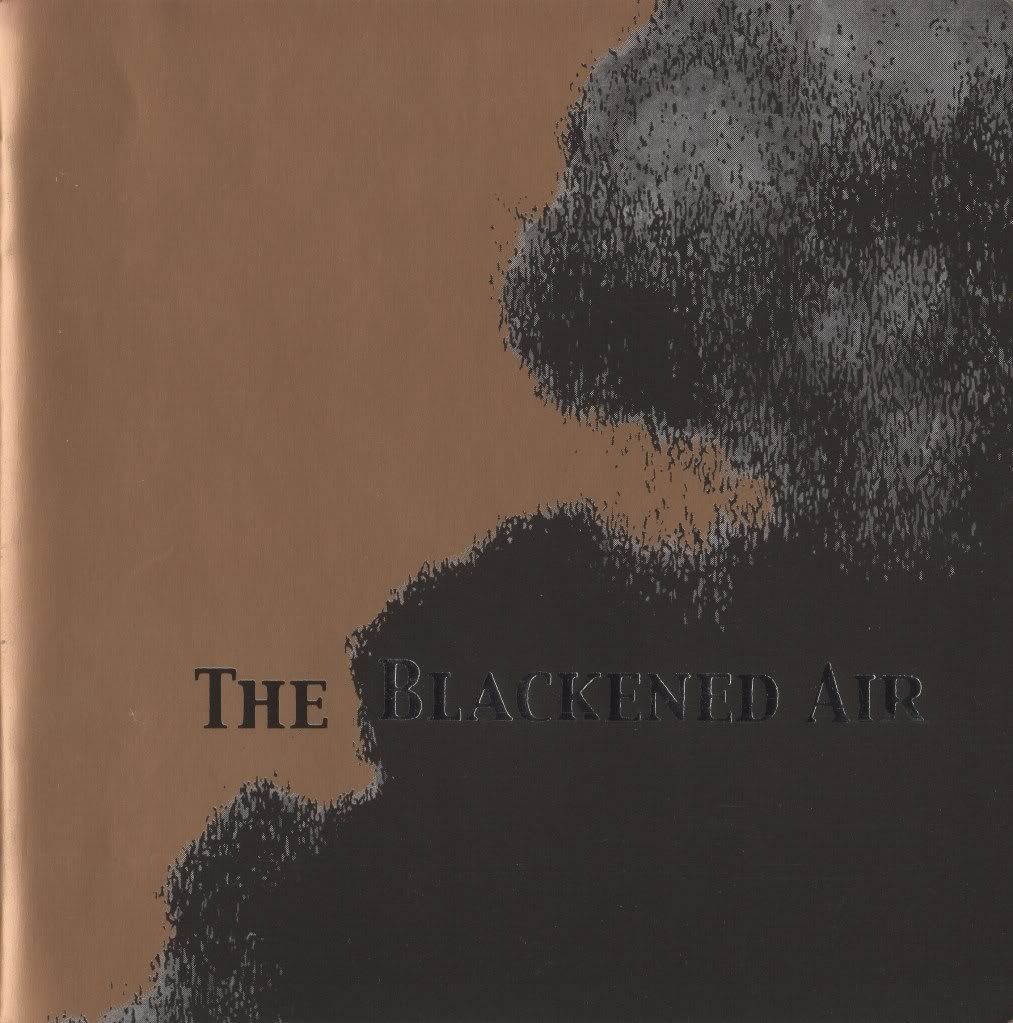
I can think of few better examples of album art that evokes the sounds contained within than Nina Nastasia's 2002 sophomore effort, The Blackened Air.  There's a smoky duskiness that's always prevalent in her music, lingering and diffuse like the on the cover.  And yet, there's also a contrasting sort of autumnal warmth that takes the edges off her dark ruminations and the desolate moments she highlights in clock-stopping detail.

Nastasia seems to be a rarity in today's "Americana" landscape insofar as she's been doing this since the late 90's (well before the current fad took off) and there's very little artifice in her delivery and the sentiments expressed in her songs.  Rather than affecting a fake southern accent on songs like the Appalachian-esque "Oh, My Stars," and the the twinkling "All For You," her wispy vocals tell the story with pure tone and no trace of a cheesy accent.  The former is a great example of Nastasia's graceful songwriting--the song conjures a vibrant sense of the moment, describing the fall of an icicle before getting to the real subject, the discovery of and the narrator's father's pursuit of a peeping Tom in the night.  Throughout The Blackened Air Nastasia proves particularly adept at spinning whole stories out of short moments.  The ability to improve storytelling by leaving out details is one that not every songwriter can pull off, but Nastasia manages to successfully employ the technique to juxtapose a cemetery visit with memories of childhood games ("In the Graveyard"), evoke the irony and resentment of relationship subservience ("I Go With Him") and to blur the lines between external and internal antagonism (the delightfully dirge-y waltz, "Ugly Face").

Though a quick perusal of YouTube reveals that Nastasia's songs lose none of their power in a live setting, one of my favorite parts about this album is how well-done the arrangements are.  The songs are loaded with cello, violin, musical saw, accordion, mandolin and the more traditional sounds of guitar, bass and drums.  So much Americana I've heard treats strings like a novelty, but here they provide both atmosphere (probably the easiest thing to accomplish, especially with amateur string players), but also melody and harmony that accentuates Nastasia's spare but repetitive two- or three-note rhythm guitar phrases.  The noise is glorious on the opener, "Run, All You..." when the barely audible opening gives way with a crash as Nastasia states the album's title with a forcefulness belied by her usual vocal delicacy.  Sometimes they do both, as on the album's centerpiece and emotional nadir, "Ocean," where the the cello is variously a source of cacophony in the song's first crescendo, a gentle pizzicato companion to Nastasia's voice that builds into broad, deep strokes for the second crescendo, and a trove of texture for the uncertain aftermath that draws the song to a close.

Among Nastasia's growing discography, I like The Blackened Air maybe the best, since its occasional cacophonous darkness points the way to her next album's (Run to Ruin) more thorough examination of those textures while at the same time retaining the recognizable folk and country tropes that made her debut, Dogs, such an accessible introduction.  I'm also always impressed by the brevity of Nastasia's songs--she packs so much into so little space by building her songs with gossamer threads.  There's very little in the way of identifiable verse/chorus chunkiness, though those elements are often present.  Though the album is quite thoroughly dark, there are moments of bright beauty and joyousness that certainly prevent a monochromatic mood.  Though she's managed to keep a mostly cult-level profile despite 10+ years making music, I still think Nastasia is one of the most sophisticated songwriters working in her field, and a damn sight more inventive when it comes to artistic integrity and vision.

Thursday, July 7, 2011

Joni Mitchell - For the Roses


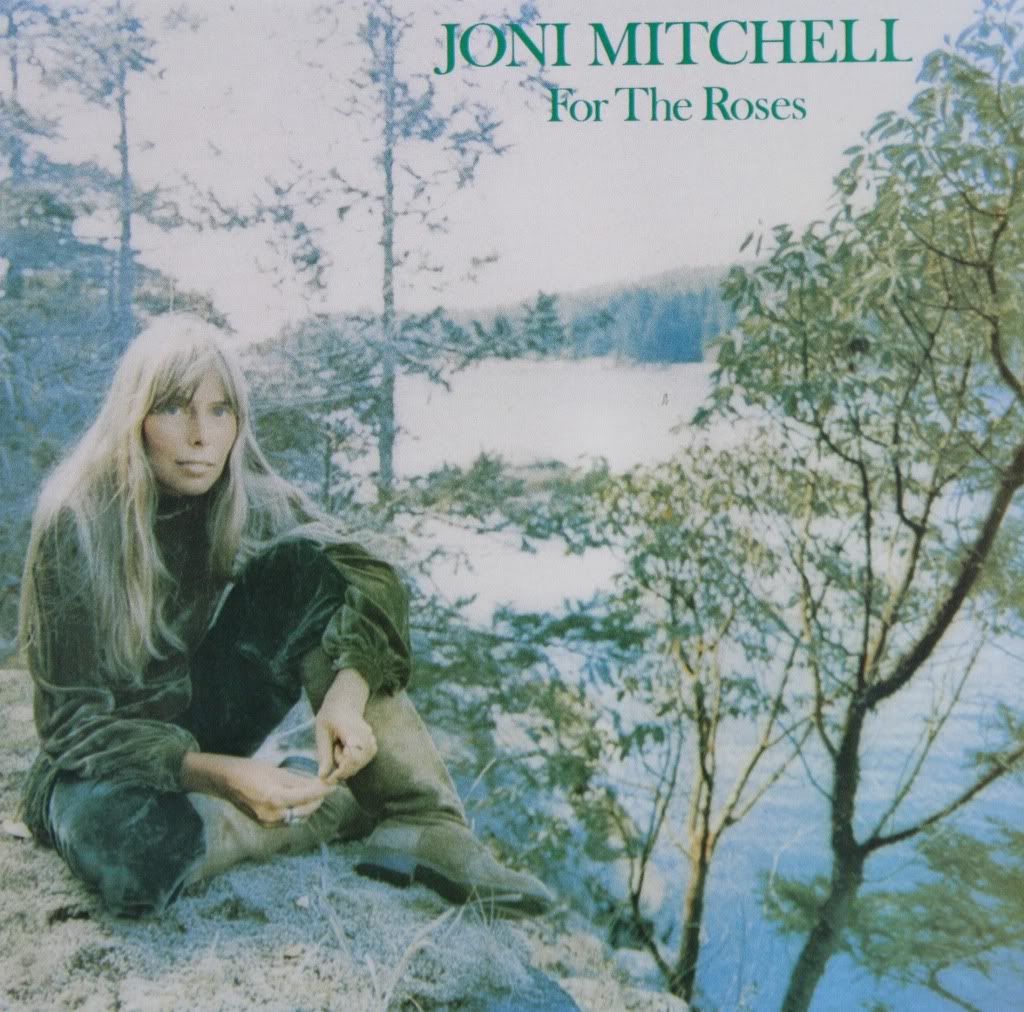
If ever there were a transition album, it's got to be Joni's 1972 long-player, For the Roses.  In almost every way, it straddles the line between her earlier folky roots and her later dive into jazzy pop, while never reaching the peaks that both eras achieved.  Moreover, the album is a reminder of the delicate balance (since it's largely absent here) between all of Mitchell's different aspects that occurs on her best albums.

Attractive as the aforementioned combination between folky, acoustic Mitchell and slick, jazzy Mitchell might sound, the songs on For the Roses mostly fail to gel.  In my opinion, it's mostly down to a dearth of good melodies and hooks.  Although all classic Joni Mitchell albums seem to thrive on ear-shocking chord changes and surprisingly far-ranging melodies, For the Roses illustrates just how fine the line is between a novel, ear-surprising vocal melody and one that just sounds strange and is ultimately unmemorable.  The inauspiciously preachy allegorical piano ballad opener, "Banquet," demonstrates this as good as any other tracks ("Lesson in Survival" and "See You Sometime" suffer similar fates)--the sounds that made "The Last Time I Saw Richard" such a haunting closer to Blue sound here like an artist looking for inspiration in uncommon chord progressions but not bothering to listen to hear if the results are compelling.  And yet, we get to hear Mitchell experimenting with some of the deep vocal vibrato that she'd later put to great use on Court and Spark and The Hissing of Summer Lawns.

Similarly, we get the first appearance of the saxophone and flute arrangements that typify those next albums, but in a much more subdued and organic setting.  The results are certainly sonically interesting, as on the wah-guitar, saxophone and synthesizer arrangements "Cold Blue Steel and Sweet Fire," the jazzy flute harmonies and bass clarinet of "Barangrill," and the tremulous vocal arrangements of "Electricity," among others.   It's just a pity that none of these songs presents a melody or lyrical hook that Mitchell had already demonstrated she was capable of on her previous two albums.  The latter, though, marks her turn toward the character sketches that would dominate her later 70's work, though it also heralds more preachiness directed toward the music industry, which we get in smaller doses here than on later albums.

Fortunately, it's not all bland--"For the Roses" is a nice mid-tempo acoustic guitar-based piece, while "You Turn Me On, I'm A Radio" calls down some much-needed catchiness in both words, structure and melody.  "Blonde in the Bleachers" (especially the last 30 seconds) and "Judgment Of the Moon and Stars" aren't necessarily great tunes, but their neo-Mitchell arrangements reach lush and stimulating heights.  Overall, For the Roses fails to impress particularly because of where it resides in the Joni Mitchell chronology.  Perhaps Mitchell was contractually rushed into writing and recording the album when she didn't quite have many ideas fully fleshed out (sometimes it's better to wait until you have something to say before trying to say anything at all), or maybe the album just needed to happen in order for Joni Mitchell the artist to progress into what was to come.  Either way, this album's mostly of interest to the already-converted and probably won't grab any newcomers.

You can get it on CD here.

Sunday, June 19, 2011

Françoise Hardy - La Question


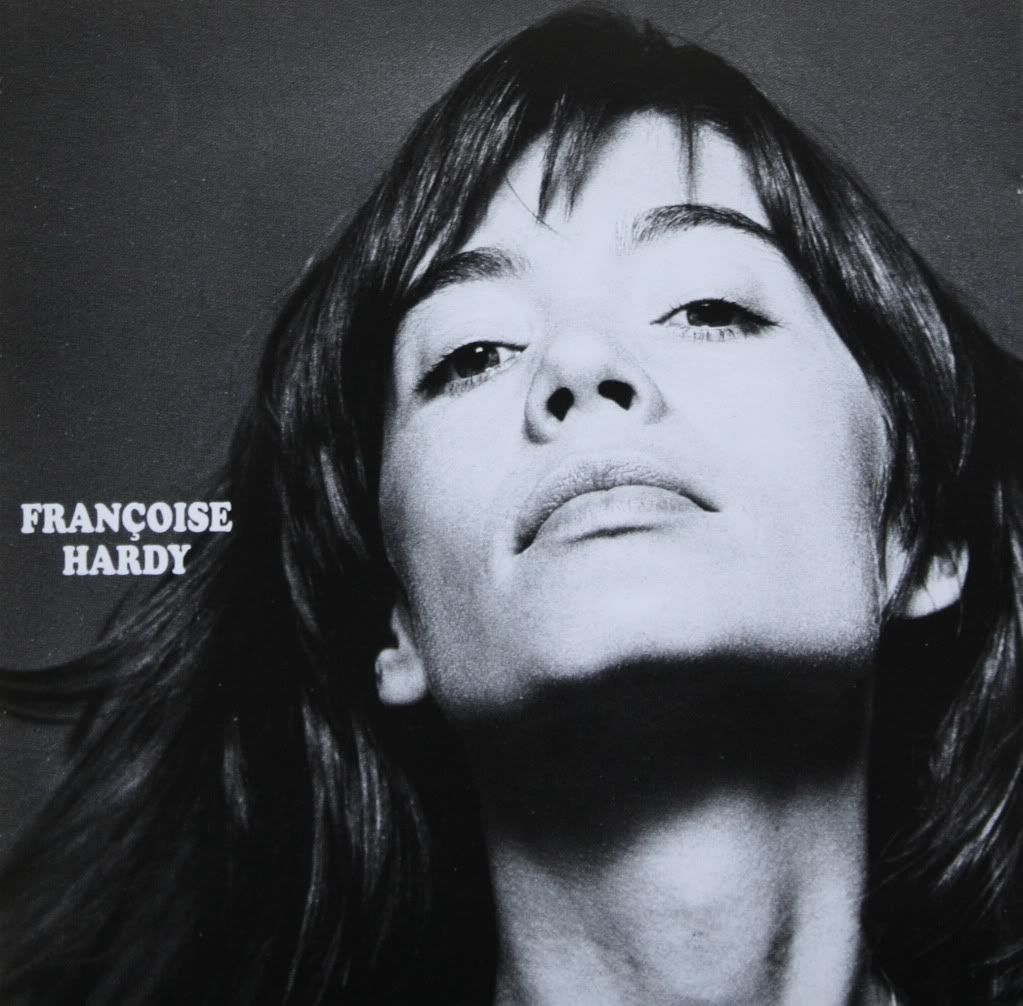
After nine years and over 15 releases in the teen idol "Yé-yé" French pop style that first garnered her fame with 1962's hit Tous les garçons et les filles, Françoise Hardy decided to change gears.  While some critics paint the stylistic shift that happened with La Question as some sort of radical change for Hardy, in reality it's less of an audacious move away from pop music and more of a subtle shift within pop to a more mysterious, atmospheric, and jazzy sound.   Rather than the catchy but generic bubblegum pop sound of her early records where the limits of her vocal technique were often made obvious by the material, the soft dynamics and spacious mystery of this album's songs places more of an emphasis on the singer's personality while simultaneously cultivating a palpable mood.  Hardy sings in a breathier, whispery style, only occasionally lifting her voice into the upper register--the contrast only makes the music more dramatic, and the feel more, well, like that look she's got on the cover.

Instrumentally, the album relies on the nylon-stringed acoustic guitar of co-writer and producer Tuca (a fairly obscure Brazillian performer), acoustic and electric bass, subtle percussion and occasional orchestrations.  The swelling "Oui je dis adieu" gracefully bounces back and forth between the strings and guitar in simple yet effective counterpoint, while "Chanson d'O" showcases Hardy's seductively breathy vocals.  An almost David Axelrod-esque tension drives the dark, cello-suffused opener, "Viens," and returns again on the disquieting opening of "Le Martien," though Tuca's bossa guitar riff eventually softens the ambiance.  The only track that really breaks the dusky atmosphere is the sing-songy "Bati Mon Nid," with its "la-la-la" chorus where a male singer joins Hardy on vocals.

While hardly left-field, La Question is totally a high-water mark in Hardy's discography and one that holds up really well in spite of its age.  The record's sultry atmosphere can't be beat when you're in the mood, but it also holds up pretty well if you're actually paying attention.

Get it here on CD, or on MP3.

Monday, April 4, 2011

Slapp Happy - Acnalbasac Noom


Since this isn't a download blog and a lot of my traffic comes from facebook, I've decided to start linking to YouTube for at least one song mentioned in each review, so use your mouse to find some Easter eggs and match some sounds to the words. 

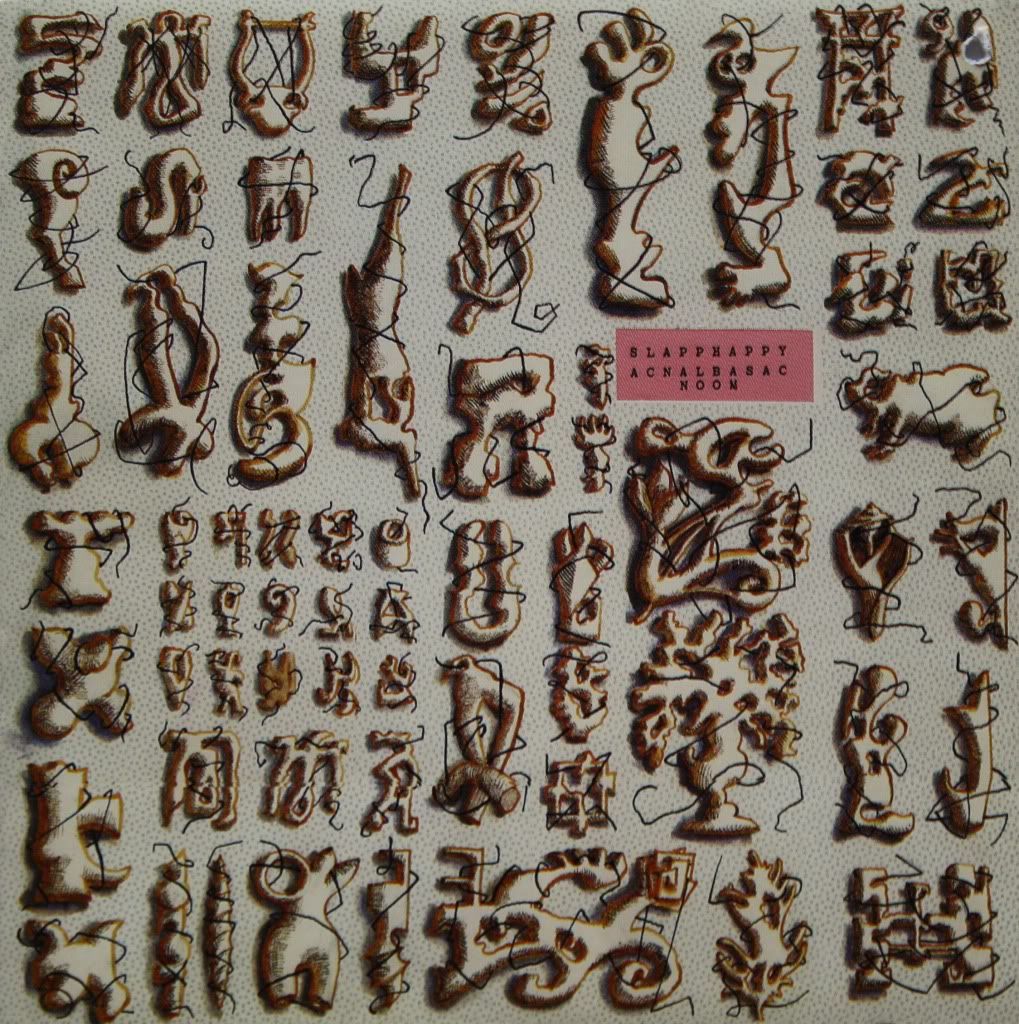
A release with an entirely befuddling genesis, Acnalbasac Noom was recorded for Polydor by the core Slapp Happy trio (Dagmar Krause, vocals; Peter Blegvad, guitar; Anthony Moore, keys) with Faust as a backing band in 1973.  The songs were re-recorded for Virgin in 1974 and released as the self-titled Slapp Happy.  The original recordings finally saw release on Recommended Records in 1980 as Slapp Happy or Slapp Happy, then (here comes the really confusing part) reissued again by Recommended as Acnalbasac Noom.  Today, if you want the original Faust version, your best bet is on CD, titled Acnalbasac Noom.

Acnalbasac Noom is pop music with brains--eclectic, jazzy, psychedelic, experimental and intelligent, but never prone to lengthy instrumental passages or songwriting that could be considered "progressive" in the early 70's meaning of the word.  Instead, it's an album that exudes wit; a clever spin on convention that won't assault anyone's expectations but subtle--slightly subversive.  The focus of the show is on Dagmar Krause's vocals singing Blegvad's lyrics.  For those familiar with Krause's later material (Henry Cow, Art Bears etc.), her performances here are much more traditional and even the timbre of her voice sounds quite different.  Here, it's a bit on the nasally side, sweetly but sharply adding an odd sultry edge to much of the lounge-flavored material and occasionally delving deeper into a more technically-proficient Nico-like register.

The real joy comes when you dig past Krause's rather thick but attractive German accent to find Blegvad's adroit way with words.  Take the album-opening words on the spy-themed title track: "He used to wear fedoras/but now he sports a fez/There's Kabbalistic innuendos/in everything he says."   The text of this album is a veritable treasure trove of clever rhyme, boundless vocabulary, humor and wit.  At times, it borders on smarmy, but despite their intelligence Blegvad's songs are blithely unpretentious--a rare combination.  The music is unobtrusively melodic, with pretty standard rock group arrangements with the occasional flittering synthesizer, and in addition to the aforementioned lounge-style pop there's some joyous almost bubblegum pop in "Charlie and Charlie," "Michelangelo," and "The Secret," while "A Little Something" lays down a bossa nova rock groove and "Mr. Rainbow" and "The Drum" tread into demonstrably heavier psychedelic territory.  The CD reissue sports a pretty wicked aerobics-themed bonus track, too, entitled "Everybody's Slimmin'", which is just as awesome as it sounds ("shake your yamma yamma like you're humping a ghost").

If you listen to this and can't stand Dagmar Krause's voice, there's probably little hope you'll enjoy Art Bears or her work with Henry Cow.  On the other hand, if you're already a fan of those, you might find this album a less demanding pleasure.  Either way, you can crawl further down the experimental pop deconstruction rabbit hole with Desperate Straights, Slapp Happy's 1975 collaboration with Henry Cow.

Get the CD here.

Saturday, February 26, 2011

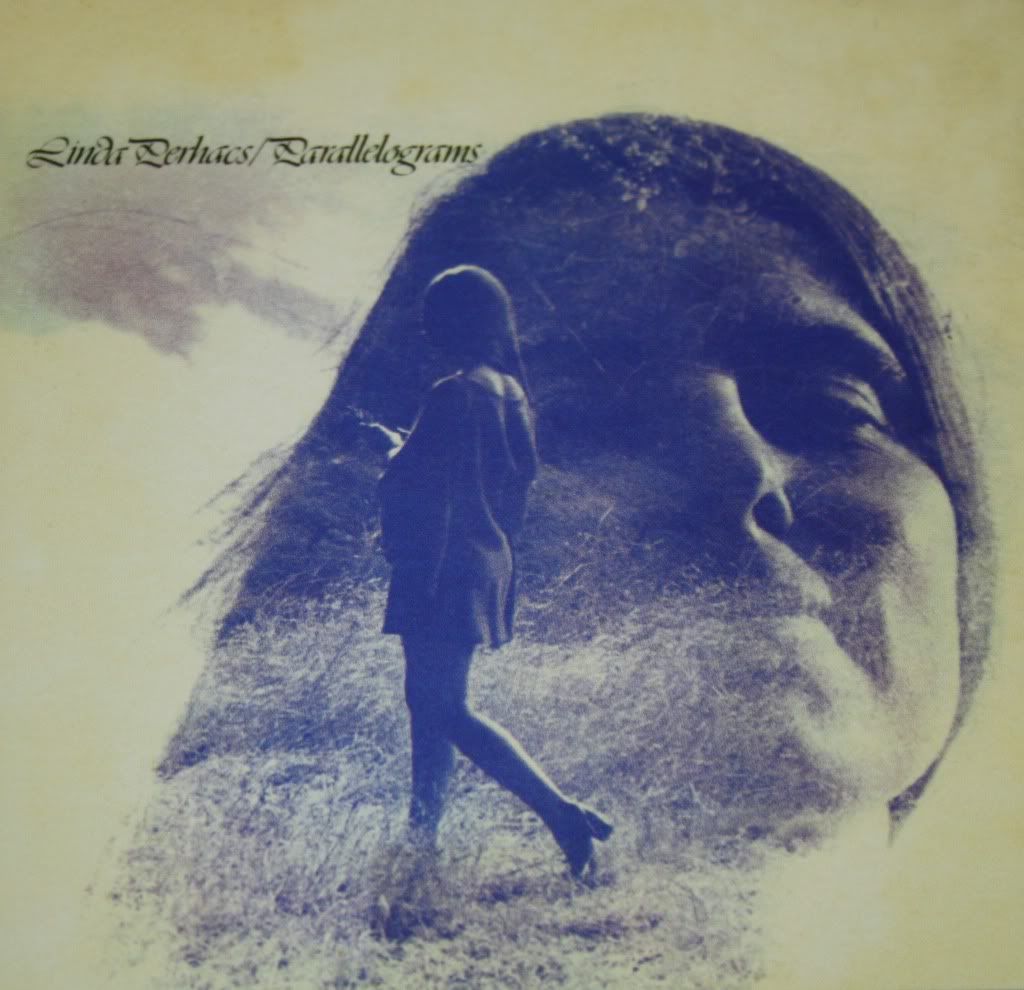
Linda Perhacs - Parallelograms


It's hard to believe but I've had this album for about five years.  It's been interesting progressing from instantly enjoying it on first listen, driving across the Bay Bridge with Sarah in August, to returning to it again and again like an old friend--then all of a sudden I can't imagine living without it.  I hate to blaspheme, but I probably like this album as much or more than I like any one album by Joni Mitchell, to whom people most often compare Linda Perhacs.  Ok, maybe I like Blue as much, but in a different way.

The mood here is flawless--hypnotic, subtly psychedelic, simultaneously hazily nocturnal and narcotically dawn-like.  Perhacs' voice isn't quite as lithe or showy as that of similar female singers, but, more importantly, it fits the songs she's written and serves the words and atmosphere perfectly.  The album's shimmering opener sets the tone--a gently unusual fingerpicked arpeggio is soon joined by Perhacs' quietly intense, cascading multitracked vocals, which emulate the titular rain.  These elements reappear repeatedly--on "Moons and Cattails" and again on the most overtly psychedelic track, "Parallelograms," which blends another chant-like guitar figure with hypnotic vocals--the comfortably dissonant combination is shattered by hand percussion and delay-treated flutes as Perhacs' vocals sink past unintelligibly before recapitulating the original theme.

Some songs reach yearning heights over delicately understated guitar--as when Perhacs pleads, "Dolphin, take me with you..." or on the exquisite "Hey, Who Really Cares?", while elsewhere her delicate vocals convey a sense of place and sense experience that's uncanny, as on the swaying "Sandy Toes" or the almost mystically sensuous "Delicious."  The arrangements are impeccable throughout the entire album--whoever's producing knows just when to leave it to voice and guitar and when to add a reverbed guitar, a 12-string, wind instruments or some appropriate bass and ethnic drums.

Sure, it's easy to point out so-called hippie elements on this album--the amount of time spent lingering on small experiential and nature-oriented details is uncommonly high, and "Paper Mountain Man" and "Porcelain Baked Cast Iron Wedding" sound pretty late-60's.  Last time I checked, though, the value of savoring the moment didn't end with flower power.  It's too late anyway--I'm too close, it's too good.  I wouldn't change one thing about this album--it's these kinds of friendships that keep me coming back--stricken, helplessly content.

Get it here on CD and MP3.