Showing posts with label Soft Machine. Show all posts

Wednesday, November 30, 2011

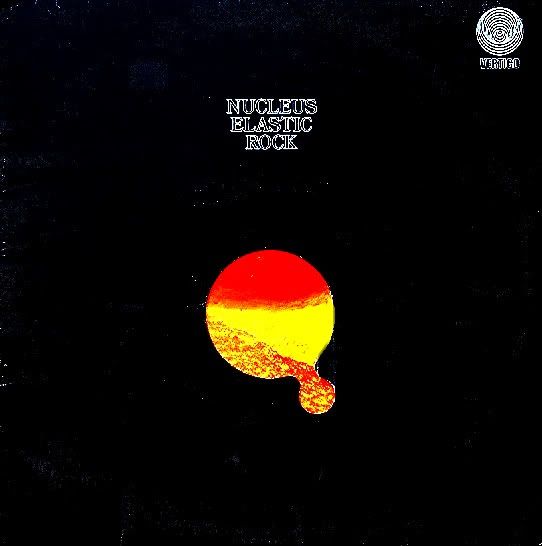
Nucleus - Elastic Rock


In celebration of some of the great jazz I've had the fortune to discover in the past six months, here's a longtime jazz/rock favorite that certainly eventually helped ease me into traditional jazz.  Though it's probably best known today as a member contributor to later incarnations of Soft Machine, British jazz rock collective Nucleus was in actuality a close contemporary of the Softs in terms of pioneering the fusion of jazz and rock music in the UK.  While Nucleus is often written about as "trumpeter Ian Carr's band," one of the things I find most interesting revisiting this album is how democratic the whole thing seems to be, with solo time and composition credits split relatively evenly.  In fact, if I were going to make a guess who the leader is, it'd probably be Karl Jenkins, whose name is on seven composition credits and whose oboe soloing at least partially defines the band's sound.  In any case, though, there's an air of equality about Elastic Rock that might detract just a bit from a sense of personality but also allows the band to cover quite a bit of ground.

Compared with the music of their Canterbury soon-to-be-kinsmen, Nucleus is probably a bit tamer, but also a fair bit more blues-oriented.  Maybe it's guitarist Chris Spedding's unshakable ties with rock music, but songs like "Elastic Rock" and especially "Crude Blues Part 2" are so tied to electric blues (especially considering the heavy backbeat in John Marshall's drumming) that it'd be tough to tie the music to jazz but for the wind instruments.  While the Softs sought to pursue the avant-garde potential in a marriage between jazz and rock by diving into labyrinthine melodies and atonal soloing, Nucleus pursues an altogether more populist mission, discovering possibilities in the space between cool jazz and rock's propulsive beats.  This is excellently evidenced in the hypnotic bassline and hi-hat of "Torrid Zone," which features some of the ensemble's best soloing over a rhythm section that is obviously rock-influenced but somehow retains an undeniably laid-back jazz vibe.

The bubbling, fragile restraint of "Earth Mother" illustrates well one of my favorite aspects of this album--thematic cohesion.  The track partially utilizes the "Torrid Zone" bassline but the group takes the energy in a completely different direction with Marshall's frenetic drumming and Spedding's unpredictable riffing.  The other, perhaps even more dominant thematic chunk is "1916," which opens the album as a melodic fragment over explosive percussion, then reappears (with much more development) doubled by trumpet and saxophone over a wicked Rhodes/guitar groove in "1916 (Battle of Boogaloo)," is quoted in various solos throughout the album, and even returns on the band's sophomore release.  I really love the cohesion that comes from a little melodic restatement, and it allows the band to play with balladry, ethnic flavors and frantic jamming in a flowing progression of short tracks that might seem overly eclectic and tossed off without the thematic context. 

When it comes to Nucleus' particular aesthetic, it would seem that "jazz/rock fusion" pertains primarily to the beat and the inclusion of a not-very-jazzy guitar.  While Marshall's got undeniable jazz chops, the beat tends to get heavier and just a little bit straighter than an actual jazz group, allowing a lot more weight when it comes to emphasizing certain melodic moments or crafting a beautiful buildup on "Twisted," for example.  There is a sacrifice, though, when it comes to rhythmic fluidity--the band members' phrasing during solos tends to be a bit square, ending neatly on those heavy kick drums and spaces created by the rock beats.  I'm sure jazz purists would point to this rigidity as evidence of fusion's inferiority, but I for one am glad bands like Nucleus explored the combination--there's a directness that's not usually found in even the most raucous of jazz, and while the chops evidenced on this disc aren't likely to make anyone throw away their Blue Note collections, it's a far cry from jam band stuff.  Through it all and bracketing any arguments about the historical trajectory of jazz, it should be said that the sounds here have aged remarkably well due to the band's clean instrumentation (electric only in the bass, guitar and Rhodes) and timelessly elegant melodic instincts.  While Soft Machine usually gets most of the props, Nucleus proves (starting here) that there's depth worthy of plumbing in the rest of the 1970's British jazz fusion scene. 

Get it here.

Wednesday, March 2, 2011

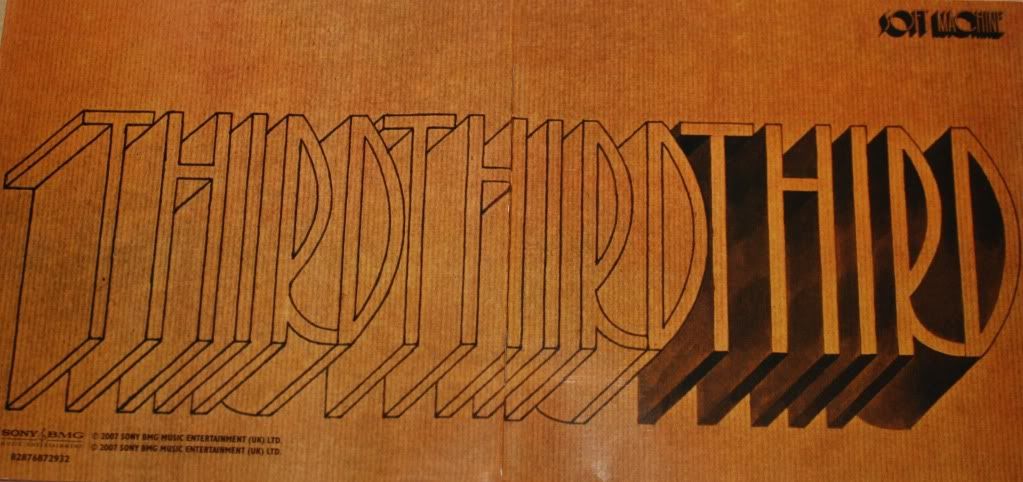
Soft Machine - Third


I've been thinking and thinking about which album I should review in order to broach the subject of the Canterbury scene--something quintessentially Canterbury, exhibiting all of the hallmark characteristics.  Ultimately, I'm not sure that's quite possible--there are albums that seem textbook Canterbury but aren't really that great, don't feature any of the important Canterbury musicians, or are just too obscure to introduce a phenomenon that's simultaneously a scene built around specific bands and people, but also a genre and approach to music that's ultimately transce.nded its origins to produce a lot of great music that has absolutely no connection to the original scene.  So, instead of attempting to find the Canterbury exemplar, I've decided to just pick one of the very best albums by arguably the most well-known Canterbury band--Soft Machine's Third.

On Third, Soft Machine became something very different from what they were on their first album (an organ-driven jazzy psychedelic pop group) as well as their second (an even more abstruse psychedelic group augmented by jazz instrumentation)--on Third, Soft Machine became something more like a jazz combo playing a more serious and epic version of what they played on Volume Two.  It's early jazz-rock fusion of an undeniably British stripe--the booty-shaking Afro-American elements that drove the seminal fusion behind Bitches Brew is nowhere to be found, replaced instead by some sort of dark, intellectual, avant-garde European sensibility.

Take the Hugh Hopper-penned opening track, "Facelift," for instance.  The live-recorded behemoth of a song opens with Mike Ratledge's outrageously overdriven organ (a classic Canterbury element) in a flagrant barrage of sound--it's arrhythmic, amelodic and fucking righteous--it's not notes, it's sound.  Say what you will about overintellectualization robbing "rock" music of its bestial nature, there's something primal in the howl and shrieks that Ratledge calls out of that thing that destroys the system in a whole other way.  It's a good six minutes before the lurking horns fall in step and state the song's main theme over Hopper's fuzz bass (another Canterbury staple).  The melody is a thing of dark imperial grandeur, threatening and tense, suddenly shattering into a driving rock beat, with Elton Dean's saxophone battling with Ratledge's organ for shrieking supremacy.  Through some clever editing (this is a live concert, remember) we cut away to Ratledge on a hypnotic electric piano vamp that prefigures Hopper's 1984 album.  A forboding flute solo, then the whole thing slowly builds back into the main theme, suddenly run backward and the song closes with analog tape squeals.  We're already a long way from home--the last vestiges of pop instincts of Volume Two have been sacrificed to the jazz gods--and what a ritual it is, with some crushing solos from Ratledge, Dean and Caravan's Jimmy Hastings on flute; the free jazz influence here is much stronger than ever before, with texture and chops reigning supreme.  Robert Wyatt, that most-celebrated of Canterbury figures, "only" plays the drums, effortlessly making the complex changes and driving the whole beast forward with imagination and verve.

"Slightly All the Time" lightens up just a bit, built on songwriter Ratledge's odd-metered electric piano riffs' interplay with Hopper's looping bass intervals.  Wyatt shines several times on cymbals.  The multi-part song treads some slow-groove territory and abruptly shifts between hypnotic vamps and manic "The Price Is Right Theme Song From Hell" excursions.  Just when you think the group's diving undersea to Sun Ra's Atlantis, "Moon In June" comes along--Robert Wyatt's thin, high, lispy vocals remind us where the band came from.  The album's third epic suite combines Wyatt's playful whimsy (another Canterbury cornerstone) with the band's newer experimental bent, soon wheeling away from Wyatt's vocal meanderings to fast riffing to a warped soundworld of slowed-down tapes, skittering violin and Wyatt's wordless voice blending with the other unrecognizable instruments as the thing rumbles to a close.

The double album finishes on the dreamiest number of the bunch, "Out-Bloody-Rageous."  Again, it's more about sound, timbre and texture as several minutes of delay keyboard collage bookend the extended suite, also appearing at the midpoint.  The driving melodic sections are again backboned by Ratledge's keys--he often solos on organ over his mightily complex electric piano riffs.  The song is similar enough in mood and style to match the rest of the album well but it takes a few listens before its individual character shines through--after all, there are only four tracks but they're each almost 20 minutes long; surely a little attention will help unlock their secrets.  I love the alien sense of melody on this album as well as its cohesiveness and foreboding majesty--it's an unexpectedly dark turn in the progression of Soft Machine's albums, but it's also a masterpiece in composition and fearless exploration of jazz fusion, which at the time was brand new.  It's hard to believe the direction other artists took the genre as the decade wore on--why would you ever want Weather Report when fusion can sound this threatening?  I didn't fully appreciate this album until getting the 2007 CD remaster--the earlier CD reissue's sound is quite murky which, combined with the material's murkiness, makes assimilating the song structures and recognizing and appreciating the melodies much more difficult.  Plus, the new remaster has three live bonus tracks.

So, Soft Machine was home to a number of Canterbury luminaries--Robert Wyatt, Hugh Hopper, Mike Ratledge, Kevin Ayers (formerly) and Elton Dean--and exhibited (actually, it often created) many classic Canterbury musical traits from the jazz influence, the sense of lyrical humor, fuzz bass and overdriven organ, as well as the general experimental spirit of the entire scene.  As will be apparent as I review more good-to-great albums from this scene, its characteristics are fluid enough that they're not immutable, and "Canterbury" became more of an attitude toward music that transcended its geographical origins.


Get it here on CD, with a bonus disc.