Wednesday, November 30, 2011

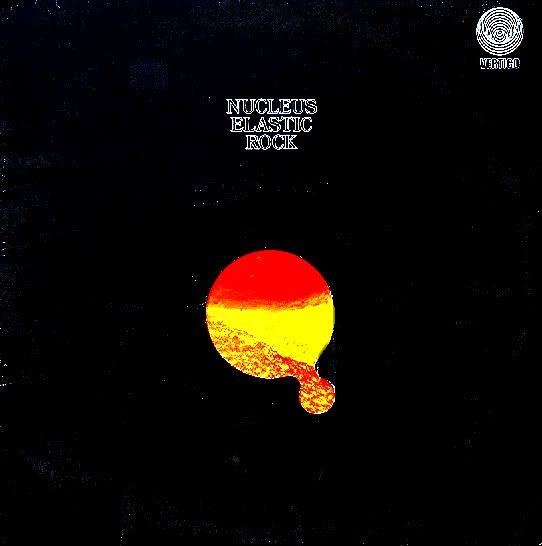
Nucleus - Elastic Rock


In celebration of some of the great jazz I've had the fortune to discover in the past six months, here's a longtime jazz/rock favorite that certainly eventually helped ease me into traditional jazz.  Though it's probably best known today as a member contributor to later incarnations of Soft Machine, British jazz rock collective Nucleus was in actuality a close contemporary of the Softs in terms of pioneering the fusion of jazz and rock music in the UK.  While Nucleus is often written about as "trumpeter Ian Carr's band," one of the things I find most interesting revisiting this album is how democratic the whole thing seems to be, with solo time and composition credits split relatively evenly.  In fact, if I were going to make a guess who the leader is, it'd probably be Karl Jenkins, whose name is on seven composition credits and whose oboe soloing at least partially defines the band's sound.  In any case, though, there's an air of equality about Elastic Rock that might detract just a bit from a sense of personality but also allows the band to cover quite a bit of ground.

Compared with the music of their Canterbury soon-to-be-kinsmen, Nucleus is probably a bit tamer, but also a fair bit more blues-oriented.  Maybe it's guitarist Chris Spedding's unshakable ties with rock music, but songs like "Elastic Rock" and especially "Crude Blues Part 2" are so tied to electric blues (especially considering the heavy backbeat in John Marshall's drumming) that it'd be tough to tie the music to jazz but for the wind instruments.  While the Softs sought to pursue the avant-garde potential in a marriage between jazz and rock by diving into labyrinthine melodies and atonal soloing, Nucleus pursues an altogether more populist mission, discovering possibilities in the space between cool jazz and rock's propulsive beats.  This is excellently evidenced in the hypnotic bassline and hi-hat of "Torrid Zone," which features some of the ensemble's best soloing over a rhythm section that is obviously rock-influenced but somehow retains an undeniably laid-back jazz vibe.

The bubbling, fragile restraint of "Earth Mother" illustrates well one of my favorite aspects of this album--thematic cohesion.  The track partially utilizes the "Torrid Zone" bassline but the group takes the energy in a completely different direction with Marshall's frenetic drumming and Spedding's unpredictable riffing.  The other, perhaps even more dominant thematic chunk is "1916," which opens the album as a melodic fragment over explosive percussion, then reappears (with much more development) doubled by trumpet and saxophone over a wicked Rhodes/guitar groove in "1916 (Battle of Boogaloo)," is quoted in various solos throughout the album, and even returns on the band's sophomore release.  I really love the cohesion that comes from a little melodic restatement, and it allows the band to play with balladry, ethnic flavors and frantic jamming in a flowing progression of short tracks that might seem overly eclectic and tossed off without the thematic context. 

When it comes to Nucleus' particular aesthetic, it would seem that "jazz/rock fusion" pertains primarily to the beat and the inclusion of a not-very-jazzy guitar.  While Marshall's got undeniable jazz chops, the beat tends to get heavier and just a little bit straighter than an actual jazz group, allowing a lot more weight when it comes to emphasizing certain melodic moments or crafting a beautiful buildup on "Twisted," for example.  There is a sacrifice, though, when it comes to rhythmic fluidity--the band members' phrasing during solos tends to be a bit square, ending neatly on those heavy kick drums and spaces created by the rock beats.  I'm sure jazz purists would point to this rigidity as evidence of fusion's inferiority, but I for one am glad bands like Nucleus explored the combination--there's a directness that's not usually found in even the most raucous of jazz, and while the chops evidenced on this disc aren't likely to make anyone throw away their Blue Note collections, it's a far cry from jam band stuff.  Through it all and bracketing any arguments about the historical trajectory of jazz, it should be said that the sounds here have aged remarkably well due to the band's clean instrumentation (electric only in the bass, guitar and Rhodes) and timelessly elegant melodic instincts.  While Soft Machine usually gets most of the props, Nucleus proves (starting here) that there's depth worthy of plumbing in the rest of the 1970's British jazz fusion scene. 

Get it here.

Monday, November 28, 2011

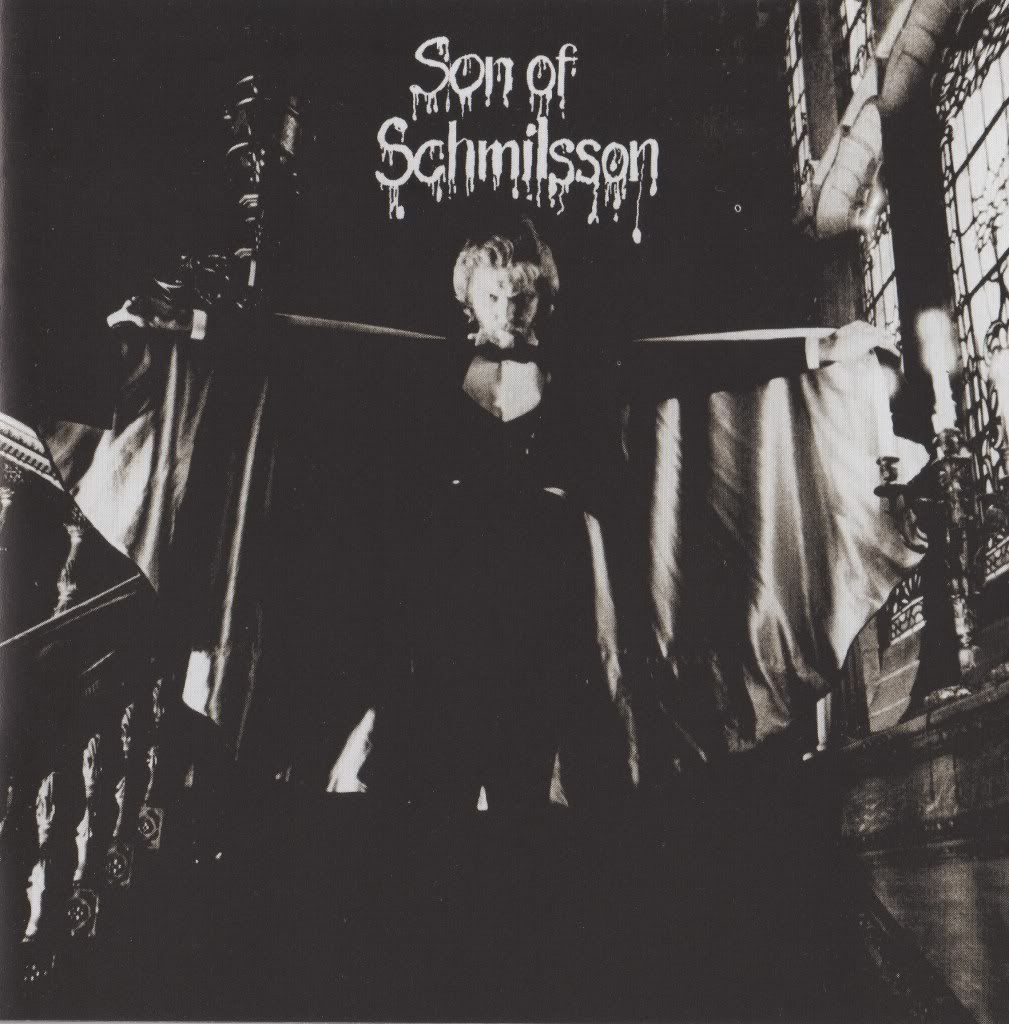
Harry Nilsson - Son of Schmilsson


No matter what institution you're a part of, be it politics, academia or just an everyday workplace, it's always good for perspective to have somebody around who's bound and determined to demonstrate on a daily basis that it's all ultimately just a pile of horseshit.  For early 70's rock, that man is undoubtedly Harry Nilsson.  When it comes to being the neighborhood subversive asshole, the usual weapons of choice are humor, satire and mockery, and Nilsson's got them in droves.  As far as I can tell, the only thing he actually cares about is singing ridiculously awesomely.  The rest seems to be an indiscriminate sampling and deconstruction of pop music in all its myriad forms with an emphasis on the puerile.  It worked pretty well for Nilsson on the previous year's breakthrough album Nilsson Schmilsson (though he'd already had successful singles and was well-known for a cover of Fred Neil's "Everybody's Talkin'").  When crafting a follow-up, it would appear that Harry's main goal was to throw the record label's desires to revisit his previous success back in their face with an album so full of jokey throwaways that it was pretty much guaranteed not to be as successful as its predecessor.

And yet, Son of Schmilsson just might be my favorite Harry Nilsson, from its righteous B horror movie cover (and sound effects at the end of the first track) to all of the burping and gargling (for serious) to the kid-in-a-candy-store smorgasbord of musical styles represented here, this album is pretty much a party record all the way.  Old school rock and roll is probably the genre of choice, as in "Take 54" where Harry "sings [his] balls off" to impress a woman who wanders into the studio, or "You're Breakin' My Heart," where Nilsson's sudden profanity sits at odds with the song's bouncy piano riff, or on the fake live boogie of "At My Front Door."  But there's so much more than rock and roll, which obviously isn't Nilsson's musical passion--"Joy" has got to be my favorite, sending up country music with all of the common tropes (spoken word, Latin flourishes, cheesy puns); I can't help but laugh every time when Nilsson sneers "good...bad...good bad" toward the end.  There's also ridiculous pseudo-Caribbean music on "The Most Beautiful World in the World" and sort of a musical theater vibe on "I'd Rather Be Dead," which famously features a chorus of retirement home residents singing about how they'd "rather be dead than wet my bed" (make sure to watch the equally hilarious documentary about the making of this album for more on that detail).

At its base level, though, this is a pop album, full of great melodies, catchy changes and Nilsson's voice and personality pushed to the front by anonymous session musicians playing a million different instruments.  For all the ridiculousness and the fact that the songs are pretty easy to grasp after a couple of listens, Nilsson's voice is (as always) a revelation, silky smooth but capable of brilliant natural distortion and some ornamentations other singers could only dream of on songs like "Take 54," "At My Front Door" and "Spaceman."  Don't tell anybody, but the merry prankster exhibits signs of actually having a heart on the velvety ballad "Remember (Christmas)" and the thoughtful "Turn on Your Radio."  Depending on which way you look at it, these songs are almost all throwaway novelty tunes or this is just a good time party album.  Either way, I think it's one hell of a fun ride with no strings attached and only a slight hangover. 

Get it here.

Friday, November 25, 2011

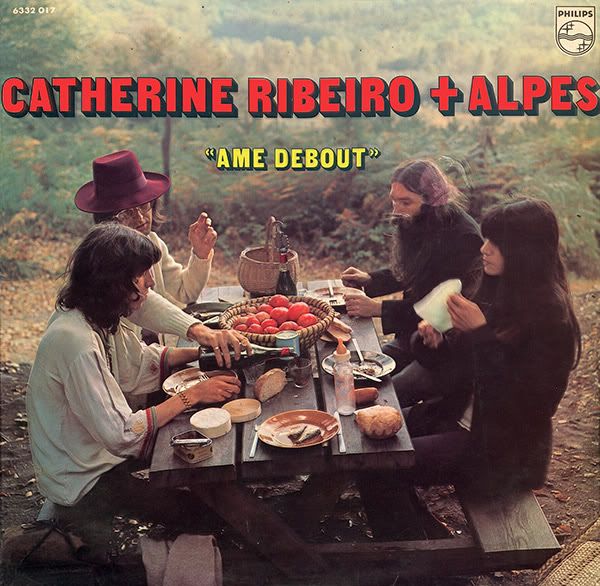
Catherine Ribeiro et Alpes - Ame Debout


We're not done with you yet, France.  In spite of all of my spirited attempts to express what I do and don't like about music into writing, sometimes it actually feels good to have those words and opinions shoved right back down my throat.  The exceptional work of singer and poet Catherine Ribeiro and her sometime-group Alpes (consisting primarily of guitarist and composer Patrice Moullet) not only defies all of my complaints about excessive repetition, its use of repetition in and across all of the album's tracks is often the precise reason why it's so great.

Rather than attempting to fuse any real recognizable styles of music with lyrics and vocals, Alpes' relationship with Ribeiro is at once more complicated and more elemental.  The band's sound is indeed consistent on most of these songs, formed primarily of repeating hand drum, bass, violin and guitar figures and droning organ and synth tones supplemented by a couple of bizarre instruments (the percuphone and the cosmophone).  The repetitious sounds are stretched long across time--minutes of the same textures, shifting perhaps ever so slightly, but rarely ever responding directly to Ribeiro's vocals rhythmically.  Instead, the music floats like an uneasy sea beneath Ribeiro's, swelling to support her vocals harmonically but rarely (if ever) displaying enough ego to act as anything other than a perfect platform for her existential angst.  For her part, Ribeiro displays peerless skills as both a singer and an actress, projecting a distilled humanity with a powerful, husky low register and desperate, cracking high range, sometimes speak-singing, sometimes freely vocalizing with moans, growls, whispers and frantic pleas.

The superb title track demonstrates the band's unique aesthetic with grace and power, as the droning instrumentation fades in with subtle dynamism and Ribeiro's vocals soar and dive as if she's pacing inside a six foot cell.  A spare organ backdrop is all that's needed to supplement the chanteuse's vocals "Le Kleenex, Le Drap De Lit Et L'etendard," wherein the bitter irony of a line like "je cherche un kleenex" sits bizarrely comfortably next to the singer's pleas to "regarde-moi, ecoute-moi."  The heart-rending "Diborowska" is undoubtedly the most compelling song melodically, with its harrowing "le train en partance pour Diborowska" merging tragically with the song's arpeggiated nylon string guitar and eerie train whistles.  The band manages to assert that its fleeting, gossamer instrumentation can arguably stand alone without Ribeiro's words with a few instrumentals, including the atmospheric "Alpes 1," the bizarre, unintelligible vocalizations of "Alpes 2" and Ribeiro's ghostly wordless vocal on "Aria Populaire."  The album comes to a folky, pounding close with "Dingue," which combines the folkiness of Ribeiro's earlier recordings with 2 Bis with a similar sort of energy to early Leonard Cohen with even more bile and energy in the vocals.

While the compositional elements and harmony employed by this music are really quite simple, there's an emotional expression happening in the combination of the vocals and music that is so rare and direct that I can't say I've ever heard anything quite like it, even in the realm of similar artists like Peter Hammill.  It's almost like the instrumentation is there for the explicit purpose of putting Ribeiro in the zone to extemporaneously conjure her deepest self onto tape, and it's always inspiring to hear.  As much as I'll probably continue to rail against excessive repetition in all forms of music, this album (along with the rest of Ribeiro's work from the same period) is a humbling reminder that there is never one single right way to make music, and the effort to conceptualize and verbalize a musical aesthetic is only an imperfect attempt to reach the sort of unquantifiable magic found here, using incomplete means.  If you can achieve this level of intuitive expression, it doesn't really matter to me how many chords are in the song or how many times you play the same note in a row.  Unfortunately most of us mortals lack the innate spark required and must attempt to find our lesser inspiration by toying with established theory and idioms down in the everyday muck.  It's absolutely criminal that these albums are out of print and Ribeiro's music is even harder to find out about than it should be.

For now, you can find it here.

Wednesday, November 23, 2011

Etron Fou Leloublan - Batelages


Back to mainland Europe and one of the first groups of bands invited by Henry Cow to join the Rock in Opposition festival--France's Etron Fou Leloublan.  Along with the recent Zappa post, this album is a great example of one of the common trade-offs found in experimental rock: if you want to hear some unorthodox ideas, don't expect the album to be uniformly coherent.  As much as I obsess over the album-as-ultimate-pop-music-artistic-statement, I also acknowledge that the effort it takes to produce unique musical ideas is often so creatively taxing that the band seems to have little energy left to expend attentively cultivating their album's big picture--flow, connectedness, uniformly high quality, or even the strength of the individual songs wherein the unique ideas reside.  As a result, some experimental albums turn out to be confused messes, while some more successful ones still tend to come across as good but wildly scattershot and inaccessibly eclectic (to some, at least).  This reality makes the truly great experimental albums full of truly great ideas so rare that they're like precious diamonds to behold.  In pursuit of that elusive ideal, though, I've found a need to shift my expectations when listening to experimental music from album consistency to subjectively evaluating the presence and quality of interesting ideas.  In other words, it can be just as entertaining to listen to a group attempt and not fully succeed at doing something that's never quite been done before as it is to listen to an artist make a thoroughly great album in a style that's already been done a million times.  What better music to illustrate this experience than Etron Fou Leloublan's 1977 debut, Batelages?

The group is surely one of the most curious of RIO outfits, consisting of just a drummer, a saxophonist and a bassist who occasionally plays guitar.  Their roots are unique within RIO too, sounding much less like Henry Cow and with more of a performance art/dance hall vibe.  The epic tracks that bookend the album demonstrate quite well the relative success and failure of an experimental approach, with "L'Amulette et le Petit Rabbin" showcasing all of the group's strengths in one long narrative.  The track opens with acoustic guitar, abruptly shifting to a punk rock-like blast of electric guitar, drums and raw but playful vocals that initiate the ironic tale of the titular "little Rabbi."  The ensuing 14 or so minutes blend the band's ribald humor and vocal/poetic acting with hypnotically interlocking bass and drum figures (probably their strongest characteristic) and cabaret-like saxophone melodies.  The story is pretty absurd and funny, but there's enough feeling in the vocals and musical depth to hold the interest of non-Francophones--like when the beat changes around 9 minutes from dance hall striptease music to bass chording and stutter-stop drum interplay.  While some may prefer more smoothness and dovetailed segues between the different sections of music, I really enjoy the immediacy and surprise that comes when the band jaggedly and instantaneously changes gears from one mood to another.  And if there was any question regarding whether or not you can play difficult, complex music and still enjoy it, just listen to the last two minutes!

Conversely, "Histoire de Graine" offers another longform statement that is much less impressive.  While the narrative elements are still strong, the ideas are fewer and further between, with considerably more repetition.  The vocalist (I'm not sure whether it's saxophonist Chris Chanet or bassist Ferdinand Richard) is considerably tamer than the first track's, and things tend to drag with less energy and more of a feeling of musical stagnation.  Still, it becomes apparent that the goal of the song is a cacophonous crescendo.  While not the most economical ratio of ideas to minutes, the build-up is not necessarily unsuccessful.  In the middle of the two epics we're treated to a solo percussion performance and a 30 second saxophone-led instrumental (both of which reinforce the band's circus-like image) and the fascinating instrumental "Madame Richard/Larika," which features a doubletracked, almost avant-classical bass intro and more of the noisy trio grooves that make the first track one of the best.  Probably the most carefully-composed piece, it's also easier to grasp the relationship between the band's freer and more aggressive tendencies and their inklings as composers.

Like a lot of the uncommercial bands that made up RIO, Etron Fou Leloublan's albums play like snapshots of what they were doing live at the time; they're not so much carefully crafted studio statements (indeed evident by the charmingly lo-fi production) as they are attempts to document the achievements of a group trying (and sometimes succeeding) at combining disparate crazy elements in one place and having a great time doing it.  Though their later albums shed some of the feral energy found here, I'm happy we have both sides of the band documented in order to compare unbridled and spontaneous creativity with a more refined and thoughtful take on some of the same ideas.  When it comes to the tension between searching for perfect albums and interesting ideas, I think this one has enough inspiration to make it worth listening to and keeping in spite of tenuously gelling as a good album--chaos is often beautiful in its own way!

Get it here.

Monday, November 21, 2011

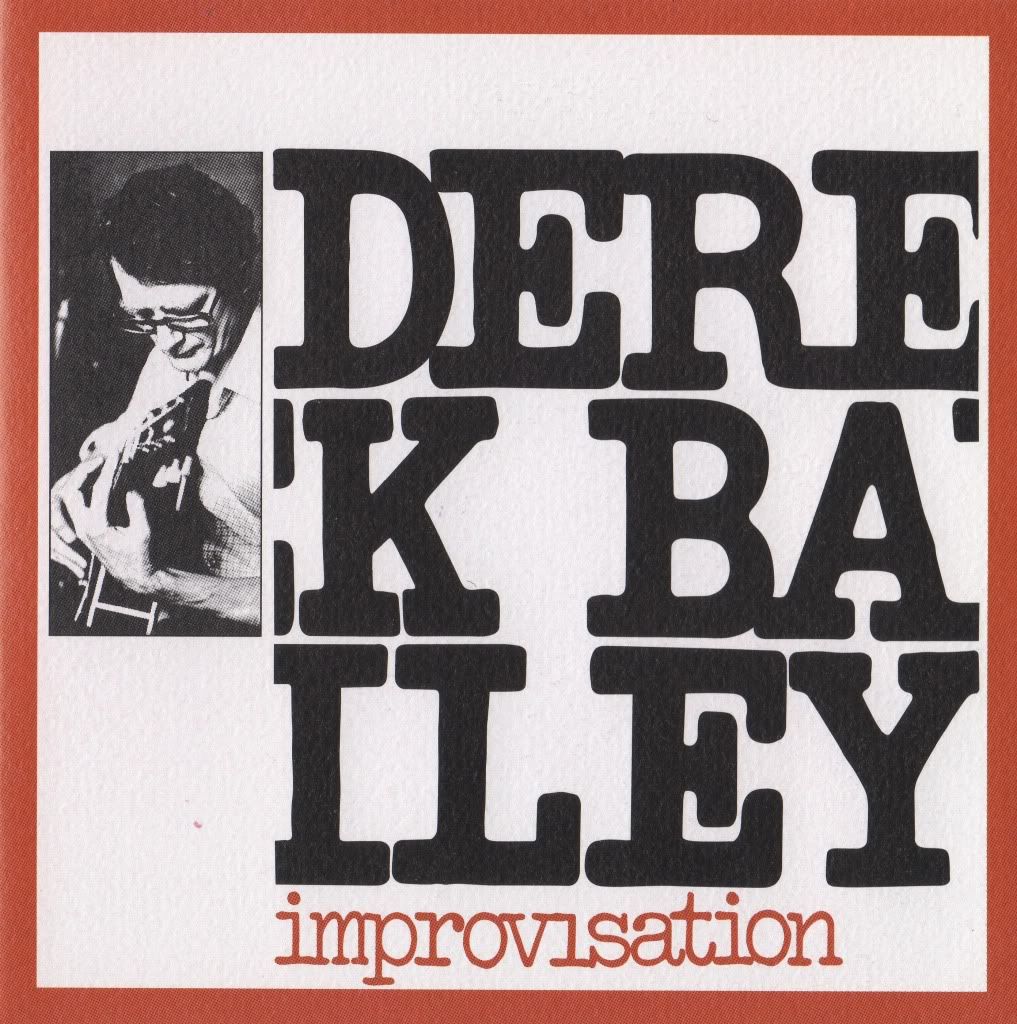
Derek Bailey - Improvisation


Derek Bailey is known for two things: being a grouchy old man when he wasn't even old, and for single-handedly creating his own free improvisation idiom on the six-string guitar.  Right up my alley on both counts!  By the time Bailey recorded Solo Guitar Volume One in 1971, he'd already been a prominent figure in the British and European free jazz circuits, performing with people like saxophonists Evan Parker and Peter Brötzmann and bassist Dave Holland, and by the time this 1975 album was released he had refined his solo improvisational technique (which came across as a bit tentative in his debut) to the rarefied level it remained for most of the rest of his career.

Listening to Derek Bailey for the first time can be a disorienting--his style is thoroughly and often brutally atonal, arrhythmic and usually very nonrepetitive.  It's also most assuredly the type of music that sounds like an irritating mess if the volume is low and you're only half paying attention.  Crank it up so your surrounded by Bailey's sound world and focus on what he's doing and an exciting (if somewhat cold) sense of adventure-in-logic dominates every move the guitarist makes.

While Keith Rowe is responsible for making equally influential advances in the guitar free improvisation realm, Bailey's music sounds much more like a conventional guitar played to an exponentially "out" degree; in fact, his amplification is so clean it's almost difficult to discern that he's playing an electric guitar on this album.  Though he almost exclusively flatpicks, Bailey's style relies heavily on harmonics, muting and exploiting the instrument's natural sustain and decay.  This can be easily heard on "M4" and to even greater depth on "M8," where Bailey's harmonics and string bends pit two strings against one another on nearly the same note, deftly controlling the oscillation between the two notes as they eerily decay into space.  At other points Bailey embarks on furious runs across bizarre intervals, sporadically halting to interject with brief spurts of silence or allowing a note to ring before again changing direction completely with some explosively percussive cluster chords ("M10").

One of the things I love most about Bailey's style is how fluidly he moves from one idea to the next; though there really isn't any melody to his playing, it's usually easy to discern what is fascinating him at any given moment, and the thrill of his free improvisation is in the headlong rush into whatever the next idea might be.  Sometimes the difference lies in the textural discrepancy between harmonics, standard string plucking and jabbing chords ("M13"), and at other points it might be a digression into exploring the percussive potential of the instrument with skittering string scrapes ("M14") or interjecting taps on the guitar top between the string's tonal sounds.  Finally, and perhaps most subtly, Bailey uses a two-amplifier setup and volume/swell pedals to dynamically pan the output of his guitar, which adds a richness and mobility to his fretboard wandering (especially noticeable on "M5").  While not quite as finely controllable as Fred Frith's dual pickup/output experiments, it's easy to see that Frith's guitar solos owe a sizable debt to the pioneering done by Bailey.

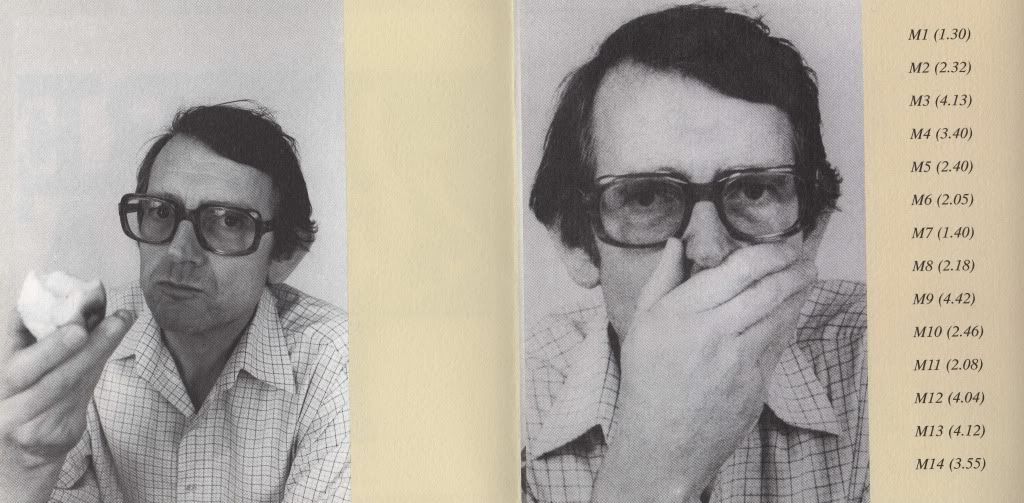
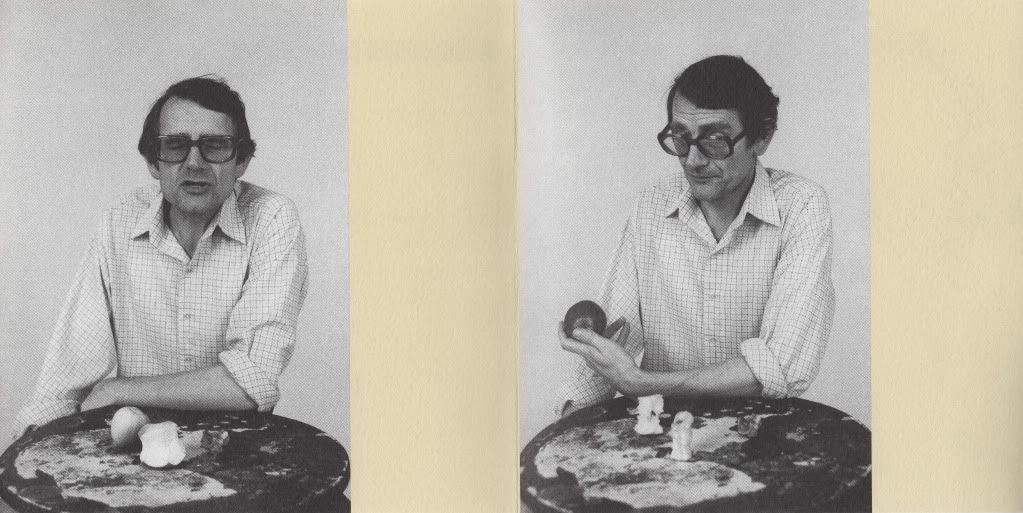
While he's got more epic albums (Aida is often regarded as his best), I think Improvisation is just as strong and is probably a better introduction to Bailey's challenging style because the track lengths are short and can be more easily focused on and digested.  Though my interest in Bailey has been tempered by the realization that his style became formalized mid-70's and didn't develop much further, revisiting his best works reminds me that 1) his style is so radically different from those who came before him that he didn't really need to reinvent himself to maintain his validity and 2) his style is so all-over-the-place that there isn't a whole lot more he could do to develop it further.  Bailey's playing is an inescapable golden standard for atonal guitar as well as an audacious challenge to all followers to conjure something else new and exciting from those six strings.  Please enjoy these pictures of Derek Bailey eating some apples.
Get it here.

Friday, November 18, 2011

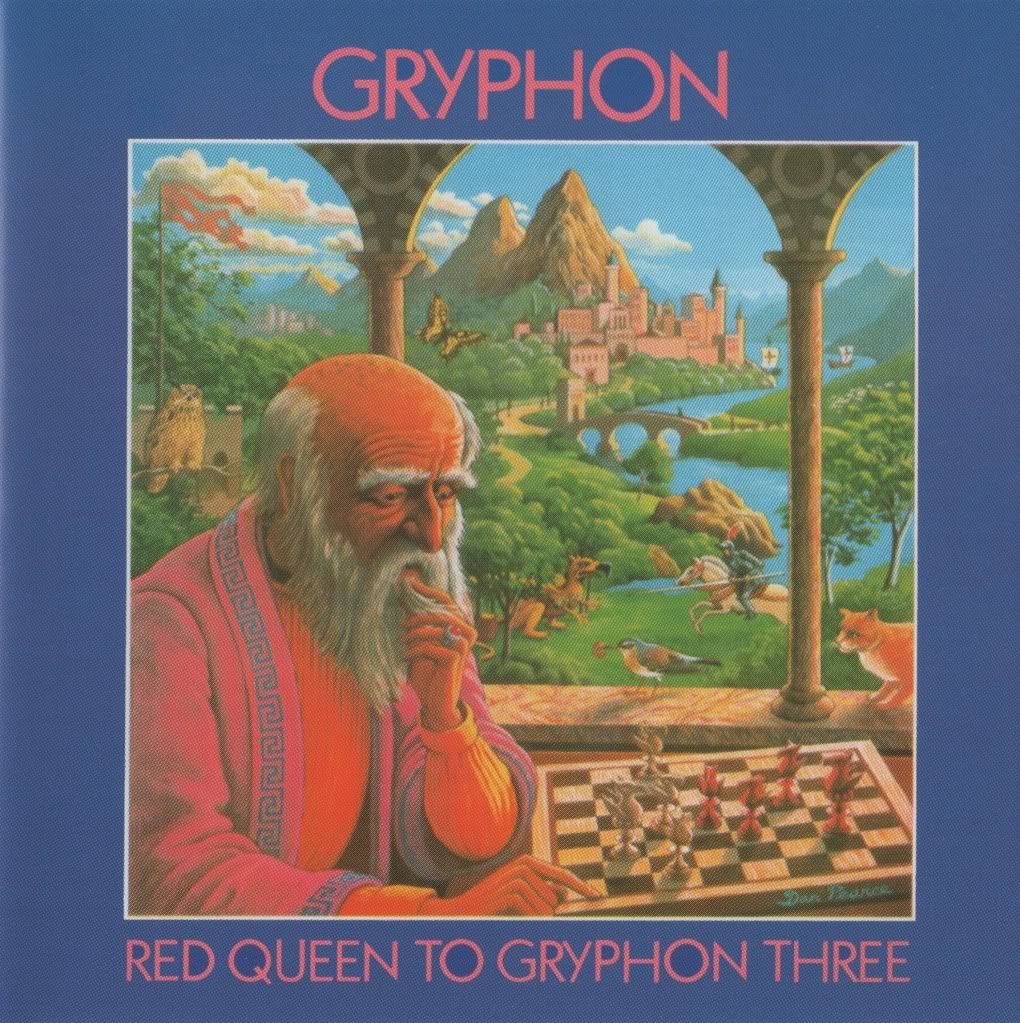
Gryphon - Red Queen to Gryphon Three


Some progressive albums from the 1970's sound like the compositions could be played in the present and might actually manage to sound a little more modern, while others remain permanently tied to the time of their origin.  British group Gryphon's 1974 third album is surely one of the latter category, and a perfect choice to end the relative drought of progressive material here.  Listening to this album is like burying your head in a synthesized pillow of 70's renaissance heaven. 

Among the numerous progressive groups of similar ambitiousness, Gryphon are distinguishable (on this album at least) for eschewing vocals entirely and utilizing crumhorns, a Renaissance-era woodwind that imbues the band's backward-looking style with some aural authenticity.  Looking at the band's credits, though, it's not a huge surprise they're adept at accommodating the crumhorn--the horn is double-reeded, and Brian Gulland spends half of his time in the group playing bassoon.  Unsurprisingly considering these guys' academic credentials, the virtuosic level of musicianship is one of the album's strongest characteristics.

Compositionally, Gryphon has to be one of the most classically-influenced contemporary progressive groups, neatly folding Renaissance and especially Baroque influences into their songs while still pumping up the amplification with electric guitar and bass, drums and some well-arranged synth parts.  The album's "Opening Move" boasts some of the dreamiest instrumental passages, utilizing gorgeous but tense chord progressions, and juxtaposing a twinkling group sound very much influenced by passages in similar Yes songs with interlocking contrapuntal sections similar to those often explored by Gentle Giant.  Unlike Yes and Gentle Giant, though, Gryphon rarely breaks past the Baroque atmosphere into a more contemporary rock sound.  In some ways, they don't have to because their vocal-free sound doesn't pose the problem of matching lyrics and vocals to such an academic sound, but it's also because they're exploring the fusion of classical and rock to a much deeper extent.  The ebb and flow of tempo and energy in "Opening Move" is abetted by the development of a strong melodic motif and showcases of the band's multi-instrumental talents.

"Second Spasm" features the most overt rock sounds of the album, with the bass and guitar doubling on a boisterous and satisfying progressive riff after a couple of the most intricate Medieval and Baroque passages of the album.  As might be reasonably inferred from its title, "Lament" is the requisite quiet piece, which seems slightly unnecessary considering even most of the mid-tempo pieces here are fairly mellow.  By the time the album closes with "Checkmate," it's apparent that the group's arrangements--replete with synth/piano double runs and multi-flute harmonies--are the album's greatest asset.  While some of the melodies are unmemorable even after numerous listens, there's always joy to be found in the spaces between the multiple simultaneous sounds, and it's clear the band took great care with keeping the sections of their extended pieces constantly on the move and heading toward the next surprising combination.  While the band's sound is uncommercial by even progressive standards and the album will always sound hopelessly dated, this kind of music will always sound great to the converted and acts as a cheerful reminder that there was once a time when bands making music like this could land a record deal and at least have a shot at success.

Get it here.

Wednesday, November 16, 2011

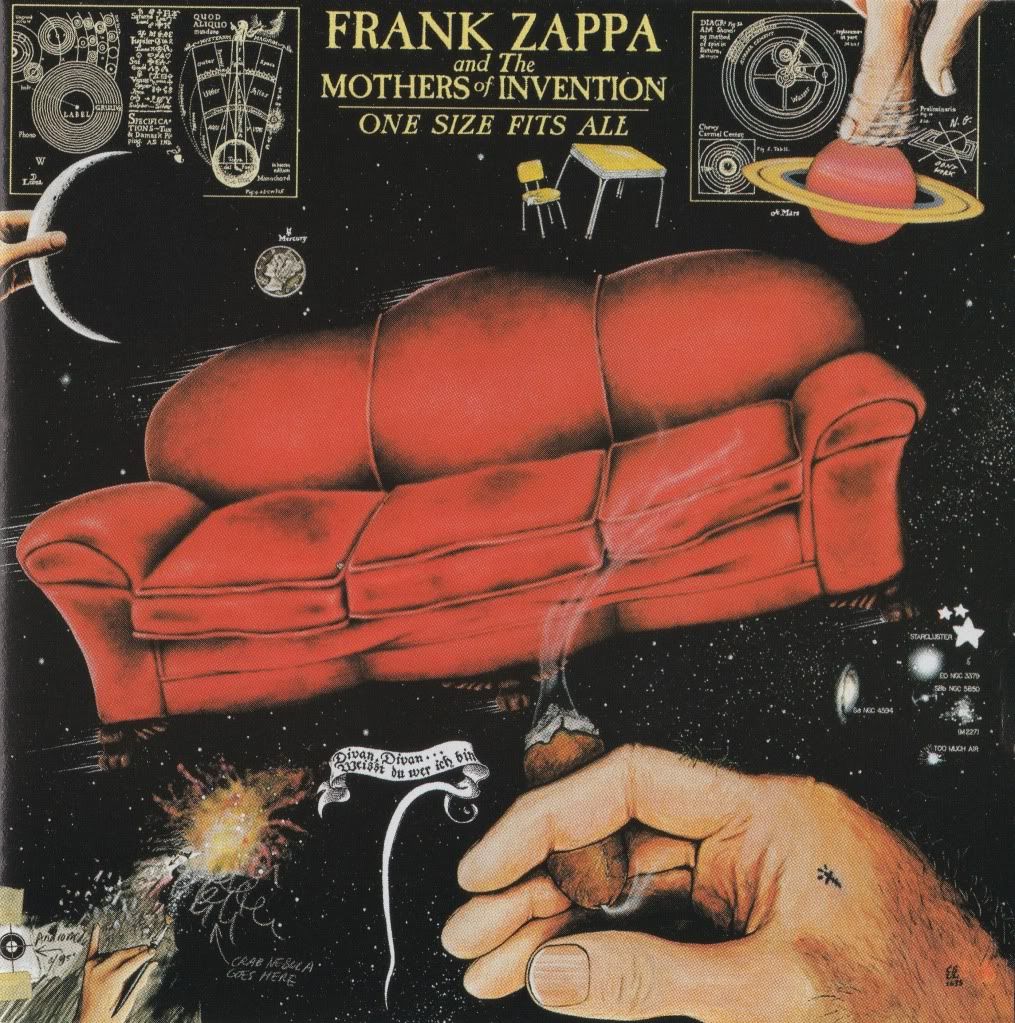
Frank Zappa and the Mothers of Invention - One Size Fits All


While his skills as a composer and guitarist are self-evident on everything I've ever heard by him, Frank Zappa hasn't ever really clicked with me as a personal favorite.  I think it might have something to do with the tension between his obvious seriousness and discipline as a composer and player but the apparently complete lack of seriousness when it comes to thoroughly crafting an album or imbuing his songs with anything but the most lightweight of messages.  I know, I know--it's just how Zappa is, but the slapdash composite of dense jazz rock, rock and roll parody and novelty song that makes up most of his fans' favorite albums just hasn't satisfied me to the point of admitting that any of them are really great.

One Size Fits All is about as enjoyable as others I've heard, though.  The dense, twinkling jazz rock that initiates the album with "Inca Roads" is my favorite part; these compositions are fluid, full of little ostinati and vibraphone/vocal runs that precariously and quickly speed through a jaw-dropping number of notes.  Zappa could always build a band, and in terms of musicianship, there are virtually no chinks in the armor here, especially in the rhythm section.  For his part, Zappa's playing runs the typical mix of able but jammy blues-inflected lead guitar interspersed with some more interesting standout ideas.  For example, his fun but repetitive fuzz solo on "Po-Jama People" sounds really familiar, while the twiddly clean riff near the end of "Sofa No. 1" sounds like only Zappa could have written it.  Obviously, I prefer the more peculiar and idiosyncratic stuff, and there's at least an adequate amount of it here, thanks to the late-game clutch pull of "Andy," with more ridiculous vocal arrangements, freely-flowing ideas, and a little bit of atypical guitar playing. 

Though I don't really find the songwriting especially consistent, the sound on this album definitely is--wide open, major seventh, ninth and eleventh chords give the music a happy feel and provide a lot of roaming territory for the vocalists, which are another strength--Zappa's proficient but limited voice is aided quite ably by some of the African American members of his band, including a welcome guest appearance by Johnny "Guitar" Watson on "San Ber'dino," which almost sounds like ELO (sorry, bigtime Zappa fans!).  As a much bigger fan of groups from the Canterbury scene (most of which are undeniably influenced by Zappa's earlier work), I can hear traces of Hatfield and the North in some of this album's intricate jazz rock, but the idea of a group from Canterbury managing to successfully include black American music in their blend is laughable.  In this way, Zappa is to Canterbury almost like extreme fascism is to extreme communism--almost the exact same thing, but somehow fundamentally and permanently separate.  For me, at least, the Canterbury bands usually did a better job of looking at the big picture and creating really solid albums, even if the music gets a little darker and less "fun," and for some reason I find their sense of humor more compelling.  And the problem for me with Zappa's idea of fun, on this album, at least, is that most of the songs are merely just goofy and rarely cross over into a level of humor that actually makes me laugh--"Po-Jama People" seems to be trying to be satirical but the identity of Zappa's actual target remains a mystery to me, while the punchline to all of the verbosity on "Evelyn, A Modified Dog" is merely "arf."  I thoroughly understand that Zappa's "I don't give a shit" attitude is deliberate and is precisely what a lot of people love about his music, but for me it's more attractive in theory than in practice.  He does come close, though, on the rock and roll bum send-up "Can't Afford No Shoes" with "maybe there's a bundle of rags that I can use."

Maybe I just need to keep sorting through the favored albums of the Zappa-converted for a couple more to help me really appreciate the man's music and humor, but for now I prefer the more successful satire of We're Only in It for the Money and Hot Rats is still my go-to for concentrated playing and compositions.  Recommendations welcome!

Get it here.

Monday, November 14, 2011

Portico Quartet - Isla


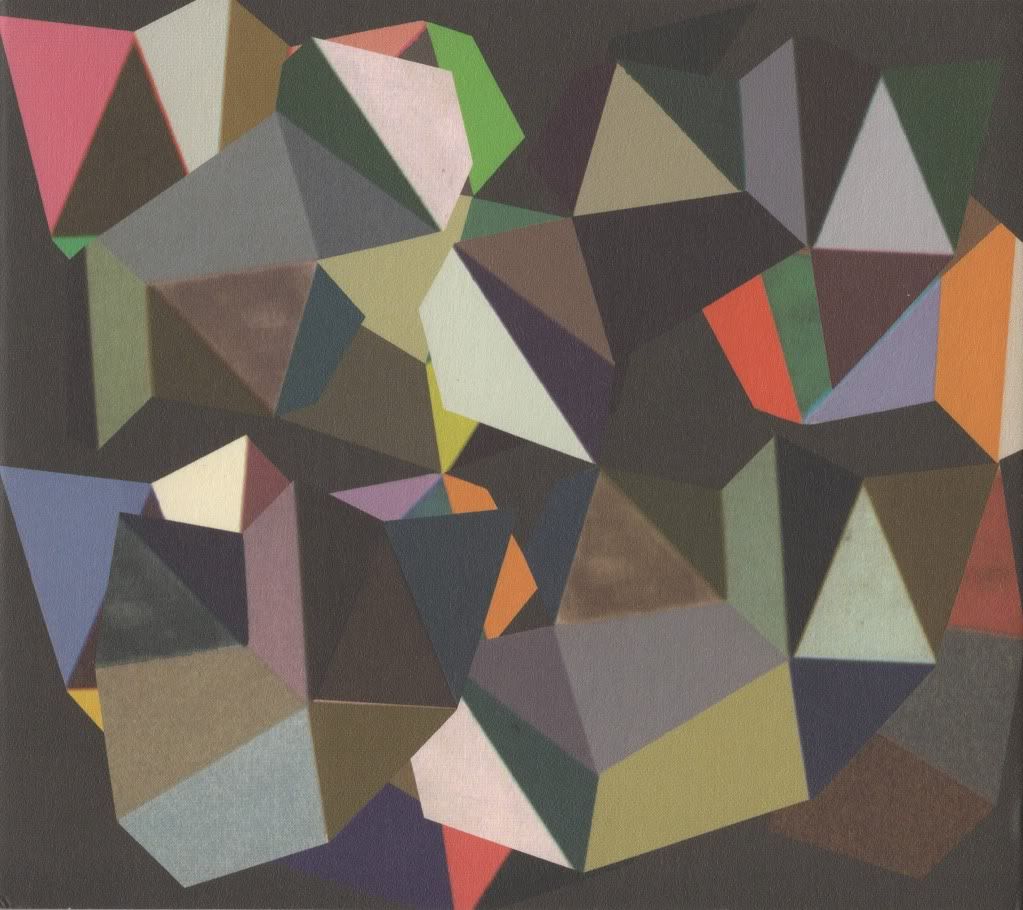
I read about this album while perusing a list of top albums of 2009 on Rate Your Music.  Inspired by the beautiful album art and a perpetual hope that there can still be good new jazz, I took a chance and was pretty well rewarded for it.  To sum up the band's general style, I'd say it's a very modern type of jazz with ethnic elements not unlike those found in places on Robert Wyatt's most recent albums, and owing a pronounced debt to the type of minimalism that Philip Glass pioneered in the 80's.  While this blend will probably do little to satisfy modern hard bop traditionalists or jazz fans hoping for something really avant-garde, it's reasonable to say that the band manages to maintain a delicate (precarious, even) balance within their chosen style and produce a work that avoids most of the obvious pitfalls that style entails.

Sonically, the most distinctive marker of this band's sound is the presence of hang drums played by either or both of the quartet's two drummers.  The instrument's timbre (like a more subdued steel drum) lends an immediately perceptible atmosphere to the music, and the deceptively simple sound of the shifting, pulsing melodic/rhythmic fragments the arrangements call for immediately tie the music to the type of cell construction that the aforementioned Glass and other minimalist composers have now been purveying for decades.   In spite of the obviousness of the influence, the band manages to individualize the concept to their style and the album has a satisfying consistency because of it.

If I had to predict a negative critical assessment of Isla, it would probably be that the band's alto/soprano sax and hang drum sound is too consistent and that the band's style, though incrementally distinctive, is homogeneous within the entire album.  And yet, even listening closely with this criticism in mind, I'm impressed with how often the band manages to surprise and subvert their own formula, even if it's in small and subtle ways.  Every time things start sounding too genteel, some noisy free-leaning squawking like the end of "Su-Bo's Mental Meltdown" comes to break up the niceness (the band uses delay and reverb--uncommon production effects in a lot of traditional jazz--to great effect).  When the melodies on tracks like "Life Mask" get a little too syrupy (many of these melodies owe more to indie rock and pop than they do to anything closely jazz-related), something like "Clipper," with its Latin rhythms, skronking saxophone and kick-ass bassline remind that this is still jazz...at least in some way. 

In some ways, the songs here aren't as melodic as they could be--"Dawn Patrol" and "Line" seem solely focused on the tension-release dynamics reminiscent of bands like Explosions in the Sky--which makes me wonder why it's necessary for the hang drum and sax noodling to sound quite so tonally-centered; couldn't the absence of a domineering melody be a little more freeing?  When the group does focus on melody though, the results can be beautiful, as on "Paper Scissors Stone," which twists quieter late Coltrane moments with minimalistic repetition, or the swelling emotion of "The Visitor," where it's disturbing how a track that verges so closely to smooth jazz can be so enjoyable and dense with details.  If there's something I'd like to see more of without changing the band's core mission, it'd be more looseness and less rigidity in the rhythm section--the saxophone seems to be the only instrument that's allowed to play around, which only adds to the smooth jazz impression.  You know something's wrong when a jazz band has to self-congratulatorily title one of their songs "Improv No 1" in parentheses, especially when that song sounds virtually the same as the composed pieces!

All in all, I'm looking forward to the next Portico Quartet release--I can see them filling a niche really well and making inroads beyond the European market--but I hope their sound continues to develop, just not too smoothly.  It's interesting to me that a group can create a unique sound purely by combining a couple of well-established genres.  If that's the future of music (and especially jazz, where it's "developed" by being cut with every other musical style out there), we could have much, much less enjoyable music to listen to than Portico Quartet's melancholy dreamscapes, but I'll always hope that there's somebody out there whose imagination stretches beyond merely rearranging pre-existing puzzle pieces.

Get it here.

Friday, November 11, 2011

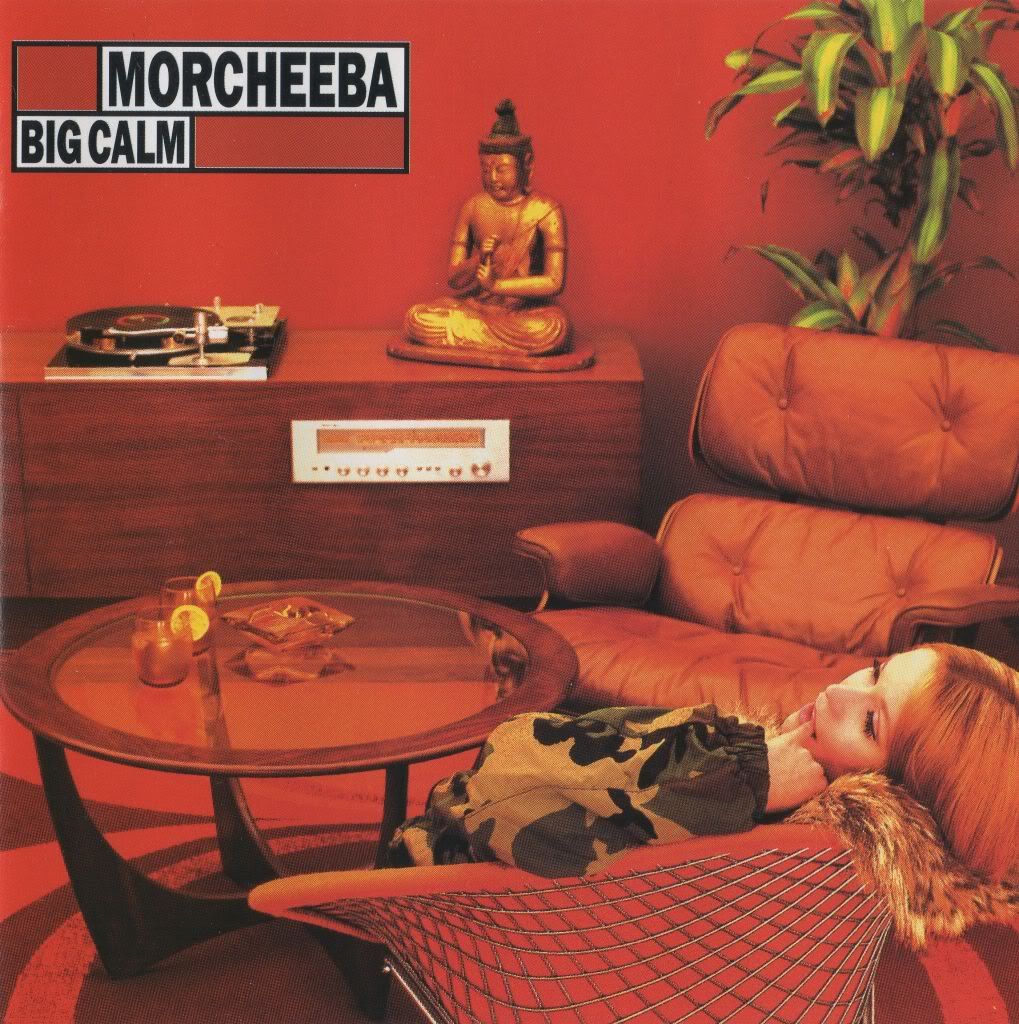
Morcheeba - Big Calm


Morcheeba's second album has been a longtime favorite since I first heard it in a New Zealand airport music shop back in 2001.  Even 10 years ago, trip-hop was on its way out of mainstream popularity, but this album always brings back good memories of my life at the time and holds up pretty well even now that the trip-hop fad has long since expired.  I think it's also another good example of what happens when a large number of good characteristics that pop up disparately in a band's other works align and the result is a thoroughly good album.

Like a lot of trip-hop acts, Morcheeba's status as a "band" is a little nebulous, but less so than some--Paul (DJ) and Ross (guitarist/multi-instrumentalist) Godfrey, and vocalist Skye Edwards.  Personally, I've found the revolving vocalist chair approach of some trip-hop bands a little annoying, and the fact that Edwards' vocals are explored in-depth adds cohesion to Morcheeba as a group.  While there is a bit of session musician anonymity to the wide range of different instruments played on the album, both Godfrey brothers do possess distinctive skills; the beats and samples are both quite tasteful and well-timed, and there are definitely some great guitar moments to liven the album with a more organic energy.

What really sets this album apart from the rest of Morcheeba's (and most other trip-hop acts, for that matter) catalogue is, unsurprisingly, the songs.  Whereas the group's songwriting on other albums sometimes comes across as a little emotionally vacant and assembly-line, the songs here are mostly crafted with more attention, are really adventurous in their eclecticism, and contain some truly compelling moments.  The level of detail on string and orchestral arrangements, scratching as an instrument and chill-yet-upbeat atmosphere is quite apparent on the band's breakout single, "The Sea," but returns in equal measure when the psychedelic sitar/tabla atmosphere breaks open on "Shoulder Holster," and on the darkly seductive "Blindfold."  Edwards' voice is undoubtedly one of the biggest draws here, with its silky smoothness, appealing accent and its tendency to somehow attractively waver off-key (thank goodness this is pre-auto-tune).  I really love how many risks the band takes with its songwriting, taking on reggae/dub in "Friction," more of a country sound on "Part of the Process," less beat-centric balladry in "Over and Over," blues in "Diggin' A Watery Grave," and instrumental psychedelic rock in "Big Calm" (which also features rap vocals) and the brilliantly dramatic "Bullet Proof," which perfectly juxtaposes Paul's beats and samples with rhodes and wailing guitar from brother Ross.  While many bands seem afraid of losing their identity by experimenting with different genres, Morcheeba proves that such experiments can result in the expansion (not abandonment) of a distinctive identity.  The icing on the cake is that the lyrics (not always the band's strong point) are actually pretty strong in places.  Rather than always sounding like vague contractual obligations (though they still do in places), the lyrics like those on the hopeful "Part of the Process" and the exquisite "Fear and Love" ("fear can stop you loving/love can stop your fear/but it's not always that clear") twist common ideas with just enough cleverness and manage to give Skye some emotional concepts to dig into rather than just sounding cool while vocalizing pastiches of unrelated half-baked metaphors and turns-of-phrase.  In many places, though, it's still up for debate whether or not the group even knows what point it's trying to get across.

It's interesting to consider the artistic success of Big Calm in light of later Morcheeba discography--the pleasant-sounding lack of inspiration that would surface on Charango's attempt to recreate this album can already be heard in some of the commonalities between melodic lines and harmonies, and it doesn't take too much of a critical ear to assert that the band's level of emotional investment in the music isn't as high as the desire to make it "good-sounding," but then again that tension usually crops up when you're in trip-hop territory.  The reduction in the dub tendencies of Who Can You Trust and pursuit of pop ideals reached its peak/nadir in the bubblegum trip-hop of Fragments of Freedom, and since 2003 the band has struggled to maintain its identity without self-plagiarizing and falling prey to the reasonable criticism that they don't have much new to say.  Even at their most detached, though, Morcheeba always succeed in offering some mellow listening pleasure--given the current date it's hard to believe they'll ever top Big Calm without completely reinventing their sound, but it'll always stand as one of my top trip-hop discs to reach for as a focused pop palate cleanser right behind the dark experimentation of any Portishead album.

Get it here.

Wednesday, November 9, 2011

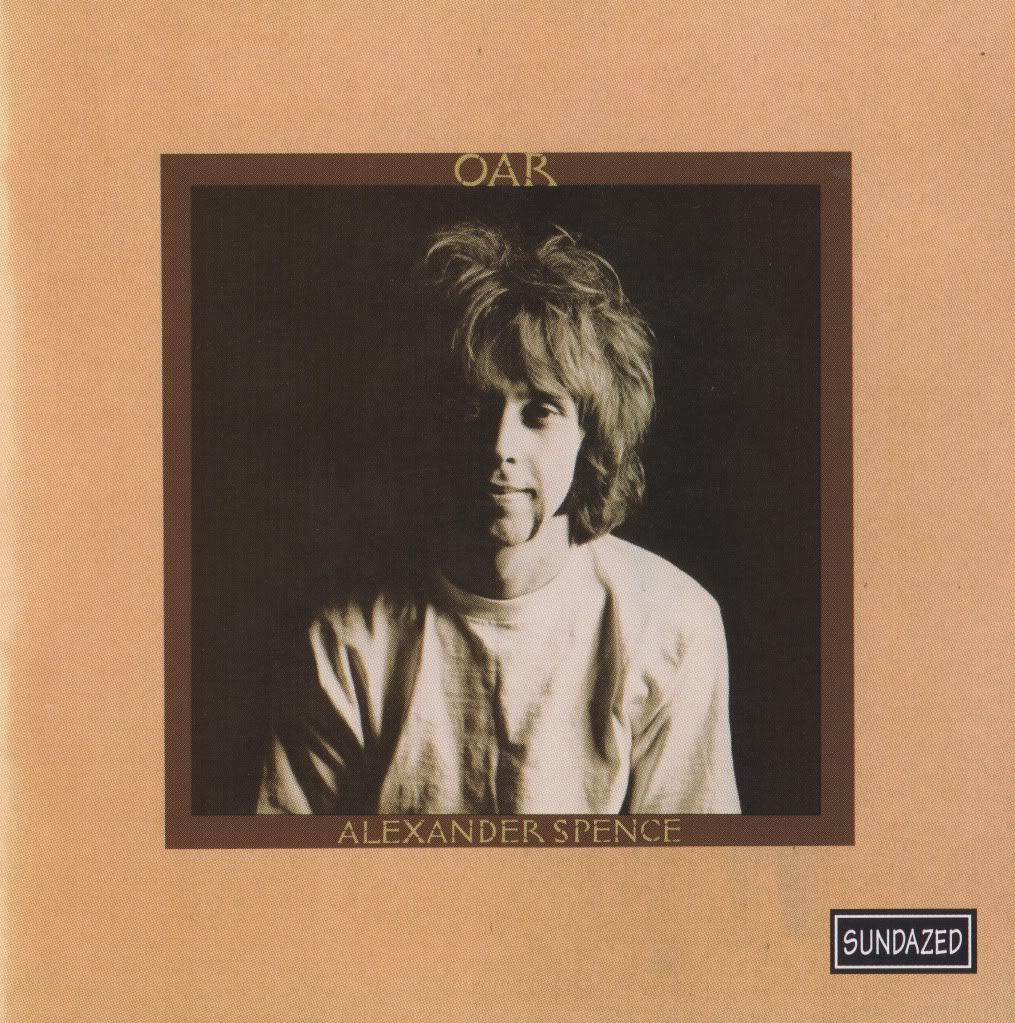
Alexander Spence - Oar


I always thought that Skip Spence was the least technically proficient of Moby Grape's three guitarist/vocalists, but that he always made up for it with unmatched manic energy and that unquantifiable magic in his songwriting that few career songwriters manage to conjure.  Of course, by 1969 and the release of this much-celebrated (but still obscure) solo album, Skip (now billed as Alexander) was long gone from the ranks of Moby Grape.  There's a lot of mythology surrounding Spence's departure from the band, his time in Bellevue Hospital and the genesis of this album, which has generated a sort of Syd Barrett-like reputation for Spence as some sort of acid messiah.  While I think it's easy to project an impression of the man's mental state onto this collection of songs, I think it holds up as fascinating and idiosyncratic work without reading too much into or presuming too much about its creator's psyche.

Probably the album's defining characteristic is that it was recorded in seven days with Spence playing all of the instruments (mostly guitar, bass and drums), which gives the album a loose, tentative feel that occasionally comes across as sort of half-assed and shambling.  What continually fascinates me on repeated listens, though, is that the rushed, uncertain mood sort of fades away like a patina being polished to reveal songwriting that's often full of musical nuances and clever wordplay and not nearly as tossed-off as it seems.  Like Syd Barrett, Spence has a reputation for sort of spontaneously firing great material straight out of his drug and illness-wracked brain, but I think he's a lot more in control than the songs' cowboy ballad structures and sketchy, plodding arrangements would suggest.  Take the tongue-in-cheek mockery of Eastern religion-obsessed hippies of "Dixie Peach Promenade," the hilarious wordplay of "Broken Heart" ("an Olympic super swimmer whose belly doesn't flop/a super race car driver whose pit it can't be stopped") or the more somber punning "weighted/waited" turnaround of the country lament, "Weighted Down (The Prison Song)."  Spence clearly has a knack for sharp satire, a taste for evocative images and an eye for the overall structure and flow that is so crucial to "classically" good songwriting. 

While the album's songs veer toward a folk/country ballad style more often than not, it wouldn't have gained its cult status without some overt psychedelia--the opening "Little Hands" has the album's most hippie-ish message and amply demonstrates Spence's ability to blend droning acoustic guitar with clean electric parts for a unique texture.  This palette reappears on the hazy "All Come to Meet Her," the closer, "Grey/Afro," which drones a little aimlessly but pays off with some cool bass/drum interplay at the end, and the album's psychedelic crown jewel "War in Peace," where Spence's delay and reverb-treated whispery vocals float above a sinuous, repeatedly swelling chord progression that finally breaks open with some understated but well-chosen lead guitar notes.  Spence's delayed vocal sound effects twitter in between blooming guitar strums as the song fades out over a forgivable ripoff of the "Sunshine of Your Love" riff.

I sometimes wonder what this album had been like if Spence had demoed the songs and rehearsed a lot more before going into the professional studio.  It certainly would have smoothed the rough edges on some of the wheezy vocals and tightened up the tendency of the drums and bass to emulate drunken lurching (hear both on "Lawrence of Euphoria").  Then again, I think the ragged feel is part of the album's charming appeal--it's almost like a trick, duping the listener into believing the music is garbage when in reality all of the most important melodic, structural and creative elements are there in droves.  Consequently, the low-key sound means the songs are never really obtrusive despite their psychedelic tinges but anyone really paying attention will be rewarded by Spence's craftsmanship, which comes across as confused muttering if the disc is played as background music.  This deceptively casual veneer has got to be one of the reasons this album is so popular with musicians--it's not easy to pull off, and the minimalism of the album's template means the songs could be (and were) embellished in unlimited ways.  I can think of few other albums quite as effortlessly subtle, and none that do it in quite this way. 

Get it here.

Monday, November 7, 2011

Galactic - Ruckus


Nothing earth-shattering this morning; just some kick-ass funky jams from the group I've seen live the most times--New Orleans' Galactic.  Though I've lost track of them a little since their singer Theryl "Houseman" De'Clouet departed, Galactic has long been a source of a lot of listening pleasure.  Their jams blend funk and heavier Hendrix-like guitar rock with some formidable jazz chops on the part of reed man Ben Ellman, keyboardist Richard Vogel and drummer Stanton Moore.  While they'd been including vocals since their first album, most of their early releases mimicked their live shows, with vocal tunes interspersed with longer instrumentals, some of which were attempts to re-create the band's sense of energy and build-up that makes their live shows so exciting.  On 2003's Ruckus, though, the group made a concerted effort to hone their pop instincts, hiring hip-hop producer Dan the Automator, enlisting the editorial aid of a couple of outside songwriters, upping the number of vocal tracks, and reigning in the run-time of the instrumentals.  The result, in my opinion, is far and away their tightest and most cohesive album.

The biggest immediate difference here is that Stanton Moore's drum sound--always a defining element of the band's sound--has been amped even more, and it's also a lot less jazzy.  A heaviness of the low midrange is also more apparent, with Jeff Raines' guitar and Rich Vogel's synths, organ and clavinette often doubling to give the songs a thick backbone.  While some of the vocal tunes could fit comfortably in the context of earlier Galactic albums (the pounding unison of "All Behind You Now," the clean funky riffing of "Never Called You Crazy,"), the band really explores some new territory in some songs, making use of softer, more soulful sounds (except for the drums of course) and Houseman's pedigree on the sultry "Paint," the downright poppy "Uptown Odyssey" and the left-field General Public cover, "Tenderness."  In other places the band manages to conjure some unforeseen magic by weaving brief vocal passages with mostly instrumental music--"Kid Kenner" is electronic-tinged, trading between ridiculously heavy drum loops and an ethereal vocal section, while "The Beast" merges Moore's weighty drums with the guitar for one of the heaviest beats of the album while the mysterious vocal sort of merges with the groove like an incantation.  They even manage something really strange on the awesome "Gypsy Fade," one of the most interesting songs of their discography--sort of a funk dirge, where the bittersweet harmonica and acoustic guitar somehow coexist with heavy overdrive and synth sounds.

I remember being a little disappointed in the instrumentals when I first bought this album at the time of its release--where was the loose jazzy element that made some of their earlier stuff so epic?  The drum sound, though heavy and impressive, seemed a little too rigid and repetitive, and the songs hardly have any soloing at all.  Needless to say, repeated listens made it apparent that these instrumentals aren't about jamming, but about melody and pop structure.  For the most part, they succeed--"Bongo Joe" blends samples and an eastern melody to great effect, "Mercamon" plays with different textures and riff-based melodies, and "The Moil" has got to be one of the hottest, most exciting songs in the band's entire discography, whereas "Doomed" is a little vacant in the melody department and seems a little superfluous in the wake of the valedictory "All Behind You Now."  Even when not much melody is happening, though, the beat is difficult to deny--it's obviously one of the best things Ruckus has going for it, and it's possible to just feel the drums for the album's duration and still be highly entertained.  My only other complaint is that the lyrics are mostly pretty superficial (the wordplay on "Tenderness" easily trumps anything the band wrote here), but it's not like Galactic was ever about deep messages or wordcraft, and neither is most pop music!

It's hard to believe this album is eight years old, and that Houseman departed the group for health reasons only a month or so after its release.  While the purpose of this recording doesn't really match the loose jamming that live Galactic past and present continues to purvey, the songs and overall sound here is so fresh, tight and catchy it's hard to believe that the album didn't make a bigger splash for the band and they never tried to follow up on the template it set.  I suppose nonstop touring has always been Galactic's bread-and-butter and that albums have been more of a begrudging necessity.   To me, though, this unrepresentative disc still stands as their best studio achievement, not to mention a great reminder of how much can be gained from concentrating on focus and brevity.

Get it here.

Friday, November 4, 2011

In medias res


Seattle's settling in for a long, probably mild (though you wouldn't know it seeing all the people who busted out their scarves when the temperature "dropped" to 60º) winter, and I'm...in the middle of something.

Demo recording for my next album continues at full steam, and the fact that I've got two sessions booked with stone cold recording engineer Justin Phelps (who mastered my last album) in Portland for the beginning and end of December means I don't have much time for fooling around.  As I continue the demanding but exciting task of bringing the often fragmentary sounds and ideas that have existed only in my head into the real world I'm continually confronted by both challenges and delightful surprises.

Something of which I'm constantly aware is that this isn't my first rodeo.  In some ways it was so easy to make decisions on the last album; it's almost easier to try and avoid clichés when your only competition is every other artist out there.  Now my worries are equally focused on my own very modestly-sized canon.  Is this guitar riff/lyric/vocal melody/song style basically the same as something I did before?  How can I make it distinctive?  I'm finding that it's continually challenging to keep things moving and avoid excessively repeating myself, and that eventually the methods for achieving new directions often take some serious thought and concerted effort to expand my perspective.  When you're making a first record, it's hard to imagine how great artists always eventually produce substandard work, but after getting back on the horse again and again it's become apparent that simply running out of new ideas is an almost an unavoidable inevitability.  I suppose it's either a matter of eventually accepting some repetition or considering the extra work part of the fun!

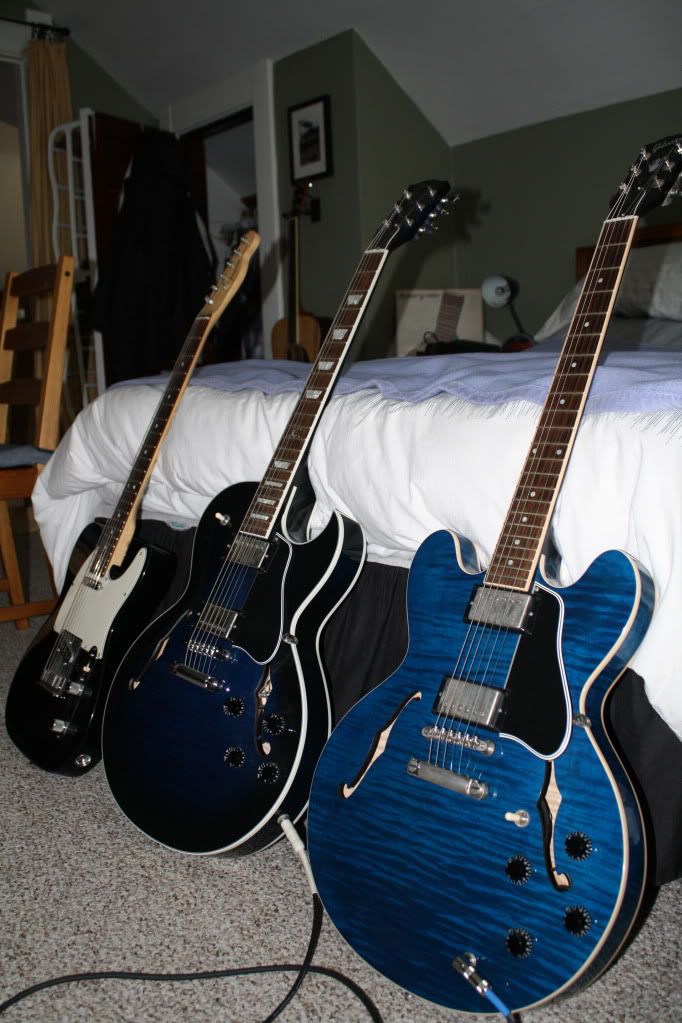
One great way to keep things moving is to expand your palette, which I'm certainly doing--the tentative lineup is somewhere between 23 and 25 songs, many of which are miniatures and discrete song experiments with a range of styles (including ones I've never tried before) and compositional themes.  In addition to adding bass clarinet, to my wind arrangements, there's going to be a lot more electric guitar on this album, as well as some contributions from an extremely accomplished drummer school friend of mine, Portland's Drew Shoals, whose jazz/rock chops I'm hoping to put to good use on several of the album's songs--his late December session is the one for which I'm working hardest to prepare, which means a lot of the electric-heavy songs are in the forefront of my mind.  Though I haven't actually been recording a guitar amp (a little to noisy for the home recording environment) it's been really fun to reacquaint myself with my electrics and remember that, although the harmonic timbres of an acoustic guitar are more organic and rich in their own way, the great part of a good electric guitar/amp combination is how much control you have over the timbre with pickup, EQ, overdrive and distortion parameters.  I'm still planning a number of acoustic-only songs to utilize both the instrument's more delicate and "heavy" (in the way I tried to explore on In Not-Even-Anything Land) aspects, but I think the diversity will be even more satisfying and enhance the eclecticism.

In arranging, one of the biggest challenges has been replacing bass--adding drums and electric guitar, it's inevitable I'll need some kind of bass texture to balance the songs (though I'm still open to not having bass--some great recordings consist of just bass and acoustic guitar), but I really want to avoid having to play much bass myself--I've bitten off enough as it is when it comes to brushing up my woodwind chops.  So, it's been fun thinking about filling the bass necessity with bass clarinet, piano, synth and detuned guitars.  On the detuned guitar subject, I've most recently been working on a two-guitar piece that's extremely counterpoint-heavy with one guitar replacing bass tuned to A# instead of E, which seems to be low enough but is difficult to keep in tune--time to buy some heavier strings.  It's been a funny couple of days, piecing together both parts, with a lot of passing back and forth between guitars to record two-second-long bits, but it's always fun to listen to the whole thing together once it's taken on more of a real shape.  Based on the arrangements I've fleshed out so far, there is some busy stuff happening here!  Another fascinating part of the arranging process is the gradual sense of awareness that comes about the vibe of the whole thing--already knowing I've got a few complex and chaotic songs has me thinking about some ways I can balance out with some space and simplicity in other places; this process goes on well after the songs start showing themselves--there are still things I wish I could change about my last album, which is why I'm trying to give myself more time with this one to hopefully notice a few of the things that will later annoy me and change them before they're permanent.  At least you can always make another record if you're not satisfied with choices you made!  The excitement continues...

Wednesday, November 2, 2011

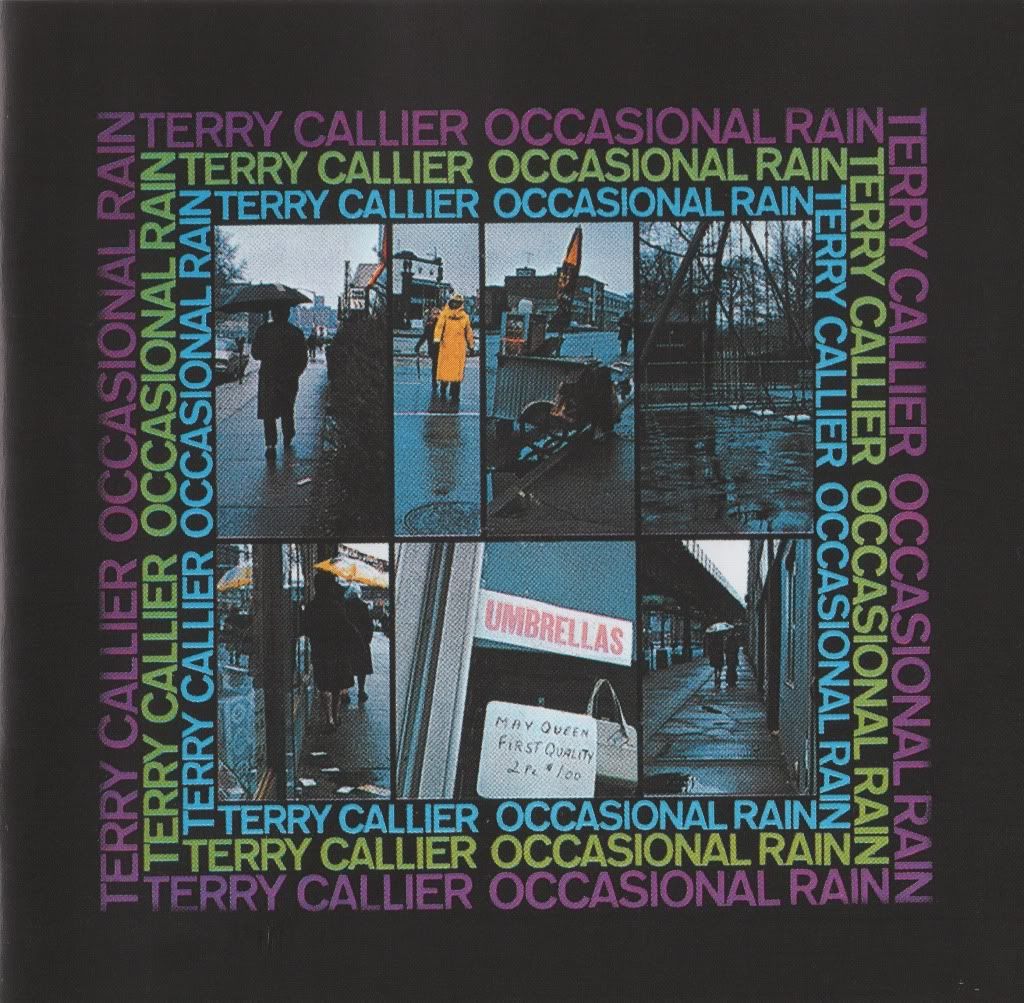
Terry Callier - Occasional Rain


Though it seems most intrepid music searchers choose What Color Is Love for a first taste of folk/soul guru Terry Callier's music (I'm sure it has nothing to do with the fact that there's a naked woman on the cover), Occasional Rain is in my books just as worthy a place to start or continue appreciating Callier's totally unique style. 

On paper, it would appear tough get too excited about this music--it's slow-moving, combines folk and soul with occasionally extravagant orchestral and choral arrangements, and Callier sings about social unrest, heartbreak and mystical insights in a husky baritone that's never far away from a wide, smooth vibrato.  In spite of the fact that people have outright laughed when I played this for them, I've always loved Terry Callier's music.  Maybe it's his deep sincerity or his ability to turn a profound phrase out of nowhere, but once you suspend your sense of being too cool to hear a man channel his deepest feelings into a pop music context, it's actually not that difficult to take this music seriously.  Actually, I don't even know why I'm writing so defensively about Callier's music--this is an awesome album! 

The only vestiges of Callier's folk debut (eight years old at the time of this recording) show up in a broken up blues called "Go Head On," which is used as segue material between the rest of the tracks, which amply demonstrate that something changed for Callier in the interim that suddenly made him capable of fusing black and white music (a bizarre artistic choice that few other black artists seemed interested in making) with an unadorned but brilliantly perceptive poetic instinct in his lyric writing.  Combine his strange amalgamation of styles with the arranging skills of Charles Stepney (of Rotary Connection and later of Earth, Wind and Fire fame) and the brew becomes even more unusual--there's a Burt Bacharach-like schmaltz (especially on things like the bouncy "Ordinary Joe" and pop blues of "Sweet Edie-D" to these arrangements, but somehow it's always justified by Callier's passionate energy and words, which freely leap from one insight to the next without ever abandoning the consistent mood of each song.

Actually, I think in some places Stepney's production is actually one of the best things about this album--he seems to know just what to use and when, like the clean cello arrangement that accompanies Callier's spare guitar and vocal parts on "Blues for Marcus," and the spine tingling organ and twinkling choral interjections (that's Minnie Riperton singing soprano!) that make "Occasional Rain" the most psychedelic thing on the album.  In other places the quality of the choral arrangements is absolutely hair-raising ("Lean On Me" is the best build-up on the album, and an excellent climax as well).  The dusky mood and extemporaneous feel of "Trance On Sedgwick Street" foreshadows the epic grandeur of Callier's forthcoming works--revisiting these songs I can't help but think that Stepney's influence expanded Callier's songwriting imagination in a way that paved the path forward to his most distinctive work.  Occasional Rain is a confidant for those moments of introspection and deep soul, and (for me, at least) it never fails to remind of the smoldering beauty that can be found in those quiet, honest spaces.

Monday, October 31, 2011

Gal Costa - Gal


A long way off from the last MPB I posted, Gal Costa's second eponymous 1969 album is firmly in the Tropicália camp with wild eclecticism, psychedelic production and bristling with the untamed energy that the Brazilian military government found so threatening at the time.  Worlds away from her more chanteuse-like debut, Gal even blows away a lot of the Tropicália competition in terms of craziness--I put it down to Gal's staggering vocal range and personality, which is self-evident on this album from the very get-go.  The syncopated beat and fuzz guitar opening of "Cinema Olympia" drops out almost immediately as Gal's seductive voice creates more of a lounge atmosphere, which soon disappears as well when the beat picks back up--by the time the chorus happens, Gal's hollering about matinee films at the Cinema Olympia over pounding snares and furious clean guitar riffing--heavy reverb and delay gradually accumulate on Gal's vocals as her wordless shouts and moans multiply before abruptly disappearing in a haze of strings...and then it's on to something completely different!  The detuned nylon string acoustic guitar and snake charmer reeds of "Tuareg" veer immediately left, and yet Costa seems to have no trouble keeping up when the bass grove kicks in and the chorus lifts the dark Eastern atmosphere back into pop territory.

It's easy to be impressed with both the stylistic breadth and quality of the songwriting on this album, and a glance at the credits confirms this gut reaction--there's three Gilberto Gil songs and two each from the pens of Caetano Veloso and Jorge Ben.  One of my favorite things about the late-60's Brazilian music scene is how communal and supportive it seems to be--all of these artists not only manage to co-exist, they also push each other into new directions and also manage to create a collective genre that's more than the sum of the bands that make it up.  The sky is the limit for the rest of the songs on this album--Gal ranges from ethnic Brazil flavor on Ben's "País Tropical," unexpectedly into sweeping string-arranged vocal pop (and a host of Tropicália artist name-dropping) on "Meu Nome É Gal" ("My Name is Gal") all the way to batshit crazy on the sound collage cut-up-cum-big band showcase for Costa's rapid delivery and upper-register bends on "Objeto Sim, Objeto Não."  Though I've got a feeling a lot of this can come across as too jumpy and frantic for a lot of listeners, the radical and immediate mood and texture shifts in this album are probably my favorite part--a song like "Com Médo, Com Pedro" snaps between quiet, jazzy strings and Hendrix-like hard rock, and Costa even trades between sexy and psychotic in the same lines!

The fact that these frenetic songs somehow hold together and make sense grouped on the same album has to be credited to both the songwriters and the backing band, who manage to not only keep up with the stylistic swings, but also to masterfully manage a chaotic atmosphere with deft control.  Listening to music like this, it almost feels like psychedelic music was created for the explicit purpose of being given to the already-able musicians of Brazil and mutated into something the British and Americans weren't even capable of imagining.  The eclectic mood, awesome power of Gal's voice, and simultaneous pop/avant garde atmosphere of this album make it probably my favorite Tropicália album, and it's also probably the most cohesively "listenable" (aside from the eccentricity) as well, since there's no obligatory six-minute tape manipulation freakout (though "Objeto Sim, Objeto Não" comes close).   If you check this out and enjoy it, good news--there's a whole lot more great music where this came from!

Friday, October 28, 2011

Keith Rowe - The Room


Now, back to something really weird.  Keith Rowe, formerly the guitarist for house favorites AMM, is probably one of the most influential underground guitarists of all time.  He was one of the first guitarists to pioneer a tabletop prepared guitar technique wherein the instrument is placed flat on a table and manipulated with various found objects to create unusual and unconventional timbres.  After quitting AMM for the second time in 2004 (a move of which he's apparently quite proud), Rowe's solo performance and album release schedule has picked up markedly, as has his further exploration of the possibilities of Electroacoustic Improvisation (EAI), a loosely-defined branch of free improvisation with an emphasis on live computer processing of improvised sound sources.  This, a 2007 solo release, is regarded by some as Rowe's best solo album and was released on Erstwhile Records, which courageously releases an impressive amount of good EAI to a generally apathetic public (awesomely enough, the label also eschews barcodes in their packaging).

While Rowe's contributions to AMM often seem intended to amplify the sounds of his unusual guitar approach into a space (i.e. a room or concert hall), The Room sounds to me much more inward, as if he is listening to the innards of the things producing the sound.  This impression is probably intensified by the fact that Rowe's improvisations sound like they're directly input to the recording device, rather than amplified and miked.  In any case, the result is a single 38:57 continuous track (though there are brief silences between sections) of droning guitar tone, amplified signals and electronic processors, some traces of Rowe's signature radio frequency manipulation, and some visceral textures produced by Rowe's physical manipulation of the guitar's strings.  If that description doesn't sound like much, please be aware that the actual sounds contained on this disc are very difficult to verbalize!  Though this album is much too indie to appear on YouTube, this video of Rowe playing prepared guitar will at least give you a better idea of what some of this sounds like (though I personally prefer not having these bizarre sounds attached to any visual explanations for their origins).  To me, the dominant timbres of the music are a sort of ambient hum (presumably the guitar), and a more rhythmically dynamic, twittering, upper-frequency sort of repetitive digital bleeping.  It's fascinating how the textures overlap in a sort of progressively sliding series of layers, with one tone source pulsing gently while another simultaneously rapidly dances on top, and before you know it one of the sounds has disappeared while your ears were transfixed by another, and a new one is just moving into the picture.

How does this music compare to free improvisation like AMM?  Well, for starters, I think it's not completely discrete--if there was some way to only hear what Rowe was doing during certain AMM performances (I'm thinking especially of the drone-heavy 2001 album Fine), I think it might sound a lot like parts of this album, despite Rowe's written assertions that it's an attempt to go somewhere completely new.  In other ways, though, it's much colder, more alien and less organic than AMM's albums, conjuring a claustrophobic atmosphere (perhaps there's a connection to the album's title and the feeling the music conveys) and a sort of digital industrial feel that never really occurs on AMM albums.  Not that it's a particularly bad thing--I vividly remember on my first listen feeling (perhaps around the 22:30 minute mark, when Rowe starts scraping the strings beneath a piercing electronic tone) a powerful sense of unease and a strange, alien emotion that no other music has ever made me feel before.  Though it's far from the warm-and-fuzzy elation that most listeners hope to achieve from an album, the experience remains ingrained in my memory as an inspirational example of music's unlimited emotional potential, and as a sort of revelation (how often do you feel a feeling you've never felt before, right?!).  Don't get me wrong--Rowe's sometimes laughably-strident views on musical aesthetics (which seem to come with the territory of free improvisation) inform this music with an uncommon level of academic seriousness--but attempting to deny the music's very real emotional power in the name of disagreeing with Rowe's artistic choices seems to unjustly disregard his contributions to the ever-growing palette of potential moods and emotions available to listeners and musicians alike. 

It's hard to really assess the quality of music like this--it's so fundamentally different structurally and in its aesthetic goals that even when talking in terms of elemental sound, it's hard to separate what's "good" from "bad," and the subjectivity of personal preference that's present with all music becomes a starting point rather than an ultimate conclusion.  Despite Rowe's professed anti-virtuosic method, though, he clearly (in my ears, at least) has a flair for space, flow and tone/timbre choice that few other improvisers do.  Though I think The Room occasionally suffers from the sort of repetitiousness and aimless structure that understandably pops up in a lot of free improv, the frigid atmosphere and occasional moments of revelation (like the digital explosion at about 24:25) make it a much-appreciated part of my collection (though I'm not sure I currently have the interest to sustain a lot more similar additions).  Support some fringe indie music facilitators and grab a copy from Erstwhile!

Wednesday, October 26, 2011

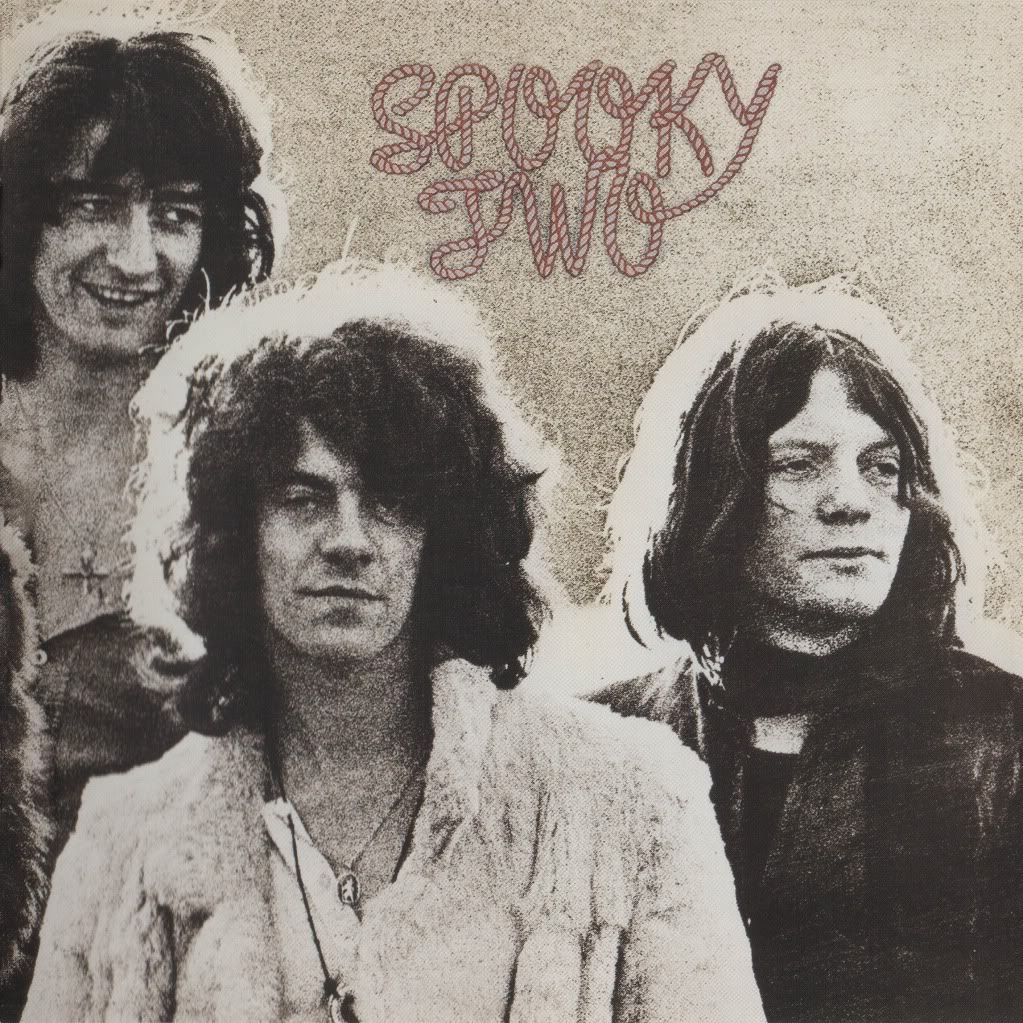
Spooky Tooth - Spooky Two


Spooky Two's 1969 sophomore effort definitely stands as one of those albums I've listened to so many times that it gets more difficult to back away and think analytically about it.  Revisiting it, though, I'm reminded just why I've listened to it so much--it's pretty awesome.  While late 60's hard rock isn't everybody's flavor of choice in 2011, for those who enjoy it I can think of few forgotten bands who do it as well as Spooky Tooth.

What I notice most re-listening to this is how well everything comes together to make the album comprehensively strong.  In the end, it's not really an album where the quality of the songs carries the music past the performances or the production masks a lack of passion or attention to detail in arranging.  Rather, all of these elements are paradoxically workmanlike yet outstanding in the way they complement each other and the overall cohesion of the album.  Take, for example, the lead-off "Waitin' for the Wind," (I love how musicians are never satisfied with just dropping the "g" when singing; they have to make sure the word ends in an apostrophe in the song title, even when the words aren't actually in the song).  It's the perfect opener--30 seconds of drum beat that gets some delay slapped on it around the 20 second mark, and finally a bass/organ riff that sounds like the heaviest thing you've ever heard.  Dual vocalists Mike Harrison and Gary Wright start singing about...well, nobody really knows what the hell they're singing about on most of these songs (something about the wind giving the narrator life advice), but it sounds awesome because they sing with such undeniable conviction.  For such a hard-rocking song, there's hardly any guitar--just on the chorus, where heavily-reverbed harmony vocals lift the energy above the already-driving main groove.  Such is the strength of this whole album--the band hits the sweet spot in all areas without really standing out in any one of them.  As far as I'm concerned, that's as worthy a musical goal as any, and a thoroughly excellent album is probably one of the hardest achievements to rack up.

Sound-wise, Spooky Tooth sets themselves apart from the rest of their UK contemporaries by slathering their sound with heavy gospel influences (the aforementioned reverb, female backing singers and a whole lot of keyboards) and maintaining a fine balance between eclectic songwriting and a cohesive, recognizable sound.  The gospel influence comes through strongest in "I've Got Enough Heartaches," where the backing vocalists share center stage as much as Harrison and Wright, and to a somewhat less classifiable extent on "Feelin' Bad," where the band wrings unbelievable heaviness out of the production and low piano keys.  Elsewhere, though, the band diverges quite successfully into poppy country rock, catchy hard riffing, anthemic folk rock, and heavier vestiges of the psychedelia of their nearly-as-formidable debut, It's All About Spooky Tooth.  Principal songwriter (and the band's only American member) Gary Wright (yes, that Gary Wright) certainly deserves credit for bridging so many styles, even if he now feels embarrassed by his falsetto singing.  On that subject, half the fun here comes from the juxtaposition of Wright's ridiculous head voice and Mike Harrison's awesomely thick, manly and soulful pipes (he's got one of the best rock voices I've ever heard, somehow able to out-Steve-Mariott Steve Mariott, at least in the vocal department).  On the subject of dual lead singers, nowhere is this more righteous than on "Evil Woman," (no, not that "Evil Woman"), probably the album's most epic cut.  The song also features what's really the only guitar solo on the album, which reminds me of my original summation of this album's balance--Grosvenor's solo is so wickedly grimy that it proves his chops in one fell swoop, yet the band as a whole acknowledges that the rest of the songs don't really call for solos and refrain from any excessive lead parts.  It's this restraint that I find most inspiring about this album--the ability to recognize what's actually best for the songs and the overall album isn't an easy one to acquire, and it elevates these guys from a second-tier group of rock journeymen to a level of judgment few big stars ever even reach.

Sadly--if predictably--the band's creative balance didn't last, with The Last Puff proving Harrison couldn't really hold up the whole band without Wright's vocal counterpoint and songwriting, and Witness showing that the duo's chemistry alone couldn't really make up for less-inspired writing from Wright and the absence of some original members.  As it stands, Spooky Two is a treasured example of everything coming together for a group, and--perhaps even more importantly--it's a glaring reminder that the conservative collection of mega hits packaged and branded by music and radio corporations as "classic rock" isn't doing us any favors when it comes to revealing the totality of good music that was produced during the period.  Shame on them for making us work so hard, but the effort is worth it when you find albums as good as this!

Monday, October 24, 2011

Michael Hedges - Aerial Boundaries


Now here's an artist who never fails to evoke conflicting reactions from me, both emotionally and intellectually.  Though it'd be easy to write Hedges off based purely on his record label (Windham Hill, epicenter of the dreaded New Age musical movement and all of its paradoxically limp-wristed perviness), to do so would be to ignore a guitar player who accomplished considerable innovation and influence in his field, as well as a composer of undeniable ability.

That Aerial Boundaries is still Hedges' most known album is undoubtedly due to the brooding title track, which is a well-realized representation of the uniqueness of his spin on the acoustic guitar and also a tight example of his trademarks as a composer.  Technically, Hedges' brilliance seems to lie in his exploration of producing sound by striking the strings not over the sound hole (the traditional location for flatpicking and fingerpicking) but on the fretboard itself--"Aerial Boundaries" combines traditional picking with a repeating figure on the fretting hand and a series of percussive interjections higher on the fretboard (on the lower strings, er) by Hedges' right hand.  The resulting sound (though it almost always necessitates unconventional open tunings tunings to make up for how busy the player's hands are) approximates three or more distinctive parts happening at the same time.  Though plenty of fingerpickers have achieved breathtaking counterpoint and polyphony by abandoning one pick for five, it would seem that no one did it in quite this way before Hedges came along.  While I probably wouldn't say Hedges has influenced me technically as a guitar player as strongly as he has other recent players like Andy McKee or Trace Bundy, I really love the way his style plays fundamentally with the incredible dynamic, tonal and harmonic range that's waiting to be discovered in the acoustic guitar.  It's amazing how many textures and sounds you can get out of a guitar by sounding it in a different way, or how much those alternate techniques can transform the way the instrument sounds when the recording or amplification volume is cranked up--this kind of fretting-as-note-striking shows that a note's decay is really a lengthy window even when the string isn't actually struck over the sound hole.  Hedges manages to avoid his innovation becoming novelty by supplementing it with more standard finger picking and even strumming on songs like "Bensusan."  Probably my favorite tracks are the more percussive, upbeat ones, like the brooding "Ragamuffin" and the funky jabbing of "Hot Type."  Also compelling is the more psychedelic "Spare Change," which uses reverse delay to further expand the interlocking nature of Hedges' playing.

While it's easy to applaud Hedges' technique and his ability as a composer to keep his pieces moving with distinctive sections and developing structures, I can't say that he's gifted or even proficient when it comes to melody--though some of the songs have memorable chord changes, the only one with a hummable melody is a cover of Neil Young's "After the Gold Rush," on which the melody is ironically carried by the fretless bass, not Hedges' guitar.  Perhaps it's my general distaste for the New Age "house flavor," but the gentle harmonic palette becomes cloying in my ears, especially on songs like the embarrassingly-titled flute/guitar/bass trio "Menage A Trois," which is so lacking in distinctive melody that it seems to beg to stay in the background at some New Age meditation party.  In fact, there are very few songs here that manage to break out of the tunefully tonal but indistinct haze that Hedges' composing generates.  While it's certainly "pretty," it seems that the pinnacle of pretty music--melody--is conspicuously absent, which to me almost defeats the purpose of trying to make pretty-sounding music.  From what (thankfully) little New Age music I've heard, this seems to be par for the course--it's as if the first goal of these artists is to make background lifestyle music that's unfocused enough that you can easily ignore it, which is horrifying to me as someone whose greatest joy comes from subsuming myself in complete attention to some beautiful music.  It seems like an unhappy coincidence that Hedges pioneered such a cool technique but used it to make New Age music--this kind of percussive attack just begs for more aggressive music, but it's also disappointing to see that most of the man's followers seem content to follow in his footsteps as a composer as well.  This music is worth hearing for the awesomeness of Hedges' guitar playing, but I suggest you crank the volume up when you do, so you can dive into the guitar playing, overcome the terribly quiet sound of the early CD issue, and avoid the vapid pseudo-emotion that many of these songs attempt to convey.