Monday, October 29, 2012

Cheap Seats 8: Tyler Fortier Interview

Today we've got the second installment of the handful of interviews I conducted for the Cheap Seats series.  I've written about my old school friend Tyler Fortier's (Bandcamp, Facebook) music before, and back in September I posed to him a series of questions similar to those in the last interview.  Just as all of the other interviews seem to have turned out, Tyler's offers a unique perspective and an emphasis on some of the constant challenges independent artists face and strive to surmount (with many of which I can seriously identify) on a day-to-day basis.


As a musician who's been doing this for a number of years, how have things changed across your career, both in terms of how you make and release your music, and in how you've attempted to promote and advance it?  What are some of the most valuable lessons/tricks you've picked up?


Over the years I have become more and more self-sufficient.  Each new project has a lower cost attached to it.  Releasing music is easy.  Promoting music is tough.  I'm burnt out and can't imagine releasing anything anytime soon.  It's a lot of politics.  It's all about who you know.  It's like looking for a job--sending resumes (press kits) to every city your traveling to.  There is probably a 10% success rate in that.   And out of the hundreds of people who read a review or see your picture or are even slightly interested, maybe one person will go out of their way to come to a show or go listen to music online.

Recently I've tried releasing digital singles because I wasn't having as much luck selling CDs as I wanted and going digital is a good way to keep overhead low.  I hate digital though so it's hard for me to do that and I probably won't continue releasing anything just in a digital format.  


What's been the most difficult challenge to overcome?


Performing intimate lyrical based music in loud and obnoxious settings for people who don't give a shit.


What's the best way to convert a new fan?  How do you measure your progress--record sales, live show attendance, Facebook "likes," etc.?


I'm not sure.  The best thing is seeing return people in your audience though, I know that.  I don't measure my success because that's a fine and blurry line, but having people that were at a show 6 months ago come back the next time and say they've been loving the CD they bought is as good as it gets.


In your experience, what does it take to break beyond a fanbase of friends and family to one populated by people solely interested in the music?


That's a tough one.  I'm not sure.  There has to be an emotional connection made somewhere but as to how to do that, I'm still trying to figure it out.


How would you describe the Eugene music scene?  How do you book your shows, especially when it comes to traveling outside your home base? At this point, would you say you're most successful regionally or online/globally?


There is a lot of good music in Eugene.  Mostly empty venues though from what I can tell.  It seems like everyone is having the same battle with getting people out to listen.  To book shows, I research a lot on the internet and then send emails or call depending on the venue.  I'm probably most successful regionally, though that doesn't mean too much.  I do appear to have a small fan base in the Netherlands area as well, judging from online sales.  Great bands out of Eugene: The Royal Blue, Leo London, Kingdom County, Tara Stonecipher and the Tall Grass, Scott Austin, Mike Surber, Beth Wood, and.....so many more but my mind just went blank.


What does it take to sell an album?  What sells most for you, physical media or downloads?  For you, are recording sales the goal, or are recordings more a piece of the overall puzzle in terms of promoting the music?  Have you reached a point where the recordings pay for themselves, or are they a necessity you're willing to support yourself?  Are people actually willing to pay for the music, or do they expect it to be free?


I'm not sure what it takes to sell an album.  I sell most of my albums at shows.  Out of town shows, that is.  I can't sell a CD in Eugene to save my life but I sell a good amount when I travel.  I don't know why.  Recording sales are not my goal, but I'm proud of my work and I want people to hear it and like it, and I want to be paid what I think I deserve for the work I and everyone who contributed put into it.  People do expect music to be free these days.  I feel like a sex worker most of the time, folding up my tips after playing with extra emotion because I needed to make some money tonight and maybe if I just sing this part with lots of gusto, I'll make an extra $20.

How important are production values when it comes to your recordings?  Your albums have spanned from lo-fi home recordings to more produced, professional products--do you think it's important to fans to have a polished, professional recording, or are they willing to sacrifice production values for quality content?  Do professional production values manifest themselves in the finished product in a way that justifies their cost?


Production is the most fun part of making music for me.  I'm always plotting the next big idea even when I'm still in the writing phase.  It is very important.  It is opening yourself up, connecting with a song on some unexplainable level, and understanding every word, guitar strum, and breath to the point that you know exactly what the song wants, what the song needs, and how to make that song sound how it was meant to sound even from the point of its conception in the pen-and-paper stage.  I think certain songs need certain things and whether it is lo-fi or polished, the song will reveal itself to the producer in time.  Fans or music listeners don't need anything.  They just want a song they like and they don't care how it's done or what work went into it.  People who like to dance want a fun beat to move to and people who like lyrics want to be challenged existentially.  I think it is literally that black and white for a majority of “music listeners.”


When it comes to promoting an album, what avenues seem the most successful in getting the music heard?  Do you do everything yourself, or do you get help from anywhere?


I haven't had much luck in promoting my albums.  Local radio here has been super supportive, especially 89.7 KLCC NPRNinkasi Brewing has been a big supporter as well and I have had great support from The Eugene Weekly.  As far as getting my music out to the masses though, I haven't had luck.  Facebook is an awful way to do this, but it is the easiest way so I rely on that sometimes because I don't have time to do anything else.  I think management is key for any serious musician.  Everyone needs some knowledgeable cheerleaders on their team.


When do you decide it's time to head back into the studio? When you've got all the songs written...when it feels right creatively...when you've got ideas but not necessarily songs?


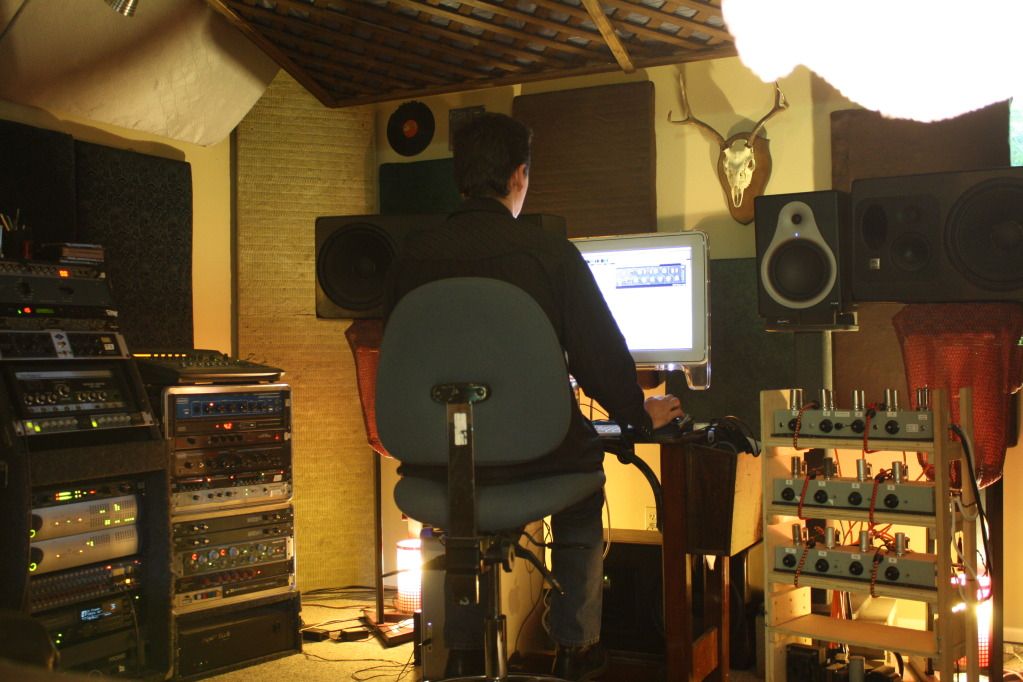
I'm always in the studio (aka the spare bedroom in my house).  This is where I record all my projects as well as projects for my clients.  Sometimes I will record a song when I deem it “ready” or sometimes I'll record a song when I am stuck melodically or lyrically with it.  Most of the stuff I don't keep, but I am always recording songs and thinking as a producer--how can I construct them to reach their highest potential?  In the last week I've been working on seven songs that I have recorded in the last two-and-a-half weeks (two of which are mine).


What keeps you going in the tough row-to-hoe that is the independent music world?  Where's your inspiration coming from right now?


I don't have inspiration or hope as an independent artist, but I do have inspiration as a songwriter.  The desire to always be better and never being satisfied with anything I do has been my inspiration and fuel for the last few years.


Do you have any advice for aspiring musicians?


Don't let your ego get in the way and don't take anything too personally.


What have you been listening to this week?  How do you seek out new music?


My playlist this week has pretty much been:
-Joe Pug's first two EP's, a record by Dolly Parton, Linda Ronstadt, and Emmylou Harris called Trio, John Prine - Common Sense, Van Morrison - Saint Dominic's Preview, Elvis Costello - Armed Forces, and in my car stereo is Saves The Day's first record: Can't Slow Down

.

What's on the horizon for you musically?


I'm putting my music on the back burner and starting to work specifically with songwriters on their songs in the role of a producer and mixing engineer.  My debut as a producer was with Mike Surber, who released is debut full length this past June.  I'm currently working on Scott Austin's first full-length, as well as some EPs for three other clients.

Cheap Seats Part 1
Cheap Seats Part 2: Non-Commercial Music 
Cheap Seats Part 3: A Day in the Studio 
Cheap Seats Part 4: The (Un)Happy Accident 
Cheap Seats Part 5: Mix Mix, Stir Stir 
Cheap Seats Part 6: Kickstarter Campaign
Cheap Seats Part 7: Alicia Dara Interview

Saturday, September 29, 2012

Cheap Seats 7: Alicia Dara Interview

As part of the continuing Cheap Seats series I've conducted a handful of interviews with independent artist friends from the Pacific Northwest and beyond.  So far, this series has focused on my own experiences making and promoting independent music, but the reality is that each artist interacts and responds to the challenges and necessities of the independent music world in his or her own unique way.  In this first interview, conducted in early July, I'm excited to feature Alicia Dara of Seattle-based bands The Volcano Diary (with Gus Palaskas and Dave Bush) and Diamondwolf (with Glen Cooper).  Alicia has been an active independent musician for over 15 years and brings a wide-range of experiences in the music industry to her ever-evolving mission as an independent musician.

Alicia performs with The Volcano Diary

As a musician who's been doing this for a number of years, how have things changed across your career, both in terms of how you make and release your music, and in how you've attempted to promote and advance it?  What are some of the most valuable lessons/tricks you've picked up?


The most awesome, fantastic, and nightmarish event in my career was the advent of the internet. I started way back in 1997, before FB, Twitter, Wikipedia, Reverbnation, and MySpace. There was email and there were websites, which weren't very interactive and tended to crash while listening to MP3's (remember them?) if you stayed on too long. Before that I had been making cassette tapes of my songs in my tiny bathroom on my friend's 8-track recorder. That bathroom was fully tiled and created the best echo/reverb effect ever. I'm still trying to find a plug-in effect that can beat it!

I was raised by classical musicians who never touched a computer in their lives, so I had absolutely zero tech background to draw from as I slogged my way through the maze of the internet, and the various ways that the music business was working to stay one step ahead of it. I had had some radio play locally and on a few stations on the West Coast before internet radio but I was pretty frickin' pleased to discover there was some demand for my music online, on the early stations like mp3.com.

Once mp3.com took off it was like the gold rush; everybody wanted a piece of the action, and the industry responded accordingly. I started making records on digital recorders in people's home studios, because all that recording equipment was suddenly affordable. I like being in the studio a lot, but I work quickly, and it was tough on my patience back then while everyone was learning these new programs called "Logic" and "QBase."  I was quite grumpy during that era.

These days when you Google my name you can find over 6 million results, which on a good day makes me feel like I'm getting somewhere. But the reality is that since music became "free" I know very few musicians who are able to make a living at it. I am fortunate enough to pay the bills through a combination of teaching, singing session work (adding my vocals to commercials and other people's music projects), and soundtrack work for film, TV, and Internet stuff. Live shows are my passion but they pay so little unless you're in a national touring band. Record labels--contrary to popular belief--are still very much alive, and they are the ones that sign and promote the bands you've heard of in the last 10 years. They also act as filters for music, though in many cases their taste is at best questionable and at worst horrific.

There are 2 things that I've learned over the past decade. The first is my great strength, which is that I can walk away from anything. If you mistreat me, if you disrespect me or my bandmates, if you do not honor the contract I signed or if you change it without informing my lawyer, I will take my toys and go home--and I will never look back. This saves me some headaches.

The second is that I am able to see into the future a bit and know which projects are worth my time and which ones aren't. I value my time.  Granted, I get paid a great big hourly rate to sing on commercials, and I do that even when I don't really want to. But I also know in my soul how short this life truly is, and I (mostly) refuse to spend it on shit that doesn't make me feel sublimely on fire.

What's been the most difficult challenge to overcome?


The biggest challenge to overcome was adjusting to the lifestyle of being an independent artist. It took awhile, and it was a bumpy ride. Making music is its own reward; you have to love it more than being loved. Everyone around me was telling me to go back to school, get a degree, learn a trade or skill that would bring a mountain of cash to my door. But I look around at the world and I see an awful lot of lost souls with fat paychecks. I don't envy them one bit.

Wednesday, September 26, 2012

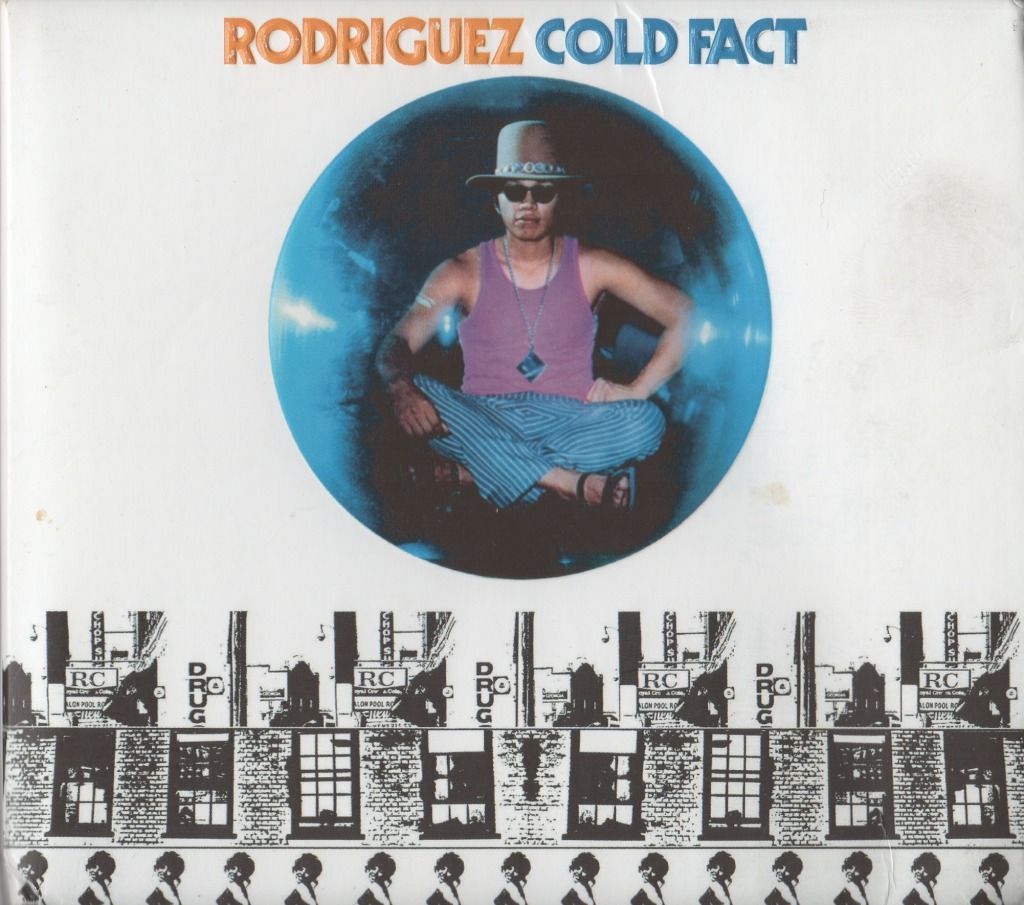
Rodriguez - Cold Fact


I first heard Rodriguez's 1970 debut Cold Fact back in 2008 at local record shop Sonic Boom--ironic, considering the store's typical "KEXP: The Record Store" selection (to be fair, I've found some great jazz classics there, as well as those epic Betty Davis reissues).  These days, Rodriguez is getting all kinds of press for Searching for Sugar Man, a new documentary detailing how the singer disappeared in the 1970's after recording two albums only to find out decades later that he'd become a star in South Africa and nobody knew where he was or what became of him.  It's a fascinating story--so many quality artists disappear without ever achieving recognition in their heyday (or ever, for that matter), so it's pretty cool, if bittersweet, to see that someone actually was appreciated, even if it took decades for his art to be recognized.  It's also nice that Rodriguez is actually still around to get his due (as well as tour and actually make some money from his music). 

As for the music, it must be said that Bob Dylan casts a long shadow--Rodriguez is clearly heavily influenced both by Dylan's songwriting as well as his vocal delivery.  "This is Not A Song, It's an Outburst: Or, The Establishment Blues" is an awkward attempt at a talking blues in the style of "Subterranean Homesick Blues," there are several kiss-offs in the style (with added venom) of  "Don't Think Twice, It's All Right" ("Forget It" and "I Wonder," for example), and Rodriguez is one of legions of singers to adopt a mid-60's sneering Dylan inflection (though his underlying vocal talents are formidable).

To write off this artist for being indebted to Dylan, though, would be to pass judgment before giving his craft a chance.  Besides, there's nary a post-60's artist who's not influenced by Dylan in some way--one of the greatest things about him is that his music showed aspiring artists that it was possible to make pop music that aspired to greater artistic depths in terms of songwriting, lyrical aesthetics and subject matter, without abandoning mainstream appeal.  While Rodriguez doesn't necessarily create a completely unique style for himself, his songs exude careful construction.

There's plenty of great one-liners (like the "you're the coldest bitch I know" conceit in "Only Good for Conversation") and Rodriguez's lyrical vision is often both emotionally direct and open to multiple interpretations.  Coming in well after the flower power movement, there's a dark, disenchanted, urban and undeniably cynical edge to a lot of the words and attitude, as heard in the unsettling "Gomorrah (A Nursery Rhyme)" and the brilliant "Hate Street Dialogue." What's more, Rodriguez has a real knack for concise, melodic song structures, a characteristic that's amplified by some great production choices--from a wet reverb on most of the vocals to the orchestrations that back many of the songs to the occasional psychedelic flourish like overdriven guitar or delay, the arrangements add tasteful depth to songs that probably could have stood alone with stripped-down arrangements.  These, of course, exist in ideal harmony on the album's flagship track, "Sugar Man" a drug song that any songwriter would kill to have penned--from the hair-raising melody to the way it ambiguously seems to both endorse and caution against drugs.

Rodriguez was probably never destined to be a huge star, but his abilities are undeniable and this album is a recommended addition to the collection of any Dylan fan who's looking for other artists of a similar caliber and style.  In light of the continuing Cheap Seats content posted here, I think a story like Rodriguez's is another piece of the puzzle that answers some questions and probably raises even more--people just might be out there listening, but you may never know.  Is it worth it to make music even if no one recognizes it in your day?  I like to hope there will always be thoughtful listeners out there just waiting for the right circumstances to lead them to music like this.

Get it here.

Friday, September 14, 2012

Cheap Seats 6: Kickstarter Campaign


I've started a campaign on Kickstarter.com, a website that helps independent artists like myself fund creative projects.  As described in the video above, the campaign is meant to fund the CD duplication and promotion of my new album, Cheap Seats at the Cartesian Theater, the professional recording of which was funded out of my own pocket.  There are some fun rewards, starting with digital and CD preorders of the album.  Any contributions or help in spreading the word about the album and Kickstarter campaign would be greatly appreciated!  I've put a lot of work into making this music the kind of stuff that readers of these blogs will enjoy, so I hope you check it out and find the money and effort I've expended worthy of a small contribution in exchange for the finished product, and help support more music to come!

More Cheap Seats content to come, including some interviews and thoughts on the brass tacks of independent recording.

Cheap Seats Part 1
Cheap Seats Part 2: Non-Commercial Music 
Cheap Seats Part 3: A Day in the Studio 
Cheap Seats Part 4: The (Un)Happy Accident 
Cheap Seats Part 5: Mix Mix, Stir Stir

Monday, September 10, 2012

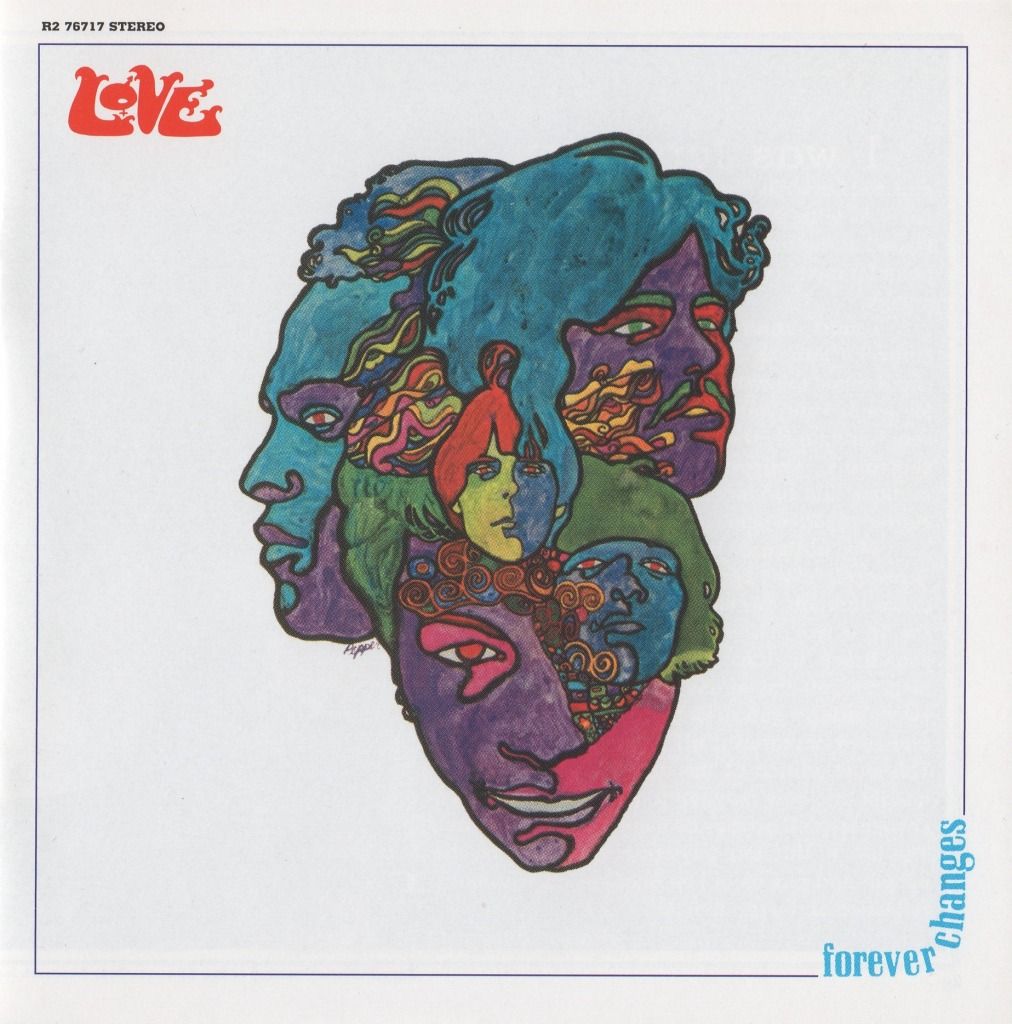
Love - Forever Changes


The past year has been so busy with recording and evaluating my own music that I've had much less time to listen to other people's sounds, which means I've focused a lot more on the "new" music I'm finding instead of revisiting old favorites.  When I do get around to albums I've heard many times, the experience is often quite illuminating.  Especially after doing so much critical evaluation of music on this blog, I sometimes realize that my "5 star" albums, upon relistening, aren't necessarily free from the kinds of things I might label as "flaws" in other music, and that ultimately, designating something "as good as it gets" rests on a certain feeling of affection or nostalgia toward the music, or at least an assertion that the great things in the music are so good that any "flaws" come across more as endearing idiosyncrasies.  In other words (and yet again), it's all subjective!  The fun part about analyzing music in writing is the disjuncture between personal preference and the fact that yes, we actually can (and should) identify and judge specific characteristics in the music that justify how "good" we say it is, but also that "good" will always be individual, and reading music reviews and blogs is ultimately most useful as a way of pairing others' tastes with your own to discover music you might enjoy. 

Forever Changes is one of those albums that winds up on innumerable critics' top lists, but has somehow kept a much lower mainstream profile in comparison with its contemporary "classics."  You never hear any Love songs on the radio or in movies etc., and you'll be lucky if you hear anyone talking about them outside of musicians and critics.  And yet, pick up Forever Changes and give it time to work its magic and you'll most likely understand why it quietly persists as a milestone in psychedelic folk-rock and as one of the best albums of the 1960's.

Like many great albums, Forever Changes is so great because it's often a bizarre combination of unquantifiable elements.  There's the fact that it's a much mellower affair than Love's previous two albums--the more garage-like electric sound of Love and Arthur Lee's aggressive vocal style on Da Capo mostly replaced by acoustic guitar and orchestral textures--and yet it's still insidiously edgy.  There's the album's unique twist on psychedelia, which often takes the form of hard-panned instrumental tracks (the nylon-stringed acoustic is so far to the right it's almost gone!) and brief additions of reverb as well as arrangement choices like having the background singers say a different word at the same time.  There's Arthur Lee's obvious magnetism as a front man, which twists together the role of a sort of tormented seer with a dark fragility, surprising poetic capabilities, an ability to distill the countless clashing emotions of the 60's into songs that are simultaneously emotionally gripping and ultimately ethereal, as well as being a larger-than-life historical legend, somehow more than fulfilling Da Capo's thwarted potential here but quickly unraveling into mental and artistic instability (he was reportedly sure his death was imminent during the creation of this album) in the following years--still capable of creating good music but never coming close to reaching the same level of insight (especially lyrically) repeatedly on display here.  And finally, in spite of Lee's dominant persona, there's the fact that the band was undeniably a collaboration, that Bryan MacLean's songwriting contributions and classical guitar contributions are as important to the album's success as any of the other elements, and that Lee's decision to disband the Forever Changes lineup soon after the album's release was a terrible blunder. 

The distinctive characteristic that most people note about Forever Changes is the inclusion of orchestral arrangements, especially prevalent on the MacLean numbers--the balance is sweet and delicate on "Alone Again Or," "Andmoreagain" and "Old Man," songs whose optimism counterbalance some of Lee's desperate worldview with detours into romantic euphoria.  Elsewhere, though, the strings and horns just as aptly provide a creepy, unsettling edge, as on the paranoid "The Red Telephone" and robotically closing "The Good Humor Man He Sees Everything Like This" (gotta love those Dylanesque 60's track titles), as well as brilliantly cathartic, as on the Latin-tinged "Maybe The People Would Be The Times Or Between Clark And Hilldale" (which boasts some of the album's most sly lyrical conceits, with expected rhymes interrupted by staccato horns only to appear to begin the next line...until the instrumental breaks, that is) and the transcendent album-closing "You Set the Scene."  The cleverest part of the delicate arrangements is how well the rock moments stick out--"A House is Not a Motel" sounds like the heaviest rock you've ever heard, despite the fact that at least half of the song doesn't even have electric guitar, and the solo on "Live and Let Live" is insanely scorching because there's nothing "hard" to compete with it.  Relistening I'm really surprised at how simple the arrangements actually are in comparison with the songs' complexity, usually consisting of just a standard two-guitar rock band with maybe a bit of piano and the aforementioned strings--the band's ability to make each part indispensable is a testament to the skill and care on display.

Lyrically, the album literally never lets up.  While it's often difficult to discern what exactly Lee is singing about in each song, the impressionistic moments paint a collectively awe-inspiring picture of urgent searching, resultant disillusionment, distress, cynicism and ultimately grasping a fleeting sort of brilliant something that makes it all worth it...a something that might just be the absence of alternatives.  Lee manages to toss out piercing one-liners right next to surreal scene-painting with the spontaneous force of a man possessed by something larger than his own conscious decision to create, and somehow manages to do so without completely slipping off the edge into incoherence.  Despite the fact that the album is so very 1960's, his struggle and observations about the world's contradictions can't help but still ring true.

Perhaps this is the only truly great album Arthur Lee had in him, but its quality does seem to justify its singularity.  Though it will likely always remain lauded but obscure, Forever Changes continues to humble me every time I revisit it--albums like this are something more than just old friends, comforting and diverting but always capable of teaching us something new.

Get it here.

Wednesday, August 15, 2012

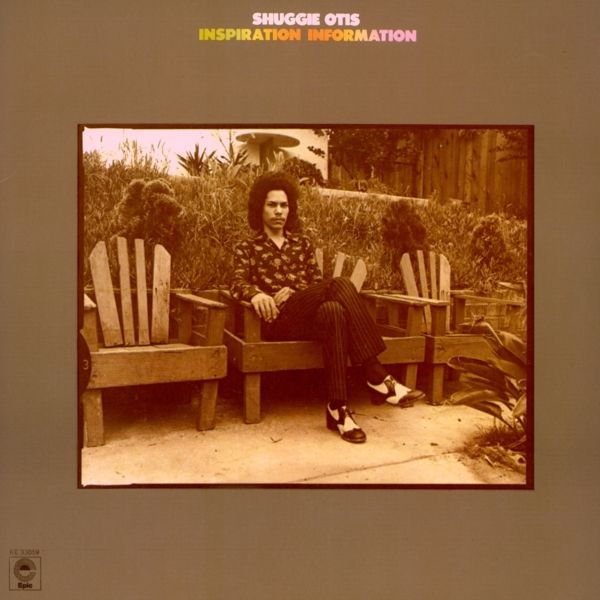
Shuggie Otis - Inspiration Information


Shuggie Otis is one of those thoroughbred musicians--being the son of early R&B pillar Johnny Otis provided a host of life-long in-person musical inspirations and paved the way for a Mozart-like career beginning for the 15 year-old Otis when he co-billed on Al Kooper's Kooper Session.  By his most "recent" full length, 1974's Inspiration Information, Otis had undoubtedly found his own voice, if not much of a commercial niche for himself.

Of course, great music doesn't go away, and today there's a lot of cult appreciation for Otis' music in the form of samples by major artists and healthy, in-print reissues of his albums.  What I really like about Inspiration Information is the subtlety and variety.  While there's a number of tracks that satisfy what you'd probably expect from a 70's soul album (the title track and only single, as well as "Sparkle City" possess the low-end bounce and horn/organ instrumentation of the day), there are a number of songs that cut the funk with something more orchestral and moodier, and even more that fit neither here nor there when it comes to standard 70's soul fare.

Songs like "Island Letter" and "Aht Uh Mi Hed" stretch the formula further out, spinning languid soul grooves whose strengths lie not in booty-shaking beats but in the subtle spaces between buzzing string arrangements and Otis' often jazzy guitar lines.  This tendency becomes even more pronounced on the atmospheric instrumentals "Rainy Day" and "Pling!", the song where the music least likely demands a titular exclamation mark.  "Pling!" also features one of the arrangement elements that makes this album distinct--Otis' experimentation with early drum machines here adds a subtle, forward-looking twist, while on the brief "XL-30" (probably my favorite track) the drum machines and wonky organ grooves start to slide in a funky early electronica direction.  Add to this fascinating experiment a couple more in "Happy House" and "Not Available," which both jump between smooth psychedelic orchestration and crisp funky R&B, and you've got an album--albeit a short one at 32 minutes.

It's easy to see why Otis has maintained a cult following in spite of decades of inactivity, with such idiosyncratic and forward-looking music, but it's also easy to see why big-time commercial success eluded him--there's far too much tempo variation here to make a successful funk album, and a reliance on instrumental tracks always alienates much of the LCD pop crowd, which almost exclusively demands vocals singing simple lyrics.  Interestingly, the 2001 CD reissue's addition of three tracks from Freedom Flight bolsters the album with more "songs" (including Otis' undoubted royalty annuity "Strawberry Letter 23") and more hooks, as well as a considerably more enticing cover that replaces the original's drab earth tones with bright, stylized colors.

Get 'er here.

Friday, July 6, 2012

Cheap Seats 5: Mix Mix, Stir Stir


After a seemingly interminable two-month break after the end of recording (a day of righteous drum tracking), Justin and I are mixing this record.  It's also worthwhile to note that it's been seven months since this album's first recording dates back in December and two years this week since I wrapped up recording for my last album in my parents' basement!  Time, naturally, flies, and it's sort of hard to believe I've been working so long on a single project. 

We've got two business weeks for mixing and at this point Justin's doing pretty much all of the work--I mostly sit around and do things like this while he sorts through the amorphous pile of tracks I heaped upon him, and after he works on a song for a few hours I chime in with some kind of verbal ingratitude like "the lead guitar isn't very audible, can we do something about that?"  While I've got a musician's and seasoned listener's ears for mixing, Justin has a professional's ears and the skills to make things happen efficiently, quickly, and with an ever-present sense of each song's big picture.

The process starts with the drums; since the record contains recorded contributions from two drummers, it's possible to dial in the mixing settings for one drummer, apply them to every song recorded with those drums to save time, then tweak them minimally for each song.  After that, Justin seems to work on the bass (if there is any) and so forth on to the guitars, horns, vocals and other instruments.  To treat this like a mixing version of A Day in the Studio, let's start by saying that "mixing" basically means arranging and adjusting the characteristics of all of the tracks that make up a song in order to make them sound cohesive, organized, and to properly represent the song's arrangement and most important elements in a way that's audible to the listener.  The process involves things as simple as setting the volume and panning (whether the track's coming from the left speaker, the right, or a mixture of both) of each track (which can actually become quite complex when there's lots of tracks), but also encompasses things like compression, equalization (or EQ; adjusting the bass, midrange and treble of a track to compensate for too much of something or allow two tracks with similar frequency ranges to coexist without covering each other up, a problem that can happen with dense arrangements like the ones in a lot of these songs), and all sorts of effects--commonplace ones like reverb and delay as well as more "proprietary" tricks of the trade.

In a nutshell, the fact that Justin's done this hundreds of times means that he has a method and a creative vision that form a solid launch pad for each song well before we even get to the point where I'm giving my own input.  As with all of the phases of this project, mixing has been a real learning experience.  I've gotten to hear the consequences of the arrangements I've made--sometimes things work great and there's space for all of the instrumental voices to sound audible and distinct, and sometimes things I thought we'd be able to fit in end up sitting atmospherically in the background, where they certainly contribute, but not quite as identifiably.  It's also been instructive to see how Justin reacts as a listener to the ideas and concepts in the music--more than a couple of times ideas I've had regarding the mix have met with questions about why exactly it needs to happen.  Not that there's some kind of creative struggle happening, but rather Justin's been quite helpful with providing feedback as to how well ideas I've had are actually audible in the music, and whether or not the things I want to do are actually making it easier for the listener to grasp the concept.  Though I don't have a lot to do to make the mixing happen, I'm trying to learn as much as I can conceptually to use during my next project--there are a lot of things I could do ahead of time to make things run smoother, and and I have a better idea of what kinds of things will later become problematic.

Hopefully, I'll also be able to maintain the inspiration that naïveté brings--I want to remain focused on coming up with the weirdest, most distinctive ideas I can rather than thinking of the mixing process first--things have a way of working out, and everything can be fixed, in one way or another!  Bottom line, this record's sound is a week away from being 95% complete...after we finish mixing, it's mastering, duplication and release!  Stay tuned for more overarching Cheap Seats content (including interviews!), as well as details about preorder and release of this behemoth. 

Cheap Seats Part 1
Cheap Seats Part 2: Non-Commercial Music 
Cheap Seats Part 3: A Day in the Studio 
Cheap Seats Part 4: The (Un)Happy Accident

Tuesday, June 26, 2012

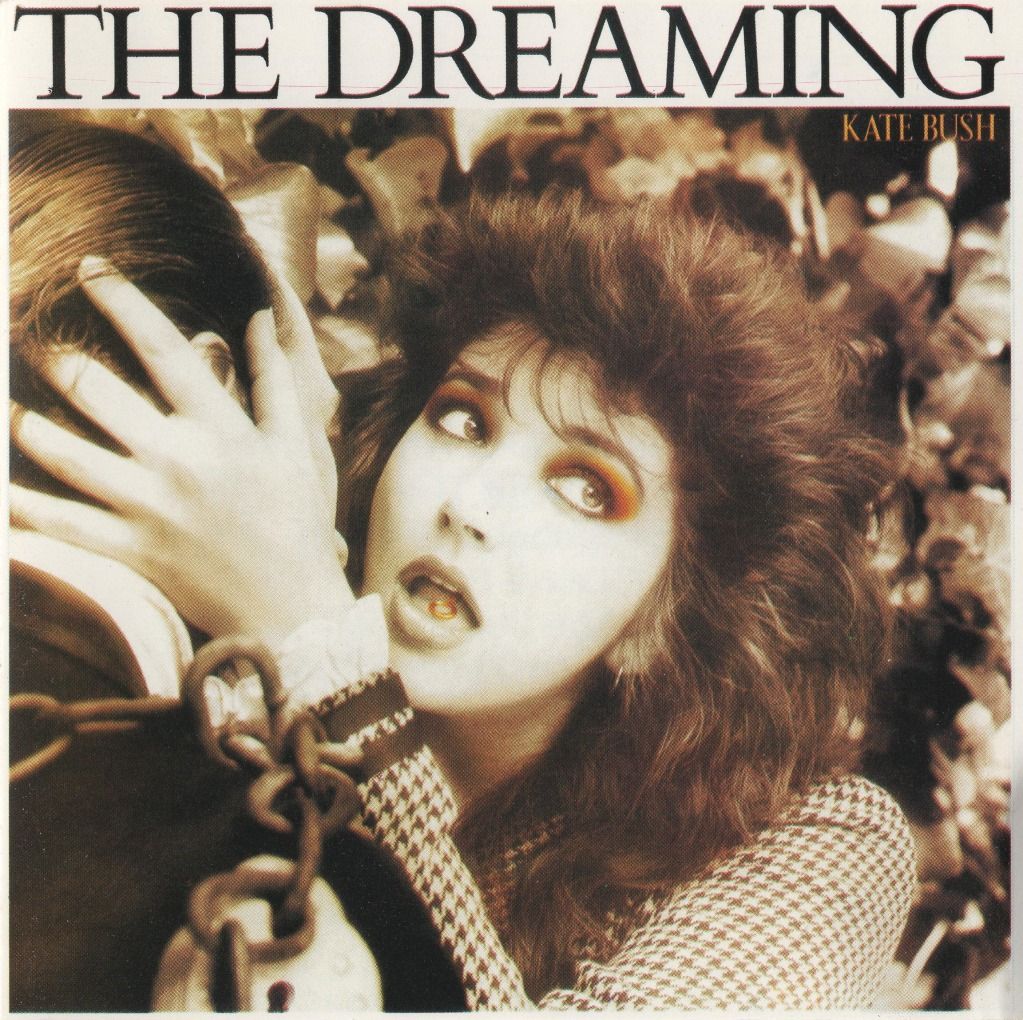
Kate Bush - The Dreaming


The Dreaming--Kate Bush's fourth album, arriving less than five years after her debut--has got me thinking about a whole mess of different things.  Approaching her music fairly indirectly (not having been around when the music was new [no real change there!], or being a hardcore fan, and not having much of an interest in 80's pop music) made for slow progress in appreciating it, but a couple of years have provided an enlightening and broadening experience in getting to know and learn from this music.

While I agree with most fans that Hounds of Love is her most distinctive and cohesive set, this album makes a close second for many of the same reasons.  Partially fulfilling her move toward tighter pop structures and chic sounds of the day, the songs here continue to move away from the more traditional (especially piano-dominated) instrumentation of her first albums into an area where 80's synths and effects surround the songs' core piano parts and multi-part structures juxtapose wildly different styles within pop-length tracks, with Bush's multi-tracked vocals calling and responding in an often bizarre array of different vocal deliveries.  Needless to say, these songs can come across as difficult to penetrate at first, a fact that's not helped by the fact that the late-80's CD reissue is in dire need of remastering, making the already-difficult songscapes even tougher to perceive because of the mediocre sound reproduction. 

Nevertheless, this shit's awesome!  What's especially interested me lately is the fine balance Bush strikes between weirdness, progressive and experimental complexity, and pop accessibility.  When I say "weirdness" I mean things like singing in a weird voice (like those shrill backing vocals that nobody else has really done the same way), laying a really strange-sounding effect on a guitar line, or singing Australian narratives and utilizing native Australian instruments.  Weirdness is a great attention-getter, and is a great way to make music distinctive and set it apart from the vast pack of musicians out there just trying to make something that sounds pretty and inoffensive in hopes that it'll appeal to the largest audience possible.  However, weirdness alone isn't enough to keep my attention long-term.  Really, the lukewarm feelings I get from a lot of today's music come from a feeling that weirdness and style often outweigh the actual content of the songs, music, lyrics etc.  Not that every artist should be changing time signatures every two measures and shredding ridiculously difficult guitar parts for music to be considered good, but there's more to making some distinctive music than singing a tired indie breakup song in an overwrought plaintive voice over eighth-note staccato power chords. 

What I love about Kate Bush is how well she backs up her weirdness with musical substance--every song has a discreet feel, be it narrative or more philosophical, and upon close examination it seems that every element of the song is carefully tailored to fulfill the song's conceptual promise, from playfully poetic lyrics to song sections that brilliantly channel Bush's twisting moods with shifting timbres and pacing (see "Pull Out the Pin," "Night of the Swallow") to vastly differing stylistic experiments between pounding, expansive rock like "Sat In Your Lap" and waltzing existential pop like "Suspended in Gaffa." 

Finally, I'm continually amazed by how poppy the music ultimately is--in spite of the fact that she's often reimagining and further developing a lot of concepts explored by then-and-now-villified progressive musicians when the genre was all but completely forced from mainstream interest, Bush manages to maintain a pure, sincere emotional core along with a buoyant conciseness that makes these songs accessible in spite of their complexity.  Even more, she's still making new fans 30 years later in spite of the extreme 80's vibe, although that's a retro aesthetic that's still currently regarded as "ok" with today's young music fans.  I'm sure it doesn't hurt that her visual aesthetic pretty much rivaled her musical one--if only today's pop songstresses could back up their audacious imagery with such equally challenging music!  Anyway, good on KB for proving that great pop doesn't have to skimp on nuance, and for helping me expand into some new musical areas.  This makes me want to check out some of her more recent work...


Get it here.

Friday, June 22, 2012

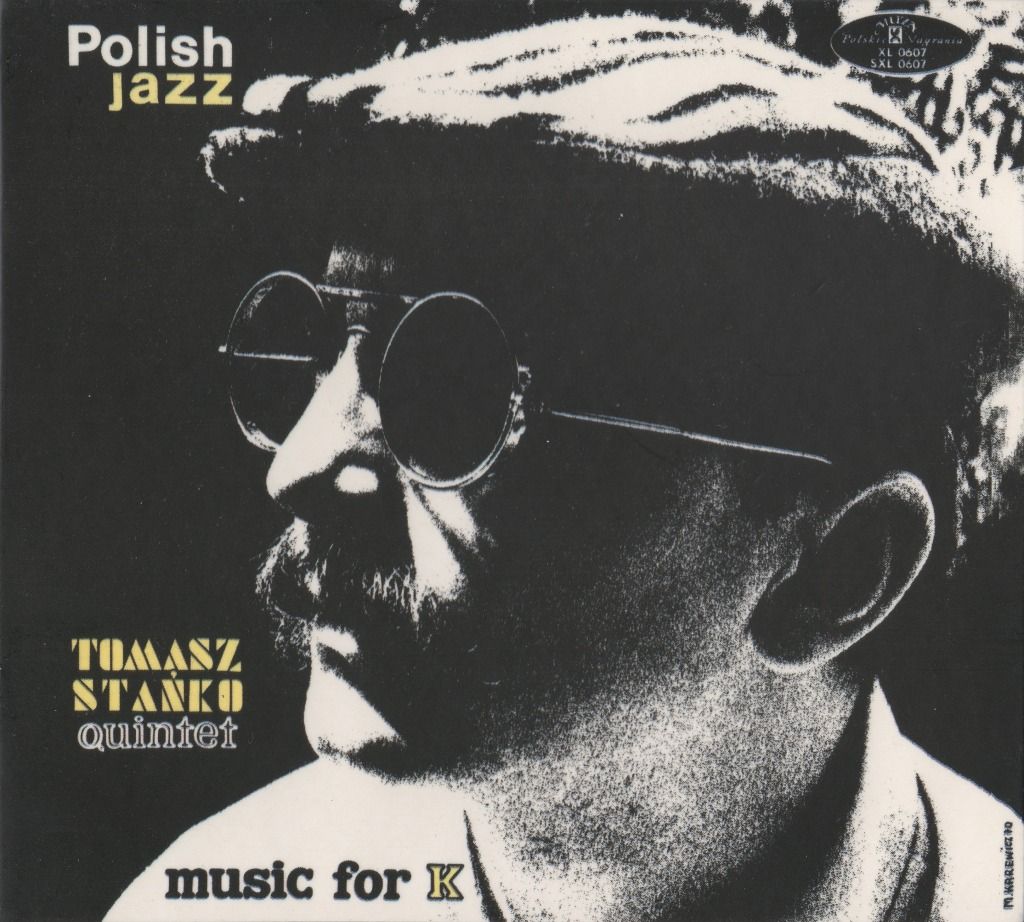
Tomasz Stańko - Music for K


These days, what's probably the biggest obstacle for Polish trumpeter Tomasz Stańko's 1970 debut is that it says "Polish Jazz" in the top left corner, leading to some reasonable assumptions that it's going to be some sort of fusion of polka or mazurka and American jazz, and some perhaps less justified assumptions that it'll be crap jazz because it's not American.  Not only are both of these assumptions proven incorrect by the music contained in these (digital) grooves, an album like this provides key evidence of the roots of the compositional framework that British/European jazz fusion bands like Nucleus and The Soft Machine utilized in the mid-1970's, but also that the narrative of jazz history in Europe is unjustifiably incomplete and marginalized in comparison with that of America.

Now, anybody in the know about this period of European jazz will probably acknowledge that I'm sort of getting ahead of myself by starting with Stańko's debut--many would cite Krzysztof Komeda's 1966 album Astigmatic as the most important illustration of the above points...in my own feeble defense, let's just say that this was the album I decided to review today for no other reason than that it's the one my eyes landed upon and seemed like a good one to write about.  Music for K is indeed a tribute to the late Komeda, on whose watershed Astigmatic album Stańko also played trumpet, and who is credited with contributing heavily to the development of a distinct flavor of European jazz that started in the 1960's and has continued to present.  Assigning credit is important but not as much as acknowledging a quality piece of work.  Here the influence of Komeda (who also had extensive film score experience including Roman Polanski's Rosemary's Baby) and Astigmatic are felt both in a sense of cinematic drama and a tonal palette that trades much of American jazz's jubilant euphoria for a darker, more cerebral form of expression.

The opener "Czatownik" both recalls Komeda's descending chromatic piano themes and predicts the tangled melodies that the aforementioned electric fusion groups would favor, with alto and tenor saxophones blurting rapid fire unison themes with the trumpet before things start to get more shambling, with each voice separating into an upward call that again lines up for a dramatic fanfare.  One of the things I really appreciate about this music is the shifting dynamics--things can go from blaring horns to sizzling quiet in an instant--the bass and drum interaction is prime here (check out that drum sound around 3:30)--and the piano-less lineup both points to the absent Komeda  and allows for alternation between skeletal frameworks and a spotlight on the wind instruments' melodies, not to mention a huge potential for free playing, of which there is an abundance.

In trying to define the specifics of a "European" jazz sensibility, my instincts are to point at its richly developed classical tradition, which seems to be borne out in a predilection for ostinato (check out the gently pulsing reeds in "Nieskonczenie Maly," and their darker, more anguished and dissonant counterparts in "Cry") and song structures that seem more linear than the typical circular jazz structures (head, solo:, head).  Things reach their freest and most intense in the 16-minute title track, which climbs a series of crescendos and mini-dips to a collective caterwaul, then steps back down across one of the album's greatest drum showcases to a squawking conclusion.

More than anything, the quality and energy of the playing on this album raises questions about the relative obscurity of the players here and severely shakes my confidence in a completely American-centric jazz narrative...we need better informational resources and access to more great music like this!  On the plus side, if you're feeling like you've exhausted the available avant-garde American jazz and everything's sounding a bit too happy and boppy for you, maybe there's hope in the Old World's "new" jazz--who knows what else we're still missing!

Get it here.

Tuesday, June 5, 2012

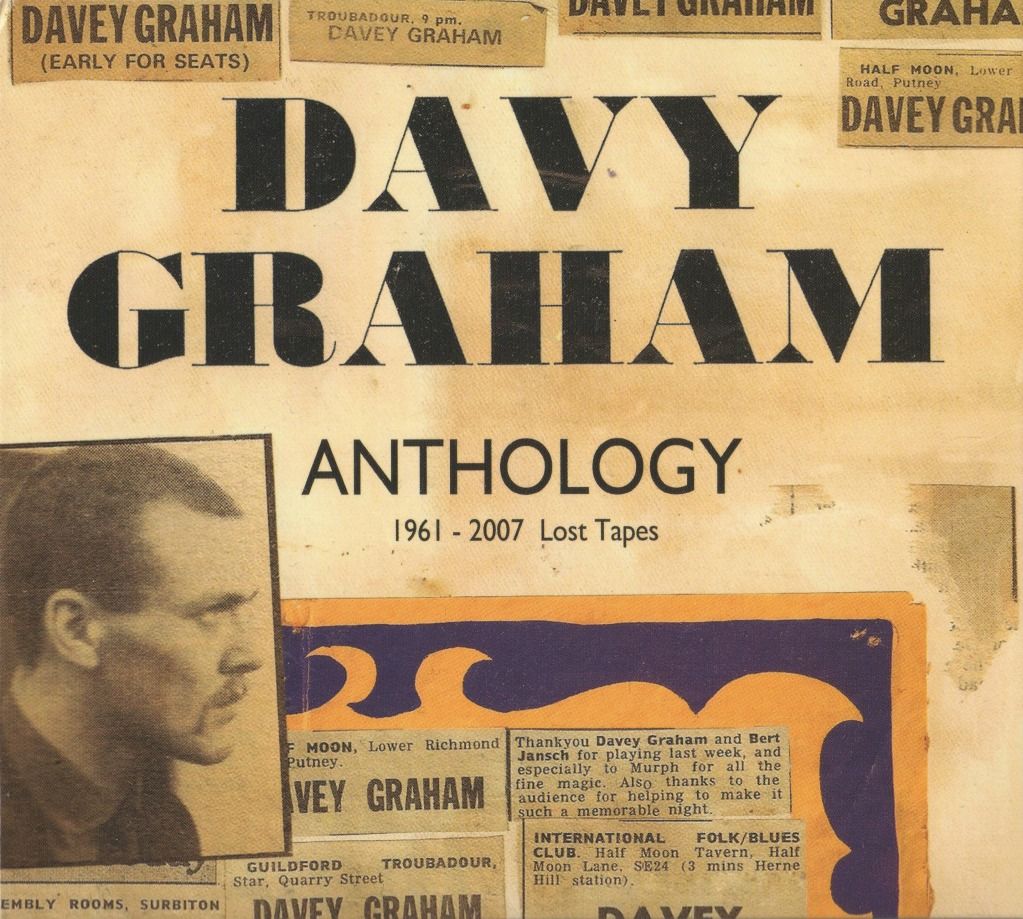
Davy Graham - Anthology: 1961-2007 Lost Tapes


Almost four years after Davy Graham's death, the folks at Les Cousins Music are still working not only to preserve his officially-recorded legacy, but also to expand the scope and depth of his output, making it clearer for those who weren't there why the guitarist was the undisputed king of the 1960's English folk revival.  Nostalgically packaged in a collage of images gleaned from Graham's personal scrapbook (and simultaneously displaying both spellings of the guitarist's first name he confoundingly vacillated between), this three-CD collection anthologizes no less than 54 tracks across more than 2 1/2 hours of unreleased recordings.  Count me in!

It's a fool's errand to attempt a track-by-track analysis of an anthology so deep, so I'll attempt to convey some general impressions and reference tracks where appropriate.  Having been a Davy Graham fan for several years, I think I'm finally starting to understand how, as Roy Harper says, Graham "never managed to turn his talent into a brand that people could go out and buy and enjoy," yet every other guitarist from the same time period and beyond cites Graham as a towering giant of the six-string.  After five years of absorbing Graham's studio output I'm still at a loss to recommend a single album of his that fully conveys and encompasses what was so revolutionary about his playing, and not having been there it's been hard to picture myself in that bright-eyed hopeful time and imagine myself at some bohemian party with Graham conjuring untold spirits out of an acoustic while everyone just sits and listens.  Enter this anthology, which as far as I've heard does the best job this side of After Hours at Hull University of recreating such a scene.  The sound quality (especially on the first two discs) is almost exclusively of home/bootleg quality and most of the performances are solo, with Graham positively shredding in front of small audiences as he sends jazz, folk, blues and "world music" (before such a term existed) through a blender and we get to hear what comes out.

Since it's mostly just an acoustic with or without vocals, the sound quality isn't much of a bother--if anything, it enhances the intimacy of the performances, which find Graham energetically blasting solo performances of many of the folk and blues songs found on his albums as well as never-before-heard tracks.  Throughout, his technique is astounding, transitioning as quickly as ever between lead and rhythm, melody and harmony, from style to style.  Somehow the setting's informality allows the guitarist's hard-won chops to shine brighter with none of the studio adornments meant to commercialize his sound, and we instead get to hear him exclaim "Ah, fuck" after some imperceptible mistakes during a lightning-fast take on Leadbelly's "Fannin Street" with nary a missed note, as well as a verbal introduction to his classic instrumental "Anji" (there are two versions here, along with an unreleased track and album highlight "Anji's Greek Cousin") that details how he wrote the tune.  While the live renditions of guitar-and-vocal folk/blues tunes present uniformly great guitar and often contain vocals that are superior to the studio versions, they also miss the mark when it comes to what made the guitarist unique--more than almost any other Graham album, this anthology conveys the strange alchemy that occurred between Graham's musical influences, his fingers and his guitar, and these discs present ample, undiluted evidence of what was possible when only these elements were on display.

Of the three discs, the third is probably the least essential, reflecting the diminishing returns that Graham's post-60's releases offer, yet it often sounds more vital than studio recordings from the same period.  Though Graham's lifestyle choices and age would gradually slow his playing and attenuate his already limited vocals, we still get some surprisingly good representations of the more delicate British folk, jazz, medieval-sounding instrumentals and world folk music explorations he continued to make through the 70's and beyond.  "The Gold Ring" shows his pull-off speed undiminished, "Sita Ram" and "Mevlut" pair his further eastern experiments with appropriate accompaniment, and "DeVisee Suite" shows a subtle, slower side to his playing that was all but absent in the early days.  The final late-period tracks remind us that we're summing up the career accomplishments and contributions of a distinctive force in 20th century popular music.  As with his 2007 swansong Broken Biscuits, the joy here comes less from marveling at jaw-dropping speed, but more from giving credit where it's due and appreciating that the man's muse was still active at the end.

While I still think it's impossible to recommend an accurate starting point for a prospective Davy Graham fan (it takes more than the average time investment to really "get" him as an artist), this anthology is a surprisingly worthy addition to even a modest Davy Graham collection.  Unlike so many retrospective collections, it manages (with the help of Graham's considerable skill and restlessness) to make familiar songs sound fresh and new songs sound immediate and relevant to the further-broadening portrait available of Graham as an artist. 

Get it here.

Tuesday, May 29, 2012

Cheap Seats 4: The (Un)Happy Accident

Signal to...1, 0 or some combination thereof
The previous Cheap Seats installments have mostly focused on my own recent creative experiences as an independent musician recording a new album.  Please permit me (in an effort to gradually expand the scope of the discussion to a realm that involves all musicians and listeners alike) to get a little bit macro.  Today's focus is the single most powerful determining factor affecting the distribution of any artist's music as well as the top force that dictates the ebb and flow of today's commercial music marketplace--I'm talking about the advent and full scale implementation of digital music recording

I'm sure when Sony and Philips designed and released the first CDs in 1982 they were mostly thinking about the obvious benefits CDs possess in comparison with the analog music media of the day--unlike vinyl and tape, CDs are sturdier and less easily damaged, are smaller and more lightweight, last much longer and are not degraded by use, and have ultimately become as inexpensive (or more) than the other available options.  In the intervening 30 years, though, the simple twist of converting source analog audio recording data to the universal binary 1's and 0's of the digital vernacular has had far-reaching implications for the music world.  On the consumer end, the introduction of CD-R technology first allowed easy copying of any audio files, while the increasing capabilities of home computers and the internet have gradually made the distribution of audio files (the size of which has more or less remained the same) easier and easier, providing music consumers with innumerable sources to acquire recordings for purchase or for free.  This increasing broadening has significantly diminished the sales of traditional physical recording media, not to mention how it's made it more and more difficult for copyright holders to keep track of and protect their intellectual property. 

On the "industry" side, not only has digital music technology changed the shape of music as a product, in the last 15 or so years it's also replaced analog recording as the most accepted method for the very creation of recordings.  ProTools has both become the industry standard software for recording studios, but its relative ease of use and availability (as well as the availability of similar free and inexpensive recording software) has meant that the average person potentially has the ability to record and edit digital music in much the same way (and with many of the same tools) as a professional recording studio--and when the product's finished, the aforementioned home computer technology and internet advancements have made it possible for artists to distribute their recordings without any of the record label, distribution and promotional infrastructure that was compulsory before digital recording dominated the market. 

Like most of the issues I'm trying to wrestle with in this series, digital recording is the quintessential double-edged sword.  Music listeners now have unprecedented access to almost any music they'd like to hear--gone are the days when local record stores could only mail-order expensive imports of cult artists whose distribution was too poor to make the music widely available, and the realities of file sharing mean that most recordings can be found and downloaded for free without risk of punishment and regardless of the recordings' copyright status or availability for sale through mainstream channels.  MP3 players allow consumers to consolidate a nearly limitless library of digital music that can be accessed instantaneously and portably (my personal favorite!).  Up-and-coming artists are no longer necessarily forced to demonstrate popularity in order to make their first recordings (a chicken-and-egg scenario that imploded as often as it succeeded).  It's never been easier to find out about and sample new music, and there's more music being recorded than ever before. 

For the recording industry, the sword mostly cuts viciously in the negative direction--though digital music does offer even more avenues for sales, when offered the choice, "You can either pay us and download the recordings, or search Google and download the recordings for free," consumers have by and large chosen the second option.  Promotional power still rests in varying degrees in the hands of record labels, but it's often limited in the case of independent labels and diminishing sales have scared the big labels into a policy of recording and promoting only guaranteed money-makers, which, as you can imagine, does little to further the spread of non-commercial music, impairing the strength of music as a product one degree of blandness at a time.  For independent musicians, it may indeed be easier and cheaper to record music, but when it comes to standing out amongst a constantly-swelling sea of competition, there are few promotional tools that seem to be worth the time or monetary investment. 

This is where the pros and cons of digital recording become even subtler.  For cash-strapped musicians, free recording is often a deal that's difficult to pass up, but the benefits of using a professional recording studio (high quality microphones and other recording equipment that most musicians don't possess, and especially the technical expertise of recording professionals) are often noticeably manifest in the quality of the finished product.  Then there comes the role of the recordings themselves--are they designed as a promotional device, to be given away at no cost to spread the word about the artist and hopefully convert more fans?  Or, is the artist hoping to offer the recordings as a product for sale?  I've heard again and again that music recordings "are free" and that the only way for musicians to make money these days is through live performance.  While I don't want to diminish the value of live performance, this argument denies the fundamental fact that regardless of the recording, somebody is investing a certain amount of time and/or money into its creation, and investments with virtually no chance of return are utterly unsustainable.  Since this entry is not supposed to focus completely on the financial aspects of independent music, I'll leave further development of those points for a later date.  Additionally, the choice to give away recordings is a difficult decision for reasons unrelated to finances--what message does it send a potential listener if you're willing to give up the fruits of your hard work in exchange for nothing?  There is an intangible degree of integrity lost when you tell listeners that your recording is worth...nothing...even when your decision is motivated by a desire to acknowledge the inevitability that your recordings will be pirated.  In such a competitive music marketplace, I've repeatedly found that the most difficult accomplishment is to simply get people to give your music a chance and listen to even one song all the way through (let alone a whole album).  Can unknown musicians afford to devalue their work at the very outset?

Likewise, for listeners, digital music has made it easy to react in a knee-jerk fashion, skipping or abandoning a recording if it doesn't instantly gratify our spoiled ears and robbing us of that crucial repeated exposure that so much great music needs in order to sink in and sound great to our often inattentive ears.   Similarly, the art of a cohesively-crafted album has been all but lost in the mainstream, with consumers able to pick and choose tracks selectively without hearing them in the intended context.  There is indeed more music than ever for listeners to choose from, but it's also becoming increasingly difficult to find out if it's actually good (of course, by "good" I mean relative to each listener's tastes and musical ideals).  How does the average listener navigate the swarm of hopeful independent musicians without help and without becoming cynical?  Do the types of algorithms that govern internet radio stations like Pandora actually succeed in steering us toward new music we'll eventually love, or do their fixed formulae actually rob us of the chance of hearing something new or different that might actually expand our tastes?  On a hopeful note, there does seem to be a kinesthetic aspect to recordings that cannot be digitized--many people believe that the added dimension of a physical package that comes with a CD or LP isn't sufficiently conveyed by a digital scan of the album art, and the artistic possibilities that come with mixed media can enhance the music and facilitate the development of a special relationship between listeners and the musical thing they're holding in their hands that's simply not possible with an intangible digital file.  Additionally, the "warm" analog sound quality, enhanced art and retro chic of vinyl records has recently experienced a resurgence among aficionados, probably for very similar reasons--still, the challenge of dealing with the rest of the potential market persists!

As an independent musician on the verge of releasing another recording, I wish I had answers to these questions--the more I think about it the more I realize that the digitization of music recordings is neither good nor bad, but that it's at its root a coincidental reality that further complicates an already complicated endeavor!  Printed text will likely remain a viable physical product in books and magazines because it can simply be unpleasant to read text on a computer screen for extended periods of time; digital reproduction of physical art like paintings and especially sculpture never comes close to capturing the physical dimensions apparent in person; television and movies may be easily digitally-reproduced at home, but live theater, dance and movie theater screenings offer an experience that cannot be digitally reproduced to come anywhere close to the live experience.  In our increasingly digitized world, recorded music has been the perfect victim of an unhappy accident insofar as it's easily reduced to digital form and sent down the waterfall into the world's digital information collective.  The issues of promotion and the value of music recordings will be further developed later, but for now I pose these questions:  What's your relationship with digital recordings?  If you're old enough, how has your relationship with music changed as digital has become standard?  Do you think the digitization of music recordings is a good or bad thing for musicians and listeners, and why?  Comments welcome and appreciated!

Cheap Seats Part 1
Cheap Seats Part 2: Non-Commercial Music 
Cheap Seats Part 3: A Day in the Studio

Wednesday, May 16, 2012

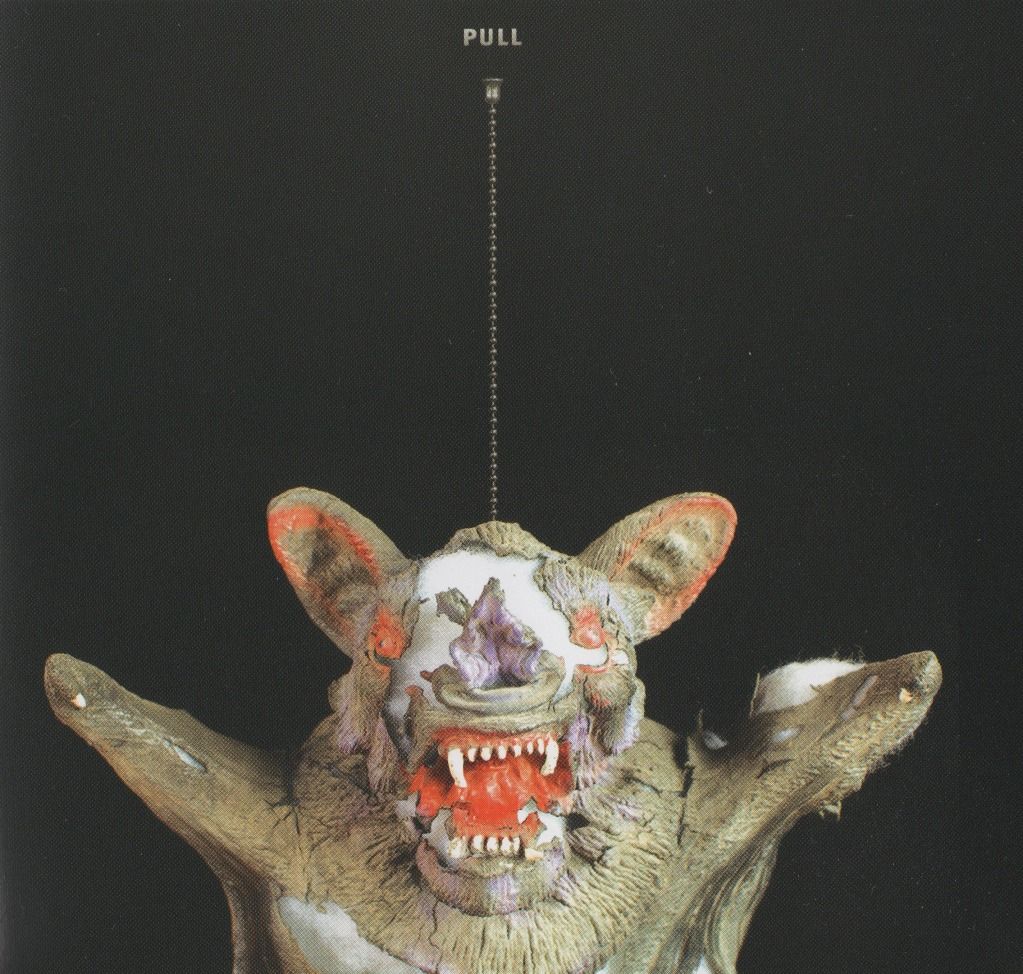
Captain Beefheart - Bat Chain Puller


It's been well over a year since I kicked off the reviews division of this site with a review of Captain Beefheart and the Magic Band's Shiny Beast (Bat Chain Puller), and considering how much the Captain's work has continued to influence my approach to music and writing I'm surprised I haven't waxed poetic about any of his other classic albums.  Technically, today still isn't that day--I'm here to gush about the "brand new" 2012 Captain Beefheart release, the lost 1976 first studio version of Bat Chain Puller, just released this spring (to disappointingly limited fanfare) on the Frank Zappa record label and nearly exclusively available for purchase here (which just might be why the album's gotten so little press).

To describe the genesis of this release briefly, Don Van Vliet decided in 1976 to return to the avant-garde and stage a creative comeback.  Herb Cohen (Frank Zappa's manager) secretly used Zappa's money to fund the project and the two had a falling out upon Zappa's return from tour, resulting in Cohen's seizure of many of Zappa's assets, unreleased Bat Chain Puller masters included. Zappa eventually reclaimed his property through legal means, but by that time Van Vliet had re-recorded most of the material on his final albums.  Since then Zappa, and now his widow Gail, have been busy enough managing Zappa's gargantuan legacy that the tapes have remained neglected in the vaults...until now!

With 10 of 12 tracks already appearing on Captain Beefheart albums that have been available for 30 years, the biggest worry with Bat Chain Puller is that it'll come across as merely supplementary to those "definitive" versions, or worse that it'll sound only partially complete in comparison to the later recordings.  Thankfully, the disc falls prey to neither possibility, playing like the hazy, dream-like album-that-never-was that it's always been!

After listening to these different versions of familiar songs and becoming familiarized with the new track sequencing, I'm left with the strong impression that this album has an undeniably distinct feel, especially in relation to Shiny Beast (Bat Chain Puller) in terms of its accessibility.  Compared to Shiny Beast's almost exclusively song-based program, this Bat Chain Puller is very much a venture split between songs, spoken word-over-music and pure poetry.  Sure, it's still considerably more mainstream than the hallowed stuff of Doc at the Radar Station, but even compared with Doc's orchestrated prickles, the poetry/music tracks here feel much more spontaneously arranged and the sonic palette more often unexpectedly drops down to just one instrument or Van Vliet's voice in some very effective instances. 

Perhaps as expected, some of the material here isn't significantly different from later versions--the arrangement of "Harry Irene" (never one of my favorite later Beefheart tracks, but an important contributor to this album's accessibility) includes guitar, but otherwise isn't much different.  The title track has its own subtle identity (further shaded by a third version here in bonus track form), bristling with kinetic motion (it's easy as ever to hear how Van Vliet originally pulled the rhythm from windshield wipers), more of an organic feel with cranked harmonica and just-barely-conflicting guitar layers (though the ever-important synths are still there) and outstanding vocal delivery (dig the the naked place he takes "their very remains and belongings").  Right off the bat, my highest hopes are kindled--one of my disappointments with later Beefheart albums is the marked reduction in the elasticity of Van Vliet's voice and additionally, in the case of Ice Cream for Crow, an overall dip in energy and compositional effort--here the Captain's voice still possesses a razor's edge and he takes enough risks that we can almost forgive him wasting the early/mid-70's trying to become a mainstream star.  "Owed T'Alex" burns with a reinvigorated closeness that's magnified further on "Floppy Boot Stomp," where the band's joyous delirium pushes the vocals so close that it sounds like the Captain's ranting all the way inside your brain. 

The most exciting aspect of Bat Chain Puller, of course, is the brand new material, namely the poetry/music hybrids "Seam Crooked Sam" and "Odd Jobs."  The former is a moody guitar/electric piano duet with Van Vliet's downbeat-yet-intense images spinning seemingly unrelated on top, while the latter is more of a full band piece with tunefully-spun vagrant imagery while the band shifts ever so slightly into what must be the first kernel of Shiny Beast's "Tropical Hot Dog Night."

Evaluating these pieces has helped me identify a couple of the specific traits that make Captain Beefheart one of my top favorite artists--first, it's the way his poetry mirrors the music, flowing smoothly then stopping, jerking, suddenly rhyming or playfully riffing off of a phrase's connotations or expected syntactical outcome.  Unsurprisingly, Van Vliet chooses words like paint colors on a palette, not necessarily concerned with their logical or expository value but rather their energy, emotional color, and the way they sound.  When I hear these songs, there are countless unexpected images and feelings popping into my head, and I can't think of too many other poets in the popular music sphere who can achieve that.  And yet, there's a strange logic or narrative to many of these pieces--what at first seems like incoherent rambling in "81 Poop Hatch," for example, gradually reveals itself to be an impressionistic panoramic scene including Van Vliet's beloved natural imagery as well as a view of his internal landscape--at least, that is, until he leaps mid-sentence to somewhere completely different; every piece seems to be at its root a rational enigma with unlimited emotional potential.

Secondly, the compositions here are a dazzling presentation of Van Vliet's painterly approach implemented in yet another aspect of the music.  More than on any of his other albums we hear open, warm-sounding jazz harmony on songs like "Seam Crooked Sam" and "Ah Carrot Is As Close As Ah Rabbit Gets To Ah Diamond."  Again, though, Van Vliet applies these combinations of notes intuitively and without regard to how theoretical rules say they're "supposed" to be used.  Fragile, sweet harmony can dissolve into dissonant, minor darkness just as quickly as it can pursue a completely fresh melodic path, as evidenced on "The Human Totem Pole (The 1,000th And 10th Day Of The Human Totem Pole)," one of two album-closing commentaries on the human race's cumulative achievements (or lack thereof) and precarious current position on earth.  Here he fuses this weird compositional approach with one of his more straightforward (yet most compelling) poems, sketching a partially-obscured picture of the skin-crawling, comical-yet-repulsive "pole," and delivering it all with a seething creepy mystery that trumps the Ice Cream for Crow version within just a few seconds..."the man on the top was starrrrrrrrvinnnnng" indeed!  Now is probably an important time to laud the contributions of the rest of the band--this music certainly couldn't have been made without the conscientious talent and attention of the rest of the band, especially drummer/guitarist John French, who also performed a crucial "music director" role in transcribing Van Vliet's hastily-blurted musical ideas into a form that the other band members could understand and memorize--just listen to the through-composed spacious atmosphere as the song sputters out in a denouement that takes up over half the song's length.  The idea that it's possible and even ideal to consent to the urge to compose and arrange notes and sounds in whatever way sounds intuitively best (regardless of the rules) is one of the important lessons I've learned from Van Vliet's music and attempted to apply to my own process.  Though the difficulty of successfully communicating such an idiosyncratic method to collaborating musicians is challenging to overcome, the singular character of the end result can really be worth the sweat.  It's also one of the few lessons any artist can potentially adapt from Van Vliet's work without necessarily ripping off his total sound wholesale--it's possible, no matter what Tom Waits tells you!

In the end, this album is like a gift sent from beyond Van Vliet's grave (though very real thanks are due to all of the living collaborators who finally brought this album to release).  Amazingly, it never sounds unnecessary in comparison with the later albums--"Brick Bats" is the only song that sounds more unfocused than its later version, with a much looser guitar arrangement, less effective vocal delivery and a fun but meandering free jazzy end section made more effective in the shorter Doc at the Radar Station version.  Nor does this earlier album obviate the ones that follow (except Ice Cream for Crow, which was always teetering on the brink of being a "completists only" release, especially now that two of its best tracks are revealed to belong to a more vital earlier work), with Shiny Beast (Bat Chain Puller) still best straddling avant-garde and pop and Doc at the Radar Station best warping Trout Mask Replica poetic/musical craziness into a newer, mature and carefully-integrated form.  Thankfully, we now have all three to consider as required listening--though the price of this CD is still uncommonly high (it cost me $27 including shipping and tax), it's worth the added expense and work it takes to track it down--let's hope there's some wider distribution on the way to make it a little easier to get the word out about this remarkable album's first issue.

Wednesday, May 9, 2012

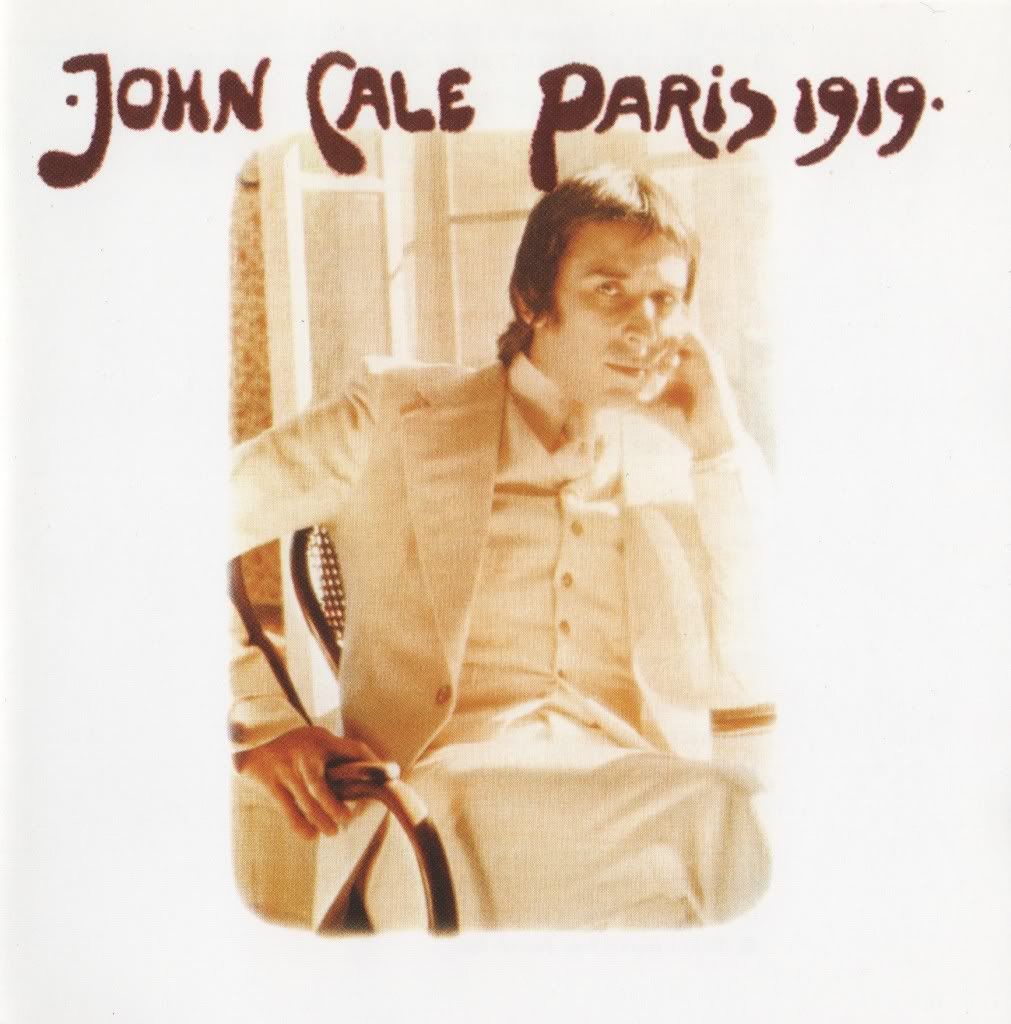
John Cale - Paris 1919


Another album I've rediscovered in the past few months, iTunes tells me I've listened to this album over 10 times.  Though I wouldn't consider it a major favorite I was trying to think of something soothing to listen to after a difficult session and this album instantaneously popped into my head.  After listening a few more times it's not hard to pinpoint why the album produces such a specific reaction: everything--from Cale's half-obscured vocals to the slide guitar, organ and strings that dominate the arrangements--everything here is the aural equivalent of being wrapped in an old but still comfy quilt (rainy day included).  If I may, it's these kinds of feelings that a lot of people might be describing when they say an album or song sounds "British" as if it's a genre or aesthetic descriptor.  There's a pervasive sophistication in these songs that seems to be uniformly reigned-in by an instinctual desire for understatement, and they all seem grounded in the sort of beauty that takes some attention to uncover and--no matter what the subject matter--is touched by a sort of resigned sadness.

Not to say that Paris 1919 is a downer, but if you're looking for some sort of extension of Cale's role in The Velvet Underground, you're likely to be repeatedly disappointed.  Sure, there are comparative moments of "rock" like the romping "Macbeth" and the quirkier, Eno-esque "Graham Green," but really nothing close to anything found on early Velvet Underground.  Not being much of a Velvet Underground fan at all, this doesn't really bother me, but I can see how this album's style might come as a shock--you're going to have to also enjoy pretty, orchestrated pop rock to make the transition to this one! 

There's so many things to enjoy in this album, from the evocative-yet-cryptic lyrics (Cale jumps from a brilliant one-liner in "nothing frightens me more than religion at my door" to the completely indecipherable titular chorus in "Hanky Panky Nohow").  The opener and "Andalucia" evoke a fragile nostalgic yearning that's only made stronger by the songs' simple and accessible melodies.  I can see how things might get a bit plodding for rock listeners ("Half Past France" gets a bit sedate, at least tempo-wise), but like many great pieces of art, a lot can change when you give yourself over to the creator's vision--when you're into it, Cale's repeated "we're so far away/floating in this bay" delivers a desolate, opiate euphoria.  Likewise, "The Endless Plain of Fortune" can change from plodding excess to gripping drama, and Cale's whispered vocals on the brilliantly-titled "Antarctica Starts Here" close the album with the sort of creepy intensity that only restrained dynamics and brevity can bring--in a scant two minutes the song is already fading away, closing the lid on a similarly terse album; packing your message into a concise package is a difficult feat to achieve, and I'm always impressed by how much more power a 31-minute album like this can pack into such a short time span.

Finally, I have to praise Cale's vocals--nothing makes me happier than hearing a great songwriter and musician achieve so much emotional resonance and deliver such beautiful performances with such a limited voice--there's nothing displeasing about Cale's delivery or tone, but it's fair to say he's not the most distinctive, technically-skilled or expressive vocalist.  That's the beauty of great singer/songwriter music--when it all comes together and the elements of composition, arrangement, performance and self-expression add up to something greater than their individual merits.  Though it may not sit at the front line of close-to-my-heart favorites, my collection always has more room for music as well-crafted as this!

Get it here.

Thursday, May 3, 2012

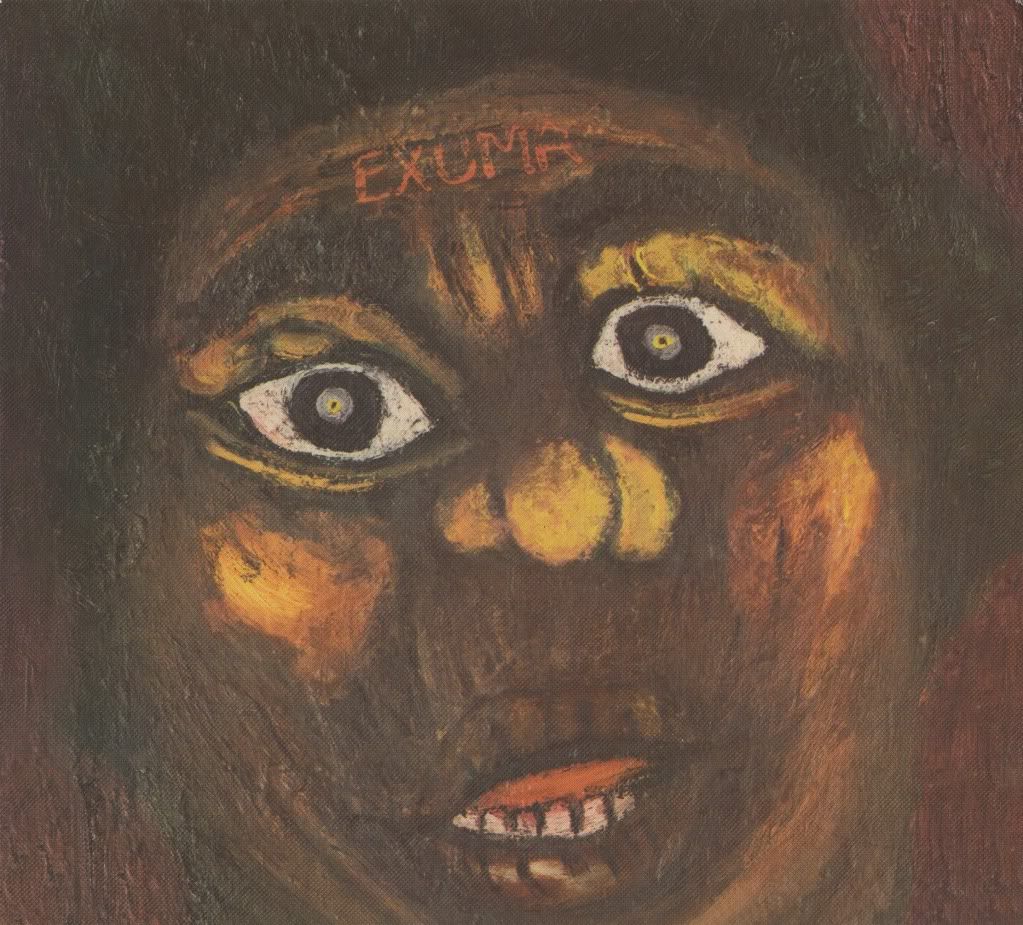
Exuma - Exuma


Getting deep into a recording project, I've found I usually go through a specific progression in my listening habits.  At the beginning, I'll keep listening to my never-ending queue of new music as a sort of respite from the day's work of composing parts and worrying about small details.  As the project starts to take shape and I realize I'm getting somewhere close to actually completing it, it gets harder and harder to tear myself away, and all I can do is compulsively listen and re-listen, fretting over the relative strength of the tracks, what should be done during mixing, whether I need to come up with more songs, and what track sequencing will eventually look like.  During this phase my exploration of new music all but dries up--if I check out something new, I find I don't even fully pay attention and maybe won't even give the music a fair shot--not ideal!  At the same time, though, when I've got a spare 40 minutes, I might pull something random out of my back collection that I haven't listened to for quite a while--because it's already familiar I don't have to pay complete attention, but the result is usually quite pleasant.  Such was my recent experience with Exuma's 1970 debut--reacquaintance with an old friend, and a fresh perspective on the kind of decisions available to musicians. 

This album makes great use of that most classic option available to singer/songwriters--create a ridiculous, outlandish personality for yourself and perform an entire conceptual album in that persona (cf. Comus, Captain Beefheart, and especially Dr. John circa Gris Gris, to which this album owes both a conceptual and musical debt).  Whether or not Exuma is actually a practitioner of obeah is pretty much immaterial--this disc is an immersive experience of primal witchcraft and dangerously good times.  In the tradition of "Seventh Son," the album opens with some classic boasting, with "Exuma, the Obeah Man" standing as a howled litany of Exuma's supernatural abilities over an appealingly filthy musical canvas of strummed acoustic guitar, hand percussion, chanting and animal sounds.  Exuma's voice is awesome--thick, edgy and surprisingly nuanced as the album goes on; few people can go from tender and soft to throat-shredding roaring with such ease, and it perfectly complements the weird song program on display here.

After the first track's invitation, the album practically plays like a field recording of an obeah ritual, including an ode to "Dambala," wherein Exuma chillingly assures us that we won't be going to heaven or hell, we'll just be stuck in our graves with the stench and the smell...over one of the album's most liltingly beautiful melodies.  We get explicit zombie references in "Mama loi, Papa loi," spiritual testimony in "The Vision," and an extended séance in "Séance in the Sixth Fret."  The reason I wrote earlier that this album makes me think of the choices available to musicians is that Exuma makes some strange and specific ones through the course of the album--instrumentally, it's pretty simple, with nary an instrumental melody to be found (lead and background vocals bear that burden) with commitment to the album's concept sometimes overriding the call for actual songs ("Séance..." isn't so much a song as it is something more like musical performance art, while "Junkanoo" is a fantastic but structure-free percussion jam).  Considering this, it's surprising when a fully-formed Caribbean folk song in "You Don't Know What's Going On" shows up to entertain us with verses, choruses, and absolutely nothing to do with the rest of the album's concept.

I really like how an album like this demonstrates it's possible to pursue alternative goals and produce music just as thrilling as an album full of "good songs;" it's as heartening as it is entertaining, though the challenge of spinning a great album out of personality and mood is probably much harder to achieve than by simply writing some great songs.  As such, Exuma is an album not quite like any other and one that contains some great songs, but ultimately stands best as an album-length statement than it does when you try to pick it apart song-by-song.

Dive into this bizarre world, and get it here.