Sunday, March 27, 2011

Fred Frith - Gravity


Gravity, Fred Frith's first post-Henry Cow solo outing, is an album positively packed with ideas.  From its through-and-through dance/rhythm concept, to the dizzying array of styles presented by each song, to the mottled textures of Frith's fantastically wrinkly songs to the man's all-over-the-place guitar playing, a lesser group would have make a career's worth of albums out of the ideas present on just half of these songs. 

The songs presented here tread middle-Eastern themes and modes ("Hands of the Juggler"), Scandanavian and British folk ("Don't Cry For Me" and "A Career in Real Estate," respectively), as well as more familiar Frith subjects like melodic jazz (on "Spring Any Day Now" I could swear he single-handedly created the template for all Nintendo music to come) and the avant-garde ("Year of the Monkey," "Crack in the Concrete").  We also get a taste of classic Canterbury humor with a totally wonky-melodied but somehow recognizable rendition of "Dancing in the Street."

I think what sets this apart from other 80's (and beyond) Fred Frith albums is the driving energy, which must in part be attributed to the backing bands--Samla Mammas Manna on the A-Side and the Muffins on the B-Side--who lend able, ballsy and often manic flesh to the bones of Frith's compositions.  Additionally, it's probably the highest concentration of pure guitar shredding ever collected on one Fred Frith album (including his solo guitar albums)--the avant-garde rock songs here have some of the most complex riffs, lead lines and soloing I've ever heard the man play, and considering the rest of the projects he's been involved in, that's really saying something.  Songs like "Norrgarden Nyvla," with its majestic-turned-insane distortion-soaked lead lines contrast yet sit perfectly comfortably near the clean Massacre-esque riffing and unbalanced sliding he pulls of on "Slap Dance."

At times the music gets quite atonal and almost mathematical in its composition (though Frith's kind of atonality rivals Captain Beefheart's in its sense of melody), but somehow it's more listenable (if still quite busy) than a lot of other avant-garde music--even examples from Frith's own canon.  Probably its greatest asset is its sense of humor and the aura of fun surrounding the whole album--a sense of humor that was surely lacking from the final days of Henry Cow and the entirety of the Art Bears project.  To hear this album immediately after Western Culture is to believe against plain evidence that avant-garde can be fun.

Get the CD here.

Saturday, March 26, 2011

Bonne Idée


Here's an even more informal, opinion-based collection of thoughts about music-making and music-evaluating.  I'm not sure I really have a specific argument to make--rather, I think it'll be more of an exploration of what's meant by the word "idea" when it comes to music, how ideas fit into my evaluation of and preferences for certain types of music (remember, it's only my opinion), and some of the ways ideas figure into the challenge of remaining vital as a musical artist across time.

For a word that everyone knows, "idea" can have quite a multitude of meanings when it comes to music.  Ostensibly, a musical idea is the same as any other type of idea--a thought or concept that is unique,  novel, interesting, or in some way memorable.  When it comes to music, though, there are myriad different ways an idea can take shape and affect the final product.  For starters, I propose that, in the context of a pop song, an "idea" and a "hook" are roughly the same thing.  A hook, as you likely know, is the elusive jewel that all pop songsmiths are constantly in search of.  A hook is that catchy riff (like Keith Richards' "Satisfaction" guitar riff)

Friday, March 25, 2011

We'll Be All Right

Flowers're pretty

` ` ` ` ` ` ` ` ` ` ` ` ` ` ` ` ` ` ` ` ` ` ` ` ` ` ` ` ` `  
Can you sing a song in a whispery voice
About your big love as if you were the first?
Can you do it all cute, like you don't have a choice?
If you can be bad, but not quite the worst

You'll be all right
The poor kids'll listen (they don't know any better)

Can you dress for your gig with an old-timey twang?
Just like the old days, but a little bit cleaner
Can you parrot the songs that your dead heroes sang?
If you can sing it all sweet when they would have been meaner

You'll be OK
The condo people'll like you

Can you sing a song that'll make us forget
The big problems and make our small ones seem strange?
Don't show us any ideas we haven't seen yet
If you can assure us that nothing should change

You'll do just fine
The baby people'll love you

` ` ` ` ` ` ` ` ` ` ` ` ` ` ` ` ` ` ` ` ` ` ` ` ` ` ` ` ` `  


This is a tongue-in-cheek but rather derisive song about some current trends in music.  Specifically, it's directed at the type of breathy "Americana" acts (and their liberal-yet-complacent audience) whose idea of creativity seems to be aping Nick Drake and creating music so predictable, so lowest-common-denominator and unchallenging that it apologizes for even being audible.  That, or they're sterilely covering folk songs note-for-note in anachronistic getups, trying to trick us into believing it's not 2011 (sorry, but your Iron and Wine arrangement was a dead giveaway).  Surely we can set our sights a little higher.

Thursday, March 24, 2011

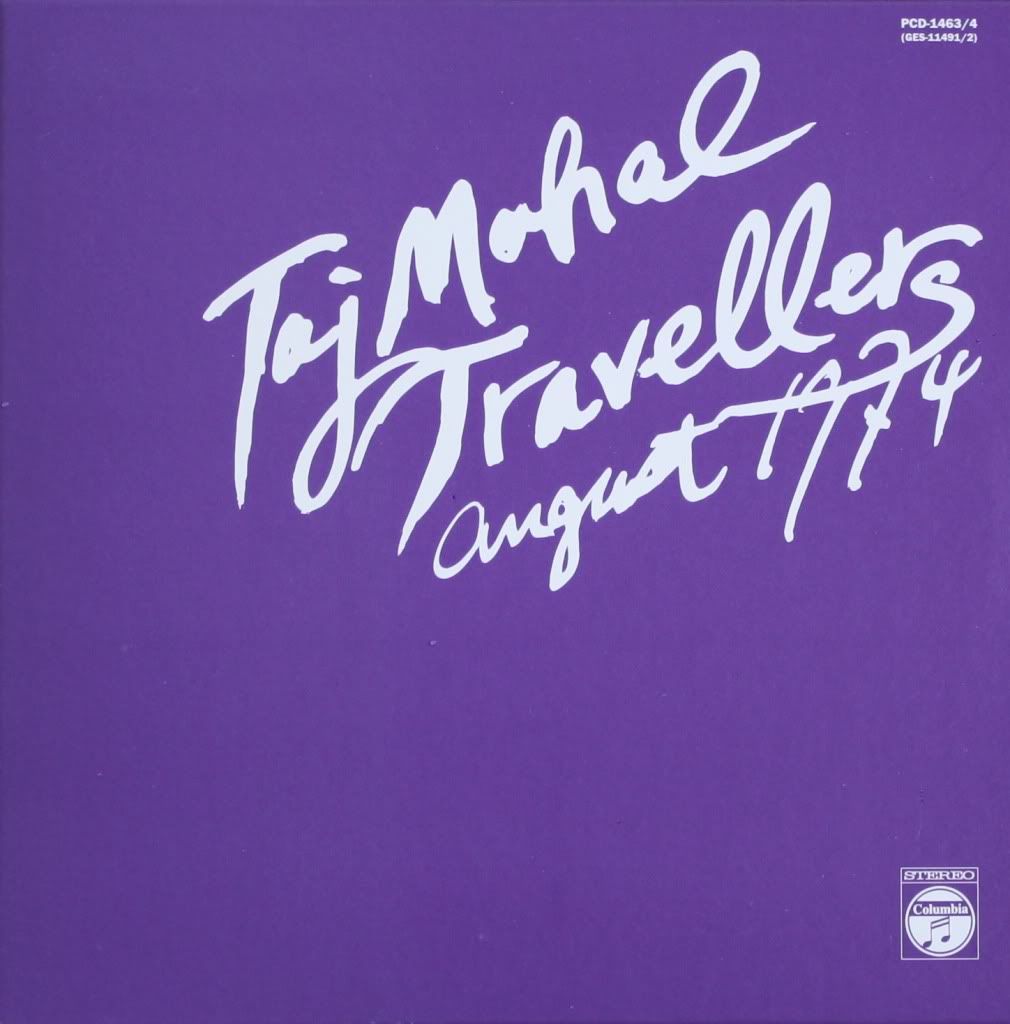
Taj Mahal Travellers - August 1974


Taj Mahal Travellers has nothing to do with American blues rock, or anything to do with the Indian mausoleum, for that matter--they're Japanese.  This is another great example of music that should not be judged by traditional aesthetic standards as well as a good comparison/contrast to the AMM album I wrote about earlier this week.

The particulars of this music are actually easy to describe--few instruments are usually playing at the same time, there's little in the way of tonal development, and it's quite repetitive.  Though each track fades out at the end, it appears to be a continuously-recorded performance.  The backbone of the group's sound is drone; the recording moves incredibly slowly and deals with huge blocks of tone.  For instance, at the album's outset the main drone is a bowed electric guitar, which plays more or less continuously on the same note while hand percussion, wooden xylophone, synthesizer, some sort of brass instrument, harmonica and voices all fade in and out.  The instruments make and repeat short statements, or they let loose long threads of tone, layering with the guitar (for now) into the texture of the overall drone.  Add to the list of instruments a few traditional Japanese instruments and a violin and you've basically got the sonic palette for the whole album, and it's a double.

Yes, it's easy to describe what's being done for over 80 minutes worth of music, and yet, when it comes to describing just why this album is so righteously awesome, the right words just can't be found.  Though the style of music is totally different, on one level this album is strongly reminiscent of Miles Davis' On The Corner.  At any given time, there aren't really that many instruments playing, but if you pay attention you start to notice that an instrument will appear in the mix, hang around for a few minutes then fade out just as delicately as it originally appeared, contributing a texture or color to the sound without altering the overall mood.  After a while, though, you might notice that none of the instruments that were playing 20 minutes ago are still playing.  The overall mood and quality of the sound moves similarly, changing slowly and subtly but hitting a few fairly distinctive areas over the course of the album.  My favorite passage happens about a third of the way through the second track, where the layered wordless voices and dulcimer-like Japanese folk instruments reach a soaring, epic swell.  The third track has some pretty awesome primal percussion/synth jams, and the fourth has a lot of delay-treated violin.  This is one of my favorite mood-centric albums--the overall feeling is mysterious, cathartic, and at times pretty weird.  While it's pretty moody, it's not really too dark, and it functions equally well as a meditative soundtrack as it does for close-listening.  The emphasis on shifting texture, the change between spaciousness and thick soundscapes, and especially the sound-exaltation that's possible when you really lose yourself in the timbre of the droning instruments offers an experience unlike a lot of mainstream music, but at the same time fairly accessible.  It's not quite as sonically-challenging as the less-repetitious and more freely-atonal works of a group like AMM, but this (and their strongly-recommended first album) demonstrates that experiments with free improvisation can deliver widely differing but similarly rewarding results.

This album is out of print...find it here.

Tuesday, March 22, 2011

Come November


` ` ` ` ` ` ` ` ` ` ` ` ` ` ` ` ` ` ` ` ` ` ` ` ` ` ` ` ` ` 
Come November,
I need someone who'll pander to my beliefs
In brief--
If he wants my vote, rote memorization of newscast persuasions won't do
True, they can be compelling but selling's not always the top goal
                                          --full stop (whole)
I'm afraid we disagree

I want someone who's said, instead of
"God bless us,"
"Maybe our messes stem from our own hands."
Grand speeches reach us, teach us false pride
While others deride what our real progress lacks
                                           --tax.

I need somebody who knows some wars aren't
worth beginning (or winning)
Who knows that a rifle and a contract a hero
do not necessarily make
Take, for example the so-called bravery
of slavery to flags and empty ideals
that steal your days to pay the already rich
                                            --you were tricked!

Please, show me someone whose thoughts aren't bought
by the sheen of a preening wool-pulling machine
Whose spleen stomachs all sides
not non-sides of meaning
manufactured for our end

Send someone quick who's not too thick to shout:
"The more we know, the less it shows!"
Whose throat parches at our sleepwalk forced marches--
Our arms raised, bills brandished in bare fists
kissed by the flaccid promise of
satisfaction from checking purchases off a perpetual list
                                             --will you ever get pissed?!

I need someone who's aware change doesn't happen
in two- four- and six-year increments
Whose implements and wisdom are unhurried
Who's worried, to boot
that the root's that there's more new ones breathing 
than older ones leaving

I need someone who doesn't exist
If you need me, 
I'll be dangling my feet in the water,
my slaughtered ballot already confetti
in the victorious breeze


` ` ` ` ` ` ` ` ` ` ` ` ` ` ` ` ` ` ` ` ` ` ` ` ` ` ` ` ` ` ` ` ` `


An uncommonly political song for me (though the conclusions are perhaps familiar) and a solid step forward on the poetry side of things.  I've been having lots of fun lately getting more and more fluid with rhyming--both in placement and how accurate/imperfect the rhyme is--and this song is the tip of the iceberg.  The process has been freeing, allowing for some associative ideas to arise unexpectedly, though at times to the extent that the resulting poems are totally unfit to accompany songs.  I wasn't sure if I could do it with this one, but it's actually been fun performing the serpentine thing.  There is no structure other than a repeating melodic motif, though it's fairly firmly in a single key--you'll forgive a few departures, right?  I'm going to try not to beat these things to death and make people work a little harder, but I will say that I couldn't resist intentionally mixing a couple of bodily metaphors.  Bad poetry--C minus.

Monday, March 21, 2011

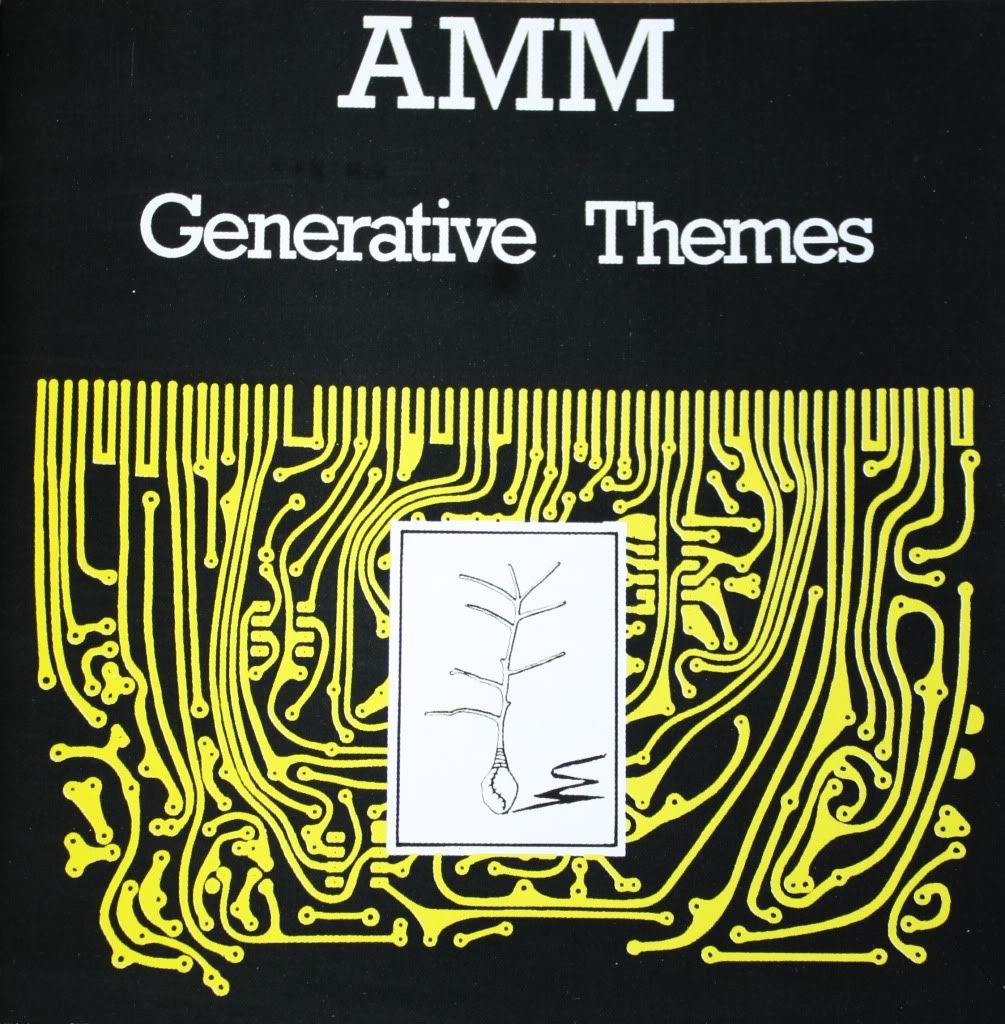
AMM - Generative Themes


AMM are the perfect group to bring up after part two of the essay I just posted, and Generative Themes is as good an album of theirs as I could hope to choose for an auditory example of some of the ideas discussed therein.  AMM was formed in 1965 with the stated intent to make music completely unrelated to any established genre.  By 1983 they'd gone through quite a few lineup changes but their group aesthetic had progressed somewhat close to the realm that they currently inhabit--free improvisation with a somewhat meditative feel, occasionally punctuated by noisy outbursts.

Generative Themes is a bit of an unusual AMM album because it's a studio recording--for this reason, it's made up of four discrete tracks instead of a single album-length track or an entire performance split up into gapless tracks for navigation purposes.  I'll be up-front--this is one of my favorite AMM albums (though I do have several favorites).  It's the first AMM album to feature pianist John Tilbury (a member to present day) and also the first to be saxophone-free.  The result is a somewhat intelligible mix of Keith Rowe's tabletop guitar and radio tuner, Eddie Prévost's percussion and Tilbury's prepared piano--for the most part each instrument is distinct and the personality of each performer is somewhat apparent, at least to a much greater extent than on the gloriously cacophonous AMMMusic or The Crypt.

Due to the nature of the album's recording, it's possible (though not necessarily obligatory) to make statements about each track as individual "themes."  The first is reminiscent of somewhat quieter early AMM--Rowe's guitar creates a gently percussive droning atmosphere, like he's dragging a pick (though it's likely something else) slowly across the coils of the strings.  Inaudible radio lurks in the background, with the occasional word or phrase popping out into the space left by the musicians.  Eventually Prévost joins in with toms and cymbals, and Tilbury makes some opening statements with the piano--the prepared instrument sounds at times more like a wooden xylophone than a piano--it's otherworldly.  The second theme finds Rowe conjuring more uncommon sounds out of his guitar, with repetitive waggling noises and some liquidy but tuneless drones (sorry, this is the best way I can describe it).  The overall texture of the track is dynamic, with lots of spaces between the piano notes and drum beats--sort of like popcorn popping, but much more engaging.  After listening to a lot of more recent AMM albums, it's a fun change to hear Prévost playing like an actual drummer--the track winds together on the last couple of minutes into as close of a groove as AMM probably ever get, with delightfully wonky beats on the drums and some aggressive keys from Tilbury. The third theme is more brooding, with some great Rowe radio moments (at one point a child's voice audibly calls "It's a pie--it's hot!"), and Tilbury playing low on the keyboard's register.  There's still plenty of space between short bursts of sound--the texture is mottled, almost playful, at times.  The final theme conjures some of the early AMM spirit--some serious noise happens, with a barrage of radio ("the GEEK"), lots of tom and cymbal work from Prévost, thick clusters on the piano, and some wild, overdriven guitar squalls.  Just five minutes before the end, the clouds break and things quiet down--the space returns, leaving pause for thought and the occasional brief noisy surprise from drum or piano.

Because of its abstractness, it's tough to write about this kind of music in any great detail, but among the AMM canon I think Generative Themes presents a pretty balanced amount of each personality as well as a good mix of old AMM/new AMM, quiet/loud, spaciousness/density, fast/slow, and the ever-present (yet easily-forgotten) element of chance--things lined up quite well, from Rowe's blind radio pulls to the collective teetering grooves which develop only to quickly disappear.  This would make a good first exposure to AMM. 

Get 'er here from the label, or from Amazon: Generative Themes.

Saturday, March 19, 2011

How Do I Love Thee? Let Me Count the Ways - Part 2


Before delving into the more elemental aesthetic elements, I’d like to propose that the deconstruction of and experimentation with the aforementioned aesthetic elements creates an enormous pool of aesthetic possibilities for expanded enjoyment.  Predictably, engagement with the central pillars of melody, harmony and structure present the most wide-reaching potential for experimentation.  Atonality—the partial or complete abandonment of traditional melodic and harmonic structure—is probably the single largest tool in deconstructing melody and harmony.  Atonal music is capable of flouting every single rule and expectation that comes with traditional harmony, bringing with it a vast freedom on the part of the musician or composer.  With this freedom, though, comes the undeniable fact that the resulting music contravenes the sonic expectations of most listeners—dissonance becomes the norm, and the unfamiliar harmonic structure can be difficult to assimilate.  Likewise, deconstruction of basic structure can also lead to extreme freedom but potential pitfalls in terms of accessibility.  Progressive rock pioneers of the 1970’s stretched the boundaries of traditional rock structure by writing extended,

Friday, March 18, 2011

How Do I Love Thee? Let Me Count the Ways - Part 1


Before I start reviewing some of the less…conventional…albums I’ve come across, I think it’s time for a bit of an informal essay on the subject I’ve been putting off for a while—to the point that it’s prevented me from writing about a few different groups and albums whose style requires a proper introduction.  Since this piece is more a collection of thoughts on a rather intangible subject, I won’t be providing a whole lot of references.  More likely, I’ll make reference to certain aesthetic components mentioned here as I review more albums, providing aural examples that correspond to the concepts.  Most of what I’m going to discuss here is old news from a music history perspective, and I don’t pretend to have said anything for the first time, though I am using my own words.  Rather, I intend to express a subjective opinion as a music lover and musician regarding music’s full aesthetic potential and argue against the deliberate limitation that seems to dominate the musical landscape as much as a century after these creative advances have been made.
This piece is not meant to systematically map the aesthetics of music with words (a fool’s errand), nor is it an attempt to confine musical pleasures to the topics and categories I mention.  Instead, I hope it will identify and illuminate some of the facets of music in which we habitually (but perhaps unconsciously) take pleasure.  Words will always be an inadequate tool when it comes to completely describing something as elusive as music, but an attempt at articulation can only make for clearer communication and a better (if imperfect) understanding of the subject.  From there, I’ll explore the slightly different but equally compelling

Monday, March 14, 2011

Merle Haggard - Sing Me Back Home


As whole albums go, Sing Me Back Home is a relatively minor entry into Merle Haggard's early catalog.  Most of the early Capitol Hag albums are built around a hit, a few potential hits, and some filler.  While you can't name a 60's Merle Haggard album that I don't enjoy from beginning to end, it's true that the good stuff is more concentrated on some albums than it is on others.  In other words, an album stands or falls based on the quality of the filler, and Sing Me Back Home has quite a bit more filler than it has potential hits.

The title track is nice and solid--stately and emotional, with a sort of anthemic quality that's a new thing for Haggard at this point in his career.  There are a couple of good drinking songs--"Wine Take Me Away" and the heartbroken "I'll Leave the Bottle On the Bar," as well as the catchy mid-tempo "Where Does the Good Times Go?"  "Seeing Eye Dog" is the most Bakersfield-sounding track on the disc and probably my favorite, with a pounding tempo, nimble steel guitar and some powerful vocals from Merle.  Add to the list the well-handled novelty tune "Son of Hickory Holler's Tramp" (it's a surprisingly jolly tune about an abandoned single mother who provides for her 14 children by becoming a prostitute) and you've hit the album's brightest spots, songwriting-wise.  Elsewhere Merle mines the songs of his Bakersfield forbears, with the somewhat out-of-place "Mom and Dad's Waltz" and tosses off the similar yet similarly out-of-place "Home is Where a Kid Grows Up." Songs like "Look Over Me," "If You See My Baby" and "My Past is Present" lack the wit, verve and hooks of their like on earlier Hag albums, though there's nothing objectively wrong with them.

Still, Sing Me Back Home is an enjoyable listen irrespective of the quality of the individual songs--the production is sterling, with a lot of close-miked guitars, drum kits and backing vocals, and Merle's vocals are worth paying close attention to for an entire listen for the depth of nuance and subtle emotion; he's not quite singing the phone book, but it's clear that his (and his band's) abilities as performers are capable of elevating material much higher than its weaknesses would seem to allow.

Get it here on CD or MP3.

Thursday, March 10, 2011

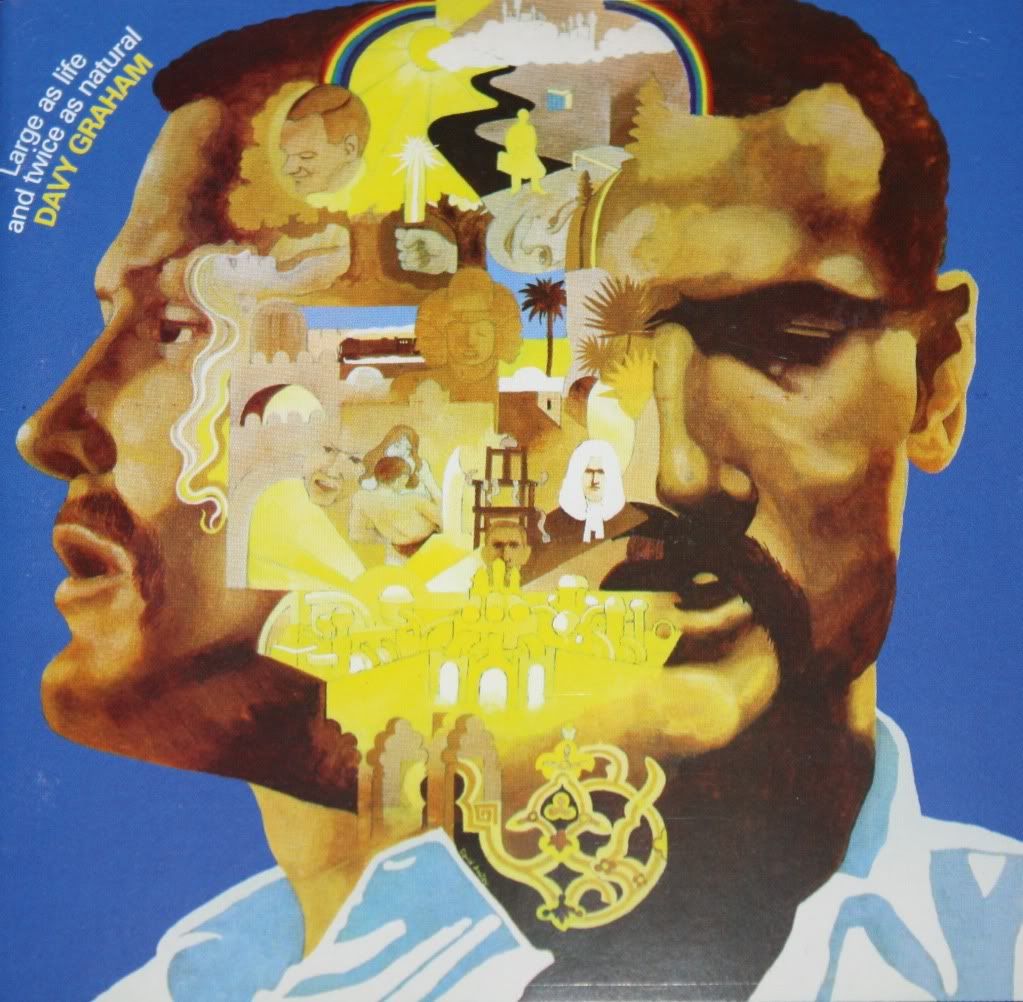
Davy Graham - Large As Life and Twice As Natural


Time to turn our probing ears to another unjustly-overlooked guitarist.  Today, few have even heard of Davy Graham, but he's unanimously considered "important" by those who have--a host of better-known performers and guitarists are quick to drop his name (Bert Jansch, John Renbourn, John Martyn, Paul Simon, Ralph McTell, Roy Harper, Jimmy Page, Martin Carthy, the list goes on...) as the most adventurous and eclectic guitarist of the early 60's English folk revival, yet his actual work remains painfully obscure (though thankfully currently in print).

Davy Graham's fourth LP, Large As Life and Twice As Natural (genius title!) presents equal justification for his esteemed reputation it does evidence for his failure to achieve commercial success.  The solo guitar "Tristano" reveals Graham as a virtuoso of the truest stripe, capable of seamless transition between (or simultaneous juggling of both) rhythm and lead parts, while the song itself fuses jazz, blues, folk and middle-Eastern modalities in a way that nobody in the mid-60's could have even imagined.  That's how Davy is usually described by the converted--a loner whose penchant for world-traveling gave him an untouchable breadth of experience which, combined with his seemingly boundless imagination and ungodly chops, meant he was fusing Irish folk songs with Indian ragas and Eastern-izing obscure blues songs (by all accounts he invented DADGAD guitar tuning) while his later followers were aping Anthology of American Folk Music standards and worshiping Dylan.  In reality, though, very little of Graham's recorded output consists of solo guitar, which I think might have played a role in his commercial difficulties.

More representative of Davy's standard MO would be his expansive reading of classic British folk song "Bruton Town," where the guitar flits jazzily around the traditional melody, refusing to adhere to traditional folk rules.  Graham's voice is probably his greatest limitation--not bad (I actually enjoy it) but certainly not traditionally "beautiful" or as marketable as his guitar abilities.  Likewise, "Both Sides Now" is a revelatory opener--its languorous, modal opening makes you wonder if this is actually the same "Both Sides Now" you thought it was, then BAM!  The bass and drums kick in and Davy presents us with an uncannily energetic and imaginative reading of Joni Mitchell's oft-covered standard.  The cacophonous rhythm section ably handles the eclectic mix of styles present here (Pentangle's Danny Thompson has got to be one of the best session bassists of the time period), bringing lots of ethnic flair to the Eastern songs (the major-key "Sunshine Raga" and minor-key "Blue Raga," as well as the hypnotic "Jenra") and provide a suitably grinding bottom to the  blues numbers ("Freight Train Blues" has some awesome cymbal work and Davy's singing is pretty rocking).

The whole album feels like it was recorded live (there are plenty of vocal imperfections and loose improvisation to attest to this observation) and the sound is great--nobody else's guitar sounded like Graham's.  The commercial flaws of the albums can be seen a mile off, though--it's neither folk (too experimental and eclectic) nor folk-rock (too jazzy and accoustic), and it's got nothing to do with psychedelia (apart from the delirium-inducing guitar excursions), which was the rage in 1968--how do you market that, and to whom?  Perhaps Davy's eclecticism became his career's undoing (deliberately becoming addicted to heroin in order to emulate his jazz idols probably didn't help either) but for me it's the best thing about him--you never know where the next song is going and his playing is full of surprises both compositionally and technically.  Here Graham might not quite fuse as many genres within the same song as he does on Folk, Blues and Beyond, but it's a fine representation of his style and contains some career highlights. 


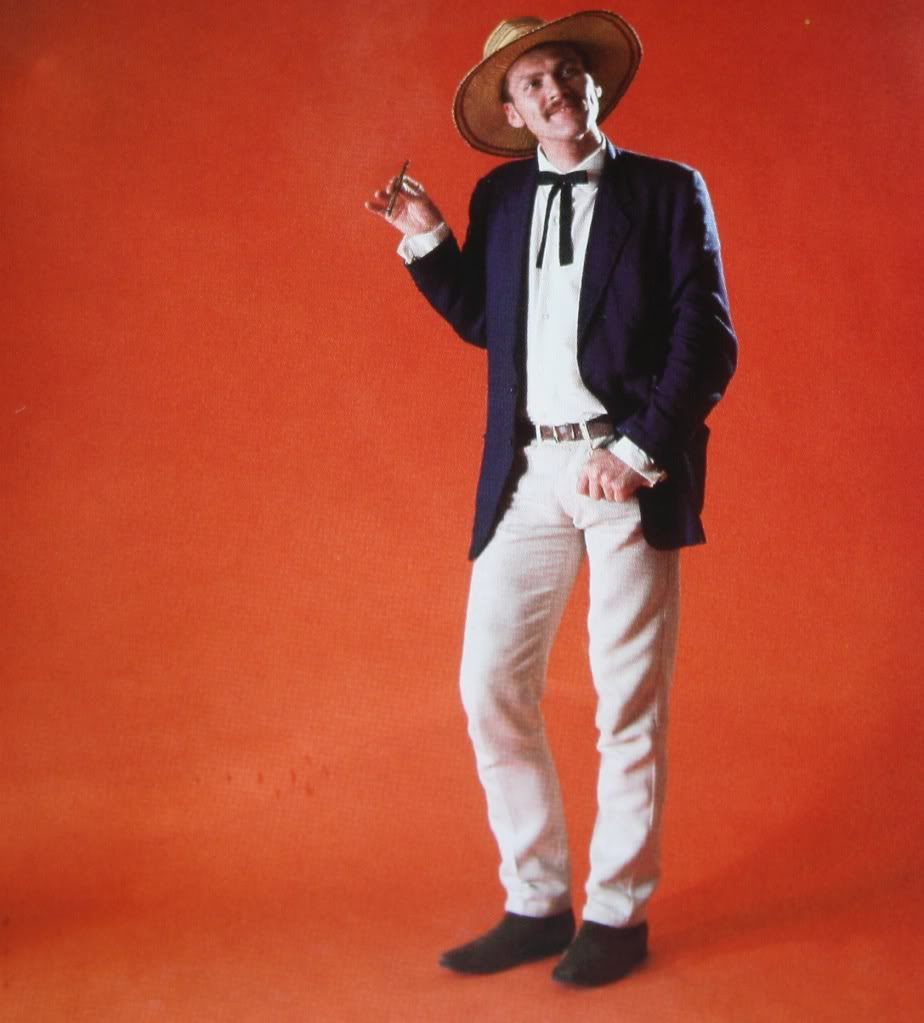
I couldn't resist including this shot from the album notes--what a cigarillo-smoking, big straw hat-wearing ladies man.  Thanks Davy. Get the CD here.

Monday, March 7, 2011

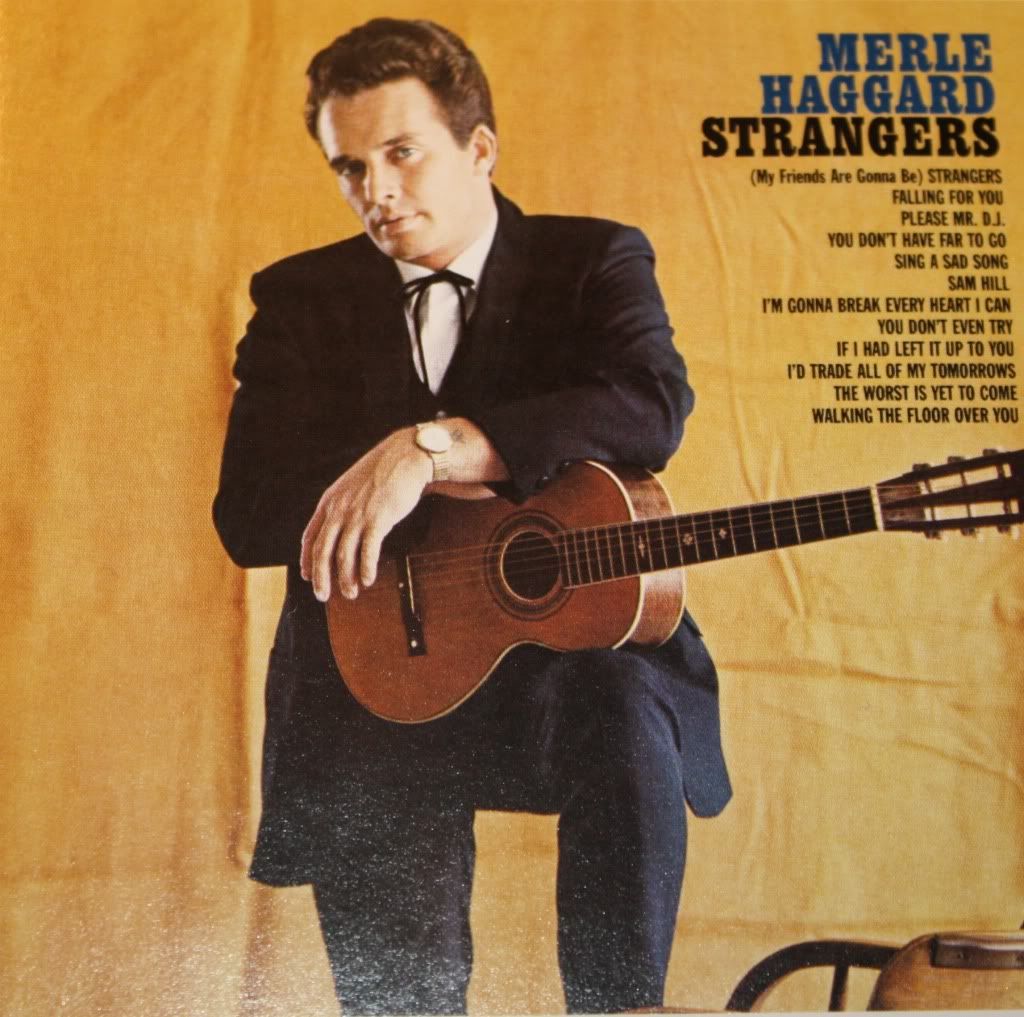
Merle Haggard - Strangers


Take a look at Merle Haggard on 1965's Strangers: even with that silly tie and leaning on that tiny guitar, he already knows he's a badass.  As might be expected, though, the full flower of Merle's greatness hasn't quite bloomed on this, his debut.  To my ears the reason is a combination of production/style and material.  It's pretty clear that Merle's being pitched as more of a crooner, with an emphasis on ballads and smooth melodies--too often the arrangements include big string arrangements and Nashville Patsy Cline-style backup singers, and the amount of reverb would suggest that Merle was performing inside a cave.  In retrospect it's easy to criticize the production choices, but it's worth mentioning that the more muscular Bakersfield brand of country that became Merle's signature was still in its very early stages in 1965--though Together Again/My Heart Skips A Beat had already been released in '64, there wasn't much precedent for the Bakersfield lightning bolt Haggard was about to call down in 1966's Swinging Doors and The Bottle Let Me Down.

So, that brings us to the material.  There are a handful of good-to-very-good songs, my favorites being "I'm Gonna Break Every Heart I Can" (or my name ain't Merle), the ridiculously awesome vocal on "Sing A Sad Song" (probably the only place where the crooner image actually fits), the title track, and "You Don't Have Very Far To Go" (for some reason Merle's recorded this song on at least three studio albums; my favorite version is on Branded Man).  Oh yeah, we also get a dynamite song title--"The Worst is Yet to Come."  There are a few bombs, too, like the novelty tune "Sam Hill," and a few bland ballads like "Falling for You" and "You Don't Even Try."  Merle's signature writing style was on its way to fulfillment, but he's only got writing credit on half of the songs, and it's pretty clear he didn't pick all of the covers (a glance at later albums' writing credits reveals that Merle had really good taste in filler; that's why the albums are so good).  Instead of a classic Hag album, we get a soft launch;   Strangers is a pleasant enough listen but I'm always left thirsting for a little more energy or a little bit better writing.  Thankfully the next nine albums of originals deliver better on both counts every single time.


Get it here in CD or MP3, along with the immortal Swinging Doors and The Bottle Let Me Down.

Thursday, March 3, 2011

Gene Clark - White Light


This album is probably one of those to which I've become too close to properly review.  I've listened to the whole thing upwards of 35 times, according to iTunes, to the point that the songs are totally ingrained into the fabric of who I am.  Like Linda Perhacs' Parallelagrams, I still remember the first time I listened to it about five years ago, sitting there still on my bed, not doing anything else.  40 minutes seems like a long time when you're just sitting there focusing on an album you've never heard before, and I remember thinking "Huh," when the album finished--neither impressed nor displeased.  That's the beauty of Gene Clark--it's a "huh" the first time you listen, then gradually it's an "oh my god this is awesome" as the plays increase.  I know some No Other fans find this album boring, but I can't see why, other than that the instrumentation is less ornate and there's perhaps a little bit less drama.

To me, this album is perfect singer/songwriter, through and through.  Gene's voice is so achingly plaintive, his words are deceptively simple the mood is meditative, and the playing is ear-catching enough to reward attention but never overshadows the songs.  A lot of the credit's probably due to producer/guitarist Jesse Davis, whose subtly deft, wrinkled arrangements reward multiple listens and whose slide guitar backs many of the tracks with the slightest bit of muscle.

The love songs here are tough to match anywhere--"With Tomorrow," just Gene and his guitar, subtly slays, with Clark imortally intoning "it was more like a dream than reality/I must have thought it was a dream when you were here with me" that marks the maturation of the "less-is-more" ethos that made "I'll Feel a Whole Lot Better" the best Byrds song on record.  Likewise, the slow-burning "Because of You" is pure emotion, founded on a subtly catchy guitar riff and lifted into the clouds with some atmospheric organ work.

My favorite tracks, though, come from Clark's more inscrutable side.  That Gene Clark was a mystic I have no doubt--it's pretty clear from No Other's torturous catharsis--but here we have an even quieter type of probing the beyond.  The rapturous "White Light" portrays the mystical experience like some sort of back porch hoedown (my heart always pounds when he joyously calls out "white light"), while the waltzing "For A Spanish Guitar" finds Gene in the ages-old struggle between a man's sense of self and...everything else.  The most glorious thing about this is it's not a description, not an explanation--it's just Clark expressing this quiet, ineffable combat as if he were just talking to himself (we'll forgive him the misuse of the word "whom").  To me, the album's production mimics the same ineffability--just the way it sounds feels so good (seriously, the opening five seconds are like a gust of warm air).

The album ends with a Dylan cover (ironic, considering that the music could easily be described as "Dylanesque" but that it also transcends the trappings of Dylan's writing style) and the entirely impenetrable rocker "1975;" I've talked with a few people who find this album boring--so it may be, but such a judgment should be made after at least a few close listens.  I don't think I've ever been bowled over by a Gene Clark album on first listen, but I can think of at least three that will remain safe in my cold dead clutches.  For those of us with sympathetic tastes, White Light is an unassuming masterpiece of form and performance and a lifelong companion.

Get it here on CD or MP3, with bonus tracks.

Wednesday, March 2, 2011

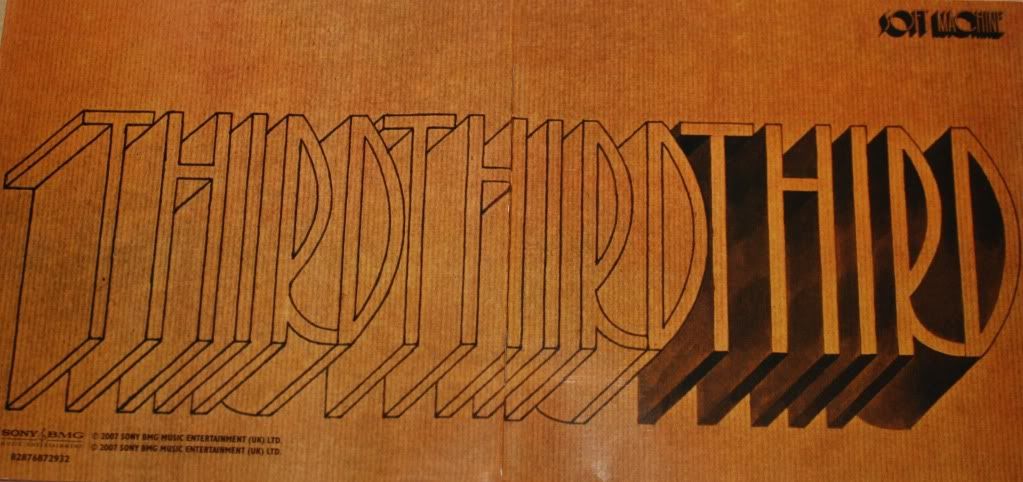
Soft Machine - Third


I've been thinking and thinking about which album I should review in order to broach the subject of the Canterbury scene--something quintessentially Canterbury, exhibiting all of the hallmark characteristics.  Ultimately, I'm not sure that's quite possible--there are albums that seem textbook Canterbury but aren't really that great, don't feature any of the important Canterbury musicians, or are just too obscure to introduce a phenomenon that's simultaneously a scene built around specific bands and people, but also a genre and approach to music that's ultimately transce.nded its origins to produce a lot of great music that has absolutely no connection to the original scene.  So, instead of attempting to find the Canterbury exemplar, I've decided to just pick one of the very best albums by arguably the most well-known Canterbury band--Soft Machine's Third.

On Third, Soft Machine became something very different from what they were on their first album (an organ-driven jazzy psychedelic pop group) as well as their second (an even more abstruse psychedelic group augmented by jazz instrumentation)--on Third, Soft Machine became something more like a jazz combo playing a more serious and epic version of what they played on Volume Two.  It's early jazz-rock fusion of an undeniably British stripe--the booty-shaking Afro-American elements that drove the seminal fusion behind Bitches Brew is nowhere to be found, replaced instead by some sort of dark, intellectual, avant-garde European sensibility.

Take the Hugh Hopper-penned opening track, "Facelift," for instance.  The live-recorded behemoth of a song opens with Mike Ratledge's outrageously overdriven organ (a classic Canterbury element) in a flagrant barrage of sound--it's arrhythmic, amelodic and fucking righteous--it's not notes, it's sound.  Say what you will about overintellectualization robbing "rock" music of its bestial nature, there's something primal in the howl and shrieks that Ratledge calls out of that thing that destroys the system in a whole other way.  It's a good six minutes before the lurking horns fall in step and state the song's main theme over Hopper's fuzz bass (another Canterbury staple).  The melody is a thing of dark imperial grandeur, threatening and tense, suddenly shattering into a driving rock beat, with Elton Dean's saxophone battling with Ratledge's organ for shrieking supremacy.  Through some clever editing (this is a live concert, remember) we cut away to Ratledge on a hypnotic electric piano vamp that prefigures Hopper's 1984 album.  A forboding flute solo, then the whole thing slowly builds back into the main theme, suddenly run backward and the song closes with analog tape squeals.  We're already a long way from home--the last vestiges of pop instincts of Volume Two have been sacrificed to the jazz gods--and what a ritual it is, with some crushing solos from Ratledge, Dean and Caravan's Jimmy Hastings on flute; the free jazz influence here is much stronger than ever before, with texture and chops reigning supreme.  Robert Wyatt, that most-celebrated of Canterbury figures, "only" plays the drums, effortlessly making the complex changes and driving the whole beast forward with imagination and verve.

"Slightly All the Time" lightens up just a bit, built on songwriter Ratledge's odd-metered electric piano riffs' interplay with Hopper's looping bass intervals.  Wyatt shines several times on cymbals.  The multi-part song treads some slow-groove territory and abruptly shifts between hypnotic vamps and manic "The Price Is Right Theme Song From Hell" excursions.  Just when you think the group's diving undersea to Sun Ra's Atlantis, "Moon In June" comes along--Robert Wyatt's thin, high, lispy vocals remind us where the band came from.  The album's third epic suite combines Wyatt's playful whimsy (another Canterbury cornerstone) with the band's newer experimental bent, soon wheeling away from Wyatt's vocal meanderings to fast riffing to a warped soundworld of slowed-down tapes, skittering violin and Wyatt's wordless voice blending with the other unrecognizable instruments as the thing rumbles to a close.

The double album finishes on the dreamiest number of the bunch, "Out-Bloody-Rageous."  Again, it's more about sound, timbre and texture as several minutes of delay keyboard collage bookend the extended suite, also appearing at the midpoint.  The driving melodic sections are again backboned by Ratledge's keys--he often solos on organ over his mightily complex electric piano riffs.  The song is similar enough in mood and style to match the rest of the album well but it takes a few listens before its individual character shines through--after all, there are only four tracks but they're each almost 20 minutes long; surely a little attention will help unlock their secrets.  I love the alien sense of melody on this album as well as its cohesiveness and foreboding majesty--it's an unexpectedly dark turn in the progression of Soft Machine's albums, but it's also a masterpiece in composition and fearless exploration of jazz fusion, which at the time was brand new.  It's hard to believe the direction other artists took the genre as the decade wore on--why would you ever want Weather Report when fusion can sound this threatening?  I didn't fully appreciate this album until getting the 2007 CD remaster--the earlier CD reissue's sound is quite murky which, combined with the material's murkiness, makes assimilating the song structures and recognizing and appreciating the melodies much more difficult.  Plus, the new remaster has three live bonus tracks.

So, Soft Machine was home to a number of Canterbury luminaries--Robert Wyatt, Hugh Hopper, Mike Ratledge, Kevin Ayers (formerly) and Elton Dean--and exhibited (actually, it often created) many classic Canterbury musical traits from the jazz influence, the sense of lyrical humor, fuzz bass and overdriven organ, as well as the general experimental spirit of the entire scene.  As will be apparent as I review more good-to-great albums from this scene, its characteristics are fluid enough that they're not immutable, and "Canterbury" became more of an attitude toward music that transcended its geographical origins.


Get it here on CD, with a bonus disc.

Tuesday, March 1, 2011

Cheap Seats at the Cartesian Theater


 ` ` ` ` ` ` ` ` ` ` ` ` ` ` ` ` ` ` ` ` ` ` ` ` ` ` ` ` ` ` `
And who, pray tell
do you think you are?
What might you think
you're saying?
What do you prove?
Can you act?
Are you more than a caption?
Are you trapped?
Can you become no stronger?
Are you even aware?

You think you know it means something
You know you think it means something
You mean you think you know something
You know you mean to think something
You thing--you mean to think you know!


` ` ` ` ` ` ` ` ` ` ` ` ` ` ` ` ` ` ` ` ` ` ` ` ` ` ` ` ` ` `
Another new song I've been playing at recent performances.  This will likely be the title track on the second album, whenever that happens.  I'm pretty excited about how the project's shaping up--it'll be a collection of mostly short (< 2 minute) songs, many of which will explore different aspects of the human mind.  For example, "One Tea" partly concerns the brain's ability to visualize and conceptualize in abstract, not to mention become lost in thought to the point of ignoring current sensory input.  The short song format should allow for a lot of wide-ranging musical experiments but ensure that they're all easily digestible (well, at least from the perspective of time commitment--some, including this song, tread near or past the far reaches of what I was messing with last time). 

I spend an inordinate amount of time thinking (insert comment about irony here) about how our brains work simultaneously as the executors of our actions and as the collectors and facilitators of our sensory and mind experience.  When I'm feeling particularly...frank, I'm tempted to think that our brains most often act automatically to fulfill their programming--to unconsciously act as we've acted before or are predisposed to act, to supply habitual necessities, to remember and want to re-achieve pleasure and avoid pain, and to veil it all with the so-arrogantly-human conscious certainty that each of our "selves" is really in control of what we're thinking, deliberately choosing before each action, and serving something greater than mere biological chemistry and deterministic behavioral probability.  Luckily, with the help of modern cognitive science and a bit of observant humility it's possible to at least try to rise above this oh-so predictable hubris and attempt something more.  It might not be wrapped in as neat a package, but acknowledging the realest state of things as accurately as possible seems to me to be the first step forward. 

Anyway, one day I was thinking something along these lines and was suddenly aware of that part of my mind which evaluates these thoughts--sure, I may (or may not) have a skeptical thoughts regarding the level of free agency the human mind actually possesses, but where do those thoughts come from?  Are they subject to the same predictability and programming, or do they perhaps issue from a less rigidly-regulated part of the mind--is it possible to stretch that rigidity and, if not travel to completely unmarked territory, to at least tread in a slightly different direction and free things up a bit?  This song addresses that part of my mind that sits in judgment of my programming.  Is it evidence of a more powerful agency, or merely illusory, another aspect of the mind's complexity--efficacy or description?  If it's indeed a sign that more can be wrung out of our minds than zombie-like fulfillment of our predispositions, is this small part of the mind enough to overcome the habitual brain chemistry that gets us through every day, or is it helpless in its novelty?  The shuffling word game at the end of the song ironically warns against becoming too impressed with the mind's ability to oversee some of its own processes.  Let's not forget what we are, where we came from and where we're going.

Musically, the song doesn't have any sort of real time signature, or a key, for that matter, though it's based on fifth intervals so each chord isn't harmonically unfamiliar to the ear.  It's got a tempo and a couple of recurring patterns, but the number of beats of silence between guitar strums alternates even if the pattern is similar.  It's also an experiment with using only bar chords.

Monday, February 28, 2011

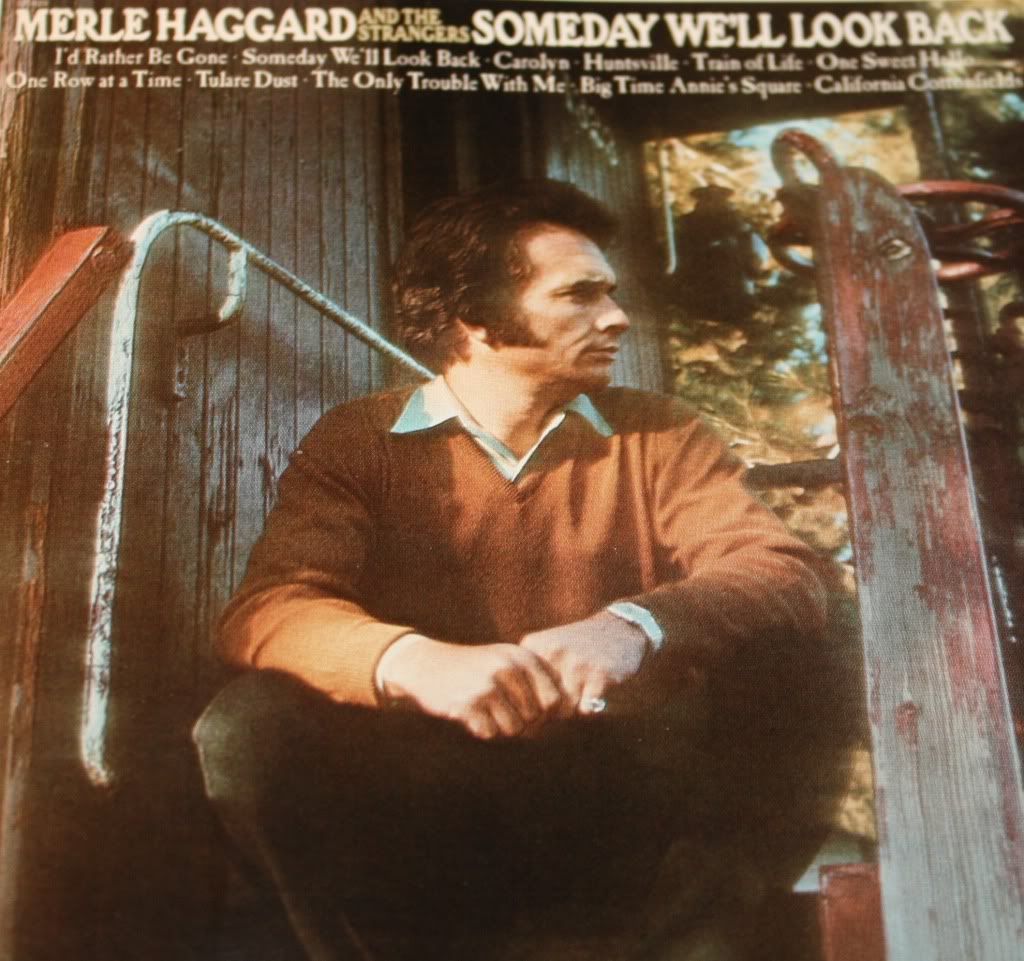
Merle Haggard - Someday We'll Look Back


Merle Mondays continue with the Hag's 1971 tour de force.  As if releasing a progressive gem in Hag earlier in the year wasn't enough, Merle saw fit to bestow upon us an even better album of bewitchingly eclectic Bakersfield country in Someday We'll Look Back.

Although my favorite side of Merle is the hard-edged Bakersfield honky-tonk sound with lots of steel guitar, I just can't fault this album (or Merle's entry in the "widest sideburn in the world" competition).  This album blends Merle's songwriting mastery (it's clear that by 1971 he'd achieved an uncommon level of assurance in his songwriting abilities) with some of his most mature vocals and a dizzying array of country blended from everything from Latin to blues on through to jazz, swing and even straight-up pop.

Though it's a mellow listen, this is classic Hag through and through--we get a dig at hippies in "Big Time Annie's Square," a badass prison song in "Huntsville" ("the man better keep both eyes on me/or they're gonna lose ol' Hag"), and some crushing heartbreak laments like "I'd Rather Be Gone."  What really tugs at my heart strings, though, is the authentic nostalgia that pervades the whole set--from the hit title track to the wistful, bittersweet imagery of "California Cottonfields," "Tulare Dust" and "One Row at a Time," Haggard has a way of sizing up his past in such a way that the emotion and sense of remembrance is overwhelming--when Merle sings "California cottonfields--as close to wealth as daddy ever came," you know he lived it.  There are Haggard albums I reach for more often, but this album is like a warm embrace from a relative you haven't seen in years.

Get it here on CD or MP3, along with the similarly strong Hag.

Sunday, February 27, 2011

Third Ear Band - Third Ear Band (Review)


Third Ear Band's second album, 1970's self-titled (now sometimes retroactively titled Elements) builds on the oboe melody-led excursions of Alchemy by assigning each of its four songs to an element.  While the instrumentation is still basically the same as the debut, the songs are considerably more identifiable from each other.

Every time I listen to this album I'm amazed at how fun a listen it is without being particularly melodic--the opener, "Air" gently coalesces out of the ether based on a repetitive tabla beat and some probing oboe and cello/violin groans and fails to present any melody except for an occasionally repeated violin riff.  And yet, its smoky mystery is utterly compelling and lushly gorgeous, especially considering how few instruments produce the music.  "Earth" shifts gears completely, with the strings playing pizzicato over a much more minstrel-like beat from the drums.  Dual oboes improvise gently, probing Eastern-scales, while the tempo subtly gathers pace.  All of a sudden it's an ecstatic frenzy, then just as suddenly the tension disappears, the rhythmic pattern slightly shifts, and the process starts again.  Despite the general mood and ever-present tonal center of the music, there's no real melody to speak of--clear and quite listenable evidence that melody needn't reign supreme as the only musical element worthy of close attention.

"Fire" is a brilliant study in high-register drones and another shift in texture, with a relentless wavering feeling not unlike that of a dancing flame.  "Water" closes the album with an actual melody (imagine that) over sustained violin with just enough dissonance to remind us that we're not in any territory that had been scouted at the time of the album's release, or really a whole lot more since.  As I listen and re-listen in rapture to the strange and evocative sounds these instruments make together, I'm not always sure how the structures pertain to the elements they're named for, but in reality it's immaterial--by consciously giving each suite a distinct mood, the band stretched itself beyond its impressive but sometimes nebulous debut and gave structure to another forty odd minutes of rare beauty with memorable compositional elements.

Get it here on CD along with the band's first album.

Saturday, February 26, 2011

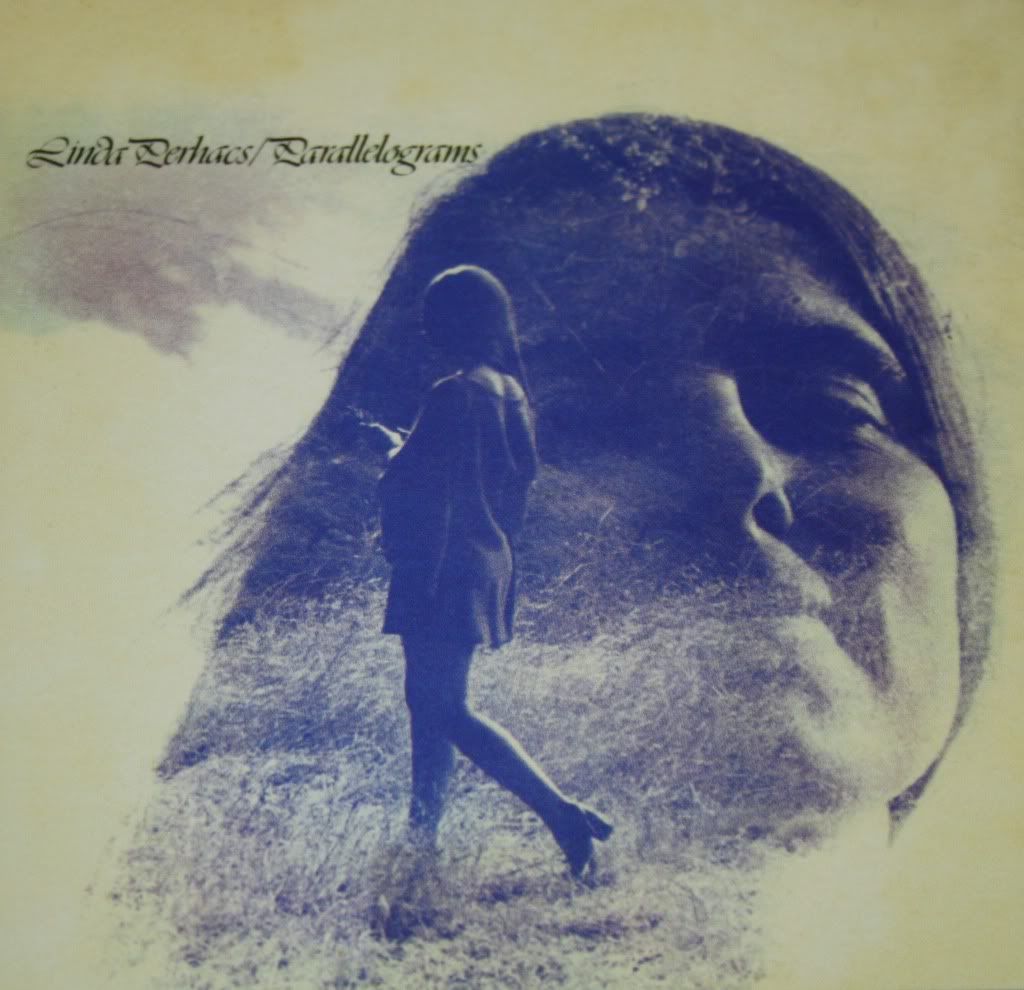
Linda Perhacs - Parallelograms


It's hard to believe but I've had this album for about five years.  It's been interesting progressing from instantly enjoying it on first listen, driving across the Bay Bridge with Sarah in August, to returning to it again and again like an old friend--then all of a sudden I can't imagine living without it.  I hate to blaspheme, but I probably like this album as much or more than I like any one album by Joni Mitchell, to whom people most often compare Linda Perhacs.  Ok, maybe I like Blue as much, but in a different way.

The mood here is flawless--hypnotic, subtly psychedelic, simultaneously hazily nocturnal and narcotically dawn-like.  Perhacs' voice isn't quite as lithe or showy as that of similar female singers, but, more importantly, it fits the songs she's written and serves the words and atmosphere perfectly.  The album's shimmering opener sets the tone--a gently unusual fingerpicked arpeggio is soon joined by Perhacs' quietly intense, cascading multitracked vocals, which emulate the titular rain.  These elements reappear repeatedly--on "Moons and Cattails" and again on the most overtly psychedelic track, "Parallelograms," which blends another chant-like guitar figure with hypnotic vocals--the comfortably dissonant combination is shattered by hand percussion and delay-treated flutes as Perhacs' vocals sink past unintelligibly before recapitulating the original theme.

Some songs reach yearning heights over delicately understated guitar--as when Perhacs pleads, "Dolphin, take me with you..." or on the exquisite "Hey, Who Really Cares?", while elsewhere her delicate vocals convey a sense of place and sense experience that's uncanny, as on the swaying "Sandy Toes" or the almost mystically sensuous "Delicious."  The arrangements are impeccable throughout the entire album--whoever's producing knows just when to leave it to voice and guitar and when to add a reverbed guitar, a 12-string, wind instruments or some appropriate bass and ethnic drums.

Sure, it's easy to point out so-called hippie elements on this album--the amount of time spent lingering on small experiential and nature-oriented details is uncommonly high, and "Paper Mountain Man" and "Porcelain Baked Cast Iron Wedding" sound pretty late-60's.  Last time I checked, though, the value of savoring the moment didn't end with flower power.  It's too late anyway--I'm too close, it's too good.  I wouldn't change one thing about this album--it's these kinds of friendships that keep me coming back--stricken, helplessly content.

Get it here on CD and MP3.

Friday, February 25, 2011

One Tea


 ` ` ` ` ` ` ` ` ` ` ` ` ` ` ` ` ` ` ` ` ` ` ` ` ` ` ` ` ` ` `

One tea shared between two cups
Separate pools, distinct
Two cups tilt--contents together
Crashing marbles, silent groans

Still two together
or now a third--discrete from one?
What force set two from one?
Moot questions, you may assert
Recombination erases any artificial identity

However, moving closer
can't you see?
Two side by side
around
passing under
Restless pacing


 ` ` ` ` ` ` ` ` ` ` ` ` ` ` ` ` ` ` ` ` ` ` ` ` ` ` ` ` ` `

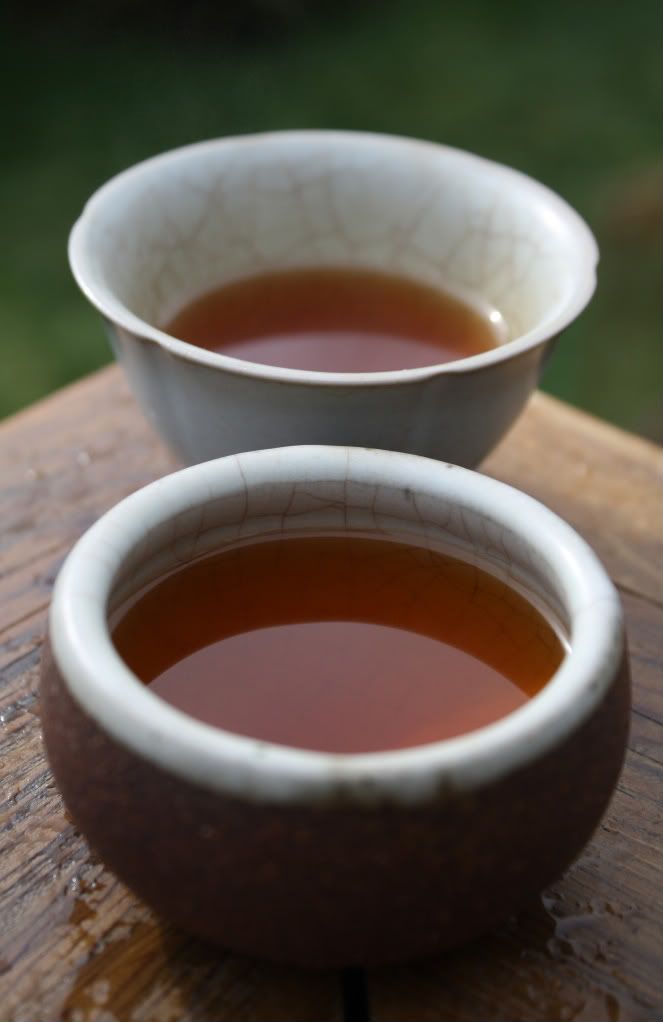
A new poem and song I've been performing this past month.  It's a quiet observation from my tea table.  Here's how it goes--I pour the tea from the pot into the sharing pitcher.  From there, the tea goes into two cups.  Now we have two different cups of tea--sure, it's the "same" tea, but not quite--the tea in the first cup isn't exactly the same as the second--to start with, they're in completely different vessels.  So, now the tea substance in each cup has a name--let's call them "A" and "B."  And what if I pour them back, together, into the sharing pitcher?  Does the tea return to being the exact same as before it was poured into cups and became "A" and "B"?  Is the distinction (which surely described something that was different about the two cups) so easily discarded and forgotten about?  Then I start thinking about the "A" molecules and the "B" molecules swimming, intermingling there in that pitcher.  It's happening as an utterly unmeasurable, ever-shifting dance.  The broader implications of this exercise constitute a substantial cornerstone of my worldview.  It's a good day when I can become so lost in amazement at a small wonder...it's nice to have some perspective.  Oh yeah, this is also a love song describing what happens to two personalities together over time.

Thursday, February 24, 2011

Peter Hammill - Over


Over is probably the Peter Hammill album that's received the most mainstream acclaim, a fact which is aided in no small part by the fact that it's the ultimate breakup album.  A fair number of critics (ah, the critics) praise Hammill's move from sci-fi existentialism to a more "mature" interpersonal lyrical bent.  This riles me for a number of reasons, chief among them being popular music's oversaturation with trite lyrics about love and breakups, and the fact that Hammill's earlier solo and Van der Graaf Generator works act as a cleansing and inspirational alternative in their passion and fascinating depth.  All value judgments regarding lyrical subjects aside, though, Over succeeds in spades at examining oft-repeated material from a fresh perspective and an honesty that makes it seem like the first breakup album ever made.

What I really love about this album is how hard on himself Hammill is--sure, there are the shallow accusations and laments that plague every breakup song, but they always sit side-by-side with Hammill's barbed, self-directed insults and self-blame.  This isn't merely a self-pity party, it's a man wrestling passionately with his mistakes in a vain effort to rise above his own faults.  In this way, Over takes the breakup beyond musical clichés--reminding us all that we're ultimately responsible for our actions--and lifts it to a level of psychological accuracy that most resembles the actual experience of an awful falling-out of any attempt that I've ever heard on record.  The emotions on this album bounce between self-pity, self-loathing, finger-pointing, outward blame, pure sorrow, confusion, anger, regret, betrayal and longing--just like you feel when a relationship disintegrates.  This turbulent stream of consciousness spans almost all of the songs (excepting the parent/child-themed "Autumn," and perhaps the ghostly "This Side of the Looking Glass," which mostly conveys despair); they could easily be strung together as one long internal dialogue.  That's not to say the songs sound samey--there's just an extremely cohesive mood.

Musically, there's much more demarcation.  Hammill's voice has filled out a little since the early 70's, though he's still capable of formidable rasps and pitch-perfect falsetto; he sounds great.  The song styles run the gamut from rockers ("Crying Wolf") to brooding acoustic numbers ("Alice [Letting Go]" and "[On Tuesdays She Used to do] Yoga") to lush, string-backed ballads ("Autumn" and "Betrayed" are like some kind of fucked-up version of Colin Blunstone's One Year) to extended, multi-part progressive suites ("Time Heals" and "Lost and Found").  Hammill's songwriting skills are in full force, and the changing instrumentation and dynamics perfectly suit his inner battles.  In the end, just like in real life, there's no true resolution--just the promise of new love and a hope that history won't completely repeat itself.

My only complaints about Over pertain to Hammill's instrumental prowess (here I'm suddenly wishing for Roy Harper's guitar abilities and Death or Glory?, my second-favorite breakup album)--if ever there were a musical visionary whose instrumental limitations necessitate compensatory collaborators, it'd be Hammill.  He comes up with fine riffs and guitar and piano figures for his songs but too often stiffly plays too many instruments by himself when his songs' creative turns are begging to have their ideas fleshed out by a more skilled guitarist and/or keyboardist--probably why Van der Graaf Generator worked so well.  Really, though, it's a minor issue as this album is a towering masterpiece of song, mood and evocation of one person's intense experience.  Over is far too complex of an album to do justice to in a few paragraphs; it's gnarled, circuitous and achingly beautiful (often in its ugliness)--time to just listen to it.


Get it here on CD, or here on MP3.

Monday, February 21, 2011

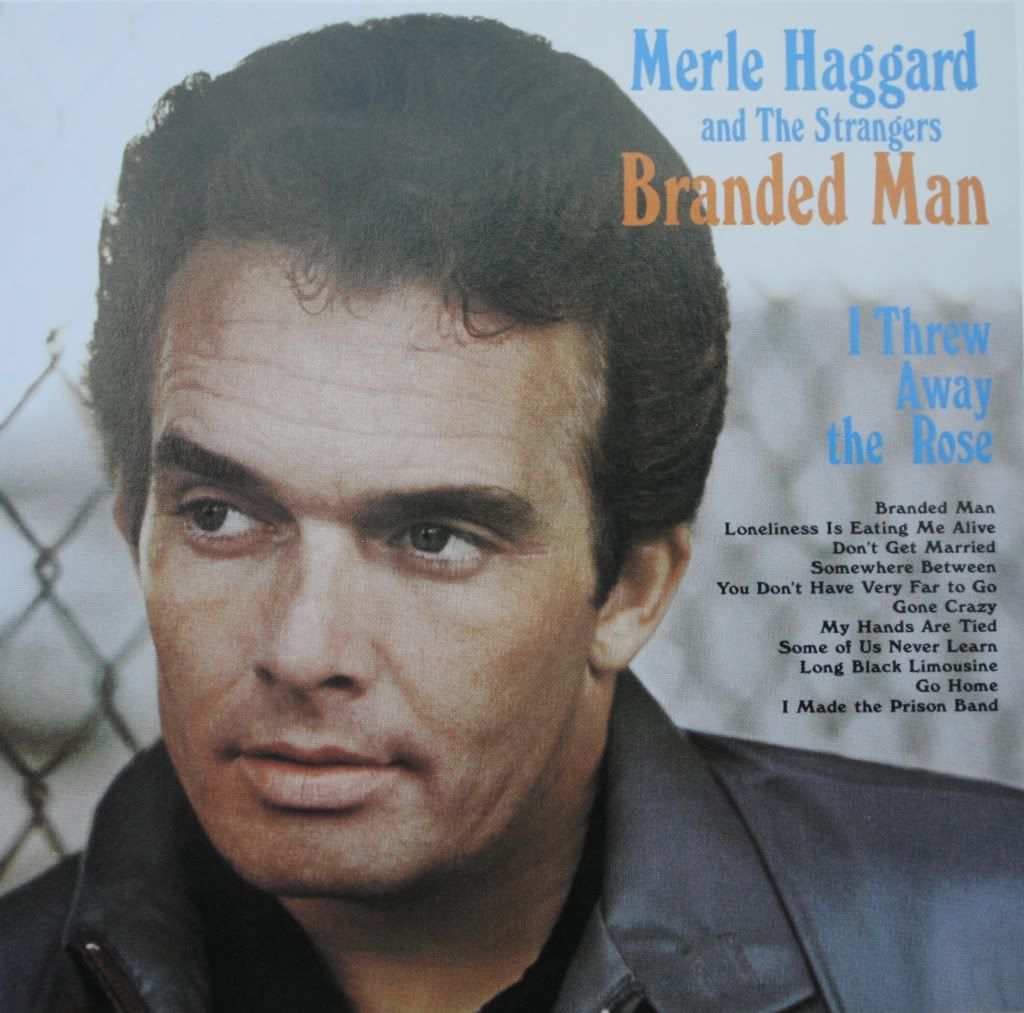
Merle Haggard - Branded Man


Yeah, that's right, there used to be such a thing as good country, and we're not talking about pill-popping tough-guy posers, we're talking about the guy who was in San Quentin for armed robbery when said legend performed there.  In spite of his heavenly pipes, Merle has always resonated with me because of his realism and authenticity--he writes and sings about what he knows, most often drinking, heartbreak and jail.

Branded Man was my first Merle Haggard album and still one of my very favorites.  Merle hits some glorious notes on this album both low (on "I Threw Away the Rose" and "Some of Us Never Learn") and high (on "Long Black Limousine" and "I Made the Prison Band").  A lot of these songs trade on the time-honored country trope of cheesy wordplay (a tradition that has somehow even remained in shitty contemporary country):  lines like "If you're trying to break my heart/You don't have very far to go" are glorious in their down-home cleverness, while elsewhere Haggard, referring to his past days of wine and roses, admits with a straight face "I kept the wine and threw away the rose."  There are many facets of this album's glory, from the track titles--some of which stand alone quite well--to the unbounded variety.  Merle goes from classic Bakersfield honky tonk to jazz to Spanish-flavored and back again in a very short time, and the Strangers have no trouble adapting to the style changes.  I swear, country music probably has the best session musicians out of any music genre.  Though there are a couple of driving Bakersfield numbers, I wouldn't mind a couple more.

Get the CD or MP3s here, on a two-for-one with I'm a Lonesome Fugitive.
Saturday, February 19, 2011

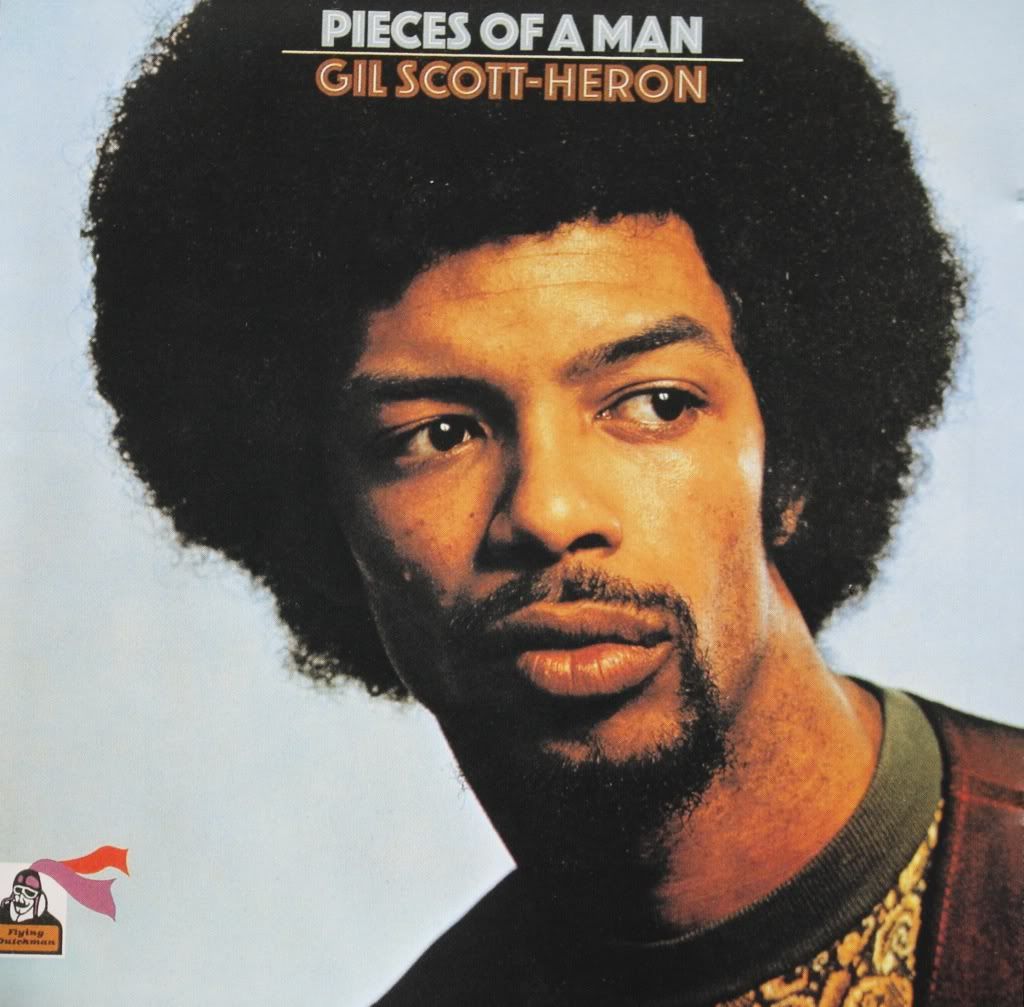
Gil Scott-Heron - Pieces of a Man


Although I've chosen some favorites to start off the review side of this blog, I'm unfortunately not completely in love with every album I review.  Not to say I don't enjoy this album, it's just too easy to describe the ways it doesn't fit with what I look for in this type of music and to list choices I wouldn't have made if I were the artist or producer.

Then again, it's pretty hard to fault the opening track--the one everyone thinks of when they think of Gil Scott-Heron--"The Revolution Will Not Be Televised."  This is the song people are thinking of when they say Gil Scott-Heron was the first rapper (or somesuch fanfare), and it's unarguably the freshest thing on the disc with Scott-Heron's rapid-fire, cutting assessment of black America's imperatives in 1971 (as he sees it) over funky drum and bass, supported by a jazzy flute.  This is one of those cases, though, where almost all of the album is totally different from the flagship song.

The rest of Pieces of a Man sees Scott-Heron considering the state of his fellow man, often through the lens of what he's feeling about himself.  On the one hand, it's fascinating from a historical perspective--it's clear that socially-conscious black artists in the early 70's were processing their world musically in a pretty different way than their analogs do today.  The problem is that none of the other songs here capture the wit or verve of the leadoff track.  Instead of using irony to prove his point with a bit of sting, Gil seems content to rely on relentlessly earnest exposition.

This problem could be thoroughly alleviated by the music; lyrics don't get much more severe than Curtis or What's Going On, but the orchestral sweep of both albums and the frantic, redemptive highs found on the former fill the words with a sense of gravitas that overcomes the seriousness of the words.  Here we get an organic (lots of flute), jazzy type of soul that seems like it would have already fallen out of fashion by 1971.  Now, that's an artistic choice I don't totally agree with, but there are issues here that go beyond taste.  First off, Scott-Heron's voice isn't up to the challenge.  There are plenty of vocally-limited artists I love: Allen Toussaint is one, and an R&B artist.  Whereas Toussaint plays to his abilities by singing simple, catchy melodies that present him as an endearing personality, Scott-Heron attempts to hit notes and run off on flourishes that he can't nail.  Moreover, there's a distinct melodic deficit in a lot of these songs--most have at least a hook or two, sometimes around the chorus, but the verses show a pretty distinct lack of attention--like he decided on the chords but didn't bother to think about which notes he was singing as long as they fit the harmonic structure.  Perhaps less important but still irritating to me personally is that, for someone who's reputedly strongest on the lyrical/poetic side of things, Scott-Heron also pays little attention to how the meter of his words fits with the rhythm of each song, running fast to fit words in too small a space or awkwardly stretching a couple of words to fill a blank space demanded by the rather rigid, unimaginative song structures.  You can't expect the artist to cover all of these bases every time, but a good producer would have at least found one way to tighten things up a little bit.

It sounds like I really hate this album.  Not so; despite the ill-fitting music and cheese ("When You Are Who You Are," "I Think I'll Call It Morning"), there are some moments where it gels and gets worked-up the way it should--"Home is Where the Hatred Is" conjures an appropriate dark edginess, and "Pieces of a Man" overcomes its Van Morrison lounge feel to do the words justice with a pretty solid vocal performance.  Overall, Pieces of a Man is actually a pleasant listen (I actually play it fairly regularly) and a pretty cohesive album, it's just that the unique promise and potential of the first track is nowhere to be found as the album progresses.  And that, my friends, is not a classic.

Get it here--out of print, but affordable on MP3.

Friday, February 18, 2011

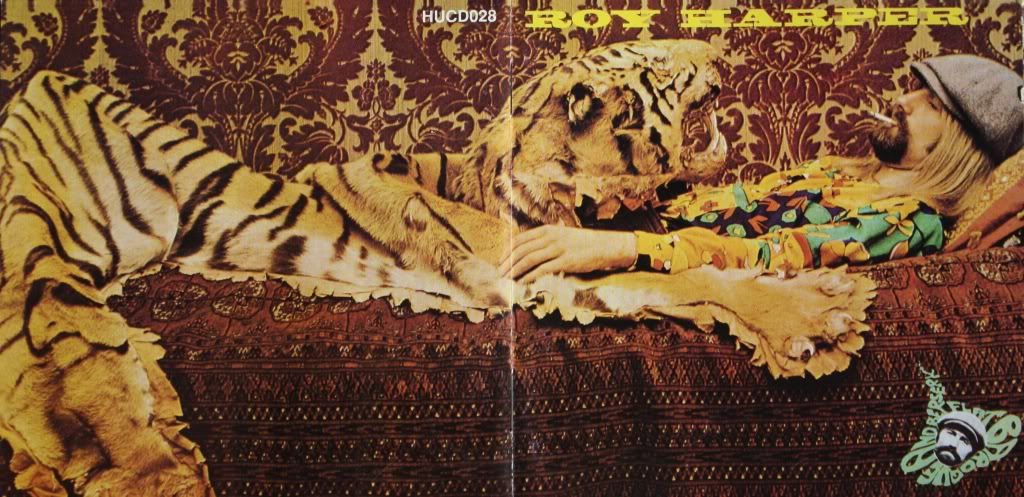
Roy Harper - Flat, Baroque and Berserk


Roy Harper's one of my all-time favorites, but that doesn't mean I think he's got a Midas touch.  Part of the reason why I love his music so much is because he wears his flaws on his sleeve--in many ways, he's made a career out of artistic as well as professional self-sabotage, always ready to nosedive with erratic behavior when a big break was on the way, and always quick to follow up an incisive gem of a song with a lewd throwaway.  Really, he's just like any of the rest of us, he just exemplifies what it means to be human to the utmost degree--the peaks of his greatness are shadowed equally by the troughs and valleys necessary to achieve that success, and the evidence is there in his songs and public personality for us all to see.  Part of great singer/songwriter music is coming to understand the person's deep personality, and Harper's got it in spades.  Like Robbie Basho, though, it's not always easy to hear and a lot of listeners have been turned off by his unflinching honesty.  As a songwriter, I think there's a lot to learn (obviously) from Harper's style as well as from his creative path--how his strengths have played out over a career and whether each of his experiments and artistic overreaches were worth the risk on principle alone, or when it's time to exercise restraint.  Then again, you can't win if you don't play.

Flat, Baroque and Berserk is Roy Harper's fourth album, and to me it's his first unqualified artistic success.  There are serious kinks in the first couple records with respect to production, focus and just how effectively his message is communicated, and the same can be argued of Folkjokeopus, but the blinding success of "McGoohan's Blues" still stands as a Harper classic and his first long-form triumph.  Here those issues seem to melt into the ether--gone is the dainty lo-fi folk rock of Come Out Fighting Genghis Smith (it's almost all acoustic guitar here, with the occasional acoustic wind instrument and one hard-rocker to break up the monotony), and the poetic confusion from Folkjokeopus' is trimmed away, leaving multifaceted yet economical poetry sung with Harper's very last breath--or so it would seem.

The instrumental arrangements are much simpler, showing off Roy's best guitar playing since his debut.  Snapshots like "Feeling All the Saturday," "Davey" and "Francesca" show a quietly intense mind working through mortality, aging and the (sometimes welcome) consequences of free love, and they're buoyed by Harper's distinctive fingerstyle.  Of course, his flatpicking style is equally as idiosyncratic, as we hear on the Jesus/Judas dialogue "Don't You Grieve" and the valedictory kiss-off, "Goodbye."  Even after all these years, the poetry on this disc still tantalizes--the inter-verse rhyming on "How Does it Feel" is fantastic, and there are numerous moments where he effortlessly pierces the shroud--a favorite of mine happens in "Tom Tiddler's Ground": "And you heard me say yes, but you know it's a guess/ Somebody else shouted 'No!'"

Yes, I'm aware I haven't even mentioned the obligatory mentionables--the gloriously ballsy "I Hate the White Man" was sort of an albatross around Harper's neck for years (listen to pretty much any live album to hear cries of "White Man!" from the audience).  Then there's the painful, smoldering resignation of "Another Day," graced by a really grand David Bedford string arrangement that prefigures his crucial contributions to Stormcock and Valentine.  Then, of course, the album closes with a hard rocking bang in  "Hell's Angels," where Roy's backed by (of all bands) The Nice (ugh...Keith Emerson...shudder).  While it's not quite as controversial as he may have intended, it's still a totally jarring close to a meditative album (see paragraph one) and his uncontrollable stoned laughter lets us know that the ride's only just beginning. 

Flat, Baroque and Berserk has a few less memorable moments ("Song of the Ages" in particular), but overall it's a pillar of the Harper discography and a refreshing album to return to when you want the good stuff but not the pomp of his mid-70's output.

Get it here, direct from the artist, or here.

Thursday, February 17, 2011

Robbie Basho - Venus in Cancer

Photobucket was scared of this photo and wouldn't let me upload it, because a naked woman = pornography.
This is easily Robbie Basho's most celebrated recording, most likely due to the tragic state of his legacy--it's one of only three (counting the fact that the entirety of The Grail and the Lotus is presented on the Guitar Soli compilation) of his original studio albums that's available today on CD.  Despite this unjust reality, Venus in Cancer is one of the better Basho albums, so we can at least be glad that what's out there does the man's contribution justice. 

In a lot of ways, I consider this album to be Robbie Basho's study in arpeggio.  Instead of the gale-force sonic flurry often heard on his earlier albums, here we get gentle, climbing guitar figures in which each individual note is audible and easy to savor.  For me, the two six-string pinnacles of Basho's Venus in Cancer style are the leadoff title track and "Kowaka d'Amour."  The former is a tentative, searching piece that sounds partly improvised--there's not necessarily an explicit melody, but the piece has an overall melodic flow and the mood progresses from mysterious to soaringly sublime at a majestic pace.  The latter song is like a darker, moodier shadow of the opener (perhaps like the astrological cover art suggests), with more of a minor, Eastern feel, but still an emphasis on space with a lot of the playing in arpeggio form.

Aside from these two brilliant solo guitar pieces, we get three vocal tunes and a 12-string instrumental.  It's customary--nay, obligatory--when writing about Robbie Basho to comment on his "love it or hate it" voice.  People love pretty guitar instrumentals, but they don't want to worry about weird.  Basho's vocal style is undeniably unconventional, but I'd argue that it's also tough to deny his ability.  If you can listen to "Eagle Sails the Blue Diamond Waters" without being moved, you've got a harder heart than I.  For me, it's not the timbre or style of Basho's voice that's an issue--I think it's marvelously unique, especially in combination with his guitar style--it's more of an issue with his poetry, which is often a bit florid (see "Wine Song").  But somehow, it all fits together here--I think "Song for the Queen" is one of the best realizations of Basho's combined guitar/vocal vision, with an aura of stately mystery that meshes well with the track's french horn and string arrangement. Out of the man's entire discography, I think the vocals work best here--far better than the less distinctive Basho Sings! and probably also even better than the vocal-heavy The Voice of the Eagle.  Regardless, Basho's vocals will probably always be bound turn off a number of those listeners who are merely looking for another John Fahey.  To the initiated, though, it's clear that Basho had a different purpose and for better or worse wasn't willing to go all-instrumental.

Venus in Cancer is a pretty good place to start with Robbie Basho--I still remember my first listen, standing out in the late summer sun painting a barn door, watching birds cross overhead and marveling at the man's passion and ability without really understanding the extent of his vision.  A lot of my favorite albums have taken years to fully appreciate, but I can still vividly remember that first unknowing encounter--this is definitely one of them. 

Out of print, but For sale used here.

Wednesday, February 16, 2011

This and That (The Piping of Earth)


` ` ` ` ` ` ` ` ` ` ` ` ` ` ` ` ` ` ` ` ` ` ` ` ` ` ` ` ` ` 
Adding, swelling
More in one spot
Growing, staying
Pretty much the same
Slowly, quicker
Helps if it's hot

At once--release!
In pieces small enough to have no name

Hurry, arms outstretched
Carry seeds of gold on uplifting fingers
Don't delay--to the weightless depths!
Peek with wonder
Fertile currents allow spring again!
You can know if you don't understand

Choosing, changing
Switching order
Sculpting, fleshing
Accidents become the laws
Encircling meaning
With a porous border

A shape is born!
The product falsely clarifies the cause

Hurry, arms outstretched
Carry seeds of gold on uplifting fingers
Don't delay--to the weightless depths!
Peek with wonder
Fertile currents allow spring again!
You can know if you don't understand


` ` ` ` ` ` ` ` ` ` ` ` ` ` ` ` ` ` ` ` ` ` ` ` ` ` ` ` ` ` 
This poem is about a dream I had--it was one of those dreams with very little action, but a whole lot of implicit meaning and impressionistic understanding.  I was facing a giant aquarium that was lit from the inside, full of tiny microorganisms floating around.  In the dream I remember feeling it was imperative that I get to the aquarium with what I was holding in my hands (which I knew was the beginning of a new life) so it could grow in the hot, fertile waters--and I wasn't the only one there ferrying life to the waters.

I spend a lot of In Not-Even-Anything Land trashing on our unqualified glorification of life (Hiding from Heaven and Dedicated... in particular), but this song celebrates the utterly inexplicable, microscopic transmutation that occurs when inanimate material becomes life.  Although I think we humans prize life as the ultimate good without giving much thought to the greater picture of the other amazing things going on in the universe, the beginning of life is a pretty amazing thing...just not necessarily better than something else. 

Among other things, the music experiments with ambiguous time signatures (for life's seeming randomness) and also with the guitar's timbre--I used a fine brush to play a hotly-miked guitar on the chorus to try and get ahold of the mysterious feeling the dream gave me.